



VY-3-135
Based on 5 publication(s) in Google Scholar
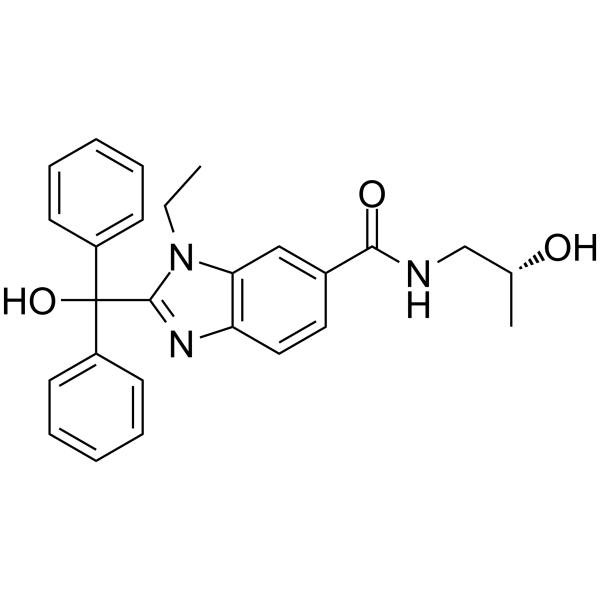
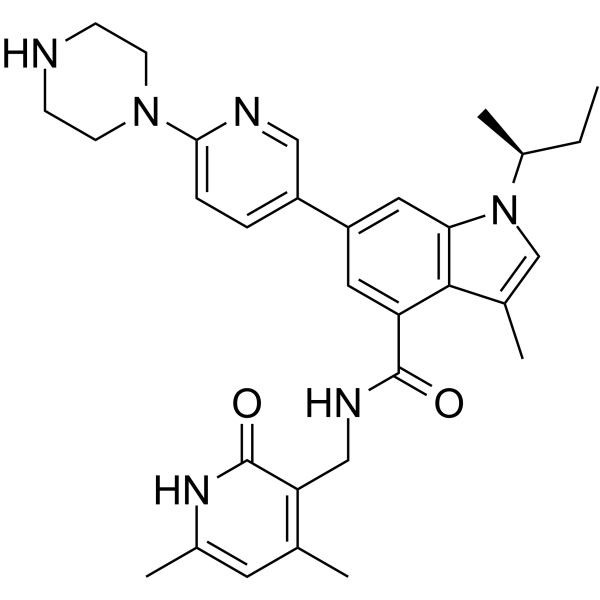
VY-3-135 is a potent, orally active, and stable ACSS2 inhibitor with an IC50 value of 44 nM. VY-3-135 is specific to ACSS2 among the AcCoA synthetase family of enzymes. VY-3-135 does not inhibit ACSS1 or ACSS3 enzymatic activity. VY-3-135 can be used for the research of breast cancer.
Nur für Forschungszwecke. Wir verkaufen nicht an Patienten.
- Reinheit : 99.62%
- CAS. Nr.: 1824637-41-3
- Formel: C26H27N3O3
- Molecular Weight:429.51
-
Speicherung:
4°C, protect from light
* In solvent : -80°C, 6 months; -20°C, 1 month (protect from light)

To place orders, for customer services and technical support, please contact: MedChemExpress USA
Tel: 609-228-6898 E-mail: [email protected] [email protected]


-
 Biologische Aktivität
-
Chemical Information
-
Lösungsmittel & Löslichkeit
- Protokoll
- Reinheit & Dokumentation
- Verweise
-
 Help & FAQs


-
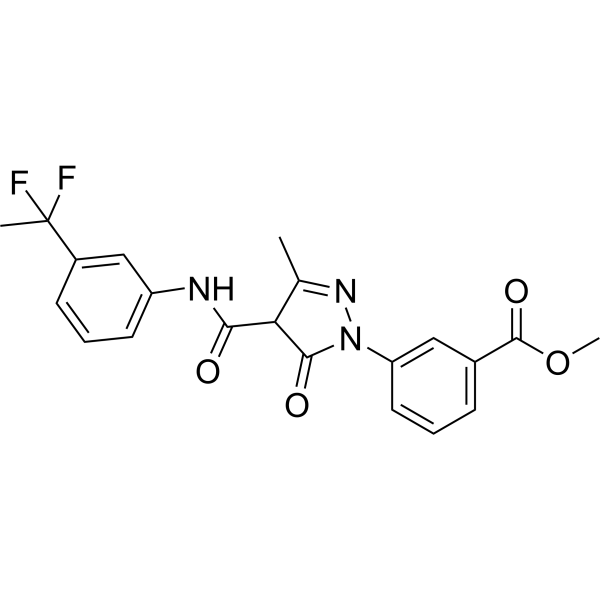
HY-148104
ACSS2-IN-2ACSS2 inhibitor -
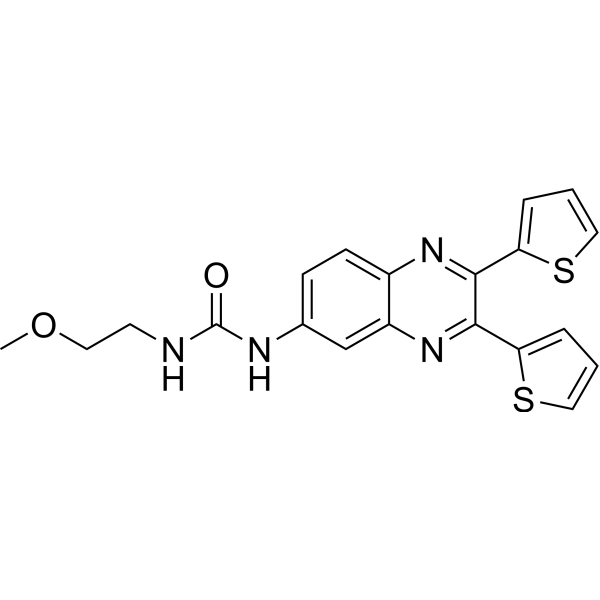
HY-104032
Ac-CoA Synthase-IN-1ACSS2 Inhibitor -
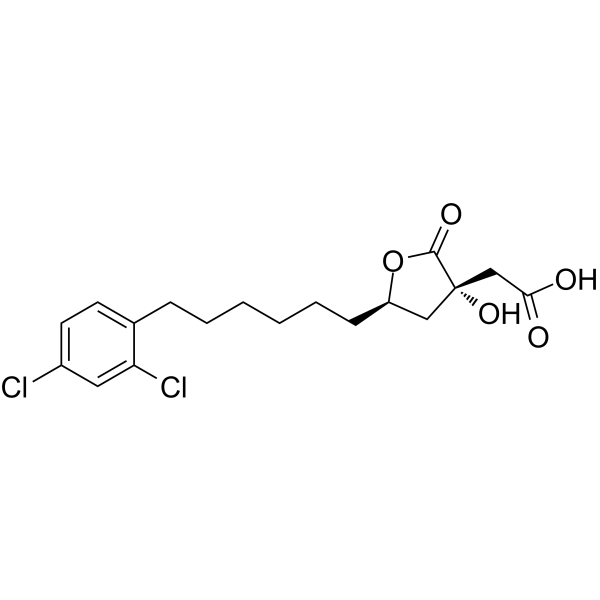
HY-16450
SB 204990ATP Citrate Lyase Inhibitor -
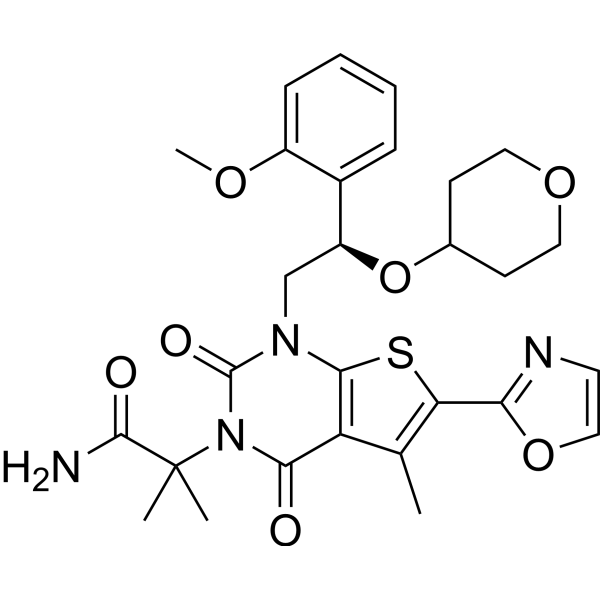
HY-101842
ND-646ACC Inhibitor -
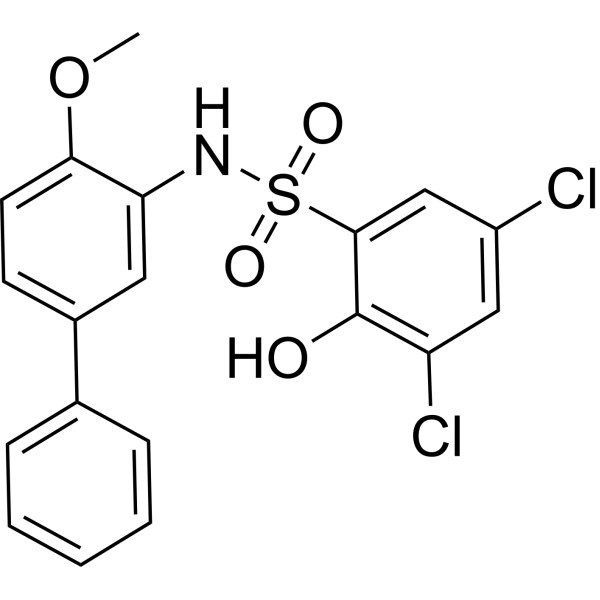
HY-16107
BMS-303141ATP Citrate Lyase Inhibitor -
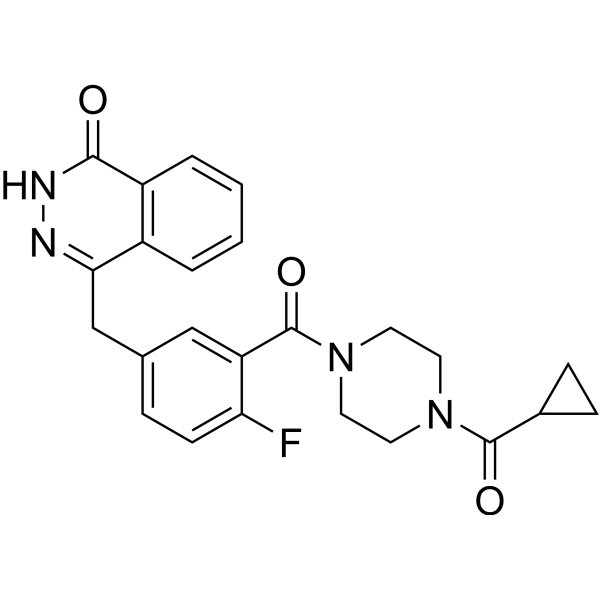
HY-10162
OlaparibPARP Inhibitor -
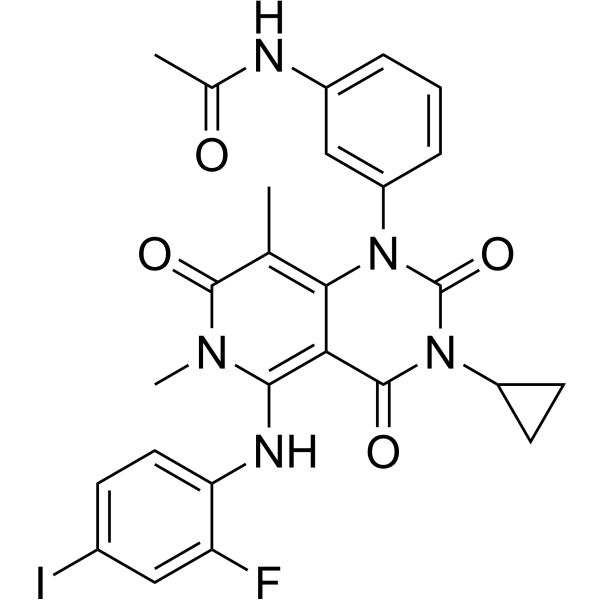
HY-10999
TrametinibMEK Inhibitor -
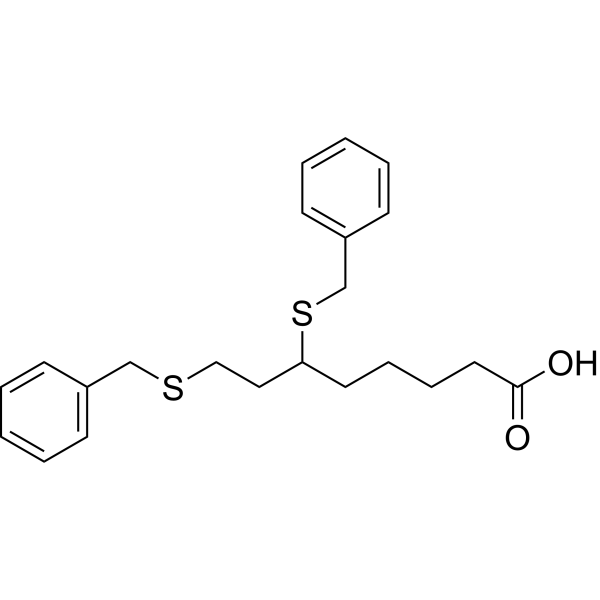
HY-15453
DevimistatMitochondrial Metabolism Inhibitor -
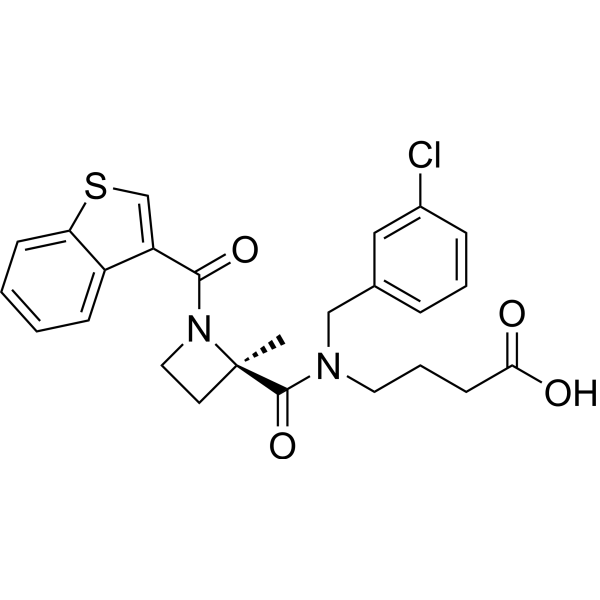
HY-12940
GLPG0974FFA2/GPR43 Antagonist -
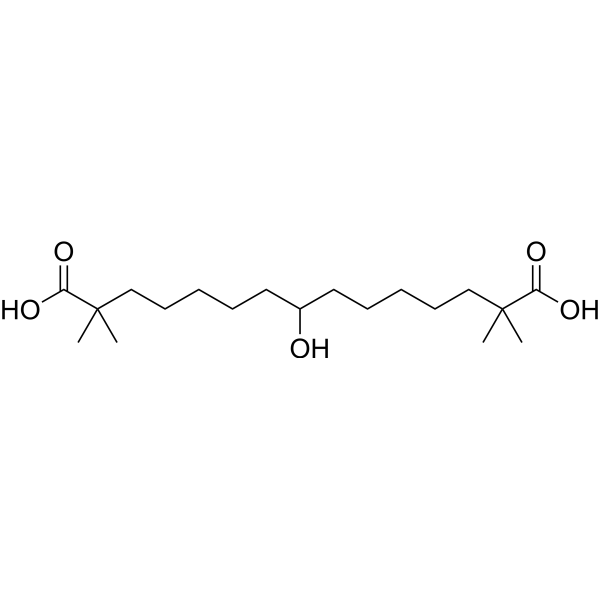
HY-12357
Bempedoic acidACL Inhibitor/AMPK Activator -
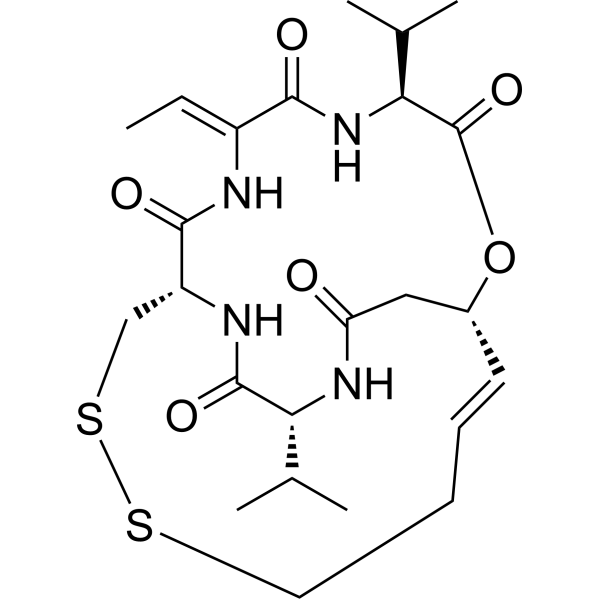
HY-15149
RomidepsinHDAC Inhibitor -
HY-13470
GSK126EZH2 Inhibitor
Publications Citing Use of MedChemExpress (MCE) VY-3-135
More

Biologische Aktivität
Beschreibung
In Vitro
VY-3-135 (0.1, 1 μM; for 24 hours) blocks acetate dependent labeling of palmitate by 13C2-acetate in ACSS2low A7C11 and ACSS2high Brpkp110 cells[1].
MedChemExpress (MCE) has not independently confirmed the accuracy of these methods. They are for reference only.
In Vivo
MedChemExpress (MCE) has not independently confirmed the accuracy of these methods. They are for reference only.


Chemical Information
-
CAS. Nr. 1824637-41-3
-
Appearance Solid
-
Molecular Weight 429.51
-
Formel C26H27N3O3
-
Color White to light yellow
-
SMILES
CCN(C(C(C1=CC=CC=C1)(C2=CC=CC=C2)O)=N3)C4=C3C=CC(C(NC[C@@H](C)O)=O)=C4
-
Versand
Room temperature in continental US; may vary elsewhere.
-
Speicherung
4°C, protect from light
* In solvent : -80°C, 6 months; -20°C, 1 month (protect from light)


Publications (5)
-
Journal Impact Factor
-
Most Recent
-
Adv Sci (Weinh)
ACSS2/AATF Drives Soluble FasL-Mediated CD8+ T Cell Apoptosis in Pancreatic Neuroendocrine Tumors. [Abstract]2025 Aug 12:e06883. PMID: 40791180 -
Cell Death Dis
ACSS1 co-opts acetyl-CoA metabolism to drive DNA repair and undermine radiotherapy efficacy in breast cancer. [Abstract]2025 Dec 18. PMID: 41413018 -
Cancer Lett
Targeting ACSS2 disrupts metabolic-epigenetic crosstalk to restore apoptosis and temozolomide chemosensitivity in pancreatic neuroendocrine tumors. [Abstract]2026 May 1:645:218406. PMID: 41786280 -
Biochim Biophys Acta Mol Basis Dis
ACSS2 promotes macrophage senescence and atherosclerosis by upregulating histone H3 lysine 9 crotonylation. [Abstract]2026 Jun 27:168336. PMID: 42364785 -
Immunotargets Ther
2025 Oct 22:14:1145-1158. PMID: 41146849


Lösungsmittel & Löslichkeit
In Vitro:
DMSO : 50 mg/mL (116.41 mM; Need ultrasonic; Hygroscopic DMSO has a significant impact on the solubility of product, please use newly opened DMSO)
Please refer to the solubility information to select the appropriate solvent. Once prepared, please aliquot and store the solution to prevent product inactivation from repeated freeze-thaw cycles.
Storage method and period of stock solution: -80°C, 6 months; -20°C, 1 month (protect from light). When stored at -80°C, please use it within 6 months. When stored at -20°C, please use it within 1 month.
Please refer to the solubility information to select the appropriate solvent. Once prepared, please aliquot and store the solution to prevent product inactivation from repeated freeze-thaw cycles.
Storage method and period of stock solution: -80°C, 6 months; -20°C, 1 month (protect from light). When stored at -80°C, please use it within 6 months. When stored at -20°C, please use it within 1 month.
Konzentration (Stammlösung) × Volumen (Stammlösung) = Konzentration (Ziellösung) × Volumen (Ziellösung)
In Vivo:
Select the appropriate dissolution method based on your experimental animal and administration route.
- For the following dissolution methods, please ensure to first prepare a clear stock solution using an In Vitro approach and then sequentially add co-solvents:
- To ensure reliable experimental results, the clarified stock solution can be appropriately stored based on storage conditions. As for the working solution for In Vivo experiments, it is recommended to prepare freshly and use it on the same day.
- The percentages shown for the solvents indicate their volumetric ratio in the final prepared solution. If precipitation or phase separation occurs during preparation, heat and/or sonication can be used to aid dissolution.
Add each solvent one by one: 10% DMSO 40% PEG300 5% Tween-80 45% Saline
Solubility: ≥ 2.5 mg/mL (5.82 mM); Clear solution
This protocol yields a clear solution of ≥ 2.5 mg/mL (saturation unknown).
Taking 1 mL working solution as an example, add 100 μL DMSO stock solution (25.0 mg/mL) to 400 μL PEG300, and mix evenly; then add 50 μL Tween-80 and mix evenly; then add 450 μL Saline to adjust the volume to 1 mL.
Preparation of Saline: Dissolve 0.9 g sodium chloride in ddH₂O and dilute to 100 mL to obtain a clear Saline solution.
Add each solvent one by one: 10% DMSO 90% (20% SBE-β-CD in Saline)
Solubility: ≥ 2.5 mg/mL (5.82 mM); Clear solution
This protocol yields a clear solution of ≥ 2.5 mg/mL (saturation unknown).
Taking 1 mL working solution as an example, add 100 μL DMSO stock solution (25.0 mg/mL) to 900 μL 20% SBE-β-CD in Saline, and mix evenly.
Preparation of 20% SBE-β-CD in Saline (4°C, storage for one week): 2 g SBE-β-CD powder is dissolved in 10 mL Saline, completely dissolve until clear.
For the following dissolution methods, please prepare the working solution directly:
It is recommended to prepare fresh solutions and use them promptly within a short period of time.
The percentages shown for the solvents indicate their volumetric ratio in the final prepared solution. If precipitation or phase separation occurs during preparation, heat and/or sonication can be used to aid dissolution.
Add each solvent one by one: 50% PEG300 50% Saline
Solubility: 25 mg/mL (58.21 mM); Clear solution; Need ultrasonic
In Vivo Dissolution Calculator
Please enter the basic information of animal experiments:
-
-
-
-
Recommended: Prepare an additional quantity of animals to account for potential losses during experiments.
Please enter your animal formula composition:
-
%DMSO +
Recommended: Keep the proportion of DMSO in working solution below 2% if your animal is weak.
-
%+
-
+%Tween-80 + +
-
%Saline +
The co-solvents required include: DMSO, . All of co-solvents are available by MedChemExpress (MCE). , Tween 80. All of co-solvents are available by MedChemExpress (MCE).
Working solution concentration: 0.22 mg/mL
Method for preparing stock solution: mg drug dissolved in μL DMSO. Stock solution concentration: mg/mL. * In solvent : -80°C, 6 months; -20°C, 1 month (protect from light)
1. Take μL DMSO stock solution;
2. Add μL .
μL , mix evenly;
3. Then add μL Tween 80, mix evenly;
4. Then add μL
Please ensure that the stock solution in the first step is dissolved to a clear state, and add co-solvents in sequence. You can use ultrasonic heating (ultrasonic cleaner, recommended frequency 20-40 kHz), vortexing, etc. to assist dissolution.


Reinheit & Dokumentation
-
Data Sheet (274 KB)
-
SDS (393 KB)
- English - EN (393 KB)
- Français - FR (393 KB)
- Deutsch - DE (393 KB)
- Norwegian - NO (393 KB)
- Español - ES (393 KB)
- Swedish - SV (393 KB)
- Italian - IT (393 KB)
- Korean - KR (393 KB)
- Portuguese - PT (393 KB)
-
Handling Instructions (2659 KB)
Verweise


Complete Stock Solution Preparation Table
Please refer to the solubility information to select the appropriate solvent. Once prepared, please aliquot and store the solution to prevent product inactivation from repeated freeze-thaw cycles.
Storage method and period of stock solution: -80°C, 6 months; -20°C, 1 month (protect from light). When stored at -80°C, please use it within 6 months. When stored at -20°C, please use it within 1 month.
| Optional Solvent | Concentration Solvent Mass | 1 mg | 5 mg | 10 mg | 25 mg |
|---|---|---|---|---|---|
| DMSO | 1 mM | 2.3282 mL | 11.6412 mL | 23.2823 mL | 58.2059 mL |
| 5 mM | 0.4656 mL | 2.3282 mL | 4.6565 mL | 11.6412 mL | |
| 10 mM | 0.2328 mL | 1.1641 mL | 2.3282 mL | 5.8206 mL | |
| 15 mM | 0.1552 mL | 0.7761 mL | 1.5522 mL | 3.8804 mL | |
| 20 mM | 0.1164 mL | 0.5821 mL | 1.1641 mL | 2.9103 mL | |
| 25 mM | 0.0931 mL | 0.4656 mL | 0.9313 mL | 2.3282 mL | |
| 30 mM | 0.0776 mL | 0.3880 mL | 0.7761 mL | 1.9402 mL | |
| 40 mM | 0.0582 mL | 0.2910 mL | 0.5821 mL | 1.4551 mL | |
| 50 mM | 0.0466 mL | 0.2328 mL | 0.4656 mL | 1.1641 mL | |
| 60 mM | 0.0388 mL | 0.1940 mL | 0.3880 mL | 0.9701 mL | |
| 80 mM | 0.0291 mL | 0.1455 mL | 0.2910 mL | 0.7276 mL | |
| 100 mM | 0.0233 mL | 0.1164 mL | 0.2328 mL | 0.5821 mL |


VY-3-135 Related Classifications
HY-145953 Related Classifications
 Powered by Bioz