1. Search Result
Search Result
Results for "

BET family

" in MedChemExpress (MCE) Product Catalog:
Cat. No. Product Name Target Research Areas Chemical Structure
  • HY-112090
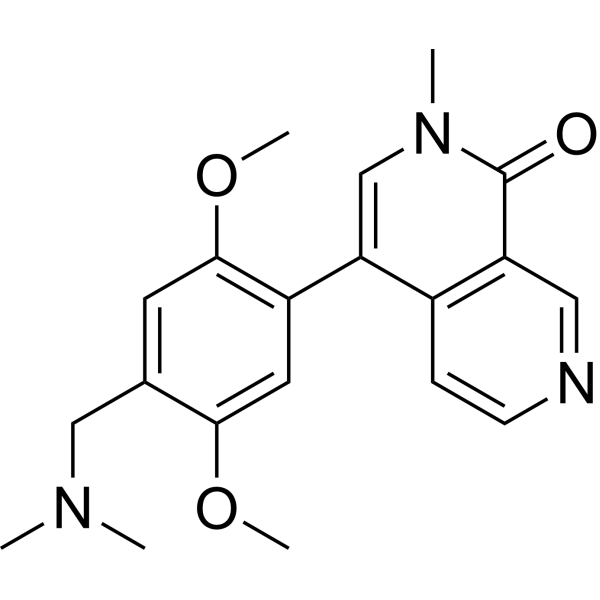
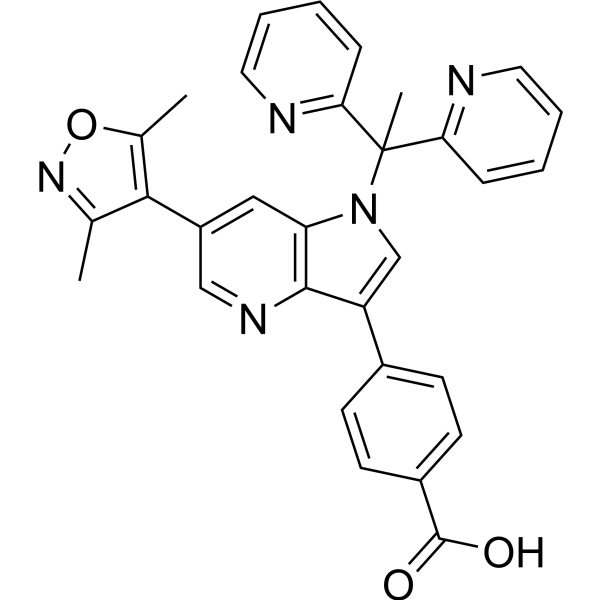
    ABBV-744
    Maximum Cited Publications
    9 Publications Verification

    Epigenetic Reader Domain HIV Infection Inflammation/Immunology Cancer
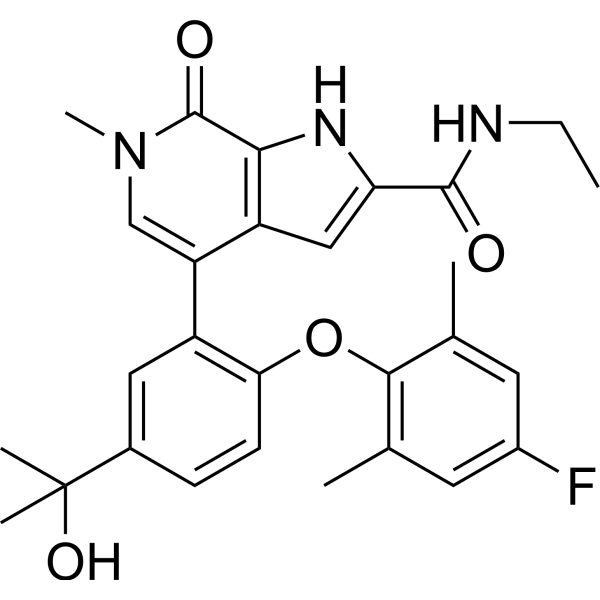
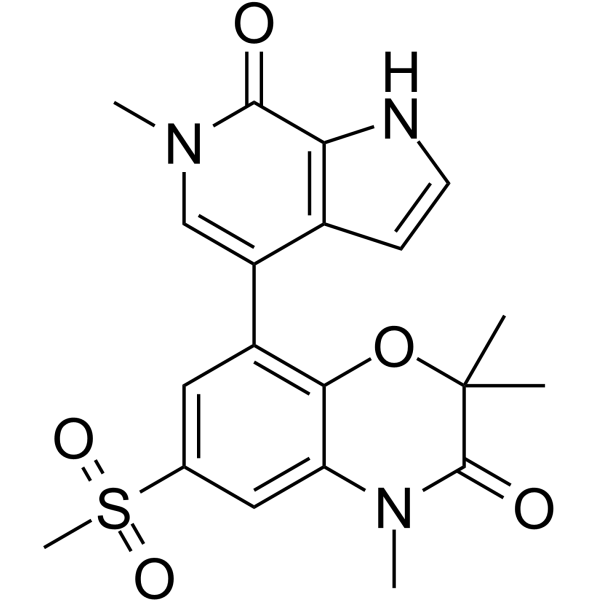
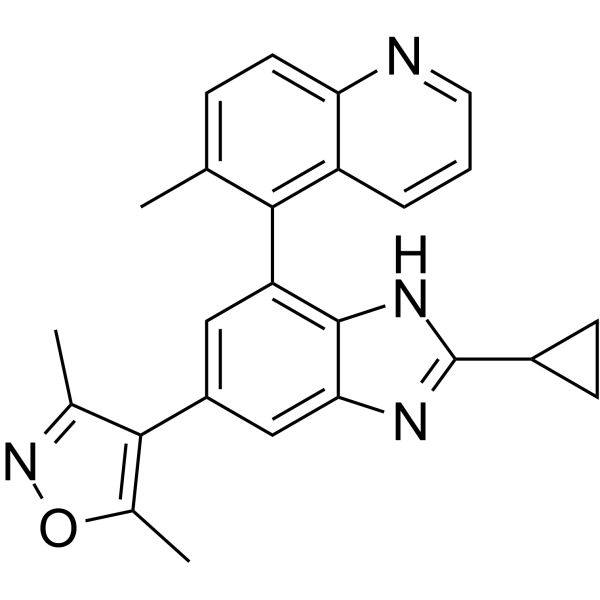
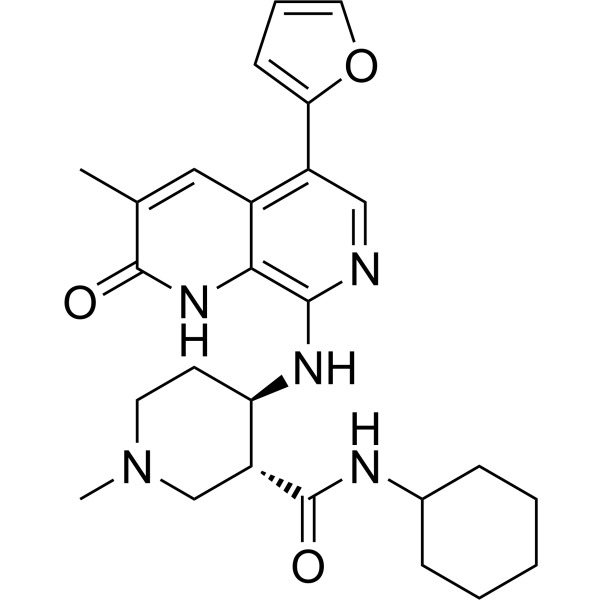
    ABBV-744 is a first-in-class, orally active and selective inhibitor of the BDII domain of BET family proteins with IC50 values ranging from 4 to 18 nM for BRD2, BRD3, BRD4 and BRDT. ABBV-744 is primarily metabolized by CYP3A4 with agent-like properties enable the investigation of its antitumor efficacy and tolerability .
    ABBV-744
  • HY-18975
    I-BRD9
    Maximum Cited Publications
    9 Publications Verification

    Epigenetic Reader Domain Inflammation/Immunology Cancer
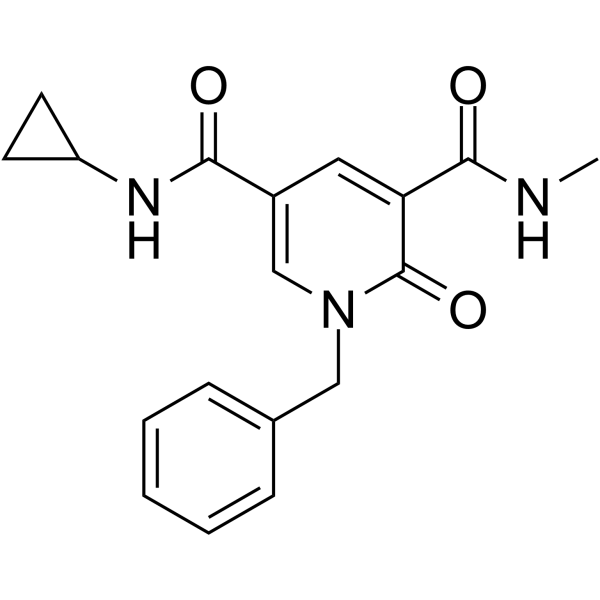
    I-BRD9 is a selective cellular chemical probe of bromodomain-containing protein 9 (BRD9) with pIC50 value of 7.3 μM. I-BRD9 has high selectivity for bromodomain and extra terminal domain (BET) family and highly homologous bromodomain-containing protein 7 (BRD7). I-BRD9 can be used to identify genes regulated by BRD9 in Kasumi-1 cells involved in oncology and immune response pathways .
    I-BRD9
  • HY-141438
    SIM1
    1 Publications Verification

    PROTACs Epigenetic Reader Domain Cancer
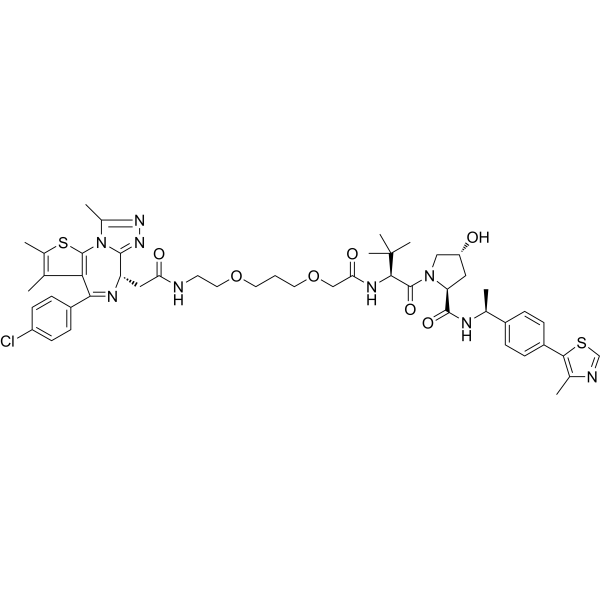
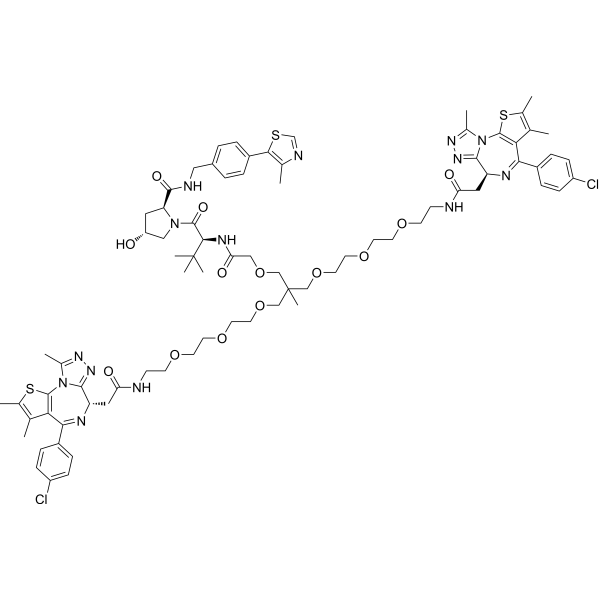
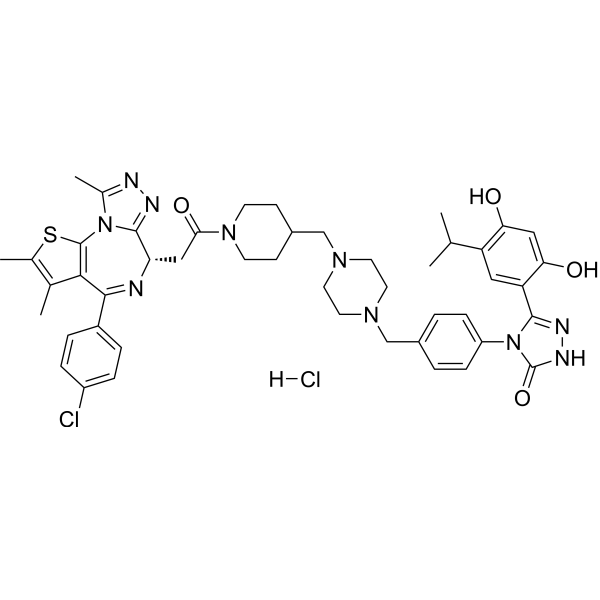
    SIM1 is a potent von Hippel-Lindau (VHL)-based trivalent PROTAC capable of degradation for all BET family members, with preference for BRD2 degradation (IC50=1.1 nM; Kd=186 nM). SIM1 shows sustained anti-cancer activity .
    SIM1
  • HY-134463
    NHWD-870
    1 Publications Verification

    Epigenetic Reader Domain Apoptosis Cancer
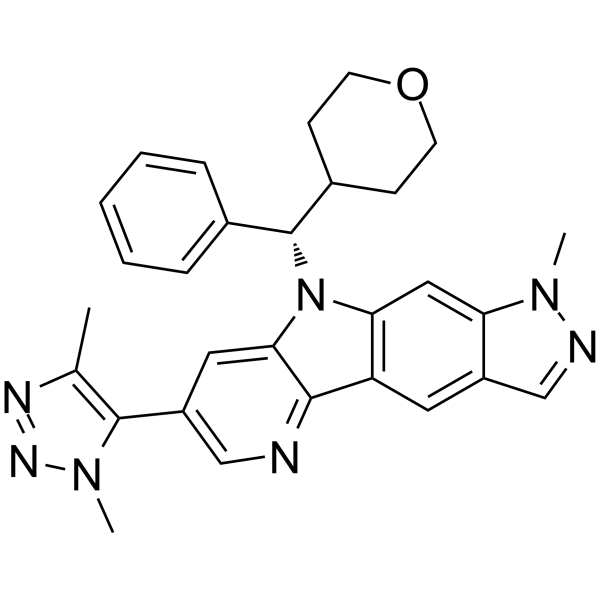
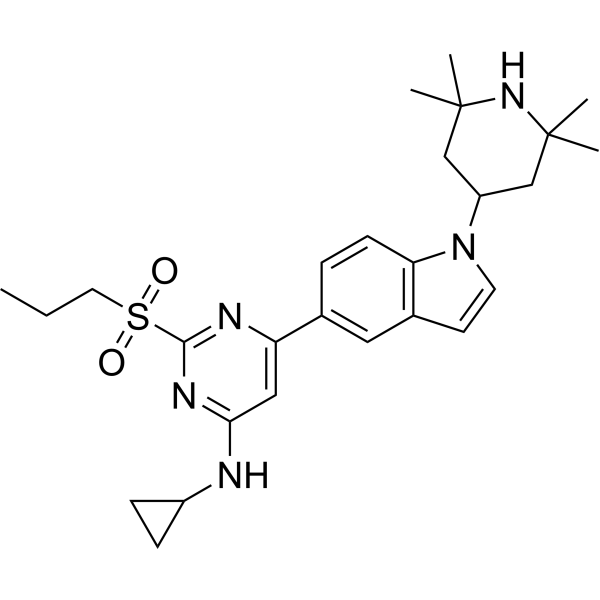
    NHWD-870 is a potent, orally active and selective BET family bromodomain inhibitor and only binds bromodomains of BRD2, BRD3, BRD4 (IC50=2.7 nM), and BRDT. NHWD-870 has potent tumor suppressive efficacies and suppresses cancer cell-macrophage interaction. NHWD-870 increases tumor apoptosis and inhibits tumor proliferation .
    NHWD-870
  • HY-117286

    TEN-010

    Epigenetic Reader Domain Apoptosis Neurological Disease Cancer
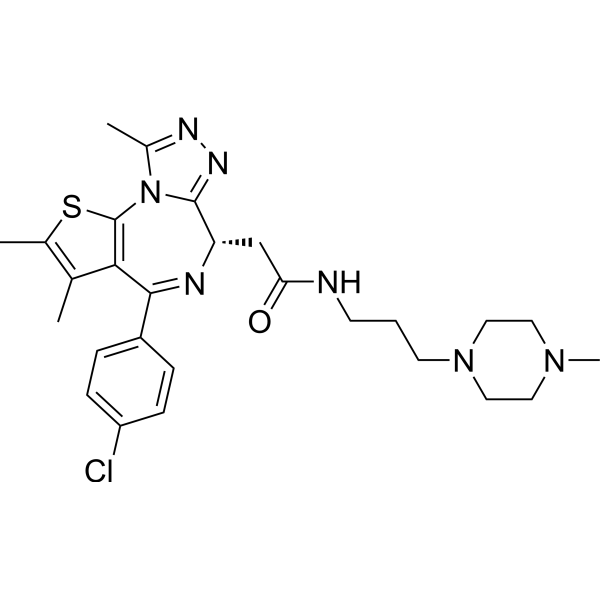
    (S)-JQ-35 (TEN-010) is an orally active, blood-brain barrier-permeable bromodomain inhibitor that selectively targets the bromodomain and extra-terminal domain (BET) protein family (BRD4, BRD3, BRD2 and BRDT). (S)-JQ-35 blocks the activation of Myc gene expression by BRD4, thereby inhibiting cancer cell proliferation and promoting cancer cell apoptosis. (S)-JQ-35 can be used in research related to NUT midline carcinoma and neuroblastoma .
    (S)-JQ-35
  • HY-117690

    PROTACs Epigenetic Reader Domain Cancer
    dBRD9,a PROTAC, can selective degrades BRD9. dBRD9 improves the bromine domain binding profile and reduces the binding activity of the whole BET family .
    dBRD9
  • HY-100352
    BI-9564
    2 Publications Verification

    Epigenetic Reader Domain Cancer
    BI-9564, a chemical probe, is a potent, selective and cell-permeable BRD9/BRD7 bromodomains inhibitor, with IC50s of 75 nM and 3.4 μM and Kds of 14 nM and 239 nM, respectively. BI-9564 has an IC50 of > 100 μM for BET family .
    BI-9564
  • HY-137892

    Epigenetic Reader Domain Inflammation/Immunology
    GSK620, a chemical probe, is a potent and orally active pan-BD2 inhibitor with excellent broad selectivity, developability and in vivo oral pharmacokinetics. GSK620 is highly selective for the BET-BD2 family of proteins, with >200-fold selectivity over all other bromodomains. GSK620 shows an anti-inflammatory phenotype in human whole blood .
    GSK620
  • HY-114416

    Epigenetic Reader Domain Cancer
    GS-626510 is a potent, and orally active BET family bromodomains inhibitor, with Kd values of 0.59-3.2 nM for BRD2/3/4, with IC50 values of 83 nM and 78 nM foe BD1 and BD2, respectively .
    GS-626510
  • HY-110374
    NVS-CECR2-1
    1 Publications Verification

    Epigenetic Reader Domain Apoptosis Cancer
    NVS-CECR2-1, a non-BET family Bromodomain (BRD) inhibitor, is a potent and selective cat eye syndrome chromosome region, candidate 2 (CECR2) inhibitor. NVS-CECR2-1 binds to CECR2 BRD with high affinity (IC50=47 nM; KD=80 nM). NVS-CECR2-1 exhibits cytotoxic activity and induces apoptosis against various cancer cells by targeting CECR2 as well as via CECR2-independent mechanism . NVS-CECR2-1 is a chemical probe.
    NVS-CECR2-1
  • HY-138563

    Epigenetic Reader Domain Cancer
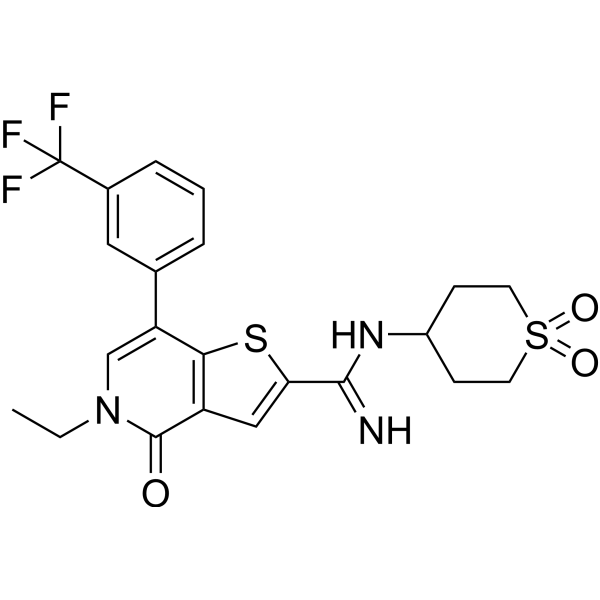
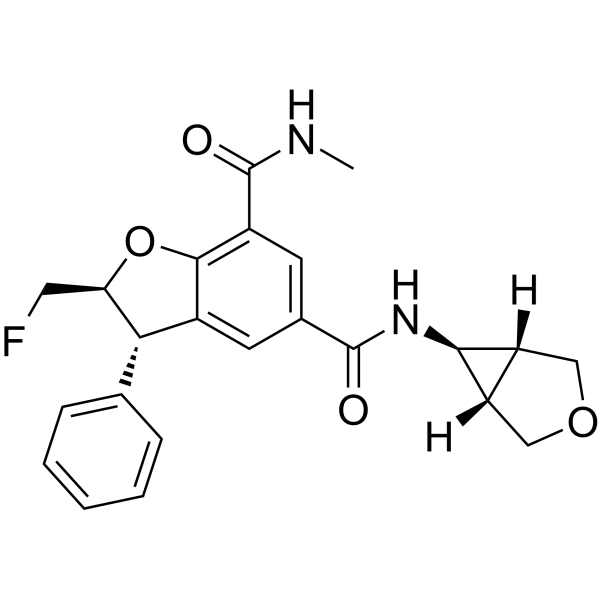
    GSK973, a chemical probe, is a highly selective, orally bioavailable inhibitor of the BD2s (second bromodomains) of the BET family, with a pIC50 of 7.8 and a pKd of 8.7 for BRD4 BD2. GSK973 displays a 1600-fold selectivity for BRD4 BD2 over BRD4 BD1. GSK973 shows good potency against BRD2 BD2, BRD3 BD2, and BRDT BD2 (pIC50=7.4~7.8; pKd=8.3~8.5) .
    GSK973
  • HY-138623

    Epigenetic Reader Domain TNF Receptor Interleukin Related Inflammation/Immunology Cancer
    GSK789 is a selective inhibitor of BET BD1. GSK789 inhibits the growth of leukemia cell lines. GSK789 inhibits LPS-stimulated production of MCP-1, TNFα and IL-6 in human whole blood. GSK789 exhibits antiproliferative, anti-inflammatory and immunomodulatory activities. GSK789 can be used in research related to cancers such as leukemia, as well as inflammatory and immune diseases .
    GSK789
  • HY-156566

    PROTACs Epigenetic Reader Domain HSP Cancer
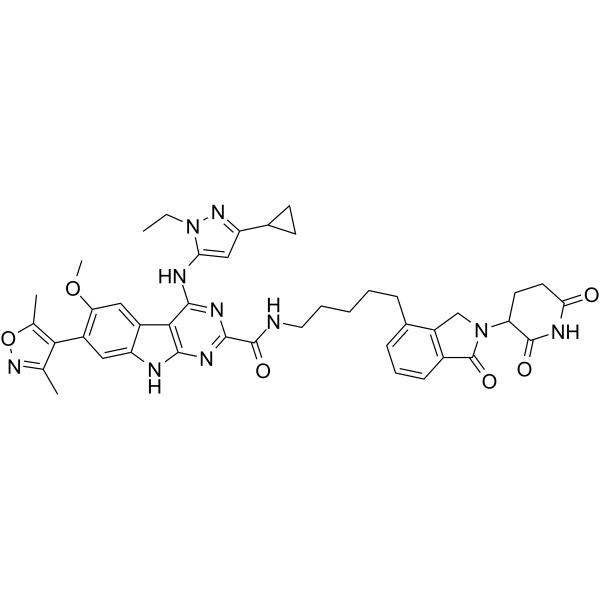
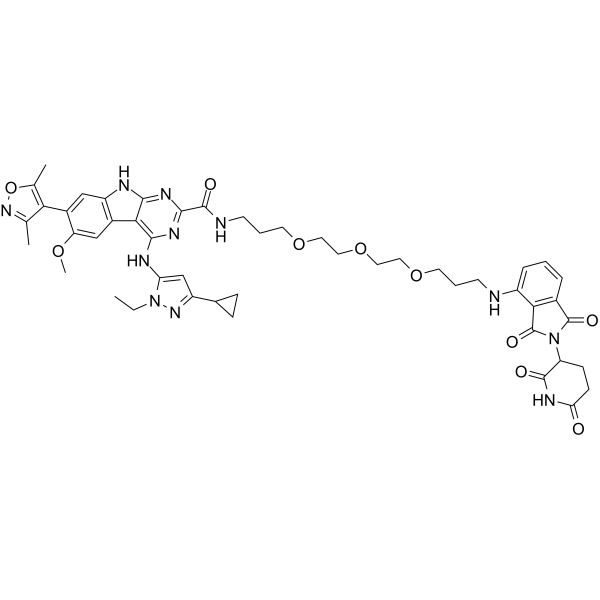
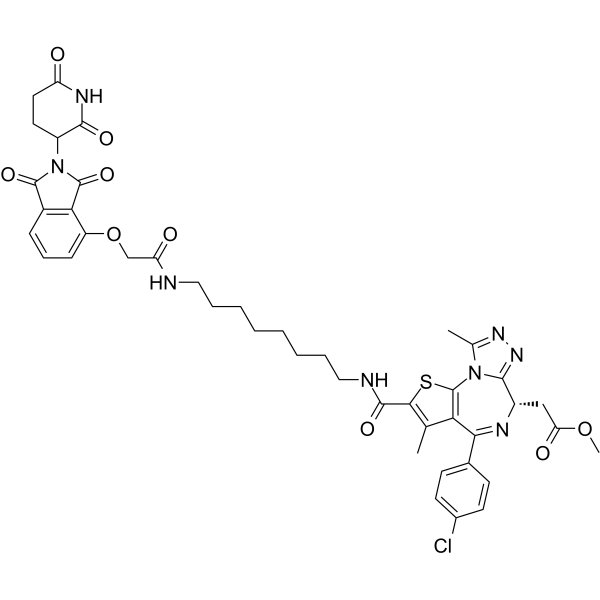
    PROTAC BRD4 Degrader-21 is a BRD4-targeting PROTAC degrader with an IC50 value of 59 nM. PROTAC BRD4 Degrader-21 induces ubiquitination of BRD4, leading to its degradation via the proteasome. PROTAC BRD4 Degrader-21 binds to recombinant HSP90α protein with moderate affinity, having an IC50 of 100-1000 nM. PROTAC BRD4 Degrader-21 induces cancer cell death. PROTAC BRD4 Degrader-21 inhibits tumor growth in xenograft mouse models. PROTAC BRD4 Degrader-21 can be used for the research of acute myeloid leukemia, diffuse large B-cell lymphoma .
    PROTAC BRD4 Degrader-21
  • HY-138563A

    Epigenetic Reader Domain Others
    (2R,3R)-GSK973 is an isomer of GSK973. GSK973 is a highly selective, orally bioavailable inhibitor of the BD2s (second bromodomains) of the BET family .
    (2R,3R)-GSK973
  • HY-157491

    PROTACs Androgen Receptor Epigenetic Reader Domain Cancer
    K2-B4-5e is a E3 ligase KLHDC2-based BRD4 and androgen receptor (AR) degradation PROTAC. K2-B4-5e is capable of inducing rapid and robust degradation of BET-family and AR proteins in cells .
    K2-B4-5e
  • HY-149948

    Epigenetic Reader Domain PROTACs Cancer
    PROTAC BRD3/BRD4-L degrader-2 is a PROTAC molecule and can selectively degrade cellular BRD3 and BRD4-L with Ki values of 16.91 and 2.8 nM, respectively. PROTAC BRD3/BRD4-L degrader-2 also has robust antitumor activity in mouse xenograft models. PROTAC BRD3/BRD4-L degrader-2 can be used for the research of cancer .
    PROTAC BRD3/BRD4-L degrader-2
  • HY-172562

    PROTACs Epigenetic Reader Domain Cancer
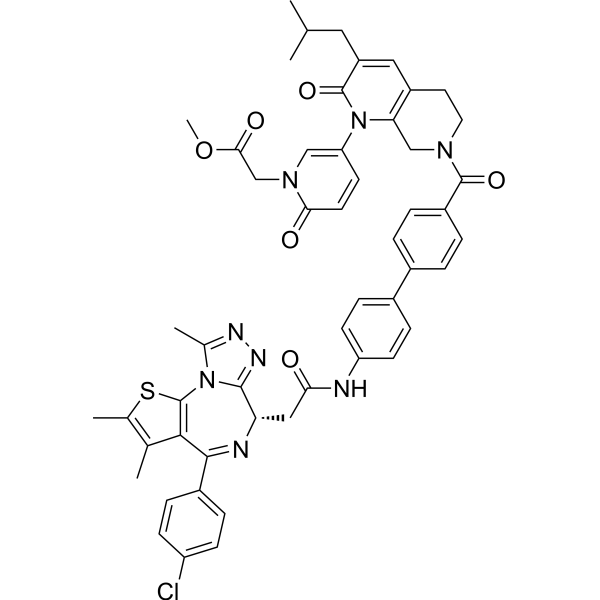
    BTR2004 is a selective BET family (BRD2/3/4) protein PROTAC degrader. BTR2004 forms a ternary complex with BRD proteins and KLHL20, inducing ubiquitination and proteasomal degradation through the UPS pathway. BTR2004 is promising for research of PC3 prostate cancer and MDA-MB-231 breast cancer cell lines. Pink: (+)-JQ1-OH (HY-161125); Blue: BTR2000 (HY-172563); Black: Linker (HY-W015236) .
    BTR2004
  • HY-143471

    PLK1/BRD4-IN-1

    Polo-like Kinase (PLK) Epigenetic Reader Domain Apoptosis Androgen Receptor c-Myc Cancer
    WNY0824 (PLK1/BRD4-IN-1) is an orally active dual inhibitor of PLK1 and BET protein families, with IC50 values ​​of 22, 402.5, 150.7, 103.9, and 311.9 nmol/L for PLK1, BRD2, BRD3, BRD4, and BRDT, respectively. WNY0824 induces cell cycle arrest and apoptosis by inhibiting AR- and MYC-mediated transcriptional processes. In addition, WNY0824 also inhibits tumor growth in Enzalutamide (HY-70002) resistant CRPC xenograft tumor models .
    WNY0824
  • HY-163543

    Epigenetic Reader Domain Neurological Disease
    Progranulin modulator-2 (compound 18A) is a bromodomain and extra-terminal domain (BET) inhibitor. Progranulin modulator-2 enhances PGRN expression by targeting members of the BET protein family. Progranulin modulator-2 can be used to study the role of BET protein in neurodevelopment, neuroplasticity and neurodegeneration .
    Progranulin modulator-2
  • HY-181867

    PROTACs Epigenetic Reader Domain Apoptosis Cancer
    PROTAC BET Degrader-16 (Compound A10) is a BET PROTAC degrader with a DC50 of 0.31 nM against BRD4, and it preferentially targets BRD4 over other BET family members. PROTAC BET Degrader-16 degrades BRD2, BRD3 and BRD4 via the ubiquitin-proteasome system, a process that requires target binding and recruitment of the CRBN E3 ligase. PROTAC BET Degrader-16 induces cell cycle arrest and promotes apoptosis. PROTAC BET Degrader-16 exerts anti-tumor activity against acute myeloid leukemia .
    PROTAC BET Degrader-16
  • HY-179588

    PROTACs Epigenetic Reader Domain c-Myc Cancer
    PROTAC BET Degrader-14 is a highly efficient PROTAC targeting BET (bromodomain and extra-terminal domain). PROTAC BET Degrader-14 can degrade all BET (BRD2, BRD3, BRD4) family proteins. PROTAC BET Degrader-14 potently degrades BET proteins in U2OS osteosarcoma cell lines (BRD4 DC50 = 130 nM) and KYSE180 esophageal squamous cell carcinoma cell lines (DC50 = 40 nM). PROTAC BET Degrader-14’s dependence on the ubiquitin-proteasome system. PROTAC BET Degrader-14 decreases levels of BET-regulated gene products c-Myc, RUNX2, and KRT14. PROTAC BET Degrader-14 can be used for the study of osteosarcoma .
    PROTAC BET Degrader-14
  • HY-181735

    Ligands for Target Protein for PROTAC Epigenetic Reader Domain Cancer
    BET-IN-30 (Compound 11d) is a BTE family protein inhibitor, which can act as a BRD2/BRD3/BRD4 target protein ligand and be used for the synthesis of PROTACs, such as PROTAC BET Degrader-15 (HY-181729). BET-IN-30 exhibits potent anti-proliferative activity against acute myeloid leukemia (AML) cells such as MV4-11. BET-IN-30 can be used for the study of AML .
    BET-IN-30
  • HY-100352R

    Epigenetic Reader Domain Reference Standards Cancer
    BI-9564 (Standard) is the analytical standard of BI-9564 (HY-100352). This product is intended for research and analytical applications. BI-9564, a chemical probe, is a potent, selective and cell-permeable BRD9/BRD7 bromodomains inhibitor, with IC50s of 75 nM and 3.4 μM and Kds of 14 nM and 239 nM, respectively. BI-9564 has an IC50 of > 100 μM for BET family .
    BI-9564 (Standard)
  • HY-183077

    Epigenetic Reader Domain Molecular Glues Cancer
    BRD4 degrader-7 (Compound ZZ1) is a CTLH-dependent BRD4 degrader and c-Glue with a DC50 of 489 nM. BRD4 degrader-7 converts to a sulfinic acid derivative inside cells, interacts with the basic pocket of YPEL5, mediates the bridging of BRD4 BD1 to the YPEL5 subunit of the CTLH E3 ubiquitin ligase, and thereby promotes the formation of a ternary complex. BRD4 degrader-7 can be used in research on Ewing's sarcoma and leukemia .
    BRD4 degrader-7
  • HY-155891

    Epigenetic Reader Domain Cancer
    BET-IN-18 (Compound 3) is a pan-BET bromodomain small-molecule inhibitor, with Ki values of 0.69 μM and 0.37 μM, and Kd values of 1.6 μM and 8.4 μM against BrdT (1) and Brd4 (1) bromodomains, respectively. BET-IN-18 potently and competitively inhibits the binding of the known BET inhibitor (+)-JQ1 (HY-13030) to Brd4 (1) and BrdT (1), with IC50 values of 1.0 μM and 2.3 μM, respectively. BET-IN-18 also competitively inhibits the binding of acetylated histone substrates to Brd4 (1) (IC50 = 0.90 μM). BET-IN-18 can be used in the research of multiple myeloma .
    BET-IN-18

Inquiry Online

Your information is safe with us. * Required Fields.

Salutation


Country or Region *

Applicant Name *


Organization Name *

Department *


Email Address *


Product Name *

Cat. No.


Requested quantity *

Phone Number *


Remarks

Inquiry Online

Inquiry Information

Product Name:
Cat. No.:
Quantity:
MCE Japan Authorized Agent:

