13 Results for "

Bromhexine

" in MedChemExpress (MCE) Product Catalog:
Products (13)

13 Results for "Bromhexine" in MCE Product Catalog:

4
4 Cited Publications
Cat. No.: HY-B0372A
CAS No.: 611-75-6
Target:  

SARS-CoV Autophagy HIV

Research Areas:  

Metabolic Disease

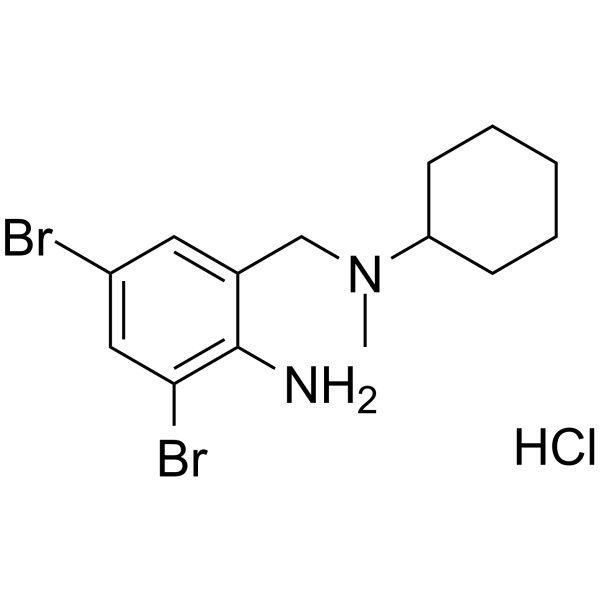
Bromhexine hydrochloride is a potent and specific TMPRSS2 protease inhibitor with an IC50 of 0.75 μM. Bromhexine hydrochloride can prevent and manage SARS-CoV-2 infection. Bromhexine hydrochloride is an autophagy agonist. Bromhexine hydrochloride is a mucolytic cough suppressant and has the potential for a range of respiratory conditions .
loading...
    loading...
3
3 Cited Publications
Cat. No.: HY-B1039A
CAS No.: 23828-92-4
Synonyms: NA-872 hydrochloride
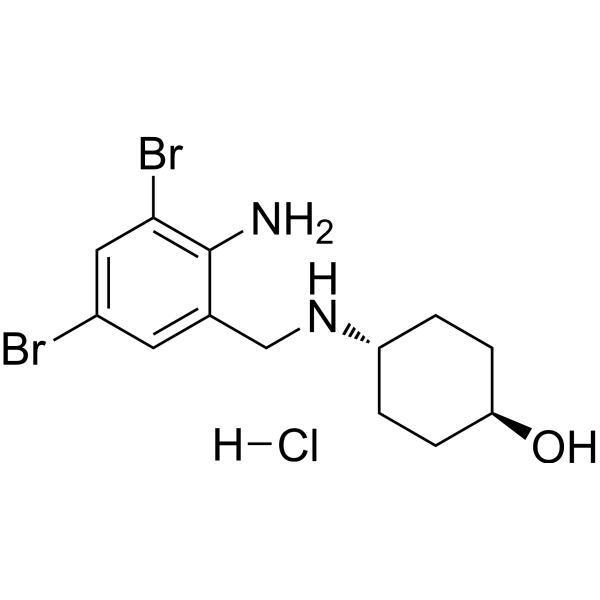
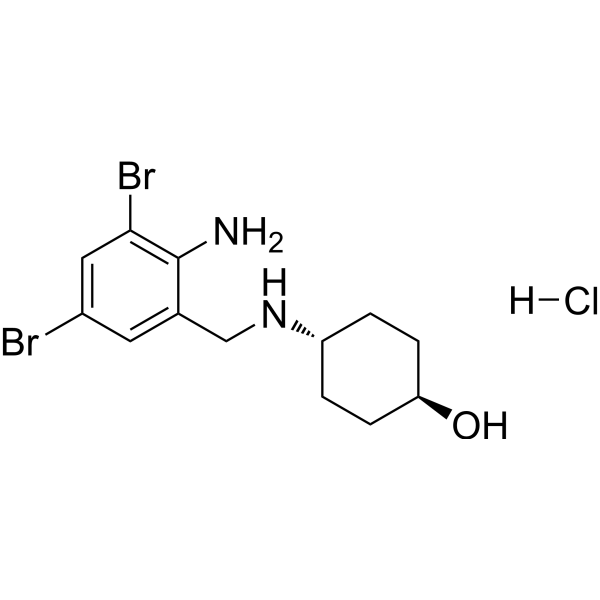
Ambroxol hydrochloride (NA-872 hydrochloride), an active metabolite of the proagent Bromhexine, has potent expectorant effects. Ambroxol hydrochloride is a glucocerebrosidase (GCase) chaperone and increases glucocerebrosidase activity. Ambroxol hydrochloride induces lung autophagy and has the potential for Parkinson disease and neuronopathic Gaucher disease research .
loading...
    loading...
3
3 Cited Publications
Cat. No.: HY-B1039
CAS No.: 18683-91-5
Synonyms: NA-872
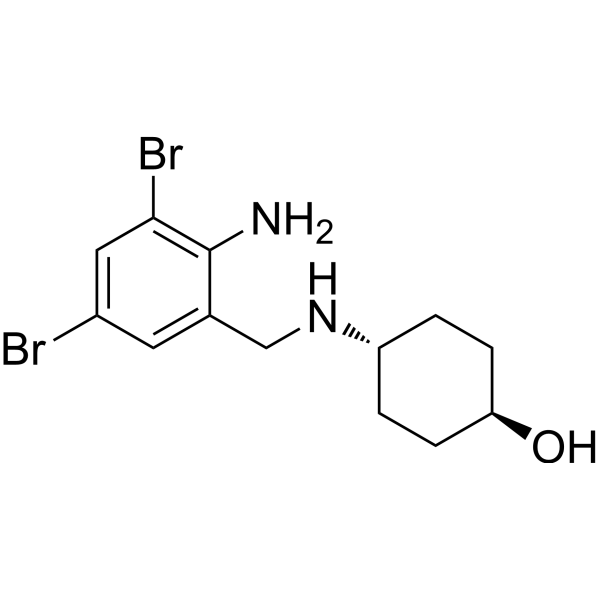
Ambroxol (NA-872), an active metabolite of the proagent Bromhexine, has potent expectorant effects. Ambroxol is a glucocerebrosidase (GCase) chaperone and increases glucocerebrosidase activity. Ambroxol induces lung autophagy and has the potential for Parkinson disease and neuronopathic Gaucher disease research .
loading...
    loading...
Cat. No.: HY-B1039AS
CAS No.: 2741380-71-0
Synonyms: NA-872-d5 hydrochloride
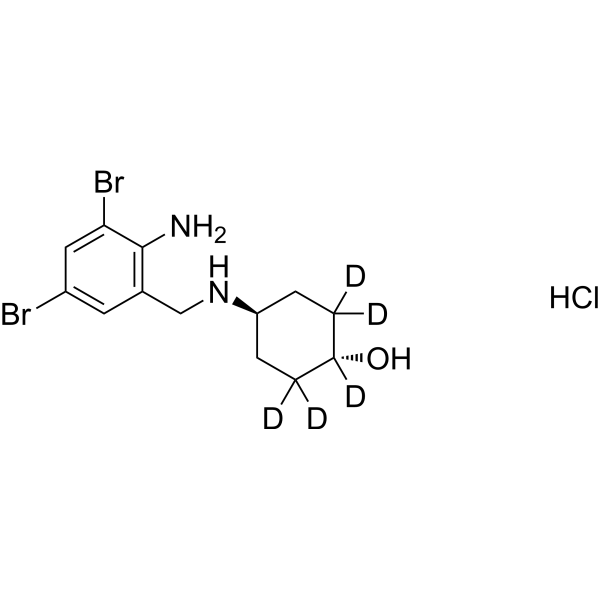
Ambroxol-d5 (hydrochloride) is the deuterium labeled Ambroxol hydrochloride. Ambroxol hydrochloride (NA-872 hydrochloride), an active metabolite of the proagent Bromhexine, has potent expectorant effects. Ambroxol hydrochloride is a glucocerebrosidase (GCase) chaperone and increases glucocerebrosidase activity. Ambroxol hydrochloride induces lung autophagy and has the potential for Parkinson disease and neuronopathic Gaucher disease research .
loading...
    loading...
Cat. No.: HY-B1039AR
CAS No.: 23828-92-4
Synonyms: NA-872 hydrochloride (Standard)
Ambroxol (hydrochloride) (Standard) is the analytical standard of Ambroxol (hydrochloride). This product is intended for research and analytical applications. Ambroxol hydrochloride (NA-872 hydrochloride), an active metabolite of the proagent Bromhexine, has potent expectorant effects. Ambroxol hydrochloride is a glucocerebrosidase (GCase) chaperone and increases glucocerebrosidase activity. Ambroxol hydrochloride induces lung autophagy and has the potential for Parkinson disease and neuronopathic Gaucher disease research .
loading...
    loading...
Cat. No.: HY-B0372
CAS No.: 3572-43-8
Target:  

Antibiotic Bacterial

Research Areas:  

Inflammation/Immunology

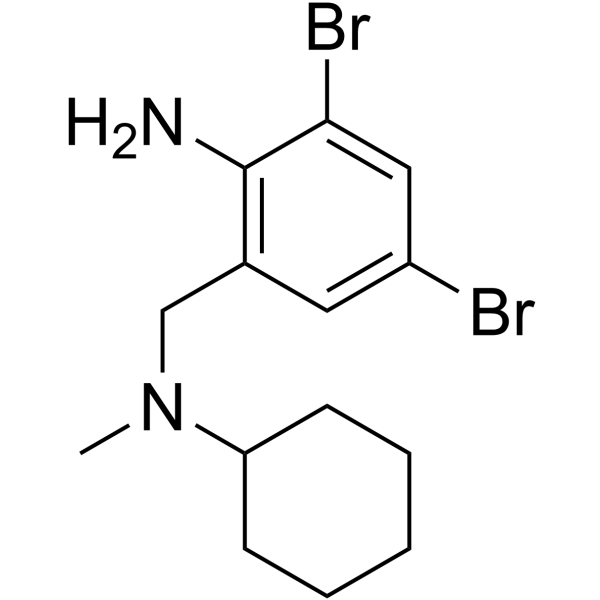
Bromhexine is a potent expectorant. Bromhexine increase mucociliary clearance and reduces cough. Bromhexine can be used in study various respiratory diseases .
loading...
    loading...
Cat. No.: HY-B0372AR
CAS No.: 611-75-6
Research Areas:  

Metabolic Disease

Bromhexine (hydrochloride) (Standard) is the analytical standard of Bromhexine (hydrochloride). This product is intended for research and analytical applications. Bromhexine hydrochloride is a potent and specific TMPRSS2 protease inhibitor with an IC50 of 0.75 μM. Bromhexine hydrochloride can prevent and manage SARS-CoV-2 infection. Bromhexine hydrochloride is an autophagy agonist. Bromhexine hydrochloride is a mucolytic cough suppressant and has the potential for a range of respiratory conditions .
loading...
    loading...
Cat. No.: HY-B0372AS
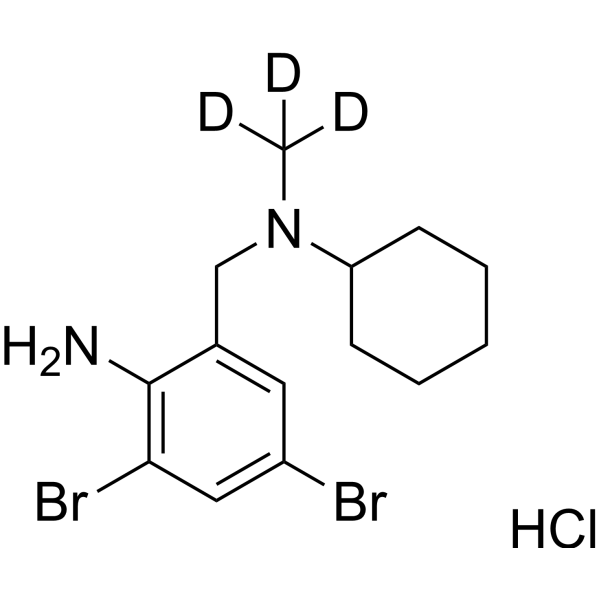
Bromhexine-d3 (hydrochloride) is deuterium labeled Bromhexine (hydrochloride). Bromhexine hydrochloride is a potent and specific TMPRSS2 protease inhibitor with an IC50 of 0.75 μM. Bromhexine hydrochloride can prevent and manage SARS-CoV-2 infection. Bromhexine hydrochloride is an autophagy agonist. Bromhexine hydrochloride is a mucolytic cough suppressant and has the potential for a range of respiratory conditions .
loading...
    loading...
Cat. No.: HY-B1039C
CAS No.: 96989-76-3
Synonyms: NA-872 acefylline; Acebrophylline
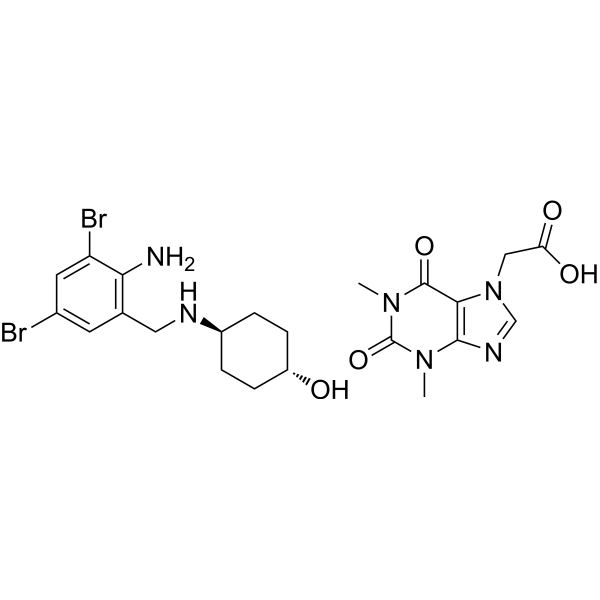
Ambroxol (NA-872) acefylline, an active metabolite of the proagent Bromhexine, has potent expectorant effects. Ambroxol acefylline is a glucocerebrosidase (GCase) chaperone and increases glucocerebrosidase activity. Ambroxol acefylline induces lung autophagy and has the potential for Parkinson disease and neuronopathic Gaucher disease research .
loading...
    loading...
Cat. No.: HY-119579
CAS No.: 54785-02-3
Adamexina is a derivative of bromhexine (HY-B0372), an expectorant. Adamexina, in addition to retaining the mucolytic effects of reducing sputum viscosity and promoting sputum excretion, also exhibits sympathomimetic and antiviral properties due to the introduction of an adamantyl group .
loading...
    loading...
Cat. No.: HY-B1039R
CAS No.: 18683-91-5
Synonyms: NA-872 (Standard)
Ambroxol (Standard) is the analytical standard of Ambroxol. This product is intended for research and analytical applications. Ambroxol (NA-872), an active metabolite of the proagent Bromhexine, has potent expectorant effects. Ambroxol is a glucocerebrosidase (GCase) chaperone and increases glucocerebrosidase activity. Ambroxol induces lung autophagy and has the potential for Parkinson disease and neuronopathic Gaucher disease research .
loading...
    loading...
Cat. No.: HY-W739944
CAS No.: 1246818-80-3
Synonyms: NA-872-d5
Ambroxol-d5 (NA-872-d5) is deuterium labeled Ambroxol. Ambroxol (NA-872), an active metabolite of the proagent Bromhexine, has potent expectorant effects. Ambroxol is a glucocerebrosidase (GCase) chaperone and increases glucocerebrosidase activity. Ambroxol induces lung autophagy and has the potential for Parkinson disease and neuronopathic Gaucher disease research .
loading...
    loading...
Cat. No.: HY-158337
CAS No.: 84210-62-8
Purity:  ≥95.0%
Synonyms: CO-1177
Target:  

Histamine Receptor

Research Areas:  

Inflammation/Immunology

Nesosteine (CO-1177) is a bronchitis inhibitor that improves the rheology and production of airway bronchial mucus in rabbits. Nesosteine significantly reduced the viscosity of airway bronchial mucus in animals with sulfuric acid nebulized bronchitis and increased mucus production in healthy animals. Nesosteine is more active than mucus-regulating drugs such as Sobrerol, N-acetylcysteine, bromhexine, ambroxol, S-carboxymethylcysteine, and mercaptoalanine. Nesosteine also reduced the content of total proteins in airway bronchial mucus, such as albumin, α1, α2, β, and γ mucins .
loading...
    loading...
  • 1

