15 Results for "

CBS Inhibitors

" in MedChemExpress (MCE) Product Catalog:
Products (15)

15 Results for "CBS Inhibitors" in MCE Product Catalog:

  • Categories Recommended:
    More
13
13 Cited Publications
Cat. No.: HY-W016715
CAS No.: 7048-04-6
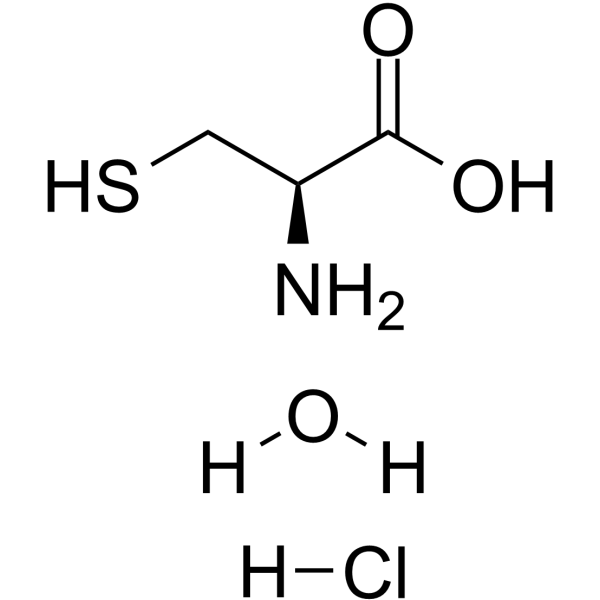
L-Cysteine hydrochloride hydrate is an orally active and essential amino acid, which acts as a precursor for biologically active molecules such as hydrogen sulphide (H2S), glutathione and taurine. L-Cysteine hydrochloride hydrate regulates CBS/H2S pathway, inhibits NF-κB activation and insulin and ghrelin secretion. L-Cysteine hydrochloride hydrate reduces blood sugar, vascular inflammation markers and appetite. L-Cysteine hydrochloride hydrate induces kidney damage. L-Cysteine hydrochloride hydrate can be used in the study of neurological diseases and diabetes .
loading...
    loading...
2
2 Cited Publications
Cat. No.: HY-15300
CAS No.: 1221485-83-1
Purity:  99.79%
Synonyms: CBS3830
Target:  

p38 MAPK Autophagy

Research Areas:  

Inflammation/Immunology

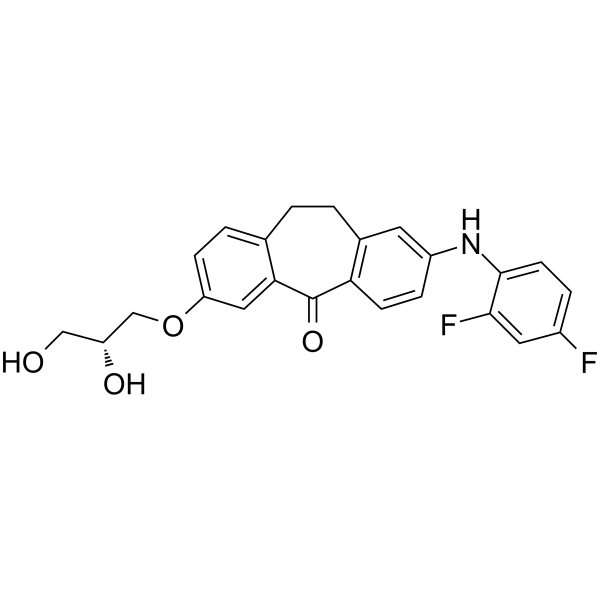
Skepinone-L (CBS3830), a chemical probe, is a selective p38 mitogen-activated protein kinase inhibitor.
loading...
    loading...
Cat. No.: HY-108716
CAS No.: 1076235-04-5
Purity:  98.84%
Synonyms: CBS9106; SL-801
Target:  

CRM1 Apoptosis

Research Areas:  

Cancer

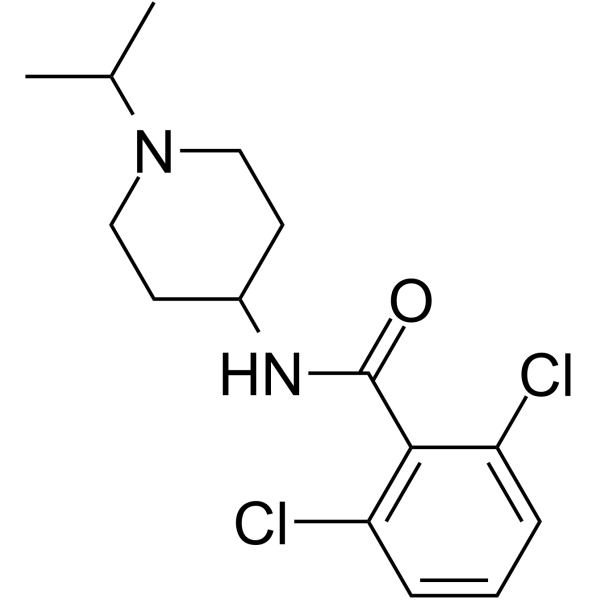
CBS9106 (SL-801) is a reversible oral CRM1 inhibitor with CRM1 degrading and antitumor activities. CBS9106, inhibits CRM1-dependent nuclear export, causing arrest of the cell cycle and inducing apoptosis in a time- and dose-dependent manner for a broad spectrum of cancer cells .
loading...
    loading...
Cat. No.: HY-W010062
CAS No.: 1878-66-6
Research Areas:  

Cancer

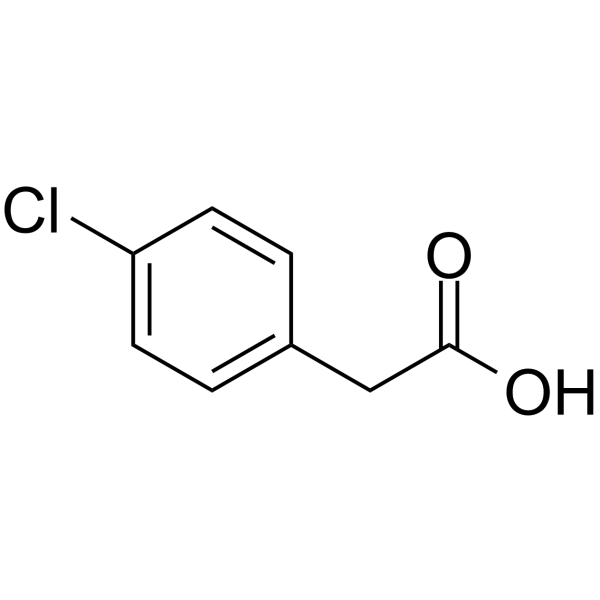
4-Chlorophenylacetic acid is an aromatase antagonist. 4-Chlorophenylacetic acid inhibits estrogen-induced breast tumorigenesis by blocking estrogen conversion. 4-Chlorophenylacetic acid also serves as the sole carbon and energy source for Pseudomonas sp. CBS3; it is degraded via dechlorination and aromatic ring cleavage pathways, and induces the synthesis of protocatechuate 2,3-dioxygenase. 4-Chlorophenylacetic acid can be applied to studies related to estrogen-induced breast tumors and bacterial degradation pathways .
loading...
    loading...
Cat. No.: HY-179433
Research Areas:  

Cancer

PROTAC AR Degrader-12 is a highly efficient PROTAC targeting AR coactivator binding site (AR-CBS). PROTAC AR Degrader-12 induces AR degradation in a ubiquitin proteasome system (UPS) pathway-dependent manner. PROTAC AR Degrader-12 inhibits tumor cell growth by affecting DNA replication and cell division PROTAC AR Degrader-12 could not only effectively degrade AR, but also potently inhibit the proliferation of MCF-7 and multiple mutant or resistant BC cells. PROTAC AR Degrader-12 effectively blocked estrogen receptor α (ERα) signaling through a dual mechanism involving ERα protein downregulation and suppression of its transcriptional activity. PROTAC AR Degrader-12 significantly inhibits the mRNA expression of FOXA1, GREB1, SRC, and PELP1. PROTAC AR Degrader-12 can be used for the study of breast cancer .
loading...
    loading...
Cat. No.: HY-131059
CAS No.: 959245-08-0
Purity:  99.76%
Target:  

Influenza Virus

Research Areas:  

Infection

CBS1117 is a virus entry inhibitor with an IC50 of 70 nM for influenza A virus, A/Puerto Rico/8/34 (H1N1). CBS1117 interferes with the hemagglutinin (HA)-mediated fusion process .
loading...
    loading...
Cat. No.: HY-178466
Research Areas:  

Cancer

Tubulin polymerization/P-gp-IN-1 is a Tubulin polymerization/P-gp dual inhibitor. Tubulin polymerization/P-gp-IN-1 inhibits tubulin polymerization and induces G2/M arrest and apoptosis. Tubulin polymerization/P-gp-IN-1 reverses MDR by inhibiting P-gp efflux function. Tubulin polymerization/P-gp-IN-1 has dual functions: direct antitumor activity and reversal of P-gp-mediated Cisplatin (HY-17394) resistance. Tubulin polymerization/P-gp-IN-1 stable binds to the tubulin CBS (ΔG = −12.4 kcal/mol) and the P-gp hydrophobic lumen (ΔG = −10.8 kcal/mol). Tubulin polymerization/P-gp-IN-1 can be used for the study of drug-resistant cervical cancer .
loading...
    loading...
Cat. No.: HY-105983A
CAS No.: 33244-00-7
Target:  

Lipoxygenase

Research Areas:  

Inflammation/Immunology

CBS-1114 hydrochloride is a potent 5-lipoxygenase inhibitor. CBS-1114 hydrochloride has the potential for inflammation and inflammation-related disorders research .
loading...
    loading...
Cat. No.: HY-111164
CAS No.: 908380-97-2
Research Areas:  

Inflammation/Immunology

CBS-3595 is a dual inhibitor of p38 MAP kinase and phosphodiesterase 4 with anti-inflammatory and anti-allodynic activities. CBS-3595 reduces the production of the proinflammatory cytokine IL-6 and increases the levels of the anti-inflammatory cytokine IL-10 in rats. CBS-3595 reduces paw oedema formation in the Complete Freund’s adjuvant (CFA) (HY-153808)-induced arthritis rat model. CBS-3595 is promising for research of autoimmune diseases .
loading...
    loading...
Cat. No.: HY-W010062R
CAS No.: 1878-66-6
4-Chlorophenylacetic acid (Standard) is the analytical standard of 4-Chlorophenylacetic acid (HY-W010062). This product is intended for research and analytical applications. 4-Chlorophenylacetic acid is an aromatase antagonist. 4-Chlorophenylacetic acid inhibits estrogen-induced breast tumorigenesis by blocking estrogen conversion. 4-Chlorophenylacetic acid also serves as the sole carbon and energy source for Pseudomonas sp. CBS3; it is degraded via dechlorination and aromatic ring cleavage pathways, and induces the synthesis of protocatechuate 2,3-dioxygenase. 4-Chlorophenylacetic acid can be applied to studies related to estrogen-induced breast tumors and bacterial degradation pathways .
loading...
    loading...
Cat. No.: HY-182579
CAS No.: 452056-93-8
CBS-3408 is an orally active p38α MAPK inhibitor. CBS-3408 inhibits the release of TNFα and IL-1β. CBS-3408 reduces the disease severity of arthritis in mice. CBS-3408 inhibits TNFα release in a rat endotoxemia model. CBS-3408 can be used in studies related to endotoxemia and arthritis .
loading...
    loading...
Cat. No.: HY-131975
CAS No.: 901259-15-2
Target:  

Influenza Virus

Research Areas:  

Infection

CBS1194 is a selective group 2 influenza virus inhibitor. CBS1194 binds to the pocket region adjacent to the HA fusion peptide, generates steric hindrance, and blocks the low pH-induced HA conformational rearrangement required for membrane fusion. CBS1194 exerts inhibitory activity in the early stage of viral infection and can inhibit HA-mediated hemolysis. CBS1194 serves as a lead compound for the development of improved influenza virus entry inhibitors. CBS1194 is applicable to studies related to influenza virus infection .
loading...
    loading...
Cat. No.: HY-187225
Research Areas:  

Cancer

NCP07 is a PROTAC degrader targeting the coactivator-binding site (CBS) of ERα. NCP07 induces the formation of the ERα-NCP07-VHL ternary complex and promotes ERα degradation via the ubiquitin-proteasome system. NCP07 induces apoptosis and cell cycle arrest in endocrine therapy-resistant breast cancer cells. NCP07 inhibits the proliferation of wild-type and ESR1-mutant breast cancer cells. NCP07 is applicable to breast cancer-related research .
loading...
    loading...
Cat. No.: HY-160906A
Synonyms: GSSSG TFA
Glutathione trisulfide TFA (GSSSG TFA) is an orally active, blood-brain barrier permeable neuroprotective agent. Glutathione trisulfide TFA inactivates intracellular tyrosinase, regulates the expression of Cars2, Cbs, MITF and TYR, inhibits α-MSH (HY-P0252)-induced melanogenesis, and restores intracellular persulfide levels reduced by α-MSH. Glutathione trisulfide TFA scavenges free radicals, quenches ROS, reduces Paclitaxel (HY-B0015)-induced superoxide production, upregulates the expression of antioxidant protein genes, and inhibits oxidative stress-induced cell death. Glutathione trisulfide TFA promotes ERK1/2 activation, prevents NF-κB p65 activation, inhibits TAK1 phosphorylation, reduces pro-inflammatory cytokine expression, and blocks microglial activation. Glutathione trisulfide TFA can be used in research related to dry age-related macular degeneration, inflammation-associated eye diseases, Alzheimer's disease, Parkinson's disease, etc.
loading...
    loading...
Cat. No.: HY-160906
CAS No.: 32607-79-7
Synonyms: GSSSG
Glutathione trisulfide (GSSSG) is an orally active, blood-brain barrier permeable neuroprotective agent. Glutathione trisulfide inactivates intracellular tyrosinase, regulates the expression of Cars2, Cbs, MITF and TYR, inhibits α-MSH (HY-P0252)-induced melanogenesis, and restores intracellular persulfide levels reduced by α-MSH. Glutathione trisulfide scavenges free radicals, quenches ROS, reduces Paclitaxel (HY-B0015)-induced superoxide production, upregulates the expression of antioxidant protein genes, and inhibits oxidative stress-induced cell death. Glutathione trisulfide promotes ERK1/2 activation, prevents NF-κB p65 activation, inhibits TAK1 phosphorylation, reduces pro-inflammatory cytokine expression, and blocks microglial activation. Glutathione trisulfide can be used in research related to dry age-related macular degeneration, inflammation-associated eye diseases, Alzheimer's disease, Parkinson's disease, etc.
loading...
    loading...
  • 1

