1. Search Result
Search Result
Results for "

CYP3A4 inhibition

" in MedChemExpress (MCE) Product Catalog:

24

Inhibitors & Agonists

1

Screening Libraries

3

Natural
Products

Cat. No. Product Name Target Research Areas Chemical Structure
  • HY-N0598
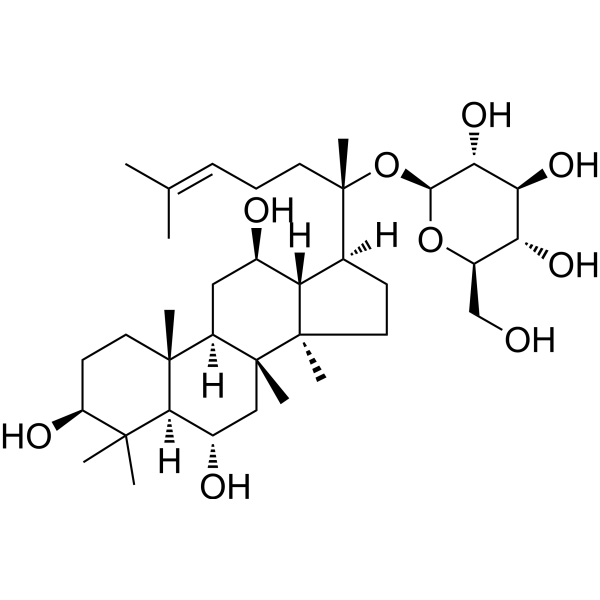
    Ginsenoside F1
    1 Publications Verification

    20(S)-Ginsenoside F1

    Cytochrome P450 Endogenous Metabolite Cancer
    Ginsenoside F1, an enzymatically modified derivative of Ginsenoside Rg1, demonstrates competitive inhibition of CYP3A4 activity and weaker inhibition of CYP2D6 activity.
    Ginsenoside F1
  • HY-134772

    STAT Cytochrome P450 Inflammation/Immunology
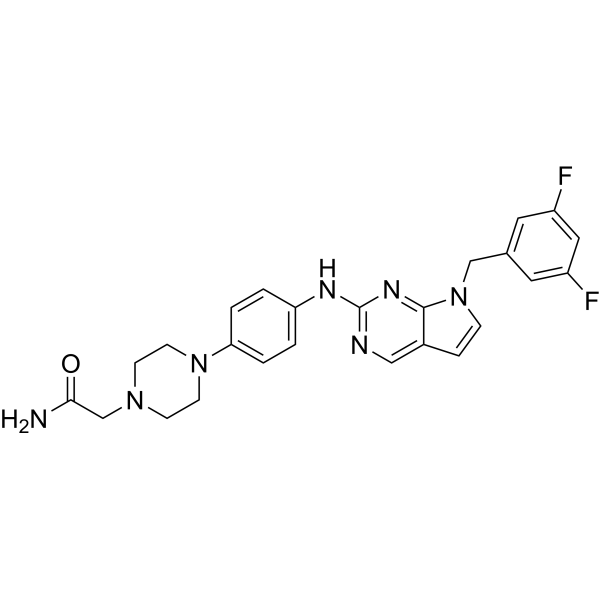
    AS1810722 is an orally active and potent STAT6 inhibitor with an IC50 of 1.9 nM. AS1810722 shows a good profile of CYP3A4 inhibition. AS1810722, a derivative of fused bicyclic pyrimidine, has the potential for allergic diseases such as asthma and atopic diseases research .
    AS1810722
  • HY-157421

    NAMPT Metabolic Disease
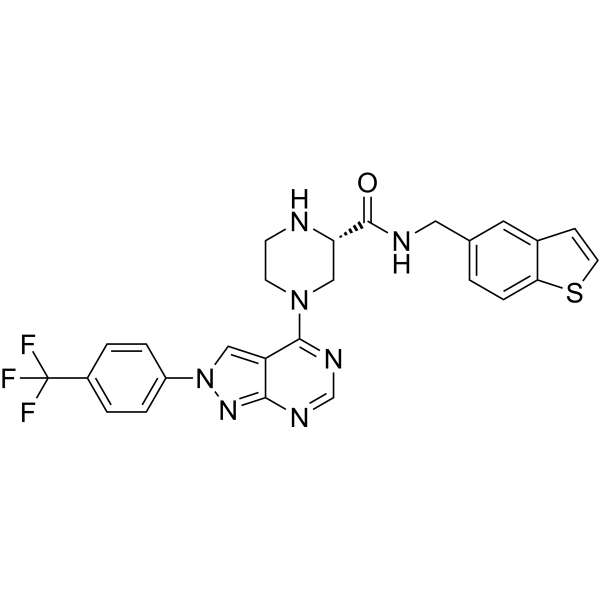
    Nampt activator-4 is an orally active NAMPT activator, with an EC50 of 58 nM and a Ka of 85.38 nM against human NAMPT. Nampt activator-4 effectively relieves the feedback inhibition of nicotinamide and NAD +, thereby enhancing enzymatic activity and significantly increasing intracellular NAD + levels. Nampt activator-4 exhibits moderate stability in human and mouse liver microsomes. Nampt activator-4 shows low to moderate inhibitory effects on cytochrome P450 (especially CYP3A4). Nampt activator-4 can be used for the research of type 2 diabetes and related metabolic disorders .
    Nampt activator-4
  • HY-110079

    IPK Superfamily Cancer
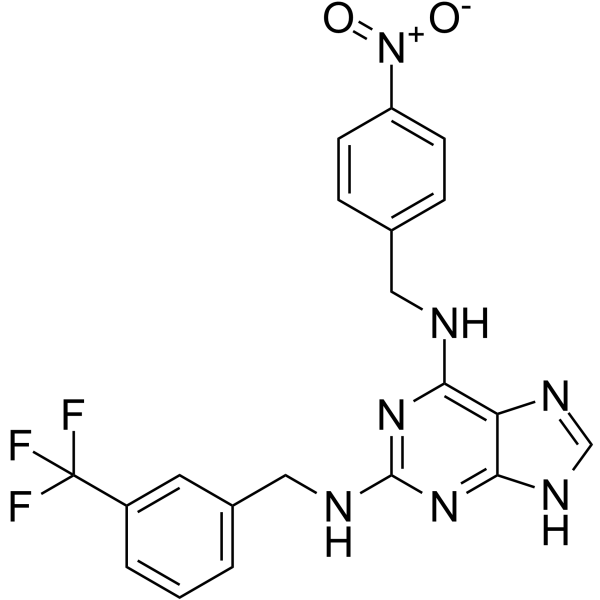
    TNP is a competitive, reversible inhibitor of IP6K1 and IP3K, with IC50s of 0.55 μM and 10.2 μM for IP6K1 and IP3K, respectively. TNP competitively binds to the ATP binding site of IP6K, inhibits the generation of 5-IP7, and thus relieves the inhibition of 5-IP7 on the AKT signaling pathway. TNP can enhance insulin sensitivity and promote thermogenesis in adipose tissue. TNP cannot effectively pass through the blood-brain barrier and is mainly used in the study of obesity, type 2 diabetes, and metabolic syndrome. However, TNP also inhibits CYP3A4 and may need further optimization[1][2][3].
    TNP
  • HY-W267897

    7-BFC

    Cytochrome P450 Others
    7-Benzyloxy-4-(trifluoromethyl)coumarin (7-BFC) is a coumarin fluorescent substrate. 7-Benzyloxy-4-(trifluoromethyl)coumarin is a substrate for cDNA-expressed CYP1A2 and CYP3A4 and is metabolized to 7-hydroxy-4-trifluoromethylcoumarin (HFC). 7-Benzyloxy-4-(trifluoromethyl)coumarin is used for rapid CYP isoform metabolism and inhibition screening studies .
    7-Benzyloxy-4-(trifluoromethyl)coumarin
  • HY-132866

    P-glycoprotein Cancer
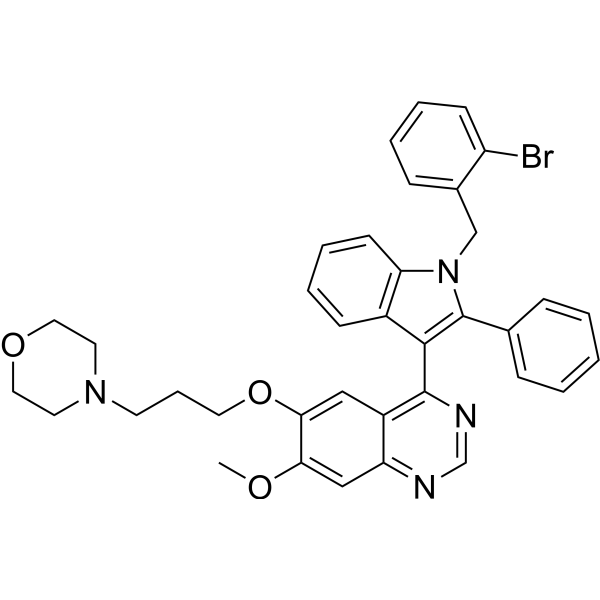
    YS-370 (compound 44) is a potent, high selective, and orally active inhibitor of P-glycoprotein (P-gp). YS-370 stimulates the P-gp ATPase activity and has moderate inhibition against CYP3A4. YS-370 effectively reverses multidrug resistance (MDR) to paclitaxel and colchicine in SW620/AD300 and HEK293T-ABCB1 cells. YS-370 in combination with paclitaxel achieves much stronger antitumor activity .
    YS-370
  • HY-18569AR

    Indole-3-acetic acid sodium (Standard); 3-IAA sodium (Standard)

    Reference Standards Endogenous Metabolite Metabolic Disease
    Ginsenoside F1 (Standard) is the analytical standard of Ginsenoside F1. This product is intended for research and analytical applications. Ginsenoside F1, an enzymatically modified derivative of Ginsenoside Rg1, demonstrates competitive inhibition of CYP3A4 activity and weaker inhibition of CYP2D6 activity.
    3-Indoleacetic acid sodium (Standard)
  • HY-W140208

    Cytochrome P450 Neurological Disease
    3-Phenylthiophene (Compound 25) is a CYP2A6 inhibitor with a Ki value of 3.3 μM. The Ki values for CYP2E1, CYP2B6, CYP2C9, and CYP2C19 are 9.7, 14, 112, and 107 μM respectively. It shows no significant inhibition on CYP3A4 and CYP2D6. 3-Phenylthiophene can be used in smoking cessation research .
    3-Phenylthiophene
  • HY-169217

    Cytochrome P450 Cancer
    CYP3A4-IN-4 (compound Δ,Λ-3), a Ru(II) Ir(III) Conjugate, is a photoactive inhibitor of the major human drug metabolizing enzyme CYP3A4. CYP3A4-IN-4 containing the [Ru(tpy)(Me2bpy)] photocaging group showed an IC50 of 2.2 μM for inhibition of microsomal CYP3A4 under light conditions (λirr=530 nm, tirr=15 min) .
    CYP3A4-IN-4
  • HY-N0598R

    20(S)-Ginsenoside F1 (Standard)

    Reference Standards Cytochrome P450 Endogenous Metabolite Cancer
    Ginsenoside F1 (Standard) is the analytical standard of Ginsenoside F1. This product is intended for research and analytical applications. Ginsenoside F1, an enzymatically modified derivative of Ginsenoside Rg1, demonstrates competitive inhibition of CYP3A4 activity and weaker inhibition of CYP2D6 activity.
    Ginsenoside F1 (Standard)
  • HY-10779

    Factor Xa Cytochrome P450 Cardiovascular Disease
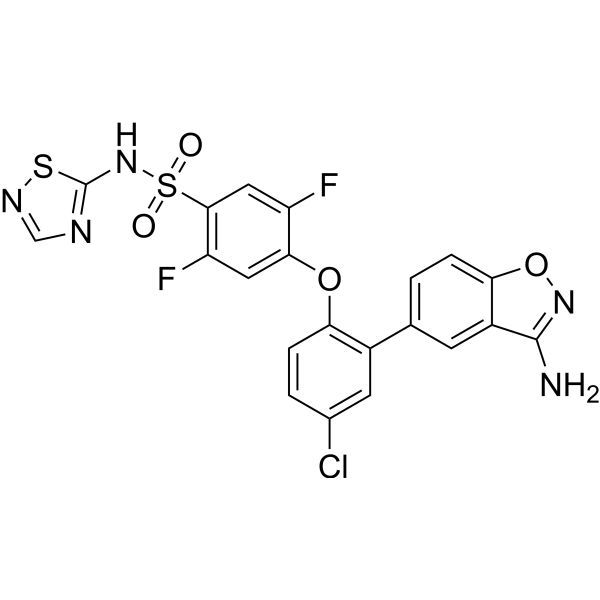
    BMS-344577 (Compound 22) is a potent and orally active factor Xa inhibitor (IC50 = 4 nM, EC2xPT = 7 μM). BMS-344577 shows potent CYP3A4 inhibition activity (IC50 = 0.3 μM). BMS-344577 can be used for the research of cardiovascular disease .
    BMS-344577
  • HY-130609

    γ-secretase Neurological Disease
    Aβ42-IN-1, compound 1v, is a novel, potent and orally active?γ-secretase modulator (GSM). Aβ42-IN-1 potently reduced Aβ42 levels with an IC50?value of 0.091?μM without CYP3A4 inhibition. Aβ42-IN-1 shows a sustained pharmacokinetic profile.
    Aβ42-IN-1
  • HY-180955

    CGRP Receptor Cytochrome P450 Neurological Disease
    Desfluoro-BMS-694153 (Compound 3) is a calcitonin gene-related peptide receptor (CGRP receptor) antagonist, with a Ki value of 0.01 nM. Desfluoro-BMS-694153 has a significantly reduced risk of CYP3A4 inhibition, and its IC50 values for CYP3A4-BFC and CYP3A4-BZR are 36 and 6 μM respectively. Desfluoro-BMS-694153 can be used for research on migraines .
    Desfluoro-BMS-694153
  • HY-141547

    Sodium Channel Cytochrome P450 Inflammation/Immunology
    Nav1.7-IN-8 is a potent blockage of NaV1.7 with high selectivity for the inhibition of NaV1.7 over the subtypes hNaV1.1 and hNaV1.5. Nav1.7-IN-8 inhibits CYP2C9 and CYP3A4 with an IC50 of 0.17 μM and 0.077 μM, respectively. Nav1.7-IN-8 displays significant analgesic effects in rodent models of acute and inflammatory pain .
    Nav1.7-IN-8
  • HY-16641

    JAK Cancer
    JAK1-IN-17 (Compound 31) is a highly selective inhibitor of JAK1 with a Ki of 1.9 nM. JAK1-IN-17 exhibits a low whole blood shift, which allows maintaining good whole blood potency. JAK1-IN-17 is also a nitrile-containing analogue with consistent, yet weak reversible inhibition of CYP3A4 using a midazolam probe (IC50 = 7.9 μM). JAK1-IN-17 can be studied in cancer research .
    JAK1-IN-17
  • HY-19397

    Potassium Channel Cytochrome P450 Neurological Disease
    BMS-223131 (Compound 1) is a potent maxi-K potassium channel opener. BMS-223131 has a strong inhibitory effect on the CYP2C9 enzyme (IC50 = 1.7 μM) and also shows varying degrees of inhibition on other common CYP enzymes such as CYP1A2, CYP2C19, CYP2D6, and CYP3A4. BMS-223131 can enhance the outward current mediated by maxi-K, by promoting K + efflux to hyperpolarize the cell membrane and reducing Ca 2+ influx. BMS-223131 can be used for the research of neurological disease, such as stroke .
    BMS-223131
  • HY-175064

    3,4-MDPM hydrochloride

    Cytochrome P450 Neurological Disease
    3,4-Methylenedioxyphenmetrazine (3,4-MDPM) hydrochloride is a psychoactive substance. 3,4-Methylenedioxyphenmetrazine exhibits strong CYP2D6 inhibition and moderate inhibition of CYP3A4 and CYP1A2 .
    3,4-Methylenedioxyphenmetrazine hydrochloride
  • HY-121698

    Cytochrome P450 Inflammation/Immunology
    GW694481 is an ApoA1 upregulator with IC50 values of 2.1 μM for CYP2C9 inhibition and 17.0 μM for CYP3A4 inhibition. GW694481 upregulates ApoA1 expression in human hepatic cells.GW694481 can be used for the research of atherosclerosis .
    GW694481
  • HY-123965

    MAP4K TNF Receptor Metabolic Disease Cancer
    PF-06745013 (Compound 37) is a MAP4K4 inhibitor without time-dependent inhibition (TDI) risk of CYP3A4 (IC50 of 0.4  nM for MAP4K4). PF-06745013 has no accumulation CNS-impaired and non-ATP competitive activities in mouse models. PF-06745013 can be used for inflammatory diseases like diabetes and cancers research .
    PF-06745013
  • HY-182761

    DNA/RNA Synthesis Cytochrome P450 Flavivirus Influenza Virus Infection
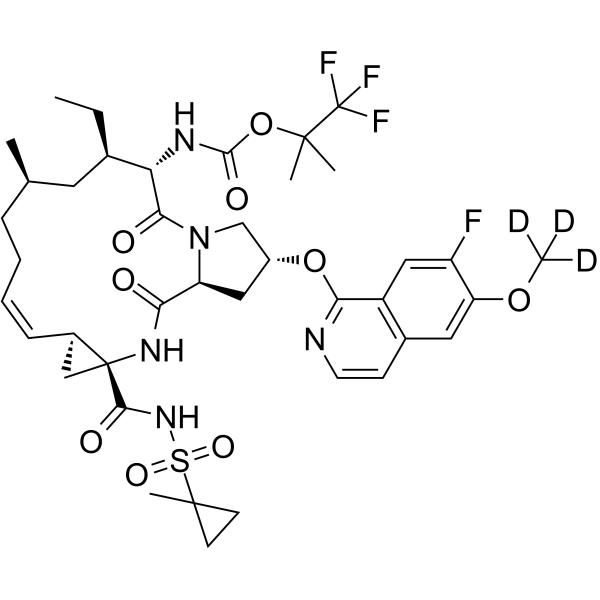
    Antiviral agent 81 is an orally bioavailable N-acylated remdesivir derivative and RdRp inhibitor with 45.3% oral bioavailability (based on active metabolite GS-441524 exposure), plasma half-life >8 h, and reduced CYP3A4 inhibition. Antiviral agent 81 exhibits activity against Coronaviridae, Flaviviridae, and Pneumoviridae, and shows no activity against Orthomyxoviridae, Herpesviridae, and Alphaviridae. Antiviral agent 81 can be used for the research of viral infections .
    Antiviral agent 81
  • HY-175804

    SARS-CoV Infection
    M2 ion channel blocker-2 (Compound 10) is a M2 channel blocker. M2 ion channel blocker-2 significantly blocks wild-type and mutant M2 (L27F and V27A) ion channels. M2 ion channel blocker-2 has potent antiviral activity against HCoV-229E (EC50: 4.7  μM in cytopathic effect) but not against influenza A virus. M2 ion channel blocker-2 has no significant inhibition of hERG and cytochrome P450 (CYP1A2, CYP2C19, and CYP3A4) activity .
    M2 ion channel blocker-2
  • HY-W663179

    Parasite Cytochrome P450 Infection
    DNDI-VL-2098 is an orally active antileishmanial agent. DNDI-VL-2098 exhibits high permeability, in vitro metabolic stability, and selective inhibition of CYP2C19 (IC50=0.47 μM). DNDI-VL-2098 does not affect the activities of other major CYP enzymes (CYP1A2, CYP2C9, CYP2D6 and CYP3A4) at concentrations up to 12.5 μM. It shows favorable pharmacokinetic properties in multiple animal models including mice, hamsters, rats and dogs. DNDI-VL-2098 is characterized by moderate to high plasma protein binding and can be used for the research of visceral leishmaniasis .
    DNDI-VL-2098
  • HY-16265A

    Ephrin Receptor PDGFR VEGFR Cancer
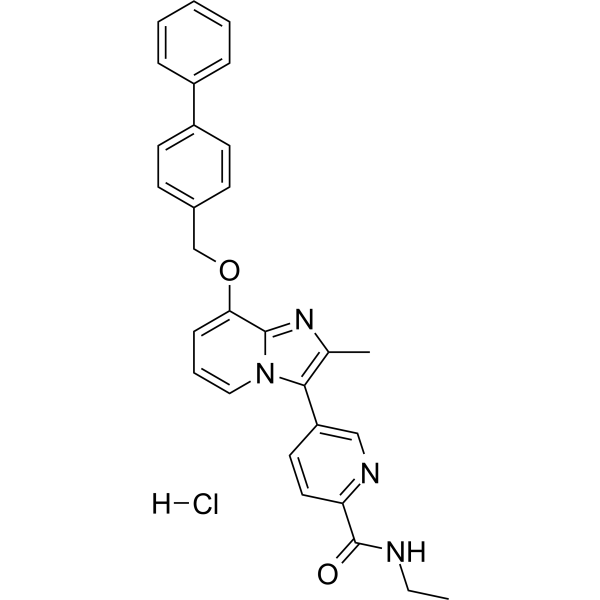
    JI-101 hydrochloride is an orally active angiogenesis inhibitor and anticancer agent with 55% oral bioavailability in Sprague Dawley rats, high permeability, and no P-gp substrate activity .JI-101 hydrochloride modulates angiogenesis signaling pathways in tumor vessel beds, downregulates EphB4, targets EphB4, VEGFR-2, and PDGFR-β, and inhibits multiple stages of tumor angiogenesis .JI-101 hydrochloride exerts activity against cancer cells and xenografts, exhibits mild to moderate inhibition of CYP3A4, and shows stability in pre-clinical and human liver microsomes .JI-101 hydrochloride undergoes rapid oral absorption in Sprague Dawley rats, has extensive tissue distribution with preferred lung uptake, and is excreted via bile with mono- and di-hydroxy metabolites, with feces as the primary elimination route .JI-101 hydrochloride can be used for the research of ovarian cancer and solid tumors .
    JI-101 hydrochloride
  • HY-181662

    MAP3K Neurological Disease
    DLK-IN-2 is a selective inhibitor of DLK and neuroprotective agent. DLK-IN-2 shows no significant inhibition against CYPs 3A4, 2D6 and 2C9. DLK-IN-2 inhibits acute axonal palmitoylation of DLK, blocks DLK-dependent pro-degenerative axon-to-soma retrograde signaling and suppresses c-Jun phosphorylation. DLK-IN-2 can be used for the mechanistic study of neurodegenerative diseases .
    DLK-IN-2

Inquiry Online

Your information is safe with us. * Required Fields.

Salutation


Country or Region *

Applicant Name *


Organization Name *

Department *


Email Address *


Product Name *

Cat. No.


Requested quantity *

Phone Number *


Remarks

Inquiry Online

Inquiry Information

Product Name:
Cat. No.:
Quantity:
MCE Japan Authorized Agent:

