1. Search Result
Search Result
Results for "

D-{Met-Met}

" in MedChemExpress (MCE) Product Catalog:

17

Inhibitors & Agonists

21

Peptides

Cat. No. Product Name Target Research Area
  • HY-P1120

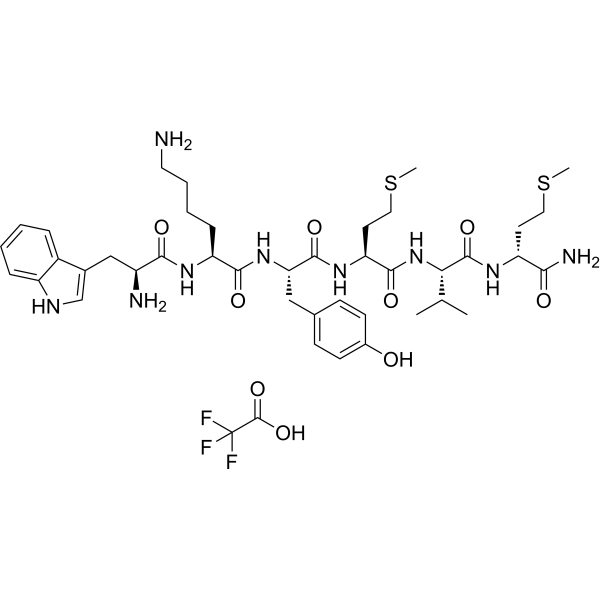
    WKYMVm-amide; W-Peptide

    Formyl Peptide Receptor (FPR) PERK Apoptosis Neurological Disease Metabolic Disease Inflammation/Immunology Cancer
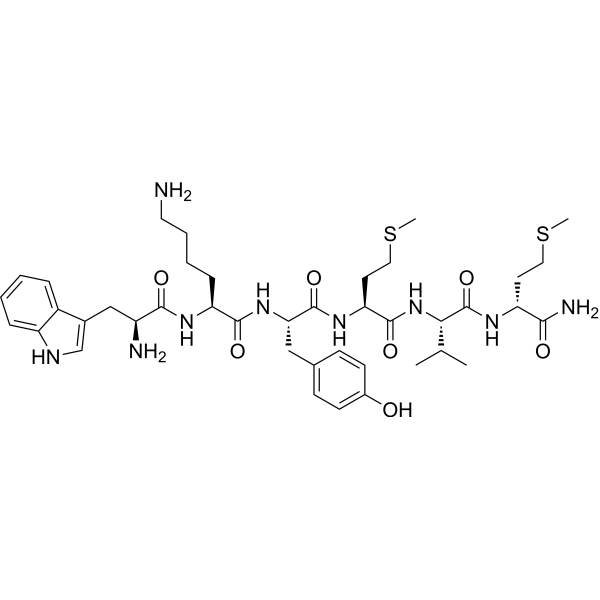
    WKYMVm is a selective formylpeptide receptor 2 (FPR2) agonist. WKYMVm has a powerful anti-inflammatory effect that can reduce lung injury and spinal cord injury. WKYMVm ameliorates obesity by regulating lipid metabolism and leptin signaling. WKYMVm is involved in the regulation of immune cells by activating FPRs. WKYMVm can promote the chemotactic migration of immune cells and inhibit the apoptosis of phagocytes. In addition, WKYMVm may play a favorable or unfavorable role in tumors, depending on the type of tumor .
  • HY-P4354

    Peptides Others
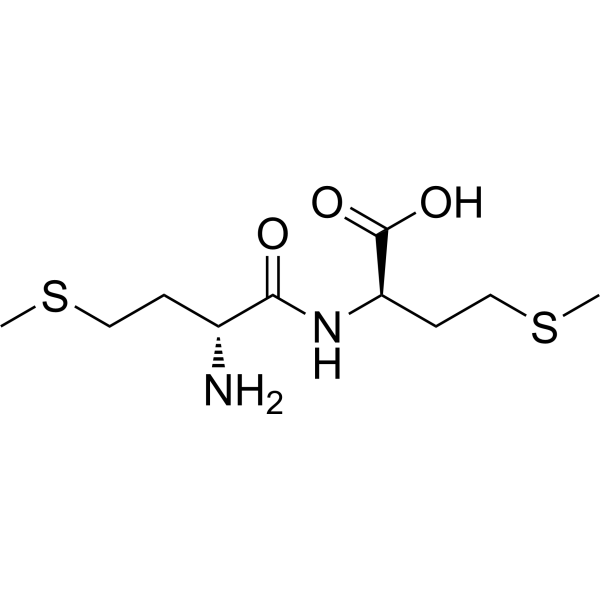
    D-{Met-Met} is a polypeptide that can be found by peptide screening. Peptide screening is a research tool that pools active peptides primarily by immunoassay. Peptide screening can be used for protein interaction, functional analysis, epitope screening, especially in the field of agent research and development .
  • HY-P0104

    Collagen Metabolic Disease
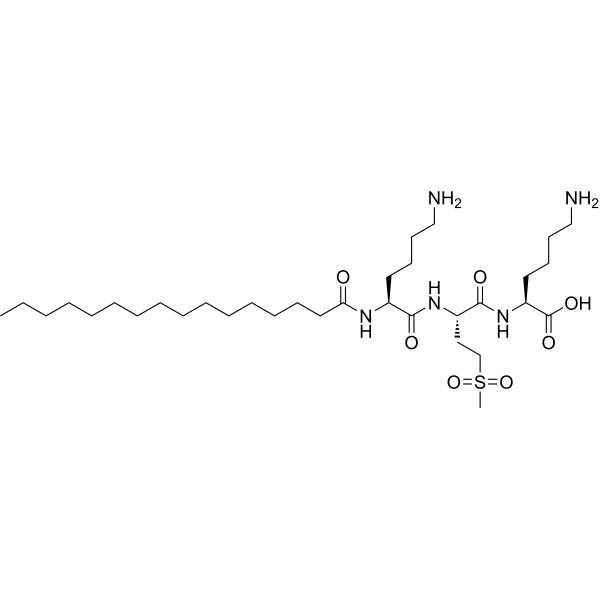
    Palmitoyl tripeptide-38 is a lipopeptide that increases the production of dermal and epidermal collagen, fibronectin, and hyaluronic acid. Palmitoyl tripeptide-38 is used in research related to skin aging (fine lines, wrinkles, reduced skin elasticity, decreased skin water content, uneven skin tone) .
  • HY-P4356

    Amino Acid Derivatives Others
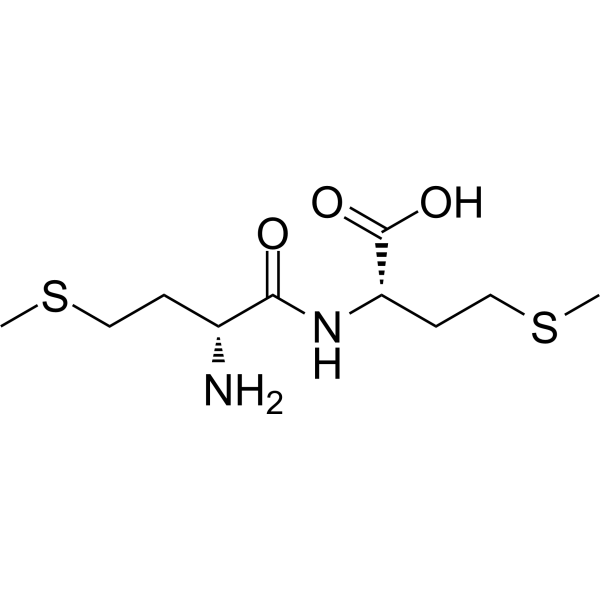
    D-Met-Met is an orally active methionine dipeptide and has potential applications in food supplements .
  • HY-P10738

    Formyl Peptide Receptor (FPR) Infection
    N-Formyl-MMYALF is a potent mitochondrial N-formyl peptide (mtFP) that has the activity of depleting calcium ions in the endoplasmic reticulum. N-Formyl-MMYALF can inhibit the FPR-1-mediated chemotactic response of polymorphonuclear leukocytes (PMNs) to bacterial peptides .
  • HY-P4428

    Fluorescent Dye Others
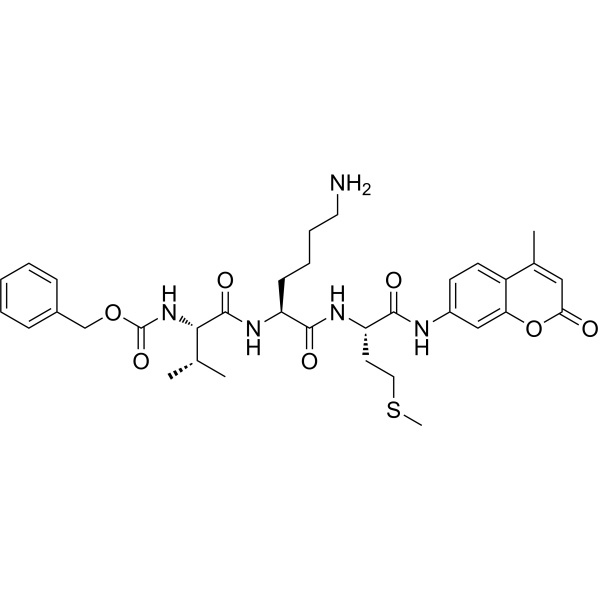
    Z-Val-Lys-Met-AMC is a fluorescent substrate that can be used to detect the β-secretase activity of cathepsin B .
  • HY-P3547

    Opioid Receptor Others
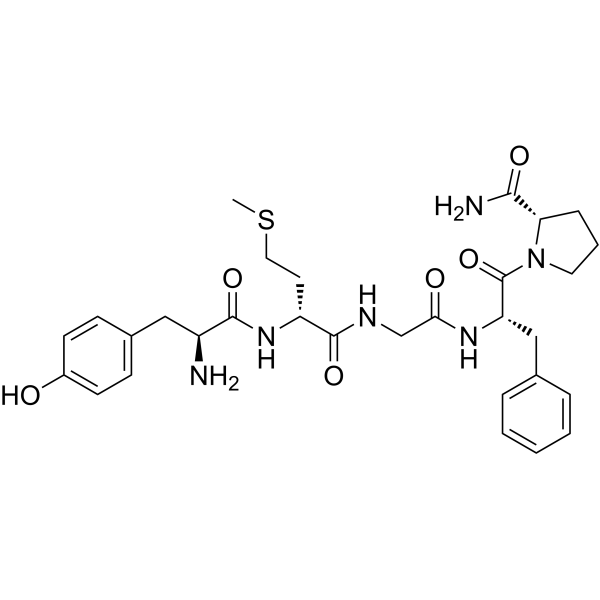
    (D-Met2,Pro5)-Enkephalinamide is a highly potent opiate agonist, and shows antinociceptive activity .
  • HY-P4428A

    Fluorescent Dye Others
    Z-Val-Lys-Met-AMC TFA is a fluorescent substrate that can be used to detect the β-secretase activity of cathepsin B .
  • HY-129271

    Deltorphin A; Dermenkephalin

    Opioid Receptor Others
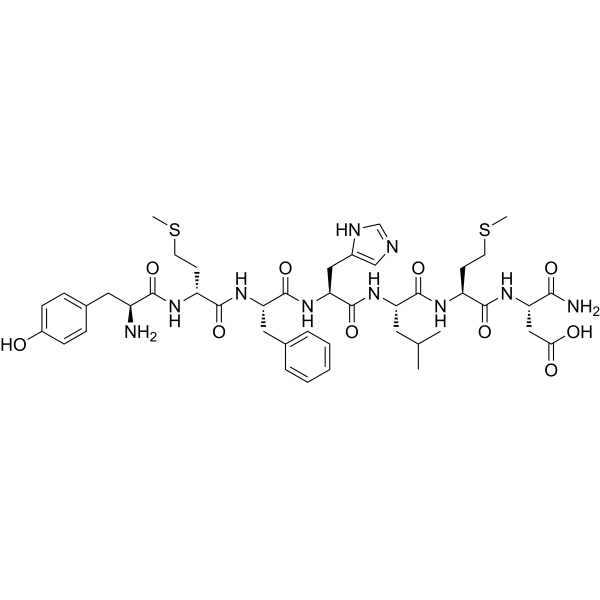
    Deltorphin (Deltorphin A; Dermenkephalin) is a biological active peptide. (Deltorphin A peptide was isolated from skin extracts of the South American frog, Phyllomedusa sauvagei. Deltorphin A is a potent and selective agonist for the delta-opioid receptor.)
  • HY-P10738A

    Formyl Peptide Receptor (FPR) Infection
    N-Formyl-MMYALF TFA is a mitochondrial N-formyl peptide that has the activity of depleting calcium ions in the endoplasmic reticulum. N-Formyl-MMYALF TFA can inhibit the FPR-1-mediated chemotactic response of PMNs to bacterial peptides .
  • HY-P1120A

    Formyl Peptide Receptor (FPR) PERK Apoptosis Neurological Disease Metabolic Disease Inflammation/Immunology Cancer
    WKYMVm (TFA) is a selective formylpeptide receptor 2 (FPR2) agonist. WKYMVm has a powerful anti-inflammatory effect that can reduce lung injury and spinal cord injury. WKYMVm ameliorates obesity by regulating lipid metabolism and leptin signaling. WKYMVm is involved in the regulation of immune cells by activating FPRs, and WKYMVm can promote the chemotactic migration of immune cells and inhibit the apoptosis of phagocytes. In addition, WKYMVm may play a favorable or unfavorable role in tumors, depending on the type of tumor .
  • HY-P4672

    GCGR Metabolic Disease
    (Met(O)27)-Glucagon (1-29) (human, rat, porcine) is a modified glucagon. (Met(O)27)-Glucagon (1-29) (human, rat, porcine) has the same maximum glucose-synthesizing activity in rat hepatocytes as native glucagon, but it is less potent, suggesting a crucial role of methionine in the binding of glucagon to its hepatic receptor .
  • HY-P4489

    Peptides Others
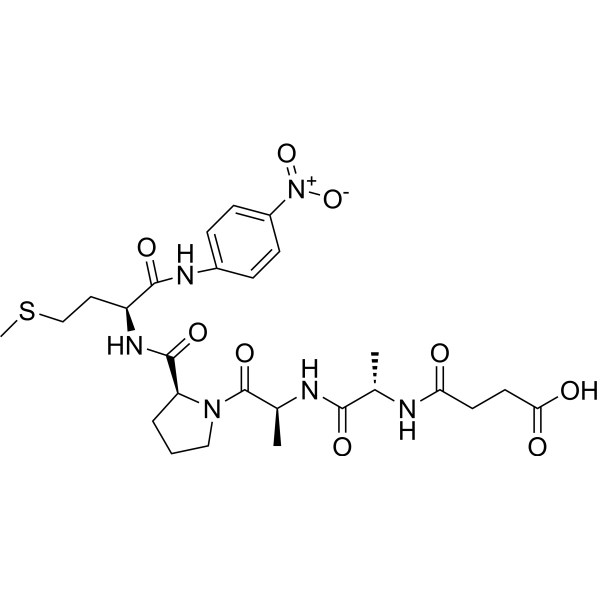
    Suc-AAPM-pNA is a sensitive substrate for the determination of human pancreatic elastase activity .
  • HY-P3781

    Amyloid-β Neurological Disease
    (Met(O)35)-Amyloid β-Protein (1-42) is the oxidation form of Met35 in Aβ42. (Met(O)35)-Amyloid β-Protein (1-42) can yield an oligomer size distribution characteristic of Aβ40. (Met(O)35)-Amyloid β-Protein (1-42) can be used in the research of Alzheimer’s disease (AD) .
  • HY-P3782

    Amyloid-β Others
    (Met(O2)35)-Amyloid β-Protein (1-42) is a peptide .
  • HY-P3685

    CRFR Endocrinology
    [Met(O)21] Corticotropin Releasing Factor, ovine is a corticotropin releasing factor isolated from ovine hypothalamic extracts. Corticotropin releasing factor (CRF) is a hypothalamic hormone, which stimulates the secretion of adrenocorticotrophic hormone (ACTH) .
  • HY-P4753

    Peptides Others
    Met(O)14-Exenatide is a polypeptide that can be found by peptide screening. Peptide screening is a research tool that pools active peptides primarily by immunoassay. Peptide screening can be used for protein interaction, functional analysis, epitope screening, especially in the field of agent research and development .
  • HY-P2113

    Melanocortin Receptor Neurological Disease
    ORG-2766 is an adrenocorticotropic hormone ACTH 4-9 analog and neurotrophic peptide. ORG-2766 affects behavioral processes such as memory and attention in animals, improving symptoms in rats with experimental allergic neuritis. ORG-2766 has a neuroprotective effect .
  • HY-19648B

    HOE-427 TFA

    nAChR Neurological Disease
    Ebiratide (HOE-427) TFA is an ACTH 4-9 derivative, which acts directly on the central nervous system and exhibits memory-enhancing efficacy. Ebiratide TFA enhances acetycholine (ACh) metabolism in rat brain .
  • HY-19648

    HOE-427 free base

    Melanocortin Receptor nAChR Neurological Disease
    Ebiratide (HOE-427 free base) is an ACTH 4-9 derivative, which acts directly on the central nervous system and exhibits memory-enhancing efficacy. Ebiratide enhances acetycholine (ACh) metabolism in rat brain .
  • HY-P2037

    Peptides Others
    FW 34-569 is an active compound.

Inquiry Online

Your information is safe with us. * Required Fields.

Salutation


Country or Region *

Applicant Name *


Organization Name *

Department *


Email Address *


Product Name *

Cat. No.


Requested quantity *

Phone Number *


Remarks

Inquiry Online

Inquiry Information

Product Name:
Cat. No.:
Quantity:
MCE Japan Authorized Agent: