1. Search Result
Search Result
Pathways Recommended: Protein Tyrosine Kinase/RTK
Results for "

EGFR tyrosine kinase

" in MedChemExpress (MCE) Product Catalog:

194

Inhibitors & Agonists

2

Screening Libraries

1

Fluorescent Dyes

1

Biochemical Assay Reagents

1

Peptides

2

Inhibitory Antibodies

14

Natural
Products

10

Recombinant Proteins

22

Isotope-Labeled Compounds

21

Antibodies

9

Click Chemistry

1

Oligonucleotides

1

GMP Molecules

Cat. No. Product Name Target Research Areas Chemical Structure
  • HY-50895
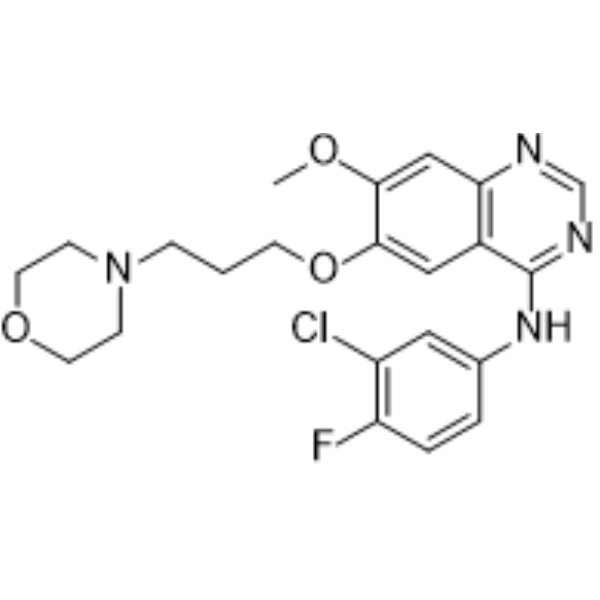
    Gefitinib
    Maximum Cited Publications
    200 Publications Verification

    ZD1839

    EGFR Autophagy Apoptosis Cancer
    Gefitinib (ZD1839) is a potent, selective and orally active EGFR tyrosine kinase inhibitor with an IC50 of 33 nM. Gefitinib selectively inhibits EGF-stimulated tumor cell growth (IC50 of 54 nM) and that blocks EGF-stimulated EGFR autophosphorylation in tumor cells. Gefitinib also induces autophagy and cell apoptosis, which can be used for cancer related research, such as Lung cancer and breast cancer .
    Gefitinib
  • HY-14596
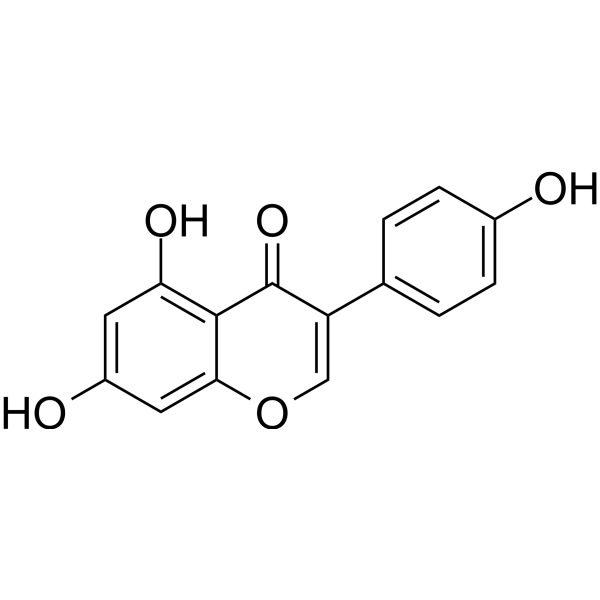
    Genistein
    Maximum Cited Publications
    88 Publications Verification

    NPI 031L

    EGFR Autophagy Apoptosis Endogenous Metabolite Cancer
    Genistein, a soy isoflavone, is a multiple tyrosine kinases (e.g., EGFR) inhibitor which acts as a chemotherapeutic agent against different types of cancer, mainly by altering apoptosis, the cell cycle, and angiogenesis and inhibiting metastasis.
    Genistein
  • HY-50896
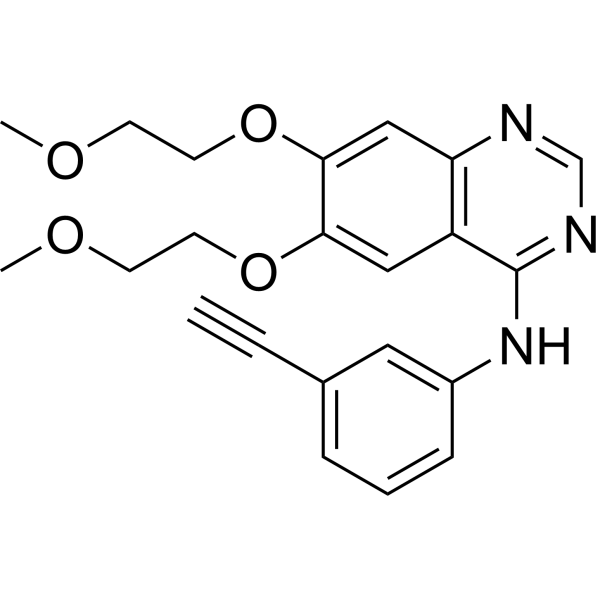
    Erlotinib
    130+ Cited Publications

    CP-358774; NSC 718781; OSI-774

    EGFR Autophagy Cancer
    Erlotinib (CP-358774) is a directly acting EGFR tyrosine kinase inhibitor, with an IC50 of 2 nM for human EGFR. Erlotinib reduces EGFR autophosphorylation in intact tumor cells with an IC50 of 20 nM. Erlotinib is used for the treatment of non-small cell lung cancer . Erlotinib is a click chemistry reagent, itcontains an Alkyne group and can undergo copper-catalyzed azide-alkyne cycloaddition (CuAAc) with molecules containing Azide groups.
    Erlotinib
  • HY-50898
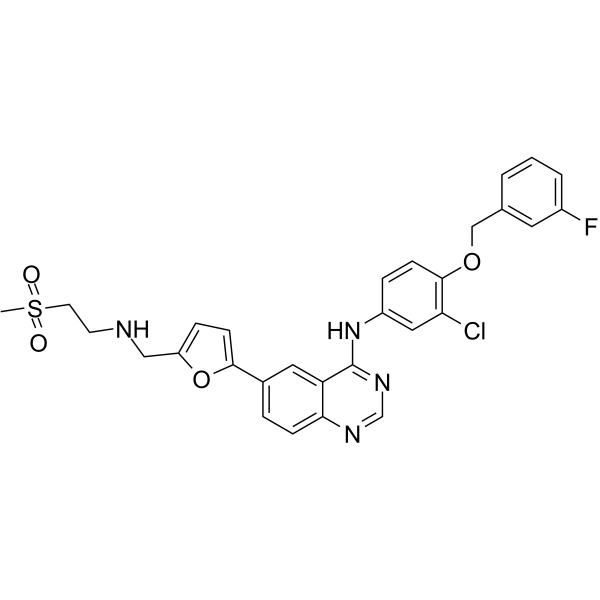
    Lapatinib
    90+ Cited Publications

    GW572016; GW2016

    EGFR Autophagy Ferroptosis Infection Neurological Disease Metabolic Disease Cancer
    Lapatinib (GW572016) is a potent, orally active inhibitor of the ErbB-2 and EGFR tyrosine kinase domains with IC50 values against purified EGFR and ErbB-2 of 10.2 and 9.8 nM, respectively .
    Lapatinib
  • HY-12000
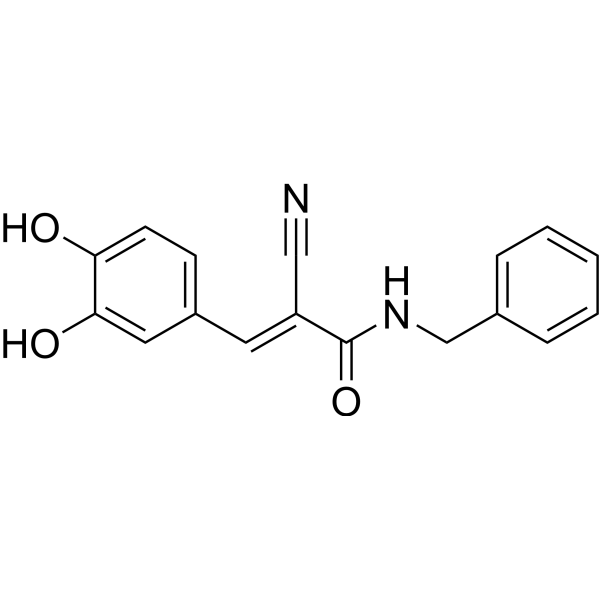
    AG490
    160+ Cited Publications

    Tyrphostin AG490; Tyrphostin B42

    EGFR STAT JAK Autophagy Cancer
    AG490 (Tyrphostin AG490) is a tyrosine kinase inhibitor that inhibits EGFR, Stat-3 and JAK2/3.
    AG490
  • HY-13524
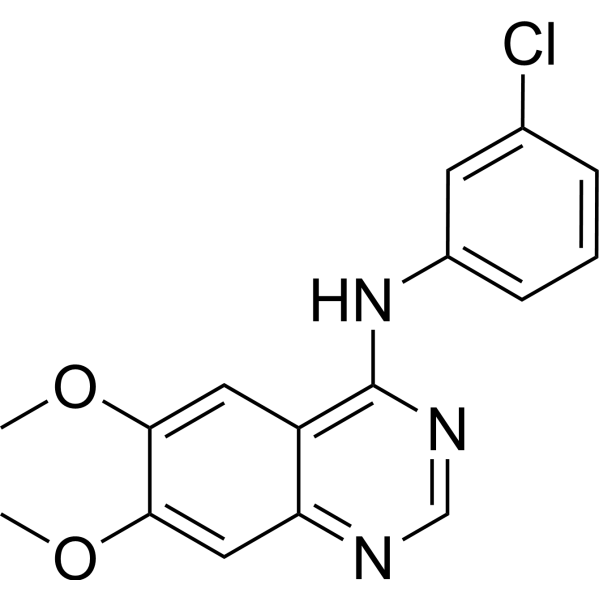
    AG-1478
    45+ Cited Publications

    Tyrphostin AG-1478; NSC 693255

    EGFR HCV Influenza Virus Infection Cardiovascular Disease Metabolic Disease Cancer
    AG-1478 (Tyrphostin AG-1478) is a selective EGFR tyrosine kinase inhibitor with IC50 of 3 nM. AG-1478 has antiviral effects against HCV and encephalomyocarditis virus (EMCV).
    AG-1478
  • HY-10260
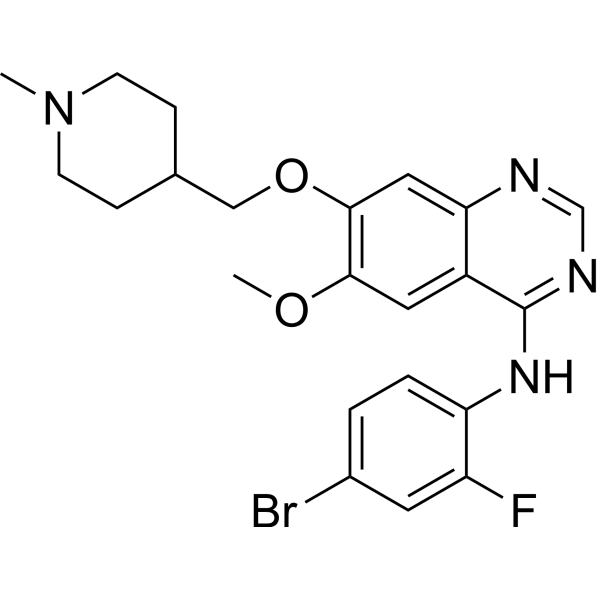
    Vandetanib
    25+ Cited Publications

    ZD6474

    VEGFR Autophagy Apoptosis Neurological Disease Inflammation/Immunology Cancer
    Vandetanib (D6474) is a potent, orally active, and blood-brain-barrier penetrate inhibitor of VEGFR2/KDR tyrosine kinase activity (IC50=40 nM). Vandetanib also has activity versus the tyrosine kinase activity of VEGFR3/FLT4 (IC50=110 nM) and EGFR/HER1 (IC50=500 nM) .
    Vandetanib
  • HY-148810
    Zongertinib
    1 Publications Verification

    BI 1810631

    c-Met/HGFR Cancer
    Zongertinib (BI 1810631) is a potent and selective HER2 and EGFR tyrosine kinase inhibitor with IC50 values of 13 nM and 579 nM, respectively. Zongertinib has antitumor activity and can be used in the study of multiple solid tumors .
    Zongertinib
  • HY-19730
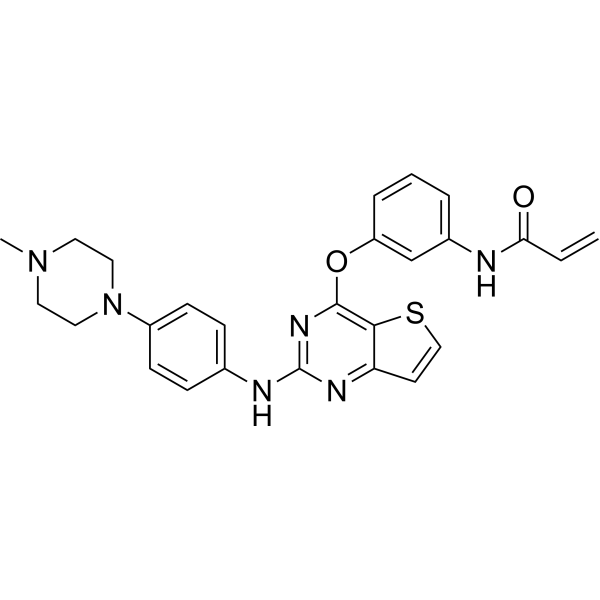
    Olmutinib
    10+ Cited Publications

    HM61713; BI 1482694

    EGFR Cancer
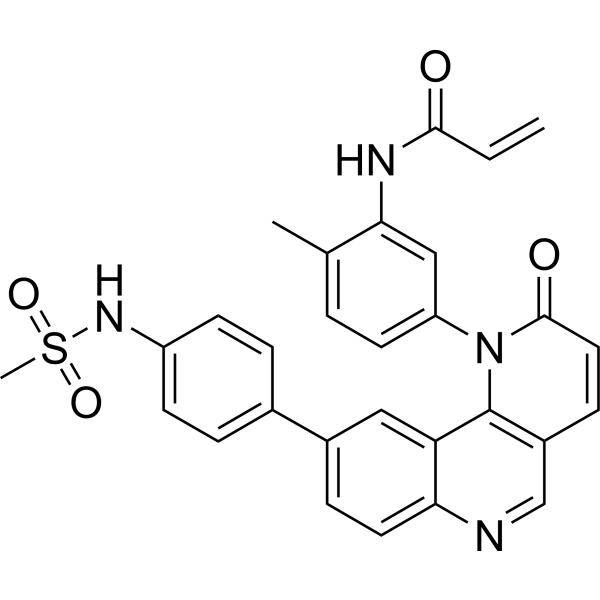
    Olmutinib (HM61713; BI-1482694) is an orally active and irreversible third EGFR tyrosine kinase inhibitor that binds to a cysteine residue near the kinase domain. Olmutinib is used for NSCLC .
    Olmutinib
  • HY-101084
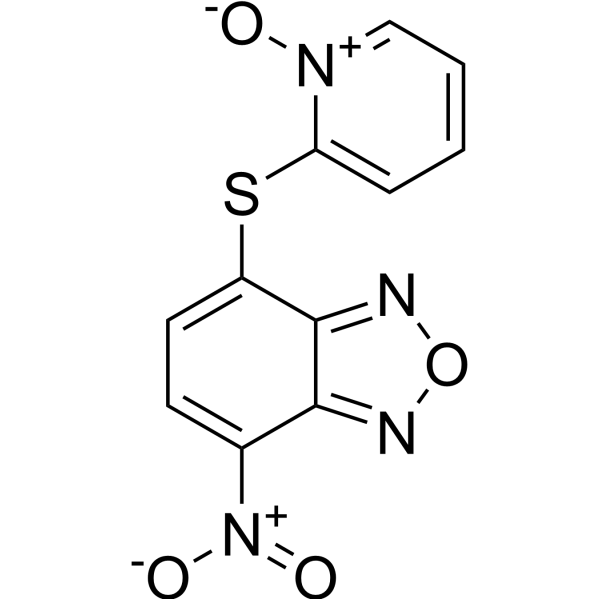
    NSC 228155
    15+ Cited Publications

    EGFR Histone Acetyltransferase Epigenetic Reader Domain Cancer
    NSC 228155 is an activator of EGFR, binds to the extracellular region of EGFR and enhance tyrosine phosphorylation of EGFR . NSC 228155 is also a potent inhibitor of KIX-KID interaction, inhibits kinase-inducible domain (KID) from CREB and KID-interacting domain (KIX) from CBP, with an IC50 of 0.36 μM .
    NSC 228155
  • HY-112299
    Zipalertinib
    3 Publications Verification

    TAS6417; CLN-081

    EGFR Apoptosis Cancer
    Zipalertinib (TAS6417; CLN-081) is a highly effective, orally active and pan-mutation-selective EGFR tyrosine kinase inhibitor with a unique scaffold fitting into the ATP-binding site of the EGFR hinge region, with IC50 values ranging from 1.1-8.0 nM .
    Zipalertinib
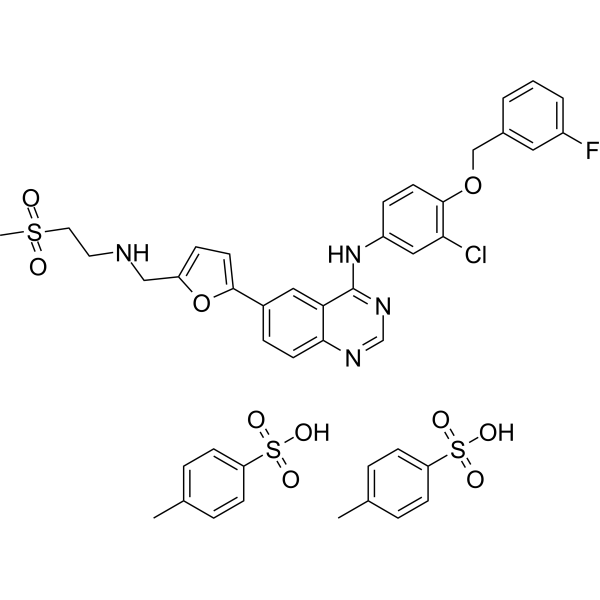
  • HY-50898A
    Lapatinib ditosylate
    90+ Cited Publications

    GW572016 ditosylate; GW2016 ditosylate

    EGFR Autophagy Ferroptosis Infection Neurological Disease Metabolic Disease Cancer
    Lapatinib ditosylate (GW572016 ditosylate) is a potent, orally active inhibitor of the ErbB-2 and EGFR tyrosine kinase domains with IC50 values against purified EGFR and ErbB-2 of 10.2 and 9.8 nM, respectively .
    Lapatinib ditosylate
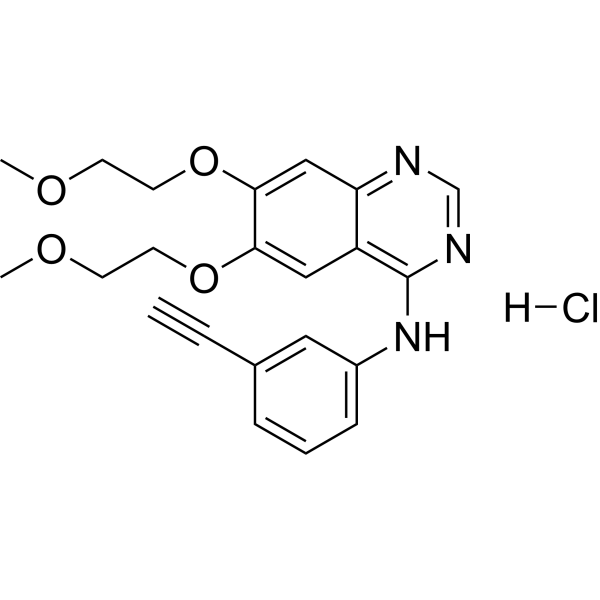
  • HY-50895A
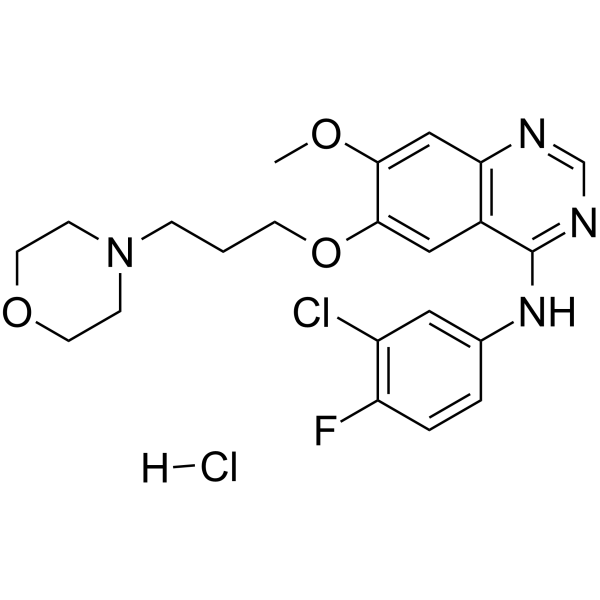
    Gefitinib hydrochloride
    Maximum Cited Publications
    200 Publications Verification

    ZD-1839 hydrochloride

    EGFR Cancer
    Gefitinib hydrochloride (ZD1839 hydrochloride) is a potent, selective and orally active EGFR tyrosine kinase inhibitor with an IC50 of 33 nM. Gefitinib hydrochloride selectively inhibits EGF-stimulated tumor cell growth (IC50 of 54 nM) and that blocks EGF-stimulated EGFR autophosphorylation in tumor cells. Gefitinib hydrochloride also induces autophagy. Gefitinib hydrochloride has antitumour activity .
    Gefitinib hydrochloride
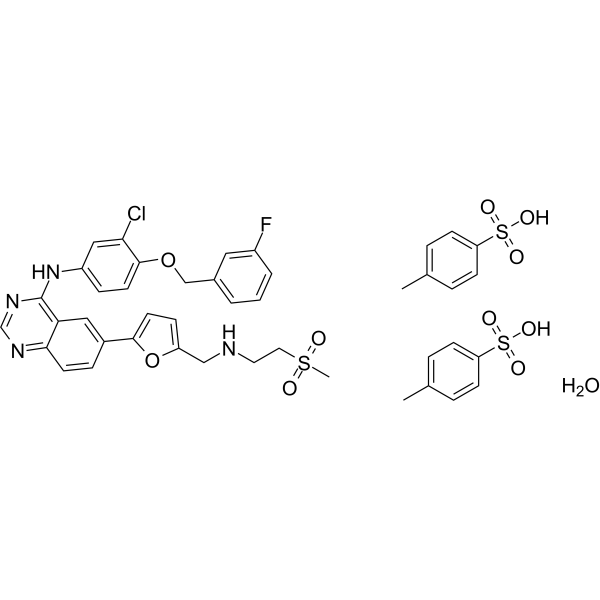
  • HY-50898B
    Lapatinib ditosylate monohydrate
    90+ Cited Publications

    GW572016 ditosylate monohydrate; GW2016 ditosylate monohydrate

    EGFR Autophagy Ferroptosis Infection Metabolic Disease Cancer
    Lapatinib ditosylate monohydrate (GW572016 ditosylate monohydrate) is a potent, orally active inhibitor of the ErbB-2 and EGFR tyrosine kinase domains with IC50 values against purified EGFR and ErbB-2 of 10.2 and 9.8 nM, respectively .
    Lapatinib ditosylate monohydrate
  • HY-10322
    Falnidamol
    4 Publications Verification

    BIBX 1382

    EGFR Cancer
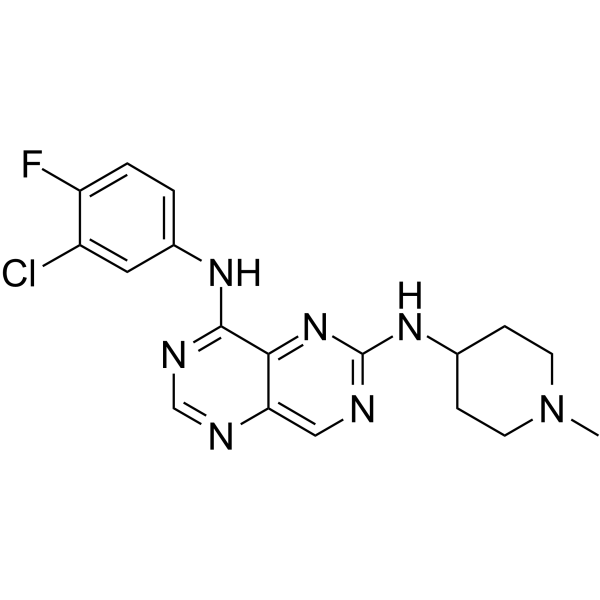
    Falnidamol (BIBX 1382) is an orally active, selective EGFR tyrosine kinase inhibitor with an IC50 of 3 nM. Falnidamol displays > 1000-fold lower potency against ErbB2 (IC50=3.4 μM) and a range of other related tyrosine kinases (IC50>10 μM). Falnidamol is a pyrimido-pyrimidine compound and has anti-cancer activity .
    Falnidamol
  • HY-117155
    PKI-166
    1 Publications Verification

    EGFR Cancer
    PKI-166 is a potent, selective and orally bioavailable EGFR tyrosine kinase inhibitor, with an IC50 of 0.7 nM .
    PKI-166
  • HY-19815

    CK-101; RX518

    EGFR Cancer
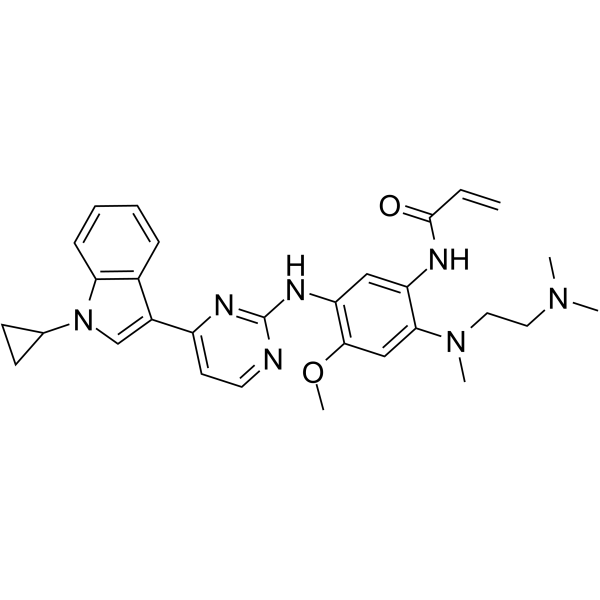
    Olafertinib (CK-101) is an orally available, third generation and irreversible epidermal growth factor receptor tyrosine kinase inhibitor (EGFR-TKI). Olafertinib selectively inhibits both EGFR-TKI-sensitizing and resistance mutations with minimal activity on wild-type EGFR. Olafertinib can be used in research for non-small cell lung cancer (NSCLC) with EGFR mutations and other advanced malignancies .
    Olafertinib
  • HY-112823A
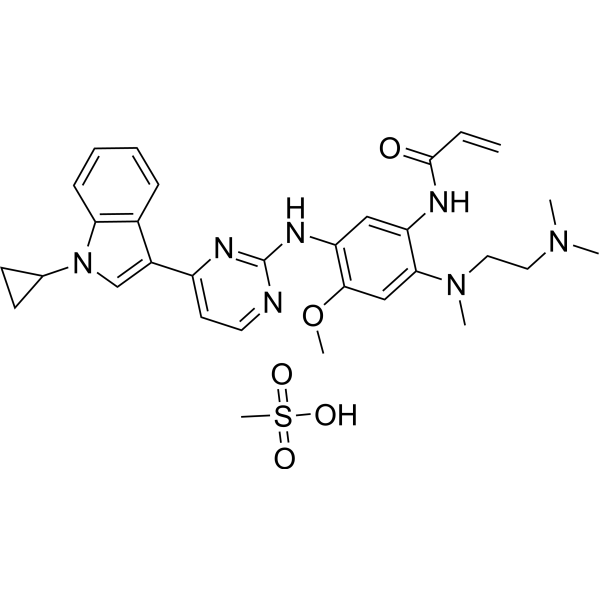
    Almonertinib mesylate
    5+ Cited Publications

    HS-10296 mesylate

    EGFR Cancer
    Almonertinib (HS-10296) mesylate is an orally available, irreversible, third-generation EGFR tyrosine kinase inhibitor with high selectivity for EGFR-sensitizing and T790M resistance mutations. Almonertinib mesylate shows great inhibitory activity against T790M, T790M/L858R and T790M/Del19 (IC50: 0.37, 0.29 and 0.21 nM, respectively), and is less effective against wild type (3.39 nM). Almonertinib mesylate is used for the research of the non-small cell lung cancer .
    Almonertinib mesylate
  • HY-P2503

    EGFR Cancer
    EGFR Protein Tyrosine Kinase Substrate is a EGFR protein tyrosine kinase substrate.
    EGFR Protein Tyrosine Kinase Substrate
  • HY-136430

    JGK037

    EGFR Cancer
    JCN037 (JGK037) is non-covalent and BBB-penetrant EGFR tyrosine kinase inhibitor, with IC50 values of 2.49 nM, 3.95 nM, 4.48 nM for EGFR, p-wtEGFR and pEGFRvⅢ, respectively .
    JCN037
  • HY-80002
    BMX-IN-1
    5+ Cited Publications

    BMX kinase inhibitor

    Btk BMX Kinase Cancer
    BMX-IN-1 is a selective, irreversible inhibitor of bone marrow tyrosine kinase on chromosome X (BMX) that targets Cys 496 in the BMX ATP binding domain with an IC50 of 8 nM, also targets the related Bruton’s tyrosine kinase (BTK) with an IC50 value of 10.4 nM, but is more than 47-656-fold less potent against Blk, JAK3, EGFR, Itk, or Tec activity.
    BMX-IN-1
  • HY-12972

    PF-06747775

    EGFR Cancer
    Mavelertinib is a selective, orally available and irreversible EGFR tyrosine kinase inhibitor (EGFR TKI), with IC50s of 5, 4, 12 and 3 nM for Del, L858R, and double mutants T790M/L858R and T790M/Del, respectively. Mavelertinib can be used for the research of non-small-cell lung cancer (NSCLC) .
    Mavelertinib
  • HY-139300

    HMPL-813

    EGFR Cancer
    Epitinib (HMPL-813) is a selective, orally active, blood-brain barrier-permeable EGFR tyrosine kinase inhibitor. Epitinib is applicable to research on EGFR T790M-positive non-small cell lung cancer with brain metastasis and advanced solid tumors .
    Epitinib
  • HY-112411

    EGFR ERK PDGFR FGFR Neurological Disease Inflammation/Immunology
    PD 174265 is a highly selective, reversible EGFR/ErbB2 tyrosine kinase inhibitor (IC50=0.45 nM) and cell differentiation inducer. By blocking receptor autophosphorylation and the downstream ERK signaling pathway (with an IC50 of 0.45 μM for full-length ERK), PD 174265 effectively inhibits tumor growth and exhibits antitumor activity without obvious toxicity in in vivo models. PD 174265 drives oligodendrocyte precursor cells to switch from a proliferative state to a differentiated state, significantly upregulates the expression of myelin proteins such as CNP, PLP and MBP, and induces neurite branching. PD 174265 shows no inhibitory effect on other kinases including insulin, PDGF and basic FGF receptors, and serves as a crucial tool molecule for investigating the treatment of human epidermoid carcinoma and the mechanism of myelin repair in multiple sclerosis .
    PD 174265
  • HY-18963
    Lavendustin A
    1 Publications Verification

    RG-14355

    EGFR Cancer
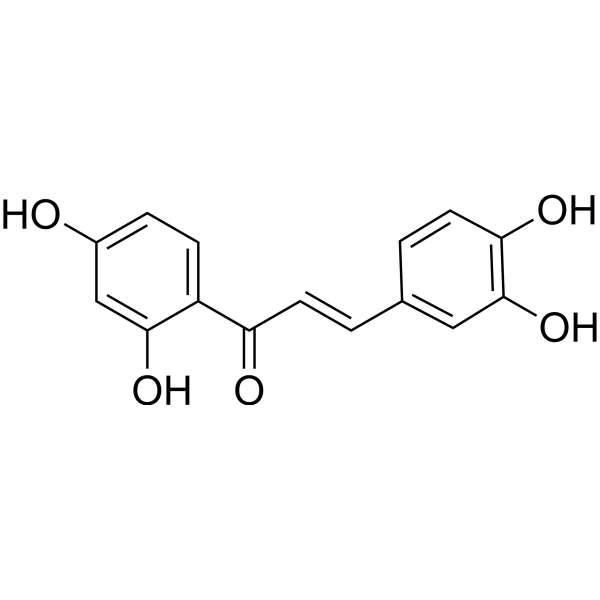
    Lavendustin A (RG-14355) is a potent, selective and ATP-competitive inhibitor of epidermal growth factor receptor (EGFR) tyrosine kinase, with an IC50 of 11 nM. Lavendustin A does not inhibit protein kinase A or C. Lavendustin A can suppress VEGF-induced angiogenesis .
    Lavendustin A
  • HY-20878
    Tyrphostin AG 879
    3 Publications Verification

    AG 879

    Trk Receptor EGFR Apoptosis Cancer
    Tyrphostin AG 879 (AG 879) is a tyrosine kinase inhibitor that inhibits TrKA phosphorylation (IC50 of 10 μM), but not TrKB and TrKC. Tyrphostin AG 879 is also a selective ErbB2 tyrosine kinase inhibitor with an IC50 of 1 μM, and has at least 500-fold higher selectivity to ErbB2 than EGFR. Tyrphostin AG 879 has anticancer activity .
    Tyrphostin AG 879
  • HY-21291

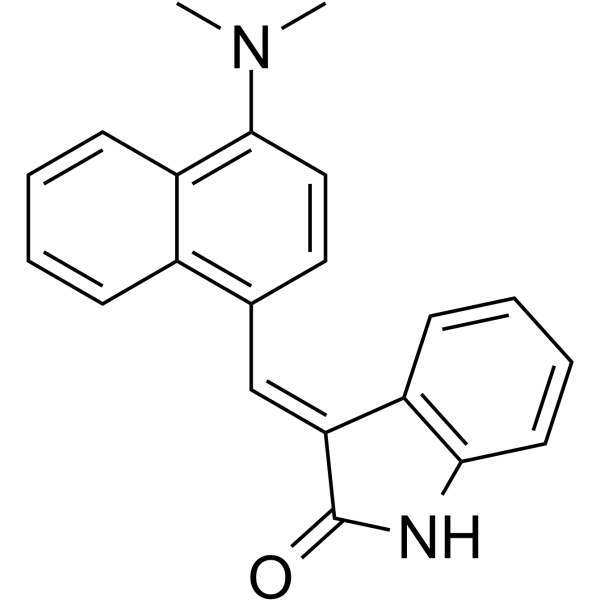
    PDGFR EGFR IGF-1R Cancer
    SU-4313 is a potent protein tyrosine kinases (PTKs) modulator with IC50s of 14.5 μM, 18.8 μM, 11 μM, 16.9 μM, 8.0 μM for PDGFR, FLK-1, EGFR, HER2 Kinase and IGF-1R, respectively. SU-4313 has the potential for modulating tyrosine kinase signal transduction in order to regulate abnormal cell proliferation .
    SU-4313
  • HY-116437
    Selatinib
    1 Publications Verification

    EGFR Cancer
    Selatinib is an orally active EGFR and HER2 tyrosine kinase inhibitor with IC50 values of 13.0 nM and 8.5 nM, respectively. Selatinib undergoes oxidative metabolism in vivo to produce Lapatinib (HY-50898). Selatinib inhibits the growth of breast, gastric and ovarian tumors. Selatinib can be used in research related to gastric cancer, breast cancer and ovarian cancer .
    Selatinib
  • HY-112412

    PDGFR Neurological Disease
    PDGFR Tyrosine kinase-IN-1, a multikinase inhibitor, inhibits PDGFR, EGFR, FGFR, PKA, and PKC, respectively. PDGFR Tyrosine kinase-IN-1 can be used for the research of amyotrophic lateral sclerosis .
    PDGFR Tyrosine kinase-IN-1
  • HY-108484

    EGFR Cancer
    PP 3 (Compound 3) is an EGFR tyrosine kinase inhibitor with an IC50 of 2.7 μM .
    PP 3
  • HY-101820

    EGFR Cancer
    Simotinib is a selective, specific, and orally bioavailable EGFR tyrosine kinase inhibitor, with an IC50 of 19.9 nM. Antineoplastic activities .
    Simotinib
  • HY-153110

    EGFR IRAK Btk Cancer
    Larotinib is a potent broad-spectrum and orally active tyrosine kinase inhibitor (TKI) with EGFR as the main target with an IC50 of 0.6 nM .
    Larotinib
  • HY-50896S

    CP-358774-d6; NSC 718781-d6; OSI-774-d6

    EGFR Cancer
    Erlotinib-d6 (CP-358774 D6) is a deuterium labeled Erlotinib (CP-358774). Erlotinib is a directly acting inhibitor EGFR tyrosine kinase inhibitor with an IC50 of 2 nM for human EGFR . Erlotinib-d6 is a click chemistry reagent, it contains an Alkyne group and can undergo copper-catalyzed azide-alkyne cycloaddition (CuAAc) with molecules containing Azide groups.
    Erlotinib-d6
  • HY-12806

    EGFR Cancer
    AG1557 is a specific and ATP competitive inhibitor of epidermal growth factor receptor (EGFR) tyrosine kinase, has a pIC50 value of 8.194 .
    AG1557
  • HY-153110A

    EGFR IRAK Btk Cancer
    Larotinib mesylate hydrate is a potent broad-spectrum and orally active tyrosine kinase inhibitor (TKI) with EGFR as the main target with an IC50 of 0.6 nM .
    Larotinib mesylate hydrate
  • HY-15772S3

    asandeutertinibum; Osimertinib-d3; AZD-9291-d3

    EGFR Cancer
    Asandeutertinib (Osimertinib-d3; AZD-9291-d3) is a epidermal growth factor receptor (EGFR) tyrosine kinase inhibitor, with antineoplastic effect .
    Asandeutertinib
  • HY-W013857

    CaMK EGFR Src Cancer
    Lavendustin C is a potent Ca 2+ calmodulin-dependent kinase II (CaMK II) inhibitor with an IC50 of 0.2 µM. Lavendustin C inhibits EGFR-associated tyrosine kinase (IC50=0.012 µM) and pp60 c-src(+) kinase (IC50=0.5 µM) .
    Lavendustin C
  • HY-156912

    EGFR Cancer
    Tyrosine kinase-IN-7 (compound 13h) is an inhibitor of the tyrosine kinase EGFR. The IC50s for inhibiting EGFR(WT) and EGFR(T790M) are 0.630 μM and 0.956 μM respectively. Tyrosine kinase-IN-7 has antitumor activity against four cancer cell lines (HepG2, HCT-116, MCF-7, and A431) with IC50s of 13.02 μM, 10.14 μM, 12.68 μM, and 47.05 μM, respectively .
    Tyrosine kinase-IN-7
  • HY-129510

    EGFR Mitosis Cancer
    4-Methyl erlotinib, is a potent and selective epidermal growth factor receptor (EGFR) tyrosine kinase inhibitor. 4-Methyl erlotinib potently inhibits EGF-mediated tumor cell mitosis by reducing EGFr-specific tyrosine phosphorylation. Using a mouse model of human tumor transplantation, 4-Methyl erlotinib demonstrated significant and sustained suppression of EGFr phosphotyrosine levels, resulting in significant growth inhibition of EGFr-dependent human cancers .
    4-Methyl erlotinib
  • HY-156741A

    EGFR Cancer
    EGFR-IN-87 (Compound Example 2) hydrochloride is a EGFR tyrosine kinase inhibitor. EGFR-IN-87 hydrochloride has IC50 value of 3.1 nM, 1.3 nM and 7.1 nM for EGFR_d746-750, EGFR_L858R/T790 and EGFR_WT in A431 cells, respectively. EGFR-IN-87 hydrochloride can be used for cancer diseases research .
    EGFR-IN-87 hydrochloride
  • HY-50898S1

    GW572016-d7 dihydrochloride; GW2016-d7 dihydrochloride

    Isotope-Labeled Compounds EGFR Autophagy Ferroptosis Cancer
    Lapatinib-d7 dihydrochloride is the deuterium labeled Lapatinib dihydrochloride. Lapatinib (GW572016) dihydrochloride is a potent, orally active inhibitor of the ErbB-2 and EGFR tyrosine kinase domains with IC50 values against purified EGFR and ErbB-2 of 10.2 and 9.8 nM, respectively .
    Lapatinib-d7 dihydrochloride
  • HY-10260B

    ZD6474 hydrochloride

    VEGFR Autophagy Apoptosis Cancer
    Vandetanib hydrochloride (D6474 hydrochloride) is a potent, orally active inhibitor of VEGFR2/KDR tyrosine kinase activity (IC50=40 nM). Vandetanib hydrochloride also has activity versus the tyrosine kinase activity of VEGFR3/FLT4 (IC50=110 nM) and EGFR/HER1 (IC50=500 nM) .
    Vandetanib hydrochloride
  • HY-117852

    TRX-13

    EGFR Tyrosinase Cancer
    CGP-59326 (TRX-13) is a highly potent and selective epidermal growth factor receptor (EGFR) tyrosine kinase inhibitor (IC50=0.027 μM). CGP-59326 blocks the EGFR signaling pathwa, demonstrating highly selective inhibition of EGFR-dependent tumor cells. CGP-59326 is promising for research of cancers .
    CGP-59326
  • HY-50898S

    GW572016-d4; GW2016-d4

    EGFR Autophagy Ferroptosis Cancer
    Lapatinib-d4 is the deuterium labeled Lapatinib (HY-50898). Lapatinib is a potent, orally active inhibitor of the ErbB-2 and EGFR tyrosine kinase domains with IC50 values against purified EGFR and ErbB-2 of 10.2 and 9.8 nM, respectively .
    Lapatinib-d4
  • HY-101958

    AG82; Tyrphostin A 25; Tyrphostin AG 82; RG-50875

    EGFR GPR35 Inflammation/Immunology Cancer
    Tyrphostin 25 (AG82) is a specific inhibitor of the EGFR tyrosine kinase with an IC50 value of 3 µM in A431 cells. Tyrphostin 25 is also a GPR35 agonist with an EC50 of 5.3 µM .
    Tyrphostin 25
  • HY-13524A

    Tyrphostin AG-1478 hydrochloride; NSC 693255 hydrochloride

    EGFR HCV Influenza Virus Infection Cardiovascular Disease Metabolic Disease Cancer
    AG-1478 hydrochloride (Tyrphostin AG-1478 hydrochloride) is a selective EGFR tyrosine kinase inhibitor with IC50 of 3 nM. AG-1478 hydrochloride has antiviral effects against HCV and encephalomyocarditis virus (EMCV) .
    AG-1478 hydrochloride
  • HY-144445

    EGFR Cancer
    NSC114126 is a potent and orally active inhibitor of EGFR tyrosine kinase (EGFR-TK). NSC114126 has strong antiproliferative activities. NSC114126 has the potential for the research of cancer diseases .
    NSC114126
  • HY-107459
    (E/Z)-AG490
    1 Publications Verification

    (E/Z)-Tyrphostin AG490; (E/Z)-Tyrphostin B42

    EGFR STAT JAK Cancer
    (E/Z)-AG490 ((E/Z)-Tyrphostin AG490) is a racemic compound of (E)-AG490 and (Z)-AG490 isomers. (E)-AG490 (HY-12000) is a tyrosine kinase inhibitor that inhibits EGFR, Stat-3 and JAK2/3.
    (E/Z)-AG490
  • HY-103439

    Tyrosine Hydroxylase EGFR Cancer
    GW 583340 dihydrochloride is an orally active ErbB-2/EGFR tyrosine kinase inhibitor. GW 583340 dihydrochloride exhibits antitumor activity in xenograft models with EGFR overexpression or ErbB-2 overexpression. GW 583340 dihydrochloride is applicable to research related to head and neck cancer, breast cancer, and gastric cancer .
    GW583340 dihydrochloride
  • HY-19730A

    HM61713 hydrochloride; BI 1482694 hydrochloride

    EGFR Cancer
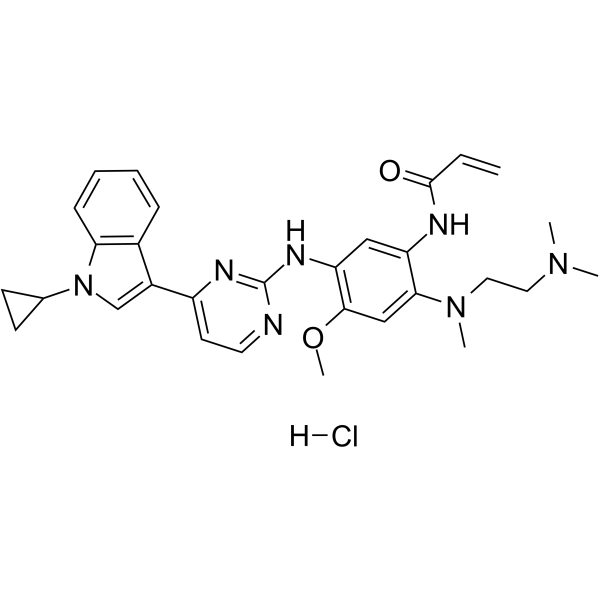
    Olmutinib hydrochloride is an orally active and irreversible third EGFR tyrosine kinase inhibitor that binds to a cysteine residue near the kinase domain. Olmutinib hydrochloride is used for NSCLC .
    Olmutinib hydrochloride

Inquiry Online

Your information is safe with us. * Required Fields.

Salutation


Country or Region *

Applicant Name *


Organization Name *

Department *


Email Address *


Product Name *

Cat. No.


Requested quantity *

Phone Number *


Remarks

Inquiry Online

Inquiry Information

Product Name:
Cat. No.:
Quantity:
MCE Japan Authorized Agent:

