17 Results for "

ESC

" in MedChemExpress (MCE) Product Catalog:
Products (17)

17 Results for "ESC" in MCE Product Catalog:

5
5 Cited Publications
Cat. No.: HY-15838
CAS No.: 147591-46-6
Purity:  99.92%
Target:  

DYRK

Research Areas:  

Cancer

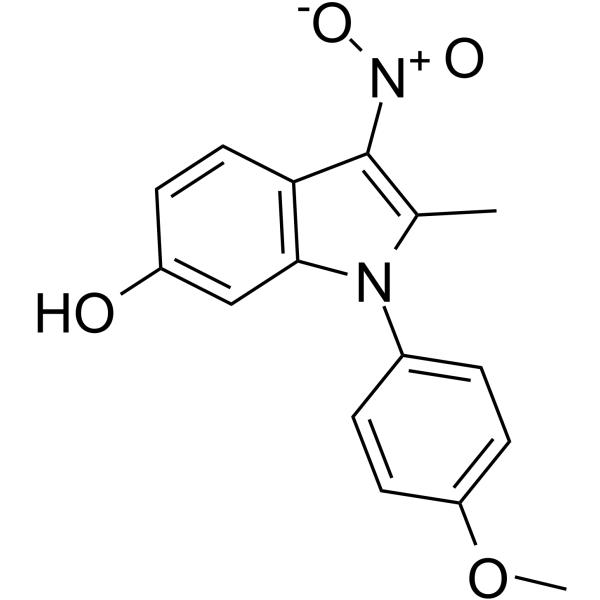
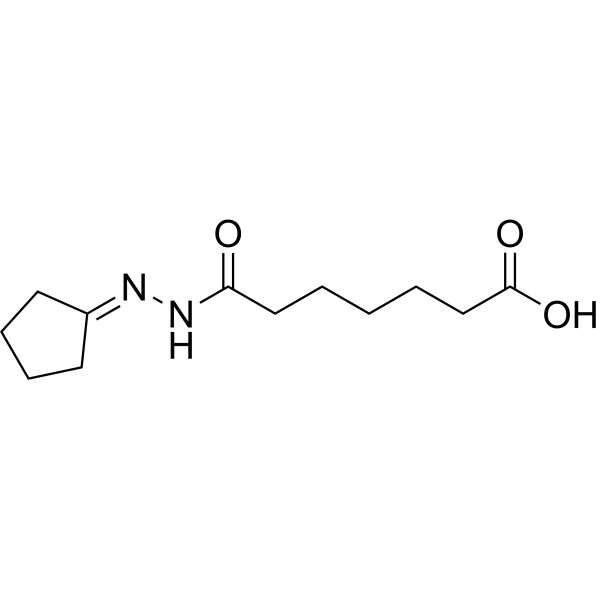
ID-8 is an inhibitor of dual-specificity tyrosine phosphorylation-regulated kinase (DYRK). ID-8 sustains embryonic stem cell (ESC) self-renewal and pluripotency. ID-8 enhances Wnt-mediated hESC survival and proliferation via inhibition of DYRKs .
loading...
    loading...
2
2 Cited Publications
Cat. No.: HY-P2300
CAS No.: 862772-11-0
Synonyms: Cyclo(RGDfC)
Target:  

Integrin

Research Areas:  

Cancer

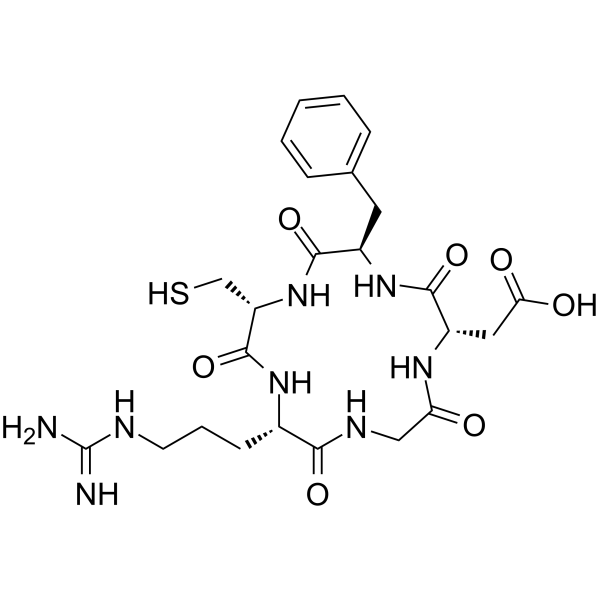
Cyclo(Arg-Gly-Asp-D-Phe-Cys) (Cyclo RGDfC), a cyclic RGD peptide which has high affinity to αvβ3, can disrupt cell integrin interactions. Cyclo(Arg-Gly-Asp-D-Phe-Cys) inhibits pluripotent marker expression in embryonic stem cells (ESCs) and the tumorigenic potential of mESCs in vivo. Cyclo(Arg-Gly-Asp-D-Phe-Cys) can be used in the research of tumors .
loading...
    loading...
2
2 Cited Publications
Cat. No.: HY-P2300A
Synonyms: Cyclo(RGDfC) TFA
Target:  

Integrin

Research Areas:  

Cancer

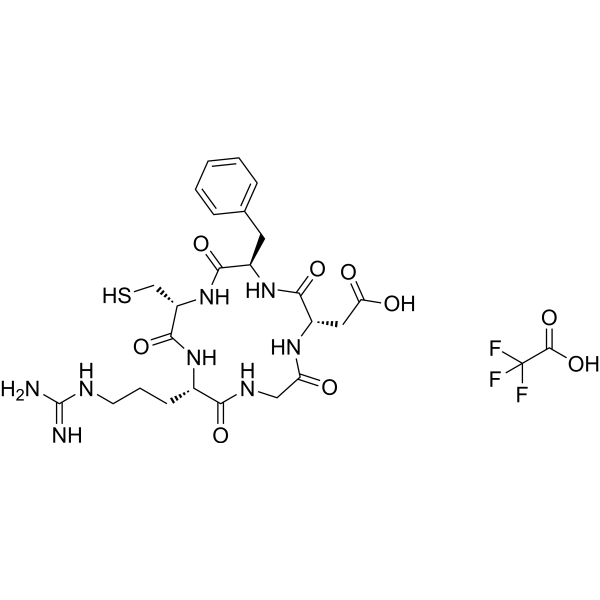
Cyclo(Arg-Gly-Asp-D-Phe-Cys) (Cyclo RGDfC) TFA, a cyclic RGD peptide which has high affinity to αvβ3, can disrupt cell integrin interactions. Cyclo(Arg-Gly-Asp-D-Phe-Cys) TFA inhibits pluripotent marker expression in embryonic stem cells (ESCs) and the tumorigenic potential of mESCs in vivo. Cyclo(Arg-Gly-Asp-D-Phe-Cys) TFA can be used in the research of tumors .
loading...
    loading...
1
1 Cited Publications
Cat. No.: HY-10254G
CAS No.: 391210-10-9
Synonyms: PD0325901 (GMP); PD325901 (GMP)
Mirdametinib (PD0325901) (GMP) is Mirdametinib (HY-10254) produced by using GMP guidelines. GMP small molecules works appropriately as an auxiliary reagent for cell therapy manufacture. Mirdametinib is an orally active, selective and non-ATP-competitive MEK inhibitor .
loading...
    loading...
Cat. No.: HY-N6747
CAS No.: 154589-96-5
Target:  

c-Myc Autophagy

Research Areas:  

Cancer

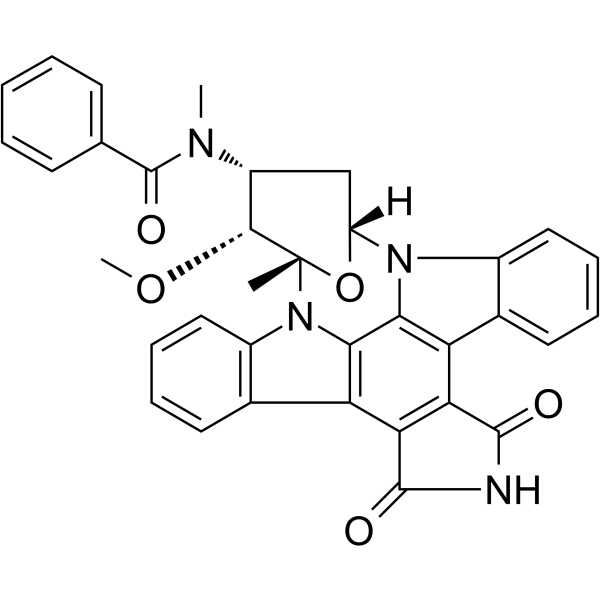
Stauprimide is a staurosporine analog that promotes embryonic stem cell (ESC) differentiation. Stauprimide is a non-broad spectrum inhibitor that binds to the MYC transcription factor NME2 and blocks its nuclear localization in ESCs, which results in down-regulation of MYC transcription .
loading...
    loading...
Cat. No.: HY-10593
CAS No.: 331001-62-8
Purity:  99.13%
Target:  

Wnt

Research Areas:  

Others

IQ 1 is a Wnt/β-catenin/CBP signalling sustainer. IQ 1 maintains long-term expansion of Wnt/β-catenin-driven mouse embryonic stem cells (ESCs) and prevents spontaneous differentiation by enhancing β-catenin/CBP-mediated transcription and preventing conversion to β-catenin/p300-mediated transcription. IQ-1 regulates Wnt signalling by interacting with PR72/130. IQ 1 can be used in study of ESCs expansion .
loading...
    loading...
Cat. No.: HY-12319A
CAS No.: 1049741-55-0
Purity:  99.79%
Target:  

β-catenin Wnt

Research Areas:  

Cardiovascular Disease

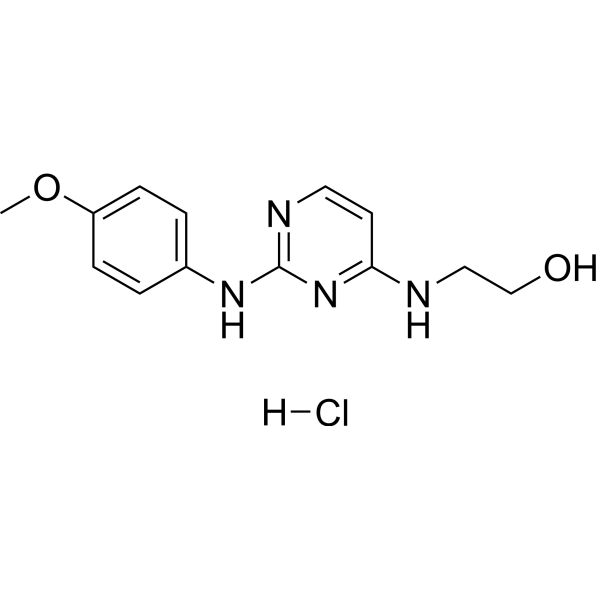
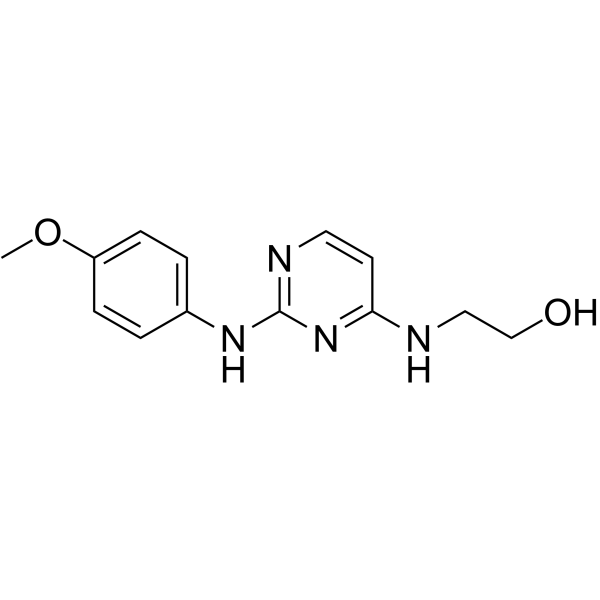
Cardiogenol C hydrochloride is a potent cell-permeable pyrimidine inducer which prompts the differentiation of ESCs into cardiomyocytes (EC50=100 nM) . Cardiogenol C hydrochloride also acts cardiomyogenic on already lineage-committed progenitor cell types with a limited degree of plasticity. Cardiogenol C hydrochloride is a useful cardiomyogenic agent and can be used as a tool to improve cardiac repair by cell transplantation therapy in animal models .
loading...
    loading...
Cat. No.: HY-100534
CAS No.: 1136466-93-7
Purity:  ≥99.0%
Target:  

Organoid TGF-beta/Smad

Research Areas:  

Others

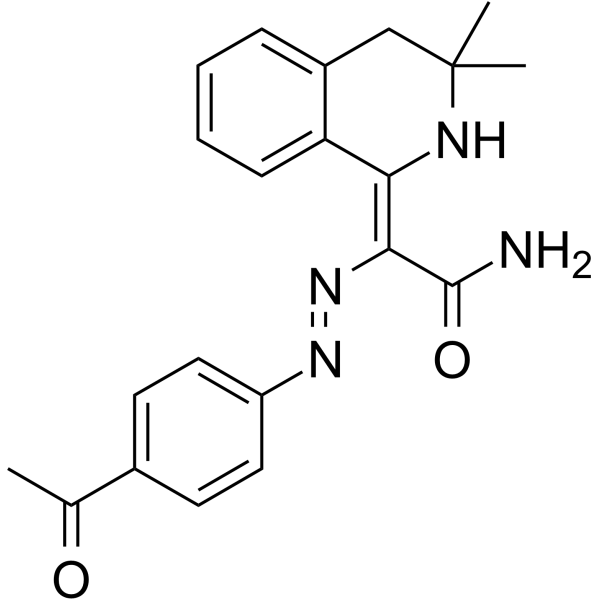
IDE2 is a small molecule cell-permeable inducer of definitive endoderm formation in mouse and human embryonic stem cells (ESCs) by activating the TGF-βsignaling pathway .
loading...
    loading...
Cat. No.: HY-12319
CAS No.: 671225-39-1
Target:  

β-catenin Wnt

Research Areas:  

Cancer

Cardiogenol C is a potent cell-permeable pyrimidine inducer which prompts the differentiation of ESCs into cardiomyocytes (EC50=100 nM) . Cardiogenol C also acts cardiomyogenic on already lineage-committed progenitor cell types with a limited degree of plasticity. Cardiogenol C is a useful cardiomyogenic agent and can be used as a tool to improve cardiac repair by cell transplantation therapy in animal models .
loading...
    loading...
Cat. No.: HY-176270
CAS No.: 2915567-21-2
Target:  

17β-HSD

Research Areas:  

Neurological Disease Cancer

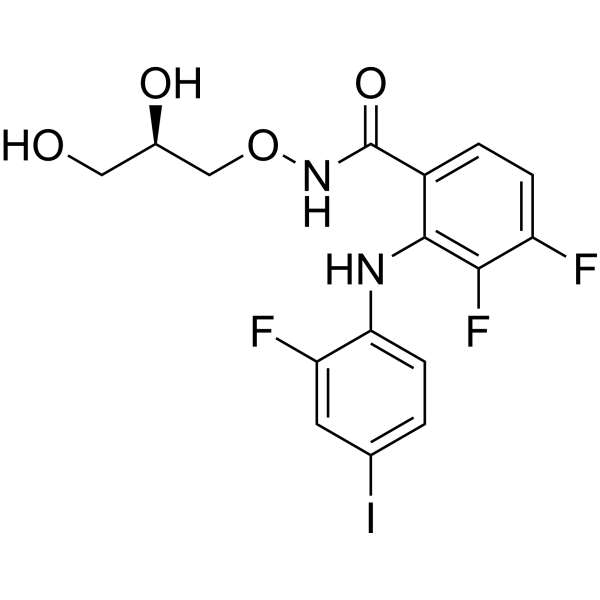
ESC1002755 is a 17β-HSD10 inhibitor with an IC50 of 19 nM. ESC1002755 has significant enzyme specificity with non-/uncompetitive inhibition against the cofactor NADH. ESC1002755 shows minimal cytotoxicity towards the HEK293 at 50 μM. ESC1002755 is promising for Alzheimer’s disease and hormone-dependent cancers (such as prostate, bone and colorectal cancer) research .
loading...
    loading...
Cat. No.: HY-184265
CAS No.: 1993461-76-9
Synonyms: Mito-ESC
Mito-Esculetin (Mito-Esc) is an orally active mitochondria-targeted derivative of Esculetin (HY-N0284). Mito-Esculetin inhibits LPS-induced phosphorylation of STAT3 Tyr-705, partially reverses LPS-mediated depletion of SIRT3, and enhances the AMPK-SIRT1 signaling axis. Mito-Esculetin inhibits PAI-1 activity, regulates miRNA, and induces phosphorylation of IRS and AKT. Mito-Esculetin suppresses oxidant-induced endothelial dysfunction, Ang-II (HY-13948)- and high glucose-induced atherosclerotic plaque formation, Palmitate (HY-N0830)-induced insulin resistance, as well as high glucose-mediated endothelial cell senescence and inflammatory responses. Mito-Esculetin reduces body weight and non-esterified fatty acid (NEFA) levels. Mito-Esculetin can be used in research related to acute coronary syndrome, type 2 diabetes, and hyperglycemia-induced atherosclerosis .
loading...
    loading...
Cat. No.: HY-K6020

MCE iPSC/ESC Dissociation Solution (Enzyme-Free) is a chelation-based, enzyme-free cell dissociation reagent specifically designed for the culture and manipulation of induced pluripotent stem cells (iPSCs) and embryonic stem cells (ESCs). This optimized solution enables gentle and efficient dissociation of iPSCs/ESCs within 5-8 min, making it suitable for routine passaging, dissociation, and cell-cluster handling. It provides superior stability and better preservation of cell state compared with traditional methods.

loading...
    loading...
Cat. No.: HY-K6303

MCE Human iPSC/ESC Cardiomyocyte Induction Differentiation Kit is based on the classical GiWi system. By precisely modulating the Wnt/β-catenin signaling pathway in a temporally controlled manner (sequential activation and inhibition), the kit enables highly efficient directed differentiation of human pluripotent stem cells into cardiomyocytes. It is suitable for cardiac disease modeling, drug cardiotoxicity assessment, and mechanistic studies.

loading...
    loading...
Cat. No.: HY-K6304

MCE Human iPSC/ESC Hepatocyte Induction Differentiation Kit enables the efficient generation of hepatocyte-like cells with a high degree of maturation within 21 d. The resulting cells stably express multiple key hepatic functional markers, including albumin (ALB), cytochrome P450 (CYP) family enzymes, and other liver-specific functional molecules, and exhibit typical hepatocellular phenotypes and functions.

loading...
    loading...
Cat. No.: HY-K6302

MCE Human iPSC/ESC Whole-Brain Organoid Induction Differentiation Kit is a non-region-specific brain organoid induction kit designed based on the neuroectoderm self-differentiation system. After 38 d of culture using this kit, the resulting whole-brain organoids stably express core neuronal markers such as TUJ1, SOX2, Nestin, and NeuN, as well as forebrain/cortical markers including FOXG1 and CTIP2.

loading...
    loading...
Cat. No.: HY-K6504

MCE Human iPSC/ESC Cortical Brain Organoid Maturation Medium is a ready-to-use culture system specifically formulated for the long-term maintenance and maturation of cortical brain organoids. It serves as a seamless transition from the induction phase and supports the continued growth and functional development of the organoids. Upon switching PSC-derived cortical brain organoids to this medium, organoid viability and structural stability are markedly enhanced, enabling a robust and extended culture period of up to 180 d.

loading...
    loading...
Cat. No.: HY-K6301

MCE Human iPSC/ESC Cortical Brain Organoid Induction Differentiation Kit is a standardized culture system specifically designed to recapitulate the developmental processes and functional features of the human cerebral cortex through forebrain ventralization-based signaling regulation. By sequentially activating the Wnt/β-catenin pathway and gradually inhibiting BMP/Smad signaling, this system efficiently drives human pluripotent stem cells (PSC) to differentiate into high-purity glutamatergic neurons (VGLUT1/2+ > 85%), while simultaneously promoting the formation of Pax6+/BLBP+ radial glial cells that establish a biomimetic ventricular-zone–like structure.

loading...
    loading...
  • 1

