1. Search Result
Search Result
Results for "

Electric Eel

" in MedChemExpress (MCE) Product Catalog:

26

Inhibitors & Agonists

5

Natural
Products

1

Isotope-Labeled Compounds

Cat. No. Product Name Target Research Areas Chemical Structure
  • HY-P2860A

    Cholinesterase (ChE) Neurological Disease
    Acetylcholinesterase, Electric eel is a cholinergic enzyme that is mainly found in neuromuscular junctions and cholinergic chemical synapses and is often used in biochemical research. Acetylcholinesterase, Electric eel can catalyze the decomposition or hydrolysis of acetylcholine and some other choline esters that act as neurotransmitters into acetic acid and choline. The main function of Acetylcholinesterase, Electric eel is to terminate neuronal transmission and signal conduction between synapses to prevent ACh diffusion and activation of nearby receptors .
    Acetylcholinesterase, Electric eel
  • HY-122203
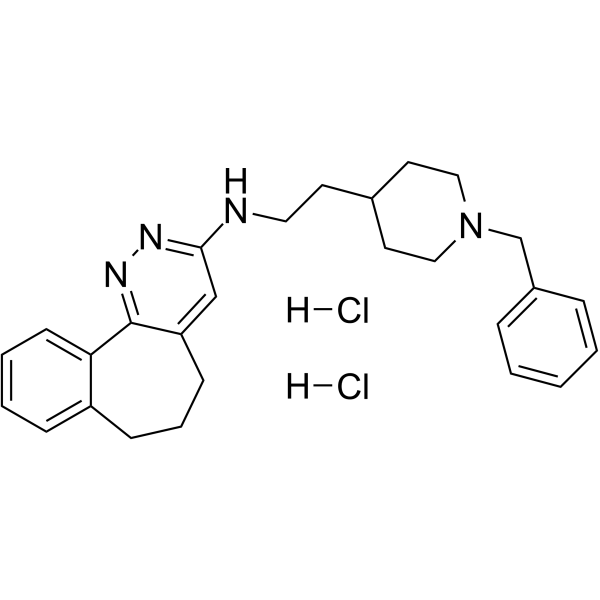
    PCS1055 dihydrochloride
    2 Publications Verification

    mAChR Cholinesterase (ChE) Neurological Disease
    PCS1055 dihydrochloride is a potent, selective and competitive muscarinic M4 receptor antagonist with an IC50 of 18.1 nM and a Kd of 5.72 nM. PCS1055 dihydrochloride inhibits radioligand [ 3H]-NMS binding to the M4 receptor with a Ki of 6.5 nM. PCS1055 dihydrochloride exhibits >100-fold selectivity over M1-, M3-, and M5-receptors and 30-fold selectivity at the M2 receptor. PCS1055 dihydrochloride is also a potent AChE inhibitor with IC50 s of 22 nM and 120 nM for electric eel and human AChE, respectively .
    PCS1055 dihydrochloride
  • HY-110389

    Cholinesterase (ChE) Neurological Disease
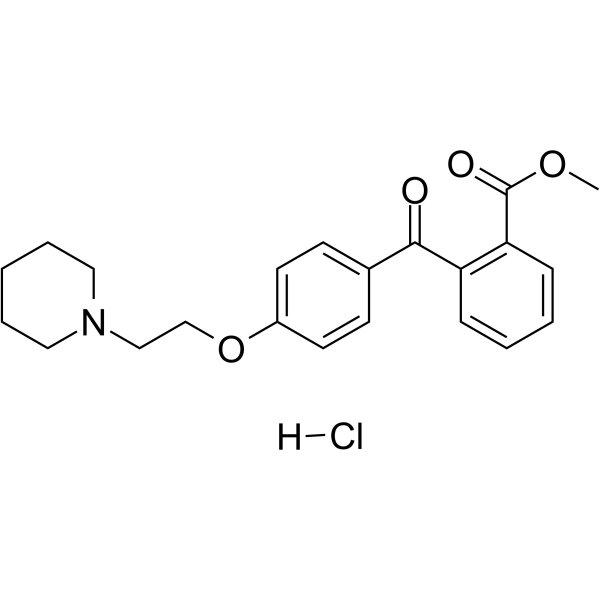
    Pitofenone hydrochloride, a spasmolytic compound, inhibits the acetylcholinesterase (AChE) activity from bovine erythrocytes and from electric eel with Kis of 36 and 45 μM, respectively .
    Pitofenone hydrochloride
  • HY-122203A
    PCS1055
    2 Publications Verification

    mAChR Cholinesterase (ChE) Neurological Disease
    PCS1055 is a selective and competitive antagonist for muscarinic M4 receptor with an IC50 of 18.1 nM and a Kd of 5.72 nM. PCS1055 inhibits radioligand [ 3H]-NMS binding to the M4 receptor with a Ki of 6.5 nM. PCS1055 is also an inhibitor for AChE with IC50 of 22 nM and 120 nM for electric eel and human AChE, respectively .
    PCS1055
  • HY-N10917

    Drug Derivative Infection Cancer
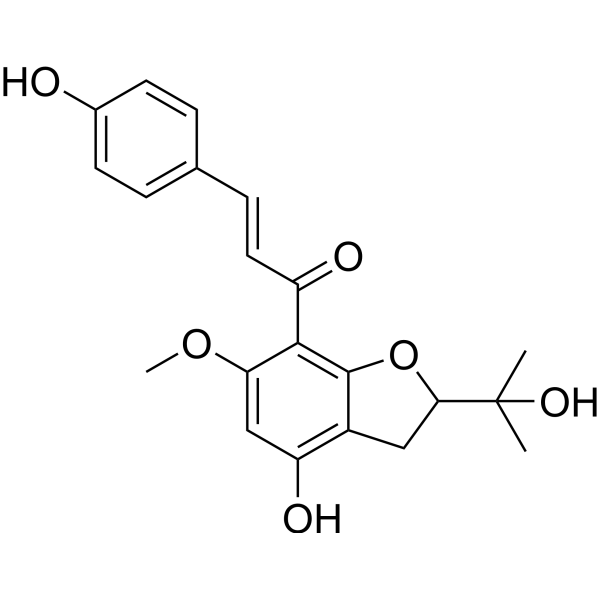
    Xanthohumol I is a derivative of Chalcone (HY-121054) that can be isolated from Humulus lupulus L. (hops). Xanthohumol I exhibits free radical scavenging activity .
    Xanthohumol I
  • HY-105853

    Cholinesterase (ChE) Neurological Disease
    Pitofenone, a spasmolytic compound, inhibits the acetylcholinesterase (AChE) activity from bovine erythrocytes and from electric eel with Kis of 36 and 45 μM, respectively .
    Pitofenone
  • HY-146663

    Cholinesterase (ChE) Neurological Disease
    AChE/BChE-IN-3 (BMC-1) is a dual AChE and BChE inhibitor with IC50 values of 6.08 μM and 0.383 μM against electric eel AChE (elAChE) and equine serum BChE (eqBChE), respectively .
    AChE/BChE-IN-3
  • HY-146663A

    Cholinesterase (ChE) Neurological Disease
    AChE/BChE-IN-3 (BMC-1) hydrochloride is a dual AChE and BChE inhibitor with IC50 values of 6.08 μM and 0.383 μM against electric eel AChE (elAChE) and equine serum BChE (eqBChE), respectively .
    AChE/BChE-IN-3 hydrochloride
  • HY-105853S

    Isotope-Labeled Compounds Neurological Disease
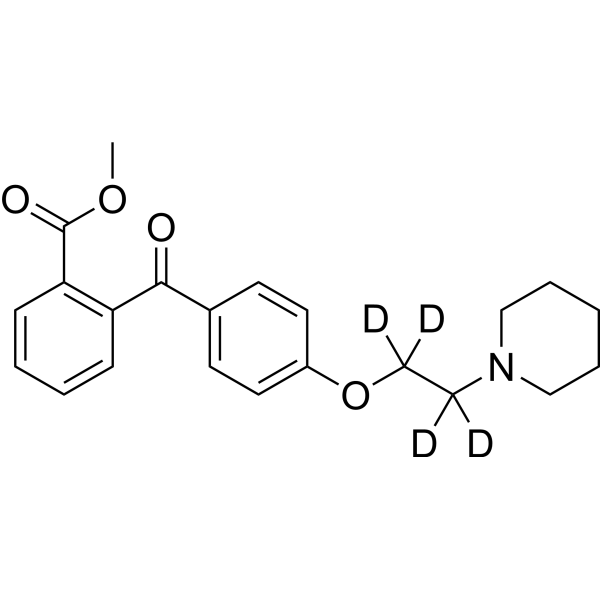
    Pitofenone-d4 is deuterium labeled Pitofenone (HY-105853). Pitofenone, a spasmolytic compound, inhibits the acetylcholinesterase (AChE) activity from bovine erythrocytes and from electric eel with Kis of 36 and 45 μM, respectively .
    Pitofenone-d4
  • HY-N7263

    Cholinesterase (ChE) Neurological Disease
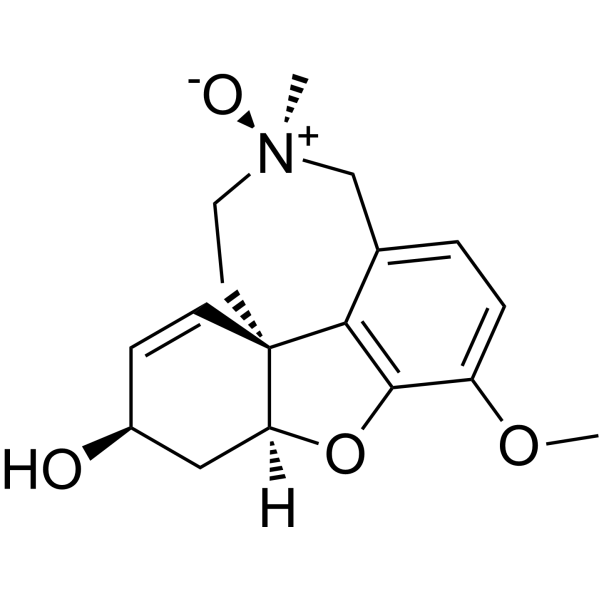
    Galanthamine N-Oxide is an alkaloid obtained from the bulbs of Zephyranthes concolor. Galanthamine N-Oxide inhibits electric eel acetylcholinesterase (AChE) with an EC50 of 26.2 μM. Galanthamine N-Oxide is a prominent inhibitor of substrate accommodation in the active site of the Torpedo californica AChE (TcAChE), hAChE and hBChE enzymes .
    Galanthamine N-Oxide
  • HY-146762

    Monoamine Oxidase Cholinesterase (ChE) Reactive Oxygen Species (ROS) Neurological Disease Inflammation/Immunology
    MAO-B-IN-7 is a potent and blood-brain barrier permeable MAO-B and AChE inhibitor with IC50s of 41 nM, 87 nM and 0.3 μM for human AChE, electric eel AChE and MAO-B, respectively. MAO-B-IN-7 can effectively alleviate oxidative stress and neuroinflammatory damage .
    MAO-B-IN-7
  • HY-146035

    Cholinesterase (ChE) Histamine Receptor Neurological Disease
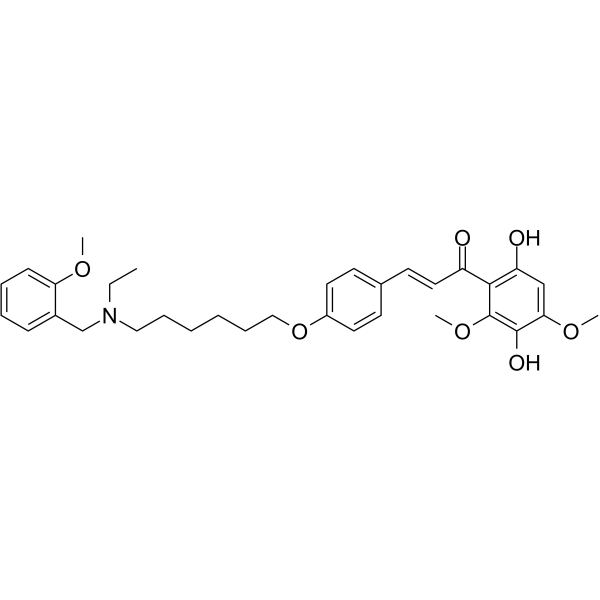
    AChE-IN-14 (compound 5) is a potent cholinesterase inhibitor with IC50s of 0.46 , 0.48, and 0.44 μM for electric eel acetylcholinesterase (eeAChE), human recombinant acetylcholinesterase (hAChE), and equine serum butyrylcholinesterase (eqBuChE), respectively. AChE-IN-14 exhibits high affinity toward human H3 receptor (H3R; Ki= 159.8 nM). AChE-IN-14 can be used for the research of Alzheimer’s disease .
    AChE-IN-14
  • HY-144790

    Amyloid-β Cholinesterase (ChE) Monoamine Oxidase Neurological Disease
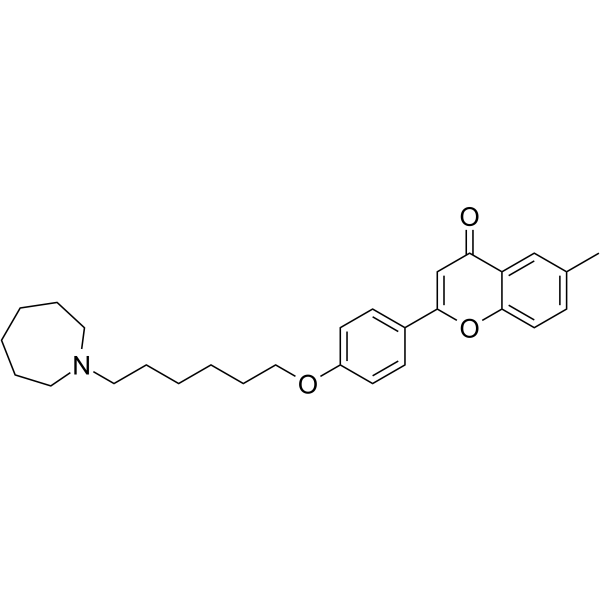
    AChE-IN-12 is a potent and blood-brain barrier (BBB) penetrant acetylcholinesterase (AChE) with IC50s of 0.41 μM and 1.88 μM for rat AChE and electric eel AChE. AChE-IN-12 is also a good antioxidant (ORAC = 3.3 eq), selective metal chelator and huMAO-B inhibitor (IC50 = 8.8 μM). AChE-IN-12 has remarkable inhibition of self- and Cu 2+-induced Aβ1-42 aggregation, as well as exhibits a good neuroprotective effect. AChE-IN-12 can be used for researching Alzheimer’s disease .
    AChE-IN-12
  • HY-183303

    Cholinesterase (ChE) Reactive Oxygen Species (ROS) Neurological Disease
    AChE-IN-116 is a selective acetylcholinesterase (AChE) inhibitor with an electric eel AChE IC50 of 1.60 μM and Ki of 1.72 μM. AChE-IN-116 exhibits weak ability to scavenge DPPH radical. AChE-IN-116 can be used for the research of Alzheimer's disease .
    AChE-IN-116
  • HY-181861

    Cholinesterase (ChE) Monoamine Oxidase Amyloid-β Tau Protein Neurological Disease
    AChE/MAO-B-IN-9 (Compound E12) is an orally active, selective, reversible, non-competitive AChE and MAO-B inhibitor, with an IC50 of 0.156 μM against electric eel AChE. AChE/MAO-B-IN-9 inhibits Aβ40/42 fibril formation, promotes Aβ fibril depolymerization, and inhibits Tau protein fibril formation. AChE/MAO-B-IN-9 exerts antioxidant and neuroprotective effects, and improves scopolamine (HY-N0296)-induced memory impairment in mice. AChE/MAO-B-IN-9 can be used for the research of Alzheimer's disease .
    AChE/MAO-B-IN-9
  • HY-182254

    Cholinesterase (ChE) Neurological Disease
    AChE/BChE-IN-35, Tacrine (HY-111338) derivative, is a brain-penetrant dual AChE/BChE inhibitor with an Electric Eel AChE IC50 of 123.66 nM, human AChE IC50 of 122.34 nM, and equine BChE IC50 of 488.00 nM. AChE/BChE-IN-35 undergoes LAT1-mediated active transport across cell membranes. AChE/BChE-IN-35 exhibits enhanced brain exposure with slower brain tissue elimination. AChE/BChE-IN-35 can be used for the research of alzheimer's disease .
    AChE/BChE-IN-35
  • HY-183760

    Cholinesterase (ChE) HSP GSK-3 Amyloid-β Neurological Disease Inflammation/Immunology
    AChE/BChE-IN-37 is a blood-brain barrier-permeable AChE/BChE inhibitor, with an IC50 of 73.65 μM against electric eel-derived AChE and an IC50 of 82.93 μM against horse-derived BChE. AChE/BChE-IN-37 exhibits chelating activity towards Cu 2+, Ca 2+, Mg 2+, Fe 2+ and Zn 2+. AChE/BChE-IN-37 interacts with HSP90AA1 and GSK-3β. AChE/BChE-IN-37 inhibits the self-induced aggregation of 1-42. AChE/BChE-IN-37 suppresses LPS-induced NO production in cells. AChE/BChE-IN-37 can be used in research related to Alzheimer's disease and inflammatory diseases .
    AChE/BChE-IN-37
  • HY-181161

    Cholinesterase (ChE) Neurological Disease
    AChE-IN-107 is a selective acetylcholinesterase (AChE) inhibitor with an IC50 of 0.22 μM and a Ki of 0.207 μM. AChE-IN-107 shows no inhibitory effect on equine serum BChE at 10 μM. AChE-IN-107 exhibits mixed-type inhibition of electric eel acetylcholinesterase, binding to both free enzyme and enzyme-substrate complex. AChE-IN-107 acts as a cytotoxin, reduces cell viability in hepatocellular carcinoma HepG2 cells.AChE-IN-107 can be used for the research of alzheimer's disease .
    AChE-IN-107
  • HY-N19855

    Geranicardic acid

    Cholinesterase (ChE) Neurological Disease
    Merulinic acid (Geranicardic acid) is an acetylcholinesterase (AChE) inhibitor with an IC50 >94 μM against electric eel-derived AChE. Merulinic acid can be used for the research of alzheimer’s disease .
    Merulinic acid
  • HY-185346

    Cholinesterase (ChE) Neurological Disease
    AChE-IN-113 is a selective acetylcholinesterase inhibitor with a Ki value of 8.3 μM against electric eel acetylcholinesterase. AChE-IN-113 can be used for the research of Alzheimer's disease .
    AChE-IN-113
  • HY-172219

    Cholinesterase (ChE) Neurological Disease Inflammation/Immunology
    CUR-IPA is a cholinesterase inhibitor, with IC50 of 5.99, 59.30, and 60.66 μM for eAChE (electric eel), hAChE (human), and hBChE (human), respectively. CUR-IPA can scavenge free radicals and has antioxidant activity. CUR-IPA can be used in the research of cognitive dysfunction .
    CUR-IPA
  • HY-N16715

    Cholinesterase (ChE) Neurological Disease
    Monardic acid A is a selective inhibitor of AChE, with an IC50 of 53.1 μM against AChE from electric eel. Monardic acid A shows weak inhibitory activity against human erythrocyte AChE (IC50 >100 μM) and has no significant inhibitory effect on BChE. Monardic acid A reduces acetylcholine breakdown by inhibiting AChE activity, and also exhibits inhibitory activity against histamine release and hyaluronidase, thus exerting anti-inflammatory and neurotransmitter regulatory effects. Monardic acid A can be isolated from lungwort (Pulmonaria officinalis) and thyme (Thymus gobicus), and is mainly used in the development of anti-inflammatory drugs and drugs related to neurodegenerative diseases .
    Monardic acid A
  • HY-185347

    Cholinesterase (ChE) Neurological Disease
    AChE-IN-114 is a selective AChE inhibitor and shows weak inhibitory activity for BChE. AChE-IN-114 can be used for the research of alzheimer’s disease .
    AChE-IN-114
  • HY-N17394

    Cholinesterase (ChE) Neurological Disease
    Melineurine is a reversible mixed-type acetylcholinesterase inhibitor, with an IC50 of 95.3 μM against AChE and an IC50 of 28.0 μM against BChE. Melineurine is applicable to the research of Alzheimer's disease .
    Melineurine
  • HY-181851

    Cholinesterase (ChE) Neurological Disease
    AChE-IN-109 is a potent mixed-type cholinesterase inhibitor with significantly stronger inhibitory activity against AChE than BChE. AChE-IN-109 has IC50 values of 0.55 μM and 12.45 μM against AChE and BChE, respectively. AChE-IN-109 inhibits cholinesterases through a mixed-type mechanism, binds to both the catalytic active site (CAS) and peripheral anionic site (PAS) of AChE. AChE-IN-109 can be used for the study of Alzheimer’s disease (AD) .
    AChE-IN-109
  • HY-181811

    Cholinesterase (ChE) GSK-3 Neurological Disease
    PJ17 is a potent dual-target inhibitor of AChE and GSK-3β, with IC50 values of 8.84 μM and 4.19 μM, respectively. PJ17 shows no significant neurotoxic effect in primary cerebellar granule neuron cultures. PJ17 serves as a template for the design of multitarget drugs. PJ17 can be used for the research of Alzheimer's disease .
    PJ17

Inquiry Online

Your information is safe with us. * Required Fields.

Salutation


Country or Region *

Applicant Name *


Organization Name *

Department *


Email Address *


Product Name *

Cat. No.


Requested quantity *

Phone Number *


Remarks

Inquiry Online

Inquiry Information

Product Name:
Cat. No.:
Quantity:
MCE Japan Authorized Agent:

