1. Search Result
Search Result
Results for "

G-quadruplex structures

" in MedChemExpress (MCE) Product Catalog:

26

Inhibitors & Agonists

2

Fluorescent Dye

2

Biochemical Assay Reagents

1

GMP Molecules

Targets Recommended:
Cat. No. Product Name Target Research Areas Chemical Structure
  • HY-15176A
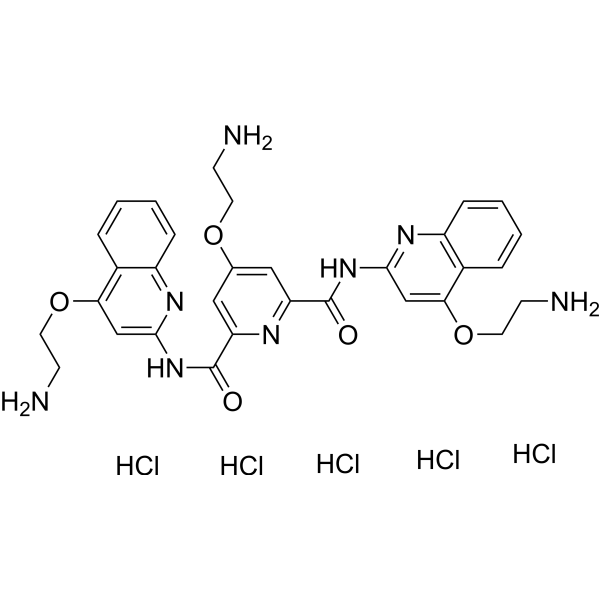
    Pyridostatin hydrochloride
    Maximum Cited Publications
    34 Publications Verification

    RR82 hydrochloride

    DNA/RNA Synthesis G-quadruplex Flavivirus Src Virus Protease Cancer
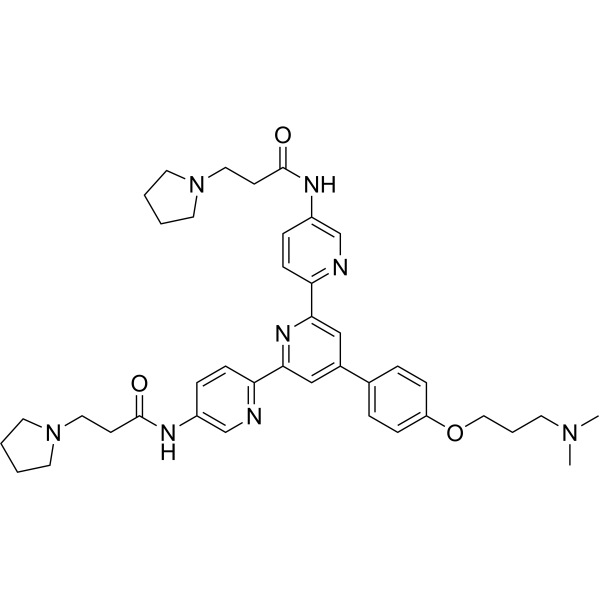
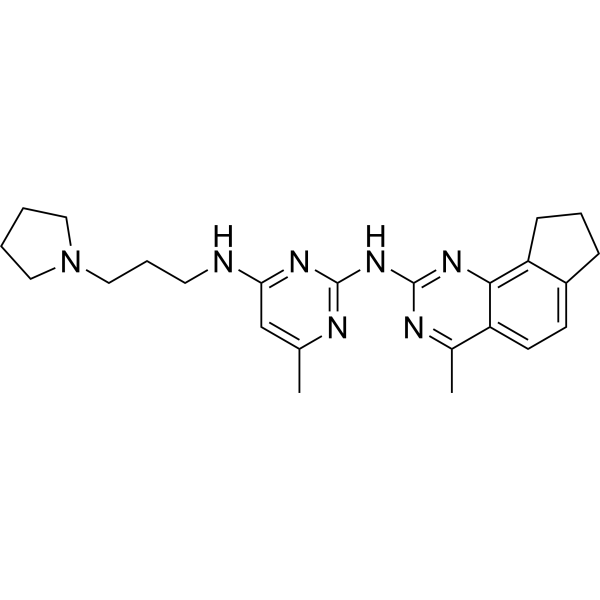
    Pyridostatin (RR82) hydrochloride is a G-quadruplex DNA stabilizing agent (Kd=490 nM) and can target DNA and RNA G4s in cells. Pyridostatin hydrochloride promotes growth arrest in human cancer cells by inducing replication- and transcription-dependent DNA damage. Pyridostatin hydrochloride targets the proto-oncogene Src. Pyridostatin hydrochloride reduced SRC protein levels and SRC-dependent cellular motility in human breast cancer cells .
    Pyridostatin hydrochloride
  • HY-15176

    RR82

    G-quadruplex Cancer
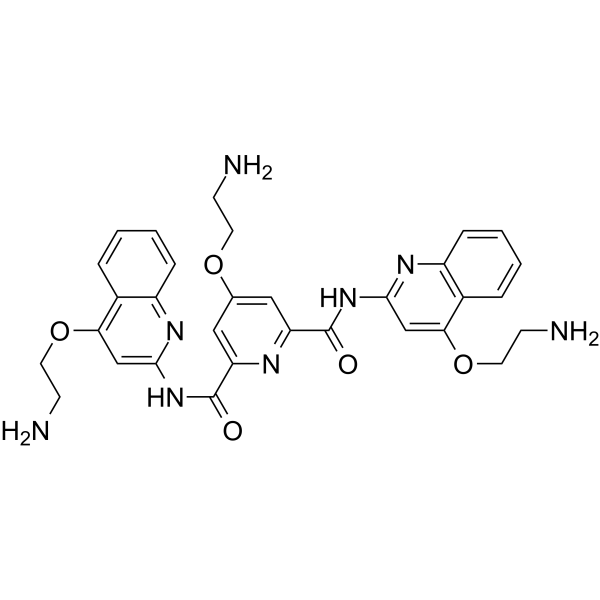
    Pyridostatin (RR82) is a G-quadruplex DNA stabilizing agent (Kd=490 nM) and can target DNA and RNA G4s in cells. Pyridostatin promotes growth arrest in human cancer cells by inducing replication- and transcription-dependent DNA damage. Pyridostatin targets the proto-oncogene Src. Pyridostatin reduced SRC protein levels and SRC-dependent cellular motility in human breast cancer cells .
    Pyridostatin
  • HY-15794
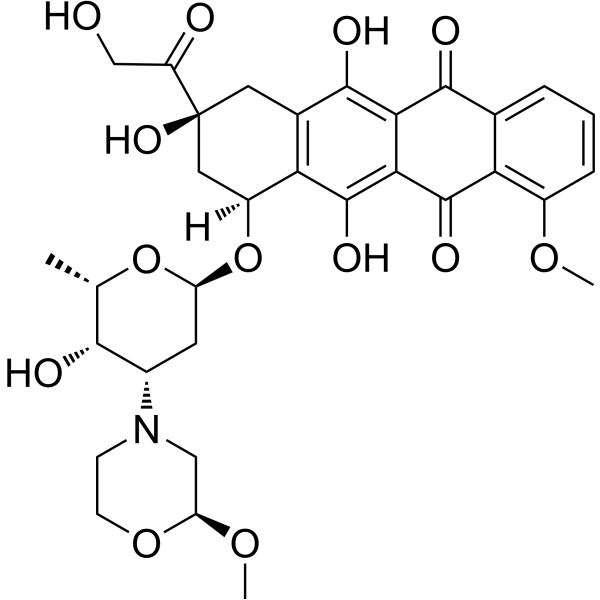
    Nemorubicin
    1 Publications Verification

    Methoxymorpholinyl doxorubicin; FCE 23762; PNU 152243

    G-quadruplex Cancer
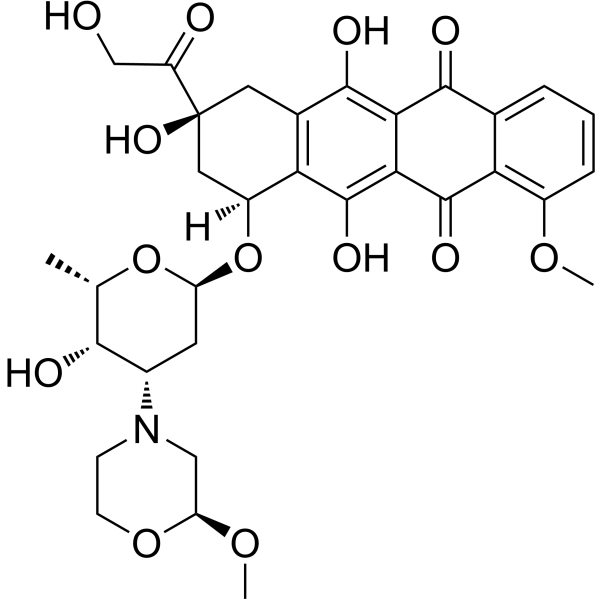
    Nemorubicin (Methoxymorpholinyl doxorubicin) is a Doxorubicin derivative with potent antitumor activity. Nemorubicin is highly cytotoxic to a variety of tumor cell lines presenting a multidrug-resistant phenotype. Nemorubicin not only intercalate into the duplex DNA, but also result in significant ligands for G-quadruplex DNA segments, stabilizing their structure. Nemorubicin requirs an intact nucleotide excision repair (NER) system to exert its activity .
    Nemorubicin
  • HY-15176B
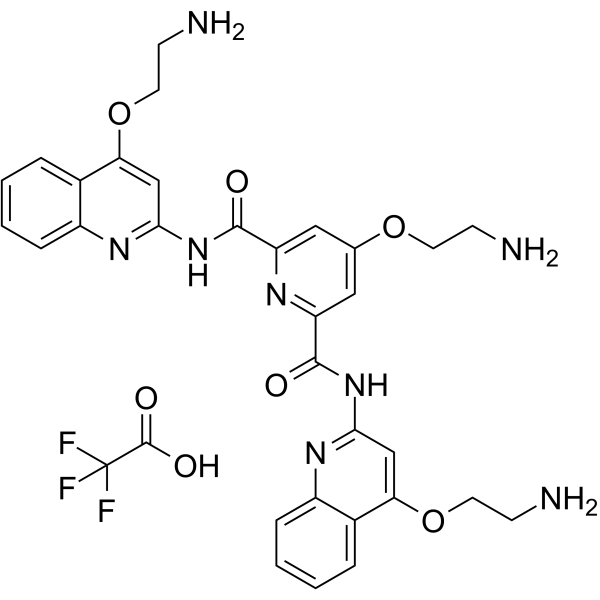
    Pyridostatin TFA
    Maximum Cited Publications
    34 Publications Verification

    RR82 TFA

    DNA/RNA Synthesis G-quadruplex Flavivirus Src Virus Protease Cancer
    Pyridostatin (RR82) TFA is a G-quadruplex (G4) inducer/stabilizer with a Kd of 490 nM. Pyridostatin TFA also acts as an inhibitor of Zika virus (ZIKV) NS2B-NS3 protease, with an IC50 of 11.0 μM. Pyridostatin TFA interacts with G-quadruplex structures, regulates the expression of SRC and SUB1, and induces replication- and transcription-dependent DNA damage, growth arrest, and genomic instability. Pyridostatin TFA exhibits antiproliferative and antiviral activities. Pyridostatin TFA can be used in studies related to breast cancer, cervical cancer, and Zika virus infection .
    Pyridostatin TFA
  • HY-164421

    G-quadruplex DNA/RNA Synthesis Cancer
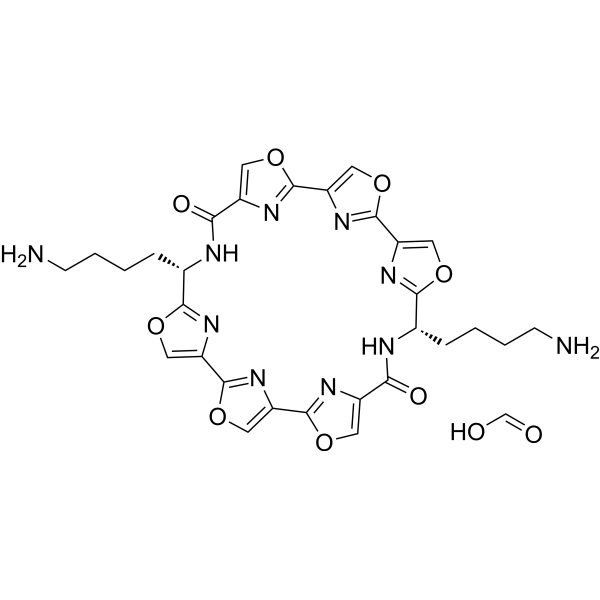
    PhpC is a G-quadruplex (G4)-DNA/RNA disruptor. PhpC disrupts DNA and RNA G4 structures and promotes G4 helicase activity. PhpC effectively enhancing the activity of Taq polymerase. PhpC modulates G-quadruplexs (G4s) both in vitro and in cells .
    PhpC
  • HY-14776
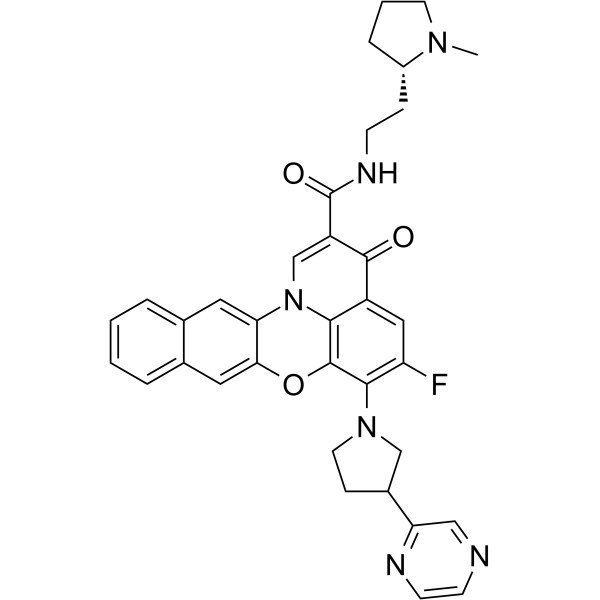
    Quarfloxin
    5+ Cited Publications

    CX-3543

    DNA/RNA Synthesis Cancer
    Quarfloxin (CX-3543), a fluoroquinolone derivative with antineoplastic activity, targets and inhibits RNA pol I activity, with IC50 values in the nanomolar range in neuroblastoma cells. Quarfloxin disrupts the interaction between the nucleolin protein and a G-quadruplex DNA structure in the ribosomal DNA (rDNA) template .
    Quarfloxin
  • HY-15176C
    Pyridostatin trihydrochloride
    Maximum Cited Publications
    34 Publications Verification

    RR82 trihydrochloride

    DNA/RNA Synthesis G-quadruplex Flavivirus Src Virus Protease Cancer
    Pyridostatin (RR82) trihydrochloride is a G-quadruplex (G4) inducer/stabilizer with a Kd of 490 nM. Pyridostatin trihydrochloride also acts as an inhibitor of Zika virus (ZIKV) NS2B-NS3 protease, with an IC50 of 11.0 μM. Pyridostatin trihydrochloride interacts with G-quadruplex structures, regulates the expression of SRC and SUB1, and induces replication- and transcription-dependent DNA damage, growth arrest, and genomic instability. Pyridostatin trihydrochloride exhibits antiproliferative and antiviral activities. Pyridostatin trihydrochloride can be used in studies related to breast cancer, cervical cancer, and Zika virus infection .
    Pyridostatin trihydrochloride
  • HY-156228

    Ras Cancer
    RGB-1 selectively binds to and stabilizes RNA G-quadruplex structures, and reduces the expression of the NRAS proto-oncogene in breast cancer cells. RGB-1 can serve as a tool for investigating the cellular functions of RNA G-quadruplex structures and identifying novel mRNA G-quadruplex-forming sequences. RGB-1 is applicable for breast cancer research .
    RGB-1
  • HY-135775
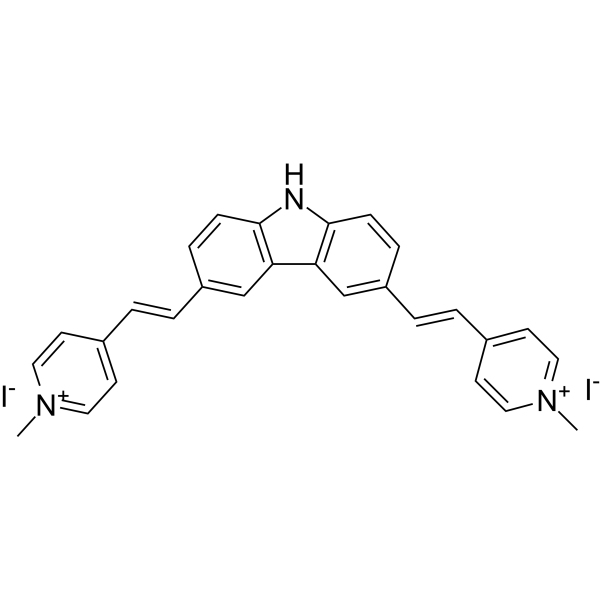
    BMVC
    1 Publications Verification

    G-quadruplex Telomerase DNA/RNA Synthesis Cancer
    BMVC is a potent G-quadruplex (G4) stabilizer and a selective telomerase inhibitor with an IC50 of ~0.2 μM. BMVC inhibits Taq DNA polymerase with an IC50 of ~2.5 μM. BMVC increases the melting temperature of G4 structure of telomere and accelerates telomere length shortening. Anticancer activities .
    BMVC
  • HY-157417

    DNA/RNA Synthesis Others
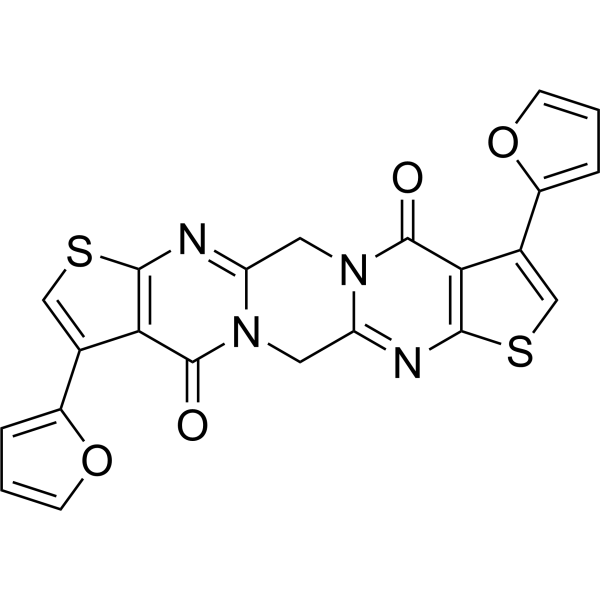
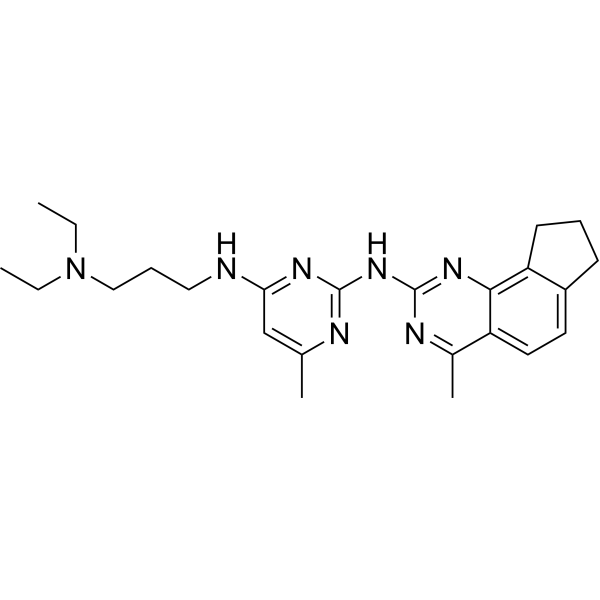
    G-quadruplex ligand 1, a G-quadruplex ligand, disrupts G-Quadruplex DNA structure and enhances gene expression .
    G-quadruplex ligand 1
  • HY-W112938

    DNA Alkylator/Crosslinker Photosensitizer Infection Cancer
    TMPyP tetrachloride is a DNA-binding agent, singlet oxygen Sensitizer and photobleaching agent. TMPyP tetrachloride binds to DNA via intercalation or external groove complexation; irradiation induces its photoinduced release from DNA. TMPyP tetrachloride sensitizes the generation of singlet molecular oxygen upon irradiation, and prolonged irradiation leads to photobleaching. TMPyP tetrachloride initially localizes preferentially in neuronal nuclei and cytoplasm, and irradiation triggers its subcellular relocalization. TMPyP tetrachloride binds to K + -free single-molecule G4-DNA nanowires via intercalation, and binds to K + -type variants via non-intercalation. TMPyP tetrachloride can be used in studies related to cancer, HIV infection and bacterial infection .
    TMPyP tetrachloride
  • HY-101931

    VEGFR Cancer
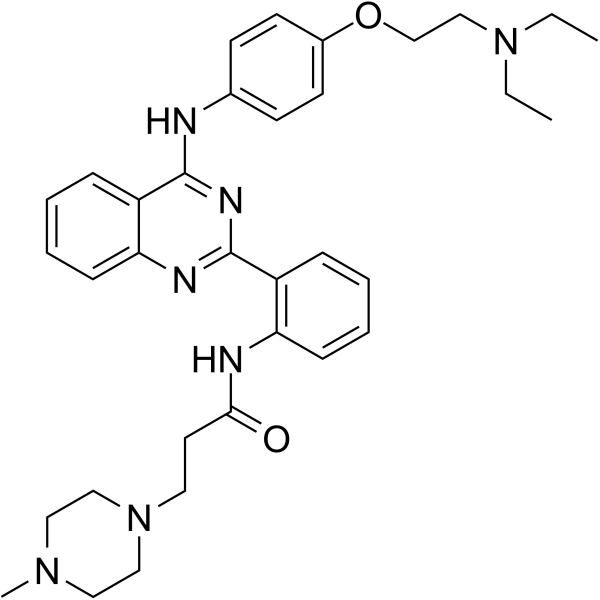
    hVEGF-IN-1, a quinazoline derivative, could specifically bind to the G-rich sequence in the internal ribosome entry site A (IRES-A) and destabilize the G-quadruplex structure. hVEGF-IN-1 binds to the IRES-A (WT) with a Kd of 0.928 μM in SPR experiments. hVEGF-IN-1 could hinder tumor cells migration and repress tumor growth by decreasing VEGF-A protein expression .
    hVEGF-IN-1
  • HY-152538

    G-quadruplex Cancer
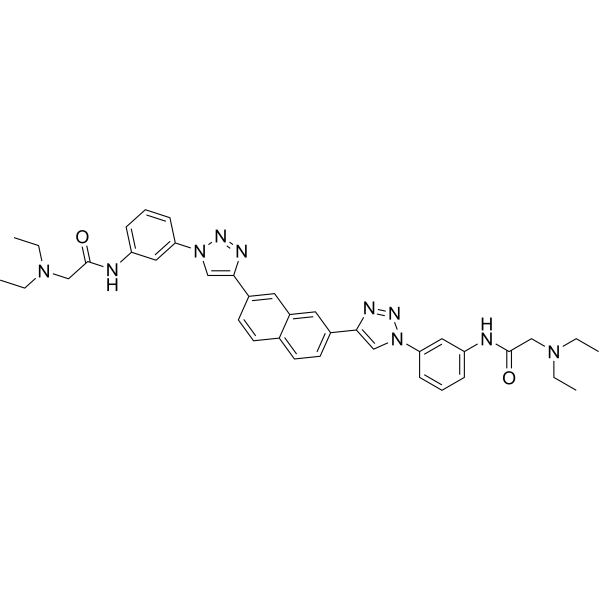
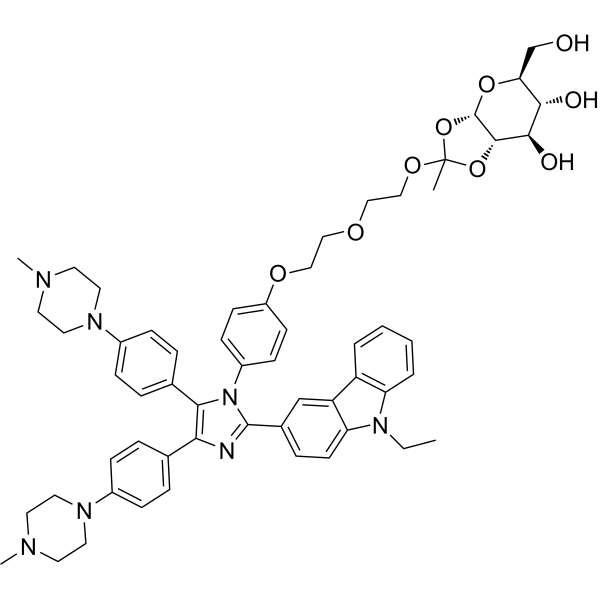
    Antitumor agent-85 is a G-quadruplex (G4)-ligand with the ability to stabilize different G4-DNA structures. Antitumor agent-85 has highly effective anti-tumor properties .
    Antitumor agent-85
  • HY-117479

    HIF/HIF Prolyl-Hydroxylase Cancer
    CL67 is a potent hypoxia-inducible factor (HIF) pathway inhibitor. CL67 interferes G-quadruplex structures within promoter sequences. CL67 can be used in research of renal cancer .
    CL67
  • HY-15794A

    Methoxymorpholinyl doxorubicin hydrochloride; FCE 23762 hydrochloride; PNU 152243A

    G-quadruplex Cancer
    Nemorubicin hydrochloride is a derivative of doxorubicin, and has antitumor activity. Nemorubicin hydrochloride, not only intercalate into the duplex DNA, but also result in significant ligands for G-quadruplex DNA segments, stabilizing their structure.
    Nemorubicin hydrochloride
  • HY-151471

    c-Myc Cancer
    Anticancer agent 84 is an anticancer agent. Anticancer agent 84 represses the transcription of c-MYC by stabilizing the G-quadruplex (G4) structure. Anticancer agent 84 can be used for the research of cancer .
    Anticancer agent 84
  • HY-164528

    Wnt G-quadruplex Cancer
    SJ26 is a Wnt1 inhibitor with anticancer activity. SJ26 inhibits the expression of Wnt1 and Wnt1-mediated downstream signaling pathways in a G-quadruplex structure-dependent manner to suppress the migration activity of cancer cells .
    SJ26
  • HY-152537

    G-quadruplex Cancer
    Antitumor agent-84 (compound 21a) is a G-quadruplex (G4)-ligand with the ability to stabilize different G4-DNA structures. Antitumor agent-84 has highly effective anti-tumor properties .
    Antitumor agent-84
  • HY-168886

    c-Myc Cancer
    Anticancer agent 263 (compound 7) is a potent anticancer agent. Anticancer agent 263 binds to the G-quadruplex DNA (G4) sequence 22-mer Pu22, a mimic of c-Myc DNA. Anticancer agent 263 is a structure modulator, showcasing a significant enhancement in protein α-helix formation and the capability to form supramolecular network. Anticancer agent 263 shows no cytotoxicity .
    Anticancer agent 263
  • HY-15794G

    Methoxymorpholinyl doxorubicin; FCE 23762; PNU 152243

    G-quadruplex Cancer
    Nemorubicin (Methoxymorpholinyl doxorubicin) GMP is a GMP-class Nemorubicin (HY-15794). Nemorubicin is a Doxorubicin derivative with potent antitumor activity. Nemorubicin is highly cytotoxic to a variety of tumor cell lines presenting a multidrug-resistant phenotype. Nemorubicin not only intercalate into the duplex DNA, but also result in significant ligands for G-quadruplex DNA segments, stabilizing their structure. Nemorubicin requirs an intact nucleotide excision repair (NER) system to exert its activity .
    Nemorubicin
  • HY-162688

    Telomerase G-quadruplex Apoptosis Ferroptosis Others
    Anticancer agent 239 (Compound 5) is a ligand of hTERT promoter G-quadruplex DNA structures (hTERT G4) (Kd = 1.1 μM), and downregulates hTERT expression. Anticancer agent 239 decreases telomerase activity, shortens telomere length, and induces DNA damage, acute cellular senescence, and apoptosis. Anticancer agent 239 causes mitochondrial dysfunction, disrupts iron metabolism and activates ferroptosis in cancer cells. Anticancer agent 239 inhibits tumor growth in MDA-MB-231 xenograft mouse model .
    Anticancer agent 239
  • HY-172902

    DNA/RNA Synthesis Neurological Disease
    RNA binder 1 (Compound 4b) is a blood-brain permeable RNA binder. RNA binder 1 can selectively bind to the G-quadruplex structure of the G4C2 repeat sequence RNA of the C9orf72 gene. RNA binder 1 significantly reduces the levels of toxic polypeptides poly(GA) and poly(GP) produced by the G4C2 repeat sequence in amyotrophic lateral sclerosis (ALS) patient-derived cells. RNA binder 1 has no significant effect on the antisense polypeptide poly(PR), showing selectivity for sense RNA. RNA binder 1 can be used in the study of ALS and frontotemporal dementia (FTD) .
    RNA binder 1
  • HY-D3415

    Fluorescent Dye G-quadruplex Cancer
    TOR-G4 is a Fluorescent probe that binds to G-quadruplex (G4) nucleic acid structures. TOR-G4 exhibits a unique fluorescence lifetime when bound to G4 compared to other structures, enabling sensitive discrimination between G4-bound and non-G4-bound states. TOR-G4 mainly colocalizes with RNA in the cytoplasm and nucleolus. TOR-G4 can be used to investigate the roles of RNA G4 in cells. TOR-G4 shows cytotoxicity against osteosarcoma cells .
    TOR-G4
  • HY-101931R

    Reference Standards VEGFR Cancer
    hVEGF-IN-1 (Standard) is the analytical standard of hVEGF-IN-1 (HY-101931). This product is intended for research and analytical applications. hVEGF-IN-1, a quinazoline derivative, could specifically bind to the G-rich sequence in the internal ribosome entry site A (IRES-A) and destabilize the G-quadruplex structure. hVEGF-IN-1 binds to the IRES-A (WT) with a Kd of 0.928 μM in SPR experiments. hVEGF-IN-1 could hinder tumor cells migration and repress tumor growth by decreasing VEGF-A protein expression .
    hVEGF-IN-1 (Standard)
  • HY-181599

    Mitochondrial Metabolism DNA/RNA Synthesis Reactive Oxygen Species (ROS) Apoptosis Autophagy Caspase Bcl-2 Family Atg8/LC3 Cancer
    XAN-5 is a mitochondrial DNA G-quadruplex (mtG4) ligand with a Kd of 3.8 μM. XAN-5 selectively binds and stabilizes mtG4 structures, disrupting mitochondrial gene transcription and DNA replication. XAN-5 triggers mitochondrial dysfunction, ROS overproduction, G0 phase arrest and caspase-dependent apoptosis. XAN-5 inhibits autophagy and induces immunogenic cell death. XAN-5 inhibits tumor growth in a mouse liver cancer model while enhancing tumor-infiltrating CD4 + and CD8 + T cells. XAN-5 targets two cancer resistance mechanisms simultaneously. XAN-5 can be used for the research of liver cancer .
    XAN-5
  • HY-181234

    c-Myc Apoptosis Cancer
    Y502-3888 is a c-Myc inhibitor. Y502-3888 binds to the c-Myc G4 structure, inhibits c-Myc transcription, and downregulates c-Myc expression at both mRNA and protein levels. Y502-3888 inhibits the viability of myeloma cells and induces cell apoptosis. Y502-3888 can be used for the research of multiple myeloma .
    Y502-3888

Inquiry Online

Your information is safe with us. * Required Fields.

Salutation


Country or Region *

Applicant Name *


Organization Name *

Department *


Email Address *


Product Name *

Cat. No.


Requested quantity *

Phone Number *


Remarks

Inquiry Online

Inquiry Information

Product Name:
Cat. No.:
Quantity:
MCE Japan Authorized Agent:

