1. Search Result
Search Result
Results for "

G6PD

" in MedChemExpress (MCE) Product Catalog:

22

Inhibitors & Agonists

3

Natural
Products

1

Recombinant Proteins

8

Antibodies

3

Oligonucleotides

Cat. No. Product Name Target Research Areas Chemical Structure
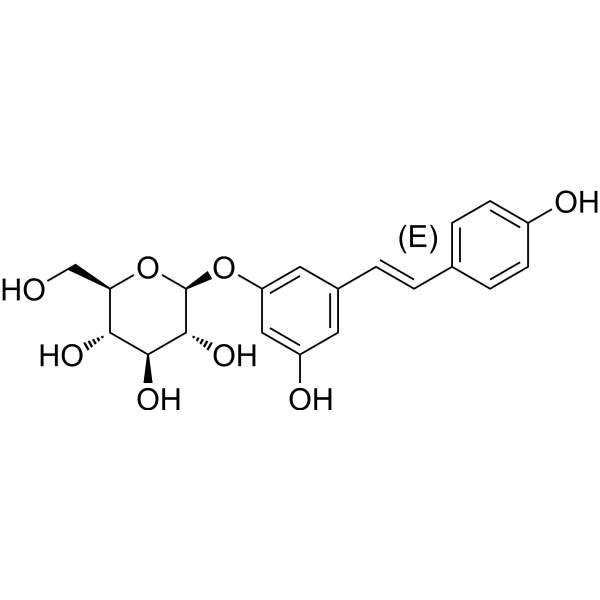
  • HY-N0120A
    Polydatin
    10+ Cited Publications

    Piceid

    Autophagy Apoptosis Mitophagy Inflammation/Immunology Cancer
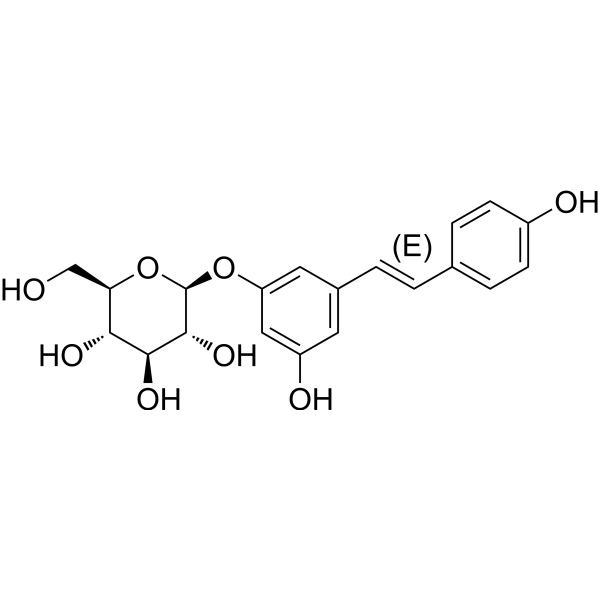
    Polydatin (Piceid), extracted from the roots of Reynoutria japonica, a widely used traditional Chinese remedies, possesses anti-inflammatory activity in several experimental models. Polydatin (Piceid) inhibits G6PD and induces oxidative and ER stresses.
    Polydatin
  • HY-W107464
    G6PDi-1
    5+ Cited Publications

    PDI Metabolic Disease Inflammation/Immunology
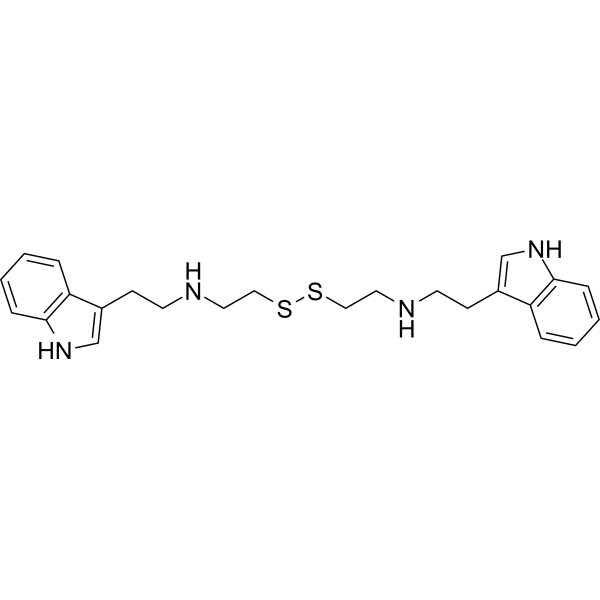
    G6PDi-1 is a reversible and non-competitive glucose-6-phosphate dehydrogenase (G6PD) inhibitor with an IC50 of 0.07 μM for human G6PD. G6PDi-1 depletes NADPH most strongly in lymphocytes. G6PDi-1 markedly decreases inflammatory cytokine production in T cells .
    G6PDi-1
  • HY-W010342
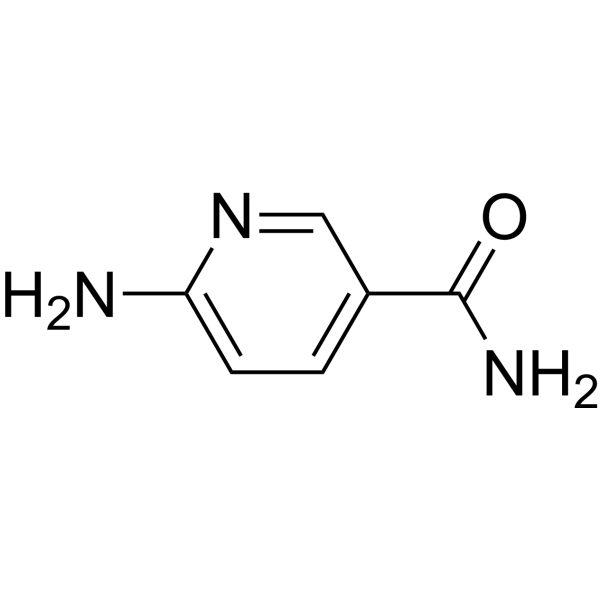
    6-Aminonicotinamide
    15+ Cited Publications

    NADPH Oxidase Cancer
    6-Aminonicotinamide, a potent antimetabolite of nicotinamide, is competitive NADP +-dependent enzyme glucose-6-phosphate dehydrogenase (G6PD) inhibitor (Ki=0.46 μM). 6-Aminonicotinamide resultis ATP depletion and synergizes with DNA-crosslinking chemotherapy agents, such as Cisplatin (HY-17394), in killing cancer cells .
    6-Aminonicotinamide
  • HY-123962
    G6PD activator AG1
    5+ Cited Publications

    NADPH Oxidase Metabolic Disease
    G6PD activator AG1 is a potent and selective glucose-6-phosphate dehydrogenase (G6PD) agonist with an EC50 of 3 μM. G6PD is an oxidoreductase that catalyzes the oxidation of glucose-6-phosphate to 6-phosphogluconolactone and the simultaneous reduction of NAD phosphate (NADP) to reduced NADP (NADPH). G6PD activator AG1 can reduce hemolysis of human erythrocytes .
    G6PD activator AG1
  • HY-16438
    RRx-001
    Maximum Cited Publications
    20 Publications Verification

    Nibrozetone

    CD47 Apoptosis Parasite Infection Inflammation/Immunology Cancer
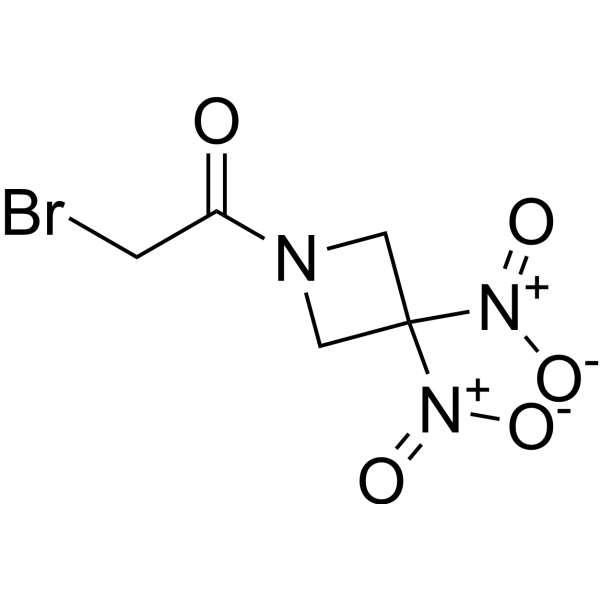
    RRx-001, a hypoxia-selective epigenetic agent and studied as a radio- and chem-sensitizer, triggers apoptosis and overcomes agent resistance in myeloma. RRx-001 exhibits potent anti-tumor activity with minimal toxicity . RRx-001 is a dual small molecule checkpoint inhibitor by downregulating CD47 and SIRP-α . RRx-001 is a potent inhibitor of G6PD and shows potent antimalarial activity .
    RRx-001
  • HY-125863

    G6PD

    Endogenous Metabolite Metabolic Disease Cancer
    Glucose-6-phosphate dehydrogenase, Microorganism (G6PD) is the rate-limiting enzyme of the pentose phosphate pathway. Glucose-6-phosphate dehydrogenase, Microorganism is a primary source of NADPH in antioxidant pathways, nitric oxide synthase, NADPH oxidase, cytochrome p450 systems, and others. Glucose-6-phosphate dehydrogenase, Microorganism is applicable in research related to diabetes, endothelial dysfunction, cancer, and cardiomyopathy .
    Glucose-6-phosphate dehydrogenase, Microorganism
  • HY-W017960

    Et-HE; 1,4-DHP

    SOD Endocrinology
    Diludine (BNP-7787) is an orally effective feed additive. Diludine reduces the activity of G6PD and increases the level of superoxide dismutase (SOD). Diludine reduces the mutagenic effect of environmental pollutants, protects parental reproductive systems and improves offspring quality. Diludine is mainly applied during the transition period of dairy cows to increase milk yield and milk fat content, and improve health status during parturition. Diludine can be used in animal feeding research .
    Diludine
  • HY-W587796

    6-PGδL; 6-Phosphonoglucono-D-lactone

    Endogenous Metabolite Cardiovascular Disease Metabolic Disease Cancer
    6-Phosphoglucono-δ-lactone (6-PGδL), a reversal substrate of glucose-6-phosphate dehydrogenase (G6PD), is an intermediate compound in the oxidative branch of the pentose phosphate pathway (PPP). 6-Phosphoglucono-δ-lactone produced from D-glucose-6-phosphate by glucose-6-phosphate dehydrogenase (G6PDH) and is converted to 6-phosphoglutonate by lactonase. 6-Phosphoglucono-δ-lactone can be used for heart failure, type 2 diabetes and cancers research .
    6-Phosphoglucono-δ-lactone
  • HY-125863C

    G6PD, Bacillus sp.

    Endogenous Metabolite Others
    Glucose-6-phosphate dehydrogenase, Bacillus sp. catalyzes the conversion of glucose-6-phosphate into 6-phosphogluconolactone, and produces reduced nicotinamide adenine dinucleotide phosphate (NADPH) and ribose-5-phosphate in this process. Glucose-6-phosphate dehydrogenase, Bacillus sp. can be used in research about diabetic complications .
    Glucose-6-phosphate dehydrogenase, Bacillus sp.
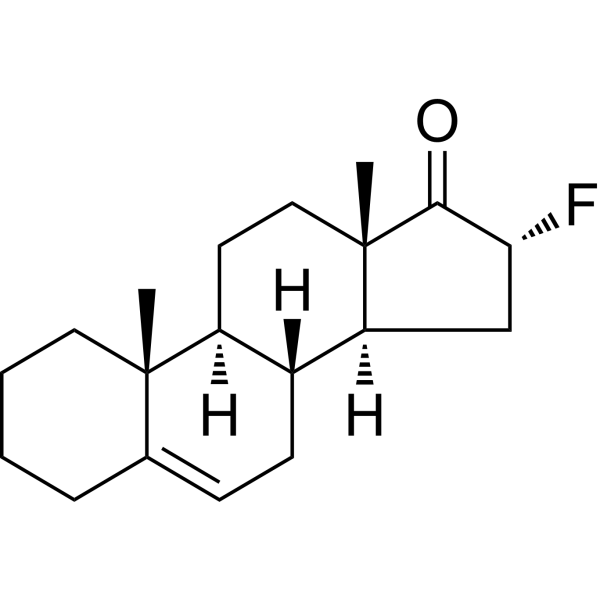
  • HY-106328
    Fluasterone
    1 Publications Verification

    Mitochondrial Metabolism Metabolic Disease Inflammation/Immunology Cancer
    Fluasterone is a potent G6PD inhibitor with a Ki of 0.51 μM. Fluasterone has anti-inflammatory, cancer preventive, and anti-diabetic effects. Fluasterone is orally active .
    Fluasterone
  • HY-N0120AR
    Polydatin (Standard)
    10+ Cited Publications

    Piceid (Standard)

    Reference Standards Autophagy Apoptosis Mitophagy Inflammation/Immunology Cancer
    Polydatin (Standard) is the analytical standard of Polydatin. This product is intended for research and analytical applications. Polydatin (Piceid), extracted from the roots of Reynoutria japonica, a widely used traditional Chinese remedies, possesses anti-inflammatory activity in several experimental models. Polydatin (Piceid) inhibits G6PD and induces oxidative and ER stresses.
    Polydatin (Standard)
  • HY-125863B

    G6PD (yeast, recombinant)

    Endogenous Metabolite Cardiovascular Disease Metabolic Disease Cancer
    Glucose 6-phosphate dehydrogenase (yeast, recombinant) is the rate-limiting enzyme of the pentose phosphate pathway and a major source of NADPH in antioxidant pathways, nitric oxide synthase, NADPH oxidase, and cytochrome P450 systems. Glucose 6-phosphate dehydrogenase helps cells resist oxidative stress and regulates metabolic rates. It holds potential for research in fields such as diabetes, endothelial dysfunction, cancer, and cardiomyopathy .
    Glucose 6-phosphate dehydrogenase (yeast, recombinant)
  • HY-RS05194

    Small Interfering RNA (siRNA) Others

    G6PD Human Pre-designed siRNA Set A contains three designed siRNAs for G6PD gene (Human), as well as a negative control, a positive control, and a FAM-labeled negative control.

    G6PD Human Pre-designed siRNA Set A
    G6PD Human Pre-designed siRNA Set A
  • HY-125863A

    G6PD (Leuconostoc sp., recombinant)

    Endogenous Metabolite Metabolic Disease
    Glucose-6-phosphate dehydrogenase (Leuconostoc sp., recombinant) is an NADP-dependent enzyme in the pentose phosphate pathway, which is one of the ways glucose is metabolized. Glucose-6-phosphate dehydrogenase (Leuconostoc sp., recombinant) can be used to quantify ATP, glucose, and creatine kinase .
    Glucose-6-phosphate dehydrogenase (Leuconostoc sp., recombinant)
  • HY-RS22997

    Small Interfering RNA (siRNA) Others

    G6pd Rat Pre-designed siRNA Set A contains three designed siRNAs for G6pd gene (Rat), as well as a negative control, a positive control, and a FAM-labeled negative control.

    G6pd Rat Pre-designed siRNA Set A
    G6pd Rat Pre-designed siRNA Set A
  • HY-W010342R

    NADPH Oxidase Reference Standards Cancer
    6-Aminonicotinamide, a potent antimetabolite of nicotinamide, is competitive NADP+-dependent enzyme glucose-6-phosphate dehydrogenase (G6PD) inhibitor (Ki=0.46 μM). 6-Aminonicotinamide resultis ATP depletion and synergizes with DNA-crosslinking chemotherapy agents, such as Cisplatin (HY-17394), in killing cancer cells .
    6-Aminonicotinamide (Standard)
  • HY-136783

    Parasite Infection
    G6PD-IN-2 is a Plasmodium falciparum glucose-6-phosphate dehydrogenase (G6PD) inhibitor with an IC50 value of 0.2 μM. G6PD-IN-2 exerts weak inhibitory activity on Plasmodium falciparum glucose-6-phosphate dehydrogenase-6-phosphogluconolactonase (PfGluPho) with an IC50 value of 22.0 μM. G6PD-IN-2 inhibits growth of Plasmodium falciparum 3D7 strain and exhibits low cytotoxicity in hepatocytes. G6PD-IN-2 can be used for the research of malaria .
    G6PD-IN-2
  • HY-W017960R

    Et-HE (Standard); 1,4-DHP (Standard)

    SOD Reference Standards Metabolic Disease
    Diludine (Standard) is the analytical standard of Diludine (HY-W017960). This product is intended for research and analytical applications. Diludine (BNP-7787) is an orally effective feed additive. Diludine reduces the activity of G6PD and increases the level of superoxide dismutase (SOD). Diludine reduces the mutagenic effect of environmental pollutants, protects parental reproductive systems and improves offspring quality. Diludine is mainly applied during the transition period of dairy cows to increase milk yield and milk fat content, and improve health status during parturition. Diludine can be used in animal feeding research .
    Diludine (Standard)
  • HY-106328R

    Mitochondrial Metabolism Reference Standards Metabolic Disease Inflammation/Immunology Cancer
    Fluasterone (Standard) is the analytical standard of Fluasterone. This product is intended for research and analytical applications. Fluasterone is a potent G6PD inhibitor with a Ki of 0.51 μM. Fluasterone has anti-inflammatory, cancer preventive, and anti-diabetic effects. Fluasterone is orally active .
    Fluasterone (Standard)
  • HY-RS15375

    Small Interfering RNA (siRNA) Others

    UBL4A Human Pre-designed siRNA Set A contains three designed siRNAs for UBL4A gene (Human), as well as a negative control, a positive control, and a FAM-labeled negative control.

    UBL4A Human Pre-designed siRNA Set A
    UBL4A Human Pre-designed siRNA Set A
  • HY-W248922

    PDI Infection
    2,6-Dibromo-4-(hydroxymethyl) phenol (Compound 5) acts as a selective inhibitor of Saccharomyces cerevisiae glucose-6-phosphate dehydrogenase, with an IC50 value of 50.2 μM, and shows no activity against Leuconostoc mesenteroides glucose-6-phosphate dehydrogenase .
    2,6-Dibromo-4-(hydroxymethyl)phenol
  • HY-182002

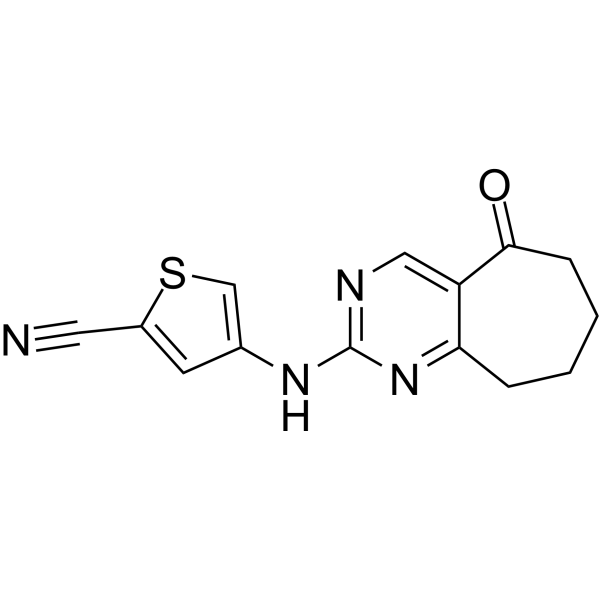
    Apoptosis IAP Cancer
    Apoptosis inducer 61 (Compound 4E) is an Apoptosis inducer. Apoptosis inducer 61 significantly downregulates the expression of BIRC3 and activates Apoptosis. Anticancer agent 313 exhibits anticancer activity against ER + breast cancer cells, triple-negative breast cancer cells, and gastric cancer cells .
    Apoptosis inducer 61

Inquiry Online

Your information is safe with us. * Required Fields.

Salutation


Country or Region *

Applicant Name *


Organization Name *

Department *


Email Address *


Product Name *

Cat. No.


Requested quantity *

Phone Number *


Remarks

Inquiry Online

Inquiry Information

Product Name:
Cat. No.:
Quantity:
MCE Japan Authorized Agent:

