22 Results for "

GGTase

" in MedChemExpress (MCE) Product Catalog:
Products (22)

22 Results for "GGTase" in MCE Product Catalog:

9
9 Publications Verification
Cat. No.: HY-15871
CAS No.: 1217457-86-7
Purity:  99.61%
Target:  

Apoptosis

Research Areas:  

Cancer

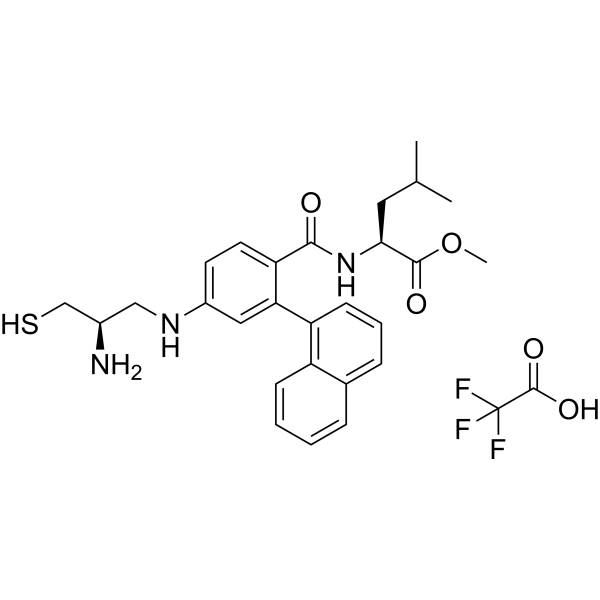
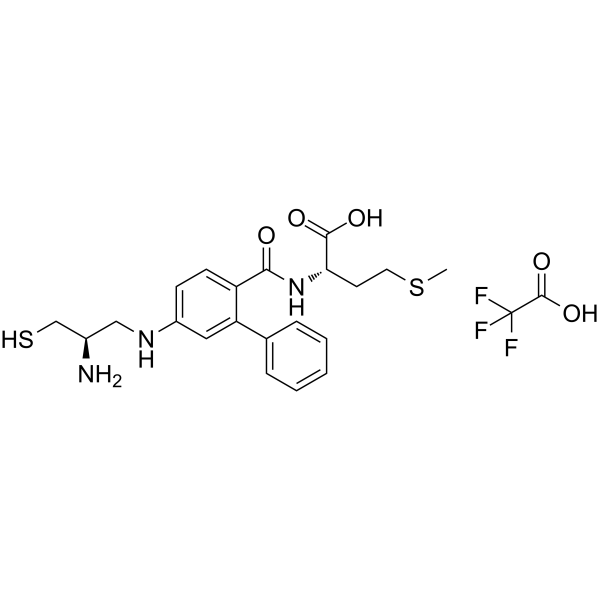
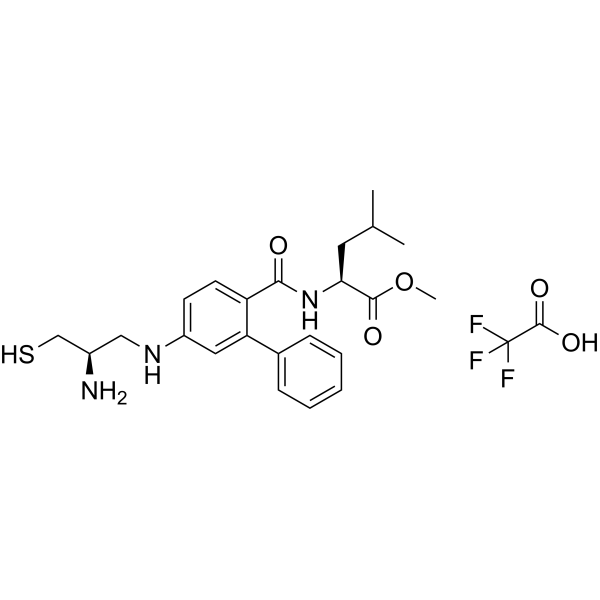
GGTI298 Trifluoroacetate is a CAAZ peptidomimetic geranylgeranyltransferase I (GGTase I) inhibitor, which can inhibit Rap1A with IC50 of 3 μM; little effect on Ha-Ras with IC50 of >20 μM.
loading...
    loading...
2
2 Cited Publications
Cat. No.: HY-16231
CAS No.: 501010-06-6
Target:  

Apoptosis

Research Areas:  

Cancer

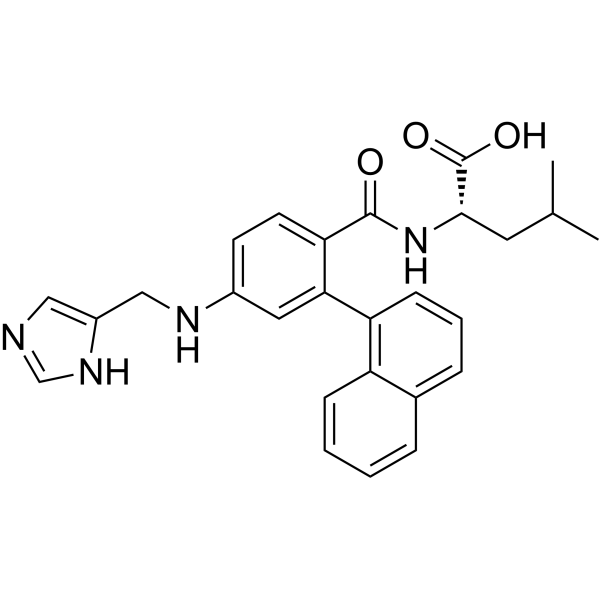
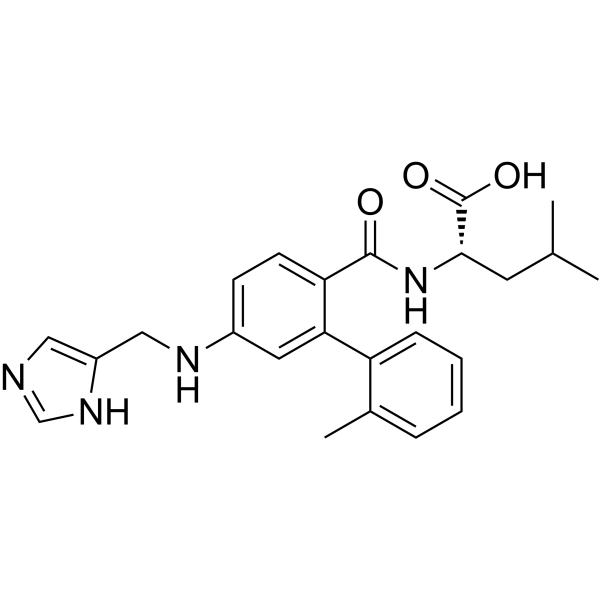
GGTI-2418 is a highly potent, competitive, and selective geranylgeranyltransferase I (GGTase I) inhibitor. GGTI-2418 inhibits GGTase I and FTase activities with IC50s of 9.5 nM and 53 μM, respectively. GGTI-2418 also increases p27(Kip1) and induces significant regression of breast tumors .
loading...
    loading...
1
1 Cited Publications
Cat. No.: HY-12369
CAS No.: 191102-79-1
Purity:  98.50%
Target:  

GGTase

Research Areas:  

Inflammation/Immunology

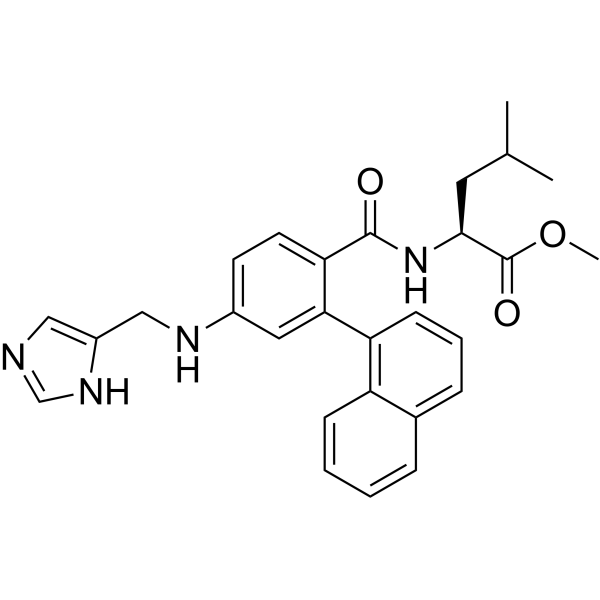
GGTI-2133, a peptidomimetic, is a selective geranylgeranyltransferase I (GGTase-I) inhibitor with an IC50 of 38 nM. GGTI-2133 shows 140-fold selectivity over farnesyltransferase (FTase) (IC50 of 5.4 μM). GGTI-2133 inhibits the geranylation of Rap-1A with an IC50 of 10 μM. GGTI-2133 can be used for the study of eosinophilic airway inflammation such as asthma .
loading...
    loading...
Cat. No.: HY-100876
CAS No.: 180977-44-0
Target:  

Apoptosis

Research Areas:  

Cancer

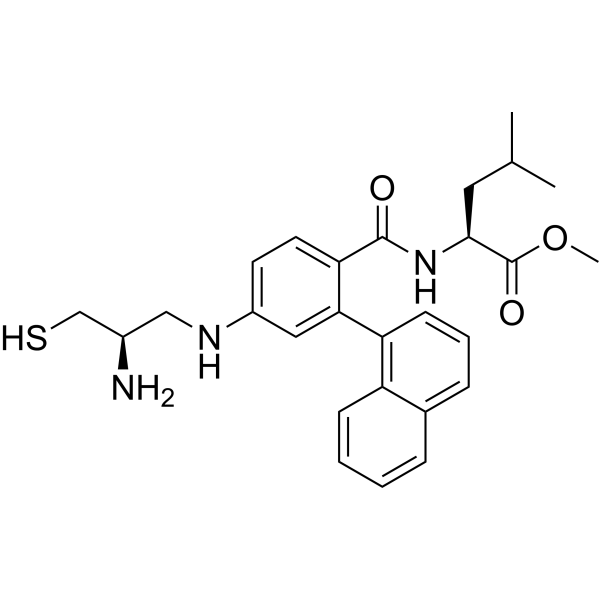
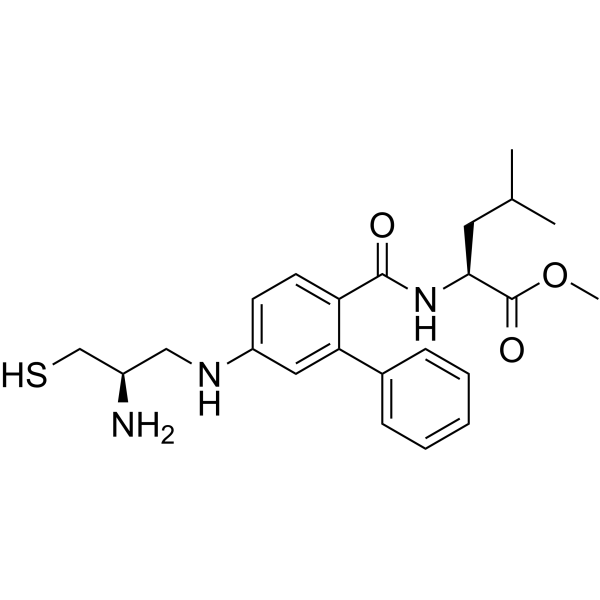
GGTI298 is a CAAZ peptidomimetic geranylgeranyltransferase I (GGTase I) inhibitor, strongly inhibiting the processing of geranylgeranylated Rap1A with little effect on processing of farnesylated Ha-Ras, with IC50 values of 3 and > 20 μM in vivo, respectively.
loading...
    loading...
Cat. No.: HY-15873A
CAS No.: 1217471-51-6
Purity:  98.03%
Research Areas:  

Cancer

FTI 276 TFA is a farnesyltransferase (FTase) inhibitor with an IC50 of 0.5 nM, and it exhibits selectivity for FTase over geranylgeranyltransferase I (GGTase I). FTI 276 TFA blocks the farnesylation of H-Ras and K-Ras4B, causes inactive Ras-Raf complexes to accumulate in the cytoplasm, and inhibits constitutive MAPK activation. FTI 276 TFA reduces the number, incidence and volume of tumors, and restricts the growth of tumors expressing activated K-ras. FTI 276 TFA can be used in research related to pulmonary adenoma .
loading...
    loading...
Cat. No.: HY-161573
CAS No.: 2413020-56-9
Target:  

YAP GGTase

Research Areas:  

Cancer

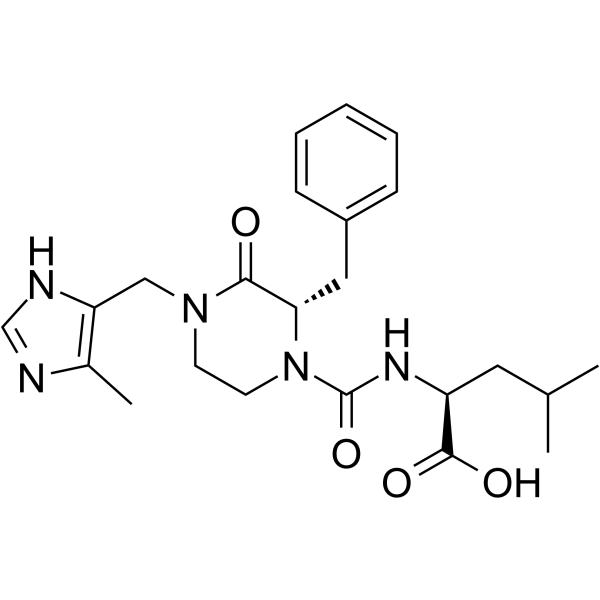
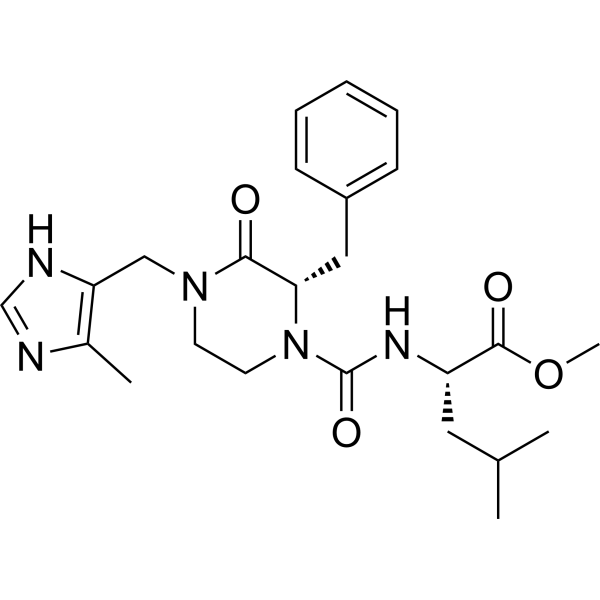
BAY-593 is an orally active GGTase-I inhibitor. BAY-593 can block YAP1/TAZ signaling in animals and has antitumor activity .
loading...
    loading...
Cat. No.: HY-16229A
CAS No.: 478908-50-8
Target:  

Apoptosis GGTase

Research Areas:  

Cancer

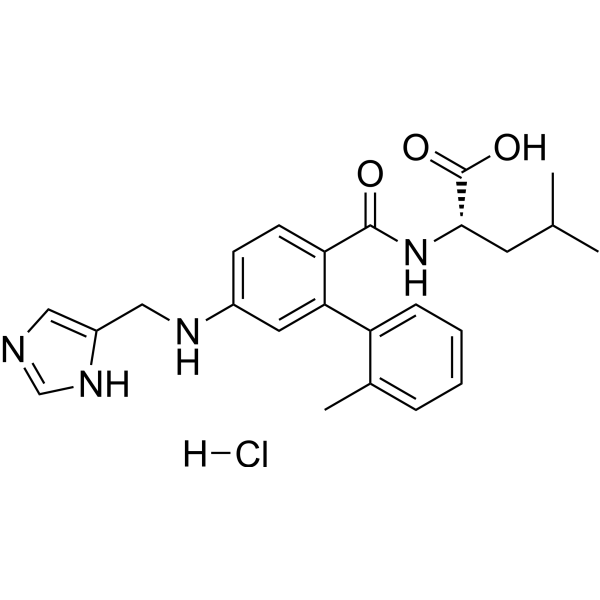
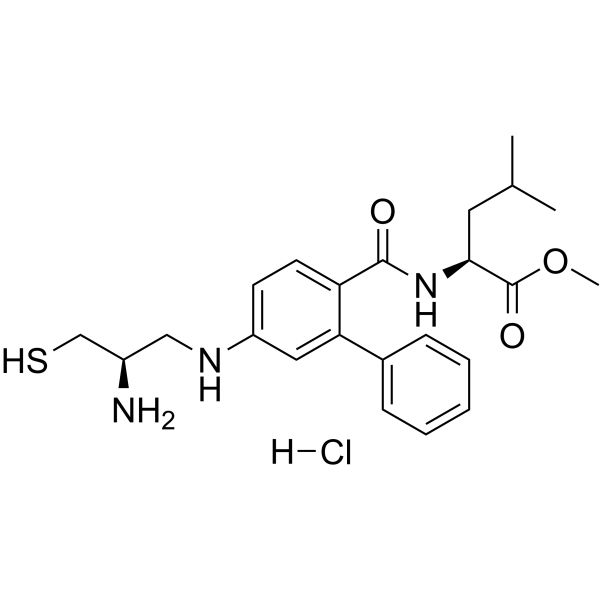
GGTI-2154 hydrochloride is a potent and selective inhibitor geranylgeranyltransferase I (GGTase I), with an IC50 of 21 nM. GGTI-2154 hydrochloride shows more than 200-fold selectivity for GGTase I over FTase (IC50=5600 nM). GGTI-2154 hydrochloride can be used for the research of cancer .
loading...
    loading...
Cat. No.: HY-16230
CAS No.: 501010-05-5
Target:  

ROS Kinase Apoptosis

Research Areas:  

Cancer

GGTI-2417 is a potent and selective inhibitor of GGTase I. GGTI-2417 inhibits the Cdk2-mediated phosphorylation of p27 Kip1 at Thr187 and accumulates p27 Kip1 in the nucleus. GGTI-2417 also induces breast cancer cell apoptosis .
loading...
    loading...
Cat. No.: HY-115489
CAS No.: 171744-11-9
Target:  

Ras

Research Areas:  

Cancer

GGTI-286, a potent and cell-permeable GGTase I inhibitor, is 25-fold more potent (IC50=2 μM) than the corresponding methyl ester of FTI-276 (HY-15873A). GGTI-286 selectively inhibits geranylgeranylation of Rap1A over farnesylation of H-Ras in NIH3T3 cells (IC50s=2 and >30 μM, respectively). GGTI-286 also potently inhibits oncogenic K-Ras4B stimulation with an IC50 of 1 μM .
loading...
    loading...
Cat. No.: HY-115489A
Research Areas:  

Cancer

GGTI-286 TFA, a potent and cell-permeable GGTase I inhibitor, is 25-fold more potent (IC50=2 μM) than the corresponding methyl ester of FTI-276 (HY-15873A). GGTI-286 TFA selectively inhibits geranylgeranylation of Rap1A over farnesylation of H-Ras in NIH3T3 cells (IC50s=2 and >30 μM, respectively). GGTI-286 TFA also potently inhibits oncogenic K-Ras4B stimulation with an IC50 of 1 μM .
loading...
    loading...
Cat. No.: HY-161573A
CAS No.: 2413068-25-2
Target:  

YAP GGTase

Research Areas:  

Cancer

(7S)-BAY-593 is the S-enantiomer of BAY-593 (HY-161573). BAY-593 is an orally active GGTase-I inhibitor. BAY-593 can block YAP1/TAZ signaling in animals and has antitumor activity .
loading...
    loading...
Cat. No.: HY-12369A
CAS No.: 1217480-14-2
Target:  

GGTase

Research Areas:  

Inflammation/Immunology

GGTI-2133 TFA, a peptidomimetic, is a selective geranylgeranyltransferase I (GGTase-I) inhibitor with an IC50 of 38 nM. GGTI-2133 TFA shows 140-fold selectivity over farnesyltransferase (FTase) (IC50 of 5.4 μM). GGTI-2133 TFA inhibits the geranylation of Rap-1A with an IC50 of 10 μM. GGTI-2133 TFA can be used for the study of eosinophilic airway inflammation such as asthma .
loading...
    loading...
Cat. No.: HY-16229
CAS No.: 251577-10-3
Target:  

Apoptosis

Research Areas:  

Cancer

GGTI-2154 is a potent and selective inhibitor of geranylgeranyltransferase I (GGTase I), with an IC50 of 21 nM. GGTI-2154 shows more than 200-fold selectivity for GGTase I over FTase (IC50=5600 nM). GGTI-2154 can be used for the research of cancer .
loading...
    loading...
Cat. No.: HY-120271
CAS No.: 181045-83-0
Target:  

Ras

Research Areas:  

Cancer

GGTI-297 is a geranylgeranyl transferase I (GGTase-1) inhibitor with IC50 values of 56 nM and 203 nM for GGTase-1 and fanesyl transferase (FTase), respectively. GGTI-297 inhibits the processing of the geranylgeranylated protein Rap1A without affecting the farnesylated protein H-Ras .
loading...
    loading...
Cat. No.: HY-118916A
CAS No.: 817586-01-9
Target:  

Farnesyl Transferase

Research Areas:  

Cancer

FTI-2148 diTFA is a RAS C-terminal mimetic dual farnesyl transferase (FT-1) and geranylgeranyl transferase-1 (GGT-1) inhibitor with IC50s of 1.4 nM and 1.7 μM, respectively .
loading...
    loading...
Cat. No.: HY-161573B
CAS No.: 2413020-57-0
Target:  

YAP GGTase

Research Areas:  

Cancer

BAY-593 (hydrochloride) is an orally active GGTase-I inhibitor. BAY-593 (hydrochloride) can block YAP1/TAZ signaling in animals and has antitumor activity .
loading...
    loading...
Cat. No.: HY-120229
CAS No.: 191102-87-1
Research Areas:  

Neurological Disease

GGTI-2147 is a potent GGTase I inhibitor. GGTI-2147 blocks geranyl-geranylation of Rap1A and reduces the activity of Rac1 (one of substrates for GGTI) and ameliorates the OGD/R-induced neuronal apoptosis.GGTI-2147 can be used for neurodevelopmental disorders research, such as autism, depression, and schizophrenia .
loading...
    loading...
Cat. No.: HY-117935
CAS No.: 181141-66-2
Target:  

Ras

Research Areas:  

Cancer

GGTI-286 hydrochloride, a potent GGTase I inhibitor, is 25-fold more potent (IC50=2 μM) than the corresponding methyl ester of FTI-276 (HY-15873A). GGTI-286 hydrochloride selectively inhibits geranylgeranylation of Rap1A over farnesylation of H-Ras in NIH3T3 cells (IC50s =2 and >30 μM, respectively). GGTI-286 hydrochloride also potently inhibits oncogenic K-Ras4B stimulation with an IC50 of 1 μM .
loading...
    loading...
Cat. No.: HY-128037
CAS No.: 156707-43-6
Target:  

Farnesyl Transferase

Research Areas:  

Others

FTase-IN-2 (Compound 2) is a farnesyltransferase inhibitor, with IC50 values of 150 nM and 1500 nM against FTase and GGTase I, respectively. FTase-IN-2 is not farnesylated by FTase, thus avoiding metabolic inactivation .
loading...
    loading...
Cat. No.: HY-114159
CAS No.: 478908-51-9
Target:  

GGTase

Research Areas:  

Metabolic Disease

GGTI-2166 is a geranylgeranyltransferase I (GGTase I) inhibitor. GGTI-2166 blocks geranylgeranylation modification of target proteins. GGTI-2166 inhibits RANKL- or TNF-α-induced pre-osteoclast formation and TRAP activity. GGTI-2166 is applicable to research on osteoclast differentiation .
loading...
    loading...

