1. Search Result
Search Result
Pathways Recommended: Stem Cell/Wnt Cell Cycle/DNA Damage
Results for "

Glioma stem cells

" in MedChemExpress (MCE) Product Catalog:

12

Inhibitors & Agonists

1

Peptides

Cat. No. Product Name Target Research Areas Chemical Structure
  • HY-160972

    LXR Neurological Disease Cancer
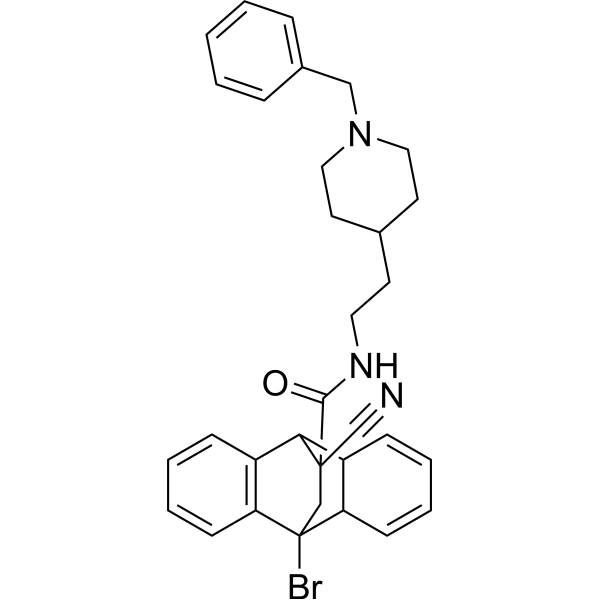
    MM0299 is a selective lanosterol synthase (LSS) inhibitor with an IC50 value of 2.22 μM. MM0299 depletes intracellular cholesterol and acts as a growth inhibitor for glioma stem-like cells. MM0299 exhibits anti-glioblastoma activity. MM0299 is applicable to research related to glioblastoma .
    MM0299
  • HY-150082

    CDK DNA/RNA Synthesis Cancer
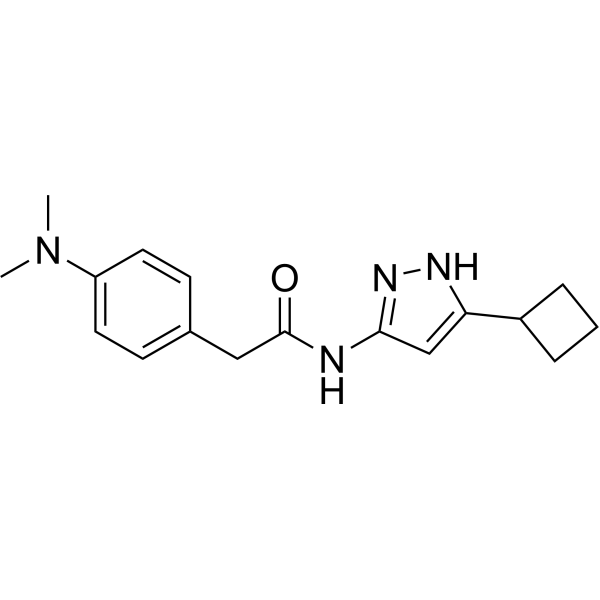
    CP681301 is a potent CDK5 inhibitor. CP681301 shows antiproliferative activity. CP681301 decreases the expression of CD133, OLIG2, SOX2, KI67, pCDK5 protein level in GSCs (Glioma stem cells). CP681301 reduces self-renewal in mouse glioma xenografts. CP681301 shows anti-tumor activity in Drosophila .
    CP681301
  • HY-117651

    Acyltransferase Cancer
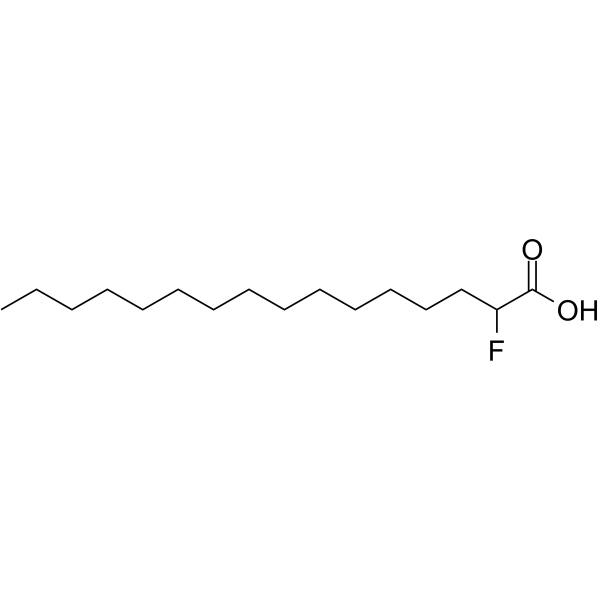
    2-Fluoropalmitic acid, an acyl-CoA synthetase inhibitor, acts as a candidate anti-glioma agent. 2-Fluoropalmitic acid suppresses the viability and stem-like phenotype of glioma stem cells (GSCs). 2-Fluoropalmitic acid also inhibits proliferation and invasion of glioma cell lines .
    2-Fluoropalmitic acid
  • HY-161303

    Zinc Finger Protein Cancer
    ZNF207-IN-1 (compound C16) is a potent inhibitor of Zinc Finger Protein 207 (ZNF207), with IC50 values ranging from 0.5–2.5 μM for inhibiting sphere formation and 0.5–15 μM for cytotoxicity. ZNF207-IN-1 exhibites efficient permeability across the blood–brain barrier .
    ZNF207-IN-1
  • HY-174212

    Apoptosis Cancer
    MXC-017 is a blood-brain barrier (BBB)-penetrant apoptosis inducer that directly targets Vimentin (VIM). MXC-017 prevents radiation-induced glioma stem cell (GSC) formation, while promoting G0/G1 cell cycle arrest and apoptosis. MXC-017 exhibits minimal off-target effects and shows no significant cytotoxicity. MXC-017 significantly prolongs median survival when used in combination with radiation therapy in glioblastoma (GBM) mouse models.
    MXC-017
  • HY-P10782

    Peptide-Drug Conjugates (PDCs) Cancer
    Pt(IV)-M13 is a BBB-penetrable Platinum (IV) prodrug-perfluoroaryl macrocyclic peptide conjugate. Pt(IV)-M13 is cytotoxic to glioma stem cells and increases uptake of platinum in the brain. Pt(IV)-M13 can be used in the study of glioblastoma .
    Pt(IV)-M13
  • HY-117651R

    Reference Standards Acyltransferase Cancer
    Quinine (sulfate hydrate) (Standard) is the analytical standard of Quinine (sulfate hydrate). This product is intended for research and analytical applications. Quinine sulfate hydrate (2:1:4) is an orally active alkaloid extracted from cinchona bark and can be used in anti-malarial studies. Quinine sulfate hydrate (2:1:4) is a potassium channel inhibitor that inhibits WT mouse Slo3 (KCa5.1) channel currents evoked by voltage pulses to +100?mV with an IC50 of 169 μM .
    2-Fluoropalmitic acid (Standard)
  • HY-181639

    HDAC Apoptosis Cancer
    HDAC6-IN-75 is a selective HDAC6 inhibitor with an IC50 of 0.17 nM against HDAC6. HDAC6-IN-75 induces the accumulation of acetylated α-tubulin in glioma cells. HDAC6-IN-75 triggers cell cycle changes, increases the SubG1 cell population, and promotes apoptosis in glioma cells and glioblastoma stem cells. HDAC6-IN-75 is applicable for glioma-related research .
    HDAC6-IN-75
  • HY-123933

    Glutaminase Neurological Disease Cancer
    TTGM 5826 is a tissue transglutaminase (tTG) inhibitor with an EC50 of 20 μM. TTGM 5826 stabilizes the open conformation of tTG that exhibits protein cross-linking activity, and acts as a competitive inhibitor of tTG-mediated cross-linking activity. TTGM 5826 inhibits the transformed phenotypes of breast cancer cells, brain cancer cells and glioma stem cells. TTGM 5826 can be used in the research of breast cancer, glioblastoma, pancreatic cancer and glioma stem cell-related tumors .
    TTGM 5826
  • HY-181640

    HDAC Apoptosis Neurological Disease Cancer
    HDAC1/3-IN-1 is a selective HDAC1/3 inhibitor, with IC50 values of 256 nM and 340.3 nM against HDAC1 and HDAC3, respectively. HDAC1/3-IN-1 increases the SubG1 cell population and promotes apoptosis of glioma cells and glioblastoma stem cells. HDAC1/3-IN-1 can be used in studies related to glioblastoma .
    HDAC1/3-IN-1
  • HY-138195

    DNA/RNA Synthesis Apoptosis FAK Src MMP Autophagy Cancer
    NEO212 is an orally active, blood-brain barrier permeable conjugate of Temozolomide (TMZ) (HY-17364) and Perillyl Alcohol (POH) (HY-N7000), with potent anticancer activity. NEO212 overcomes classical TMZ resistance and DNA alkylation by depleting MGMT. By inhibiting the FAK/Src signaling pathway, NEO212 reduces the production of MMP2 and MMP9, induces mesenchymal-epithelial transition, and inhibits the migration, invasion and tumor progression of glioma stem cells. NEO212 disrupts autophagy flux to enhance mitochondrial apoptosis; it induces differentiation of acute myeloid leukemia (AML) cells into macrophages and proliferation arrest .
    NEO212
  • HY-182358

    Apoptosis Cancer
    TMLZ-G46 is an orally active ZNF207 inhibitor with blood-brain barrier penetration ability, with a Kd value of 68 nM. TMLZ-G46 inhibits cancer cell proliferation, stemness, migration and invasion, induces G0/G1 cell cycle arrest and apoptosis, and suppresses colony formation. TMLZ-G46 can be used in glioma research .
    TMLZ-G46

Inquiry Online

Your information is safe with us. * Required Fields.

Salutation


Country or Region *

Applicant Name *


Organization Name *

Department *


Email Address *


Product Name *

Cat. No.


Requested quantity *

Phone Number *


Remarks

Inquiry Online

Inquiry Information

Product Name:
Cat. No.:
Quantity:
MCE Japan Authorized Agent:

