1. Search Result
Search Result
Results for "

HAEC

" in MedChemExpress (MCE) Product Catalog:

19

Inhibitors & Agonists

4

Natural
Products

1

Isotope-Labeled Compounds

1

Oligonucleotides

Cat. No. Product Name Target Research Areas Chemical Structure
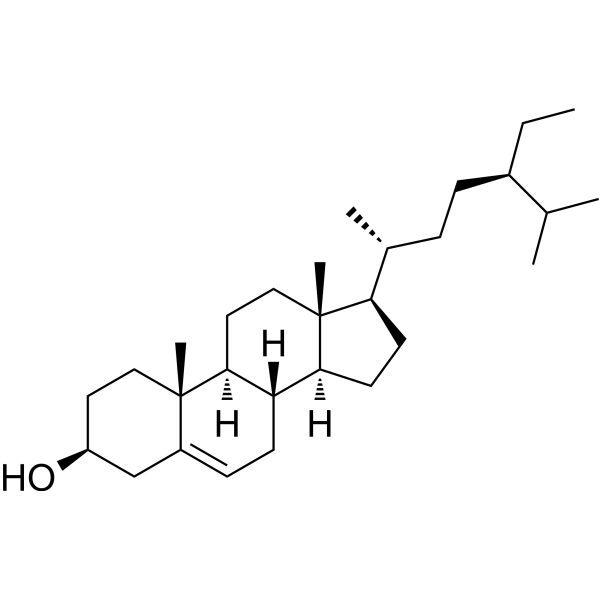
  • HY-N0171A
    Beta-Sitosterol (purity>98%)
    15+ Cited Publications

    β-Sitosterol (purity>98%); 22,23-Dihydrostigmasterol (purity>98%)

    Bacterial Apoptosis Reactive Oxygen Species (ROS) MDM-2/p53 Caspase PARP MMP Bcl-2 Family HIF/HIF Prolyl-Hydroxylase TNF Receptor Interleukin Related NF-κB mTOR Lactate Dehydrogenase CDK Glutathione Peroxidase SOD Infection Cardiovascular Disease Inflammation/Immunology Cancer
    Beta-Sitosterol (purity>98%) is orally active. Beta-Sitosterol exhibits multiple activities, including anti-inflammatory, anticancer, antioxidant, antimicrobial, antidiabetic, antioxidant enzyme, and analgesic. Beta-Sitosterol inhibits inflammation and impaired adipogenesis in bovine mammary epithelial cells by reducing levels of ROS, TNF-α, IL-1β, and NF-κB p65 and restoring the activity of the HIF-1α/mTOR signaling pathway. Beta-Sitosterol induces apoptosis in cancer cells through ROS-mediated mitochondrial dysregulation and p53 activation. Beta-Sitosterol exerts its anticancer effects in cancer cells by activating caspase-3, caspase-8, and caspase-9, mediating PARP inactivation, MMP loss, altered Bcl-2-Bax ratio, and cytochrome c release. Beta-Sitosterol modulates macrophage polarization and reduces rheumatoid inflammation in mice. Beta-Sitosterol inhibits tumor growth in multiple mouse cancer models. Beta-Sitosterol can be used in the research of arthritis, lung cancer, breast cancer and other cancers, diabetes, etc .
    Beta-Sitosterol (purity>98%)
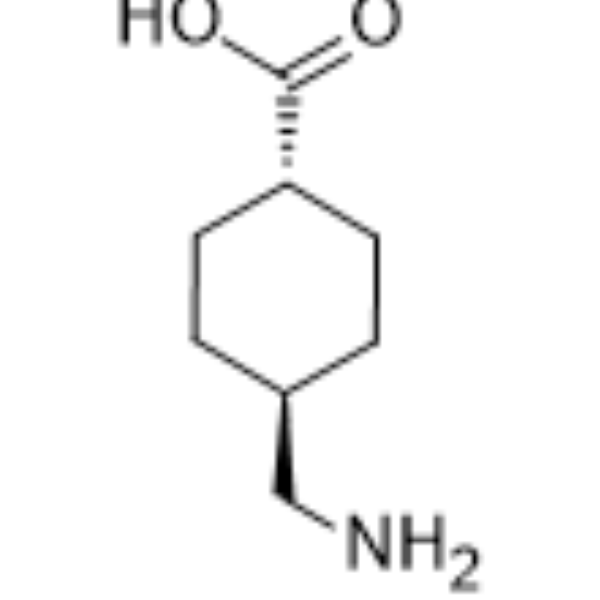
  • HY-B0149
    Tranexamic acid
    1 Publications Verification

    cyclocapron

    IGF-1R AMPK MMP Mitophagy PROTAC Linkers Cardiovascular Disease Neurological Disease Cancer
    Tranexamic acid (cyclocapron), a cyclic analog of lysine, is an orally active antifibrinolytic agent. Tranexamic acid attenuates the effects of severe trauma, inhibits urokinase plasminogen activator and ameliorates dry wrinkles. Tranexamic acid can used for the research of hemostasis. Tranexamic acid is a PROTAC linker. Tranexamic acid is used to synthesize PROTACs (e.g. LZ-07 (HY-172590)) .
    Tranexamic acid
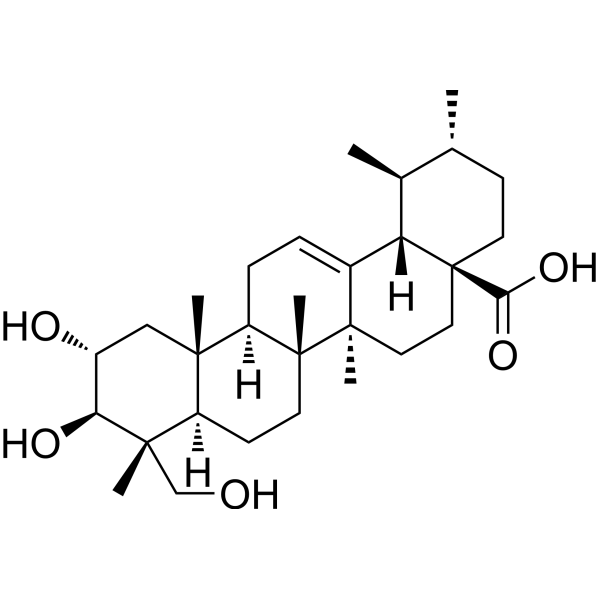
  • HY-N0194
    Asiatic acid
    4 Publications Verification

    Apoptosis Parasite Inflammation/Immunology Cancer
    Asiatic acid, a pentacyclic triterpene found in Centella asiatica (Centella asiatica), has anticancer activity. Asiatic acid induces apoptosis in melanoma cells and has barrier protective effects on human aortic endothelial cells (HAEC). Asiatic acid also has anti-inflammatory activity and inhibits tumor necrosis factor (TNF)-α-induced endothelial barrier dysfunction. Asiatic acid also inhibits NLRP3 inflammasome activation and NF-κB pathway, effectively inhibits inflammation in rats, and has neuroprotective effects in rat spinal cord injury (SCI) model .
    Asiatic acid
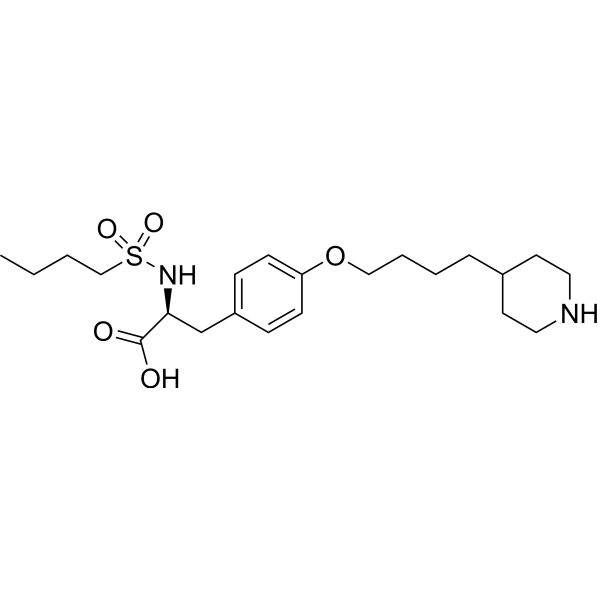
  • HY-17369B
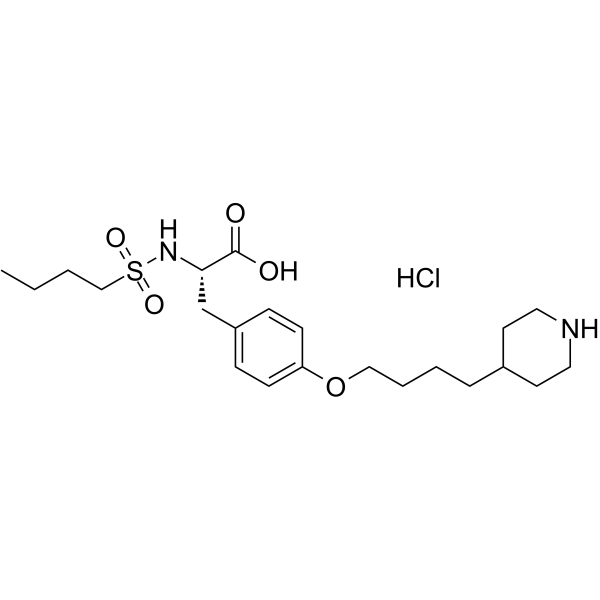
    Tirofiban
    5+ Cited Publications

    L700462; MK383

    Integrin Cardiovascular Disease
    Tirofiban (L700462) is a selective and reversible platelet integrin receptor (Gp IIb/IIIa) antagonist that inhibits fibrinogen binding to this receptor and has antithrombotic activity. Tirofiban induces proliferation and migration on endothelial cell by inducing production of VEGF. Tirofiban can significantly reduces myocardial no-reflow and ischemia-reperfusion injury by alleviating myocardial microvascular structural and endothelial dysfunction in the ischemic area .
    Tirofiban
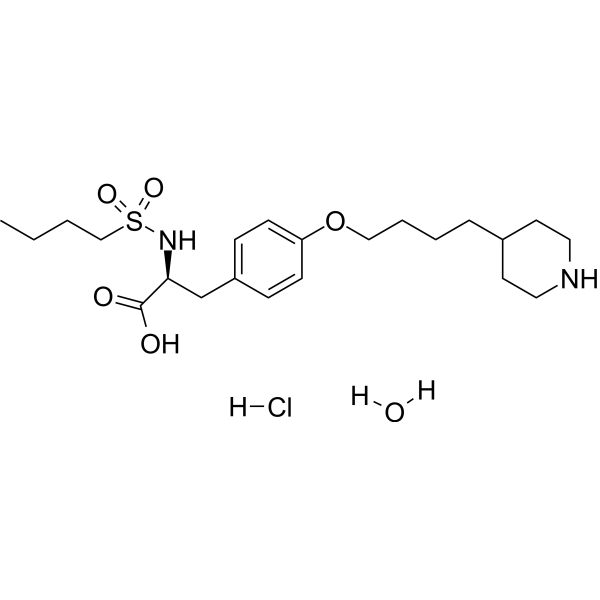
  • HY-17369

    L700462 hydrochloride monohydrate; MK383 hydrochloride monohydrate

    Integrin Cardiovascular Disease
    Tirofiban (L700462) hydrochloride monohydrate is a selective and reversible platelet integrin receptor (Gp IIb/IIIa) antagonist that inhibits fibrinogen binding to this receptor and has antithrombotic activity. Tirofiban hydrochloride monohydrate induces proliferation and migration on endothelial cell by inducing production of VEGF. Tirofiban hydrochloride monohydrate can significantly reduces myocardial no-reflow and ischemia-reperfusion injury by alleviating myocardial microvascular structural and endothelial dysfunction in the ischemic area .
    Tirofiban hydrochloride monohydrate
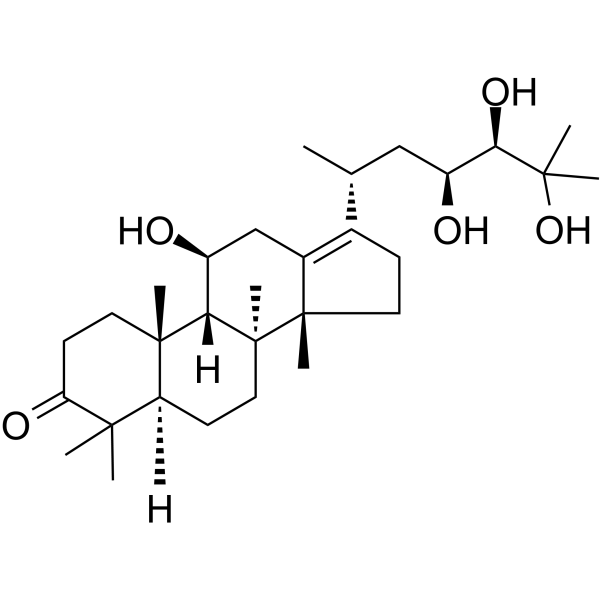
  • HY-N0853
    Alisol A
    5 Publications Verification

    AMPK Acetyl-CoA Carboxylase PPAR MMP Interleukin Related Infection Cardiovascular Disease Neurological Disease Metabolic Disease Inflammation/Immunology Cancer
    Alisol A is an orally active tetracyclic triterpenoid compound of the prototerpane type. Alisol A can be extracted from the rhizome of Alisma orientale. Alisol A activates AMPK/ACC/SREBP-1c, SIRT1, PPARα, inhibits MMP-2/-9, decreases inflammatory cytokine expression (IL-1β, IL-6, IL-8). Alisol A has anti-tumor activity against breast cancer and colorectal cancer. Alisol A has anti-obesity and anti-atherosclerotic activities. Alisol A can be used in the research of hepatitis B, breast cancer, colorectal cancer, atherosclerosis, and obesity .
    Alisol A
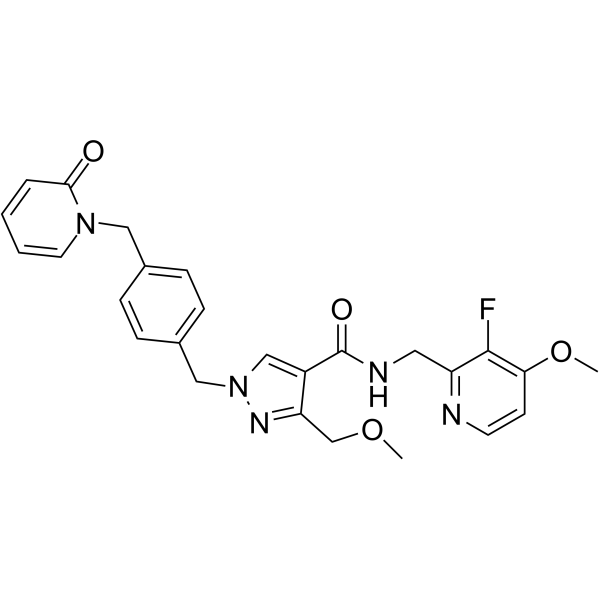
  • HY-172437

    S-892216

    Virus Protease SARS-CoV Infection
    Secutrelvir is an oral SARS-CoV-2 3C-like protease (3CLpro) inhibitor and antiviral agent, with IC50 values of 0.655 nM and 0.697 nM against SARS-CoV-2 3CLpro, respectively. Secutrelvir forms a reversible covalent bond with the catalytic cysteine C145 of SARS-CoV-2 3CLpro, thereby inhibiting viral replication. Secutrelvir exhibits activity against multiple SARS-CoV-2 variants and can be used in research related to coronavirus disease 2019 (COVID-19) .
    Secutrelvir
  • HY-N0194R

    Reference Standards Apoptosis Parasite Inflammation/Immunology Cancer
    Asiatic acid (Standard) is the analytical standard of Asiatic acid. This product is intended for research and analytical applications. Asiatic acid, a pentacyclic triterpene found in Centella asiatica (Centella asiatica), has anticancer activity. Asiatic acid induces apoptosis in melanoma cells and has barrier protective effects on human aortic endothelial cells (HAEC). Asiatic acid also has anti-inflammatory activity and inhibits tumor necrosis factor (TNF)-α-induced endothelial barrier dysfunction. Asiatic acid also inhibits NLRP3 inflammasome activation and NF-κB pathway, effectively inhibits inflammation in rats, and has neuroprotective effects in rat spinal cord injury (SCI) model .
    Asiatic acid (Standard)
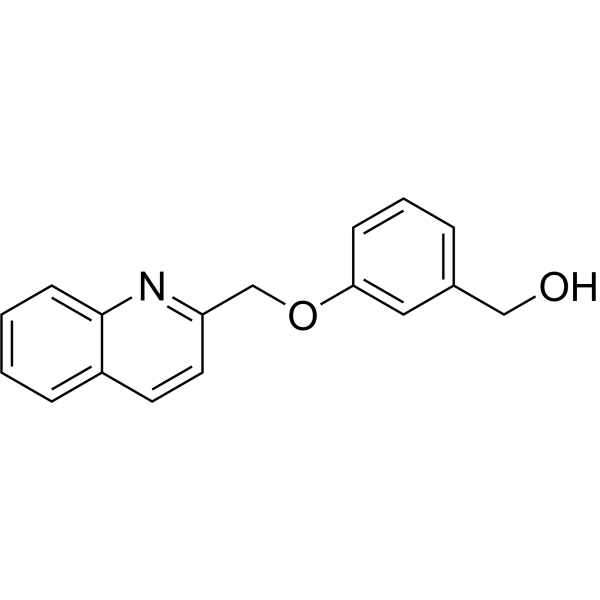
  • HY-147086

    Leukotriene Receptor G protein-coupled Bile Acid Receptor 1 TNF Receptor Metabolic Disease Inflammation/Immunology
    CAY10789 is a potent CysLT1R (cysteinyl leukotriene receptor 1) antagonist (IC50=2.80 μM) and GPBAR1 (G-protein-coupled bile acid receptor 1) agonist (EC50=3 μM). CAY10789 significantly reduces the adhesion of U937 cells to HAEC, reduces the expression of TNF-α. CAY10789 shows very promising metabolic stability and excellent pharmacokinetics. CAY10789 can be used for the research of colitis, metabolic syndromes, and other GPBAR1/CysLT1R-related diseases .
    CAY10789
  • HY-17369A

    L700462 hydrochloride; MK383 hydrochloride

    Integrin Cardiovascular Disease
    Tirofiban (L700462) hydrochloride is a selective and reversible platelet integrin receptor (Gp IIb/IIIa) antagonist that inhibits fibrinogen binding to this receptor and has antithrombotic activity. Tirofiban hydrochloride induces proliferation and migration on endothelial cell by inducing production of VEGF. Tirofiban hydrochloride can significantly reduces myocardial no-reflow and ischemia-reperfusion injury by alleviating myocardial microvascular structural and endothelial dysfunction in the ischemic area .
    Tirofiban hydrochloride
  • HY-175029

    SARS-CoV Virus Protease Infection
    ALG-097558 is an orally active 3CLpro inhibitor. ALG-097558 demonstrates pan-coronavirus activity against various SARS-CoV-2 variants as well as other human coronaviruses (HCoVs) such as SARS-CoV-1, α-HCoV 229E, and β-HCoV OC43. ALG-097558 demonstrates potent inhibition with IC50s of 2 nM (SARS-CoV-2 3CLpro) and 6 nM (229E 3CLpro). ALG-097558 demonstrates antiviral activity in the SARS-CoV-2 hamster infection model. ALG-097558 can be used for the study of viral infections[1].
    ALG-097558
  • HY-17369BR

    L700462 (Standard); MK383 (Standard)

    Reference Standards Integrin Cardiovascular Disease
    Tirofiban (Standard) is the analytical standard of Tirofiban. This product is intended for research and analytical applications. Tirofiban (L700462) is a selective and reversible platelet integrin receptor (Gp IIb/IIIa) antagonist that inhibits fibrinogen binding to this receptor and has antithrombotic activity. Tirofiban induces proliferation and migration on endothelial cell by inducing production of VEGF. Tirofiban can significantly reduces myocardial no-reflow and ischemia-reperfusion injury by alleviating myocardial microvascular structural and endothelial dysfunction in the ischemic area .
    Tirofiban (Standard)
  • HY-W706672

    Glycerol Tritricosanoate; TG(23:0/23:0/23:0); Tritricosanoin

    Endogenous Metabolite Metabolic Disease
    1,2,3-Tritricosanoyl glycerol is a triacylglycerol that contains tricosanoic acid (HY-W009081) at the sn-1, sn-2, and sn-3 positions. It has been used as an internal standard for the quantification of fatty acids in the triglyceride component of human aortic endothelial cells (HAECs) grown in media supplemented with stearic and/or oleic acid.
    Propane-1,2,3-triyl tritricosanoate
  • HY-17369R

    L700462 hydrochloride monohydrate (Standard); MK383 hydrochloride monohydrate (Standard)

    Reference Standards Integrin Cardiovascular Disease
    Tirofiban (hydrochloride monohydrate) (Standard) is the analytical standard of Tirofiban (hydrochloride monohydrate). This product is intended for research and analytical applications. Tirofiban (L700462) hydrochloride monohydrate is a selective and reversible platelet integrin receptor (Gp IIb/IIIa) antagonist that inhibits fibrinogen binding to this receptor and has antithrombotic activity. Tirofiban hydrochloride monohydrate induces proliferation and migration on endothelial cell by inducing production of VEGF. Tirofiban hydrochloride monohydrate can significantly reduces myocardial no-reflow and ischemia-reperfusion injury by alleviating myocardial microvascular structural and endothelial dysfunction in the ischemic area .
    Tirofiban hydrochloride monohydrate (Standard)
  • HY-138284

    NF-κB Inflammation/Immunology
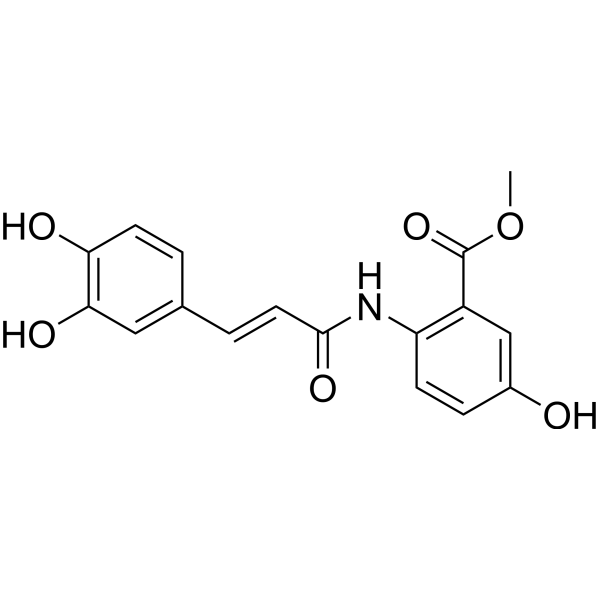
    Avenanthramide-C methyl ester is an anti-inflammatory agent and NF-κB inhibitor that inhibits the secretion of pro-inflammatory factors. Avenanthramide-C methyl ester inhibits NF-κB activation by inhibiting IKK and IκB phosphorylation and inhibiting proteasome activity .
    Avenanthramide-C methyl ester
  • HY-A0117

    Temocapril diacid; Temocaprilate; RS 5139

    Angiotensin-converting Enzyme (ACE) Cardiovascular Disease
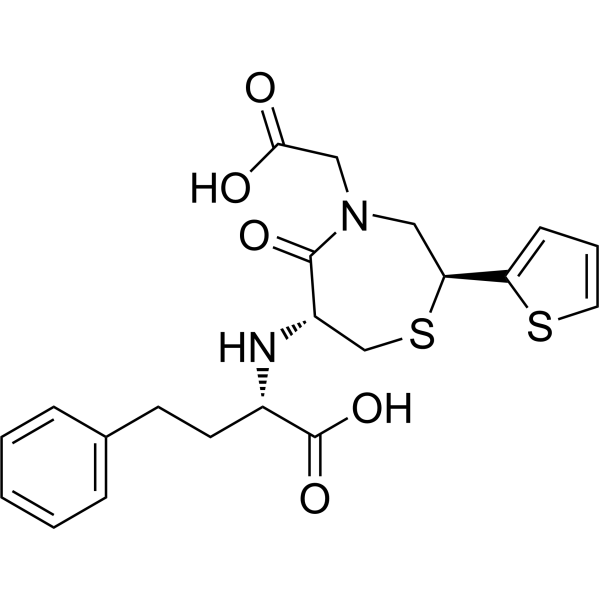
    Temocaprilat (Temocapril diacid) is an inhibitor of angiotensin-converting enzyme (ACE). Temocaprilat alleviates the inhibitory effect of high glucose on the proliferation of aortic endothelial cells. Temocaprilat has potential applications in hypertension and vascular inflammation .
    Temocaprilat
  • HY-177477

    Drug Derivative Cadherin β-catenin Cardiovascular Disease Cancer
    2,5-Epidithia-3,6-dioxopiperazine (Formula 15) is a derivative of Epidithiodioxopiperazine (ETP). 2,5-Epidithia-3,6-dioxopiperazine improves intracellular penetration and restores the activity of 2-Cys-Prx (especially Peroxiredoxin II (PrxII)) of form simulation in cells. 2,5-Epidithia-3,6-dioxopiperazine inhibits PDGF-induced proliferation and migration in vascular smooth muscle cells while promoting these actions in endothelial cells with VEGF induction. 2,5-Epidithia-3,6-dioxopiperazine effectively inhibits the proliferation and migration and lung metastasis of melanoma cells. 2,5-Epidithia-3,6-dioxopiperazine can be used for vascular diseases such as hypertension, angina pectoris and myocardial infarction research .
    2,5-Epidithia-3,6-dioxopiperazine
  • HY-W706672R

    Glycerol Tritricosanoate (Standard); TG(23:0/23:0/23:0) (Standard); Tritricosanoin (Standard)

    Endogenous Metabolite Reference Standards Metabolic Disease
    Propane-1,2,3-triyl tritricosanoate (Standard) is the analytical standard of Propane-1,2,3-triyl tritricosanoate. This product is intended for research and analytical applications. 1,2,3-Tritricosanoyl glycerol is a triacylglycerol that contains tricosanoic acid (HY-W009081) at the sn-1, sn-2, and sn-3 positions. It has been used as an internal standard for the quantification of fatty acids in the triglyceride component of human aortic endothelial cells (HAECs) grown in media supplemented with stearic and/or oleic acid.
    Propane-1,2,3-triyl tritricosanoate (Standard)
  • HY-W710512

    Glycerol Tritricosanoate-d5; TG(23:0/23:0/23:0)-d5; Tritricosanoin-d5

    Isotope-Labeled Compounds Endogenous Metabolite Metabolic Disease
    Propane-1,2,3-triyl tritricosanoate-d5 (Glycerol Tritricosanoate-d5) is deuterium labeled Propane-1,2,3-triyl tritricosanoate. 1,2,3-Tritricosanoyl glycerol is a triacylglycerol that contains tricosanoic acid (HY-W009081) at the sn-1, sn-2, and sn-3 positions. It has been used as an internal standard for the quantification of fatty acids in the triglyceride component of human aortic endothelial cells (HAECs) grown in media supplemented with stearic and/or oleic acid.
    Propane-1,2,3-triyl tritricosanoate-d5

Inquiry Online

Your information is safe with us. * Required Fields.

Salutation


Country or Region *

Applicant Name *


Organization Name *

Department *


Email Address *


Product Name *

Cat. No.


Requested quantity *

Phone Number *


Remarks

Inquiry Online

Inquiry Information

Product Name:
Cat. No.:
Quantity:
MCE Japan Authorized Agent:

