1. Search Result
Search Result
Results for "

HDF

" in MedChemExpress (MCE) Product Catalog:

13

Inhibitors & Agonists

4

Natural
Products

1

Oligonucleotides

Cat. No. Product Name Target Research Areas Chemical Structure
  • HY-N1931

    Caspase PARP Apoptosis MDM-2/p53 Cancer
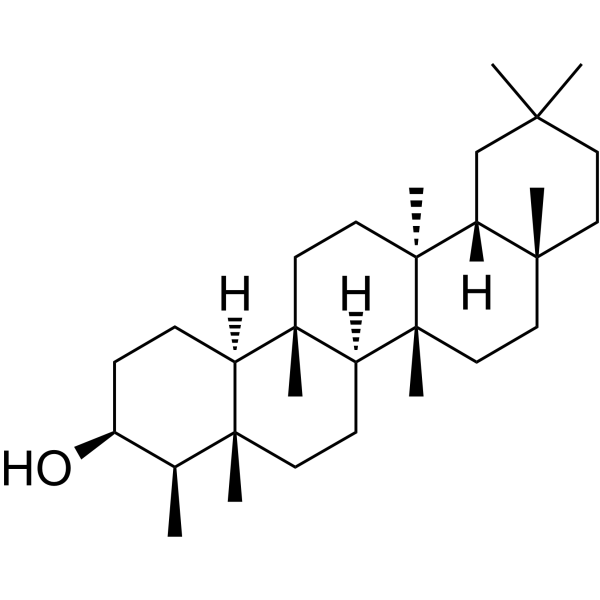
    Epifriedelanol is a triterpenoid found in the root bark of Ulmus davidiana. Epifriedelanol induces apoptosis in DU145 cells. Epifriedelanol has antitumor and anti-inflammatory activities. Epifriedelanol inhibits cellular senescence in human primary cells .
    Epifriedelanol
  • HY-W002199

    6:2 FTOH; 1H,1H,2H,2H-Perfluoro-1-octanol; 2-(Perfluorohexyl)ethanol

    Bacterial Apoptosis ERK TNF Receptor Infection Neurological Disease
    6:2 Fluorotelomer alcohol (6:2 FTOH) is an orally active, blood-brain barrier-permeable modulator of cyclin D1 and ETS1. 6:2 Fluorotelomer alcohol downregulates cyclin D1 expression, upregulates ETS1 via the TNF-α/ERK 1/2 pathway, impairs mitochondrial membrane potential and respiratory function, increases reactive oxygen species levels, disrupts calcium homeostasis and activates endoplasmic reticulum stress markers, and induces cell proliferation inhibition and endothelial-mesenchymal transition. Furthermore, 6:2 Fluorotelomer alcohol induces morphological abnormalities in zebrafish embryos and liver developmental damage, while disrupting the brain immune microenvironment in mice, causing systemic toxicity and delayed pup maturation in CD-1 mice. 6:2 Fluorotelomer alcohol also induces cortical neuron apoptosis, glial cell activation, synaptic abnormalities, colonic barrier damage, intestinal dysbiosis and autism spectrum disorder-like symptoms in mice. 6:2 Fluorotelomer alcohol shows no mutagenic, clastogenic, primary skin/eye irritation or skin sensitizing effects, exhibits no selective reproductive toxicity in CD-1 mice, and is classified as GHS Category 4 for acute oral toxicity. 6:2 Fluorotelomer alcohol can be used in studies of neurodevelopmental disorders and autism spectrum disorders .
    6:2 Fluorotelomer alcohol
  • HY-N1326

    Santamarin; Balchanin

    JNK p38 MAPK MMP NF-κB COX TNF Receptor Interleukin Related Reactive Oxygen Species (ROS) Apoptosis Mitochondrial Metabolism DNA/RNA Synthesis Keap1-Nrf2 Bcl-2 Family Caspase PARP TGF-beta/Smad Metabolic Disease Inflammation/Immunology Cancer
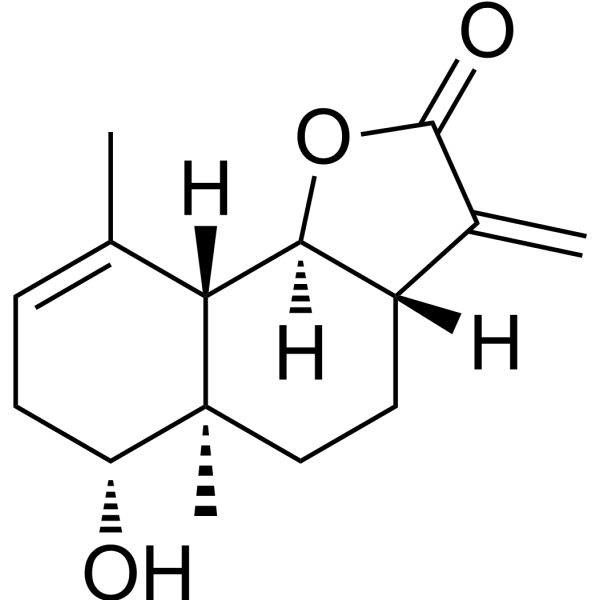
    Santamarine (Santamarin; Balchanin) is a sesquiterpene lactone found in Artemisia scoparia. Santamarine shows anti-inflammatory, antioxidant, anticancer and anti-photoaging activities. Santamarine suppresses UVA-induced phosphorylation of JNK and p38 MAPK, nuclear translocation of phosphorylated c-Fos and c-Jun, and AP-1-mediated MMP-1 transcription and secretion. Santamarine suppresses NF-κB signaling, iNOS, COX-2, TNF-α, and IL-1β production. Santamarine inhibits thioredoxin reductase activity, induces ROS production, mitochondrial apoptosis, G2/M cell cycle arrest, and DNA damage, and reduces cancer cell growth. Santamarine can be used for the photoaging, inflammatory diseases and cancer .
    Santamarine
  • HY-W747516

    Antibiotic Infection Cancer
    Butylcycloheptylprodigiosin is the secondary metabolite produced by some bacteria, such as Streptomyces. Butylcycloheptylprodigiosin is a red-pigmented antibiotic and exhibits cytotoxicity against cancer cell MCF-7 and HDF .
    Butylcycloheptylprodigiosin
  • HY-N1190

    (±)-Syringaresinol

    p38 MAPK AP-1 Bacterial Infection
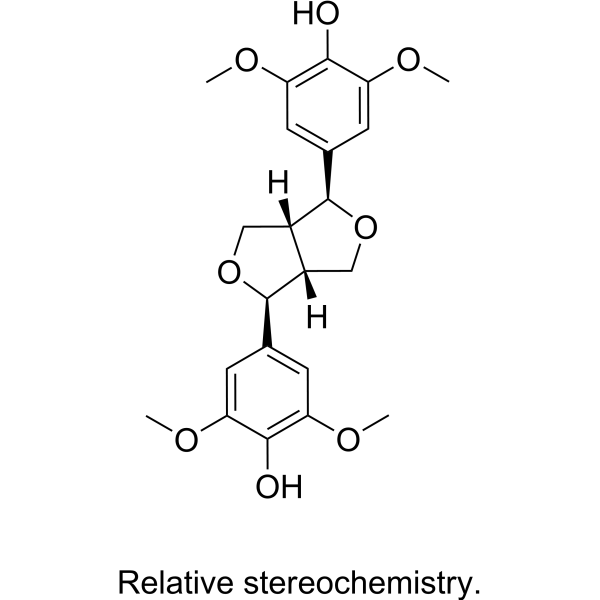
    DL-Syringaresinol ((±)-Syringaresinol), a lignin, inhibits UVA-induced upregulation of MMP-1 by suppressing MAPK/AP-1 signaling in human HaCaT keratinocytes and dermal fibroblasts (HDFs). DL-Syringaresinol has antiphotoaging properties against UVA-induced skin aging. DL-Syringaresinol exhibits weak antimycobacterial activity against Mycobacterium tuberculosis H37Rv .
    DL-Syringaresinol
  • HY-149367

    Apoptosis Cancer
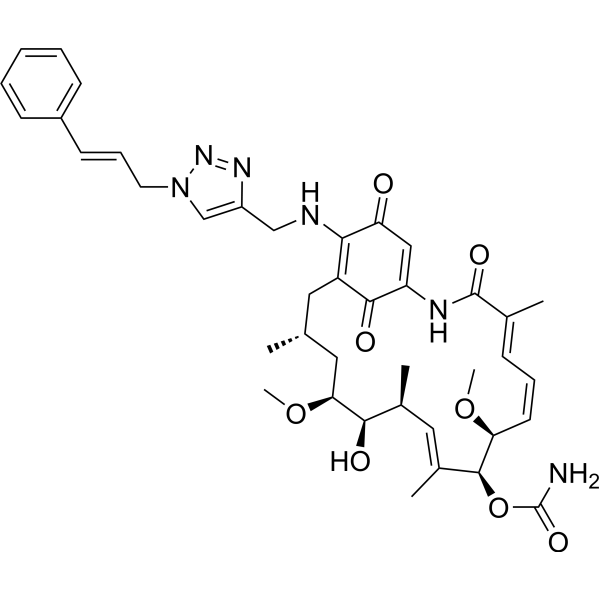
    Anticancer agent 136 (compound 22), a C17-triazole analogue of Geldanamycin (GDM; HY-15230), has an IC50 of 3.38 μM for HDF and a Kd of 3.86 μM for Hsp90. Anticancer agent 136 is an apoptosis-inducing agent .
    Anticancer agent 136
  • HY-155105

    Glycosidase Metabolic Disease
    α-Glucosidase-IN-30 (compound 8c) is a potent, orally active, competitive inhibitor against α-glucosidase, with Ki  of 40.0 µM and IC50 value of 49.0 µM. α-Glucosidase-IN-30 is non-cytotoxic against the cancer and normal cell lines MCF-7 and HDF, and can be used for Type 2 diabetes study .
    α-Glucosidase-IN-30
  • HY-144808

    Microtubule/Tubulin Cancer
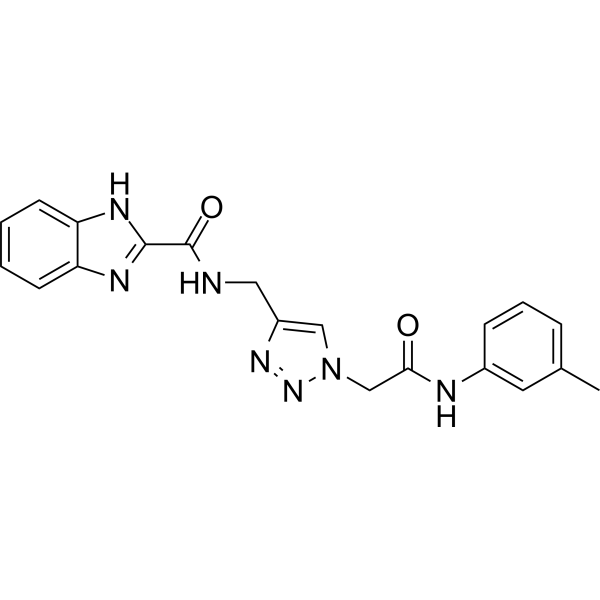
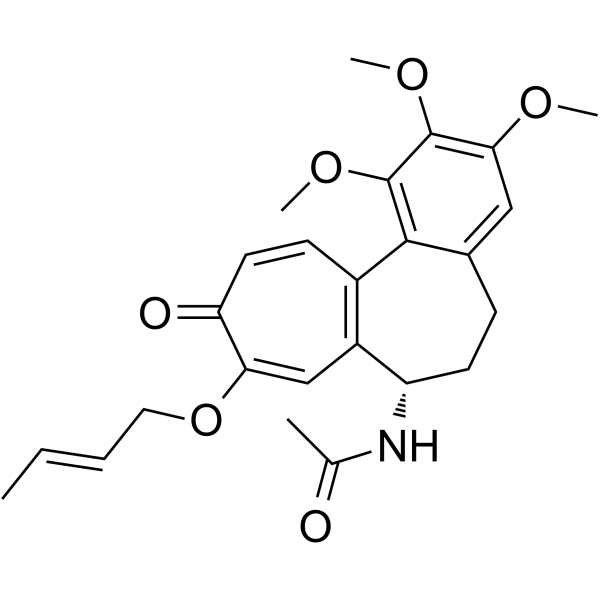
    Anticancer agent 40 (compound 3e) is a potent anticancer agent. Anticancer agent 40 shows anticancer activities with IC50s of 0.94, 0.98, 0.96, 0.95, 2.13 nM for SKBR-3, SKOV-3, PC-3, U-87, HDF cells, respectively .
    Anticancer agent 40
  • HY-170607

    Apoptosis Cancer
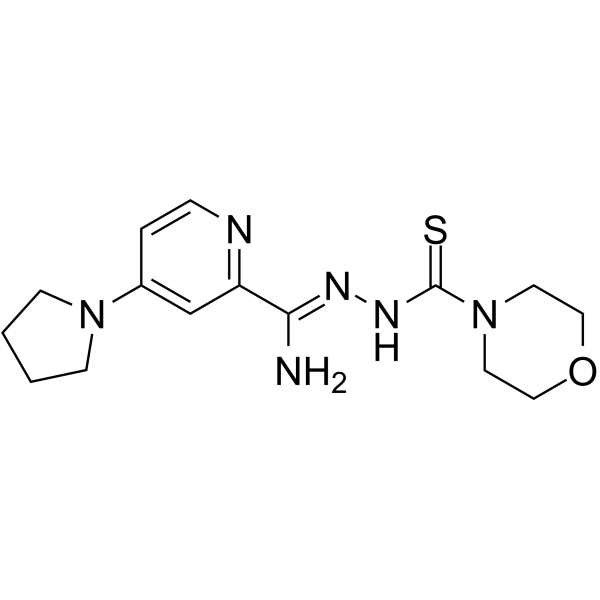
    HPCR exhibits anti-proliferative activity against multi cancer cells. HPCR is involved in cell apoptosis .
    HPCR
  • HY-RS19652

    Small Interfering RNA (siRNA) Others

    Vcan Mouse Pre-designed siRNA Set A contains three designed siRNAs for Vcan gene (Mouse), as well as a negative control, a positive control, and a FAM-labeled negative control.

    Vcan Mouse Pre-designed siRNA Set A
    Vcan Mouse Pre-designed siRNA Set A
  • HY-175170

    Glycosidase Metabolic Disease
    α-Glucosidase-IN-95 (Compound 21c) is a competitive α-Glucosidase inhibitor with an IC50 of 0.44  μM. α-Glucosidase-IN-95 has a significant inhibitory potency without cytotoxicity to normal cells. α-Glucosidase-IN-95 can be used for metabolic disorders like diabetes mellitus research .
    α-Glucosidase-IN-95
  • HY-147505

    Bacterial Fungal Infection
    Antitubercular agent-21 (Compound 15) is an antitubercular agent with an MIC of o.4 µg/mL against M. tuberculosis H37Rv. Antitubercular agent-21 exhibits lower activity against other microorganism such as bacteria gram-positive, gram-negative or fungi. Antitubercular agent-21 shows low cytotoxicity .
    Antitubercular agent-21
  • HY-182029

    G-quadruplex Cancer
    G-quadruplex ligand 5 is a G-quadruplex (G4) ligand. G-quadruplex ligand 5 selectively stabilizes cancer-associated G4 oligonucleotides and shows cytotoxicity toward cancer cells. G-quadruplex ligand 5 can be used for the research of cancer .
    G-quadruplex ligand 5

Inquiry Online

Your information is safe with us. * Required Fields.

Salutation


Country or Region *

Applicant Name *


Organization Name *

Department *


Email Address *


Product Name *

Cat. No.


Requested quantity *

Phone Number *


Remarks

Inquiry Online

Inquiry Information

Product Name:
Cat. No.:
Quantity:
MCE Japan Authorized Agent:

