12 Results for "

HFD-fed

" in MedChemExpress (MCE) Product Catalog:
Products (12)

12 Results for "HFD-fed" in MCE Product Catalog:

9
9 Publications Verification
Cat. No.: HY-12756A
CAS No.: 1345675-25-3
Purity:  99.96%
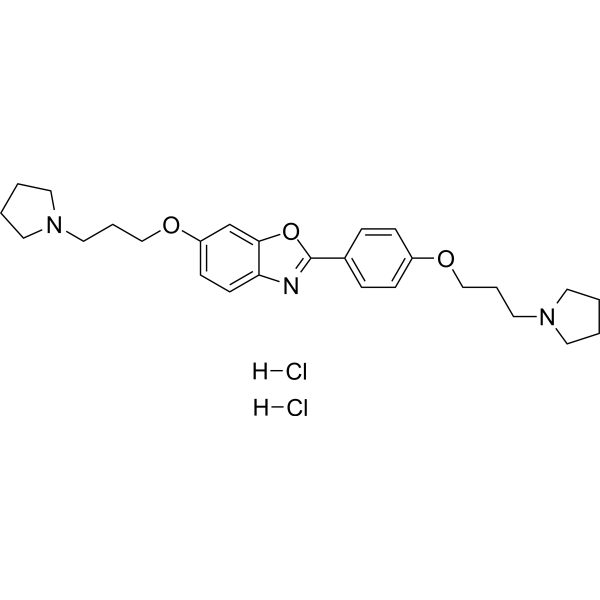
E6446 dihydrochloride is a potent and orally acitve TLR7 and TLR9 antagonist, used in the research of deleterious inflammatory responses. E6446 dihydrochloride is also a potent SCD1 inhibitor (KD: 4.61 μM), significantly inhibiting adipogenic differentiation and hepatic lipogenesis through SCD1-ATF3 signaling. E6446 dihydrochloride also improves liver pathology in high-fat diet (HFD)-fed mice and may be useful in the study of non-alcoholic fatty liver disease (NAFLD) .
loading...
    loading...
9
9 Publications Verification
Cat. No.: HY-12756
CAS No.: 1219925-73-1
Purity:  ≥98.0%
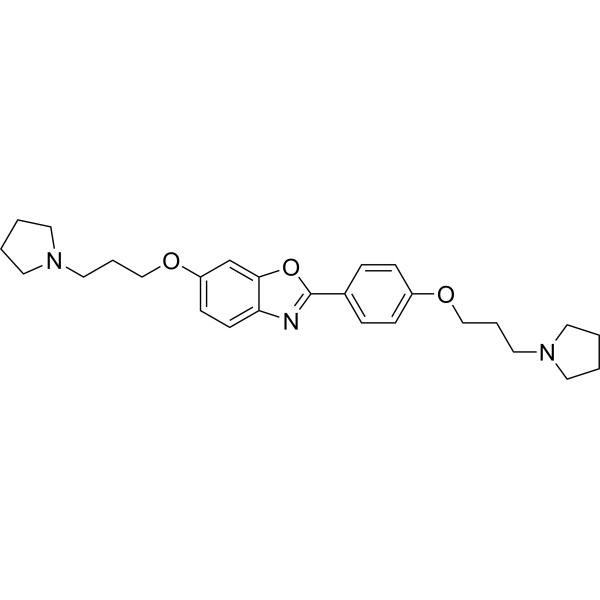
E6446 is a potent and orally acitve TLR7 and TLR9 antagonist, used in the research of deleterious inflammatory responses. E6446 is also a potent SCD1 inhibitor (KD: 4.61 μM), significantly inhibiting adipogenic differentiation and hepatic lipogenesis through SCD1-ATF3 signaling. E6446 also improves liver pathology in high-fat diet (HFD)-fed mice and may be useful in the study of non-alcoholic fatty liver disease (NAFLD) .
loading...
    loading...
5
5 Cited Publications
Cat. No.: HY-12402
CAS No.: 489415-96-5
Purity:  99.28%
Target:  

PCSK9

Research Areas:  

Cardiovascular Disease

SBC-115076 is a potent proprotein convertase subtilisin/kexin type 9 (PCSK9) inhibitor. PCSK9 is a proprotein convertase, which plays a crucial role in LDL receptor metabolism .
loading...
    loading...
3
3 Cited Publications
Cat. No.: HY-P2625
CAS No.: 275801-62-2
Target:  

GCGR

Research Areas:  

Metabolic Disease

GLP-2(3-33), generated naturally by dipeptidylpeptidase IV (DPPIV), acts as a partial agonist on GLP-2 receptor (EC50=5.8 nM) .
loading...
    loading...
2
2 Cited Publications
Cat. No.: HY-128578
CAS No.: 906669-07-6
Purity:  99.86%
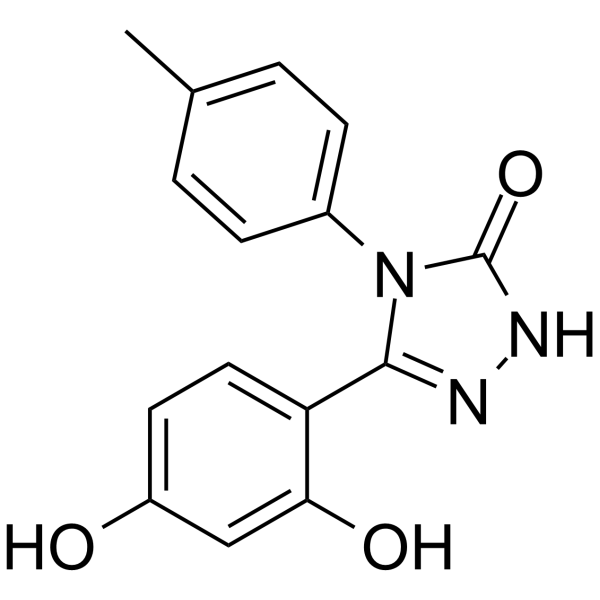
KPLH1130 is a pyruvate dehydrogenase kinase (PDK) inhibitor. KPLH1130 potently inhibits M1 macrophage polarization by reducing the expression of pro-inflammatory cytokines, decreasing the levels of M1 phenotype markers (HIF-1α, iNOS) and nitric oxide (NO) production. KPLH1130 prevents the reduction of mitochondrial oxygen consumption rate (OCR) induced by inflammatory stimuli (LPS ((HY-D1056) + IFN-γ) in various macrophage types. KPLH1130 improves glucose tolerance in HFD-fed mice. KPLH1130 can be used for the study of obesity-associated metabolic disorders and other inflammatory conditions .
loading...
    loading...
Cat. No.: HY-160004
CAS No.: 1523493-53-9
PXL770 is an orally active, direct allosteric AMP-activated protein kinase (AMPK) activator. PXL770 decreases C26:0 levels, improves mitochondrial respiration, reduces expression of proinflammatory genes and induces expression of compensatory transporters (ABCD2/3) in ALD fibroblasts/lymphocytes. PXL770 normalizes plasma VLCFA levels, significantly reduces elevated VLCFA levels in brain and spinal cord in Abcd1 KO mice. PXL770 improves glycemia, dyslipidemia, and insulin resistance in ob/ob and high-fat diet (HFD)-fed mice. PXL770 can be used for the study of X-linked adrenoleukodystrophy (ALD), autosomal dominant polycystic kidney disease and nonalcoholic steatohepatitis (NASH) .
loading...
    loading...
Cat. No.: HY-141645
CAS No.: 1221412-23-2
Purity:  97.07%
Synonyms: WS070117
IMM-H007 (WS070117) is an orally active and potent AMPK (AMP-activated protein kinase) activator and TGFβ1 (transforming growth factor β1) antagonist. IMM-H007 has protective effects in cardiovascular diseases via activation of AMPK. IMM-H007 negatively regulates endothelium inflammation through inactivating NF-κB and JNK/AP1 signaling. IMM-H007 inhibits ABCA1 degradation. IMM-H007 resolves hepatic steatosis in HFD-fed hamsters by the regulation of lipid metabolism. IMM-H007 can be used for the research of nonalcoholic fatty liver disease (NAFLD) and inflammatory atherosclerosis .
loading...
    loading...
Cat. No.: HY-12756AR
CAS No.: 1345675-25-3
E6446 (dihydrochloride) (Standard) is the analytical standard of E6446 (dihydrochloride). This product is intended for research and analytical applications. E6446 dihydrochloride is a potent and orally acitve TLR7 and TLR9 antagonist, used in the research of deleterious inflammatory responses. E6446 dihydrochloride is also a potent SCD1 inhibitor (KD: 4.61 μM), significantly inhibiting adipogenic differentiation and hepatic lipogenesis through SCD1-ATF3 signaling. E6446 dihydrochloride also improves liver pathology in high-fat diet (HFD)-fed mice and may be useful in the study of non-alcoholic fatty liver disease (NAFLD) .
loading...
    loading...
Cat. No.: HY-P2625S
Research Areas:  

Metabolic Disease

GLP-2(3-33) (Leu- 13C6, 15N) is 13C and 15N labeled GLP-2(3-33) (HY-P2625). GLP-2(3-33), generated naturally by dipeptidylpeptidase IV (DPPIV), acts as a partial agonist on GLP-2 receptor (EC50=5.8 nM).
loading...
    loading...
Cat. No.: HY-P2625S1
Research Areas:  

Metabolic Disease

GLP-2(3-33) (Leu- 13C6, 15N) TFA is 13C and 15N labeled GLP-2(3-33) (HY-P2625). GLP-2(3-33), generated naturally by dipeptidylpeptidase IV (DPPIV), acts as a partial agonist on GLP-2 receptor (EC50=5.8 nM).
loading...
    loading...
Cat. No.: HY-134998
CAS No.: 84201-40-1
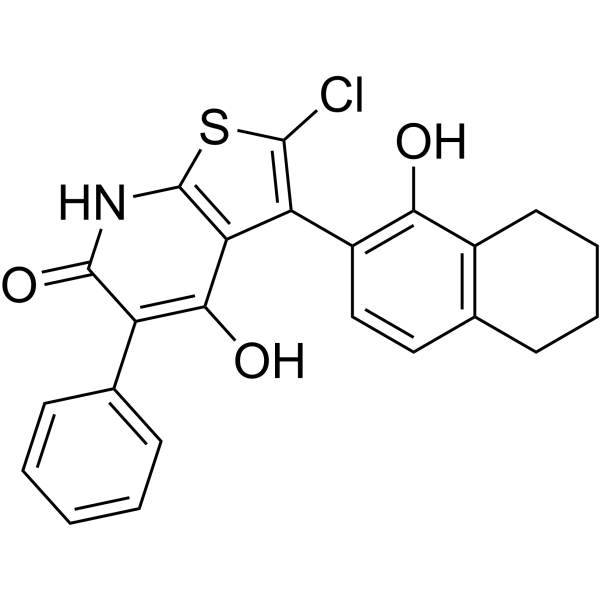
Oltipraz metabolite M2, an active metabolite of Oltipraz (HY-12519), is an orally active HIF-1α inhibitor. Oltipraz metabolite M2 increases mitochondrial fuel oxidation and inhibits lipogenesis in the liver by dually activating AMPK in high-fat diet (HFD)-fed mice. Oltipraz metabolite M2 can be used for hepatic steatosis and steatohepatitis research .
loading...
    loading...
Cat. No.: HY-187422
CAS No.: 440120-55-8
Target:  

ROR MicroRNA

Research Areas:  

Inflammation/Immunology

RS-2982 is a retinoic acid receptor-related orphan receptor A (RORA) agonist. RS-2982 enhances the promoter activity of MIR122 via the RORA binding site, and promotes the expression and secretion of MIR122. RS-2982 reduces the expression of hepatic triglyceride biosynthetic enzymes, hepatic lipotoxicity, hepatic fibrosis and body weight in diet-fed mice, while improving insulin resistance. RS-2982 can be used in the research of non-alcoholic steatohepatitis .
loading...
    loading...
  • 1

