1. Search Result
Search Result
Results for "

HSV-1-IN-1

" in MedChemExpress (MCE) Product Catalog:

40

Inhibitors & Agonists

2

Biochemical Assay Reagents

3

Peptides

1

Inhibitory Antibodies

14

Natural
Products

9

Isotope-Labeled Compounds

1

Oligonucleotides

Cat. No. Product Name Target Research Areas Chemical Structure
  • HY-B1773A
    Sodium propionate
    3 Publications Verification

    Environmental Pollutants Apoptosis Endogenous Metabolite Bacterial Autophagy HSV PPAR NF-κB COX NO Synthase Infection Neurological Disease Inflammation/Immunology Cancer
    Sodium propionate is an orally active short-chain fatty acid. Sodium propionate can be produced by intestinal bacteria from the metabolism of dietary fiber. Sodium propionate increases PPAR-γ, inhibits NF-κB activation, and reduces COX-2 expression and NO production. Sodium propionate also induces Apoptosis and Autophagy. Sodium propionate reduces HSV-1-induced keratitis. Sodium propionate has anticancer effects against glioblastoma. Sodium propionate exhibits neuroprotective, antioxidant, and anti-inflammatory activities. Sodium propionate can be used in the research of spinal cord injury and Alzheimer's disease .
    Sodium propionate
  • HY-B0275
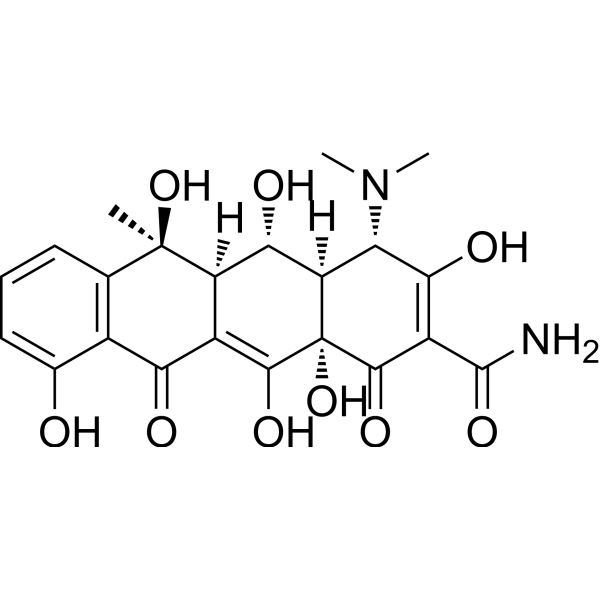
    Oxytetracycline
    Maximum Cited Publications
    10 Publications Verification

    Environmental Pollutants Antibiotic Endogenous Metabolite Bacterial HSV Infection
    Oxytetracycline is an antibiotic belonging to the tetracycline class. Oxytetracycline potent inhibits Gram-negative and Gram-positive bacteria. Oxytetracycline is a protein synthesis inhibitor and prevents the binding from aminoacil-tRNA to the complex m-ribosomal RNA. Oxytetracycline also possesses anti-HSV-1 activity .
    Oxytetracycline
  • HY-B0275A
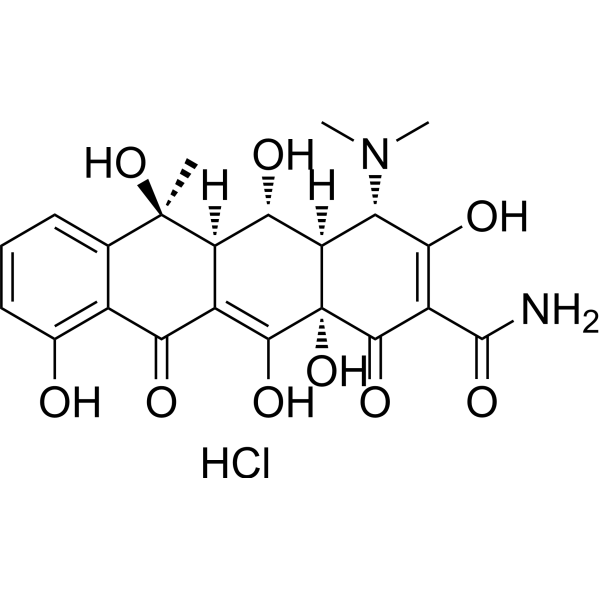
    Oxytetracycline hydrochloride
    Maximum Cited Publications
    10 Publications Verification

    Environmental Pollutants Antibiotic Endogenous Metabolite Bacterial HSV Infection
    Oxytetracycline hydrochloride is an antibiotic belonging to the tetracycline class. Oxytetracycline hydrochloride potent inhibits Gram-negative and Gram-positive bacteria. Oxytetracycline hydrochloride is a protein synthesis inhibitor and prevents the binding from aminoacil-tRNA to the complex m-ribosomal RNA. Oxytetracycline hydrochloride also possesses anti-HSV-1 activity .
    Oxytetracycline hydrochloride
  • HY-15303
    Pritelivir
    5+ Cited Publications

    AIC316; BAY 57-1293

    DNA/RNA Synthesis HSV Infection
    Pritelivir (AIC316), an inhibitor of the viral helicase-primase complex, exhibits antiviral activity in vitro and in animal models of herpes simplex virus (HSV) infection. Pritelivir is active against herpes simplex virus types 1 and 2 (HSV-1 and HSV-2) with the IC50 of 0.02 μM against HSV1-2 .
    Pritelivir
  • HY-B1773AS3

    Isotope-Labeled Compounds Apoptosis NF-κB Bacterial PPAR COX NO Synthase Autophagy HSV Endogenous Metabolite Infection Neurological Disease Inflammation/Immunology Cancer
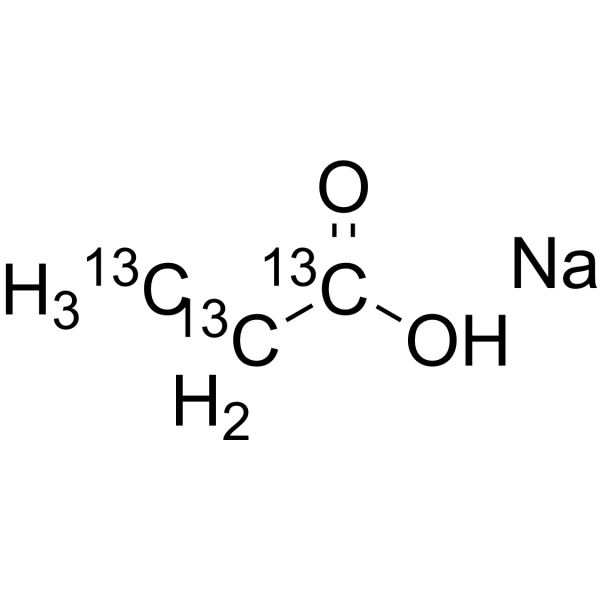
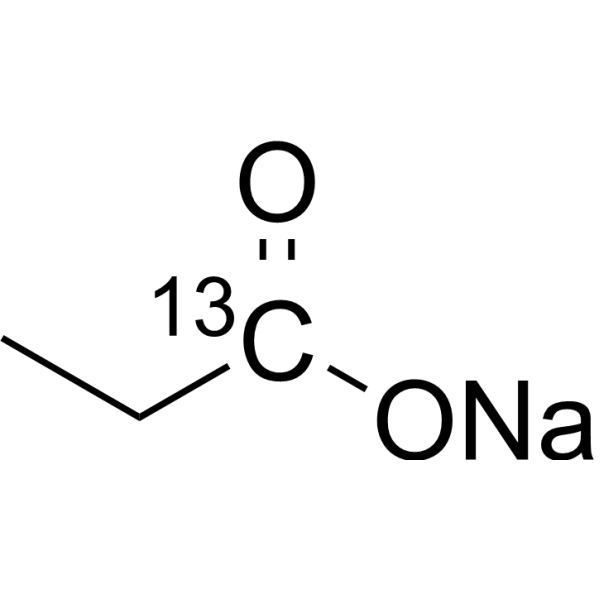
    Sodium propionate- 13C-3 is the 13C-labeled Propionate sodium (HY-B1773A). Sodium propionate is an orally active short-chain fatty acid. Sodium propionate can be produced by intestinal bacteria from the metabolism of dietary fiber. Sodium propionate increases PPAR-γ, inhibits NF-κB activation, and reduces COX-2 expression and NO production. Sodium propionate also induces Apoptosis and Autophagy. Sodium propionate reduces HSV-1-induced keratitis. Sodium propionate has anticancer effects against glioblastoma. Sodium propionate exhibits neuroprotective, antioxidant, and anti-inflammatory activities. Sodium propionate can be used in the research of spinal cord injury and Alzheimer's disease .
    Sodium propionate-13C3
  • HY-W342664

    FIRU

    Nucleoside Antimetabolite/Analog HSV Cancer
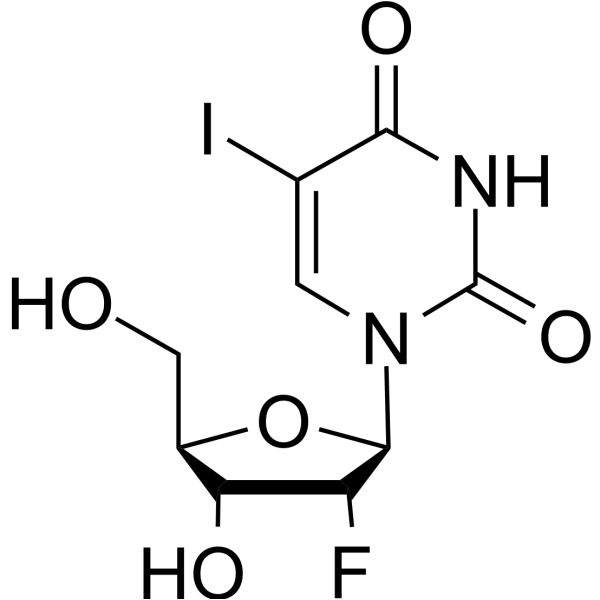
    2'-Deoxy-2'-fluoro-5-iodouridine (FIRU) is a nucleoside analog. When labeled with 123I, 2'-Deoxy-2'-fluoro-5-iodouridine accumulates highly selectively in tumors expressing the HSV1-tk gene. Radiolabeled 2'-Deoxy-2'-fluoro-5-iodouridine enables imaging of adenovirus-mediated HSV1-tk suicide gene transfer .
    2'-Deoxy-2'-fluoro-5-iodouridine
  • HY-N2004
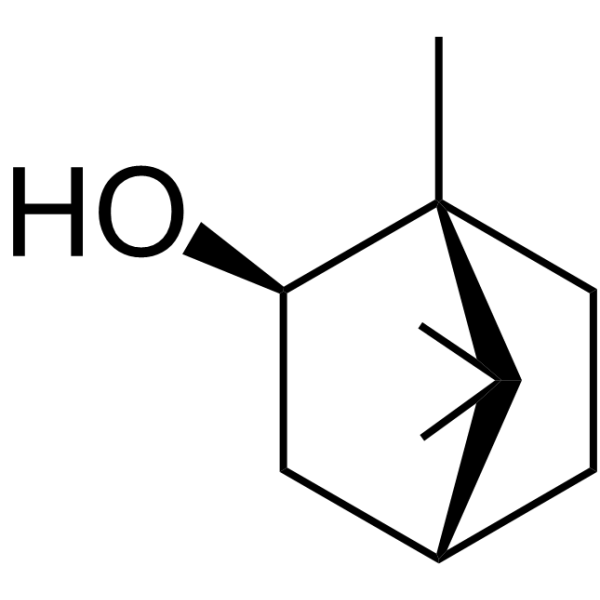
    Isoborneol
    1 Publications Verification

    (±)-Isoborneol

    Environmental Pollutants HSV Infection Neurological Disease
    Isoborneol ((±)-Isoborneol) is a monoterpenoid alcohol present in the essential oils of numerous medicinal plants and has antioxidant and antiviral properties. Isoborneol is a potent inhibitor of herpes simplex virus type 1 (HSV-1) .
    Isoborneol
  • HY-B0275B
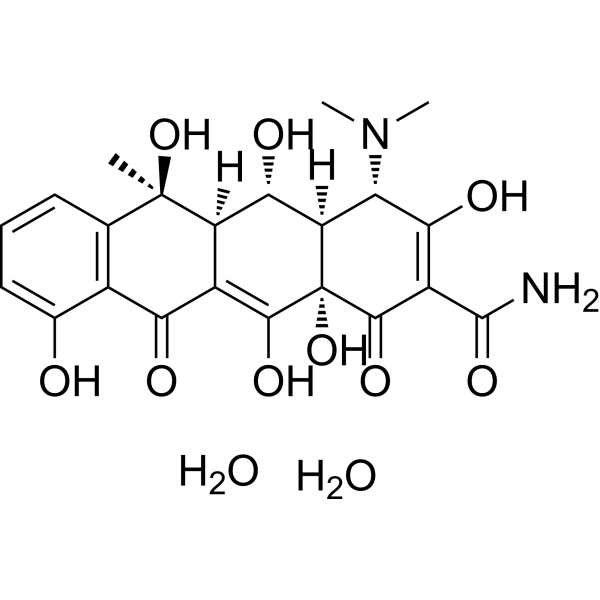
    Oxytetracycline dihydrate
    Maximum Cited Publications
    10 Publications Verification

    Bacterial HSV Antibiotic Endogenous Metabolite Infection
    Oxytetracycline dihydrate is an antibiotic belonging to the tetracycline class. Oxytetracycline dihydrate potent inhibits Gram-negative and Gram-positive bacteria. Oxytetracycline dihydrate is a protein synthesis inhibitor and prevents the binding from aminoacil-tRNA to the complex m-ribosomal RNA. Oxytetracycline dihydrate also possesses anti-HSV-1 activity .
    Oxytetracycline dihydrate
  • HY-B0275AR

    Reference Standards Bacterial HSV Antibiotic Endogenous Metabolite Infection
    Oxytetracycline (hydrochloride) (Standard) is the analytical standard of Oxytetracycline (hydrochloride). This product is intended for research and analytical applications. Oxytetracycline hydrochloride is an antibiotic belonging to the tetracycline class. Oxytetracycline hydrochloride potent inhibits Gram-negative and Gram-positive bacteria. Oxytetracycline hydrochloride is a protein synthesis inhibitor and prevents the binding from aminoacil-tRNA to the complex m-ribosomal RNA. Oxytetracycline hydrochloride also possesses anti-HSV-1 activity .
    Oxytetracycline hydrochloride (Standard)
  • HY-P5997

    Autophagy Cyclic GMP-AMP Synthase Inflammation/Immunology
    XQ2B is a specific cGAS inhibitor targeting protein-DNA interaction and phase separation. XQ2B markedly reduces ISD-induced Autophagy. XQ2B inhibits herpes simplex virus 1 (HSV-1)-induced antiviral immune responses and enhances HSV-1 infection .
    XQ2B
  • HY-P1958

    HSV Infection
    Histone H4 (2-21) is the core histones associated with chromatinization of herpes simplex virus 1 (HSV-1) genomes .
    Histone H4 (2-21)
  • HY-117025A
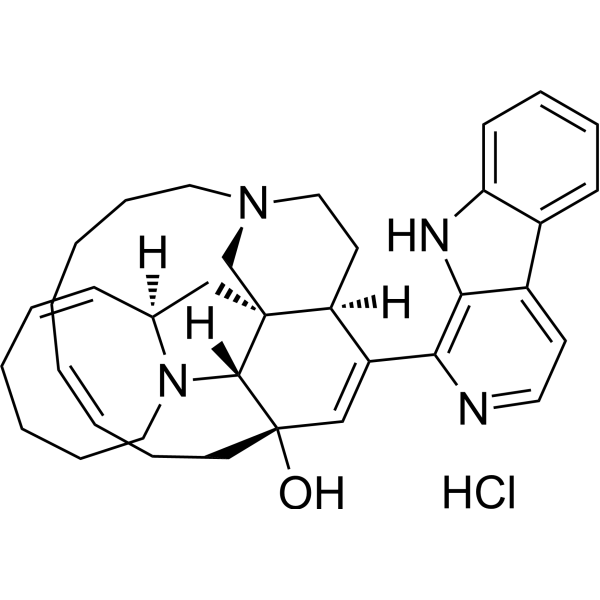
    Manzamine A hydrochloride
    2 Publications Verification

    KeramamINe A hydrochloride

    GSK-3 CDK Parasite Proton Pump HSV Autophagy Infection Neurological Disease Cancer
    Manzamine A hydrochloride, an orally active beta-carboline alkaloid, inhibits specifically GSK-3β and CDK-5 with IC50s of 10.2 μM and 1.5 μM, respectively. Manzamine A hydrochloride targets vacuolar ATPases and inhibits autophagy in pancreatic cancer cells. Manzamine A hydrochloride has antimalarial and anticancer activities. Manzamine A hydrochloride also shows potent activity against HSV-1 .
    Manzamine A hydrochloride
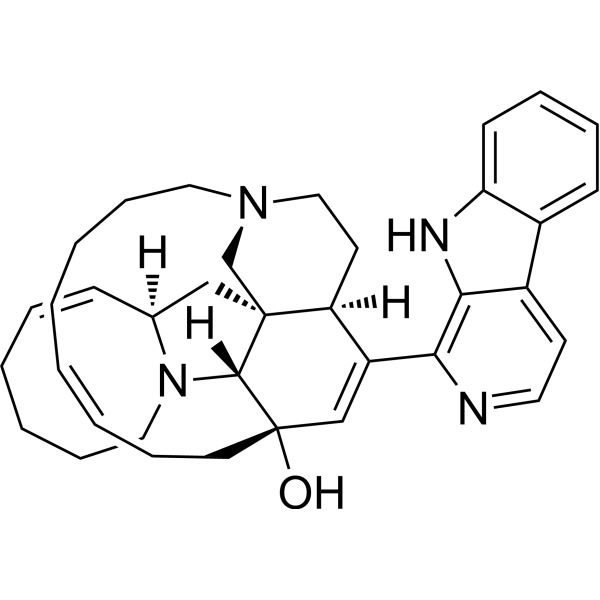
  • HY-117025

    KeramamINe A

    GSK-3 CDK Parasite Proton Pump HSV Autophagy Infection Neurological Disease Cancer
    Manzamine A, an orally active beta-carboline alkaloid, inhibits specifically GSK-3β and CDK-5 with IC50s of 10.2 μM and 1.5 μM, respectively. Manzamine A targets vacuolar ATPases and inhibits autophagy in pancreatic cancer cells. Manzamine A has antimalarial and anticancer activities. Manzamine A also shows potent activity against HSV-1 .
    Manzamine A
  • HY-15303A
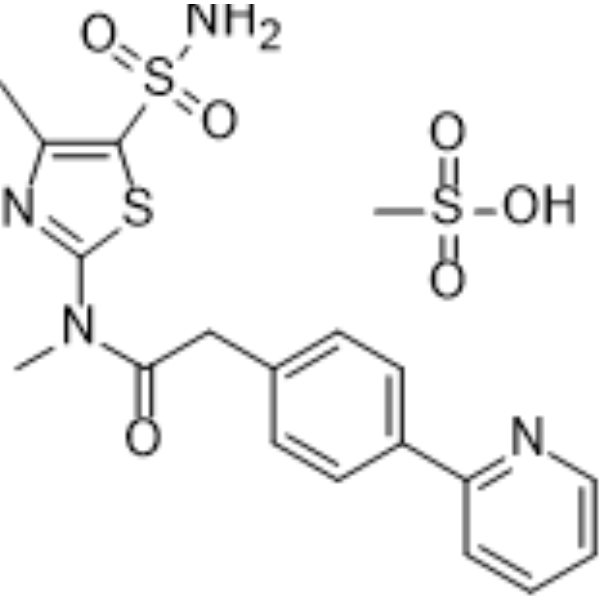
    Pritelivir mesylate
    5+ Cited Publications

    AIC316 mesylate; BAY 57-1293 mesylate

    DNA/RNA Synthesis HSV Infection
    Pritelivir mesylate (BAY 57-1293 mesylate), an inhibitor of the viral helicase-primase complex, exhibits antiviral activity in vitro and in animal models of herpes simplex virus (HSV) infection. Pritelivir mesylate is active against herpes simplex virus types 1 and 2 (HSV-1 and HSV-2) with the IC50 of 0.02 μM against HSV1-2 .
    Pritelivir mesylate
  • HY-B0275S

    Isotope-Labeled Compounds Antibiotic Bacterial Endogenous Metabolite HSV Infection
    Oxytetracycline-d6 is deuterium labeled Oxytetracycline. Oxytetracycline is an antibiotic belonging to the tetracycline class. Oxytetracycline potent inhibits Gram-negative and Gram-positive bacteria. Oxytetracycline is a protein synthesis inhibitor and prevents the binding from aminoacil-tRNA to the complex m-ribosomal RNA. Oxytetracycline also possesses anti-HSV-1 activity .
    Oxytetracycline-d6
  • HY-B1773AS4

    Isotope-Labeled Compounds Apoptosis NF-κB Bacterial PPAR COX NO Synthase Autophagy HSV Endogenous Metabolite Infection Neurological Disease Inflammation/Immunology Cancer
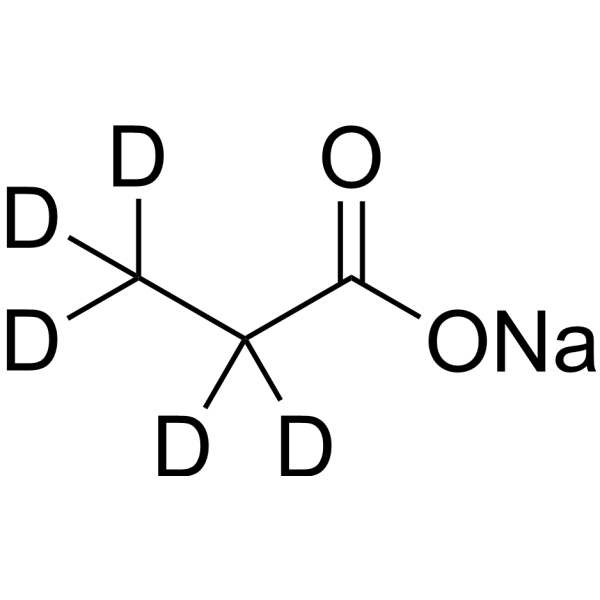
    Sodium propionate-d5 is the deuterium labeled Propionate sodium (HY-B1773A). Sodium propionate is an orally active short-chain fatty acid. Sodium propionate can be produced by intestinal bacteria from the metabolism of dietary fiber. Sodium propionate increases PPAR-γ, inhibits NF-κB activation, and reduces COX-2 expression and NO production. Sodium propionate also induces Apoptosis and Autophagy. Sodium propionate reduces HSV-1-induced keratitis. Sodium propionate has anticancer effects against glioblastoma. Sodium propionate exhibits neuroprotective, antioxidant, and anti-inflammatory activities. Sodium propionate can be used in the research of spinal cord injury and Alzheimer's disease .
    Sodium propionate-d5
  • HY-B1773AS

    Isotope-Labeled Compounds Apoptosis NF-κB Bacterial PPAR COX NO Synthase Autophagy HSV Endogenous Metabolite Infection Neurological Disease Inflammation/Immunology Cancer
    Sodium propionate- 13C is the 13C labeled Propionate sodium (HY-B1773A). Sodium propionate is an orally active short-chain fatty acid. Sodium propionate can be produced by intestinal bacteria from the metabolism of dietary fiber. Sodium propionate increases PPAR-γ, inhibits NF-κB activation, and reduces COX-2 expression and NO production. Sodium propionate also induces Apoptosis and Autophagy. Sodium propionate reduces HSV-1-induced keratitis. Sodium propionate has anticancer effects against glioblastoma. Sodium propionate exhibits neuroprotective, antioxidant, and anti-inflammatory activities. Sodium propionate can be used in the research of spinal cord injury and Alzheimer's disease .
    Sodium propionate-13C
  • HY-163546

    HSV Infection
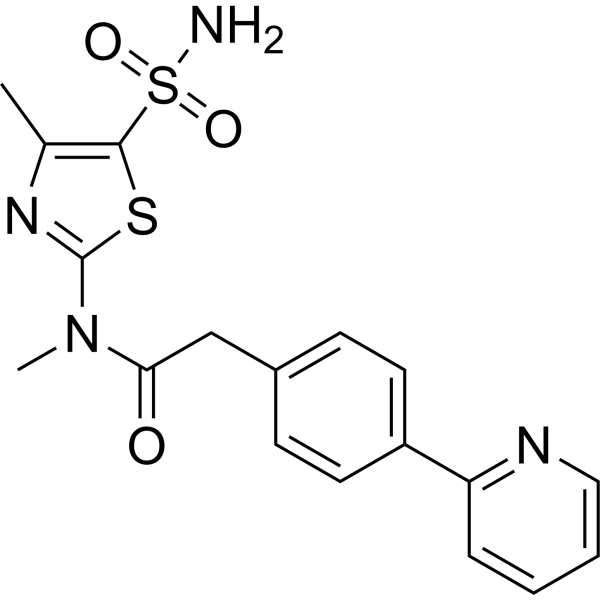
    HSV-1-IN-1 (compound 1b) is a drug candidate for herpes simplex virus HSV-1(IC50=0.5 nM) and HSV-2(IC50=16 nM) infection. HSV-1-IN-1 inhibits the helicase-primase complex to prevent viral replication, thereby inhibiting HSV infection .
    HSV-1-IN-1
  • HY-B0275S1

    Isotope-Labeled Compounds Endogenous Metabolite Bacterial Antibiotic HSV Infection
    Oxytetracycline-d3 is the deuterium labeled Oxytetracycline (HY-B0275). Oxytetracycline is an antibiotic belonging to the tetracycline class. Oxytetracycline potent inhibits Gram-negative and Gram-positive bacteria. Oxytetracycline is a protein synthesis inhibitor and prevents the binding from aminoacil-tRNA to the complex m-ribosomal RNA. Oxytetracycline also possesses anti-HSV-1 activity .
    Oxytetracycline-d3
  • HY-N8082

    HSV Infection
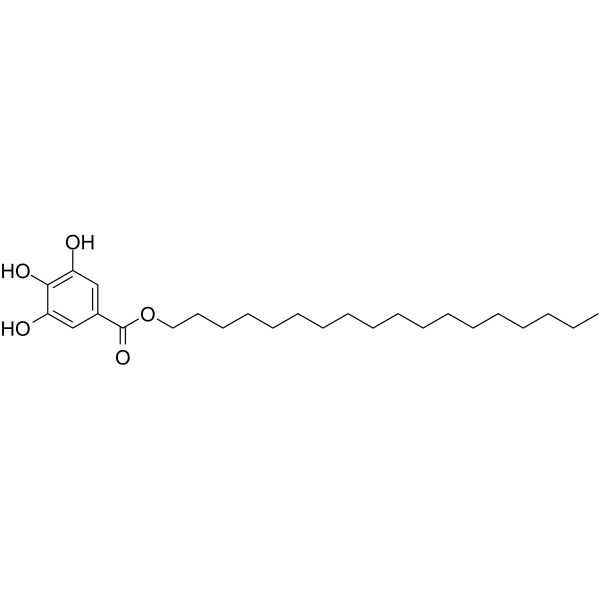
    Stearyl gallate is an alkyl gallate with a long alkyl chain (carbon number of 18). Stearyl gallate has an antioxidant activity, and a weak antiviral activity against HSV-1 .
    Stearyl gallate
  • HY-15303B
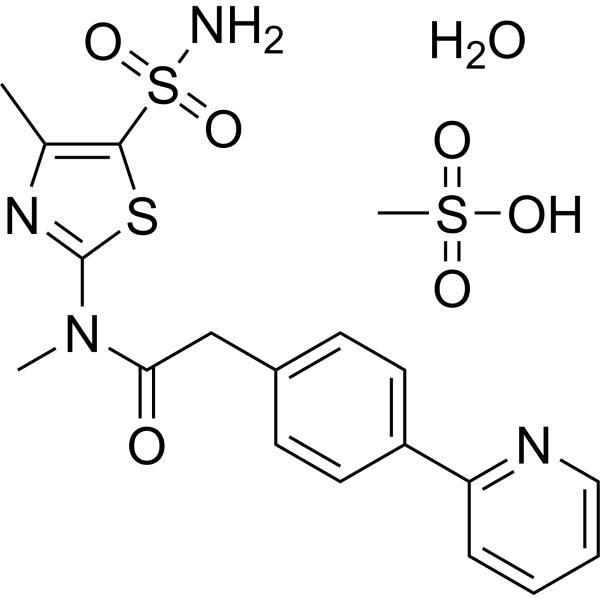
    Pritelivir mesylate hydrate
    5+ Cited Publications

    AIC316 mesylate hydrate; BAY 57-1293 mesylate hydrate

    DNA/RNA Synthesis HSV Infection
    Pritelivir mesylate hydrate (BAY 57-1293 mesylate hydrate), an inhibitor of the viral helicase-primase complex, exhibits antiviral activity in vitro and in animal models of herpes simplex virus (HSV) infection. Pritelivir mesylate hydrate is active against herpes simplex virus types 1 and 2 (HSV-1 and HSV-2) with the IC50 of 0.02 μM against HSV1-2 .
    Pritelivir mesylate hydrate
  • HY-B1773AS5

    Isotope-Labeled Compounds Apoptosis NF-κB Bacterial PPAR COX NO Synthase Autophagy HSV Endogenous Metabolite Infection Neurological Disease Inflammation/Immunology Cancer
    Sodium propionate-d3 is the deuterium labeled Propionate sodium (HY-B1773A). Sodium propionate is an orally active short-chain fatty acid. Sodium propionate can be produced by intestinal bacteria from the metabolism of dietary fiber. Sodium propionate increases PPAR-γ, inhibits NF-κB activation, and reduces COX-2 expression and NO production. Sodium propionate also induces Apoptosis and Autophagy. Sodium propionate reduces HSV-1-induced keratitis. Sodium propionate has anticancer effects against glioblastoma. Sodium propionate exhibits neuroprotective, antioxidant, and anti-inflammatory activities. Sodium propionate can be used in the research of spinal cord injury and Alzheimer's disease .
    Sodium propionate-d3
  • HY-B0275C

    Bacterial HSV Antibiotic Endogenous Metabolite Infection
    Oxytetracycline calcium is an antibiotic belonging to the tetracycline class. Oxytetracycline calcium potently inhibits Gram-negative and Gram-positive bacteria. Oxytetracycline calcium is a protein synthesis inhibitor and prevents the binding from aminoacil-tRNA to the complex m-ribosomal RNA. Oxytetracycline calcium also possesses anti-HSV-1 activity .
    Oxytetracycline calcium
  • HY-B0275R

    Reference Standards Bacterial HSV Endogenous Metabolite Antibiotic Infection
    Oxytetracycline (Standard) is the analytical standard of Oxytetracycline. This product is intended for research and analytical applications. Oxytetracycline is an antibiotic belonging to the tetracycline class. Oxytetracycline potent inhibits Gram-negative and Gram-positive bacteria. Oxytetracycline is a protein synthesis inhibitor and prevents the binding from aminoacil-tRNA to the complex m-ribosomal RNA. Oxytetracycline also possesses anti-HSV-1 activity .
    Oxytetracycline (Standard)
  • HY-W755036

    Isotope-Labeled Compounds Bacterial HSV Antibiotic Infection
    Oxytetracycline-13C,d3 hydrochloride is the 13C- and deuterium labeled Oxytetracycline hydrochloride (HY-B0275A). Oxytetracycline hydrochloride is an antibiotic that exhibits board-spectrum antibacterial activity. Oxytetracycline hydrochloride is a protein synthesis inhibitor and prevents the binding from aminoacil-tRNA to the complex m-ribosomal RNA. Oxytetracycline hydrochloride also possesses anti-HSV-1 activity .
    Oxytetracycline-13C,d3 hydrochloride
  • HY-15303AR

    AIC316 mesylate (Standard); BAY 57-1293 mesylate (Standard)

    HSV Reference Standards Infection
    Pritelivir (mesylate) (Standard) is the analytical standard of Pritelivir (mesylate). This product is intended for research and analytical applications. Pritelivir mesylate (BAY 57-1293 mesylate), an inhibitor of the viral helicase-primase complex, exhibits antiviral activity in vitro and in animal models of herpes simplex virus (HSV) infection. Pritelivir mesylate is active against herpes simplex virus types 1 and 2 (HSV-1 and HSV-2) with the IC50 of 0.02 μM against HSV1-2 .
    Pritelivir mesylate (Standard)
  • HY-15303R

    AIC316 (Standard); BAY 57-1293 (Standard)

    HSV Reference Standards Infection
    Pritelivir (Standard) is the analytical standard of Pritelivir. This product is intended for research and analytical applications. Pritelivir (AIC316), an inhibitor of the viral helicase-primase complex, exhibits antiviral activity in vitro and in animal models of herpes simplex virus (HSV) infection. Pritelivir is active against herpes simplex virus types 1 and 2 (HSV-1 and HSV-2) with the IC50 of 0.02 μM against HSV1-2 .
    Pritelivir (Standard)
  • HY-118703

    HIV HSV Infection
    L-Ristosamine nucleoside is a nucleoside compound with antiviral activity against HIV and HSV-1 .
    L-Ristosamine nucleoside
  • HY-N14564

    Antibiotic HSV Infection
    Cycloviracin B2 is an antibiotic with antiviral activity. Cycloviracin B2 has a strong inhibitory activity against herpes simplex virus type 1 (HSV-1) .
    Cycloviracin B2
  • HY-P11160

    HSV Infection
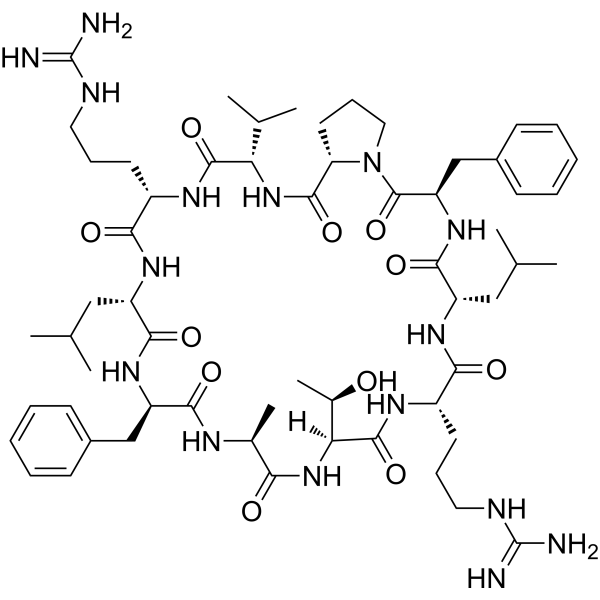
    GF-17 is a polypeptide containing 17 amino acids. is the precursor peptide of GF19. GF-17 exhibits significant antiviral activity. GF-17 can be used for research on viral infections such as HSV-1 virus .
    GF-17
  • HY-N2004R

    (±)-Isoborneol (Standard)

    Reference Standards HSV Infection Neurological Disease
    Isoborneol (Standard) is the analytical standard of Isoborneol. This product is intended for research and analytical applications. Isoborneol ((±)-Isoborneol) is a monoterpenoid alcohol present in the essential oils of numerous medicinal plants and has antioxidant and antiviral properties. Isoborneol is a potent inhibitor of herpes simplex virus type 1 (HSV-1) .
    Isoborneol (Standard)
  • HY-N10177

    HSV Infection
    Peniterphenyl A is a natural product obtained from a deep-sea-derived Penicillium sp. Peniterphenyl A inhibits HSV-1/2 virus entry into cells and may block HSV-1/2 infection through direct interaction with virus envelope glycoprotein D to interfere with virus adsorption and membrane fusion. Peniterphenyl A is a promising lead compound against HSV-1/2 .
    Peniterphenyl A
  • HY-B0275BR

    Reference Standards Bacterial HSV Antibiotic Endogenous Metabolite Infection
    Oxytetracycline (dihydrate) (Standard) is the analytical standard of Oxytetracycline (dihydrate). This product is intended for research and analytical applications. Oxytetracycline dihydrate is an antibiotic belonging to the tetracycline class. Oxytetracycline dihydrate potent inhibits Gram-negative and Gram-positive bacteria. Oxytetracycline dihydrate is a protein synthesis inhibitor and prevents the binding from aminoacil-tRNA to the complex m-ribosomal RNA. Oxytetracycline dihydrate also possesses anti-HSV-1 activity .
    Oxytetracycline dihydrate (Standard)
  • HY-15303S

    AIC316-d4-1; BAY 57-1293-d4-1

    Isotope-Labeled Compounds HSV DNA/RNA Synthesis Infection
    Pritelivir-d4-1 (AIC316-d4-1) is deuterium labeled Pritelivir. Pritelivir (AIC316), an inhibitor of the viral helicase-primase complex, exhibits antiviral activity in vitro and in animal models of herpes simplex virus (HSV) infection. Pritelivir is active against herpes simplex virus types 1 and 2 (HSV-1 and HSV-2) with the IC50 of 0.02 μM against HSV1-2 .
    Pritelivir-d4-1
  • HY-B1773AR

    Reference Standards Apoptosis NF-κB Bacterial PPAR COX NO Synthase Autophagy HSV Endogenous Metabolite Infection Neurological Disease Inflammation/Immunology Cancer
    Sodium propionate (Standard) is the analytical standard of Sodium propionate. This product is intended for research and analytical applications. Sodium propionate is an orally active short-chain fatty acid. Sodium propionate can be produced by intestinal bacteria from the metabolism of dietary fiber. Sodium propionate increases PPAR-γ, inhibits NF-κB activation, and reduces COX-2 expression and NO production. Sodium propionate also induces Apoptosis and Autophagy. Sodium propionate reduces HSV-1-induced keratitis. Sodium propionate has anticancer effects against glioblastoma. Sodium propionate exhibits neuroprotective, antioxidant, and anti-inflammatory activities. Sodium propionate can be used in the research of spinal cord injury and Alzheimer's disease .
    Sodium propionate (Standard)
  • HY-B1773AS1

    Isotope-Labeled Compounds Apoptosis NF-κB Bacterial PPAR COX NO Synthase Autophagy HSV Endogenous Metabolite Infection Neurological Disease Inflammation/Immunology Cancer
    Sodium propionate- 13C-1 is the 13C-labeled Propionate sodium (HY-B1773A). Sodium propionate is an orally active short-chain fatty acid. Sodium propionate can be produced by intestinal bacteria from the metabolism of dietary fiber. Sodium propionate increases PPAR-γ, inhibits NF-κB activation, and reduces COX-2 expression and NO production. Sodium propionate also induces Apoptosis and Autophagy. Sodium propionate reduces HSV-1-induced keratitis. Sodium propionate has anticancer effects against glioblastoma. Sodium propionate exhibits neuroprotective, antioxidant, and anti-inflammatory activities. Sodium propionate can be used in the research of spinal cord injury and Alzheimer's disease .
    Sodium propionate-13C-1
  • HY-P99147

    CD3 Infection Inflammation/Immunology
    Anti-Mouse TCR V gamma 2 Antibody (UC3-10A6) is an Armenian Hamster-derived IgG antibody inhibitor, targeting to mouse TCR V gamma 2. Anti-Mouse TCR V gamma 2 Antibody (UC3-10A6) reacts with an epitope on the delta chain of the mouse Vγ2 TCR (V gamma 2 T cell receptor). Anti-Mouse TCR V gamma 2 Antibody (UC3-10A6) can deplete γδ T cell. Anti-Mouse TCR V gamma 2 Antibody (UC3-10A6) can be used for the researches of infection and immunology, such as herpes simplex virus-1 (HSV-1) infection .
    Anti-Mouse TCR V gamma 2 Antibody (UC3-10A6)
  • HY-N18293

    HSV Infection
    Makisterone A 2-acetate is a steroid compound that can be isolated from the 75% ethanol extract of Cyanotis arachnoidea. Experimental tests show that Makisterone A 2-acetate has no anti-HSV-1 activity .
    Makisterone A 2-acetate
  • HY-186203

    HSV Infection
    8-Bromo-harmane is a β-carboline derivative with anti-HSV-1 activity. 8-Bromo-harmane is non-cytotoxic. 8-Bromo-harmane can be used for the research of herpes simplex virus 1 (HSV-1) infection .
    8-Bromo-harmane
  • HY-180881

    HSV Tau Protein Akt GSK-3 Neurological Disease
    PAV-174 is a potent antiviral agent that targets a host protein. PAV-174 prevents Herpes simplex virus (HSV-1) infection in cells (IC50 of 0.02 μM in Vero cells) and human brain organoids. PAV-174 inhibits oxidized macrophage migration inhibitory factor (oxMIF)-induced tau phosphorylation in vitro and in vivo independent of infection. PAV-174 reduces HSV-1-induced tau phosphorylation via the Akt/GSK3β signaling pathway. PAV-174 can be used for Alzheimer’s disease research .
    PAV-174

Inquiry Online

Your information is safe with us. * Required Fields.

Salutation


Country or Region *

Applicant Name *


Organization Name *

Department *


Email Address *


Product Name *

Cat. No.


Requested quantity *

Phone Number *


Remarks

Inquiry Online

Inquiry Information

Product Name:
Cat. No.:
Quantity:
MCE Japan Authorized Agent:

