1. Search Result
Search Result
Pathways Recommended: Neuronal Signaling JAK/STAT Signaling
Results for "

Hedgehog/GLI signaling

" in MedChemExpress (MCE) Product Catalog:

12

Inhibitors & Agonists

1

Peptides

2

Natural
Products

Targets Recommended:
Cat. No. Product Name Target Research Areas Chemical Structure
  • HY-B0877
    Halcinonide
    1 Publications Verification

    SQ-18566

    Smo Caspase RAR/RXR CDK Cardiovascular Disease Neurological Disease Inflammation/Immunology
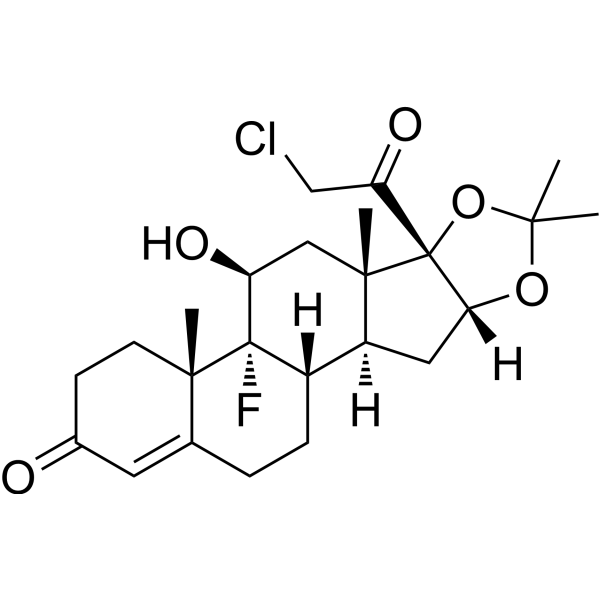
    Halcinonide (SQ-18566) is an orally active Smoothened (Smo) agonist. Halcinonide activates the Hedgehog signaling pathway by binding to Smo and promoting its internalization and expression, thereby activating Gli transcription factors. Halcinonide not only stimulates cell proliferation, increases the expression of cyclin D2/CDK6 and inhibits the degradation of caspase-3, but also suppresses Bcl-2/Bax-mediated apoptosis, oxidative stress and inflammatory responses. Halcinonide activates RxRγ to upregulate the expression of myelin genes, thereby reducing cerebral infarction and improving behavioral deficits. Halcinonide has been used in studies related to multiple sclerosis and ischemic stroke .
    Halcinonide
  • HY-18366A
    RU-SKI 43 hydrochloride
    2 Publications Verification

    Hedgehog Cancer
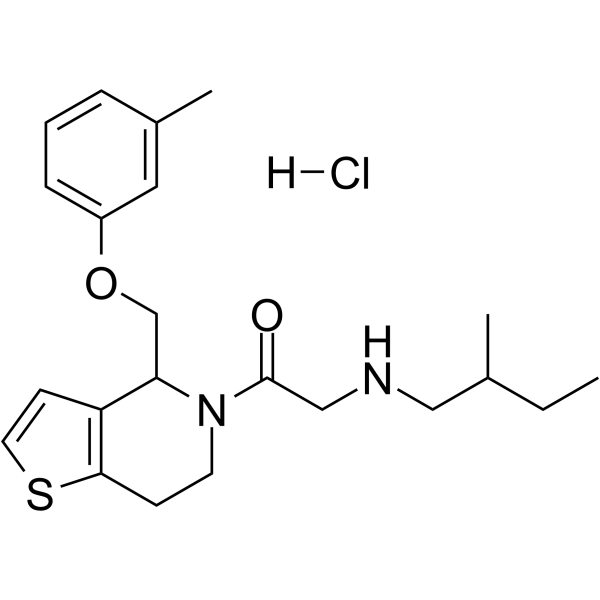
    RU-SKI 43 hydrochloride is a potent and selective Hedgehog acyltransferase (Hhat) inhibitor with an IC50 of 850 nM. RU-SKI 43 hydrochloride reduces Gli-1 activation through Smoothened-independent non-canonical signaling and decreases Akt and mTOR pathway activity. RU-SKI 43 hydrochloride has anti-cancer activity .
    RU-SKI 43 hydrochloride
  • HY-107551

    Hedgehog Gli Cancer
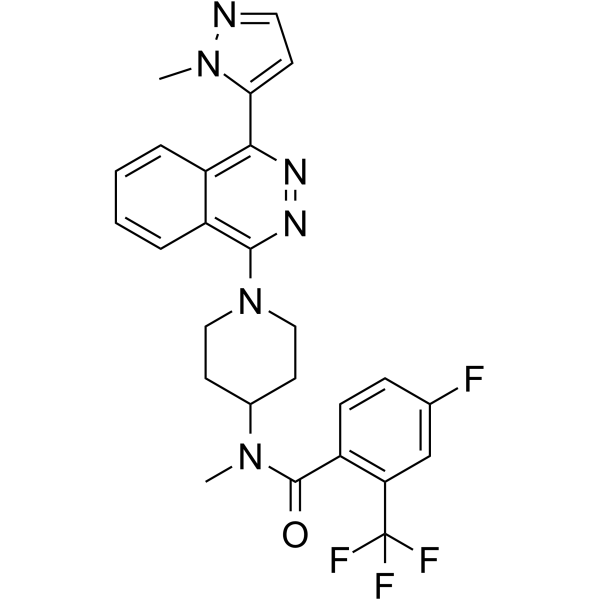
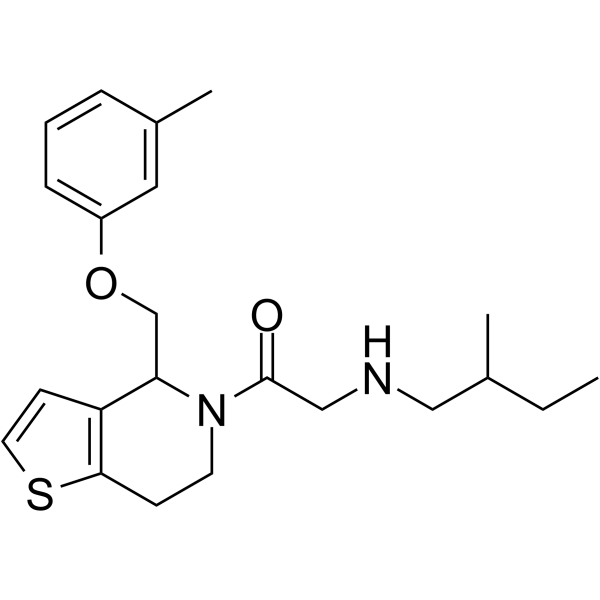
    Hh Pathway-IN-1, a Hedgehog (Hh) pathway inhibitor, is a potent Gli antagonist. Hh Pathway-IN-1 inhibits Hh pathway functional with an IC50 value of 1.1 µM in C3H10T1/2 cells. Hh Pathway-IN-1 does not inhibit Wnt signaling. Hh Pathway-IN-1 shows anti-proliferative activity. Hh Pathway-IN-1 decreases the GLI1 mRNA expression. Hh Pathway-IN-1 inhibits colony formation in a dose-dependent manner .
    Hh Pathway-IN-1
  • HY-P10875

    Hedgehog Cancer
    HL2-m5 is the inhibitor for the interaction between sonic hedgehog/patched (Shh/PTCH1) with Kd of 170 nM for Shh. HL2-m5 inhibits activation of Hedgehog signaling pathway and transcription of Gli-controlled gene with an IC50 of 230 nM .
    HL2-m5
  • HY-18366

    Hedgehog Cancer
    RU-SKI 43 is a potent and selective Hedgehog acyltransferase (Hhat) inhibitor with an IC50 of 850 nM. RU-SKI 43 reduces Gli-1 activation through Smoothened-independent non-canonical signaling and decreases Akt and mTOR pathway activity. RU-SKI 43 has anti-cancer activity .
    RU-SKI 43
  • HY-143400

    HSP Hedgehog Cancer
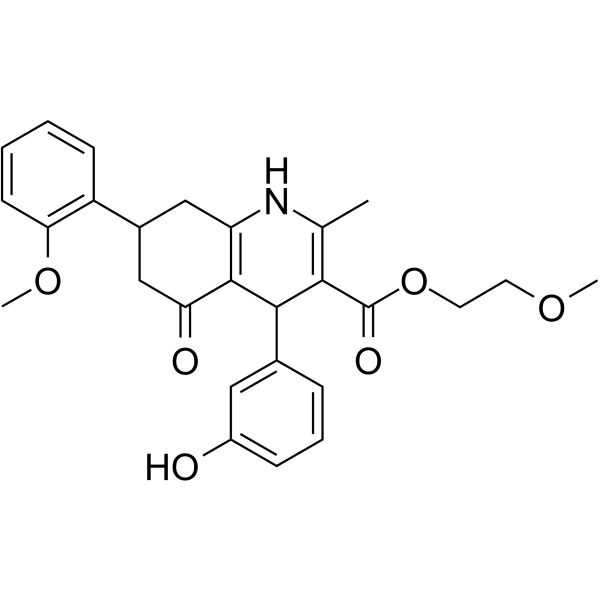
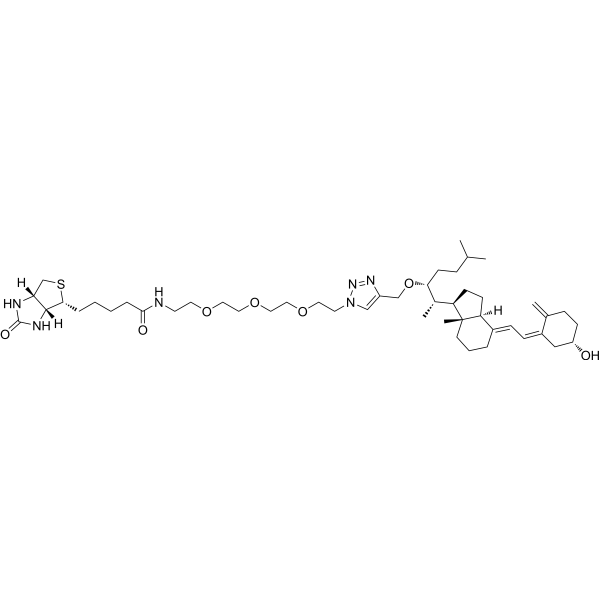
    HSP70-IN-3 is a potent HSP70 inhibitor (IC50s of 1.1 and 1.9 μM in ASZ001 and C3H10T1/2, respectively). HSP70-IN-3 has anti-Hh (Hedgehog signaling) activity and anti-proliferative activity and reduces expression of the oncogenic transcription factor GLI1 .
    HSP70-IN-3
  • HY-172449

    Hedgehog Cancer
    GLI1-IN-3 (Compound 11a), a triterpenoid analogue, can inhibit Hedgehog signaling in GLI1 overexpression cancer cells. GLI1-IN-3 inhibits the proliferation in NSCLC and prostate cancer cell lines exhibiting hyper-activated Hh signaling. GLI1-IN-3 can also decrease the expression of endogenous GLI1 protein and its target genes associated with tumor progression and proliferation in A549 and DU-145 cancer cells .
    GLI1-IN-3
  • HY-N8270

    Hedgehog Endogenous Metabolite Cancer
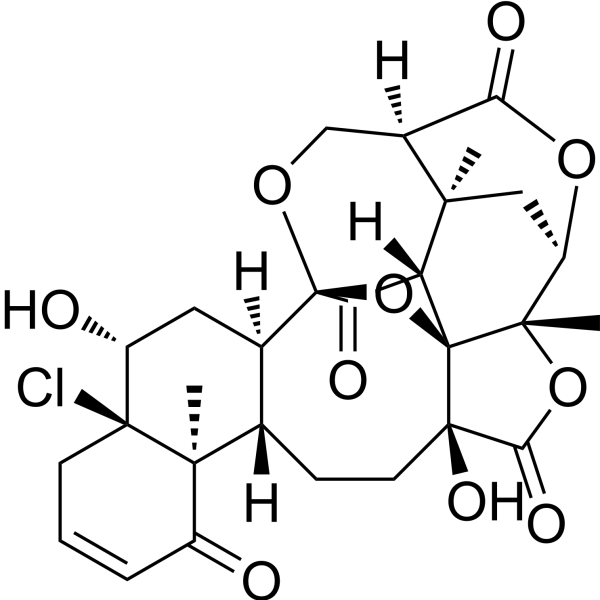
    Physalin H is a natural product that can be isolated from Solanum nigrum. Physalin H is an inhibitor of Hedgehog (Hh) signaling and it disrupts GLI1-DNA-complex formation. Physalin H inhibits GLI1 transcription with an IC50 value of 0.7 μM. Physalin H shows cytotoxicity to PANC1 and DU145 cells with IC50 values of 5.7 and 6.8 μM, respectively .
    Physalin H
  • HY-159893

    Smo Hedgehog Apoptosis Cancer
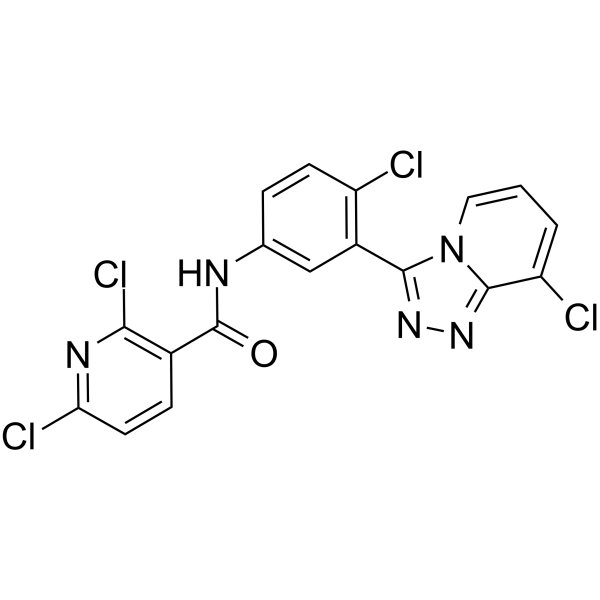
    SMO-IN-5 ((Compound 25(B31)) is a potent and competitive inhibitor of smoothened (SMO) that can inhibit Hedgehog (Hh) signaling. SMO-IN-5 interacts with Smo through hydrogen bonds, hydrophobic interactions, and electrostatic forces. SMO-IN-5 inhibits PC cell proliferation, migration, and induces apoptosis by suppressing Gli1 expression. SMO-IN-5 exhibits antitumor activity in pancreatic cancer. .
    SMO-IN-5
  • HY-147670

    Hedgehog Smo Gli Apoptosis Cancer
    TPB15 is an orally active and potent Hh (Hedgehog) signaling inhibitor. TPB15 markedly induces cell cycle arrest and apoptosis in MDA-MB-468 cells. TPB15 blocks Smo (Smoothened) translocation into the cilia and reduced Smo protein and mRNA expression. TPB15 inhibits the expression of the downstream regulatory factor glioma-associated oncogene 1 (Gli1). TPB15 shows good anti-tumor activity with low toxicity .
    TPB15
  • HY-N9684

    EGFR GSK-3 Hedgehog Akt ERK Apoptosis Cancer
    Degalactotigonin is a saponin-selective inhibitor targeting the EGFR, GSK3β and Hedgehog/Gli1 pathways and can be isolated from Solanum nigrum (Solanum nigrum). Degalactotigonin inhibits EGFR phosphorylation and the downstream Akt/ERK signaling pathway, and at the same time inhibits the Hedgehog/Gli1 pathway through GSK3β inactivation, thereby inducing cancer cell apoptosis, arresting the cell cycle, and inhibiting migration and invasion. Degalactotigonin can be used in targeted research on malignant tumors such as pancreatic cancer and osteosarcoma .
    Degalactotigonin
  • HY-183335

    Smo Hedgehog Gli Apoptosis Caspase Cancer
    Anticancer agent 321 is a Smoothened (SMO) inhibitor with a human IC50 of 0.12 μM, enhanced aqueous solubility, good plasma and metabolic stability, moderate therapeutic index, preliminary safety profile, and moderate oral bioavailability in rats.Anticancer agent 321 binds to SMO’s 7-transmembrane helical channel, forming hydrogen bonds with Asp384 and hydrophobic/π-π interactions with His470, Phe391, Tyr394, stabilizing SMO’s inactive conformation to inhibit Hedgehog/GLI signaling.Anticancer agent 321 inhibits proliferation, suppresses colony formation, induces apoptosis, and downregulates Hedgehog/GLI pathway target genes GLI1, GLI2, Ptch1, HHip in cancer cells.Anticancer agent 321 inhibits tumor growth, downregulates Ki67 and SOX2, and upregulates cleaved-caspase 3 in tumor tissues.Anticancer agent 321 can be used for the research of cutaneous squamous cell carcinoma .
    SMO-IN-6

Inquiry Online

Your information is safe with us. * Required Fields.

Salutation


Country or Region *

Applicant Name *


Organization Name *

Department *


Email Address *


Product Name *

Cat. No.


Requested quantity *

Phone Number *


Remarks

Inquiry Online

Inquiry Information

Product Name:
Cat. No.:
Quantity:
MCE Japan Authorized Agent:

