


14 Results for "

Hypermotility

" in MedChemExpress (MCE) Product Catalog:
Products (14)

14 Results for "Hypermotility" in MCE Product Catalog:

8
8 Publications Verification
Cat. No.: HY-17585
CAS No.: 76-90-4
Target:  

mAChR GPR109A

Research Areas:  

Others Inflammation/Immunology

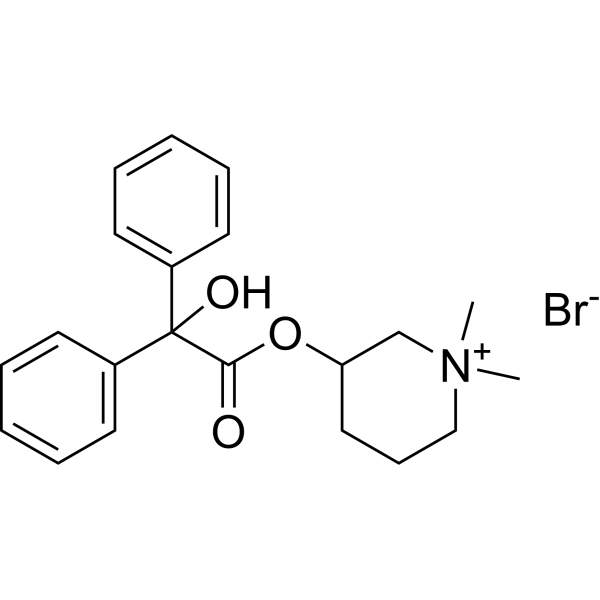
Mepenzolate bromide is an orally administered muscarinic receptor antagonist with Kis of 0.68 and 2.6 nM for hM2R and hM3R, respectively. Mepenzolate bromide can be used to suppress the gastrointestinal hypermotility associated with irritable bowel syndrome .Mepenzolate bromide is a GPR109A inhibitor .
loading...
    loading...
1
1 Cited Publications
Cat. No.: HY-P1108
CAS No.: 681260-70-8
Target:  

CRFR

Astressin 2B is a blood-brain barrier-impermeable, highly selective CRFR2 antagonist (rCRFR2, IC50=0.57 nM). Astressin 2B blocks the protective effects mediated by CRFR2, thereby exacerbating indomethacin (HY-14397)-induced hemorrhagic intestinal injury in rats. Astressin 2B reverses the protective effects of Urocortin 1 against intestinal hypermotility, bacterial invasion and upregulation of inflammatory mediators. Astressin 2B also blocks the anxiogenic effect of Urocortin 2 and attenuates stress-induced anxiety-related behaviors. In the Clostridioides difficile toxin A (C. difficile toxin A)-mediated enteritis model, Astressin 2B mimics the phenotype of CRFR2-deficient mice, significantly exacerbating intestinal epithelial damage, edema, neutrophil migration and the expression of multiple proinflammatory cytokines. Astressin 2B is an important tool molecule for investigating the intestinal protective mechanisms of CRFR2 .
loading...
    loading...
1
1 Cited Publications
Cat. No.: HY-P1108A
Target:  

CRFR

Astressin 2B TFA is a blood-brain barrier-impermeable, highly selective CRFR2 antagonist (rCRFR2, IC50=0.57 nM). Astressin 2B TFA blocks the protective effects mediated by CRFR2, thereby exacerbating indomethacin (HY-14397)-induced hemorrhagic intestinal injury in rats. Astressin 2B TFA reverses the protective effects of Urocortin 1 against intestinal hypermotility, bacterial invasion and upregulation of inflammatory mediators. Astressin 2B TFA also blocks the anxiogenic effect of Urocortin 2 and attenuates stress-induced anxiety-related behaviors. In the Clostridioides difficile toxin A (C. difficile toxin A)-mediated enteritis model, Astressin 2B TFA mimics the phenotype of CRFR2-deficient mice, significantly exacerbating intestinal epithelial damage, edema, neutrophil migration and the expression of multiple proinflammatory cytokines. Astressin 2B TFA is an important tool molecule for investigating the intestinal protective mechanisms of CRFR2 .
loading...
    loading...
1
1 Cited Publications
Cat. No.: HY-P1329A
Target:  

Opioid Receptor

Research Areas:  

Neurological Disease

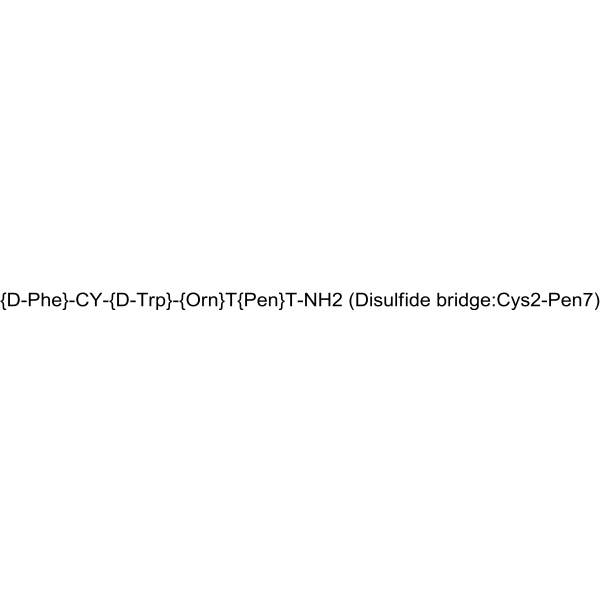
CTOP TFA is a potent and highly selective μ-opioid receptor antagonist. CTOP TFA antagonizes the acute analgesic effect and hypermotility. CTOP TFA enhances extracellular dopamine levels in the nucleus accumbens. CTOP TFA dose-dependently enhances locomotor activity .
loading...
    loading...
1
1 Cited Publications
Cat. No.: HY-13340
CAS No.: 409351-28-6
Purity:  98.98%
Synonyms: VU152100
Target:  

mAChR

Research Areas:  

Neurological Disease

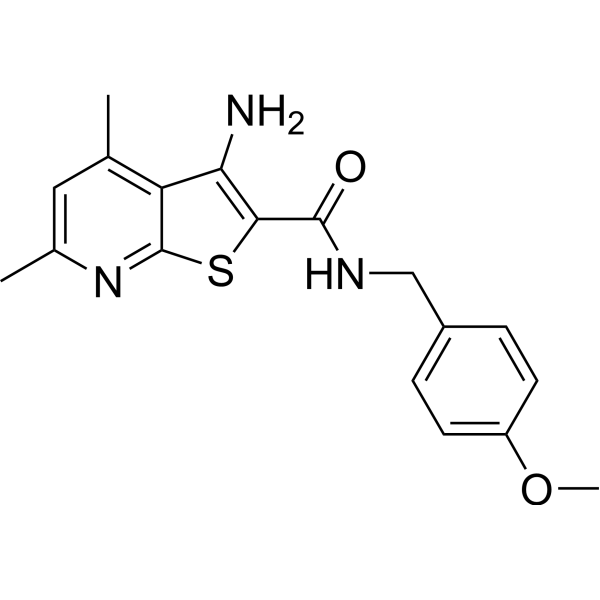
VU0152100 (VU152100) is a highly selective mAChR positive allosteric modulator (permeable to the blood-brain barrier). VU0152100 reverses Amphetamine-induced hypermotility in rats and increased levels of extracellular dopamine in nucleus accumbens and caudate-putamen. VU0152100 has good research potential in psychosis and cognitive impairment associated with mental disorders such as schizophrenia .
loading...
    loading...
Cat. No.: HY-B1667
CAS No.: 71-81-8
Target:  

mAChR

Research Areas:  

Metabolic Disease

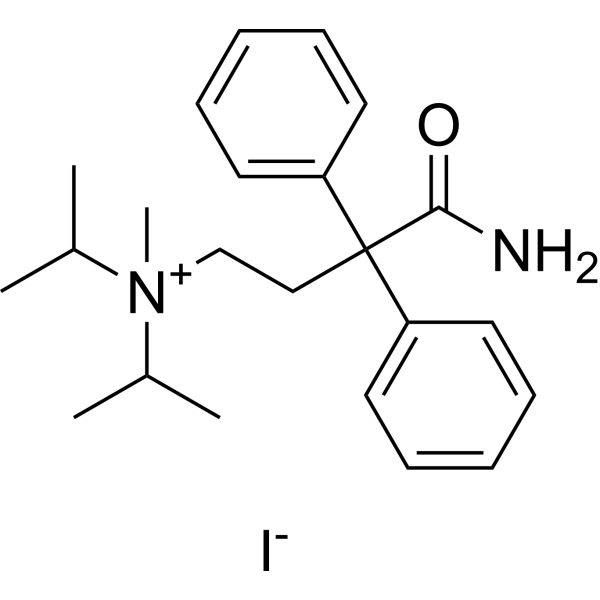
Isopropamide iodide is a long-acting quaternary anticholinergic agent. Isopropamide iodide is used in peptic ulcer and other gastrointestinal disorders marked by hyperacidity and hypermotility .
loading...
    loading...
Cat. No.: HY-122086
CAS No.: 4630-95-9
Target:  

mAChR

Research Areas:  

Neurological Disease

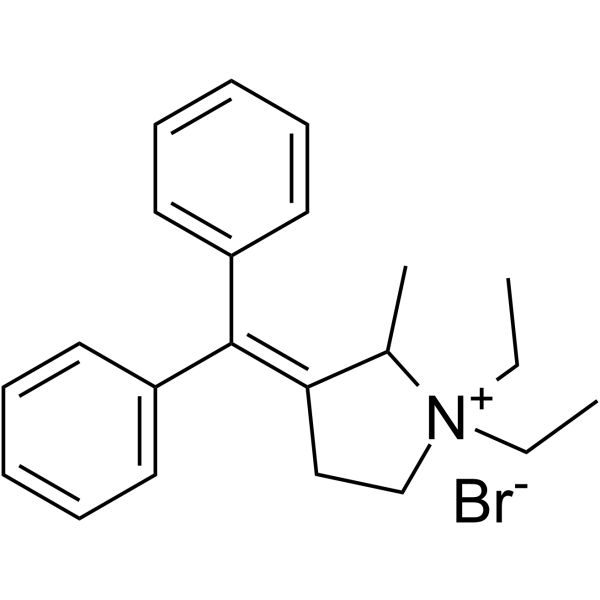
Prifinium bromide is an anticholinergic drug with anticholinergic and antispasmodic activities, and it exhibits oral activity. Prifinium bromide competitively antagonizes cholinergic receptors and relieves symptoms of spasm or hypermotility in the digestive and urinary tracts, with its anticholinergic activity representing the core mechanism underlying the inhibition of bladder smooth muscle contraction. Prifinium bromide can be used in research related to spasms and diverticular disease .
loading...
    loading...
Cat. No.: HY-W153159
CAS No.: 13062-76-5
N-Methyltyramine hydrochloride is an orally active α2-adrenoreceptor antagonist with an IC50 value of 5.53 μM against rat targets. N-Methyltyramine hydrochloride blocks α2-adrenoreceptors, while inhibiting lipolysis, hyperactivity responses and small intestinal peristalsis in mice. N-Methyltyramine hydrochloride promotes gastrin release and pancreatic juice secretion, upregulates appetite, blood pressure, myocardial contraction frequency and contraction intensity, and increases renal blood flow, renal vascular resistance and mean peripheral arterial resistance. N-Methyltyramine hydrochloride relaxes mouse small intestinal smooth muscle and undergoes biotransformation in vivo to produce adrenaline. N-Methyltyramine hydrochloride can be used in studies related to gastrointestinal diseases .
loading...
    loading...
Cat. No.: HY-P1329
CAS No.: 103429-31-8
Target:  

Opioid Receptor

Research Areas:  

Neurological Disease

CTOP is a potent and highly selective μ-opioid receptor antagonist. CTOP antagonizes the acute morphine-induced analgesic effect and hypermotility. CTOP enhances extracellular dopamine levels in the nucleus accumbens. CTOP dose-dependently enhances locomotor activity .
loading...
    loading...
Cat. No.: HY-B1667R
CAS No.: 71-81-8
Research Areas:  

Metabolic Disease

Isopropamide (iodide) (Standard) is the analytical standard of Isopropamide (iodide). This product is intended for research and analytical applications. Isopropamide iodide is a long-acting quaternary anticholinergic agent. Isopropamide iodide is used in peptic ulcer and other gastrointestinal disorders marked by hyperacidity and hypermotility .
loading...
    loading...
Cat. No.: HY-108985
CAS No.: 97110-59-3
Synonyms: EGYT-3615
Target:  

Others

Research Areas:  

Neurological Disease

Trazium esilate (EGYT-3615) is an antidepressant, which influences the central dopaminergic system. Trazium esilate synergizes amphetamine, potentiates stereotypy and hypermotility. Trazium esilate blocks Apomorphine (HY-12723)-induced hypothermic and the stereotypy, and Bulbocapnine (HY-W436270)-induced cataleptic state. Trazium esilate enhances the effect of Norepinephrine (HY-13715) on isolated vas deferens of the rat .
loading...
    loading...
Cat. No.: HY-13340R
CAS No.: 409351-28-6
Synonyms: VU152100 (Standard)
Research Areas:  

Neurological Disease

VU0152100 (Standard) is the analytical standard of VU0152100. This product is intended for research and analytical applications. VU0152100 (VU152100) is a highly selective mAChR positive allosteric modulator (permeable to the blood-brain barrier). VU0152100 reverses Amphetamine-induced hypermotility in rats and increased levels of extracellular dopamine in nucleus accumbens and caudate-putamen. VU0152100 has good research potential in psychosis and cognitive impairment associated with mental disorders such as schizophrenia .
loading...
    loading...
Cat. No.: HY-W291147
CAS No.: 27199-40-2
Target:  

Others

Research Areas:  

Neurological Disease

Pifexole is a biologically active 3,5-disubstituted-1,2,4-oxadiazole compound. Pifexole exhibits antispasmodic and muscle relaxant activities, with no effect on monosynaptic knee-jerk reflex. Pifexole can be used in studies related to muscle relaxation and spasm .
loading...
    loading...
Cat. No.: HY-183540
CAS No.: 57558-44-8
Target:  

mAChR

Secoverine is a muscarinic cholinergic receptor (mAChR) antagonist and antispasmodic with blood-brain barrier permeability. Secoverine binds competitively to muscarinic receptors, blocks central cholinergic effects, and inhibits cholinergically induced gastrointestinal motility, intestinal smooth muscle contraction, and acetylcholine-mediated neurotransmitter release. Secoverine exerts direct antispasmodic activity on intestinal smooth muscle independent of receptor blockade, and exhibits characteristics such as reversible smooth muscle activity and long duration of action. Secoverine can be used in studies related to hyperintestinal motility, diverticular disease, and colonic spasm .
loading...
    loading...
  • 1

