From 11:00 pm to 12:00 pm EST ( 8:00 pm to 9:00 pm PST ) on January 6th, the website will be under maintenance. We are sorry for the inconvenience. Please arrange your schedule properly.
Ladiratuzumab vedotin (SGN-LIV1A) is a LIV-1 targeting antibody drug conjugate (ADC) (IC50: 5.6 nM for LIV-1). Ladiratuzumab vedotin consists of humanized IgG1 monoclonal antibody, MMAE and a protease-cleavable linker. Ladiratuzumab vedotin can drive immunogenic cell death (ICD) to elicit an immune response. Ladiratuzumab vedotin can be used for research of breast cancer .
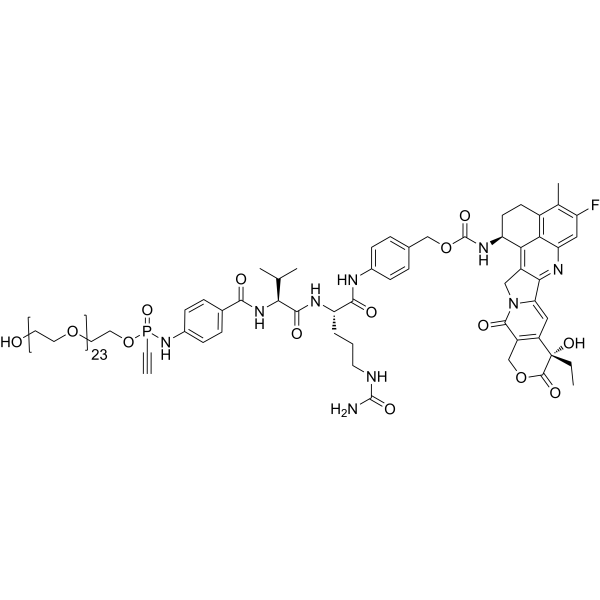
P5 (PEG24)-VC-PAB-Exatecan is a TOP1 inhibitor payload with antibody-conjugation-dependent activity. Conjugation of P5 (PEG24)-VC-PAB-Exatecan with Trastuzumab (HY-P9907) generates a DAR8 antibody-drug conjugate (ADCs) with antibody-like pharmacokinetic properties. P5 (PEG24)-VC-PAB-Exatecan induces S-phase and G2-M-phase cell cycle arrest, DNA damage and apoptosis in target-positive tumor cells, and releases damage-associated molecular patterns (DAMP) related to immunogenic cell death (ICD). The ADCs prepared from it exert bystander killing effects on non-target tumor cells. ADCs based on P5 (PEG24)-VC-PAB-Exatecan exhibit linker stability in vitro and in vivo, show in vivo efficacy, and can be used in research related to HER2-positive cancers .
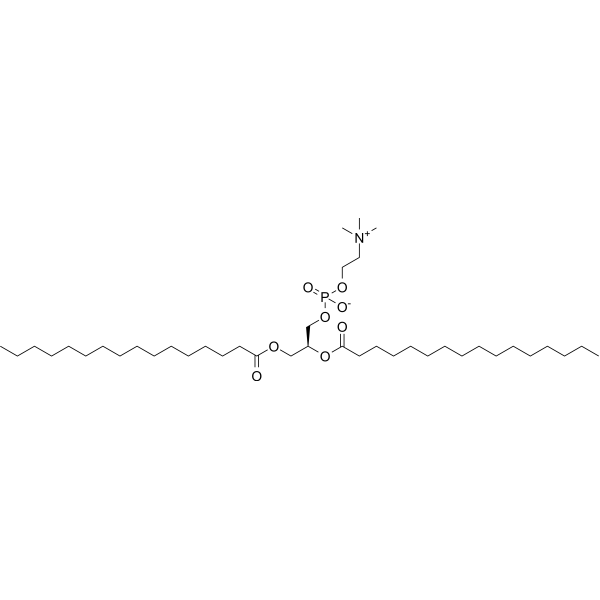
2,3-Dipalmitoyl-sn-glycero-1-phosphocholine, 95% (D-DPPC, 95%) is a chiral phospholipid that serves as a membrane-forming lipid component for bicelle assembly. 2,3-Dipalmitoyl-sn-glycero-1-phosphocholine, 95% can form bicelle assemblies with DHPC, which induce an induced circular dichroism (ICD) signal in the chiral probe DPH, with a polarity opposite to that induced by chiral L-DPPC/DHPC bicelles .
ICD inducer-1 (Compound Re1) is an effective immunogenic cell death (ICD) inducer that can target the endoplasmic reticulum (ER) and block ER-phagy at the late stages. ICD inducer-1 is promising for research of cancers .
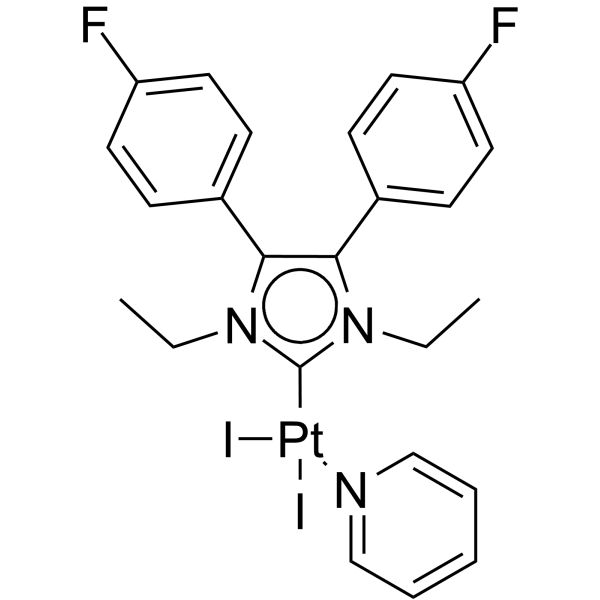
ROS-ERS inducer 1 is a type II ICD (immunogenic cell death) inducer. ROS-ERS inducer 1 is a Pt(II)-N-heterocyclic carbene (Pt(II)-NHC) complex derived from 4,5-diarylimidazole. ROS-ERS inducer 1 successfully induces endoplasmic reticulum stress (ERS) accompanied by reactive oxygen species (ROS) generation and finally lead to the release of damage-associated molecular patterns (DAMPs) in HCC cells. ROS-ERS inducer 1 displays much higher anticancer activities than Cisplatin .
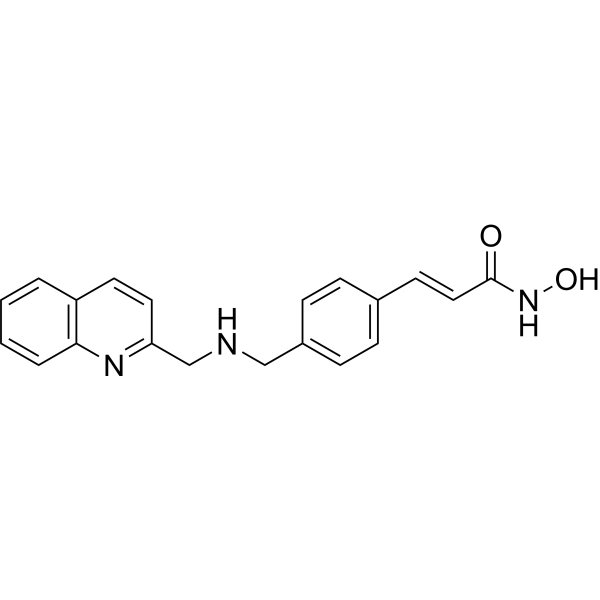
HFY-4A is a HDAC inhibitor. HFY-4A inhibits breast cancer cell proliferation, migration, and invasion, and induces cell apoptosis. HFY-4A induces immunogenic cell death (ICD). HFY-4A inhibits tumor growth in breast cancer xenograft mouse models .
Telomeric G4s ligand 1 is a telomeric G-quadruplex ligand that stabilizes telomeric G4 and induces R-loop formation, leading to DNA damage responses. Telomeric G4s ligand 1 induces apoptosis and evokes immunogenic cell death (ICD) in tumor cells .
GNPTAB Human Pre-designed siRNA Set A contains three designed siRNAs for GNPTAB gene (Human), as well as a negative control, a positive control, and a FAM-labeled negative control.
Lauryl benzalkonium-d5 chloride (Dimethylbenzyllaurylammonium-d5 chloride) is the deuterium labeled Lauryl benzalkonium chloride (HY-B1549). Lauryl benzalkonium (Dimethylbenzyllaurylammonium) chloride is a cationic surfactant that may produce some irritant contact dermatitis (ICD) to the skin .
ROS-ERS inducer 2 (Complex 3f) triggers intracellular ROS generation and affect the function of mitochondria. promote the release of damage-associated molecular patterns (DAMPs), induce immunogenic cell death (ICD) and activates endoplasmic reticulum stress (ERS). ROS-ERS inducer 2 plays an important role in anti-liver cancer research .
Ferroptocide is a cell death inducer that triggers ferroptosis and has anti-tumor activity. Ferroptocide can induce oxidative stress, leading to G2/M cell cycle arrest and apoptosis activation in LNCaP cells, while also effectively inhibiting the cell viability of both LNCaP and TRAMP-C1 cells. Ferroptocide can be used to study its capability to induce mitochondrial autophagy and to trigger immunogenic cell death (ICD) in prostate cancer cells .
2,3-Dipalmitoyl-sn-glycero-1-phosphocholine, 99% (D-DPPC, 99%) is a chiral phospholipid that serves as a membrane-forming lipid component for bicelle assembly. 2,3-Dipalmitoyl-sn-glycero-1-phosphocholine, 99% can form bicelle assemblies with DHPC, which induce an induced circular dichroism (ICD) signal in the chiral probe DPH, with a polarity opposite to that induced by chiral L-DPPC/DHPC bicelles .
ROCK/HDAC-IN-1 (Compound 10h) is an orally active ROCK/HDAC inhibitor. ROCK/HDAC-IN-1 inhibits ROCK1/2 (IC50: 254.9 nM, 58.18 nM) and HDAC1/2/3/6/8 (IC50: 9.09, 8.03, 6.26, 0.41, 7.69 nM). ROCK/HDAC-IN-1 stimulates the activation of DAMPs, specifically Calreticulin (CRT) exposure and HMGB1 release, indicating that it is a potential ICD inducer.. ROCK/HDAC-IN-1 has antiproliferative activity against breast cancer cells (IC50: 0.37 μM for MDA-MB-231 cell), and inhibits tumor growth and activates T cells without apparent toxicity .
ICD inducer-2 is a immunogenic cell death inducer. ICD inducer-2 binds to the colchicine binding site on tubulin to inhibit tubulin polymerization. ICD inducer-2 exhibits broad-spectrum antiproliferative activity across multiple cancer cell lines. ICD inducer-2 inhibits cells migration, causes G2/M phase and induces apoptosis. ICD inducer-2 promotes infiltration of CD4+ and CD8+ T cells into the tumor microenvironment. ICD inducer-2 downregulates antiapoptotic protein Bcl-2, upregulates proapoptotic proteins Bax and Bim-1, and increases cleaved caspase 3, cleaved caspase 9, and cleaved PARP levels. ICD inducer-2 overcomes paclitaxel resistance in xenograft models and achieves tumor growth inhibition. ICD inducer-2 can be used for the research of cancer, such as lung carcinoma .
Anticancer agent 292 (Compound P4) is a photosensitizer for anti-melanoma. Anticancer agent 292 shows good biocompatibility under dark conditions and, upon illumination, induces apoptosis and partial necrosis in B16-F10 cells by disrupting the lysosomal membrane. Anticancer agent 292 not only directly kills tumor cells through the generation of reactive oxygen species (ROS), but also induces immune-prone cell death (ICD), thereby generating anti-tumor immune effects. Anticancer agent 292 can be used in the research of photodynamic therapy for melanoma .
Pt(II)-NHC Complex 2C (Platinum(II)-N-Heterocyclic Carbene complex 2C) (Compound 2C) is a platinum(II) complex based on N-heterocyclic carbene (NHC). Pt(II)-NHC Complex 2C is an immunogenic cell death (ICD) inducer that can induce endoplasmic reticulum stress (ERS) in liver cancer cells and produce reactive oxygen species (ROS), ultimately leading to the release of damage-associated molecular patterns (DAMP). Pt(II)-NHC Complex 2C blocks the cell cycle at the S phase and significantly induces cell apoptosis. Pt(II)-NHC Complex 2C shows anti-liver cancer potential in mouse models and activates immune cells in liver injury models.
FGFR-IN-25 (Compound 19E) is a FGFR inhibitor (IC50s: 1.30 nM and 0.85 nM for FGFR1 and FGFR2, respectively) and radiosensitizer. FGFR-IN-25 effectively reduces the phosphorylation of FGFR1 and its key downstream effectors, pAKT and pERK. FGFR-IN-25 exerts broad-spectrum antitumor activity against gastric cancer, colorectal carcinoma, hepatocellular carcinoma, breast cancer, triple-negative breast cancer, and glioblastoma. FGFR-IN-25, when combined with radiotherapy, synergistically activates the ROS-Caspase-3-GSDME axis, downregulates PD-L1 expression, and induces immunogenic cell death (ICD). FGFR-IN-25 combined with radiotherapy improves the antitumor efficacy .
STAT3-IN-51 is a STAT3 inhibitor that directly binds to the STAT3 SH2 domain. STAT3-IN-51 induces apoptosis, ferroptosis, and immunogenic cell death (ICD) to potentiate anti-tumor immunity. STAT3-IN-51 inhibits STAT3 activation (phosphorylation, p-STAT3) and its downstream signaling. STAT3-IN-51 induces ROS generation, decreases Bcl-2 expression, disruptes mitochondrial function, suppresses GPX4 activity, and promotes lipid peroxidation. STAT3-IN-51 can be used for the study of colorectal carcinoma, breast adenocarcinoma, non-small cell lung cancer (NSCLC) and Cisplatin (HY-17394)-resistant pulmonary adenocarcinoma .
2,3-Dipalmitoyl-sn-glycero-1-phosphocholine, 95% (D-DPPC, 95%) is a chiral phospholipid that serves as a membrane-forming lipid component for bicelle assembly. 2,3-Dipalmitoyl-sn-glycero-1-phosphocholine, 95% can form bicelle assemblies with DHPC, which induce an induced circular dichroism (ICD) signal in the chiral probe DPH, with a polarity opposite to that induced by chiral L-DPPC/DHPC bicelles .
2,3-Dipalmitoyl-sn-glycero-1-phosphocholine, 99% (D-DPPC, 99%) is a chiral phospholipid that serves as a membrane-forming lipid component for bicelle assembly. 2,3-Dipalmitoyl-sn-glycero-1-phosphocholine, 99% can form bicelle assemblies with DHPC, which induce an induced circular dichroism (ICD) signal in the chiral probe DPH, with a polarity opposite to that induced by chiral L-DPPC/DHPC bicelles .
HER4 is an important tyrosine protein kinase receptor for members of the neuregulin and EGF families that directs heart, central nervous system, and mammary gland development. It is critical for myocardial differentiation, postnatal cardiomyocyte proliferation, neural crest cell migration, axon guidance, and mammary gland function. HER4 Protein, Human (HEK293, hFc) is the recombinant human-derived HER4 protein, expressed by HEK293 , with C-hFc labeled tag.
HER4 is an important tyrosine protein kinase receptor for members of the neuregulin and EGF families that directs heart, central nervous system, and mammary gland development. It is critical for myocardial differentiation, postnatal cardiomyocyte proliferation, neural crest cell migration, axon guidance, and mammary gland function. HER4 Protein, Human (HEK293, His-Avi) is the recombinant human-derived HER4 protein, expressed by HEK293 , with C-Avi, C-His labeled tag.
HER4 Protein, crucial in central nervous system development, influences neural crest cell migration and axon guidance. Additionally, it participates in mammary gland differentiation, inducing milk proteins and contributing to lactation. HER4 Protein, Rat (HEK293, His) is the recombinant rat-derived HER4 protein, expressed by HEK293 , with C-His labeled tag.
HER4 is an important tyrosine protein kinase receptor for members of the neuregulin and EGF families that directs heart, central nervous system, and mammary gland development. It is critical for myocardial differentiation, postnatal cardiomyocyte proliferation, neural crest cell migration, axon guidance, and mammary gland function. HER4 Protein, Human (Biotinylated, HEK293, His-Avi) is the recombinant human-derived HER4 protein, expressed by HEK293 , with C-Avi, C-His labeled tag.
HER4 Protein, crucial in central nervous system development, influences neural crest cell migration and axon guidance. Additionally, it participates in mammary gland differentiation, inducing milk proteins and contributing to lactation. HER4 Protein, Rat (HEK293, Fc) is the recombinant rat-derived HER4 protein, expressed by HEK293 , with C-hFc labeled tag.
HER4 is an important tyrosine protein kinase receptor for members of the neuregulin and EGF families that directs heart, central nervous system, and mammary gland development. It is critical for myocardial differentiation, postnatal cardiomyocyte proliferation, neural crest cell migration, axon guidance, and mammary gland function. HER4 Protein, Human (HEK293, His-Fc) is the recombinant human-derived HER4 protein, expressed by HEK293 , with C-hFc, C-10*His labeled tag.
Nerve Growth Factor Receptor (NGFR) also known as CD271, p75NTR, TNFRSF16, is a transmembrane low-affinity receptor for the neurotrophin family. NGFR has no intrinsic tyrosine kinase activity. NGFR can act as a tumour suppressor, negatively regulating cell growth and proliferation. NGF-NGFR cascade activates NF-κB, leading to inhibition of apoptosis, increases survival of schwannoma, and breast cancer cells. NGFR Protein, Human (HEK293) is a recombinant protein consisting of 222 amino acids (K29-N250) and is produced in HEK293 cells.
Nerve Growth Factor Receptor (NGFR) also known as CD271, p75NTR, TNFRSF16, is a transmembrane low-affinity receptor for the neurotrophin family. NGFR has no intrinsic tyrosine kinase activity. NGFR can act as a tumour suppressor, negatively regulating cell growth and proliferation. NGF-NGFR cascade activates NF-κB, leading to inhibition of apoptosis, increases survival of schwannoma, and breast cancer cells. NGFR Protein, Human (HEK293, Fc) is a recombinant protein with a C-Terminal Fc label, It consists of 250 amino acids (M1-N250) and is produced in HEK293 cells. NGFR Protein, Rabbit (HEK293, His) is a recombinant protein with a C-Terminal His label, It consists of 242 amino acids (M1-D242) and is produced in HEK293 cells.
Nerve Growth Factor Receptor (NGFR) also known as CD271, p75NTR, TNFRSF16, is a transmembrane low-affinity receptor for the neurotrophin family. NGFR has no intrinsic tyrosine kinase activity. NGFR can act as a tumour suppressor, negatively regulating cell growth and proliferation. NGF-NGFR cascade activates NF-κB, leading to inhibition of apoptosis, increases survival of schwannoma, and breast cancer cells. NGFR Protein, Mouse (HEK293, Fc) is a recombinant protein with a C-Terminal Fc label, It consists of 243 amino acids and is produced in HEK293 cells.
Nerve Growth Factor Receptor (NGFR) also known as CD271, p75NTR, TNFRSF16, is a transmembrane low-affinity receptor for the neurotrophin family. NGFR has no intrinsic tyrosine kinase activity. NGFR can act as a tumour suppressor, negatively regulating cell growth and proliferation. NGF-NGFR cascade activates NF-κB, leading to inhibition of apoptosis, increases survival of schwannoma, and breast cancer cells. NGFR Protein, Mouse (HEK293, His) is a recombinant protein with a C-Terminal His label, It consists of 243 amino acids (M1-N243) and is produced in HEK293 cells.
Nerve Growth Factor Receptor (NGFR) also known as CD271, p75NTR, TNFRSF16, is a transmembrane low-affinity receptor for the neurotrophin family. NGFR has no intrinsic tyrosine kinase activity. NGFR can act as a tumour suppressor, negatively regulating cell growth and proliferation. NGF-NGFR cascade activates NF-κB, leading to inhibition of apoptosis, increases survival of schwannoma, and breast cancer cells. NGFR Protein, Human (HEK293, Fc) is a recombinant protein with a C-Terminal Fc label, It consists of 250 amino acids (M1-N250) and is produced in HEK293 cells.
Nerve Growth Factor Receptor (NGFR) also known as CD271, p75NTR, TNFRSF16, is a transmembrane low-affinity receptor for the neurotrophin family. NGFR has no intrinsic tyrosine kinase activity. NGFR can act as a tumour suppressor, negatively regulating cell growth and proliferation. NGF-NGFR cascade activates NF-κB, leading to inhibition of apoptosis, increases survival of schwannoma, and breast cancer cells. NGFR Protein, Rabbit (HEK293, hFc) is a recombinant protein with a C-Terminal Fc label, It consists of 242 amino acids (M1-D242) and is produced in HEK293 cells.
Tumour Necrosis Factor alpha (TNF alpha) is a potent pro-inflammatory cytokine. TNF alpha binds to its receptors, mainly TNFR1 and TNFR2, and then transmits molecular signals for biological functions such as inflammation and cell death. TNF alpha stimulates NF-κB pathway via TNFR2 promotes cancer growth, invasion, and metastasis. Anti-TNF-α MAb significantly suppresses the tumor development in colitis-associated cancer (CAC) mouse. TNF alpha as a proneurogenic factor activates the SAPK/JNK Pathway and can facilitate neuronal replacement and brain repair in response to brain injury. TNF-alpha/TNFSF2 Protein, Canine is a recombinant protein produced in E. coli.
Tumour Necrosis Factor alpha (TNF alpha) is a potent pro-inflammatory cytokine. TNF alpha binds to its receptors, mainly TNFR1 and TNFR2, and then transmits molecular signals for biological functions such as inflammation and cell death. TNF alpha stimulates NF-κB pathway via TNFR2 promotes cancer growth, invasion, and metastasis. Anti-TNF-α MAb significantly suppresses the tumor development in colitis-associated cancer (CAC) mouse. TNF alpha as a proneurogenic factor activates the SAPK/JNK Pathway and can facilitate neuronal replacement and brain repair in response to brain injury. TNF-alpha/TNFSF2 Protein, Cynomolgus is a recombinant protein consisting of 157 amino acids (V77-L233) and is produced in E. coli.
Tumour Necrosis Factor alpha (TNF alpha) is a potent pro-inflammatory cytokine. TNF alpha binds to its receptors, mainly TNFR1 and TNFR2, and then transmits molecular signals for biological functions such as inflammation and cell death. TNF alpha stimulates NF-κB pathway via TNFR2 promotes cancer growth, invasion, and metastasis. Anti-TNF-α MAb significantly suppresses the tumor development in colitis-associated cancer (CAC) mouse. TNF alpha as a proneurogenic factor activates the SAPK/JNK Pathway and can facilitate neuronal replacement and brain repair in response to brain injury. TNF-alpha/TNFSF2 Protein, Ferret is a recombinant protein consisting of 157 amino acids (V77-L233) and is produced in E. coli.
Tumour Necrosis Factor alpha (TNF alpha) is a potent pro-inflammatory cytokine. TNF alpha binds to its receptors, mainly TNFR1 and TNFR2, and then transmits molecular signals for biological functions such as inflammation and cell death. TNF alpha stimulates NF-κB pathway via TNFR2 promotes cancer growth, invasion, and metastasis. Anti-TNF-α MAb significantly suppresses the tumor development in colitis-associated cancer (CAC) mouse. TNF alpha as a proneurogenic factor activates the SAPK/JNK Pathway and can facilitate neuronal replacement and brain repair in response to brain injury. TNF-alpha/TNFSF2 Protein, Cynomolgus (Biotinylated) is a biotinylated recombinant protein consisting of 157 amino acids (V77-L233) and is produced in E. coli.
The NGFR protein is a low-affinity receptor that binds nerve growth factor (NGF), brain-derived neurotrophic factor (BDNF), neurotrophin-3 (NTF3), and neurotrophin-4 (NTF4). NGFR cooperates with SORCS2 to form a high-affinity heterodimeric receptor for NGF, BDNF, and NTF3 precursor forms, but has lower affinity for mature NGF and BDNF. NGFR Protein, Human (Biotinylated, HEK293, His-Avi) is the recombinant human-derived NGFR protein, expressed by HEK293 , with N-Avi, N-6*His labeled tag.
TNF-alpha/TNFSF2 protein binds to TNFRSF1A/TNFR1 and TNFRSF1B/TNFBR. It induces tumor cell death, fever, cachexia, cell proliferation, and cell differentiation. It also causes insulin resistance and GKAP42 protein degradation in adipocytes. Additionally, it plays a role in angiogenesis, osteoclastogenesis, and IL12 production in dendritic cells. TNF-alpha/TNFSF2 Protein, Cynomolgus (N-His) is the recombinant cynomolgus-derived TNF-alpha/TNFSF2 protein, expressed by E. coli , with N-6*His labeled tag.
The EpCAM/TROP1 protein serves as an important homogeneous interacting molecule that promotes direct contact between intestinal epithelial cells (IEC) and intraepithelial lymphocytes (IEL) in the mucosal epithelium. This feature helps establish an immune barrier against mucosal infections. EpCAM/TROP1 Protein, Human (His-SUMO) is the recombinant human-derived EpCAM/TROP1 protein, expressed by E. coli , with N-6*His, N-SUMO labeled tag.
Lauryl benzalkonium-d5 chloride (Dimethylbenzyllaurylammonium-d5 chloride) is the deuterium labeled Lauryl benzalkonium chloride (HY-B1549). Lauryl benzalkonium (Dimethylbenzyllaurylammonium) chloride is a cationic surfactant that may produce some irritant contact dermatitis (ICD) to the skin .
P5 (PEG24)-VC-PAB-Exatecan is a TOP1 inhibitor payload with antibody-conjugation-dependent activity. Conjugation of P5 (PEG24)-VC-PAB-Exatecan with Trastuzumab (HY-P9907) generates a DAR8 antibody-drug conjugate (ADCs) with antibody-like pharmacokinetic properties. P5 (PEG24)-VC-PAB-Exatecan induces S-phase and G2-M-phase cell cycle arrest, DNA damage and apoptosis in target-positive tumor cells, and releases damage-associated molecular patterns (DAMP) related to immunogenic cell death (ICD). The ADCs prepared from it exert bystander killing effects on non-target tumor cells. ADCs based on P5 (PEG24)-VC-PAB-Exatecan exhibit linker stability in vitro and in vivo, show in vivo efficacy, and can be used in research related to HER2-positive cancers .
GNPTAB Human Pre-designed siRNA Set A contains three designed siRNAs for GNPTAB gene (Human), as well as a negative control, a positive control, and a FAM-labeled negative control.
Inquiry Online
Your information is safe with us. * Required Fields.
Western blot analysis of extracts from THP-1(lane 2(20μg), Jurkat (lane 3(20μg) and NIH3T3(lane 4(20μg) using FOXO1A (HY-P80132) Rabbit mAb. Proteins were transferred
to a PVDF membrane and blocked with 5% non-fat milk in TBST for 2 hour at room temperature. The primary antibody (1/1000) and Loading control antibody (Beta Actin, HY-P80438, 1/10000) was
used in 5% non-fat milk in TBST at 4°C overnight. Goat Anti-Mouse/Rabbit IgG-HRP Secondary Antibody (1/10000) was used for 1 hour at room temperature.
Western blot analysis of extracts from THP-1(lane 2(20μg), Jurkat (lane 3(20μg) and NIH3T3(lane 4(20μg) using FOXO1A (HY-P80132) Rabbit mAb. Proteins were transferred
to a PVDF membrane and blocked with 5% non-fat milk in TBST for 2 hour at room temperature. The primary antibody (1/1000) and Loading control antibody (Beta Actin, HY-P80438, 1/10000) was
used in 5% non-fat milk in TBST at 4°C overnight. Goat Anti-Mouse/Rabbit IgG-HRP Secondary Antibody (1/10000) was used for 1 hour at room temperature.
Western blot analysis of extracts from THP-1(lane 2(20μg), Jurkat (lane 3(20μg) and NIH3T3(lane 4(20μg) using FOXO1A (HY-P80132) Rabbit mAb. Proteins were transferred
to a PVDF membrane and blocked with 5% non-fat milk in TBST for 2 hour at room temperature. The primary antibody (1/1000) and Loading control antibody (Beta Actin, HY-P80438, 1/10000) was
used in 5% non-fat milk in TBST at 4°C overnight. Goat Anti-Mouse/Rabbit IgG-HRP Secondary Antibody (1/10000) was used for 1 hour at room temperature.
Western blot analysis of extracts from THP-1(lane 2(20μg), Jurkat (lane 3(20μg) and NIH3T3(lane 4(20μg) using FOXO1A (HY-P80132) Rabbit mAb. Proteins were transferred
to a PVDF membrane and blocked with 5% non-fat milk in TBST for 2 hour at room temperature. The primary antibody (1/1000) and Loading control antibody (Beta Actin, HY-P80438, 1/10000) was
MedchemExpress Validation 03
Western blot analysis of extracts from THP-1(lane 2(20μg), Jurkat (lane 3(20μg) and NIH3T3(lane 4(20μg) using FOXO1A (HY-P80132) Rabbit mAb. Proteins were transferred
MedchemExpress Validation 04
Western blot analysis of extracts from THP-1(lane 2(20μg), Jurkat (lane 3(20μg) and NIH3T3(lane 4(20μg) using FOXO1A (HY-P80132) Rabbit mAb. Proteins were transferred
to a PVDF membrane and blocked with 5% non-fat milk in TBST for 2 hour at room temperature. The primary antibody (1/1000) and Loading control antibody (Beta Actin, HY-P80438, 1/10000) was
used in 5% non-fat milk in TBST at 4°C overnight. Goat Anti-Mouse/Rabbit IgG-HRP Secondary Antibody (1/10000) was used for 1 hour at room temperature.
MedchemExpress Validation
Western blot analysis of extracts from THP-1(lane 2(20μg), Jurkat (lane 3(20μg) and NIH3T3(lane 4(20μg) using FOXO1A (HY-P80132) Rabbit mAb. Proteins were transferred
to a PVDF membrane and blocked with 5% non-fat milk in TBST for 2 hour at room temperature. The primary antibody (1/1000) and Loading control antibody (Beta Actin, HY-P80438, 1/10000) was
used in 5% non-fat milk in TBST at 4°C overnight. Goat Anti-Mouse/Rabbit IgG-HRP Secondary Antibody (1/10000) was used for 1 hour at room temperature.
Western blot analysis of extracts from THP-1(lane 2(20μg), Jurkat (lane 3(20μg) and NIH3T3(lane 4(20μg) using FOXO1A (HY-P80132) Rabbit mAb. Proteins were transferred
to a PVDF membrane and blocked with 5% non-fat milk in TBST for 2 hour at room temperature. The primary antibody (1/1000) and Loading control antibody (Beta Actin, HY-P80438, 1/10000) was
used in 5% non-fat milk in TBST at 4°C overnight. Goat Anti-Mouse/Rabbit IgG-HRP Secondary Antibody (1/10000) was used for 1 hour at room temperature.
MedchemExpress Validation
Western blot analysis of extracts from THP-1(lane 2(20μg), Jurkat (lane 3(20μg) and NIH3T3(lane 4(20μg) using FOXO1A (HY-P80132) Rabbit mAb. Proteins were transferred
to a PVDF membrane and blocked with 5% non-fat milk in TBST for 2 hour at room temperature. The primary antibody (1/1000) and Loading control antibody (Beta Actin, HY-P80438, 1/10000) was
used in 5% non-fat milk in TBST at 4°C overnight. Goat Anti-Mouse/Rabbit IgG-HRP Secondary Antibody (1/10000) was used for 1 hour at room temperature.
MedchemExpress Validation
Western blot analysis of extracts from THP-1(lane 2(20μg), Jurkat (lane 3(20μg) and NIH3T3(lane 4(20μg) using FOXO1A (HY-P80132) Rabbit mAb. Proteins were transferred
to a PVDF membrane and blocked with 5% non-fat milk in TBST for 2 hour at room temperature. The primary antibody (1/1000) and Loading control antibody (Beta Actin, HY-P80438, 1/10000) was
used in 5% non-fat milk in TBST at 4°C overnight. Goat Anti-Mouse/Rabbit IgG-HRP Secondary Antibody (1/10000) was used for 1 hour at room temperature.
MedchemExpress Validation
Western blot analysis of extracts from THP-1(lane 2(20μg), Jurkat (lane 3(20μg) and NIH3T3(lane 4(20μg) using FOXO1A (HY-P80132) Rabbit mAb. Proteins were transferred
to a PVDF membrane and blocked with 5% non-fat milk in TBST for 2 hour at room temperature. The primary antibody (1/1000) and Loading control antibody (Beta Actin, HY-P80438, 1/10000) was
used in 5% non-fat milk in TBST at 4°C overnight. Goat Anti-Mouse/Rabbit IgG-HRP Secondary Antibody (1/10000) was used for 1 hour at room temperature.
MedchemExpress Validation
Western blot analysis of extracts from THP-1(lane 2(20μg), Jurkat (lane 3(20μg) and NIH3T3(lane 4(20μg) using FOXO1A (HY-P80132) Rabbit mAb. Proteins were transferred
to a PVDF membrane and blocked with 5% non-fat milk in TBST for 2 hour at room temperature. The primary antibody (1/1000) and Loading control antibody (Beta Actin, HY-P80438, 1/10000) was
used in 5% non-fat milk in TBST at 4°C overnight. Goat Anti-Mouse/Rabbit IgG-HRP Secondary Antibody (1/10000) was used for 1 hour at room temperature.
MedchemExpress Validation
Western blot analysis of extracts from THP-1(lane 2(20μg), Jurkat (lane 3(20μg) and NIH3T3(lane 4(20μg) using FOXO1A (HY-P80132) Rabbit mAb. Proteins were transferred
to a PVDF membrane and blocked with 5% non-fat milk in TBST for 2 hour at room temperature. The primary antibody (1/1000) and Loading control antibody (Beta Actin, HY-P80438, 1/10000) was
used in 5% non-fat milk in TBST at 4°C overnight. Goat Anti-Mouse/Rabbit IgG-HRP Secondary Antibody (1/10000) was used for 1 hour at room temperature.
MedchemExpress Validation
Western blot analysis of extracts from THP-1(lane 2(20μg), Jurkat (lane 3(20μg) and NIH3T3(lane 4(20μg) using FOXO1A (HY-P80132) Rabbit mAb. Proteins were transferred
to a PVDF membrane and blocked with 5% non-fat milk in TBST for 2 hour at room temperature. The primary antibody (1/1000) and Loading control antibody (Beta Actin, HY-P80438, 1/10000) was
used in 5% non-fat milk in TBST at 4°C overnight. Goat Anti-Mouse/Rabbit IgG-HRP Secondary Antibody (1/10000) was used for 1 hour at room temperature.
MedChemExpress values your privacy and your trust is important to us. We use cookies to enhance your website experience. Some cookies are necessary to run the website.
Privacy and Cookie Policy

