

1. Search Result
Search Result
Results for "

Inert

" in MedChemExpress (MCE) Product Catalog:

22

Inhibitors & Agonists

7

Biochemical Assay Reagents

1

Peptides

2

Inhibitory Antibodies

1

Oligonucleotides

Cat. No. Product Name Target Research Areas Chemical Structure
  • HY-D0227
    THAM
    1 Publications Verification

    Tris; Tris(hydroxymethyl)aminomethane

    Biochemical Assay Reagents Metabolic Disease
    THAM (Tris) is a low-toxicity amino alcohol buffer, a specific CO2-consuming proton acceptor that buffers carbon dioxide and acid both in vitro and in vivo. THAM binds protons to form bicarbonate, reduces PaCO2, and induces intracellular alkalization, thereby ameliorating hypercapnia-induced elevation of pulmonary blood vessels and pulmonary arterial pressure. THAM may cause PaCO2 rebound, hypoglycemia, and respiratory depression. THAM removes amniotic epithelium and preserves the basement membrane, but depletes extracellular matrix and reduces the adhesion rate of limbal epithelial cells. THAM can act as a CO2 carrier to enhance the productivity and carbon utilization rate of Scenedesmus obliquus. THAM is a key component of buffer solutions used in various biological, cell culture, biochemical, and molecular biology applications .
    THAM
  • HY-111373
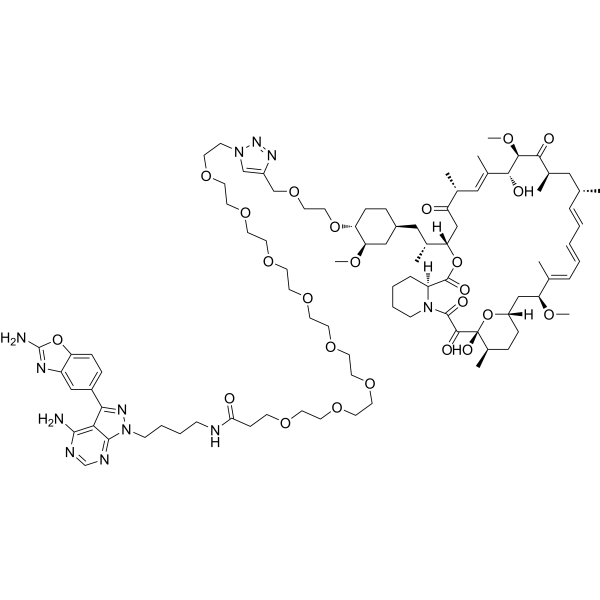
    RapaLink-1
    Maximum Cited Publications
    13 Publications Verification

    mTOR Autophagy Cancer
    RapaLink-1, the third-generation bivalent mTOR inhibitor, combines Rapamycin (HY-10219) with MLN0128 (HY-13328, a second-generation mTOR kinase inhibitor) by an inert chemical linker. RapaLink-1 shows better efficacy than Rapamycin or mTOR kinase inhibitors (TORKi), potently blocking cancer-derived, activating mutants of mTOR. RapaLink-1 can cross the blood-brain barrier. RapaLink-1 binding to FKBP12 results in targeted and durable inhibition of mTORC1. RapaLink-1 plays an antithrombotic role in antiphospholipid syndrome by improving autophagy. Anticancer activity .
    RapaLink-1
  • HY-112624B

    Dextran 70; Dextran D70; Dextran T70(MW 64000-76000)

    Bacterial Others
    Dextran 70,000 is a high molecular weight polysaccharide formed by glucose linked by α-(1→6) glycosidic bonds. Dextran 70,000 can expand blood volume through colloidal osmotic pressure effect and inhibit cell adhesion and platelet aggregation through steric hindrance. At the same time, Dextran 70,000 can be used as a drug carrier to achieve targeted delivery through endocytosis. Dextran 70,000 is biologically inert and has low immunogenicity. It can be used for clinical blood volume expansion, anti-thrombotic research, and evaluation of vascular permeability in in vitro experiments. It can also be combined with fluorescent dyes for cell tracking and drug delivery research. The Dextran series of compounds are also natural polysaccharide drug carriers that can be connected to drugs through covalent bonding methods such as ester bonds, amide bonds or click chemistry, or self-assembled to form carriers such as nanoparticles and hydrogels. Dextran is biodegradable and biocompatible, and can achieve targeted delivery and controlled release of drugs. Dextran derivatives can prolong the half-life of drugs, increase local concentrations, and reduce the activity of immune clearance.
    Dextran T70 (MW 70,000)
  • HY-D0227A
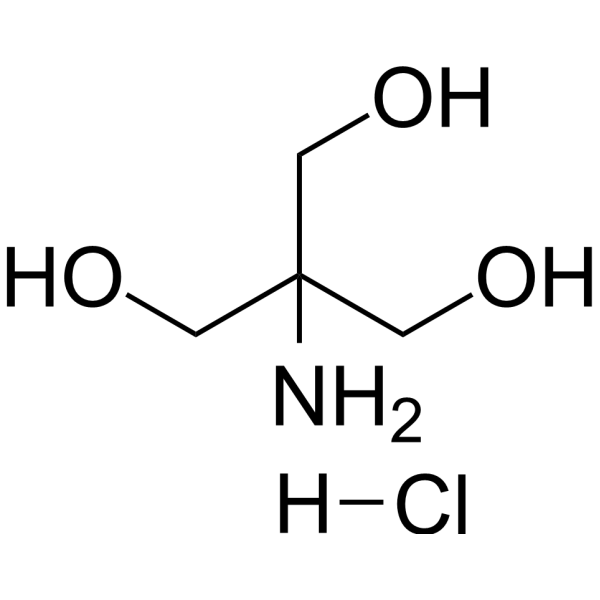
    THAM hydrochloride
    1 Publications Verification

    Tris HCl; Tris(hydroxymethyl)aminomethane hydrochloride

    Biochemical Assay Reagents Metabolic Disease Cancer
    THAM hydrochloride (Tris HCl) is a biologically inert amino alcohol of low toxicity, which buffers carbon dioxide and acids in vitro and in vivo. THAM hydrochloride is an effective amine compound for pH control in the physiological range .
    THAM hydrochloride
  • HY-W096178B

    Biochemical Assay Reagents Others
    Silica sand, 1-2 mm is an inorganic, inert, and biocompatible (under certain conditions) solid matrix composed of high-purity silica particles. Silica sand, 1-2 mm is primarily used as a physical functional material in biochemical research .
    Silica sand, 1-2mm
  • HY-W127717

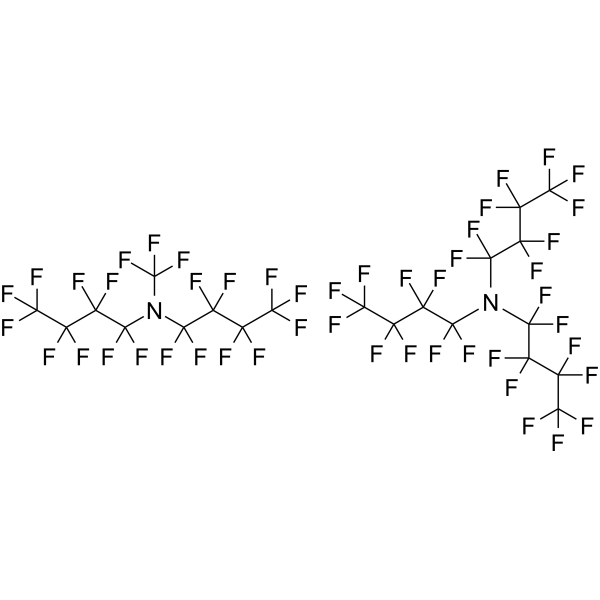
    Perfluoro-compound FC-40

    Biochemical Assay Reagents Others
    Fluorinert FC-40 is a non-conductive liquid containing a mixture of fluorinated compounds. It is commonly used as a cooling and heat transfer fluid in electronics, especially in high-performance computer systems and electronic components that generate a lot of heat. Fluorinert FC-40 has various properties that make it ideal for these applications, including its low viscosity, high thermal stability and excellent dielectric strength. In addition, it can be used as an inert solvent in chemical reactions and a lubricant in mechanical systems.
    Fluorinert FC-40
  • HY-P99572

    BNT-312; DuoBody-CD40x-4-1BB; GEN1042

    TNF Receptor Inflammation/Immunology Cancer
    Tecaginlimab (BNT-312) is a Fc-inert bispecific antibody for dual targeting and conditional stimulation of CD40 and 4-1BB. Tecaginlimab can enhance priming and reactivation of tumor-specific immunity .
    Tecaginlimab
  • HY-Y1219H

    Biochemical Assay Reagents Others
    Silica gel, high-purity grade, 200-400 mesh is a biologically inert matrix and desiccant with high water retention capacity and low regeneration temperature. Silica gel, high-purity grade, 200-400 mesh prevents DNA degradation by absorbing water from plant leaves, and is suitable for preserving field-collected samples for subsequent DNA extraction, restriction endonuclease digestion, PCR amplification and gene sequencing. Silica gel, high-purity grade, 200-400 mesh can be regenerated and reused after water absorption saturation. Silica gel, high-purity grade, 200-400 mesh provides a non-toxic, inert aqueous environment for embedded cells, allows free diffusion of nutrients, oxygen and metabolic wastes, blocks external contamination, and thus maintains the viability of fibroblasts and epithelial cells. Silica gel, high-purity grade, 200-400 mesh serves as an ideal candidate material for tissue culture scaffolds and implantable bioreactors .
    Silica gel, high-purity grade, 200-400 mesh
  • HY-104035E

    Poly(dimethylsiloxane) (PDMS), viscosity 100 cSt (25 °C); Dimethylsilcone fluid, viscosity 100 cSt (25 °C)

    Environmental Pollutants Biochemical Assay Reagents Others
    Dimethyl silicone oil, viscosity 100 cSt (25 °C) (Poly(dimethylsiloxane) (PDMS), viscosity 100 cSt (25 °C); Dimethylsilcone fluid, viscosity 100 cSt (25 °C)) is a transparent, colorless, and inert polydimethylsiloxane liquid with stable properties. Dimethyl silicone oil, viscosity 100 cSt (25 °C) exhibits high dielectric strength and excellent lubrication, cushioning, and thermal conductivity. Dimethyl silicone oil, viscosity 100 cSt (25 °C) can be used in cosmetics, lubricants, and electronics.
    Dimethyl silicone oil, viscosity 100 cSt (25 °C)
  • HY-16215

    G-202

    Peptide-Drug Conjugates (PDCs) PSMA Calcium Channel Cancer
    Mipsagargin (G-202) is a novel thapsigargin-based targeted proagent consisting of a prostate-specific membrane antigen (PSMA)-specific peptide coupled to an analog of the potent sarcoplasmic/endoplasmic reticulum calcium adenosine triphosphatase (SERCA) pump inhibitor Thapsigargin (HY-13433). Mipsagargin is activated by PSMA-mediated cleavage of an inert masking peptide. Mipsagargin has the potential for refractory, advanced or metastatic solid tumours research .
    Mipsagargin
  • HY-W393372
    THAM maleate
    1 Publications Verification

    Tris maleate; Tris(hydroxymethyl)aminomethane maleate

    Environmental Pollutants Biochemical Assay Reagents Cardiovascular Disease Metabolic Disease
    THAM (Tris) maleate is a biologically inert amino alcohol of low toxicity, which buffers carbon dioxide and acids in vitro and in vivo. THAM maleate is an effective amine compound for pH control in the physiological range .
    THAM maleate
  • HY-107520

    Drug Derivative Neurological Disease
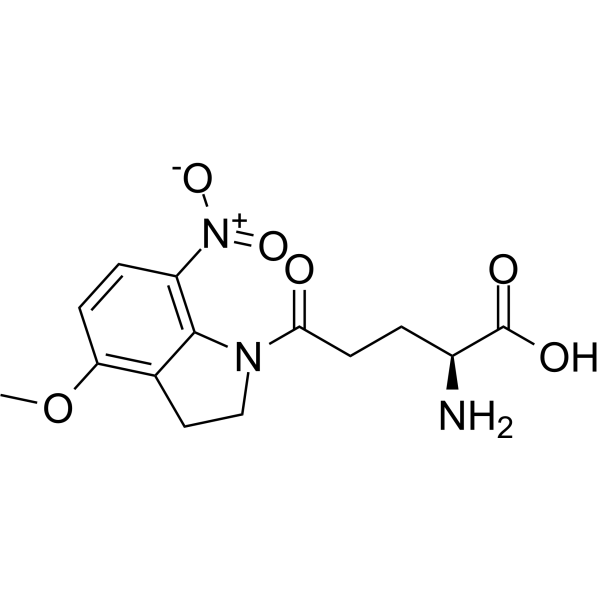
    MNI-caged-L-glutamate is an inert photolabile glutamate precursor. MNI-caged-L-glutamate does not modulate NMDA and AMPA receptor function in cultured neurones. MNI-caged-L-glutamate can be used for research on neurotransmitters .
    MNI-caged-L-glutamate
  • HY-Y1219E

    Biochemical Assay Reagents Others
    Silica gel, high-purity grade, 130-270 mesh is a high-purity inert additive with low density and large specific surface area, which can be used in the preparation of chromatographic column frits based on the sol-gel method. As a condensed-phase flame retardant, thermal stability enhancer and melt viscosity enhancer, Silica gel, high-purity grade, 130-270 mesh can restrict the mobility of polymer chains in polypropylene to improve its thermal stability, and increase the melt viscosity of polypropylene and polyethylene oxide. During gasification or combustion, Silica gel, high-purity grade, 130-270 mesh accumulates on the polymer surface to form a thermal insulation layer, and exerts flame retardant effects by reducing surface concentration and blocking the transport of degradation products .
    Silica gel, high-purity grade, 130-270 mesh
  • HY-131039

    MDNI-glu

    Amino Acid Derivatives Others
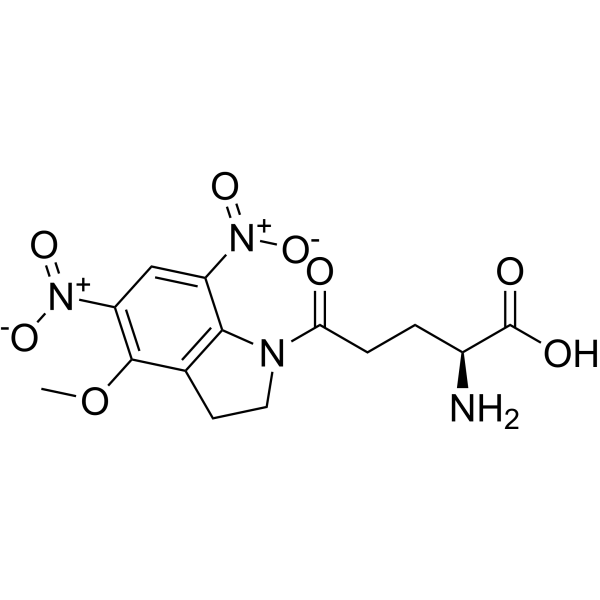
    MDNI-caged-L-glutamate (MDNI-glu) is a biologically inert, photosensitive derivative of the major excitatory amino acid, L-glutamate. MDNI-caged-L-glutamate makes more efficient use of incident light .
    MDNI-caged-L-glutamate
  • HY-D0227R

    Tris (Standard); Tris(hydroxymethyl)aminomethane (Standard)

    Biochemical Assay Reagents Reference Standards Metabolic Disease Cancer
    THAM (Standard) is the analytical standard of THAM. This product is intended for research and analytical applications. THAM (Tris) is a biologically inert amino alcohol of low toxicity, which buffers carbon dioxide and acids in vitro and in vivo. THAM is an effective amine compound for pH control in the physiological range .
    THAM (Standard)
  • HY-133105

    Oxothiazolidinecarboxylic acid

    Drug Intermediate Inflammation/Immunology
    Procysteine, an antioxidant, is a proagent of cysteine that is inert until metabolized to cysteine intracellulary, thus stimulating glutathione synthesis .
    Procysteine
  • HY-D0227AR

    Tris HCl (Standard); Tris(hydroxymethyl)aminomethane hydrochloride (Standard)

    Biochemical Assay Reagents Reference Standards Metabolic Disease Cancer
    THAM (hydrochloride) (Standard) is the analytical standard of THAM (hydrochloride). This product is intended for research and analytical applications. THAM hydrochloride (Tris HCl) is a biologically inert amino alcohol of low toxicity, which buffers carbon dioxide and acids in vitro and in vivo. THAM hydrochloride is an effective amine compound for pH control in the physiological range .
    THAM hydrochloride (Standard)
  • HY-107520A

    Drug Derivative Neurological Disease
    MNI-caged-L-glutamate TFA is an inert photolabile glutamate precursor. MNI-caged-L-glutamate TFA does not modulate NMDA and AMPA receptor function in cultured neurones. MNI-caged-L-glutamate TFA can be used for research on neurotransmitters .
    MNI-caged-L-glutamate TFA
  • HY-158918

    4-CF3-Triphenylphosphonium-DC

    Biochemical Assay Reagents Others
    4-CF3-TPP-DC (4-CF3-Triphenylphosphonium-DC) is an inert mitochondrial targeting carrier, that delivers target drugs and probes to mitochondria without causing mitochondrial depolarization and cytotoxicity in cell C2C12 .
    4-CF3-TPP-DC
  • HY-W591314

    Biochemical Assay Reagents Others
    m-PEG11-Ms is a PEG linker featuring a methoxy cap and a mesylate group. The methoxy cap is inert while the mesylate is a good leaving group which is easily displaced by nucleophiles such as alcohols and amines.
    M-PEG11-Ms
  • HY-E71182

    Biochemical Assay Reagents Others
    11β-Hydroxysteroid dehydrogenase (EC 1.1.1.146) catalyze the conversion of inert 11 keto-products (cortisone) to active cortisol, or vice versa, thus regulating the access of glucocorticoids to the steroid receptors.
    11β-Hydroxysteroid dehydrogenase
  • HY-P992370

    Interleukin Related IFNAR Cancer
    HPN601 is a protease-activated EpCAM-targeting T-cell engager that binds EpCAM competitively and induces T-cell mediated tumor cell killing. HPN601 binds to EpCAM, CD3e and albumin; albumin binding extends its half-life, while masking groups keep the molecule inert outside the tumor microenvironment. HPN601 significantly reduces the release levels of IFN-γ, IL-2, IL-6 and IL-10. HPN601 can be used in research related to cancers such as breast cancer and gastric cancer .
    HPN601

Inquiry Online

Your information is safe with us. * Required Fields.

Salutation


Country or Region *

Applicant Name *


Organization Name *

Department *


Email Address *


Product Name *

Cat. No.


Requested quantity *

Phone Number *


Remarks

Inquiry Online

Inquiry Information

Product Name:
Cat. No.:
Quantity:
MCE Japan Authorized Agent:

