
10 Results for "

JAK1/STAT3 pathway

" in MedChemExpress (MCE) Product Catalog:
Products (10)

10 Results for "JAK1/STAT3 pathway" in MCE Product Catalog:

1
1 Cited Publications
Cat. No.: HY-N6069
CAS No.: 38963-94-9
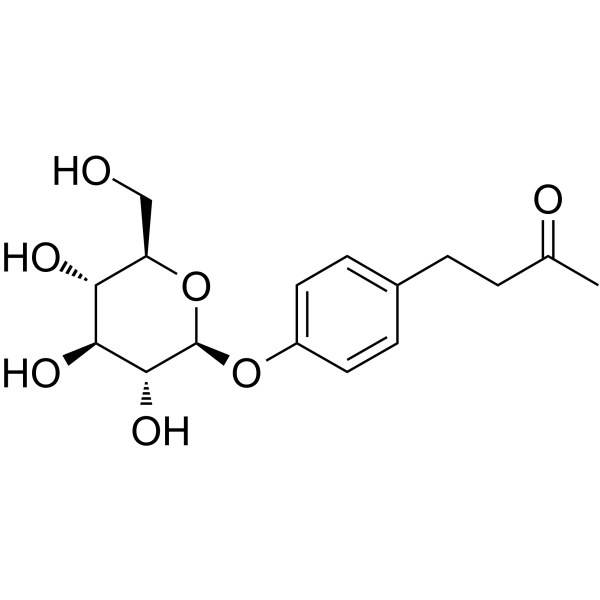
Raspberry ketone glucoside is a melanogenesis inhibitor. Raspberry ketone glucoside inhibits melanogenesis by activating the IL6/JAK1/STAT3 pathway, inhibiting the transcriptional activity of MITFa, and its downstream expression levels of the TYR and TYRP1a genes. Raspberry ketone glucoside shows remarkable whitening activity on both B16F10 cells in vitro and zebrafish model in vivo .
loading...
    loading...
1
1 Cited Publications
Cat. No.: HY-N6850
CAS No.: 26020-14-4
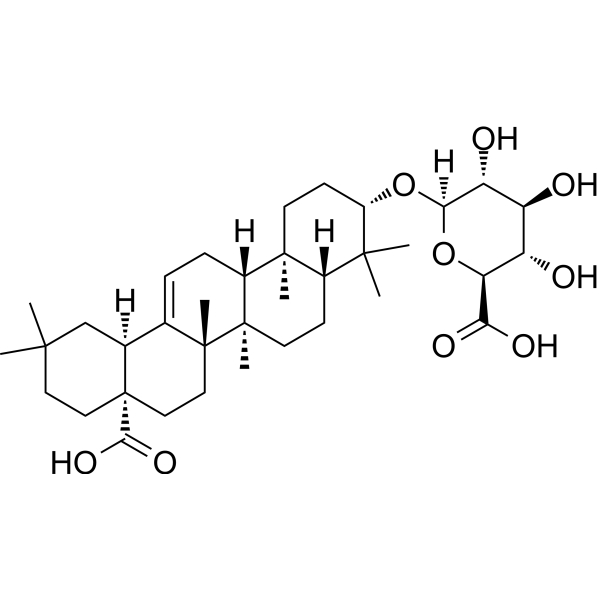
Calenduloside E is a pentacyclic triterpenoid saponin that can be extracted from the bark and roots of Aralia ovata, and has anti-inflammatory and anti-apoptotic activities. Calenduloside E alleviates atherosclerosis by regulating macrophage polarization, improves mitochondrial function by regulating the AMPK-SIRT3 pathway, and alleviates acute liver injury. In addition, Calenduloside E promotes the interaction between L-type calcium channels and Bcl-2 related apoptosis genes, inhibits calcium overload, and alleviates myocardial ischemia/reperfusion injury. Calenduloside E also improves non-alcoholic fatty liver disease by regulating heat shock-dependent pathways, and inhibits ROS mediated JAK1-STAT3 pathways to reduce cellular inflammatory responses .
loading...
    loading...
Cat. No.: HY-P99244
CAS No.: 1007106-86-6
Synonyms: ILV 094
Fezakinumab (ILV 094) is an anti-IL-22 monoclonal antibody. Fezakinumab inhibits IL-22 signal transduction, and regulates the JAK1/STAT3 pathway as well as apoptotic proteins. Fezakinumab alleviates airway remodeling, alveolar enlargement and inflammatory cell infiltration in lung tissues. Fezakinumab reduces the levels of neutrophils, lymphocytes, eosinophils and macrophages in lung tissues. Fezakinumab can be used in the research of chronic obstructive pulmonary disease and skin diseases .
loading...
    loading...
Cat. No.: HY-N7653
CAS No.: 529-51-1
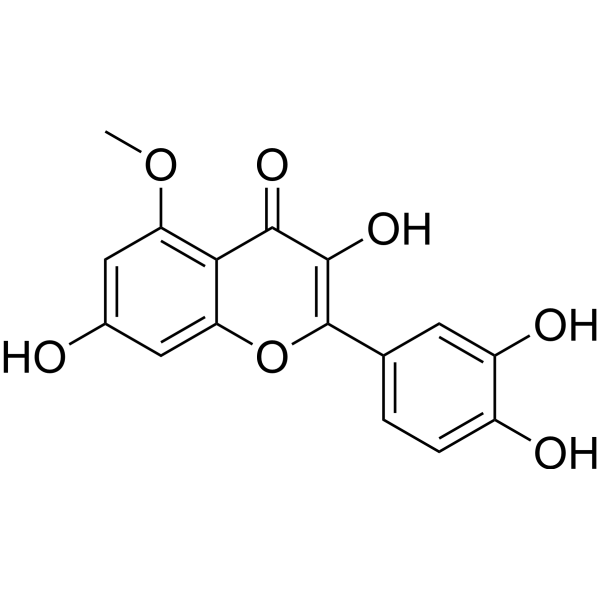
Azaleatin is an orally active inhibitor of hQC, NS2B-NS3 protease and E. coli β-glucuronidase, with IC50 values of 1.1 μM, 38.00 μg/mL and 0.57 μM, respectively. Azaleatin inhibits the activities of NF-κB, MyD88, JAK1, TLR4, STAT3, IL-1β, IL-6, COX-2, TNF-α and β-glucuronidase, blocks pro-inflammatory signaling pathways, reduces the levels of ROS, MDA and uric acid, elevates the levels of GPx, GSR, GST, SOD, CAT, HO-1 and GSH, scavenges free radicals and exerts reducing capacity. Azaleatin inhibits the expression of pro-apoptotic proteins Bax, Caspase-9 and Caspase-3, and upregulates the expression of anti-apoptotic protein Bcl-2. Azaleatin reduces the levels of cardiac injury markers, restores cardiac histological structure, inhibits Aβ aggregation, dengue protease activity, hepatic stellate cell proliferation and cancer cell growth, and also exhibits antibacterial activity. Azaleatin can be used in studies related to subchronic cardiotoxicity, Alzheimer's disease, dengue fever, hyperuricemia, liver fibrosis, gastric cancer and bacterial infections .
loading...
    loading...
Cat. No.: HY-N6069R
CAS No.: 38963-94-9
Raspberry ketone glucoside (Standard) is the analytical standard of Raspberry ketone glucoside (HY-N6069). Raspberry ketone glucoside is a melanogenesis inhibitor. Raspberry ketone glucoside inhibits melanogenesis by activating the IL6/JAK1/STAT3 pathway, inhibiting the transcriptional activity of MITFa, and its downstream expression levels of the TYR and TYRP1a genes. Raspberry ketone glucoside shows remarkable whitening activity on both B16F10 cells in vitro and zebrafish model in vivo .
loading...
    loading...
Cat. No.: HY-170977
Target:  

JAK STAT

Research Areas:  

Inflammation/Immunology

JAK1/STAT3-IN-1 (compound 4f) is an anti-AD (atopic dermatitis) agent by inhibiting JAK1/STAT3 signaling pathway. JAK1/STAT3-IN-1 inhibits NO generation with an IC50 of 2.17 μM. JAK1/STAT3-IN-1 improves the skin condition of AD-like mice, reduces inflammatory infiltration, inhibits the expressions of p-JAK1/JAK1 and p-STAT3/STAT3, and mitigates the excessive immune response on Calcipotriol (HY-10001) (MC903)-induced AD-like mice .
loading...
    loading...
Cat. No.: HY-168971
CAS No.: 1390658-79-3
Synonyms: CP-25
Paeoniflorin-6′-O-benzene sulfonate (CP-25) is the inhibitor for G protein-coupled receptor kinase 2 (GRK2) that inhibits the translocation of GRK2 to the cell membrane, inhibits JAK1/STAT3 signaling pathway. Paeoniflorin-6′-O-benzene sulfonate inhibits IL-17A/CXCL2-induced proliferation of HaCaT. Paeoniflorin-6′-O-benzene sulfonate reduces the levels of inflammatory factors and chemokines such as IL-17A, IL-17F, IFN-γ, TNF-α, IL-22, IL-23, CXCL2, CXCL3 and CXCL9, alleviates Imiquimod (HY-B0180)-induced psoriasis in mouse model .
loading...
    loading...
Cat. No.: HY-168893
Research Areas:  

Cancer

K882 (Compound 4e) is a Src inhibitor, with KD of 0.315 μM. K882 induces Apoptosis. K882 inhibits XIAP and Survivin. K882 inhibits the activation of PI3K/Akt/mTOR, Jak1/Stat3, Ras/MAPK signaling pathways. K882 shows anti-tumor activity against non-small cell lung cancer .
loading...
    loading...
Cat. No.: HY-179715
PROTAC JAK1/2 degrader-1 is an orally active JAK1/JAK2 PROTAC degrader, with DC50 values of 1.4 μM and 0.92 μM against JAK1 and JAK2, respectively. PROTAC JAK1/2 degrader-1 triggers degradation via a CRBN- and proteasome-dependent pathway. PROTAC JAK1/2 degrader-1 inhibits the secretion of tumor necrosis factor-α (TNF-α) and interleukin-6 (IL-6). PROTAC JAK1/2 degrader-1 alleviates inflammatory responses and colon injury by inhibiting the JAK/STAT3 signaling pathway. PROTAC JAK1/2 degrader-1 can be used for the research of inflammatory bowel disease .
loading...
    loading...
Cat. No.: HY-L008
738 compounds

The Janus kinase (JAK)/signal transducer and activator of transcription (STAT) pathway is central to signaling by cytokine receptors, a superfamily of more than 30 transmembrane proteins that recognize specific cytokines, and is critical in blood formation and immune response. Canonical JAK/STAT signaling begins with the association of cytokines and their corresponding transmembrane receptors. Activated JAKs then phosphorylate latent STAT monomers, leading to dimerization, nuclear translocation, and DNA binding. In mammals, there are four JAKs (JAK1, JAK2, JAK3, TYK2) and seven STATs (STAT1, STAT2, STAT3, STAT4, STAT5a, STAT5b, STAT6). Since the JAK/STAT pathway plays a major role in many fundamental processes, such as apoptosis and inflammation, dysfunctional proteins in the pathway may lead to a number of diseases. For example, alterations in JAK/STAT signalling can result in cancer and diseases affecting the immune system, such as severe combined immunodeficiency disorder (SCID).

MCE provides 738 compounds that can be used in the study of the JAK/STAT signaling pathway and related diseases.

