1. Search Result
Search Result
Results for "

MCAO mice

" in MedChemExpress (MCE) Product Catalog:

6

Inhibitors & Agonists

1

Natural
Products

Cat. No. Product Name Target Research Areas Chemical Structure
  • HY-13817
    IU1
    Maximum Cited Publications
    25 Publications Verification

    Deubiquitinase Autophagy Apoptosis Cardiovascular Disease Neurological Disease Endocrinology Cancer
    IU1 is a selective, reversible USP14 inhibitor with an IC50 of 4-5 μM. IU1 binds USP14’s catalytic cleft to block deubiquitinase activity. IU1 induces calpain-dependent Tau cleavage, causes ATP deficits, reduces E1~Ub thioester levels and 26S proteasome assembly. IU1 enhances 26S proteasome chymotrypsin-like activity, modulates LC3B-dependent autophagy flux, reduces cancer cell proliferation and migration, and blocks G0/G1 to S phase cell cycle transition in follicular thyroid cancer cells. IU1 activates autophagy-lysosomal and ubiquitin-proteasome pathways, triggers apoptosis, and reduces cervical cancer cell growth. IU1 enhances degradation of proteasome substrates linked to neurodegenerative disease, accelerates oxidized protein degradation, and increases oxidative stress resistance. IU1 can be used for the research of Alzheimer’s disease, follicular thyroid cancer, ischemic stroke, cervical cancer, and neurodegenerative disease .
    IU1
  • HY-N2255
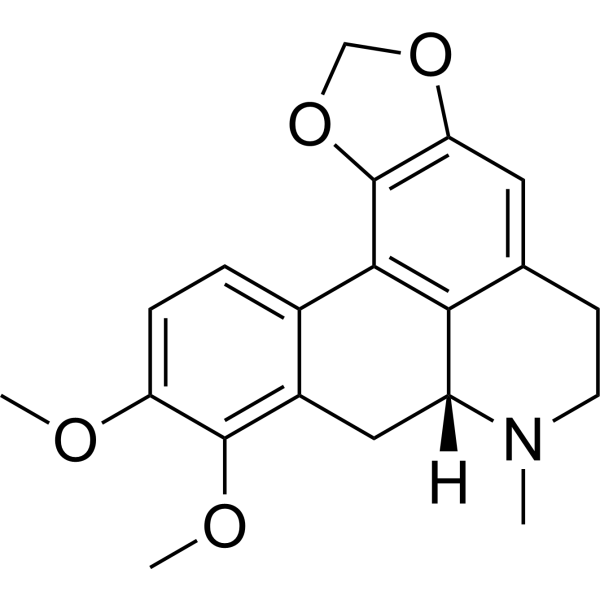
    Crebanine
    4 Publications Verification

    Akt Apoptosis NF-κB Reactive Oxygen Species (ROS) p38 MAPK ERK Interleukin Related TNF Receptor NO Synthase nAChR Bacterial Cancer
    Crebanine is an isoquinoline-like alkaloid that can be derived from Stephania. Crebanine is an antagonist of the α7-nAChR with an IC50 of 19.1 μM. Crebanine suppresses the proliferation, migration, and invasion of cancer cells, triggers reactive oxygen species (ROS) burst, and promotes apoptosis. Crebanine inhibits the AKT/FoxO3a, NF-κB and MAPK signaling pathways. Crebanine attenuates NOX2 hyperactivation, exhibits antioxidant properties by reducing reactive oxygen species and peroxidation in microglia cells. Crebanine inhibits voltage-dependent Na + current in guinea-pig ventricular myocytes. Crebanine has high inhibitory activity against gram-positive animal pathogenic bacteria. Crebanine ameliorates ischemia-reperfusion brain damage in middle cerebral artery occlusion and reperfusion (MCAO/R) rats. Crebanine significantly improves Scopolamine (HY-N0296)-induced cognitive deficits in ICR mice. Crebanine can be used for the study of hepatocellular carcinoma (HCC), cerebral ischemia and Alzheimer's disease .
    Crebanine
  • HY-139192
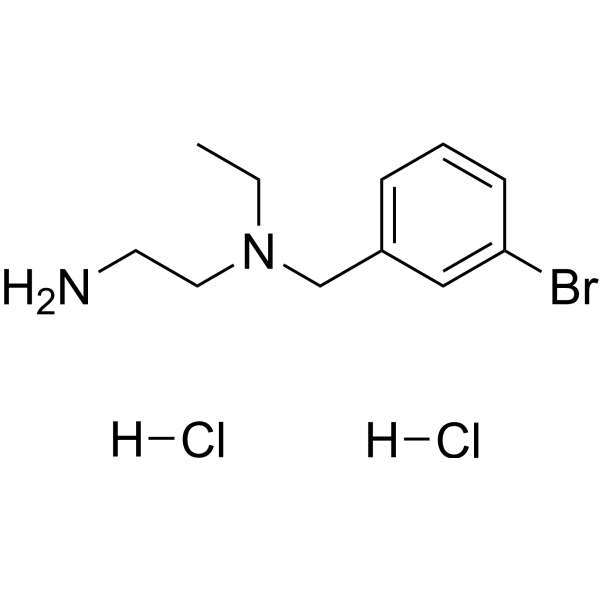
    Brophenexin
    3 Publications Verification

    NMDAR/TRPM4-IN-2

    iGluR TRP Channel ERK Neurological Disease
    Brophenexin (compound 8) is a potent NMDAR/TRPM4 interaction interface inhibitor. Brophenexin shows neuroprotective activity. Brophenexin prevents NMDA-induced cell death and mitochondrial dysfunction in hippocampal neurons, with an IC50 of 2.1 μM. Brophenexin protects mice from MCAO-induced brain damage and NMDA-induced retinal ganglion cell loss .
    Brophenexin
  • HY-125039
    N-Acetyl lysyltyrosylcysteine amide
    2 Publications Verification

    Glutathione Peroxidase Cardiovascular Disease Neurological Disease
    N-Acetyl lysyltyrosylcysteine amide is a potent, reversible, specific, and non-toxic tripeptide inhibitor of myeloperoxidase (MPO). N-Acetyl lysyltyrosylcysteine amide effectively inhibits MPO generation of toxic oxidants in vivo. N-Acetyl lysyltyrosylcysteine amide reduces neuronal damage and preserves brain tissue and neurological function in the stroked brain. N-Acetyl lysyltyrosylcysteine amide inhibits MPO-dependent hypochlorous acid (HOCl) generation, protein nitration, and LDL oxidation .
    N-Acetyl lysyltyrosylcysteine amide
  • HY-139192A
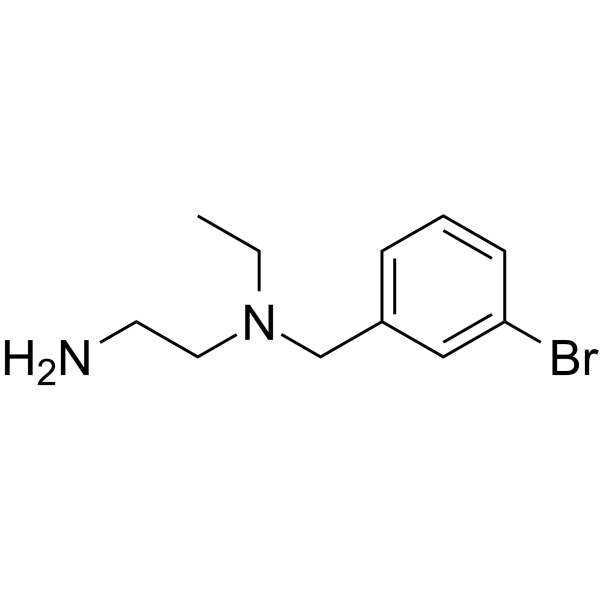
    Brophenexin free base
    3 Publications Verification

    NMDAR/TRPM4-IN-2 free base

    iGluR TRP Channel ERK Neurological Disease
    Brophenexin free base (compound 8) is a potent NMDAR/TRPM4 interaction interface inhibitor. Brophenexin free base shows neuroprotective activity. Brophenexin free base prevents NMDA-induced cell death and mitochondrial dysfunction in hippocampal neurons, with an IC50 of 2.1 μM. Brophenexin free base protects mice from MCAO-induced brain damage and NMDA-induced retinal ganglion cell loss .
    Brophenexin free base
  • HY-172455

    Potassium Channel Neurological Disease
    TREK inhibitor-3 (Cpd8l) is a selective and BBB-permeable TREK-1 inhibitor with an IC50 of 0.81 μM. TREK inhibitor-3 has neuroprotective effects, which can significantly reduce the death of cortical neurons induced by oxygen-glucose deprivation/reoxygenation (OGD/R) and improve brain injury in mice models of middle cerebral artery occlusion/reperfusion (MCAO/R). TREK inhibitor-3 can be used in the research of ischemic stroke .
    TREK inhibitor-3

Inquiry Online

Your information is safe with us. * Required Fields.

Salutation


Country or Region *

Applicant Name *


Organization Name *

Department *


Email Address *


Product Name *

Cat. No.


Requested quantity *

Phone Number *


Remarks

Inquiry Online

Inquiry Information

Product Name:
Cat. No.:
Quantity:
MCE Japan Authorized Agent:

