1. Search Result
Search Result
Results for "

MDA-MB-453

" in MedChemExpress (MCE) Product Catalog:

31

Inhibitors & Agonists

2

Peptides

1

Isotope-Labeled Compounds

1

Click Chemistry

Cat. No. Product Name Target Research Areas Chemical Structure
  • HY-14543
    Sertindole
    3 Publications Verification

    Lu 23-174

    5-HT Receptor Dopamine Receptor Adrenergic Receptor Autophagy Neurological Disease Cancer
    Sertindole (Lu 23-174) is an orally active 5-HT2A, 5-HT2C, dopamine D2, and αl-adrenergic receptors antagonist. Sertindole shows antipsychotic activity and anti-proliferative activity to multiple cancer cells .
    Sertindole
  • HY-139659

    PROTACs Androgen Receptor Progesterone Receptor Apoptosis Cancer
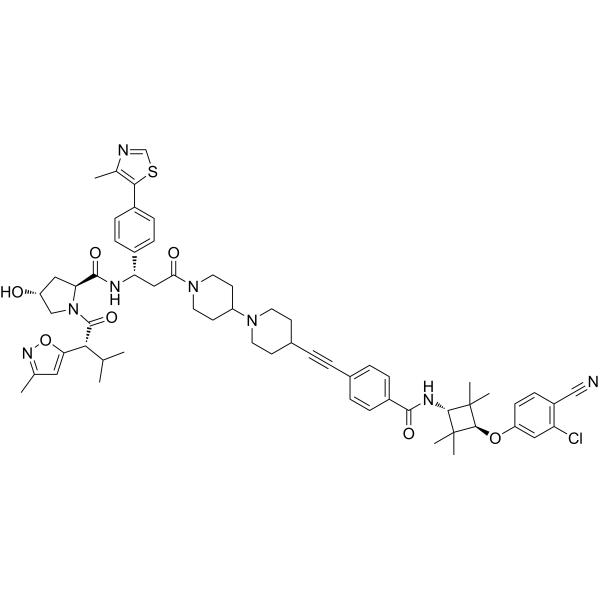
    ARD-61 is a highly potent, effective and specific PROTAC androgen receptor (AR) degrader. ARD-61 potently and effectively induces AR and progesterone receptors (PR) degradation in AR+ cancer cell lines. ARD-61 induces apoptosis and effectively induces tumor growth inhibition in the MDA-MB-453 xenograft model in mice . ARD-61 is a click chemistry reagent, it contains an Alkyne group and can undergo copper-catalyzed azide-alkyne cycloaddition (CuAAc) with molecules containing Azide groups.
    ARD-61
  • HY-13896
    PD168393
    3 Publications Verification

    EGFR Autophagy Apoptosis Cancer
    PD168393 is a potent, selective and cell-permeable inhibitor of EGFR tyrosine kinase and ErbB2. PD168393 irreversiblely inactivates EGF receptor ( IC50=0.7 nM) and is inactive against insulin receptor, PDGFR, FGFR and PKC .
    PD168393
  • HY-107367A

    S-22611 hydrochloride

    EGFR Cancer
    Epertinib (S-22611) hydrochloride is a potent, orally active, reversible, and selective tyrosine kinase inhibitor of EGFR, HER4 and HER2, with IC50s of 1.48 nM, 2.49 nM and 7.15 nM, respectively. Epertinib hydrochloride shows potent antitumor activity . Epertinib (hydrochloride) is a click chemistry reagent, it contains an Alkyne group and can undergo copper-catalyzed azide-alkyne cycloaddition (CuAAc) with molecules containing Azide groups.
    Epertinib hydrochloride
  • HY-136447
    ASP4132
    1 Publications Verification

    AMPK Cancer
    ASP4132 is an orally active, potent AMPK activator with an EC50 of 18 nM. ASP4132 has anti-cancer activity and makes tumor regression in breast cancer xenograft mouse models .
    ASP4132
  • HY-112411

    EGFR ERK PDGFR FGFR Neurological Disease Inflammation/Immunology
    PD 174265 is a highly selective, reversible EGFR/ErbB2 tyrosine kinase inhibitor (IC50=0.45 nM) and cell differentiation inducer. By blocking receptor autophosphorylation and the downstream ERK signaling pathway (with an IC50 of 0.45 μM for full-length ERK), PD 174265 effectively inhibits tumor growth and exhibits antitumor activity without obvious toxicity in in vivo models. PD 174265 drives oligodendrocyte precursor cells to switch from a proliferative state to a differentiated state, significantly upregulates the expression of myelin proteins such as CNP, PLP and MBP, and induces neurite branching. PD 174265 shows no inhibitory effect on other kinases including insulin, PDGF and basic FGF receptors, and serves as a crucial tool molecule for investigating the treatment of human epidermoid carcinoma and the mechanism of myelin repair in multiple sclerosis .
    PD 174265
  • HY-103440

    EGFR Cancer
    EGFR/ErbB-2/ErbB-4 inhibitor-3 (compound 29) is a potent tyrosine kinase inhibitor with IC50s of 0.3, 1.1, 0.5, 2.5, 24 nM for erbB1, erbB2, erbB4, EGF, HER, respectively . EGFR/ErbB-2/ErbB-4 inhibitor-3 is a click chemistry reagent, it contains an Alkyne group and can undergo copper-catalyzed azide-alkyne cycloaddition (CuAAc) with molecules containing Azide groups.
    EGFR/ErbB-2/ErbB-4 inhibitor-3
  • HY-176165

    CDK Histone Methyltransferase Cancer
    CDK9/EZH2-IN-1 (Compound D16) is a CDK9/EZH2 dual-target inhibitor (IC50: 83.9/108.6 nM). CDK9/EZH2-IN-1 induces apoptosis and DNA double-strand breaks (DSBs). CDK9/EZH2-IN-1 inhibits the proliferation activity of MKN45, MDA-MB-453 and SW620 cancer cells (IC50 values are 136.3, 171.3 and 315.7 nM, respectively) .
    CDK9/EZH2-IN-1
  • HY-50936S

    Ecteinascidin 743-d3; ET-743-d3

    Isotope-Labeled Compounds Reactive Oxygen Species (ROS) Apoptosis Inflammation/Immunology Cancer
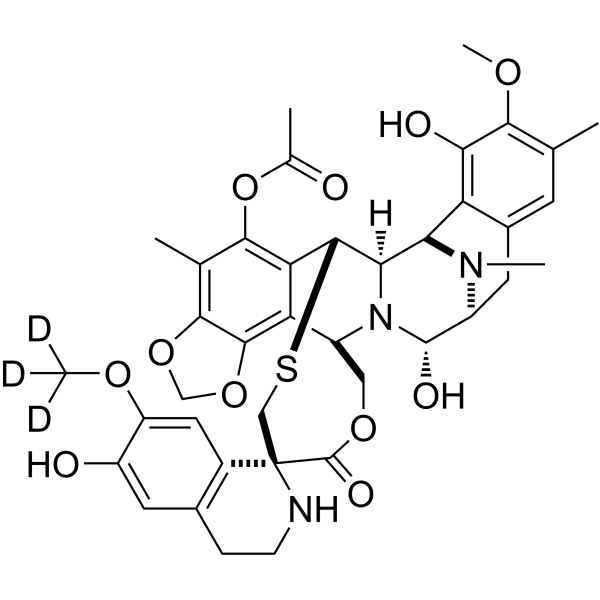
    Trabectedin D3 (Ecteinascidin 743 D3) is deuterium labeled Trabectedin. Trabectedin is a tetrahydroisoquinoline alkaloid with potent antitumor activity. Trabectedin binds to the minor groove of DNA, blocks transcription of stress-induced proteins, induces DNA backbone cleavage and cancer cells apoptosis, and increases the generation of ROS in MCF-7 and MDA-MB-453 cells. Trabectedin has tje potential for soft tissue sarcoma and ovarian cancer treatment .
    Trabectedin-d3
  • HY-P2317

    Bacterial Endogenous Metabolite Infection
    Cecropin P1, porcine is an antibacterial peptide that can be isolated from the upper part of the small intestine of the pig. Cecropin P1, porcine shows antibacterial activity against Gram-negative bacteria. Cecropin P1, porcine shows antiviral activity and inhibits PRRSV infection .
    Cecropin P1, porcine
  • HY-154825

    20(OH)D3; 20S-Hydroxyvitamin D3

    VD/VDR Aryl Hydrocarbon Receptor NF-κB Cytochrome P450 Inflammation/Immunology Cancer
    20-Hydroxyvitamin D3 (20(OH)D3), a product of vitamin D3 hydroxylation, is a noncalcemic immunomodulator. 20-Hydroxyvitamin D3 binds to vitamin D receptor (VDR), activates VDR and aryl hydrocarbon receptor (AhR) signaling, stimulates CYP24A1 expression, and drives VDR nuclear translocation. 20-Hydroxyvitamin D3 inhibits NF-κB activity via IκBα upregulation. 20-Hydroxyvitamin D3 acts as a substrate for CYP27B1 and rat CYP24A1, undergoing hydroxylation to form dihydroxy-derivatives. 20-Hydroxyvitamin D3 inhibits cell proliferation, colony formation, migration, and tumor growth, and induces cell differentiation in cancer cells. 20-Hydroxyvitamin D3 can be used for the research of inflammatory and autoimmune diseases, melanoma, breast carcinomas, and hepatocarcinoma .
    20-Hydroxyvitamin D3
  • HY-W1117786

    ADC Payload NAMPT Cancer
    Nampt-IN-10 (Compound 4) is an efficient inhibitor of nicotinamide phosphoribosyltransferase (NAMPT). Nampt-IN-10 exhibits nanomolar-level inhibitory activity against cell lines such as MDA-MB453, NCI-N87, and NCI-H526. Nampt-IN-10 can be used as an ADC payload, and the ADC constructed with it as the core demonstrates significant anti-tumor activity .
    Nampt-IN-10
  • HY-175030

    HDAC Apoptosis Pyroptosis Necroptosis PANoptosis Cancer
    TNI-97 is a selective and orally active HDAC6 inhibitor, with an IC50 of 0.2 nM. TNI-97 potently inhibited TNBC cell MDA-MB-453 growth and clonogenicity. TNI-97 induces PANoptosis including apoptosis, necroptosis and pyroptosis in MDA-MB-453 cells. TNI-97 shows antitumor activity in the mice carrying the MDA-MB-453 xenograft or carrying murine-derived TNBC cell allografts. TNI-97 can be used for the study of triple-negative breast cancer .
    TNI-97
  • HY-157210

    CDK Cancer
    CDK7-IN-26 (compound 36) is an orally active CDK7 inhibitor (IC50: 7.4 nM). CDK7-IN-26 potently inhibits the growth of triple-negative breast cancer (TNBC) cell line-derived xenograft (CDX) tumors in vivo and inhibits MDA-MB-453 cells in vitro with an IC50 of 0.15 μM .
    CDK7-IN-26
  • HY-147515

    FGFR Cancer
    FGFR4-IN-11 (Compound 30) is a potent, selective, covalent FGFR4 inhibitor with an IC50 of 2.1 nM. FGFR4-IN-11 significantly inhibits the FGF19/FGFR4 signaling pathway and shows antitumor activity .
    FGFR4-IN-11
  • HY-107367

    S-22611

    EGFR Cancer
    Epertinib (S-22611) is a potent, orally active, reversible, and selective tyrosine kinase inhibitor of EGFR, HER4 and HER2, with IC50s of 1.48 nM, 2.49 nM and 7.15 nM, respectively. Epertinib shows potent antitumor activity . Epertinib is a click chemistry reagent, it contains an Alkyne group and can undergo copper-catalyzed azide-alkyne cycloaddition (CuAAc) with molecules containing Azide groups.
    Epertinib
  • HY-172551

    Apoptosis Cadherin MMP Bcl-2 Family Cancer
    anti-TNBC agent-9 (Compound 3as) is an anti-cancer agent for triple-negative breast cancer (TNBC). anti-TNBC agent-9 exhibits significant inhibitory activity against MDA-MB-453 cells with an IC50 value of 8.5 μM. anti-TNBC agent-9 inhibits tumor cell migration by upregulating E-cadherin and downregulating N-cadherin, matrix metalloproteinase 2 (MMP2), and MMP9. anti-TNBC agent-9 induces apoptosis by increasing the expression of the pro-apoptotic protein BAX and decreasing the expression of the anti-apoptotic protein BCL-2, thereby inhibiting tumor cell proliferation .
    anti-TNBC agent-9
  • HY-146065

    FAK Apoptosis Cancer
    FAK-IN-4 (Compound 7d) is potential FAK inhibitor with anticancer activities. FAK-IN-4 induces cell apoptosis .
    FAK-IN-4
  • HY-174414

    EGFR Cancer
    EGFR/HER2-IN-18 is a stable EGFR/HER2 dual inhibitor with IC50 values of 0.09 (EGFR) and 0.08 μM (HER2) respectively. EGFR/HER2-IN-18 exhibits broad-spectrum anti-cancer activity. EGFR/HER2-IN-18 induces MCF-7 cells apoptosis and inhibits the cell cycle. EGFR/HER2-IN-18 can be used for the study of breast cancer .
    EGFR/HER2-IN-18
  • HY-172886

    PI3K Bcl-2 Family Apoptosis Cancer
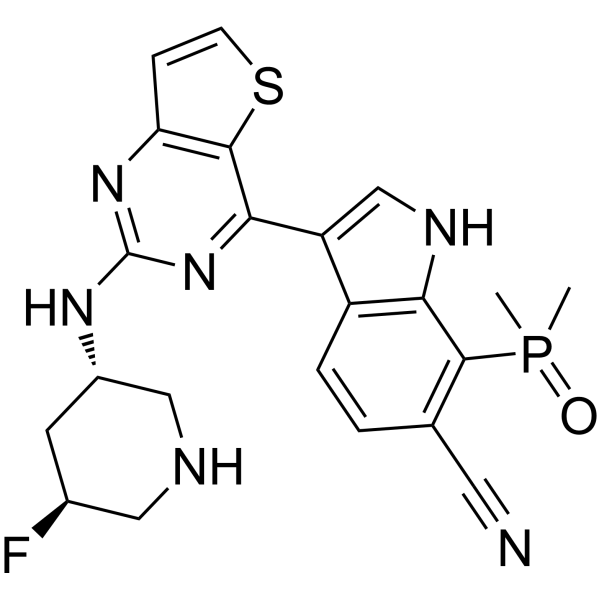
    PI3K-IN-58 (Compound 17f) is a PI3Kα inhibitor (IC50: 0.039 μM). PI3K-IN-58 exhibits significant antiproliferative effects on PC-3, 22RV1, MDA-MB-231 and MDA-MB-453 cell lines with IC50s of 3.48 μM, 1.06 μM, 2.21 μM and 0.93 μM, respectively. PI3K-IN-58 induces apoptosis by downregulating the expression levels of anti-apoptotic proteins Bcl-XL and Bcl-2 and upregulating the expression of anti-apoptosis protein BAX. PI3K-IN-58 can be used in PI3K-targeted cancer research .
    PI3K-IN-58
  • HY-162416

    CDK Cancer
    CDK7-IN-27 (Compound 37) is a selective inhibitor for cyclin-dependent kinase 7 (CDK7), with Ki of 3 nM. CDK7-IN-27 arrests the cell cycle at G0/G1 phase .
    CDK7-IN-27
  • HY-149259

    FAK Cancer
    FAK-IN-9 (Compound 8f) is a potent and orally active FAK inhibitor with an IC50 of 27.44 nM. FAK-IN-9 induces triple-negative breast cancer (TNBC) cell apoptosis .
    FAK-IN-9
  • HY-177966

    Drug Metabolite Apoptosis Reactive Oxygen Species (ROS) Cancer
    ETM-305 is a degradation product of the anticancer agent ET-743 (HY-50936). ET-743 (Ecteinascidin 743; Trabectedin) is a tetrahydroisoquinoline alkaloid that binds to the minor groove of DNA, blocks the transcription of stress-induced proteins, induces DNA backbone cleavage and cancer cell apoptosis, and increases ROS production in MCF-7 and MDA-MB-453 cells. Trabectedin is used in the research of soft tissue sarcoma and ovarian cancer .
    ETM-305
  • HY-14543R

    Lu 23-174 (Standard)

    5-HT Receptor Dopamine Receptor Adrenergic Receptor Autophagy Reference Standards Neurological Disease Cancer
    Sertindole (Standard) is the analytical standard of Sertindole. This product is intended for research and analytical applications. Sertindole (Lu 23-174) is an orally active 5-HT2A, 5-HT2C, dopamine D2, and αl-adrenergic receptors antagonist. Sertindole shows antipsychotic activity and anti-proliferative activity to multiple cancer cells .
    Sertindole (Standard)
  • HY-103440R

    Reference Standards EGFR Cancer
    EGFR/ErbB-2/ErbB-4 inhibitor-3 (Standard) is the analytical standard of EGFR/ErbB-2/ErbB-4 inhibitor-3 (HY-103440). This product is intended for research and analytical applications. EGFR/ErbB-2/ErbB-4 inhibitor-3 (compound 29) is a potent tyrosine kinase inhibitor with IC50s of 0.3, 1.1, 0.5, 2.5, 24 nM for erbB1, erbB2, erbB4, EGF, HER, respectively . EGFR/ErbB-2/ErbB-4 inhibitor-3 is a click chemistry reagent, it contains an Alkyne group and can undergo copper-catalyzed azide-alkyne cycloaddition (CuAAc) with molecules containing Azide groups.
    EGFR/ErbB-2/ErbB-4 inhibitor-3 (Standard)
  • HY-107367AR

    S-22611 hydrochloride (Standard)

    Reference Standards EGFR Cancer
    Epertinib hydrochloride (Standard) (S-22611 hydrochloride (Standard)) is the analytical standard of Epertinib (hydrochloride) (HY-107367A). This product is intended for research and analytical applications. Epertinib (S-22611) hydrochloride is a potent, orally active, reversible, and selective tyrosine Kinase inhibitor of EGFR, HER4 and HER2, with IC50s of 1.48 nM, 2.49 nM and 7.15 nM, respectively. Epertinib hydrochloride shows potent antitumor activity . Epertinib (hydrochloride) is a click chemistry reagent, it contains an Alkyne group and can undergo copper-catalyzed azide-alkyne cycloaddition (CuAAc) with molecules containing Azide groups.
    Epertinib hydrochloride (Standard)
  • HY-181928

    c-Met/HGFR PARP Apoptosis Cancer
    PARP1/c-Met-IN-3 (Compound L19) is a selective c-Met and PARP1 inhibitor, with an IC50 of 5.4 nM against c-Met and an IC50 of 3.7 nM against PARP1. PARP1/c-Met-IN-3 inhibits PARP2 enzymatic activity with an IC50 of 4.52 nM, and shows no specificity for PARP1 and PARP2. PARP1/c-Met-IN-3 induces cell cycle arrest and apoptosis. PARP1/c-Met-IN-3 exhibits anti-tumor activity against triple-negative breast cancer .
    PARP1/c-Met-IN-3
  • HY-181670

    Androgen Receptor c-Myc Akt mTOR ERK PDK-1 PI3K Apoptosis Metabolic Disease Cancer
    WH23 is a dehydrogenase/reductase SDR family member 11 (DHRS11) inhibitor with IC50 values of 0.037 μM. WH23 binds to DHRS11, forming a hydrogen bond with the enzyme’s His210 residue. WH23 suppresses androgen receptor mRNA and protein expression, reduces c-Myc expression, and inhibits cancer cell proliferation. WH23 inhibits PI3K/AKT signaling by reducing phosphorylation of PDK1, AKT, mTOR, and ERK. WH23 enhances Capivasertib (HY-15431)-induced cytotoxicity and apoptosis. WH23 can be used for the research of luminal androgen receptor-positive triple-negative breast cancer .
    WH23
  • HY-181833

    ADC Payload PI3K Cancer
    PI3K/PIKK-IN-1 is a PI3K and PIKK inhibitor that serves as a payload for antibody-drug conjugates (ADC) to prepare ADC. PI3K/PIKK-IN-1 is applicable to research related to breast cancer, multiple myeloma, Burkitt lymphoma, diffuse large B-cell lymphoma, and non-small cell lung cancer .
    PI3K/PIKK-IN-1
  • HY-P10792A

    EGFR Cancer
    HYNIC-H6F is a SPECT imaging probe with binding specificity for human epidermal growth factor receptor 2 (HER2) domain II (IC50 = 11 nM). HYNIC-H6F accumulates in HER2-positive breast cancer xenografts via receptor-mediated uptake, while shows low uptake in HER2-negative breast cancer xenografts. HYNIC-H6F enables non-invasive detection of HER2-positive breast cancer in mouse models and allows evaluation of HER2 expression levels without blocking interference. HYNIC-H6F can be used in breast cancer-related research .
    HYNIC-H6F
  • HY-173561A

    PROTACs Histone Methyltransferase Cancer
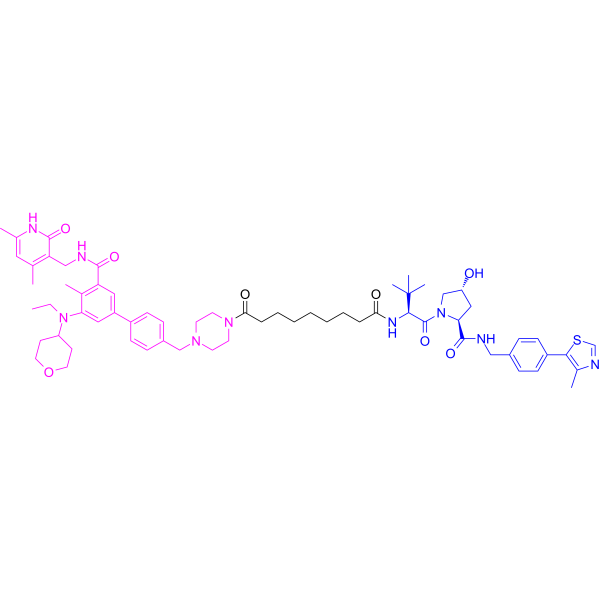
    MS115 TFA is a selective PRMT5/MEP50 PROTAC degrader, with DC50 values of 17.4 nM and 11.3 nM for PRMT5 and MEP50, respectively. MS115 TFA promotes PRMT5/MEP50 ubiquitination and degradation. MS115 TFA shows anticancer activity against breast cancer .
    MS115 TFA

Inquiry Online

Your information is safe with us. * Required Fields.

Salutation


Country or Region *

Applicant Name *


Organization Name *

Department *


Email Address *


Product Name *

Cat. No.


Requested quantity *

Phone Number *


Remarks

Inquiry Online

Inquiry Information

Product Name:
Cat. No.:
Quantity:
MCE Japan Authorized Agent:

