
1. Search Result
Search Result
Results for "

Multiple myeloma mice

" in MedChemExpress (MCE) Product Catalog:

31

Inhibitors & Agonists

1

Peptides

6

Inhibitory Antibodies

1

Click Chemistry

Cat. No. Nom du produit Target Áreas de investigación Chemical Structure
  • HY-103259
    Sodium metatungstate
    10+ Cited Publications

    Sodium polyoxotungstate; POM-1

    Phosphatase P2X Receptor P2Y Receptor Pyroptosis Interleukin Related Neurological Disease Inflammation/Immunology Cancer
    Sodium metatungstate (Sodium polyoxotungstate) is a NTPDase inhibitor, with Ki values of 2.58 μM, 3.26 μM, and 28.8 μM for NTPDase 1 (CD39), NTPDase 3 and NTPDase 2 respectively . Sodium metatungstate has anti-inflammatory and anti-cancer effect. Sodium metatungstate inhibits ATP breakdown but also blocks central synaptic transmission .
    Sodium metatungstate
  • HY-13241A
    Ralimetinib
    Maximum Cited Publications
    15 Publications Verification

    LY2228820

    p38 MAPK Autophagy Cancer
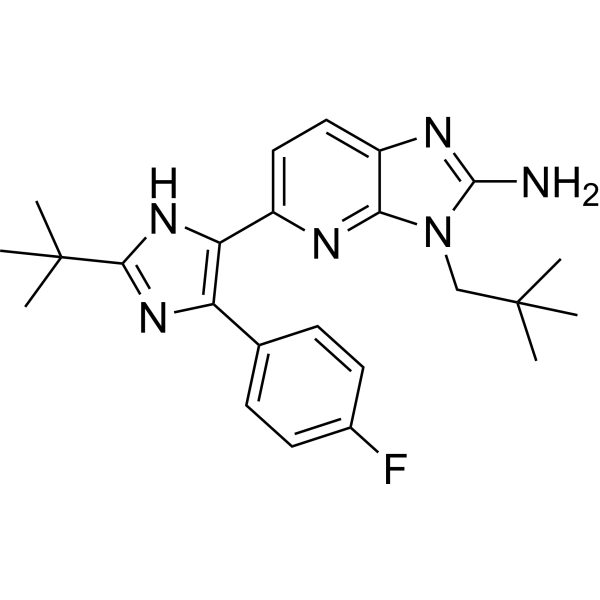
    Ralimetinib is an ATP-competitive p38α and p38β MAPK inhibitor with an IC50 of 5.3 nmol/L against human p38α and an IC50 of 3.2 nmol/L against human p38β. Ralimetinib slows tumor growth in preclinical in vivo cancer models, exhibits oral bioavailability in mice, and achieves sustained target inhibition for 4 to 8 h. Ralimetinib is applicable for research on melanoma, non-small cell lung cancer, ovarian cancer, glioma, multiple myeloma, breast cancer, renal cancer, and head and neck squamous cell carcinoma .
    Ralimetinib
  • HY-119264

    Molecular Glues Ras Apoptosis HIF/HIF Prolyl-Hydroxylase Cancer
    PRLX-93936 is a molecular Glues that binds to and reprograms the TRIM21 ubiquitin ligase to degrade nuclear pore complexes. PRLX-93936 binds to TRIM21, forms a ternary complex with TRIM21 and NUP98, and mediates the ubiquitination and proteasomal degradation of NUP98 and other nuclear pore complex proteins. PRLX-93936 induces the loss of short-lived cytoplasmic mRNA transcripts, triggers cancer cell apoptosis (Apoptosis), and inhibits the activated Ras pathway. PRLX-93936 inhibits HIF-1 under hypoxic conditions (IC50 = 0.09 μM in cell-based reporter gene assay). PRLX-93936 suppresses tumor growth in mouse models and improves survival rates in mouse models of multiple myeloma. PRLX-93936 is applicable to research related to pancreatic cancer and multiple myeloma .
    PRLX-93936
  • HY-P990980

    CND-106; EMB-06

    CD3 Inflammation/Immunology Cancer
    Cizutamig (CND-106) is a bispecific T-cell engager targeting BCMA and CD3. Cizutamig exhibits immunostimulatory and anti-tumor activities. Cizutamig can be used in research related to relapsed or refractory multiple myeloma and systemic lupus erythematosus .
    Cizutamig
  • HY-176763

    Sec61 Cancer
    KZR-261 is a Sec61 translocase inhibitor. KZR-261 binds directly to the Sec61 channel, thereby inhibiting the biosynthesis of certain Sec61 substrate proteins, including oncogenic factors. KZR-261 activates the endoplasmic reticulum stress response. KZR-261 exhibits broad in vitro anticancer activity. KZR-261 shows antitumor efficacy in mouse models of cancer. KZR-261 can be used for the research of multiple myeloma, colorectal cancer, small cell lung cancer, pancreatic cancer, prostate cancer, non-Hodgkin's lymphoma, and mantle cell lymphoma .
    KZR-261
  • HY-15163
    Zotiraciclib
    2 Publications Verification

    TG02; SB1317

    JAK CDK FLT3 Cancer
    Zotiraciclib (TG02; SB1317) is an orally active JAK2/FLT3/CDK2 inhibitor with IC50 values of 13 nM, 73 nM and 56 nM , respectively. Zotiraciclib inhibits cancer cell proliferation, tumor growth and the activity of CYP2D6. Zotiraciclib exhibits high plasma protein binding rate, Caco-2 permeability and tissue distribution capacity, as well as metabolic stability in human and canine liver microsomes. Zotiraciclib achieves tumor growth inhibition in nude mouse models of colon cancer and lymphoma xenografts. Zotiraciclib can be used for research related to colon cancer, B-cell lymphoma, advanced leukemia, acute leukemia and multiple myeloma .
    Zotiraciclib
  • HY-P99744

    TAK-573

    CD38 Inflammation/Immunology Cancer
    Modakafusp alfa (TAK-573) is a humanized, anti-CD38 IgG4 monoclonal antibody fused to 2 attenuated IFNα2b molecules, which delivers interferon-alpha to CD38-expressing cells. Modakafusp alfa has direct anti-proliferative activity on multiple myeloma (MM) cancer cells in vitro and induces robust and durable antitumor responses in MM xenograft tumor models. Modakafusp alfa in combination with anti-PD-1 antibodies induces immunomodulation and antitumor responses with good tolerance in mice .
    Modakafusp alfa
  • HY-P99814

    AMG-701

    CD3 Inflammation/Immunology Cancer
    Pavurutamab (AMG-701) is a bispecific T cell engager molecule that anti-CD3 and anti-B cell maturation antigens (BCMA). Pavurutamab has an extended half-life based on Pacanalotamab (HY-P99798). The Fc of Pavurutamab is coupled to molecules to improve pharmacokinetic parameters. Pavurutamab has potential applications in immune regulation and multiple myeloma (MM) .
    Pavurutamab
  • HY-122895
    E64FC26
    2 Publications Verification

    Apoptosis PDI Cancer
    E64FC26 is a potent pan-inhibitor of the protein disulfide isomerase (PDI) family, with IC50s of 1.9, 20.9, 25.9, 16.3, and 25.4 μM against PDIA1, PDIA3, PDIA4, TXNDC5, and PDIA6, respectively. E64FC26 shows anti-myeloma activity .
    E64FC26
  • HY-119264A

    Molecular Glues Apoptosis Ras HIF/HIF Prolyl-Hydroxylase Cancer
    PRLX-93936 dihydrochloride is a molecular Glues that binds to and reprograms the TRIM21 ubiquitin ligase to degrade nuclear pore complexes. PRLX-93936 dihydrochloride binds to TRIM21, forms a ternary complex with TRIM21 and NUP98, and mediates the ubiquitination and proteasomal degradation of NUP98 and other nuclear pore complex proteins. PRLX-93936 dihydrochloride induces the loss of short-lived cytoplasmic mRNA transcripts, triggers cancer cell apoptosis (Apoptosis), and inhibits the activated Ras pathway. PRLX-93936 dihydrochloride inhibits HIF-1 under hypoxic conditions (IC50 = 0.09 μM in cell-based reporter gene assay). PRLX-93936 dihydrochloride suppresses tumor growth in mouse models and improves survival rates in mouse models of multiple myeloma. PRLX-93936 dihydrochloride is applicable to research related to pancreatic cancer and multiple myeloma .
    PRLX-93936 dihydrochloride
  • HY-161305

    HDAC Metabolic Disease Cancer
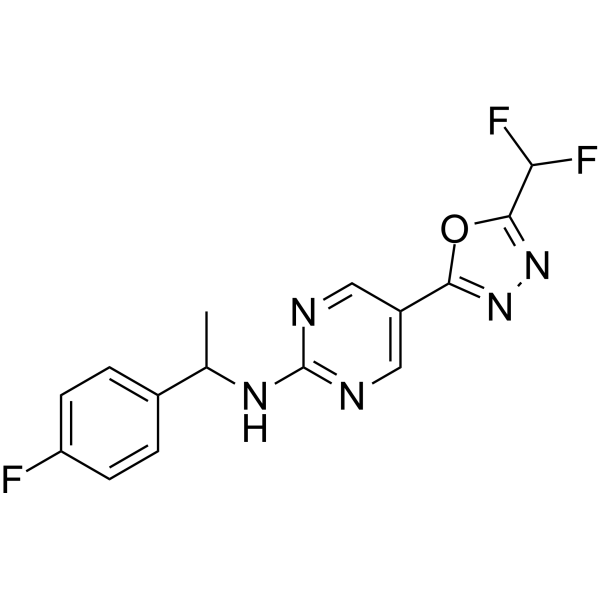
    SE-7552, a 2-(difluoromethyl)-1,3,4-oxadiazole (DFMO) derivative, is an orally active, highly selective, non-hydroxamate HDAC6 inhibitor with an IC50 of 33 nM. SE-7552 is greater than 850-fold selectivity versus all other known HDAC isozymes. SE-7552 is capable of blocking multiple myeloma growth in vivo. SE-7552 acts as an anti-obesity agent in diet-induced obese mice .
    SE-7552
  • HY-122895A

    Apoptosis PDI Cancer
    (E/Z)-E64FC26 is a mixture complex of E-E64FC26 and Z-E64FC26. E64FC26 (E-E64FC26) is a potent pan-inhibitor of the protein disulfide isomerase (PDI) family, with IC50s of 1.9, 20.9, 25.9, 16.3, and 25.4 μM against PDIA1, PDIA3, PDIA4, TXNDC5, and PDIA6. E64FC26 shows anti-myeloma activity .
    (E/Z)-E64FC26
  • HY-114340

    Histone Methyltransferase Apoptosis Cancer
    LEM-14 is a potent and selective NSD2 inhibitor with an IC50 of 132 µM. LEM-14 has very weak activitv against NSD1 and has no activity against NSD3. LEM-14 inhibits fibrotic gene expression in ND but not DIO BMDMs. LEM-14 combined with ionizing radiation (IR) enhances the apoptosis rate and reduces the colony-formation ability of CRC cells. LEM-14 exhibits enhanced anti-tumor efficacy in Balb/c nude mice bearing LoVo cell xenografts when combined with ionizing radiation. LEM-14 has the potential for the research of multiple myeloma and colorectal cancer .
    LEM-14
  • HY-175164

    Apoptosis c-Myc Cancer
    SVC112 is a translation elongation inhibitor that prevents the cyclic dissociation of EF2 from the ribosome, thereby inhibiting the elongation step of translation. SVC112 shows activity in growth inhibition among cancer cell lines of various origins (acute myeloid leukemia (AML), multiple myeloma (Myeloma), colorectal cancer (CRC), and head and neck squamous cell carcinoma (HNSCC)). SVC112 preferentially impedes ribosomal processing of mRNAs, and decreaseds CSC-related proteins including Myc and Sox2. SVC112 induces apoptosis in hematologic cancer cell lines, while phosphorylation of c-Myc correlates with sensitivity to SVC112 in colorectal cancer cell lines. SVC112 inactivates HNSCC stem cells in vitro and prevents the regrowth of HNSCC tumor xenografts in mice. SVC112 can be used for the study of HNSCC .
    SVC112
  • HY-172614

    RK-552

    Histone Methyltransferase Apoptosis Cancer
    RK-0080552 (RK-552) is a NSD2 inhibitor with an IC50 of 0.11 μM, and it exhibits selectivity over histone methyltransferases G9a (IC50: 1.2 μM) and SET7/9 (IC50: >50 μM). RK-0080552 functionally inhibits NSD2 histone methyltransferase activity, reduces the dimethylation level of histone H3 lysine 36, suppresses IRF4 transcription, induces apoptosis and triggers cell death. RK-0080552 inhibits the growth of xenograft tumors and prolongs host survival. RK-0080552 is available for the research of multiple myeloma .
    RK-0080552
  • HY-174445

    PROTACs Histone Methyltransferase Apoptosis Cancer
    C199 is a PROTAC degrader targeting PRMT4 (DC50 = 106 nM). C199 shows high selectivity for PRMT4 over other protein arginile methyltransferases. C199 exhibits strong cell degradation ability. C199 induces apoptosis in MM cell lines. C199 efficiently clears PRMT4 protein via the VHL-proteasome pathway. C199 has a relatively long half-life and shows strong anti-multiple myeloma (MM) tumor activity (Pink: Target protein ligand (HY-111109); Blue: E3 ligase ligand (HY-112078), E3 ligase ligand + linker (HY-174474); black: Linker) .
    C199
  • HY-13312A

    IGF-1R Insulin Receptor Akt Apoptosis Cancer
    GTx-134 is a dual insulin-like growth factor 1 receptor/insulin receptor (IGF-1R/IR) inhibitor with an IC50 values for IGF-1R and IR of 97 and 187 nM respectively. GTx-134 inhibits the autophosphorylation of IGF-1R and its downstream signaling pathway (Akt), thereby blocking the proliferation and survival signals of tumor cells. GTx-134 has broad-spectrum inhibitory activity against multiple myeloma cell lines and can induce apoptosis in sensitive cells. GTx-134 significantly inhibits tumor growth in mice with MM1.S cell transplantation. GTx-134 works in synergy with existing therapies (such as protease preparations, immunomodulators). GTx-134 can be used in high-risk myeloma research .
    GTx-134
  • HY-175502

    Molecular Glues IKZF Family Apoptosis Cancer
    MGD-22, a molecular glue, is an orally active IKZF1/2/3 degrader with DC50 values of 8.33 nM, 9.91 nM, and 5.74 nM, respectively. MGD-22 exhibits extremely potent anti-proliferative activity against diverse hematological cancer cells. MGD-22 induces apoptosis in cancer cells. MGD-22 demonstrates potent anti-tumor efficacy in mice bearing NCI-H929 xenografts or WSU-DLCL-2 xenografts. MGD-22 can be used for the study of hematological cancers, including multiple myeloma (MM), acute myeloid leukemia (AML), and diffuse large B-cell lymphoma (DLBCL) .
    MGD-22
  • HY-P11257

    Radionuclide-Drug Conjugates (RDCs) Cancer
    DOTA-BP1 is a DOTA-modified BP1 (BCMA-targeting peptide). DOTA-BP1 can be radiolabeled with [ 68Ga]Ga to produce a BCMA-targeting PET tracer. DOTA-BP1 can be used in the research of detecting BCMA in multiple myeloma .
    DOTA-BP1
  • HY-117087

    Phosphatase PANoptosis Cancer
    K103 is an inhibitor discovered from the screen that is an analog of the serotonin antagonist benzazocine. K103 exhibited inhibition of SHIP homologues, labelling it a pan-SHIP1/2 inhibitor, but the molecule had no effect on another 5' inositol phosphatase, OCRL. In line with the "two PIPs hypothesis", the molecule exhibited significant anti-tumour effects against a variety of cell lines, particularly breast cancer cells. Additional studies with K103 revealed that inhibition of SHIP1/2 in multiple myeloma cells resulted in G2/M cell cycle arrest followed by extensive apoptosis via activation of the caspase cascade. K103 fits the commonly used small molecule agent property profile, but while this work was being conducted, it was discovered that K103 caused psychoactive effects in mice, which limited the utility of the molecule in vivo. Therefore, certain synthetic studies were conducted on this tryptamine to identify the features that needed to be present in the molecule to maintain pan-SHIP1/2 inhibition in order to design an inhibitor with favourable pharmacodynamic properties and an improved side effect profile.
    K103
  • HY-111077

    JAK STAT Inflammation/Immunology Cancer
    INCB16562 is an orally active and selective inhibitor against JAK1/2 markedly selective over JAK3. INCB16562 potently inhibits interleukin-6 (IL-6)-induced phosphorylation of STAT3. Additionally, INCB16562 inhibits the proliferation and survival of myeloma cells dependent on IL-6 for growth, as well as the IL-6–induced growth of primary bone marrow-derived plasma cells. INCB16562 antagonizes the growth of myeloma xenografts in mice with antitumor activity. INCB16562 is promising for research of multiple myeloma .
    INCB16562
  • HY-P991587

    Orphan GPCR Cancer
    SAR-446523 is a humanized IgG1 monoclonal antibody inhibitor targeting GPRC5D. SAR-446523 significantly induces antibody-dependent cell-mediated cytotoxicity (ADCC). SAR-446523 has potent antitumor activity with improvement of mouse survival in NK humanized NOG huIL15 transgenic mice model bearing MM cells. SAR-446523 can be used for multiple myeloma (MM) research .
    SAR-446523
  • HY-161840

    FGFR Cancer
    Antitumor agent-176 (Compound 22), an antitumor agent, can effectively bind to FGF2 and inhibit the activation of fibroblast growth factor receptor (FGFR) in multiple myeloma (MM) cells, exhibiting significant antitumor activity both in vivo and in vitro against MM .
    Antitumor agent-176
  • HY-101780A

    EDO-S101 hydrochloride; NL-101 hydrochloride

    HDAC Cancer
    Tinostamustine hydrochloride (EDO-S101 hydrochloride) is a compound with anti-multiple myeloma activity and the ability to promote CD38 expression. Tinostamustine hydrochloride enhances the sensitivity of tumor cells to the anti-CD38 monoclonal antibody daratumumab by increasing the acetylation level of histone H3. Tinostamustine hydrochloride can increase the expression of MICA and MICB, thereby activating NK cells. Tinostamustine hydrochloride can significantly delay tumor growth and improve the survival rate of mice .
    Tinostamustine hydrochloride
  • HY-P992455

    CD38 Fc Receptor (FcR) Apoptosis Cancer
    SAR442085 is an Fc-engineered anti-CD38 monoclonal antibody with a Kd of 0.2 nM for human CD38. SAR442085 inhibits CD38, induces apoptosis, and triggers antibody-dependent cellular cytotoxicity and phagocytosis in CD38-expressing tumor cells. SAR442085 binds allelic variants of FcγRIIa and FcγRIIIa, enhances NK cell activation, degranulation and cytokine secretion, and exerts anti-tumor activity in human Fc receptor transgenic mice. SAR442085 can be used in the research of multiple myeloma .
    SAR442085
  • HY-123255

    Proteasome MMP Apoptosis Autophagy Cardiovascular Disease Neurological Disease Cancer
    BSc2118 is a 20S proteasome inhibitor with an IC50 of approximately 50 nM. BSc2118 induces G2/M phase cell cycle arrest and apoptosis in myeloma cells, inhibits cytoprotective autophagy, and suppresses tumor angiogenesis. BSc2118 reduces MMP9 activity, promotes angioneurogenesis, and alleviates recombinant tissue-type plasminogen activator-induced cerebral toxicity. BSc2118 is applicable to studies related to cerebral ischemia and multiple myeloma .
    BSc2118
  • HY-183819

    E3 Ligase Ligand-Linker Conjugates Cancer
    CRBN ligand-903-trans-1,4-cyclohexanediamine-Boc is a cereblon (CRBN) ligand and ligase binding ligand (LBL) used in synthesis of p300 protein degraders, also designated as compound 28f. CRBN ligand-903-trans-1,4-cyclohexanediamine-Boc is tert-butyl (trans-4-(4-(2,4-dioxotetrahydropyrimidin-1(2H)-yl)-1-methoxy-2-naphthamido)cyclohexyl)carbamate, a CRBN ligand intermediate for synthesis of degrader 28.
    CRBN ligand-903-trans-1,4-cyclohexanediamine-Boc
  • HY-P992483

    Transmembrane Glycoprotein Cancer
    VIS832 is an anti-CD138 monoclonal antibody. VIS832 induces antibody-dependent cellular cytotoxicity. VIS832 inhibits the growth of disseminated multiple myeloma tumors in vivo. VIS832 exerts anti-tumor effects on multiple myeloma in combination with Lenalidomide (HY-A0003) or Bortezomib (HY-10227). VIS832 can be used in research related to multiple myeloma .
    VIS832
  • HY-182649

    HDAC Apoptosis Microtubule/Tubulin Cancer
    NN-429 is a selective HDAC6 inhibitor. NN-429 induces apoptosis, increases the acetylation level of α-tubulin, and exhibits cytotoxicity against cancer cells. NN-429 is applicable to research related to acute myeloid leukemia, multiple myeloma and lymphoma .
    NN-429
  • HY-181934

    ClpP Reactive Oxygen Species (ROS) Mitochondrial Metabolism Cancer
    ClpP activator-2 (Compound GU18) is a ClpP activator with a Kd of 5.01 μM for HsClpP. ClpP activator-2 enhances the proteolytic activity of HsClpP and promotes the degradation of α-casein by HsClpP, with an EC50 of 1.09 μM. ClpP activator-2 induces the accumulation of mitochondrial reactive oxygen species (ROS), leading to damage to mitochondrial structure and function. ClpP activator-2 exhibits significant in vivo anti-multiple myeloma activity .
    ClpP activator-2
  • HY-181849

    Histone Methyltransferase Cancer
    MS2928 is a selective SETD8 inhibitor with an IC50 of 0.14 μM against SETD8 methyltransferase activity. MS2928 reduces cellular H4K20me1 levels and inhibits proliferation of SETD8-overexpressing multiple myeloma cells. MS2928 inhibits tumor growth in xenograft mouse models of SETD8-overexpressing multiple myeloma. MS2928 can be used for the study of SETD8 biological functions and multiple myeloma .
    MS2928

Demande en ligne

Your information is safe with us. * Required Fields.

Civilité


Country or Region *

Nom du demandeur *


Nom de l'organisation *

Department *


Adresse e-mail *


Nom du produit *

Cat. No.


Requested quantity *

Numéro de téléphone *


Remarques

Demande en ligne

Inquiry Information

Nom du produit:
Cat. No.:
Quantité:
MCE Japan Authorized Agent:

