1. Search Result
Search Result
Results for "

Muscarinic M4 receptor

" in MedChemExpress (MCE) Product Catalog:

87

Inhibitors & Agonists

1

Peptides

4

Natural
Products

10

Isotope-Labeled Compounds

Targets Recommended:
Cat. No. Product Name Target Research Areas Chemical Structure
  • HY-17366
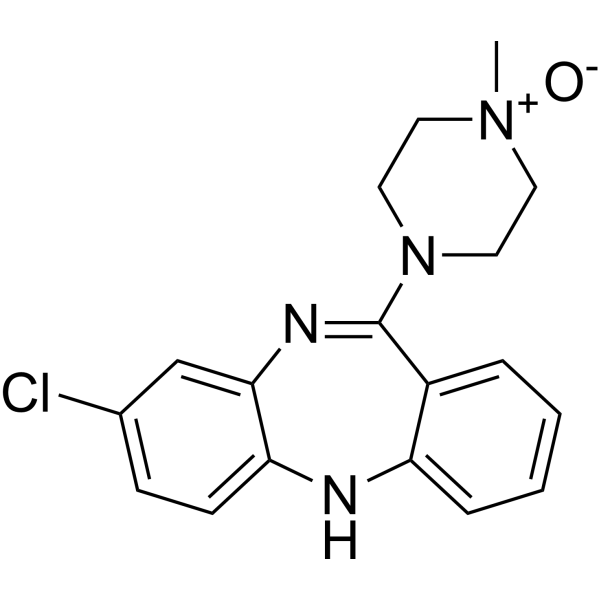
    Clozapine N-oxide
    Maximum Cited Publications
    145 Publications Verification

    Drug Metabolite mAChR Dopamine Receptor Neurological Disease
    Clozapine N-oxide is a major metabolite of Clozapine and a human muscarinic designer receptors (DREADDs) agonist. Clozapine N-oxide activates the DREADD receptor hM3Dq and hM4Di. Clozapine N-oxide can't cross the blood-brain barrier . Clozapine is a potent dopamine antagonist and also a potent and selective muscarinic M4 receptor (EC50=11 nM) agonist .
    Clozapine N-oxide
  • HY-B1205
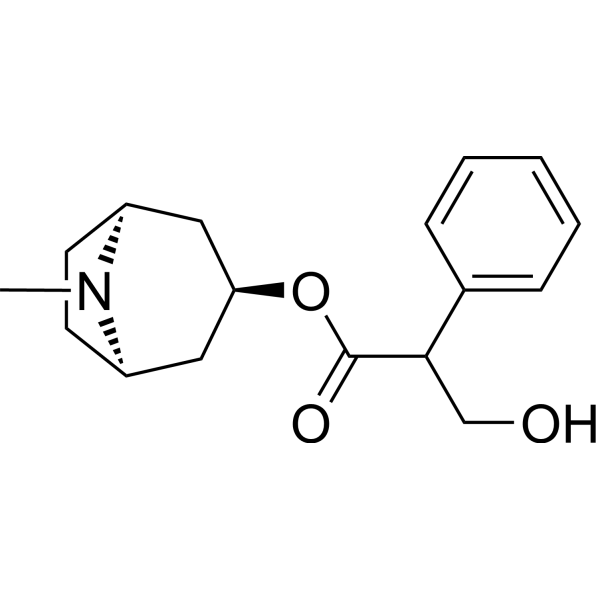
    Atropine
    20+ Cited Publications

    Tropine tropate; DL-Hyoscyamine

    Environmental Pollutants Endogenous Metabolite mAChR Cardiovascular Disease Neurological Disease Cancer
    Atropine (Tropine tropate) is a competitive muscarinic acetylcholine receptor (mAChR) antagonist with IC50 values of 0.39 and 0.71 nM for Human mAChR M4 and Chicken mAChR M4, respectively. Atropine inhibits ACh-induced relaxations in human pulmonary veins. Atropine can be used for research of anti-myopia and bradycardia .
    Atropine
  • HY-17366A
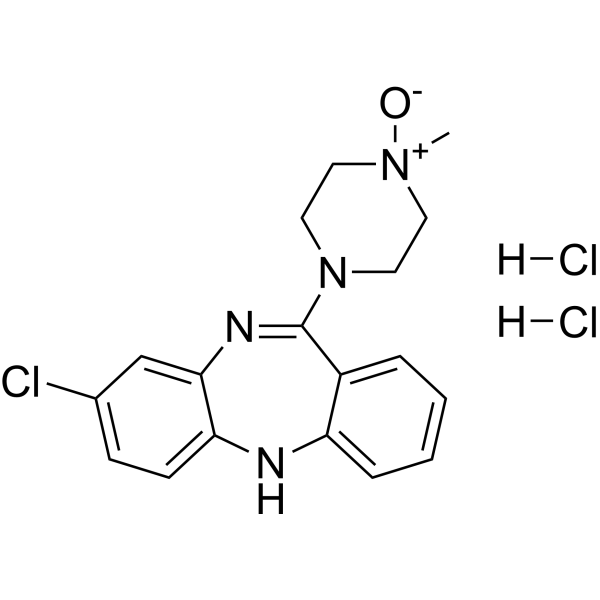
    Clozapine N-oxide dihydrochloride
    Maximum Cited Publications
    145 Publications Verification

    mAChR Dopamine Receptor Drug Metabolite Neurological Disease
    Clozapine N-oxide dihydrochloride is a major metabolite of Clozapine and a human muscarinic designer receptors (DREADDs) agonist. Clozapine N-oxide dihydrochloride activates the DREADD receptor hM3Dq and hM4Di. Clozapine N-oxide dihydrochloride cannot cross the blood-brain barrier . Clozapine is a potent dopamine antagonist and also a potent and selective muscarinic M4 receptor (EC50=11 nM) agonist .
    Clozapine N-oxide dihydrochloride
  • HY-14539
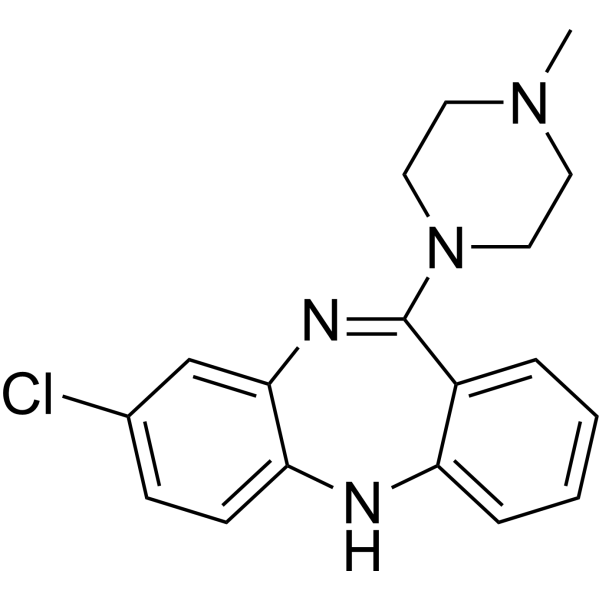
    Clozapine
    10+ Cited Publications

    HF 1854; ZINC000019796155

    Dopamine Receptor mAChR Adrenergic Receptor 5-HT Receptor Ligands for E3 Ligase Neurological Disease Cancer
    Clozapine (HF 1854) is an antipsychotic used for the research of schizophrenia. Clozapine has high affinity for a number of neuroreceptors. Clozapine is a potent antagonist of dopamine D2 with a Ki of 75 nM. Clozapine inhibits the muscarinic M1 receptor and serotonin 5HT2A receptor with Kis of 9.5 nM and 4 nM, respectively . Clozapine is also a potent and selective agonist at the muscarinic M4 receptor (EC50=11 nM) .
    Clozapine
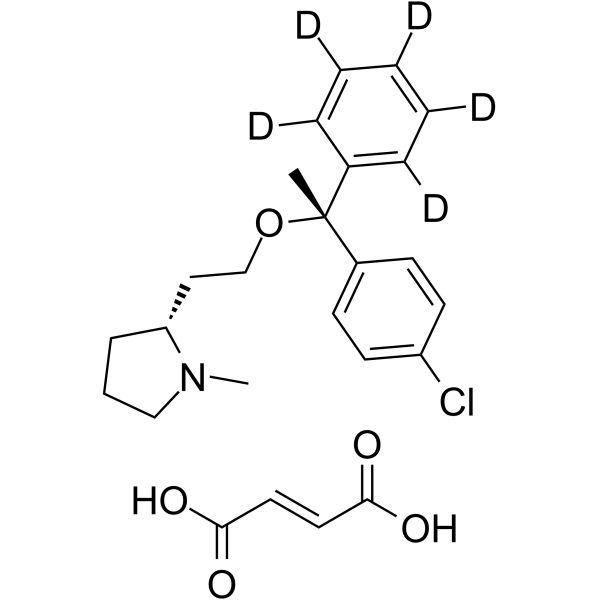
  • HY-B0298A
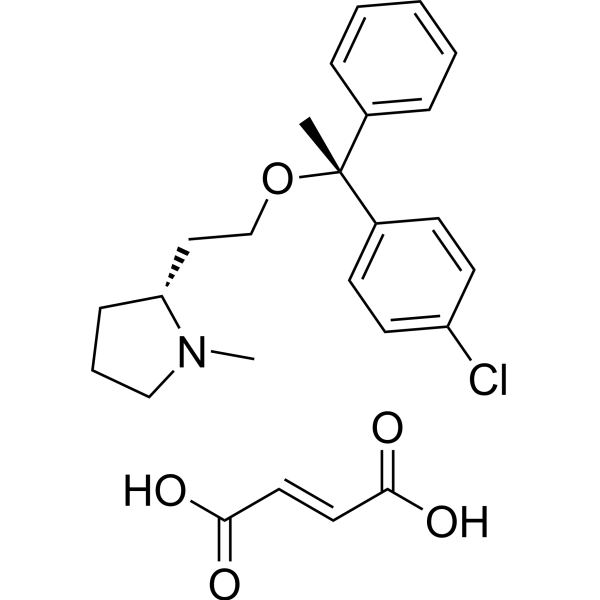
    Clemastine fumarate
    10+ Cited Publications

    HS-592 fumarate; Meclastine fumarate

    Histamine Receptor Apoptosis mAChR Pyroptosis Keap1-Nrf2 p62 Autophagy mTOR IKK Neurological Disease Metabolic Disease
    Clemastine (HS-592; Meclastine) fumarate is an orally active, blood-brain barrier-permeable H1 histamine receptor (H1 histamine receptor) antagonist with potent antiallergic effects. Clemastine fumarate also antagonizes muscarinic acetylcholine receptors (mAChR), particularly the M1 and M4 subtypes. In addition to antihistamine effects, Clemastine fumarate exhibits multiple pharmacological activities, especially in promoting central nervous system remyelination, activating autophagy and pyroptosis, exerting anti-apoptotic and neuroprotective effects, and suppressing inflammation .
    Clemastine fumarate
  • HY-105182
    Xanomeline
    5+ Cited Publications

    LY-246708

    mAChR Neurological Disease
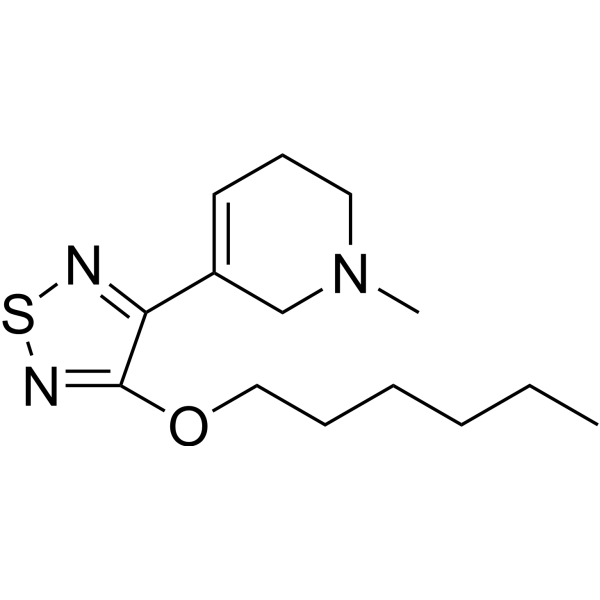
    Xanomeline, as an effective and selective muscarinic type 1 and type 4 (M1/M4) receptor agonist, increases neuronal excitability. Xanomeline can be used for the research of neurological disorders, such as schizophrenia .
    Xanomeline
  • HY-B0527A
    Amitriptyline hydrochloride
    5+ Cited Publications

    Serotonin Transporter 5-HT Receptor mAChR Histamine Receptor Adrenergic Receptor Trk Receptor Sodium Channel Potassium Channel Dopamine Transporter Apoptosis Neurological Disease Inflammation/Immunology Endocrinology
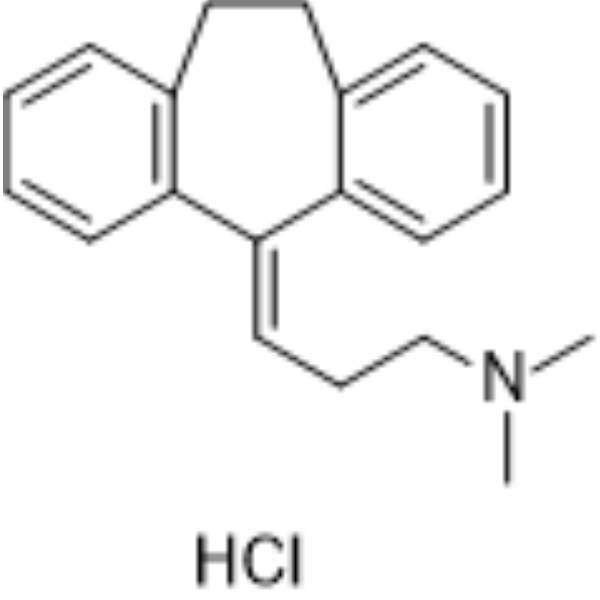
    Amitriptyline hydrochloride is an orally active tricyclic antidepressant (TCA). Amitriptyline hydrochloride mainly exerts its antidepressant effect by blocking SERT (Ki = 3.45 nM) and NET (Ki = 13.3 nM), thereby increasing the concentrations of 5-hydroxytryptamine (5-HT) and norepinephrine (NE) in the synaptic cleft. Amitriptyline hydrochloride is also an agonist at α2A and TrkA/TrkB receptors, thereby exerting analgesic and neurotrophic activities (inhibiting cell apoptosis). Amitriptyline hydrochloride can reduce inflammation, angiogenesis and fibrosis. Amitriptyline hydrochloride binds to DAT (with Ki = 2.58 μM). Amitriptyline hydrochloride has high affinity for a series of receptors and can antagonize muscarinic cholinergic receptors (M1/M2/M3/M4/M5 receptors) (Ki = 11-24 nM), H1 receptors (Ki = 0.5-1.1 nM), adrenergic α1 receptors (Ki = 4.4 nM), etc., resulting in a series of side effects. Amitriptyline hydrochloride can block sodium channels and hERG potassium channel (IC50 = 4.78 μM) and it has cardiotoxicity .
    Amitriptyline hydrochloride
  • HY-B0527
    Amitriptyline
    5+ Cited Publications

    Serotonin Transporter Trk Receptor Sodium Channel 5-HT Receptor Histamine Receptor Adrenergic Receptor mAChR Potassium Channel Dopamine Transporter Apoptosis Neurological Disease Inflammation/Immunology Endocrinology
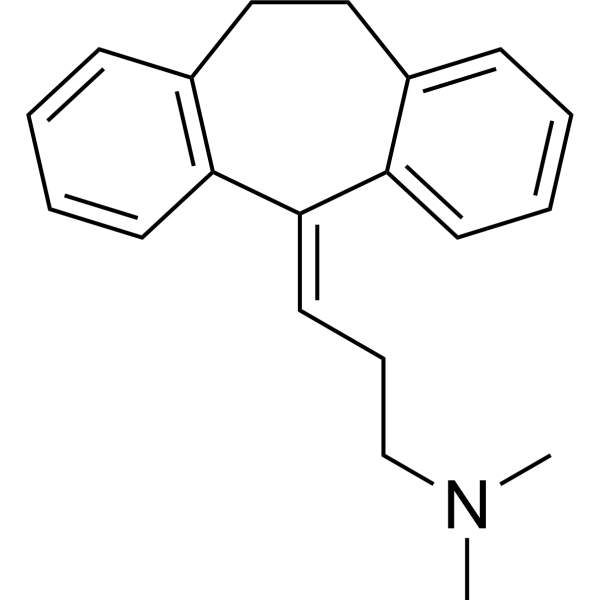
    Amitriptyline is an orally active tricyclic antidepressant (TCA). Amitriptyline mainly exerts its antidepressant effect by blocking SERT (Ki = 3.45 nM) and NET (Ki = 13.3 nM), thereby increasing the concentrations of 5-hydroxytryptamine (5-HT) and norepinephrine (NE) in the synaptic cleft. Amitriptyline is also an agonist at α2A and TrkA/TrkB receptors, thereby exerting analgesic and neurotrophic activities (inhibiting cell apoptosis). Amitriptyline can reduce inflammation, angiogenesis and fibrosis. Amitriptyline binds to DAT (with Ki = 2.58 μM). Amitriptyline has high affinity for a series of receptors and can antagonize muscarinic cholinergic receptors (M1/M2/M3/M4/M5 receptors) (Ki = 11-24 nM), H1 receptors (Ki = 0.5-1.1 nM), adrenergic α1 receptors (Ki = 4.4 nM), etc., resulting in a series of side effects. Amitriptyline can block sodium channels and hERG potassium channel (IC50 = 4.78 μM) and it has cardiotoxicity .
    Amitriptyline
  • HY-132812

    CVL-231

    mAChR Neurological Disease
    Emraclidine (CVL-231) is a muscarinic M4 receptor positive allosteric modulator (WO2018002760, compound 11). Emraclidine can be used for the research of neurological diseases .
    Emraclidine
  • HY-105182A
    Xanomeline tartrate
    5+ Cited Publications

    LY 246708 tartrate

    mAChR Neurological Disease
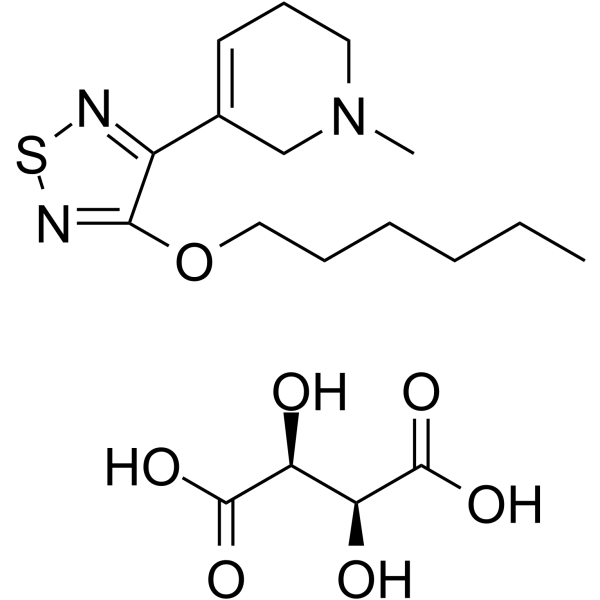
    Xanomeline (LY 246708) is the potent agonist of muscarinic M1/M4 receptor with antipsychotic-like activity. Xanomeline (LY 246708) increases neuronal excitability. Xanomeline (LY 246708) can be used for the research of schizophrenia .
    Xanomeline tartrate
  • HY-A0030

    mAChR Neurological Disease Metabolic Disease Cancer
    Fesoterodine Fumarate is an orally active, nonsubtype selective, competitive muscarinic receptor (mAChR) antagonist with pKi values of 8.0, 7.7, 7.4, 7.3, 7.5 for M1, M2, M3, M4, M5 receptors, respectively. Fesoterodine Fumarate is used for the overactive bladder (OAB) .
    Fesoterodine fumarate
  • HY-B0394
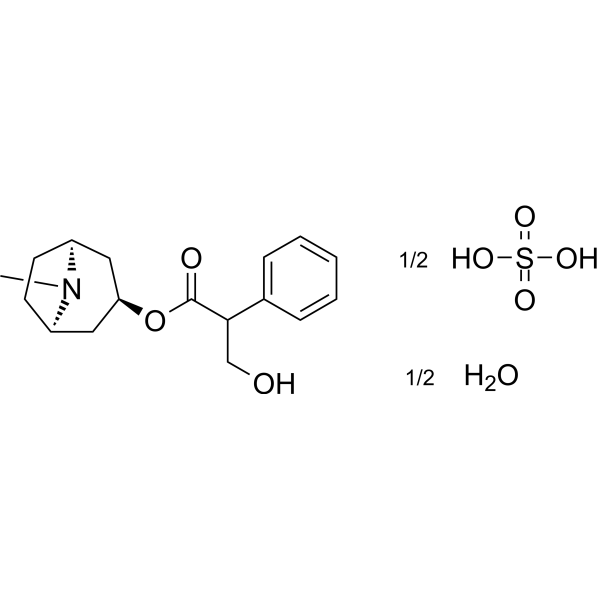
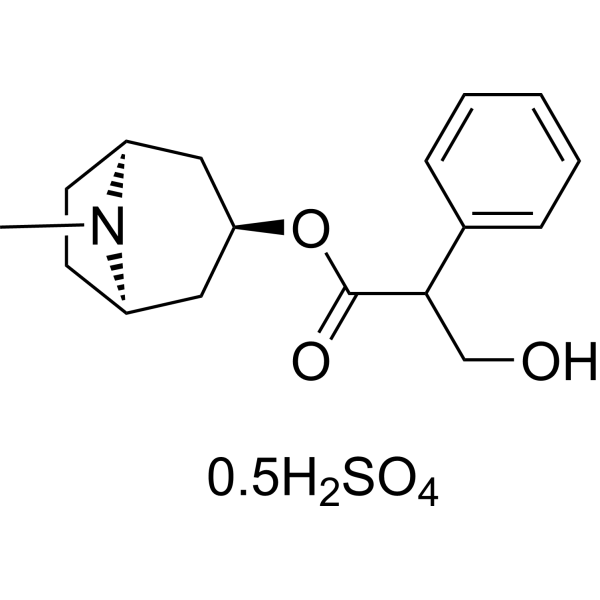
    Atropine sulfate monohydrate
    20+ Cited Publications

    Tropine tropate sulfate monohydrate; DL-Hyoscyamine sulfate monohydrate

    mAChR Cardiovascular Disease Neurological Disease Cancer
    Atropine (Tropine tropate) sulfate monohydrate is a competitive muscarinic acetylcholine receptor (mAChR) antagonist with IC50 values of 0.39 and 0.71 nM for Human mAChR M4 and Chicken mAChR M4, respectively. Atropine sulfate monohydrate inhibits ACh-induced relaxations in human pulmonary veins. Atropine sulfate monohydrate can be used for research of anti-myopia and bradycardia .
    Atropine sulfate monohydrate
  • HY-B0298
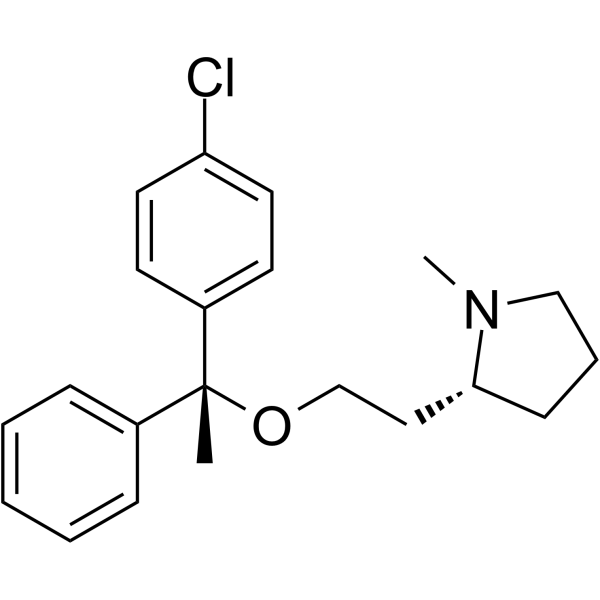
    Clemastine
    10+ Cited Publications

    HS-592; Meclastine

    Histamine Receptor mAChR Autophagy Apoptosis Keap1-Nrf2 p62 mTOR Pyroptosis IKK Cardiovascular Disease Neurological Disease Inflammation/Immunology
    Clemastine (HS-592; Meclastine) is an orally active, blood-brain barrier-permeable H1 histamine receptor (H1 histamine receptor) antagonist with potent antiallergic effects. Clemastine also antagonizes muscarinic acetylcholine receptors (mAChR), particularly the M1 and M4 subtypes. In addition to antihistamine effects, Clemastine exhibits multiple pharmacological activities, especially in promoting central nervous system remyelination, activating autophagy and pyroptosis, exerting anti-apoptotic and neuroprotective effects, and suppressing inflammation .
    Clemastine
  • HY-B1205A
    Atropine sulfate
    20+ Cited Publications

    Tropine tropate sulfate; DL-Hyoscyamine sulfate; Sulfatropinol

    mAChR Cardiovascular Disease Neurological Disease Cancer
    Atropine (Tropine tropate) sulfate is a competitive muscarinic acetylcholine receptor (mAChR) antagonist with IC50 values of 0.39 and 0.71 nM for Human mAChR M4 and Chicken mAChR M4, respectively. Atropine sulfate inhibits ACh-induced relaxations in human pulmonary veins. Atropine sulfate can be used for research of anti-myopia and bradycardia .
    Atropine sulfate
  • HY-107646

    mAChR Neurological Disease
    PD 102807 is a M4 muscarinic receptor antagonist with an IC50 of 90.7 nM. PD 102807 inhibits M1, M2, M3, M5 muscarinic receptor with IC50s of 6558.7, 3440.7, 950.0, and 7411.7 nM, respectively . Antidyskinetic effect.
    PD 102807
  • HY-159829

    NBI-1117568; HTL-0016878

    mAChR Neurological Disease
    Direclidine (NBI-1117568, HTL-0016878) is a selective orthosteric agonist targeting the muscarinic acetylcholine M4 receptor, exhibiting very low affinity for M1, M2, M3, and M5 receptors. It binds to the orthosteric site of the M4 receptor in a non-covalent, competitive manner. Direclidine specifically activates the M4 receptor, inhibiting the release of acetylcholine from striatal cholinergic interneurons, thereby regulating the balance of the dopaminergic system and reducing psychiatric symptoms associated with excessive dopamine release. Direclidine can improve symptoms associated with neuropsychiatric disorders and is used in research on schizophrenia and other neuropsychiatric disorders .
    Direclidine
  • HY-B0321
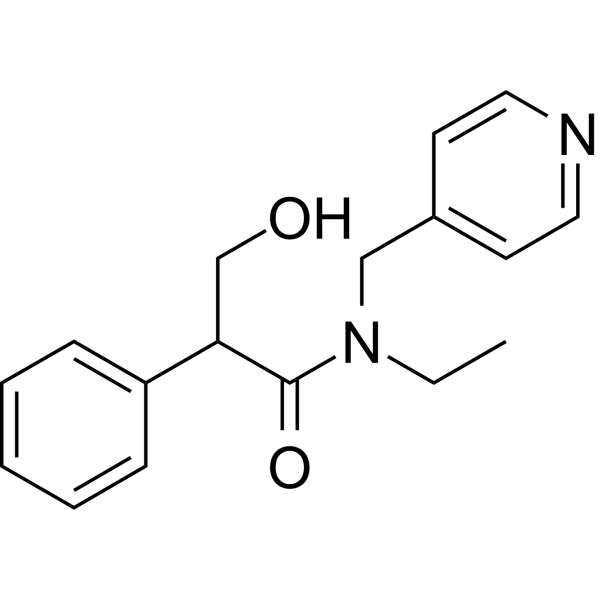
    Tropicamide
    5 Publications Verification

    Ro 1-7683

    mAChR Neurological Disease
    Tropicamide (Ro 1-7683) is a selective M4 muscarinic acetylcholine receptor antagonist. When used as an eye drop, Tropicamide causes short-term mydriasis (pupil dilation) and cycloplegia. Tropicamide can be used in the research of neurological diseases, such as epilepsy .
    Tropicamide
  • HY-A0082

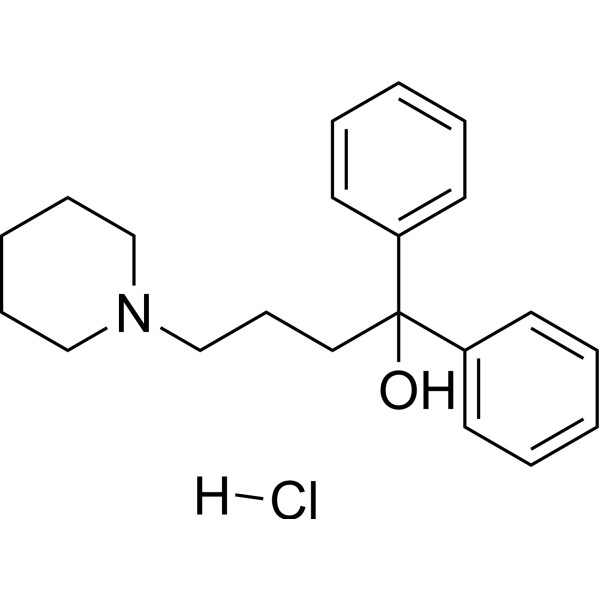
    Difenidol hydrochloride

    mAChR Sodium Channel Neurological Disease
    Diphenidol hydrochloride (Difenidol hydrochloride) is a non-selective muscarinic M1-M4 receptor antagonist, has anti-arrhythmic activity. Diphenidol hydrochloride is also a potent non-specific blocker of voltage-gated ion channels (Na +, K +, and Ca 2+) in neuronal cells. Diphenidol hydrochloride can be used in the study of antivertigo and antinausea .
    Diphenidol hydrochloride
  • HY-107647
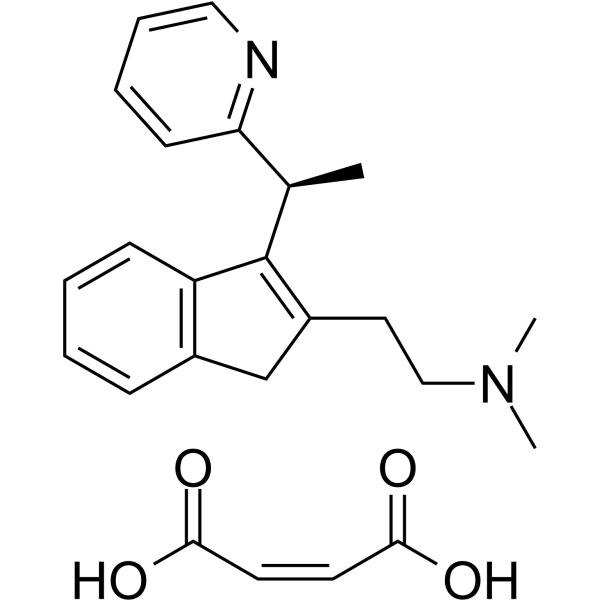
    (S)-(+)-Dimethindene maleate
    1 Publications Verification

    mAChR Histamine Receptor Inflammation/Immunology
    (S)-(+)-Dimethindene maleate, an enantiomer, is a potent M2-selective muscarinic receptor antagonist (pA2 = 7.86/7.74; pKi = 7.78). (S)-(+)-Dimethindene maleate shows lower affinities for the muscarinic M1 (pA2 = 6.83/6.36; pKi = 7.08), the M3 (pA2 = 6.92/6.96; pKi = 6.70) and the M4 receptors (pKi = 7.00), respectively. (S)-(+)-Dimethindene maleate also is a histamine H1 receptor antagonist (pA2 = 7.48) .
    (S)-(+)-Dimethindene maleate
  • HY-70053

    mAChR Neurological Disease Metabolic Disease
    Fesoterodine is an orally active, nonsubtype selective, competitive muscarinic receptor (mAChR) antagonist with pKi values of 8.0, 7.7, 7.4, 7.3, 7.5 for M1, M2, M3, M4, M5 receptors, respectively. Fesoterodine is used for the overactive bladder (OAB) .
    Fesoterodine
  • HY-15885

    mAChR Neurological Disease
    LY2119620 is a high-affinity muscarinic M2/M4 receptor agonist.
    LY2119620
  • HY-112209
    VU0467154
    5 Publications Verification

    mAChR Neurological Disease
    VU0467154 is a positive allosteric modulator of the M4 muscarinic acetylcholine receptor (mAChR), potentiating the response to ACh with pEC50s of 7.75, 6.2 and 6 for rat, human and cynomolgus monkey M4 receptor, respectively.
    VU0467154
  • HY-109013

    BBI 4000

    mAChR Neurological Disease
    Sofpironium bromide (BBI 4000) is an anticholinergic agent used in the study of primary axillary hyperhidrosis (PAH). Sofpironium bromide reduces sweating by inhibiting M3 muscarinic receptors in eccrine glands at the application site. Sofpironium bromide also has a high afnity for the M1, M2, M4 and M5 subtypes .
    Sofpironium bromide
  • HY-122203
    PCS1055 dihydrochloride
    2 Publications Verification

    mAChR Cholinesterase (ChE) Neurological Disease
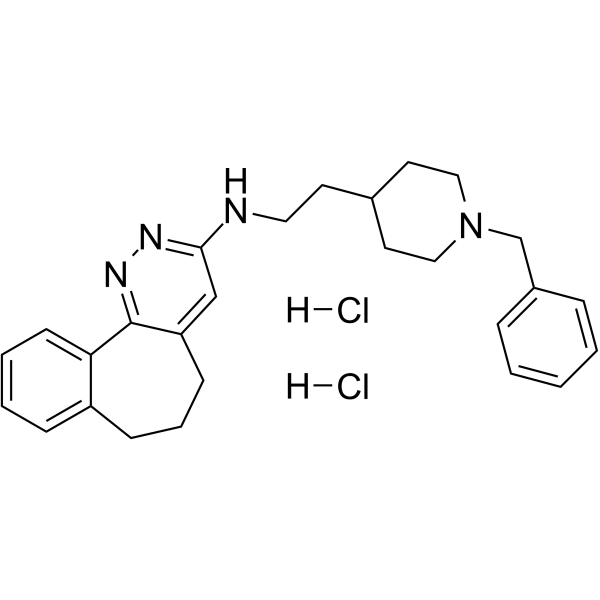
    PCS1055 dihydrochloride is a potent, selective and competitive muscarinic M4 receptor antagonist with an IC50 of 18.1 nM and a Kd of 5.72 nM. PCS1055 dihydrochloride inhibits radioligand [ 3H]-NMS binding to the M4 receptor with a Ki of 6.5 nM. PCS1055 dihydrochloride exhibits >100-fold selectivity over M1-, M3-, and M5-receptors and 30-fold selectivity at the M2 receptor. PCS1055 dihydrochloride is also a potent AChE inhibitor with IC50 s of 22 nM and 120 nM for electric eel and human AChE, respectively .
    PCS1055 dihydrochloride
  • HY-N7247

    mAChR Metabolic Disease
    Thiochrome, a natural oxidation product and metabolite of thiamine, is a selective M4 muscarinic receptor of acetylcholine (ACh) affinity enhancer. Thiochrome has neutral cooperativity with ACh at M1 to M3 receptors .
    Thiochrome
  • HY-B1205R

    Tropine tropate (Standard); DL-Hyoscyamine (Standard)

    Reference Standards mAChR Endogenous Metabolite Cardiovascular Disease Neurological Disease
    Atropine (Standard) is the analytical standard of Atropine. This product is intended for research and analytical applications. Atropine (Tropine tropate) is a competitive muscarinic acetylcholine receptor (mAChR) antagonist with IC50 values of 0.39 and 0.71 nM for Human mAChR M4 and Chicken mAChR M4, respectively. Atropine inhibits ACh-induced relaxations in human pulmonary veins. Atropine can be used for research of anti-myopia and bradycardia .
    Atropine (Standard)
  • HY-14539A
    Clozapine hydrochloride
    10+ Cited Publications

    HF 1854 hydrochloride

    Dopamine Receptor mAChR Adrenergic Receptor 5-HT Receptor Neurological Disease
    Clozapine hydrochloride (HF 1854 hydrochloride) is an antipsychotic used for the research of schizophrenia. Clozapine hydrochloride has high affinity for a number of neuroreceptors. Clozapine hydrochloride is a potent antagonist of dopamine D2 with a Ki of 75 nM. Clozapine hydrochloride inhibits the muscarinic M1 receptor and serotonin 5HT2A receptor with Kis of 9.5 nM and 4 nM, respectively . Clozapine hydrochloride is also a potent and selective agonist at the muscarinic M4 receptor (EC50=11 nM) .
    Clozapine hydrochloride
  • HY-14539R
    Clozapine (Standard)
    10+ Cited Publications

    HF 1854 (Standard)

    Reference Standards Dopamine Receptor mAChR Adrenergic Receptor 5-HT Receptor Neurological Disease
    Clozapine (Standard) is the analytical standard of Clozapine. This product is intended for research and analytical applications. Clozapine (HF 1854) is an antipsychotic used for the research of schizophrenia. Clozapine has high affinity for a number of neuroreceptors. Clozapine is a potent antagonist of dopamine D2 with a Ki of 75 nM. Clozapine inhibits the muscarinic M1 receptor and serotonin 5HT2A receptor with Kis of 9.5 nM and 4 nM, respectively . Clozapine is also a potent and selective agonist at the muscarinic M4 receptor (EC50=11 nM) .
    Clozapine (Standard)
  • HY-17366R

    Reference Standards mAChR Dopamine Receptor Drug Metabolite Neurological Disease
    Clozapine N-oxide (Standard) is the analytical standard of Clozapine N-oxide. This product is intended for research and analytical applications. Clozapine N-oxide is a major metabolite of Clozapine and a human muscarinic designer receptors (DREADDs) agonist. Clozapine N-oxide activates the DREADD receptor hM3Dq and hM4Di. Clozapine N-oxide cannot cross the blood-brain barrier[1][2][3][4]. Clozapine is a potent dopamine antagonist and also a potent and selective muscarinic M4 receptor (EC50=11 nM) agonist[5][6].
    Clozapine N-oxide (Standard)
  • HY-70053A

    mAChR Neurological Disease Metabolic Disease Cancer
    Fesoterodine L-mandelate is an orally active, nonsubtype selective, competitive muscarinic receptor (mAChR) antagonist with pKi values of 8.0, 7.7, 7.4, 7.3, 7.5 for M1, M2, M3, M4, M5 receptors, respectively. Fesoterodine L-mandelate is used for the overactive bladder (OAB) .
    Fesoterodine L-mandelate
  • HY-B0527AR
    Amitriptyline hydrochloride (Standard)
    4 Publications Verification

    Reference Standards Serotonin Transporter 5-HT Receptor Histamine Receptor mAChR Adrenergic Receptor Trk Receptor Sodium Channel Potassium Channel Dopamine Transporter Apoptosis Neurological Disease Inflammation/Immunology Endocrinology
    Amitriptyline hydrochloride (Standard) is the analytical standard of Amitriptyline hydrochloride (HY-B0527A). This product is intended for research and analytical applications. Amitriptyline hydrochloride is an orally active tricyclic antidepressant (TCA). Amitriptyline hydrochloride mainly exerts its antidepressant effect by blocking SERT (Ki = 3.45 nM) and NET (Ki = 13.3 nM), thereby increasing the concentrations of 5-hydroxytryptamine (5-HT) and norepinephrine (NE) in the synaptic cleft. Amitriptyline hydrochloride is also an agonist at α2A and TrkA/TrkB receptors, thereby exerting analgesic and neurotrophic activities (inhibiting cell apoptosis). Amitriptyline hydrochloride can reduce inflammation, angiogenesis and fibrosis. Amitriptyline hydrochloride binds to DAT (with Ki = 2.58 μM). Amitriptyline hydrochloride has high affinity for a series of receptors and can antagonize muscarinic cholinergic receptors (M1/M2/M3/M4/M5 receptors) (Ki = 11-24 nM), H1 receptors (Ki = 0.5-1.1 nM), adrenergic α1 receptors (Ki = 4.4 nM), etc., resulting in a series of side effects. Amitriptyline hydrochloride can block sodium channels and hERG potassium channel (IC50 = 4.78 μM) and it has cardiotoxicity.
    Amitriptyline hydrochloride (Standard)
  • HY-122203A
    PCS1055
    2 Publications Verification

    mAChR Cholinesterase (ChE) Neurological Disease
    PCS1055 is a selective and competitive antagonist for muscarinic M4 receptor with an IC50 of 18.1 nM and a Kd of 5.72 nM. PCS1055 inhibits radioligand [ 3H]-NMS binding to the M4 receptor with a Ki of 6.5 nM. PCS1055 is also an inhibitor for AChE with IC50 of 22 nM and 120 nM for electric eel and human AChE, respectively .
    PCS1055
  • HY-156331

    mGluR Neurological Disease
    VU6004909 is a blood-brain barrier penetrated mGlu1 positive allosteric modulator (PAM), with the EC50s of 25.7 nM and 31 nM for human mGlu1 and rat mGlu1, respectively. VU6004909 reduces dorsolateral striatal dopamine (DA) release in vivo and displays antipsychotic efficacy .
    VU6004909
  • HY-B0321S

    Ro 1-7683-d3

    mAChR Neurological Disease
    Tropicamide-d3 is the deuterium labeled Tropicamide . Tropicamide (Ro 1-7683) is a selective M4 muscarinic acetylcholine receptor antagonist. Tropicamide produces short acting mydriasis (dilation of the pupil) and cycloplegia when applied as eye drops .
    Tropicamide-d3
  • HY-105182S1

    LY-246708-d3

    Isotope-Labeled Compounds mAChR Neurological Disease
    Xanomeline-d3 (LY-246708-d3) is deuterium labeled Xanomeline. Xanomeline, as an effective and selective muscarinic type 1 and type 4 (M1/M4) receptor agonist, increases neuronal excitability. Xanomeline can be used for the research of neurological disorders, such as schizophrenia .
    Xanomeline-d3
  • HY-B0527AS

    Isotope-Labeled Compounds Serotonin Transporter 5-HT Receptor Histamine Receptor mAChR Adrenergic Receptor Trk Receptor Sodium Channel Potassium Channel Dopamine Transporter Apoptosis Neurological Disease Inflammation/Immunology Endocrinology
    Amitriptyline-d6 hydrochloride is the deuterium labeled Amitriptyline hydrochloride (HY-B0527A). Amitriptyline hydrochloride is an orally active tricyclic antidepressant (TCA). Amitriptyline hydrochloride mainly exerts its antidepressant effect by blocking SERT (Ki = 3.45 nM) and NET (Ki = 13.3 nM), thereby increasing the concentrations of 5-hydroxytryptamine (5-HT) and norepinephrine (NE) in the synaptic cleft. Amitriptyline hydrochloride is also an agonist at α2A and TrkA/TrkB receptors, thereby exerting analgesic and neurotrophic activities (inhibiting cell apoptosis). Amitriptyline hydrochloride can reduce inflammation, angiogenesis and fibrosis. Amitriptyline hydrochloride binds to DAT (with Ki = 2.58 μM). Amitriptyline hydrochloride has high affinity for a series of receptors and can antagonize muscarinic cholinergic receptors (M1/M2/M3/M4/M5 receptors) (Ki = 11-24 nM), H1 receptors (Ki = 0.5-1.1 nM), adrenergic α1 receptors (Ki = 4.4 nM), etc., resulting in a series of side effects. Amitriptyline hydrochloride can block sodium channels and hERG potassium channel (IC50 = 4.78 μM) and it has cardiotoxicity.
    Amitriptyline-d6 hydrochloride
  • HY-101841

    mAChR Neurological Disease
    LY 2033298 is a selective positive allosteric modulator of the muscarinic M4 receptor. LY 2033298 can be used in the study of psychiatric disorders .
    LY 2033298
  • HY-B1205AR

    Tropine tropate sulfate (Standard); DL-Hyoscyamine sulfate (Standard); Sulfatropinol (Standard)

    Reference Standards mAChR Cardiovascular Disease Neurological Disease
    Atropine (sulfate) (Standard) is the analytical standard of Atropine (sulfate). This product is intended for research and analytical applications. Atropine (Tropine tropate) sulfate is a competitive muscarinic acetylcholine receptor (mAChR) antagonist with IC50 values of 0.39 and 0.71 nM for Human mAChR M4 and Chicken mAChR M4, respectively. Atropine sulfate inhibits ACh-induced relaxations in human pulmonary veins. Atropine sulfate can be used for research of anti-myopia and bradycardia .
    Atropine sulfate (Standard)
  • HY-162663

    ML253

    mAChR Neurological Disease
    VU0448088 (ML253) is a potent and cross the blood-brain barrier tricyclic muscarinic acetylcholine receptor subtype 4 (M4) positive allosteric modulator with EC50 values of 56, 176 nM for human and rat, respectively. VU0448088 has the potential for the research of psychotic .
    VU0448088
  • HY-107656

    mAChR Neurological Disease
    PTAC oxalate is a selective muscarinic receptor ligand. PTAC oxalate is an partial agonist of M2 and M4 but antagonist of M1, M3, and M5 (Ki values of 0.2-2.8 nM for hM1-5 in CHO cells). PTAC oxalate alleviates the mechanical allodynia on the neuropathic pain and has antidepression effects .
    PTAC oxalate
  • HY-A0030S

    mAChR Metabolic Disease
    Fesoterodine-d7 (fumarate) is the deuterium labeled Fesoterodine fumarate . Fesoterodine Fumarate is an orally active, nonsubtype selective, competitive muscarinic receptor (mAChR) antagonist with pKi values of 8.0, 7.7, 7.4, 7.3, 7.5 for M1, M2, M3, M4, M5 receptors, respectively. Fesoterodine Fumarate is used for the overactive bladder (OAB) .
    Fesoterodine-d7 fumarate
  • HY-174259

    mAChR Neurological Disease
    Muscarinic M4 modulator-1 is a Muscarinic M4 receptor positive allosteric modulator. Muscarinic M4 modulator-1 activates the muscarinic M4 receptor with allosteric potency EC50 s of 14 and 3 Nm in CHO-K1 cells and HEK293 cells. Muscarinic M4 modulator-1 has an antipsychotic-like activity, promising for psychiatric and/or neurological disorders research .
    Muscarinic M4 modulator-1
  • HY-175532

    mAChR Neurological Disease
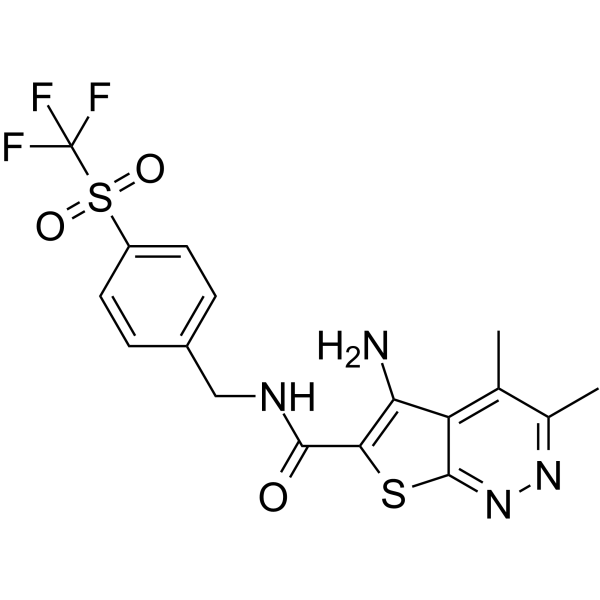
    M4 mAChR Modulator-2 is an orally active, selective, brain-penetrant positive allosteric modulator (PAM) of the M4 muscarinic acetylcholine receptor (M4 mAChR) (EC50 = 513 nM). M4 mAChR Modulator-2 exhibits high target selectivity, showing negligible affinity and low inhibition rates for non-target receptors (D1R/D2R/D3R, 5-HT subtypes, κ/δ/μ opioid receptors, H1, M1/M2) while specifically binding to M4 mAChR with a Ki of 377 nM and an inhibition rate of 62.8%. M4 mAChR Modulator-2 reverses Dizocilpine (MK-801) (HY-15084B)-induced hyperlocomotion in mice. M4 mAChR Modulator-2 can be used for the study of schizophrenia
    M4 mAChR Modulator-2
  • HY-N7247R

    Reference Standards mAChR Metabolic Disease
    Thiochrome (Standard) is the analytical standard of Thiochrome. This product is intended for research and analytical applications. Thiochrome, a natural oxidation product and metabolite of thiamine, is a selective M4 muscarinic receptor of acetylcholine (ACh) affinity enhancer. Thiochrome has neutral cooperativity with ACh at M1 to M3 receptors .
    Thiochrome (Standard)
  • HY-105182AR

    LY 246708 tartrate (Standard)

    Reference Standards mAChR Neurological Disease
    Xanomeline (tartrate) (Standard) is the analytical standard of Xanomeline (tartrate). This product is intended for research and analytical applications. Xanomeline (LY 246708) is the potent agonist of muscarinic M1/M4 receptor with antipsychotic-like activity. Xanomeline (LY 246708) increases neuronal excitability. Xanomeline (LY 246708) can be used for the research of schizophrenia .
    Xanomeline tartrate (Standard)
  • HY-A0270

    mAChR Sodium Channel Neurological Disease
    Diphenidol is a non-selective muscarinic M1-M4 receptor antagonist, has anti-arrhythmic activity. Diphenidol is also a potent non-specific blocker of voltage-gated ion channels (Na +, K +, and Ca 2+) in neuronal cells. Diphenidol can be used in the study of antivertigo and antinausea .
    Diphenidol
  • HY-107652

    mAChR Neurological Disease
    AF-DX 384 is a selective antagonist of M2 and M4 muscarinic acetylcholine receptors (Kis=6.03 and 10 nM, respectively) . AF-DX 384 reverses deficits in novel object recognition and passive avoidance in aged rats, as well as in young rats with impairments induced by scopolamine .
    AF-DX 384
  • HY-12158

    mAChR Neurological Disease
    VU0238441 is a pan muscarinic acetylcholine receptor (mAChR) positive allosteric modulator (PAM) with EC50s of 3.2 μM, 2.8 μM, 2.2 μM, 2.1 μM, >10 μM for M1, M2, M3, M5 and M4, respectively .
    VU0238441
  • HY-160440A

    mAChR Neurological Disease
    VU6021625 is a selective antagonist muscarinic acetylcholine receptors (mAChRs), with the IC50 value of 0.44 nM, 57 nM for human M4 and rat M4, respectively .
    VU6021625
  • HY-A0030R

    Reference Standards mAChR Neurological Disease Metabolic Disease Cancer
    Fesoterodine (fumarate) (Standard) is the analytical standard of Fesoterodine (fumarate). This product is intended for research and analytical applications. Fesoterodine Fumarate is an orally active, nonsubtype selective, competitive muscarinic receptor (mAChR) antagonist with pKi values of 8.0, 7.7, 7.4, 7.3, 7.5 for M1, M2, M3, M4, M5 receptors, respectively. Fesoterodine Fumarate is used for the overactive bladder (OAB) .
    Fesoterodine fumarate (Standard)

Inquiry Online

Your information is safe with us. * Required Fields.

Salutation


Country or Region *

Applicant Name *


Organization Name *

Department *


Email Address *


Product Name *

Cat. No.


Requested quantity *

Phone Number *


Remarks

Inquiry Online

Inquiry Information

Product Name:
Cat. No.:
Quantity:
MCE Japan Authorized Agent:

