1. Search Result
Search Result
Pathways Recommended: Stem Cell/Wnt Cell Cycle/DNA Damage
Results for "

NCI-H1299 cells

" in MedChemExpress (MCE) Product Catalog:

13

Inhibitors & Agonists

2

Natural
Products

Cat. No. 상품명 Target 연구분야 Chemical Structure
  • HY-15995
    Tubulysin A
    1 Publications Verification

    TubA

    Antibiotic Microtubule/Tubulin ADC Payload Mitosis Cancer
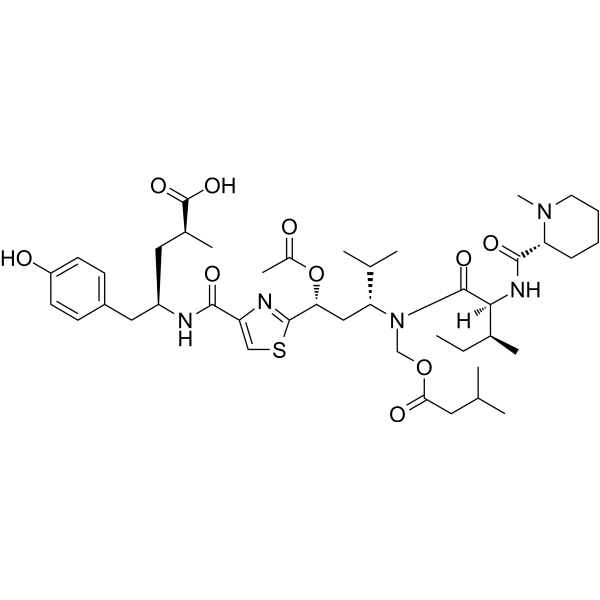
    Tubulysin A (TubA) is an anticancer and antiangiogenic agent with anti-microtubule, anti-mitosis and anti-proliferative activity against a variety of cancer cells with IC50 values in the pmol range. It can induce apoptosis of cancer cells and has no effect on normal cells. Tubulysins are a group of potent cytotoxins consisting of nine members (A-I). Tubulysin A can synthesize ADC as ADC Cytotoxin .
    Tubulysin A
  • HY-122639
    ZINC05007751
    3 Publications Verification

    NEKs Cancer
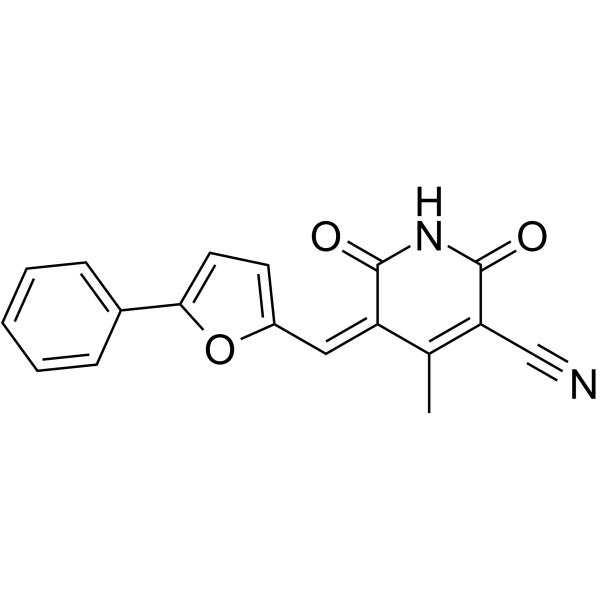
    ZINC05007751 is a potent NIMA-related kinase NEK6 inhibitor with an IC50 of 3.4 μM. ZINC05007751 shows antiproliferative activity against a panel of human cancer cell lines, and displays a synergistic effect with Cisplatin and Paclitaxel in a BRCA2 mutated ovarian cancer cell line. ZINC05007751 is very selective against NEK1 and NEK6 with no significant activity was observed against NEK2, NEK7, and NEK9 .
    ZINC05007751
  • HY-N1988
    Cucurbitacin IIa
    1 Publications Verification

    Hemslecin A

    Survivin Apoptosis EGFR Caspase p38 MAPK Autophagy MEK Raf ERK STAT CaMK Inflammation/Immunology Cancer
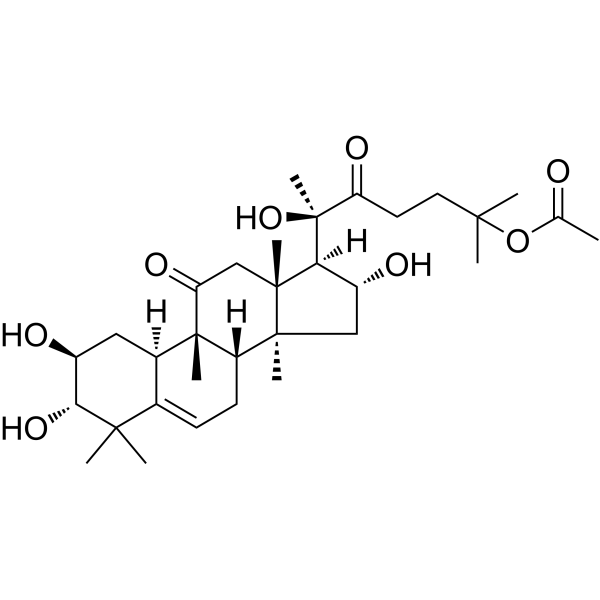
    Cucurbitacin IIa (Hemslecin A) is an orally active, blood-brain barrier-permeable EGFR inhibitor with an IC50 of 1.455 nM against human EGFR. Cucurbitacin IIa induces caspase-3-dependent apoptosis, downregulates survivin expression, enhances autophagy levels, disrupts the actin cytoskeleton via actin aggregation, arrests the cell cycle at the G2/M phase, and exerts anti-inflammatory activity by inhibiting the EGFR-MAPK signaling pathway. Cucurbitacin IIa can be used in the research of inflammation-related diseases, depression, and cancers such as non-small cell lung cancer .
    Cucurbitacin IIa
  • HY-153937

    E1/E2/E3 Enzyme Cancer
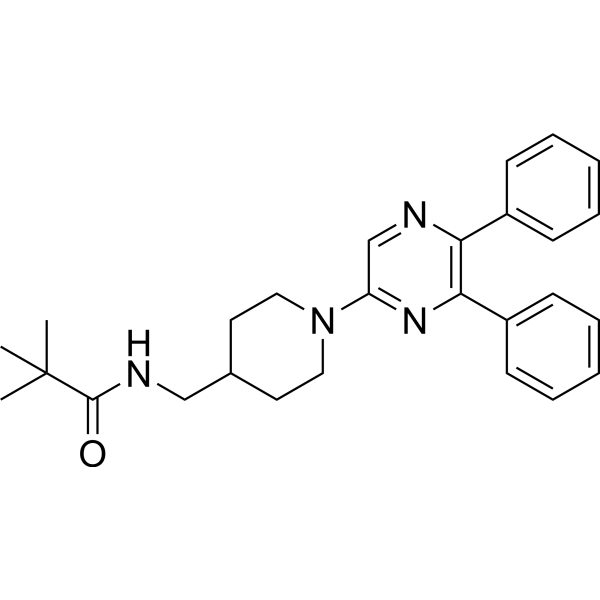
    Skp2 inhibitor 2 is a Skp2-Cks1 protein-protein interaction inhibitor with a human IC50 of 0.57 μM. Skp2 inhibitor 2 binds to Skp2 at the interaction interface to block Skp2-Cks1 complex formation. Skp2 inhibitor 2 can be used for the research of gastric cancer, non-small cell lung cancer, breast cancer, prostate cancer .
    Skp2 inhibitor 2
  • HY-170995

    PROTACs ROR Apoptosis Cancer
    PROTAC ROR1 degrader-1 is a ROR1 PROTAC degrader with DC50 values of 40.88 nM (NCI-H23), 69.0 nM (NCI-H460), 83.35 nM (NCI-H1299) and 42.07 nM (NCI-H1975), respectively. PROTAC ROR1 degrader-1 inhibits the proliferation of lung cancer cells and induces apoptosis. PROTAC ROR1 degrader-1 can be used in research related to non-small cell lung cancer .
    PROTAC ROR1 degrader-1
  • HY-115949

    HSP Cancer
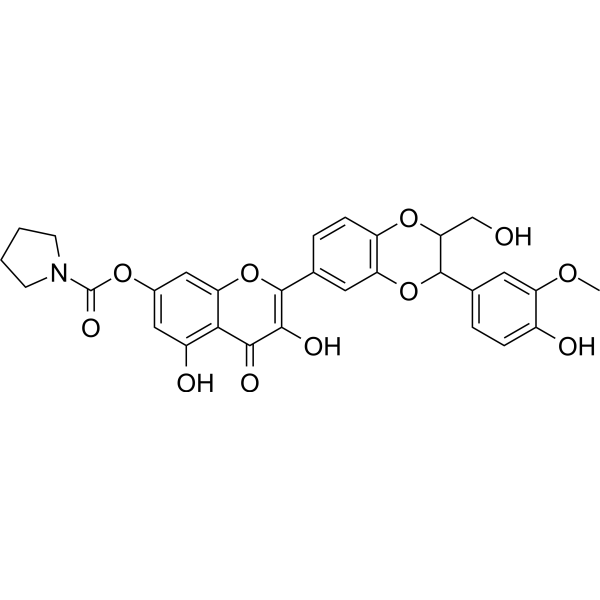
    Antitumor agent-47 (Compound 3e) is a silibinin derivative with an antitumor activity. Antitumor agent-47 shows cytotoxic activity against NCI-H1299 and HT29 cells with IC50 values of 8.07 µM and 6.27 µM, respectively .
    Antitumor agent-47
  • HY-115950

    Drug Derivative Cancer
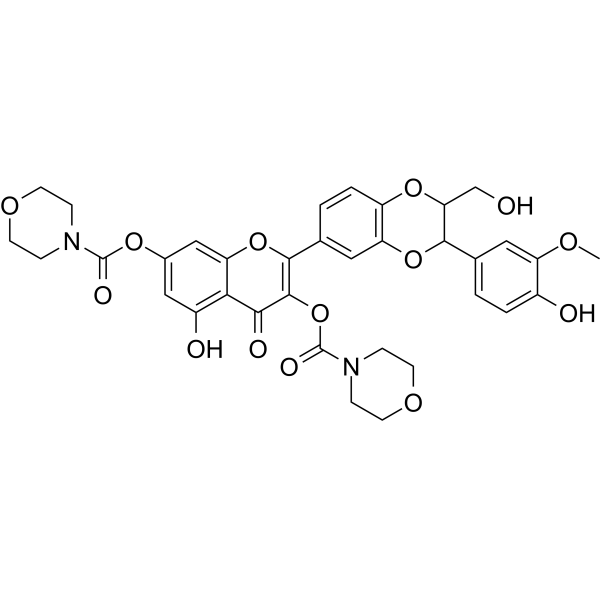
    Antitumor agent-48 (Compound 4a) is a 2,3-dehydrosilybin derivative with an antitumor activity. Antitumor agent-48 shows cytotoxic activity against MCF-7, NCI-H1299, HepG2 and HT29 cells with IC50 values of 8.06 µM, 13.1 µM, 16.51 µM and 12.44 µM, respectively .
    Antitumor agent-48
  • HY-N15614

    Others Cancer
    Cassamine is a diterpenoid compound that can be isolated from the bark of Erythrophleum fordii. Cassamine exhibits certain cytotoxicity against non-small cell lung cancer cell lines, with IC50 values of 3.4, 2.1, and 1.9 μM against A549, NCI-H1975, and NCI-H1299, respectively. Cassamine has antitumor activity and can be used in the research of lung cancer and other tumors .
    Cassamine
  • HY-169921

    c-Myc Apoptosis Cancer
    c-Myc inhibitor 15 (Compound A5) is a selective c-Myc inhibitor that exerts anticancer effects by disrupting the interaction between c-Myc and Max, leading to the degradation of c-Myc protein and the induction of apoptosis. Its IC50 values are 4.08 μM and 7.86 μM in A549 and NCI-H1299 lung cancer cell lines, respectively, demonstrating strong cytotoxic activity. In a syngeneic tumor model, c-Myc inhibitor 15 exhibited outstanding antitumor efficacy, achieving a tumor growth inhibition rate of 76.4% and significantly reducing c-Myc protein expression levels. c-Myc inhibitor 15 holds promise for research related to c-Myc-driven lung cancers .
    c-Myc inhibitor 15
  • HY-183257

    Autophagy Beclin1 Reactive Oxygen Species (ROS) p97 Cancer
    ATI-1 is an autophagy initiation inhibitor. ATI-1 targets valosin-containing protein (VCP/p97, disrupts its interaction with UFL1, impairs UFMylation homeostasis associated with VCP, promotes polyubiquitination and degradation of Beclin1, and blocks the formation of early autophagosomes. ATI-1 induces synergistic death of autophagy-dependent malignant tumor cells under nutrient deprivation conditions, accompanied by decreased mitochondrial membrane potential, reduced ROS levels and lysosomal stress. ATI-1 exhibits anti-tumor efficacy in a pancreatic adenocarcinoma xenograft mouse model. ATI-1 can be used for the research of pancreatic adenocarcinoma and lung cancer .
    ATI-1
  • HY-186118

    Ligands for Target Protein for PROTAC YAP Neurological Disease Cancer
    TEAD ligand 6 is a TEAD ligand. TEAD ligand 6 serves as a ligand for target protein for PROTAC (Ligands for Target Protein for PROTAC) and is used to develop and design PROTAC-based TEAD degraders, such as KG-FP-003 (HY-186117). TEAD ligand 6 applies to glioblastoma research .
    TEAD ligand 6
  • HY-183635

    Autophagy Cancer
    ELMO2-IN-1 is an ELMO2 inhibitor with a human target Kd of 1.0 µM. ELMO2-IN-1 binds to ELMO2, disrupting its function. ELMO2-IN-1 induces autophagy-dependent cell death. ELMO2-IN-1 can be used for the research of non-small cell lung cancer .
    ELMO2-IN-1
  • HY-181440

    DNA Glycosylase DNA/RNA Synthesis Cancer
    TDG-IN-1 is an orally active, selective small-molecule inhibitor of thymine DNA glycosylase (TDG) with a Ka of 1.46 nM. TDG-IN-1 impairs the DNA-binding ability of TDG, induces downregulated expression of DHX9, accumulation of double-stranded RNA, and activation of the RIG-I/MDA5-MAVS pathway, while acting as a tumor suppressor, innate immune activator and immunostimulant. TDG-IN-1 inhibits the growth of p53-deficient tumor cells and xenograft tumors, and exerts a synthetic lethal effect with p53. TDG-IN-1 is applicable to the research of p53-deficient cancers .
    TDG-IN-1

온라인 문의

Your information is safe with us. * Required Fields.

호칭


Country or Region *

고객명 *


회사명 *

Department *


메일주소 *


상품명 *

Cat. No.


Requested quantity *

전화번호 *


비고

온라인 문의

Inquiry Information

상품명:
Cat. No.:
수량:
MCE Japan Authorized Agent:

