




1. Search Result
Search Result
Results for "

PBS

" in MedChemExpress (MCE) Product Catalog:

23

Inhibitors & Agonists

2

Screening Libraries

7

Fluorescent Dye

3

Biochemical Assay Reagents

3

Peptides

5

MCE Kits

3

Inhibitory Antibodies

3976

Antibodies

5

Oligonucleotides

Cat. No. Product Name Target Research Areas Chemical Structure
  • HY-P9915A
    Daratumumab (Anti-CD38)
    10+ Cited Publications

    Anti-Human CD38, Human Antibody (PBS)

    ADC Antibody CD38 Cancer
    Daratumumab (PBS) (Anti-Human CD38) is the first-in-class human-specific anti-CD38 monoclonal antibody (IgG1). Daratumumab (PBS) has anti-multiple myeloma (MM) effect. Daratumumab (PBS) impairs MM cell adhesion, which results in an increased sensitivity of MM to proteasome inhibition .
    Daratumumab (Anti-CD38)
  • HY-P9S0008

    Radionuclide-Drug Conjugates (RDCs) EGFR Cancer
    Cetuximab (PBS) is a human IgG1 monoclonal antibody that can inhibit EGFR. The SPR method measured the Kd value of Cetuximab for EGFR to be 0.201 nM; Cetuximab has a highly effective anti-tumor effect .
    Cetuximab (PBS)
  • HY-D0031

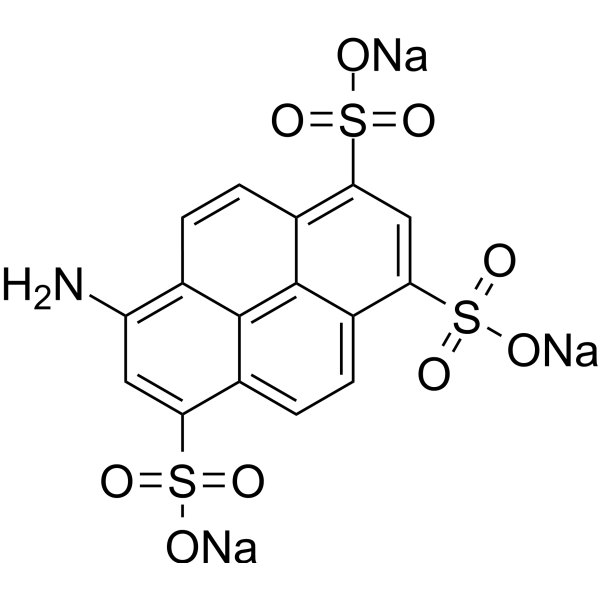
    APTS

    Fluorescent Dye Others
    8-Aminopyrene-1,3,6-trisulfonic acid trisodium (APTS) is an anionic fluorescent dye (excitation/emission: 425/503 nm in pH 7.4 PBS). The fluorescence intensity of 8-Aminopyrene-1,3,6-trisulfonic acid trisodium remains stable at pH 4-10. 8-Aminopyrene-1,3,6-trisulfonic acid trisodium retains its fluorescence properties when immobilized in a hydrogel by copolymerization. 8-Aminopyrene-1,3,6-trisulfonic acid trisodium can be used for glucose sensing .
    8-Aminopyrene-1,3,6-trisulfonic acid trisodium
  • HY-172202A
    Control Liposomes(PBS)
    1 Publications Verification

    Biochemical Assay Reagents Others
    Control Liposomes (PBS) can be used as control liposomes for Clodronate liposomes (HY-172202) without clodronate.
    Control Liposomes(PBS)
  • HY-DY1019

    Fluorescent Dye Others
    2-NBDG (solution) is a fluorescently-labeled deoxyglucose analog that is used primarily to directly monitor glucose uptake by living cells and tissues. It is also used as a topical contrast reagent for the detection of neoplasia. 2-NBDG can be used in real-time confocal, high-resolution, or wide-field fluorescence microscopy as well as in flow cytometry. The probe can be excited by the Argon laser at 488 nm to give the environment-sensitive fluorescence. It has lower photostability than the rhodamine-based fluorescent probes.
    Solvent and Concentration: Sterile PBS: 5 mM
    2-NBDG (solution)
  • HY-144012

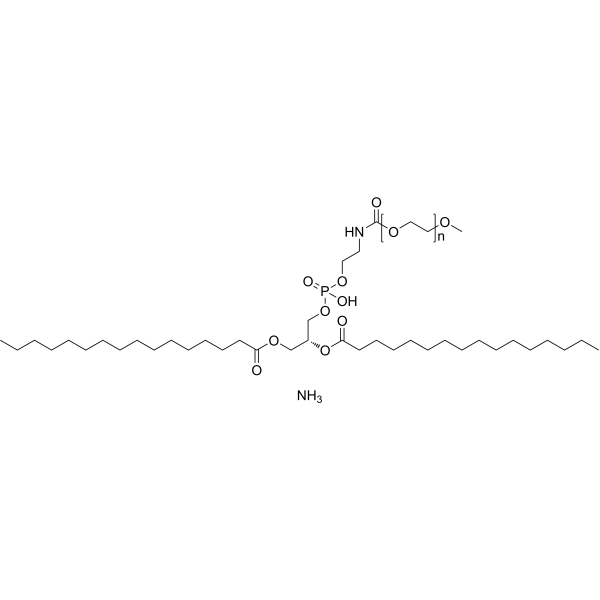
    16:0 PEG2000 PE ammonium; 1,2-Dipalmitoyl-sn-glycero-3-phosphoethanolamine-N-[methoxy(polyethylene glycol)-2000] ammonium

    Liposome Others
    DPPE-PEG2000 ammonium (16:0 PEG5000 PE) is a polymer-lipid conjugate and LipoParticle stabilizer with a PEG chain of 5,000 g/mol molecular weight attached to its polar head, and it can be internalized by biological membranes. DPPE-PEG2000 ammonium enables LipoParticle to maintain colloidal stability after 20-fold dilution in PBS or cell culture medium, and prevents aggregate formation during lyophilization and rehydration. DPPE-PEG2000 ammonium helps enhance the non-cytotoxic property of LipoParticle formulations against human osteoblasts. DPPE-PEG2000 ammonium serves as a PEG lipid functional end group for synthesizing liposomes (LPs), is used in the design of conjugated polymer nanoparticles, and applies to research related to bone and joint infections .
    DPPE-PEG2000 ammonium
  • HY-144012H

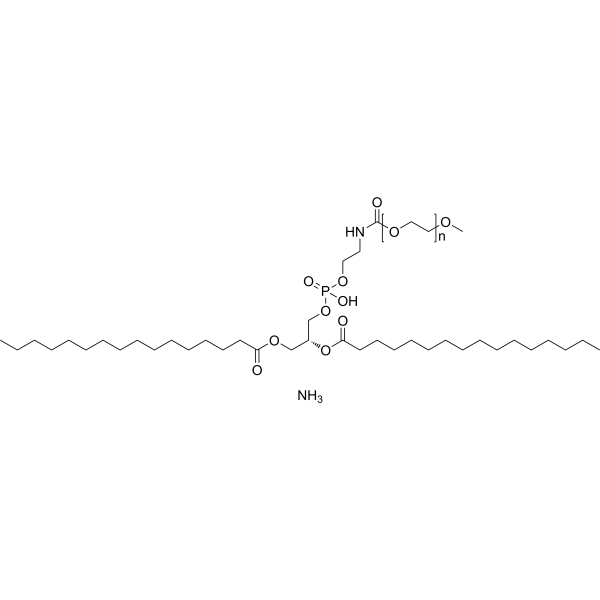
    16:0 PEG5000 PE; 1,2-Dipalmitoyl-sn-glycero-3-phosphoethanolamine-N-[methoxy(polyethylene glycol)-5000] ammonium

    Liposome Others
    DPPE-PEG5000 (16:0 PEG5000 PE) is a polymer-lipid conjugate and LipoParticle stabilizer with a PEG chain of 5,000 g/mol molecular weight attached to its polar head, and it can be internalized by biological membranes. DPPE-PEG5000 enables LipoParticle to maintain colloidal stability after 20-fold dilution in PBS or cell culture medium, and prevents aggregate formation during lyophilization and rehydration. DPPE-PEG5000 helps enhance the non-cytotoxic property of LipoParticle formulations against human osteoblasts. DPPE-PEG5000 serves as a PEG lipid functional end group for synthesizing liposomes (LPs), is used in the design of conjugated polymer nanoparticles, and applies to research related to bone and joint infections .
    DPPE-PEG5000
  • HY-158089
    PLGA-COOH (MW 80000) (LA/GA 50:50)
    1 Publications Verification

    Biochemical Assay Reagents Others
    PLGA-COOH (MW 80000) (LA/GA 50:50) is a copolymer composed of lactic acid (LA)-glycolic acid (GA) at a molar ratio of 50:50 and a terminal carboxyl group. PLGA-COOH (MW 80000) (LA/GA 50:50) is used in compound delivery systems due to its biocompatibility and biodegradability .
    PLGA-COOH (MW 80000) (LA/GA 50:50)
  • HY-P99540

    PSB-205; QL1706 (iparomlimab/tuvonralimab); PBS105

    CTLA-4 Cancer
    Tuvonralimab (PSB-205) is a humanized IgG1 monoclonal antibody against CTLA-4. Tuvonralimab can be used in the research of tumors. Recommend Isotype Controls: Human IgG1 kappa, Isotype Control (HY-P99001) .
    Tuvonralimab
  • HY-146268

    CaMK Neurological Disease
    CaMKIIα-IN-1 (Compound 4d) is an orally active Ca 2+/calmodulin-dependent protein kinase II α (CaMKIIα) inhibitor with a KD of 219 nM for CaMKIIα WT hub. CaMKIIα-IN-1 has good metabolic stability .
    CaMKIIα-IN-1
  • HY-D1391

    PBS/CdSe QD

    Fluorescent Dye Others
    PbS/CdS QDs (PbS/CdSe QD) is a fluorescent probe that can be used for in vivo fluorescence imaging in the second near-infrared window .
    PbS/CdS QDs
  • HY-P10428

    HPV Infection
    E6AP-mimicking peptide (compound 13) is a high-affinity, selective, irreversible and potent peptide-based covalent HPV16 E6 inhibitor targeting the 16E6 oncoprotein using a cysteine-reactive acrylamide warhead. E6AP-mimicking peptide has a Ki of 17 nM. E6AP-mimicking peptide targets all residues appearing in the binding pocket of E6 to disrupt the binding interface of 16E6 and E6AP. E6AP-mimicking peptide selectively binds and crosslinks to MBP-16E6 in PBS or a protein mixture .
    E6AP-mimicking peptide
  • HY-RS02662

    Small Interfering RNA (siRNA) Others

    CHRM3 Human Pre-designed siRNA Set A contains three designed siRNAs for CHRM3 gene (Human), as well as a negative control, a positive control, and a FAM-labeled negative control.

    CHRM3 Human Pre-designed siRNA Set A
    CHRM3 Human Pre-designed siRNA Set A
  • HY-169288

    α-synuclein Neurological Disease
    α-Synuclein modulator 1 (Compound 7k) is a modulator for α-synuclein. α-Synuclein modulator 1 exhibits a maximal absorption and emission wavelength of 386 and 603 nm in ACN/PBS (1:1) buffer .
    α-Synuclein modulator 1
  • HY-155383

    Tau Protein Neurological Disease Cancer
    TNIR7-1A is a fused cycloheptatriene–BODIPY derivative that displays properties favorable for near-infrared (NIR) imaging (Ex/Em = 600/774 nm in PBS) with high affinity and specificity to Neurofibrillary tangles (NFTs) in vitro. TNIR7-1A effectively penetrated the blood–brain barrier .
    TNIR7-1A
  • HY-D1684

    Amyloid-β Neurological Disease
    DCDAPH (Compound 2c) is a novel smart NIRF probe for detection of β-amyloid () plaques (λexem=597/665 nm in PBS). DCDAPH shows high affinity for Aβ aggregates (Ki=37 nM, Kd=27 nM). DCDAPH shows good blood brain barrier permeation and can meet most of the requirements for the detection of Aβ plaques both in vitro and in vivo .
    DCDAPH
  • HY-RS15177

    Small Interfering RNA (siRNA) Others

    TSPO Human Pre-designed siRNA Set A contains three designed siRNAs for TSPO gene (Human), as well as a negative control, a positive control, and a FAM-labeled negative control.

    TSPO Human Pre-designed siRNA Set A
    TSPO Human Pre-designed siRNA Set A
  • HY-P11457

    Bacterial Infection
    cCBD-LL37 is a chimeric antimicrobial peptide modified with a collagen-binding domain (cCBD) (TKKTLRT). cCBD-LL37 has improved retention on collagen after PBS washing and varying electrostatic conditions. cCBD-LL37 binds to collagen involves both specific and non-specific interactions, initiated by long-range electrostatic forces that transitions to close range or hydrophobic interactions. cCBD-LL37 has potent antimicrobial activity with improved structural stability under different ionic strengths and pH conditions (pH 5.5-8). cCBD-LL37 can be used for biomaterials like collagen-based wound dressings research .
    cCBD-LL37
  • HY-DY1086

    MTT (solution); Thiazolyl Blue Tetrazolium bromide (solution); Methylthiazolyldiphenyl-tetrazolium bromide (solution)

    Fluorescent Dye Others
    Thiazolyl Blue (solution) (MTT (solution)) is a cell-permeable and positively charged tetrazolium dye that is used to detect reductive metabolism in cells. Thiazolyl Blue is taken up by cells through the plasma membrane and then reduced to formazan by intracellular NAD (P) H-oxidoreductases. Thiazolyl Blue is frequently used in colorimetric assays to measure cell proliferation, cytotoxicity, and apoptosis .
    Solvent and concentration: PBS: 5 mg/mL
    Thiazolyl Blue (solution)
  • HY-111090

    Polo-like Kinase (PLK) NEKs Cancer
    GSK461364 analogue 1 is a thiophene-based PLK1 inhibitor with a PLK1 IC50 of 2 nM and a PLK3 IC50 of 630 nM. GSK461364 analogue 1 also acts as an inhibitor of Nek2 kinase (IC50: 21 nM). GSK461364 analogue 1 has a solubility of ≥190 μM in pH 7.4 PBS and a human plasma protein binding rate of 91.5%. GSK461364 analogue 1 can be used in studies related to colon cancer, lung cancer, breast cancer and ovarian cancer .
    GSK461364 analogue 1
  • HY-D3207

    Fluorescent Dye Neurological Disease
    DHUCu-1 is a lysosome-targeted NIR divalent copper ion probe with high water solubility. DHUCu-1 serves as a tool for investigating the physiological functions of Cu 2+ and related diseases, such as Menke syndrome, Wilson's disease, and Alzheimer's disease .
    DHUCu-1
  • HY-P11737

    Radionuclide-Drug Conjugates (RDCs) Carbonic Anhydrase Cancer
    IPM-N001 is a carbonic anhydrase IX (CAIX) ligand with a Kd value of <0.0337 nM for hCAIX. When radio-conjugated with 68Ga, IPM-N001 serves as a CAIX-targeted radionuclide tracer. [ 68Ga]Ga-IPM-N001 exhibits excellent tumor uptake and significantly improves the tumor-to-background ratio in PET/CT imaging studies using OS-RC-2 tumor-bearing mice. IPM-N001 can be used for the research of clear cell renal cell carcinoma .
    IPM-N001
  • HY-D3206

    Fluorescent Dye Cancer
    CuFS is a reaction-based fluorescent sensor for detecting Cu 2+ with zero background fluorescence. CuFS acts as a fluorescence quencher in the absence of Cu 2+ and as a fluorescence enhancer in the presence of Cu 2+. CuFS can be fabricated into test strips and applied to the detection of Cu 2+ in human cancer cells .
    CuFS

Inquiry Online

Your information is safe with us. * Required Fields.

Salutation


Country or Region *

Applicant Name *


Organization Name *

Department *


Email Address *


Product Name *

Cat. No.


Requested quantity *

Phone Number *


Remarks

Inquiry Online

Inquiry Information

Product Name:
Cat. No.:
Quantity:
MCE Japan Authorized Agent:

