Delivery of temperature sensitive items including proteins and kits will be paused on 6/19 for the Juneteenth holiday. For urgent orders please contact customer service.
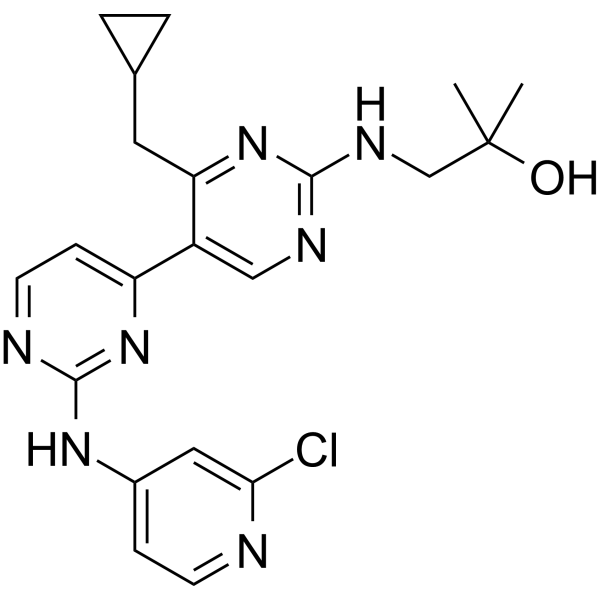
Vps34-IN-1 is a potent and selective inhibitor of class III Vps34 PI3K. Vps34-IN-1 inhibits phosphorylation of PtdIns by recombinant insect cell expressed Vps34-Vps15 complex with an IC50 of ~25 nM. Vps34-IN-1 can suppress SGK3 activation by reducing PtdIns(3)P levels via lowering phosphorylation of T-loop and hydrophobic motifs. Vps34-IN-1 modulates autophagy .
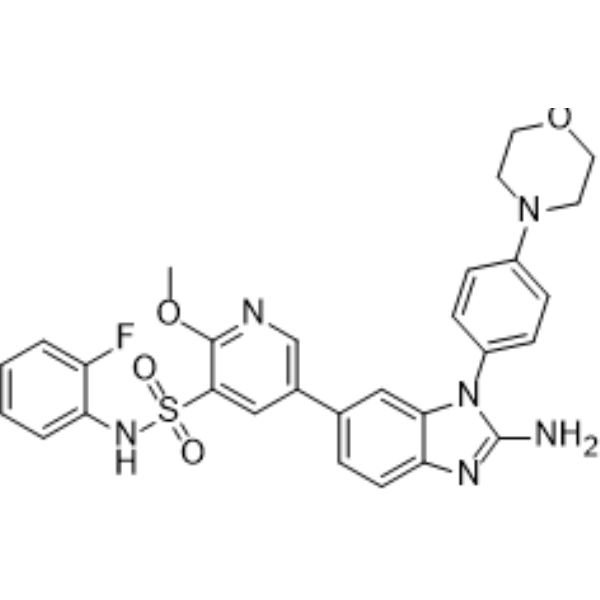
GSK-A1 is a selective type III phosphatidylinositol 4-kinase PI4KA (PI4KIIIα) inhibitor with a pIC50 of 8.5-9.8. GSK-A1 inhibits PtdIns(4,5)P2 resynthesis with an IC50 of about 3 nM. GSK-A1 potently decreases the levels of PtdIns(4)P with a negligible effect on PtdIns(4,5)P2. GSK-A1 has the potential for anti-hepatitis C virus (HCV) research .
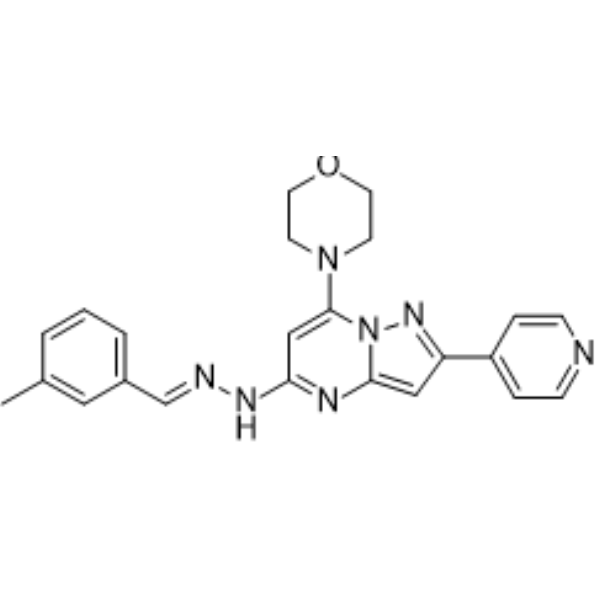
APY0201 is a potent PIKfyve inhibitor, which inhibits the conversion of PtdIns3P to PtdIns(3,5)P2 in the presence of in the presence of [ 33P]ATP with an IC50 of 5.2 nM. APY0201 also inhibits IL-12/IL-23 production.
Phosphatidylinositol 4,5-bisphosphate (L-alpha-Phosphatidylinositol-4,5-bisphosphate) is a plasma membrane lipid that is enriched in the cytoplasmic leaflet of the plasma membrane. Phosphatidylinositol 4,5-bisphosphate serves as a substrate for phospholipase C and class I PI3K, generating diacylglycerol, inositol (1,4,5)-trisphosphate, and phosphatidylinositol (3,4,5)-trisphosphate. Phosphatidylinositol 4,5-bisphosphate contributes to lamellipodial protrusion, directional cell migration, focal adhesion lipid generation, and trafficking of the GABAA receptor. Phosphatidylinositol 4,5-bisphosphate can be used in research related to acute lung injury and pulmonary edema .
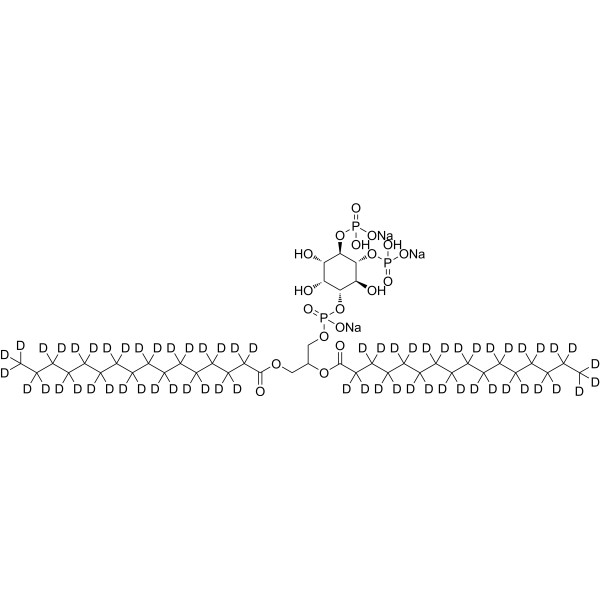
PtdIns-(345)-P3 (12-dipalmitoyl) sodium (Phosphatidylinositol tris-3,4,5-phosphate, 1,2-dipalmitoyl sodium) is a phosphatidylinositol 3,4,5-trisphosphate (PIP3) analog. PtdIns-(345)-P3 (12-dipalmitoyl) sodium can be incorporated in liposomes establish a backdrop of membrane phospholipids that closely mirrors in vivo conditions .
PtdIns-(3,4,5)-P3-biotin sodium is a Biotin-labeled PtdIns-(3,4,5)-P3 (PI(3,4,5)P3). PI(3,4,5)P3 is a substrate of nuclear phosphatidylinositol 5-phosphatase (PIP5Pase). PI(3,4,5)P3 binds to the N-terminus of RAP1 (repressor activator protein 1) and controls its DNA binding activity .
PtdIns-(3,4,5)-P3 is a second messenger. PtdIns-(3,4,5)-P3-fluorescein triethylammonium is a fluorescent probe that can detect any protein that has a high-affinity binding interaction with inositol-(3,4,5)-triphosphate phospholipids .
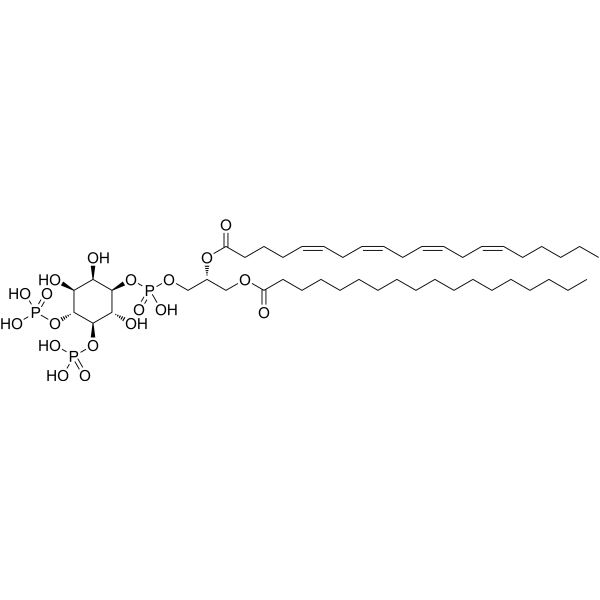
18:0-20:4 PI(3,4,5)P3 (sodium) is an analogue of phosphatidylinositol. Protein-binding to PtdIns-(3,4,5)-P3 is important for cytoskeletal rearrangements and membrane trafficking. PtdIns-(3,4,5)-P3 is resistant to cleavage by PI-specific PLC .
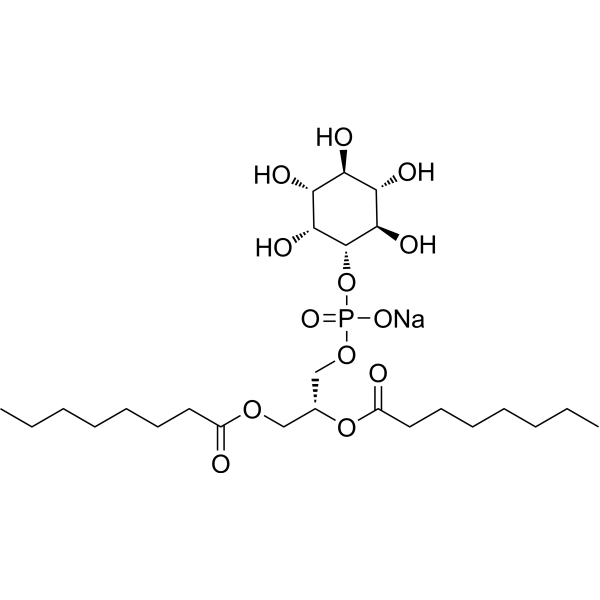
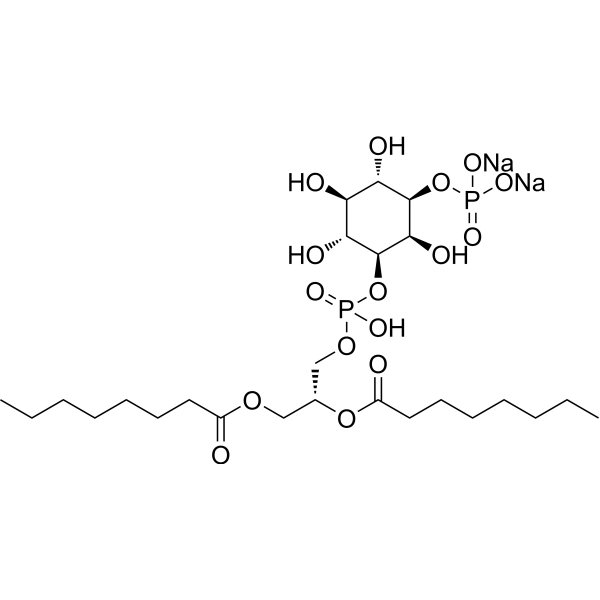
Phosphatidylinositol-1,2-dioctanoyl sodium significantly inhibits transmembrane P-gp transport in a reproducible, cell line-independent, and substrate-independent manner. Phosphatidylinositol-1,2-dioctanoyl sodium plays an important role in signal transduction and cell movement .
PtdIns-(3)-P1(1,2-dioctanoyl) sodium (compound 1b) is a glycogen phosphate that plays a key role in eukaryotic membrane trafficking and agonist-activated intracellular signaling .
1,2-Dioctanoyl-sn-glycero-3-phospho-(1'-myo-inositol-4'-phosphate) (PtdIns-(4)-P1 (1,2-dioctanoyl)) ammonium is a synthetic phosphatidylinositol. 1,2-Dioctanoyl-sn-glycero-3-phospho-(1'-myo-inositol-4'-phosphate) ammonium can be used for the research of signal transduction research .
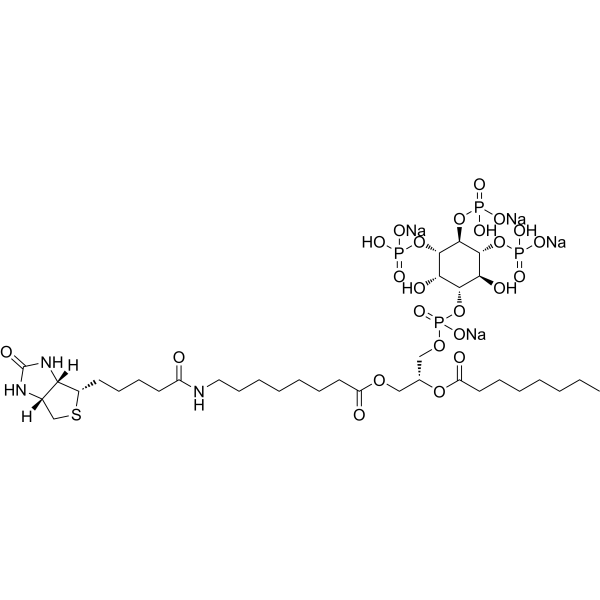
PtdIns-(4,5)-P2-biotin trisodium is a Biotin-labeled PtdIns-(4,5)-P2 analog. PtdIns-(4,5)-P2-biotin trisodium is an affinity probe of PI3Kγ. PI3Kγ can catalyse the phosphorylation of PtdIns-(4,5)-P2 at the 3′-OH group, giving rise to the second messenger PtdIns(3,4,5)-P3 .
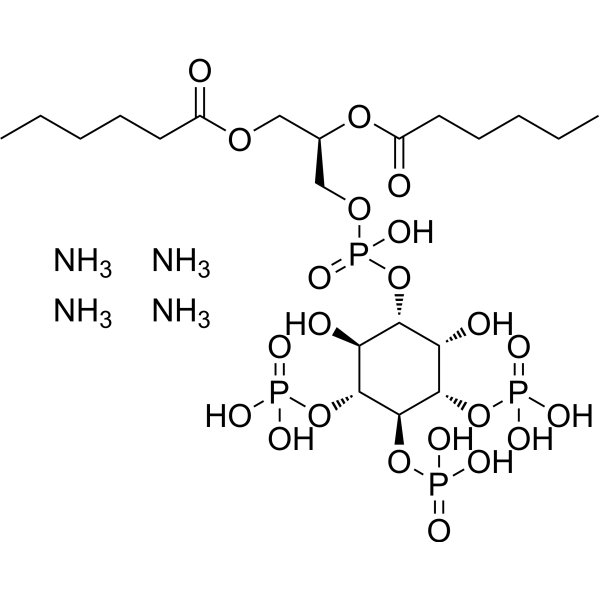
PtdIns-(4)-P1-(1,2-dihexanoyl) sodium is a synthetic phosphatidylinositol (PtdIns) derivative. PtdIns-(4)-P1-(1,2-dihexanoyl) sodium can be used as a membrane phospholipid model in in vitro enzymology studies .
PtdIns-(5)-P1-(1,2-dioctanoyl) ammonium is a synthetic phosphatidylinositol (PtdIns) derivative. PtdIns-(5)-P1-(1,2-dioctanoyl) ammonium can be used as a membrane phospholipid model in in vitro enzymology studies .
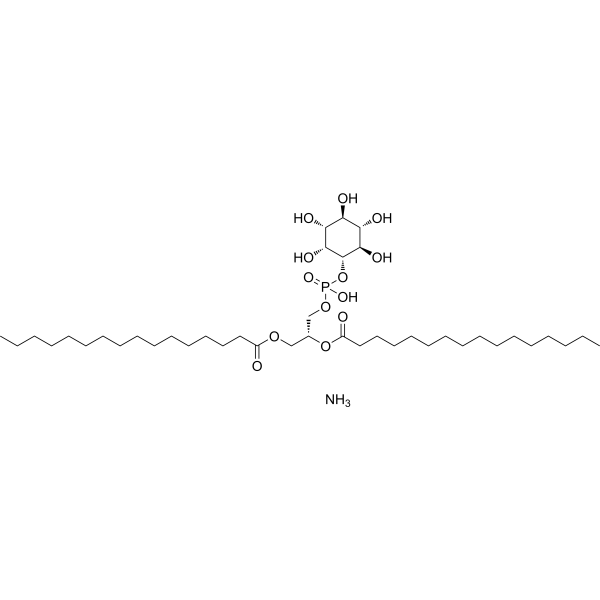
PtdIns-(4,5)-P2 (1,2-dipalmitoyl) ammonium (PI(4,5)P2) is a signaling molecule. PtdIns-(4,5)-P2 (1,2-dipalmitoyl) ammonium is critical at multiple stages of endocytosis, where it sequentially recruits adaptor proteins and accessory proteins to endocytic sites. PtdIns-(4,5)-P2 (1,2-dipalmitoyl) ammonium is considered essential for maintaining the structure of the Golgi apparatus and the transport of proteins within the Golgi apparatus .
PtdIns-(3,4,5)-P3-(1-stearoyl, 2-arachidonoyl) sodium is a specific molecular form of phosphatidylinositol-3,4,5-trisphosphate (PIP3). PIP3 is the core lipid messenger in the tyrosine kinase pathway, regulating cell proliferation, survival and metabolism by recruiting effector proteins. Its abnormality is associated with cancer. PtdIns-(3,4,5)-P3-(1-stearoyl, 2-arachidonoyl) sodium can be used for studying lipid signal transduction .
PtdIns-(4,5)-P2-fluorescein (PI(4,5)P2-fluorescein) triethylammonium is a fluorescently labeled phosphatidylinositol-4,5-bisphosphate, which is a marked form of an important phospholipid signaling molecule (PIP2) on the cell membrane. PtdIns-(4,5)-P2-fluorescein triethylammonium can be used to detect proteins that interact with phosphatidylinositol-4,5-bisphosphate, such as PI3K, PTEN, and PH domain proteins, etc .
PtdIns-(4,5)-P2-biotin (DOPI-4,5-P2-biotin) sodium is a biotin-labeled phosphatidylinositol 4,5-bisphosphate (PIP2) derivative. PtdIns-(4,5)-P2-biotin sodium uses a biotin tag to capture and purify natural PIP2 molecules and their interacting proteins.
PtdIns-(3)-P1 (1,2-dipalmitoyl) (Compound 7) ammonium is a derivative of phosphatidylinositol 3-phosphate (PtdIns(3)P). phosphatidylinositol 3-phosphate can bind to the FYVE domain of human EEA1 and act as a second messenger in cellular signaling and membrane trafficking. phosphatidylinositol 3-phosphate can stimulate ROS formation by regulating the neutrophil oxidase complex .
DPPI-5-P (ammonium) (PtdIns-(5)-P1) can be phosphorylated to form disphosphates such as PtdIns-(4,5)-P2. DPPI-5-P (ammonium) can also be cleaved by PI-specific phospholipase C (PLC) to give inositol triphosphates .
PtdIns-(4,5)-P2-biotin (DOPI-4,5-P2-biotin) sodium is a biotin-labeled phosphatidylinositol 4,5-bisphosphate (PIP2) derivative. PtdIns-(4,5)-P2-biotin sodium uses a biotin tag to capture and purify natural PIP2 molecules and their interacting proteins.
1,2-Dioctanoyl-sn-glycero-3-phospho-(1'-myo-inositol-4'-phosphate) (PtdIns-(4)-P1 (1,2-dioctanoyl)) ammonium is a synthetic phosphatidylinositol. 1,2-Dioctanoyl-sn-glycero-3-phospho-(1'-myo-inositol-4'-phosphate) ammonium can be used for the research of signal transduction research .
Phosphatidylinositol 4,5-bisphosphate (L-alpha-Phosphatidylinositol-4,5-bisphosphate) is a plasma membrane lipid that is enriched in the cytoplasmic leaflet of the plasma membrane. Phosphatidylinositol 4,5-bisphosphate serves as a substrate for phospholipase C and class I PI3K, generating diacylglycerol, inositol (1,4,5)-trisphosphate, and phosphatidylinositol (3,4,5)-trisphosphate. Phosphatidylinositol 4,5-bisphosphate contributes to lamellipodial protrusion, directional cell migration, focal adhesion lipid generation, and trafficking of the GABAA receptor. Phosphatidylinositol 4,5-bisphosphate can be used in research related to acute lung injury and pulmonary edema .
The PIP4K2A protein phosphorylates phosphatidylinositol 5-phosphate to form phosphatidylinositol 4,5-bisphosphate. PIP4K2A Protein, Human (HEK293, His) is the recombinant human-derived PIP4K2A protein, expressed by HEK293 , with C-6*His labeled tag.
PITPNA Protein catalyzes phosphatidylinositol (PI) and phosphatidylcholine (PC) transfer between membranes, displaying a preference for shorter saturated or monosaturated acyl chains at sn-1 and sn-2 positions. For PC, the preference order is C16:1 > C16:0 > C18:1 > C18:0 > C20:4, and for PI, it is C16:1 > C16:0 > C18:1 > C18:0 > C20:4 > C20:3. PITPNA Protein, Human (His) is the recombinant human-derived PITPNA protein, expressed by E. coli , with N-6*His labeled tag.
PIK3R3 protein, through its SH2 domain, interacts with phosphorylated protein-tyrosine kinases, crucially regulating their kinase activity. During insulin stimulation, PIK3R3 binds to IRS-1. Operating as a heterodimer with a p110 catalytic subunit, it interacts with AXL, expanding its functional network. PIK3R3 Protein, Human (sf9, His, GST) is the recombinant human-derived PIK3R3 protein, expressed by sf9 insect cells , with N-8*His, N-GST labeled tag.
The PI4KB protein is a key enzyme that initiates the production of 1,4,5-trisphosphate inositol (PIP) by phosphorylating phosphatidylinositol (PI). In addition to myo-inositol signaling, it is involved in mitotic Golgi disassembly and Golgi-to-plasma membrane trafficking, which is critical for cell membrane dynamics. PI4KB Protein, Human (sf9, His, GST) is the recombinant human-derived PI4KB protein, expressed by sf9 insect cells , with N-8*His, N-GST labeled tag.
PIP4K2B protein actively synthesizes phosphatidylinositol 4,5-bisphosphate and preferentially selects GTP over ATP in PI(5)P phosphorylation. The enzyme activity is related to physiological GTP levels. Its unique GTP-sensing ability is critical for metabolic adaptation. PIP4K2B Protein, Human (His) is the recombinant human-derived PIP4K2B protein, expressed by E. coli , with N-10*His labeled tag.
PIK3C3; Phosphatidylinositol 3-kinase catalytic subunit type 3; PI3-kinase type 3; PI3K type 3; PtdIns-3-kinase type 3; Phosphatidylinositol 3-kinase p100 subunit; Phosphoinositide-3-kinase class 3; hVps34
The PI3KC3 protein is the catalytic subunit of the PI3K complex and mediates the formation of phosphatidylinositol 3-phosphate. PI3KC3-C1 initiates autophagosomes, whereas PI3KC3-C2 promotes autophagosome maturation and endocytosis. PK3C3 Protein, Human (sf9, His, GST) is the recombinant human-derived PK3C3 protein, expressed by sf9 insect cells , with N-8*His, N-GST labeled tag.
PIK3CA Protein, Human (Active, H1047R, sf9, His, StrepⅡ) is the recombinant human-derived PIK3CA, expressed by sf9 insect cells , with Strep, His labeled tag.
PI3 Kinase p110 alpha/PIK3CA Antibody (YA5770) is a Rabbit-derived and non-conjugated IgG monoclonal antibody, targeting to PI3 Kinase p110 alpha/PIK3CA.
Phospho-PI3 Kinase p85/p55 (Tyr467/Tyr199) Antibody is a Rabbit-derived and non-conjugated IgG polyclonal antibody, targeting to Phospho-PI3 Kinase p85/p55 (Tyr467/Tyr199).
PI3 Kinase p110 alpha/PIK3CA Antibody (YA3537) is a Rabbit-derived and non-conjugated IgG monoclonal antibody, targeting to PI3 Kinase p110 alpha/PIK3CA.
PtdIns-(3)-P1(1,2-dioctanoyl) sodium (compound 1b) is a glycogen phosphate that plays a key role in eukaryotic membrane trafficking and agonist-activated intracellular signaling .
1,2-Dioctanoyl-sn-glycero-3-phospho-(1'-myo-inositol-4'-phosphate) (PtdIns-(4)-P1 (1,2-dioctanoyl)) ammonium is a synthetic phosphatidylinositol. 1,2-Dioctanoyl-sn-glycero-3-phospho-(1'-myo-inositol-4'-phosphate) ammonium can be used for the research of signal transduction research .
PtdIns-(4,5)-P2 (1,2-dipalmitoyl) (trisodium) is a phosphoinositide. Phosphoinositides (PI) are similar to other phospholipids, but the head group is the cyclic myo-inositol.
Western blot analysis of extracts from THP-1(lane 2(20μg), Jurkat (lane 3(20μg) and NIH3T3(lane 4(20μg) using FOXO1A (HY-P80132) Rabbit mAb. Proteins were transferred
to a PVDF membrane and blocked with 5% non-fat milk in TBST for 2 hour at room temperature. The primary antibody (1/1000) and Loading control antibody (Beta Actin, HY-P80438, 1/10000) was
used in 5% non-fat milk in TBST at 4°C overnight. Goat Anti-Mouse/Rabbit IgG-HRP Secondary Antibody (1/10000) was used for 1 hour at room temperature.
Western blot analysis of extracts from THP-1(lane 2(20μg), Jurkat (lane 3(20μg) and NIH3T3(lane 4(20μg) using FOXO1A (HY-P80132) Rabbit mAb. Proteins were transferred
to a PVDF membrane and blocked with 5% non-fat milk in TBST for 2 hour at room temperature. The primary antibody (1/1000) and Loading control antibody (Beta Actin, HY-P80438, 1/10000) was
used in 5% non-fat milk in TBST at 4°C overnight. Goat Anti-Mouse/Rabbit IgG-HRP Secondary Antibody (1/10000) was used for 1 hour at room temperature.
Western blot analysis of extracts from THP-1(lane 2(20μg), Jurkat (lane 3(20μg) and NIH3T3(lane 4(20μg) using FOXO1A (HY-P80132) Rabbit mAb. Proteins were transferred
to a PVDF membrane and blocked with 5% non-fat milk in TBST for 2 hour at room temperature. The primary antibody (1/1000) and Loading control antibody (Beta Actin, HY-P80438, 1/10000) was
used in 5% non-fat milk in TBST at 4°C overnight. Goat Anti-Mouse/Rabbit IgG-HRP Secondary Antibody (1/10000) was used for 1 hour at room temperature.
Western blot analysis of extracts from THP-1(lane 2(20μg), Jurkat (lane 3(20μg) and NIH3T3(lane 4(20μg) using FOXO1A (HY-P80132) Rabbit mAb. Proteins were transferred
to a PVDF membrane and blocked with 5% non-fat milk in TBST for 2 hour at room temperature. The primary antibody (1/1000) and Loading control antibody (Beta Actin, HY-P80438, 1/10000) was
MedchemExpress Validation 03
Western blot analysis of extracts from THP-1(lane 2(20μg), Jurkat (lane 3(20μg) and NIH3T3(lane 4(20μg) using FOXO1A (HY-P80132) Rabbit mAb. Proteins were transferred
MedchemExpress Validation 04
Western blot analysis of extracts from THP-1(lane 2(20μg), Jurkat (lane 3(20μg) and NIH3T3(lane 4(20μg) using FOXO1A (HY-P80132) Rabbit mAb. Proteins were transferred
to a PVDF membrane and blocked with 5% non-fat milk in TBST for 2 hour at room temperature. The primary antibody (1/1000) and Loading control antibody (Beta Actin, HY-P80438, 1/10000) was
used in 5% non-fat milk in TBST at 4°C overnight. Goat Anti-Mouse/Rabbit IgG-HRP Secondary Antibody (1/10000) was used for 1 hour at room temperature.
MedchemExpress Validation
Western blot analysis of extracts from THP-1(lane 2(20μg), Jurkat (lane 3(20μg) and NIH3T3(lane 4(20μg) using FOXO1A (HY-P80132) Rabbit mAb. Proteins were transferred
to a PVDF membrane and blocked with 5% non-fat milk in TBST for 2 hour at room temperature. The primary antibody (1/1000) and Loading control antibody (Beta Actin, HY-P80438, 1/10000) was
used in 5% non-fat milk in TBST at 4°C overnight. Goat Anti-Mouse/Rabbit IgG-HRP Secondary Antibody (1/10000) was used for 1 hour at room temperature.
Western blot analysis of extracts from THP-1(lane 2(20μg), Jurkat (lane 3(20μg) and NIH3T3(lane 4(20μg) using FOXO1A (HY-P80132) Rabbit mAb. Proteins were transferred
to a PVDF membrane and blocked with 5% non-fat milk in TBST for 2 hour at room temperature. The primary antibody (1/1000) and Loading control antibody (Beta Actin, HY-P80438, 1/10000) was
used in 5% non-fat milk in TBST at 4°C overnight. Goat Anti-Mouse/Rabbit IgG-HRP Secondary Antibody (1/10000) was used for 1 hour at room temperature.
MedchemExpress Validation
Western blot analysis of extracts from THP-1(lane 2(20μg), Jurkat (lane 3(20μg) and NIH3T3(lane 4(20μg) using FOXO1A (HY-P80132) Rabbit mAb. Proteins were transferred
to a PVDF membrane and blocked with 5% non-fat milk in TBST for 2 hour at room temperature. The primary antibody (1/1000) and Loading control antibody (Beta Actin, HY-P80438, 1/10000) was
used in 5% non-fat milk in TBST at 4°C overnight. Goat Anti-Mouse/Rabbit IgG-HRP Secondary Antibody (1/10000) was used for 1 hour at room temperature.
MedchemExpress Validation
Western blot analysis of extracts from THP-1(lane 2(20μg), Jurkat (lane 3(20μg) and NIH3T3(lane 4(20μg) using FOXO1A (HY-P80132) Rabbit mAb. Proteins were transferred
to a PVDF membrane and blocked with 5% non-fat milk in TBST for 2 hour at room temperature. The primary antibody (1/1000) and Loading control antibody (Beta Actin, HY-P80438, 1/10000) was
used in 5% non-fat milk in TBST at 4°C overnight. Goat Anti-Mouse/Rabbit IgG-HRP Secondary Antibody (1/10000) was used for 1 hour at room temperature.
MedchemExpress Validation
Western blot analysis of extracts from THP-1(lane 2(20μg), Jurkat (lane 3(20μg) and NIH3T3(lane 4(20μg) using FOXO1A (HY-P80132) Rabbit mAb. Proteins were transferred
to a PVDF membrane and blocked with 5% non-fat milk in TBST for 2 hour at room temperature. The primary antibody (1/1000) and Loading control antibody (Beta Actin, HY-P80438, 1/10000) was
used in 5% non-fat milk in TBST at 4°C overnight. Goat Anti-Mouse/Rabbit IgG-HRP Secondary Antibody (1/10000) was used for 1 hour at room temperature.
MedchemExpress Validation
Western blot analysis of extracts from THP-1(lane 2(20μg), Jurkat (lane 3(20μg) and NIH3T3(lane 4(20μg) using FOXO1A (HY-P80132) Rabbit mAb. Proteins were transferred
to a PVDF membrane and blocked with 5% non-fat milk in TBST for 2 hour at room temperature. The primary antibody (1/1000) and Loading control antibody (Beta Actin, HY-P80438, 1/10000) was
used in 5% non-fat milk in TBST at 4°C overnight. Goat Anti-Mouse/Rabbit IgG-HRP Secondary Antibody (1/10000) was used for 1 hour at room temperature.
MedchemExpress Validation
Western blot analysis of extracts from THP-1(lane 2(20μg), Jurkat (lane 3(20μg) and NIH3T3(lane 4(20μg) using FOXO1A (HY-P80132) Rabbit mAb. Proteins were transferred
to a PVDF membrane and blocked with 5% non-fat milk in TBST for 2 hour at room temperature. The primary antibody (1/1000) and Loading control antibody (Beta Actin, HY-P80438, 1/10000) was
used in 5% non-fat milk in TBST at 4°C overnight. Goat Anti-Mouse/Rabbit IgG-HRP Secondary Antibody (1/10000) was used for 1 hour at room temperature.
MedchemExpress Validation
Western blot analysis of extracts from THP-1(lane 2(20μg), Jurkat (lane 3(20μg) and NIH3T3(lane 4(20μg) using FOXO1A (HY-P80132) Rabbit mAb. Proteins were transferred
to a PVDF membrane and blocked with 5% non-fat milk in TBST for 2 hour at room temperature. The primary antibody (1/1000) and Loading control antibody (Beta Actin, HY-P80438, 1/10000) was
used in 5% non-fat milk in TBST at 4°C overnight. Goat Anti-Mouse/Rabbit IgG-HRP Secondary Antibody (1/10000) was used for 1 hour at room temperature.
MedChemExpress values your privacy and your trust is important to us. We use cookies to enhance your website experience. Some cookies are necessary to run the website.
Privacy and Cookie Policy

