1. Search Result
Search Result
Pathways Recommended: Stem Cell/Wnt Cell Cycle/DNA Damage
Results for "

RANKL-induced osteoclast cells

" in MedChemExpress (MCE) Product Catalog:

12

Inhibitors & Agonists

7

Natural
Products

Cat. No. Product Name Target Research Areas Chemical Structure
  • HY-W008634
    Bropirimine
    2 Publications Verification

    U-54461; U-54461S; PNU-54461

    Toll-like Receptor (TLR) Cancer
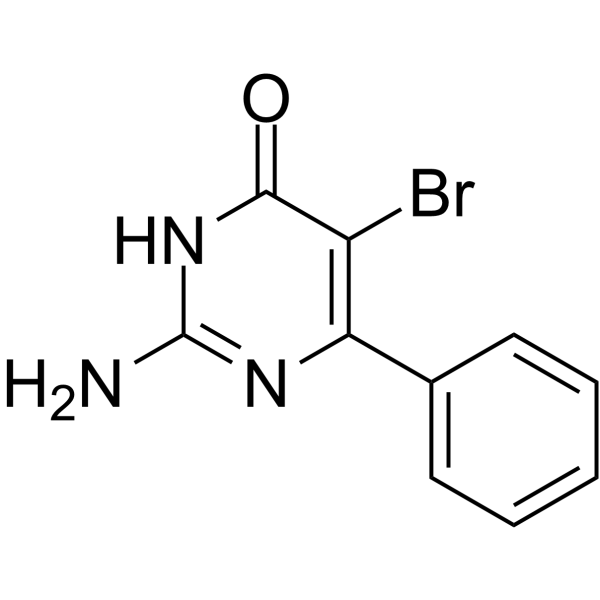
    Bropirimine (U-54461; U-54461S; PNU-54461) is an orally active TLR7 agonist. Bropirimine inhibits RANKL-induced osteoclast differentiation of mouse bone marrow-derived macrophages (BMMs). Bropirimine exhibits dose-dependent direct inhibitory effects on colony formation of cultured KK-47 and 724 cells. Bropirimine can be used for the study of cancers and bone metabolic disorders such as osteoporosis .
    Bropirimine
  • HY-N5048

    6'-O-Galloyl paeoniflorin

    NF-κB ERK JNK Nuclear Factor of activated T Cells (NFAT) Keap1-Nrf2 PI3K Akt Reactive Oxygen Species (ROS) Apoptosis DNA/RNA Synthesis Infection Neurological Disease Metabolic Disease Inflammation/Immunology
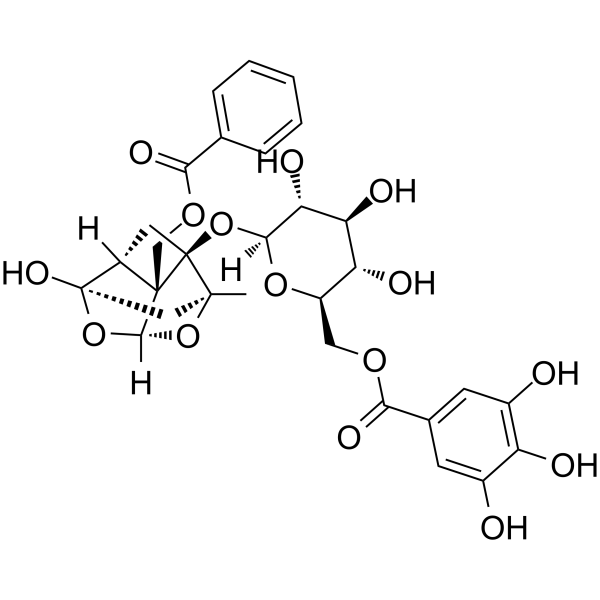
    Galloylpaeoniflorin (6'-O-Galloyl paeoniflorin) is an orally active galloylated derivative of Paeoniflorin (HY-N0293) found in peony roots with various anti-inflammatory and antioxidant activities. Galloylpaeoniflorin suppresses RANKL-induced activation of ERK, JNK, c-Fos, c-Jun, and NFATc1, and reduces osteoclast-specific gene expression. Galloylpaeoniflorin activates Nrf2 and PI3K/Akt pathways, inhibits NF-κB activation, and scavenges ROS to reduce oxidative DNA, lipid, and protein damage. Galloylpaeoniflorin attenuates neuroinflammation, inhibits apoptosis, reduces Helicobacter pylori-induced gastric mucosa injury and UVB-induced cell damage. Galloylpaeoniflorin can be used for the research of osteoporosis, gastritis, ischemic stroke and skin diseases .
    Galloylpaeoniflorin
  • HY-N0805A
    Alisol B
    1 Publications Verification

    Epoxide Hydrolase CaMK Autophagy Apoptosis Metabolic Disease Inflammation/Immunology Cancer
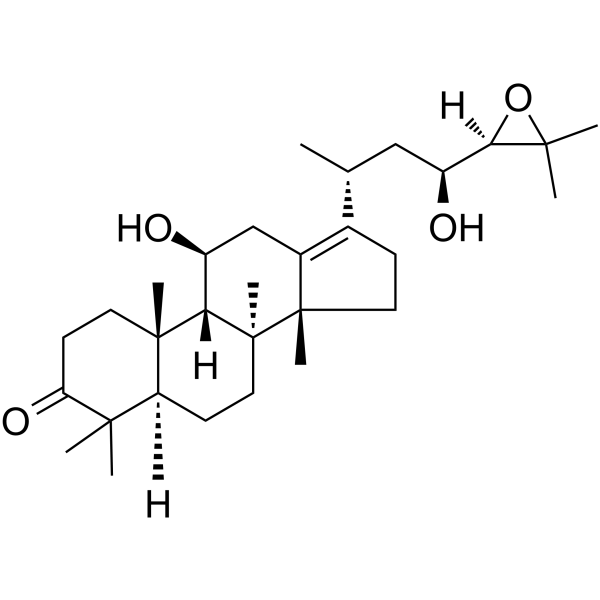
    Alisol B is a triterpene with diverse biological activities. Alisol B binds human soluble epoxide hydrolase (sEH) with a Ki of 5.97 μM and reduces sEH activity. Alisol B inhibits RANKL-induced JNK phosphorylation, NFATc1 and c-Fos expression, osteoclast formation, mature osteoclast pit-forming and actin ring activity, and SERCA pump activity. Alisol B induces calcium mobilization, CaMKK-AMPK-mTOR pathway activation, autophagic flux, autophagosome formation, G1 phase cell cycle arrest, endoplasmic reticulum stress, unfolded protein responses, and cancer cell apoptosis. Alisol B can be used for the research of hypercalcemia, osteoporosis, rheumatoid arthritis, periodontitis, acute kidney injury, and breast cancer .
    Alisol B
  • HY-118482

    Saurolactam

    Others Neurological Disease
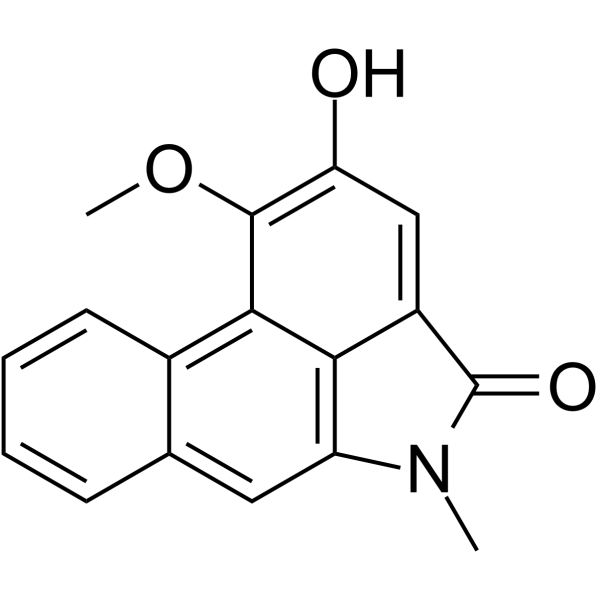
    Sauristolactam, a natural aristolactam isolated from aerial portions of Saururus chinensis, has significant neuroprotective activity against glutamate-induced toxicity in primary cultured rat cortical cells . Sauristolactam also inhibits the receptor activator of nuclear factor-κB ligand (RANKL)-induced osteoclastogenesis and has the potential to inhibit osteoclast differentiation .
    Sauristolactam
  • HY-121282B

    Pecazine acetate

    Apoptosis MALT1 Others
    Mepazine acetate (Pecazine acetate) is a drug that has the activity to inhibit the protease activity of MALT1. Mepazine acetate is often used to study the role of MALT1 in biology. Treatment of mouse bone marrow precursor cells with mepazine acetate strongly inhibited RANK ligand (RANKL)-induced osteoclast formation. Mepazine acetate also inhibited the expression of multiple osteoclast markers such as TRAP, feline hepsin K, and calcitonin. The protective effect of mepazine acetate was not affected by MALT1 deficiency. The mechanism of action of mepazine acetate may involve MALT1-independent mechanisms, and this aspect needs to be considered in future studies .
    Mepazine acetate
  • HY-N10062

    RANKL/RANK Others
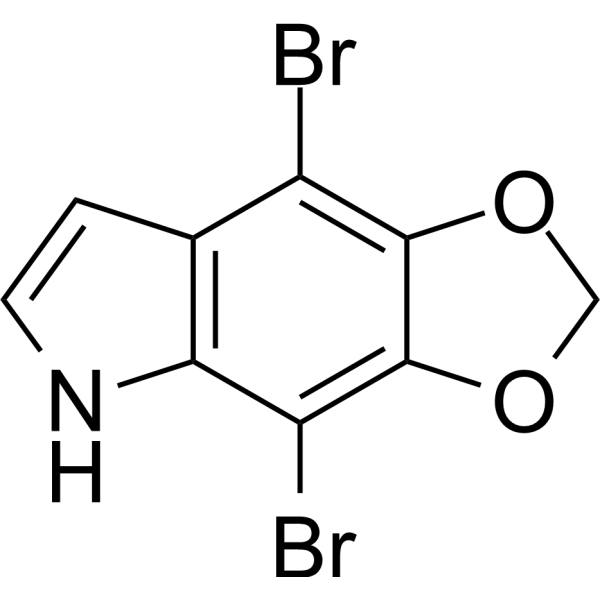
    Amakusamine inhibits the receptor activator of nuclear factor-κB ligand (RANKL)-induced formation of multinuclear osteoclasts with an IC50 value of 10.5 μM in RAW264.7 cells.
    Amakusamine
  • HY-N12507

    STING NF-κB Others
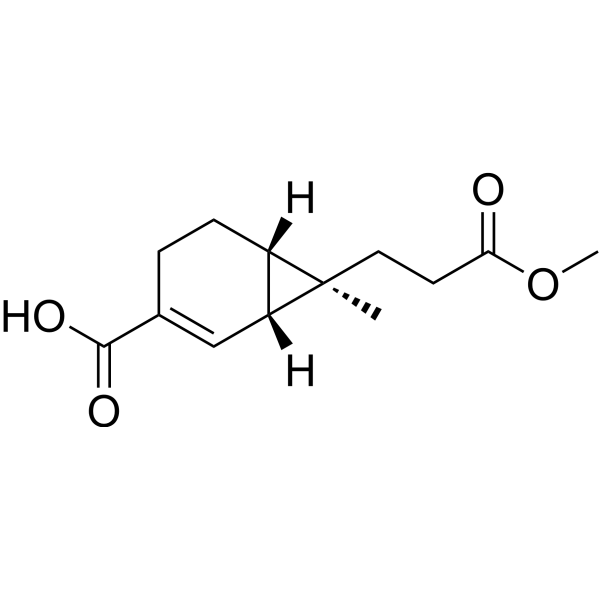
    Eupenicisirenin C (compound 1) is a sirenin derivative. Eupenicisirenin C has strong NF-κB inhibitory activities. Eupenicisirenin C suppresses effects on cGAS-STING pathway. Eupenicisirenin C inhibits RANKL-induced osteoclast differentiation in bone marrow macrophage cells .
    Eupenicisirenin C
  • HY-158311

    RANKL/RANK p38 MAPK NF-κB Endocrinology
    Anti-osteoporosis agent-8 (Compound 4aa) is an inhibitor for RANKL, which inhibits RANKL-induced osteoclastogenesis and osteoclast differentiation (IC50 is 2.41 μM) in cells RAW264.7. Anti-osteoporosis agent-8 ameliorates bone loss in an ovariectomized (OVX) mice model .
    Anti-osteoporosis agent-8
  • HY-163847

    MMP Cathepsin Inflammation/Immunology
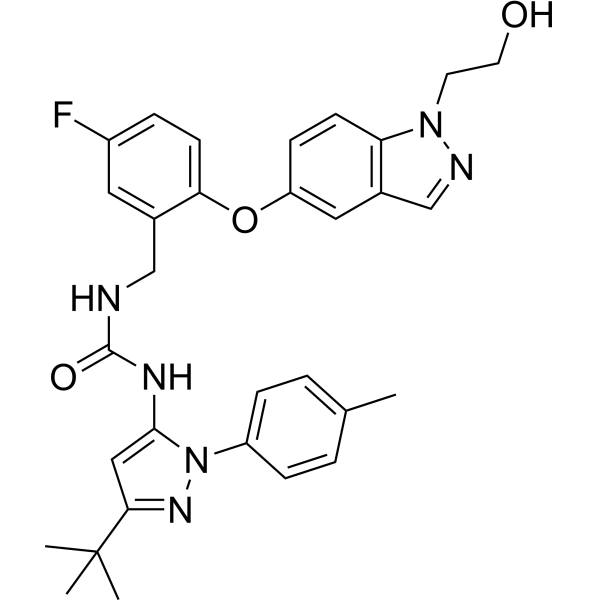
    Anti-osteoporosis agent-9 (compound 5b) is a N-cyclopropyl-4-((4-((4-(trifluoromethyl)phenyl)sulfonyl)piperazin-1-yl)methyl)benzamide derivative that shows anti-osteoclast activity .
    Anti-osteoporosis agent-9
  • HY-N0805AR

    Reference Standards Epoxide Hydrolase CaMK Autophagy Apoptosis Metabolic Disease Inflammation/Immunology Cancer
    Alisol B (Standard) is the analytical standard of Alisol B (HY-N0805A). This product is intended for research and analytical applications. Alisol B is a triterpene with diverse biological activities. Alisol B binds human soluble epoxide hydrolase (sEH) with a Ki of 5.97 μM and reduces sEH activity. Alisol B inhibits RANKL-induced JNK phosphorylation, NFATc1 and c-Fos expression, osteoclast formation, mature osteoclast pit-forming and actin ring activity, and SERCA pump activity. Alisol B induces calcium mobilization, CaMKK-AMPK-mTOR pathway activation, autophagic flux, autophagosome formation, G1 phase cell cycle arrest, endoplasmic reticulum stress, unfolded protein responses, and cancer cell apoptosis. Alisol B can be used for the research of hypercalcemia, osteoporosis, rheumatoid arthritis, periodontitis, acute kidney injury, and breast cancer.
    Alisol B (Standard)
  • HY-182757

    RANKL/RANK Nuclear Factor of activated T Cells (NFAT) Cathepsin Metabolic Disease Inflammation/Immunology
    Y1693 is an orally active RANKL inhibitor with a Kd of 5.03 μM for hRANKL. Y1693 inhibits the activation of the downstream c-fos/NFATc1 signaling pathway by blocking its interaction with RANK. Y1693 significantly inhibits RANKL-induced osteoclast differentiation, F-actin ring formation and bone resorptive activity, while downregulating the mRNA and protein expressions of TRAP, cathepsin K, c-fos and NFATc1. Y1693 shows no obvious cytotoxicity to bone marrow-derived macrophages and osteoclast precursor cells, and exhibits favorable ADME properties. Y1693 improves ovariectomy-induced osteoporosis in mice and reverses ligation-induced periodontal alveolar bone loss. Y1693 is applicable to research related to osteoporosis and periodontal diseases .
    Y1693
  • HY-N17353

    IKK NF-κB NO Synthase Interleukin Related Neurological Disease Inflammation/Immunology
    Vitedoamine A is a Phenylnaphthalene-type lignan alkaloid. Vitedoamine A can be isolated from Vitex negundo. Vitedoamine A inhibits the activity of IKKβ with an IC50 value of 39 μM. Vitedoamine A could inhibit the transcriptional activity of NF-κB, and suppress the production of NO and reduce the expressions of inflammatory cytokines (IL-1β, IL-6, and TNF-α). Vitedoamine A inhibits the phosphorylation of IKKα/β and p65, and prevents the degradation of IκBα. Vitedoamine A possesses anti-rheumatoid arthritis capacity .
    Vitedoamine A

Inquiry Online

Your information is safe with us. * Required Fields.

Salutation


Country or Region *

Applicant Name *


Organization Name *

Department *


Email Address *


Product Name *

Cat. No.


Requested quantity *

Phone Number *


Remarks

Inquiry Online

Inquiry Information

Product Name:
Cat. No.:
Quantity:
MCE Japan Authorized Agent:

