






1. Search Result
Search Result
Results for "

RNA sequences

" in MedChemExpress (MCE) Product Catalog:

53

Inhibitors & Agonists

2

Screening Libraries

1

Fluorescent Dye

3

Biochemical Assay Reagents

16

Peptides

2

Natural
Products

22

Oligonucleotides

Cat. No. Product Name Target Research Areas Chemical Structure
  • HY-132609
    Patisiran sodium
    1 Publications Verification

    Small Interfering RNA (siRNA) Transthyretin (TTR) Neurological Disease
    Patisiran sodium is a double-stranded small interfering RNA that targets a sequence within the transthyretin (TTR) messenger RNA. Patisiran sodium specifically inhibits hepatic synthesis of mutant and wild-type TTR. Patisiran sodium can be used for the research of hereditary TTR amyloidosis .
    Patisiran sodium
  • HY-148503

    Phosphoramidites Nucleoside Antimetabolite/Analog Others
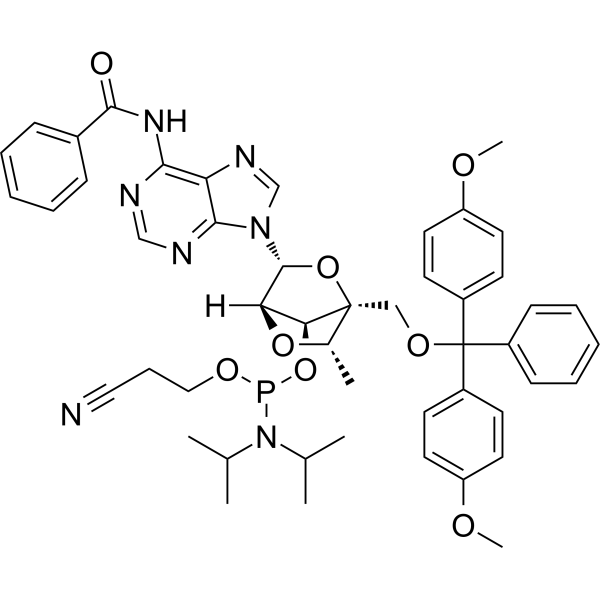
    5'-ODMT cEt N-Bz A Phosphoramidite (Amidite) is a nucleoside phosphoramidite monomer used to synthesize locked nucleic acid (LNA) analog oligonucleotides. It can be used as a building block of antisense oligonucleotides (ASOs) to target complementary RNA sequences. 5'-ODMT cEt N-Bz A Phosphoramidite (Amidite) locks the furanose ring into an N-type conformation through 2',4'-constrained ethyl (cEt) modification, enhancing hybridization affinity and mismatch discrimination with RNA, while significantly improving the resistance of oligonucleotides to exonuclease digestion. 5'-ODMT cEt N-Bz A Phosphoramidite (Amidite) mediates RNase H-dependent mRNA degradation or inhibits translation by forming a stable hybrid with RNA, thereby achieving gene expression regulation. 5'-ODMT cEt N-Bz A Phosphoramidite (Amidite) is mainly used in the development of antisense drugs, gene function research and oligonucleotide synthesis related to disease treatment .
    5'-ODMT cEt N-Bz A Phosphoramidite (Amidite)
  • HY-147217

    ISIS 505358

    HBV Infection
    Bepirovirsen is an antisense oligonucleotide targeting all HBV messenger RNAs. Bepirovirsen leads to reductions in HBV-derived RNAs, HBV DNA and viral proteins. Bepirovirsen can be used for the research of chronic HBV infection. Bepirovirsen binding site sequence (GCACTTCGCTTCACCTCTGC) .
    Bepirovirsen
  • HY-147217A

    ISIS 505358 sodium

    HBV Infection
    Bepirovirsen (ISIS 505358) sodium is an antisense oligonucleotide targeting all HBV messenger RNAs. Bepirovirsen sodium leads to reductions in HBV-derived RNAs, HBV DNA and viral proteins. Bepirovirsen sodium can be used for the research of chronic HBV infection. Bepirovirsen sodium binding site sequence (GCACTTCGCTTCACCTCTGC) .
    Bepirovirsen sodium
  • HY-P1103
    CTCE-9908
    1 Publications Verification

    CXCR Cancer
    CTCE-9908 is a potent and selective CXCR4 antagonist. CTCE-9908 induces mitotic catastrophe, cytotoxicity and inhibits migration in CXCR4-expressing ovarian cancer cells .
    CTCE-9908
  • HY-153898

    Amyloid-β Neurological Disease
    rTRD01 is an orally active, specific TDP-43 binder that targets the RRM1 and RRM2 domains of TDP-43. rTRD01 partially disrupts the interaction between TDP-43 and c9orf72 repeat RNA, but does not affect the binding of TDP-43 to canonical binding sequences. rTRD01 exhibits significant neuroprotective effects in zebrafish models, improves motor function and protects against paraquat (a widely used herbicide)-induced neurodegeneration, with no teratogenicity at high concentrations. rTRD01 is not a general antioxidant and cannot counteract Rotenone (HY-B1756)-induced neuronal death. rTRD01 can be used to study amyotrophic lateral sclerosis and other TDP-43 proteinopathies .
    rTRD01
  • HY-148688

    DNA/RNA Synthesis Others
    ASO 556089 sodium is a 16 nucleotide length gapmer (3-10-3) that targets the human and mouse long non-coding RNA MALAT1, with the sequence: 5’-GmCATTmCTAATAGmCAGmC-3’ .
    ASO 556089 sodium
  • HY-137697D

    HIV DNA/RNA Synthesis Nucleoside Antimetabolite/Analog Drug Metabolite HIV Protease Infection
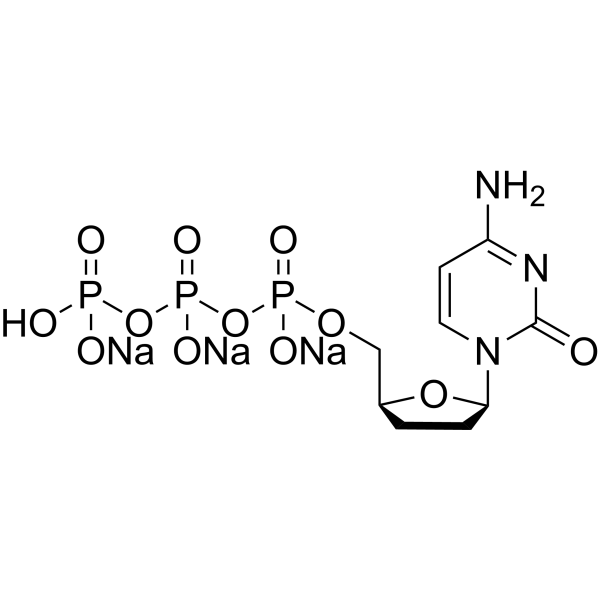
    ddCTP trilithium solution (100 mM) is a chain-terminating dideoxynucleotide. ddCTP trilithium is a type of chain-terminating deoxynucleotide. ddCTP trilithium can be incorporated into the extension primer chain that lacks the 3'-hydroxyl group, thereby terminating primer extension, viral genome replication, and DNA synthesis. ddCTP trilithium can distinguish almost identical RNA through distinguishable extension products in primer extension inhibition experiments. ddCTP trilithium is the active metabolite of Zalcitabine (HY-17392), which can competitively inhibit HIV reverse transcriptase, terminate the synthesis of viral DNA chains, and thereby inhibit HIV replication .
    ddCTP trisodium solution (100 mM)
  • HY-136248
    Cyanine 3 Tyramide
    1 Publications Verification

    Tyramide-Cy3

    DNA Stain Fluorescent Dye Others
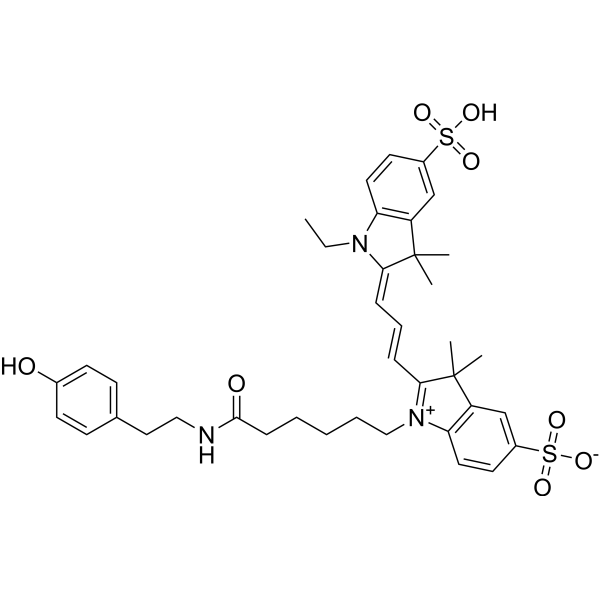
    Cyanine 3 Tyramide (Tyramide-Cy3) is an orange fluorescent dye used as a reporter fluorescent substrate for horseradish peroxidase (HRP)-catalyzed deposition, which serves as a signal amplification technique in immunoassays and in situ nucleic acid hybridization .
    Cyanine 3 Tyramide
  • HY-156228

    Ras Cancer
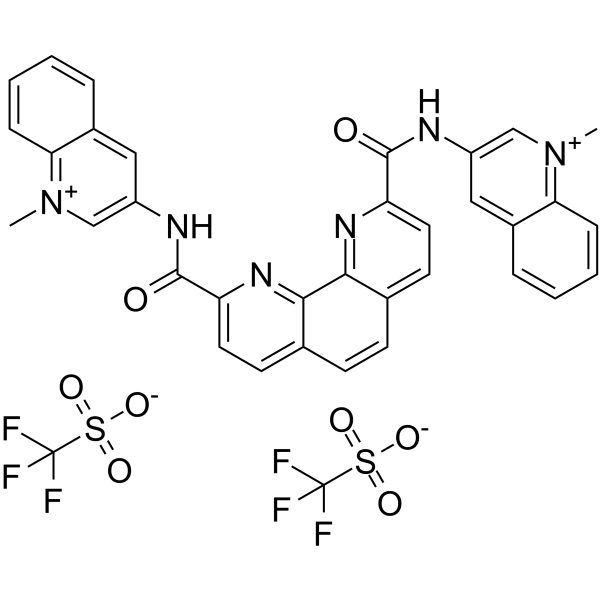
    RGB-1 selectively binds to and stabilizes RNA G-quadruplex structures, and reduces the expression of the NRAS proto-oncogene in breast cancer cells. RGB-1 can serve as a tool for investigating the cellular functions of RNA G-quadruplex structures and identifying novel mRNA G-quadruplex-forming sequences. RGB-1 is applicable for breast cancer research .
    RGB-1
  • HY-177360

    DNA/RNA Synthesis Neurological Disease Cancer
    RNA splicing modulator-4 is an RNA splicing modulator. RNA splicing modulator-4 controls the inclusion or exclusion of specific exons in precursor mRNA (pre-mRNA) by regulating alternative splicing events, thereby altering the coding sequence and function of mature mRNA. RNA splicing modulator-4 shows promise for research into neurodegenerative diseases (such as Huntington's disease) and cancers .
    RNA splicing modulator-4
  • HY-153609

    Transthyretin (TTR) Small Interfering RNA (siRNA) Neurological Disease
    AS-Patisiran sodium is an antisense strand of Patisiran. Patisiran is a double-stranded small interfering RNA that targets a sequence within the transthyretin (TTR) messenger RNA. Patisiran specifically inhibits hepatic synthesis of mutant and wild-type TTR. Patisiran can be used for the research of hereditary TTR amyloidosis .
    AS-Patisiran sodium
  • HY-E70090

    DNA/RNA Synthesis Infection
    T7 RNA polymerase is a polymerase expressed by Escherichia coli from the RNA polymerase gene of T7 bacteriophage. T7 RNA polymerase is highly specific and involved in in vitro transcription (IVT) of mRNA. In the presence of Mg 2+, T7 RNA polymerase only uses the single-stranded or double-stranded DNA containing the T7 promoter sequence as a template, and uses NTP as a substrate to synthesize RNA complementary to the single-stranded DNA downstream of the promoter .
    T7 RNA polymerase
  • HY-132590A

    ALN-TTRSC sodium

    Small Interfering RNA (siRNA) Transthyretin (TTR) Neurological Disease
    Revusiran (ALN-TTRSC) sodium is an RNA interference agent targeting the mRNA of transthyretin (Transthyretin, TTR). Revusiran sodium mediates sequence-specific degradation of TTR mRNA through RNA interference, reduces the synthesis of TTR protein, binds to GalNAc ligands, and is taken up by hepatocytes via the asialoglycoprotein receptor. Revusiran sodium exhibits favorable nonclinical safety profiles. Revusiran sodium can be used in studies related to transthyretin-mediated amyloidosis .
    Revusiran sodium
  • HY-153843

    Biochemical Assay Reagents Others
    RNA Aptamer Corn (sodium) is a 28-nt-long aptamer that is substantially shorter than Spinach and Spinach2 and exhibits bright red fluorescence upon binding DFHO (a soluble analog of the intrinsic fluorophore of red fluorescent protein), RNA Aptamer Corn (sodium) can be used to visualize RNA expression or localization in live cells which have been soaked with chromophores. The Corn-DFHO does not become appreciably cytotoxic when illuminated. And most importantly, Corn-DFHO exhibits markedly increased photostability compared to other aptamer-chromophore complexes both in vitro and in vivo. (36 nt Corn construct: 5'-GGCGCGAGGAAGGAGGUCUGAGGAGGUCACUGCGCC-3'; A 36-nt RNA construct, comprised of the 28-nt minimal Corn sequence extended proximally with a 4 base-pair stem.)
    RNA Aptamer Corn sodium
  • HY-146178

    Insulin Receptor Cancer
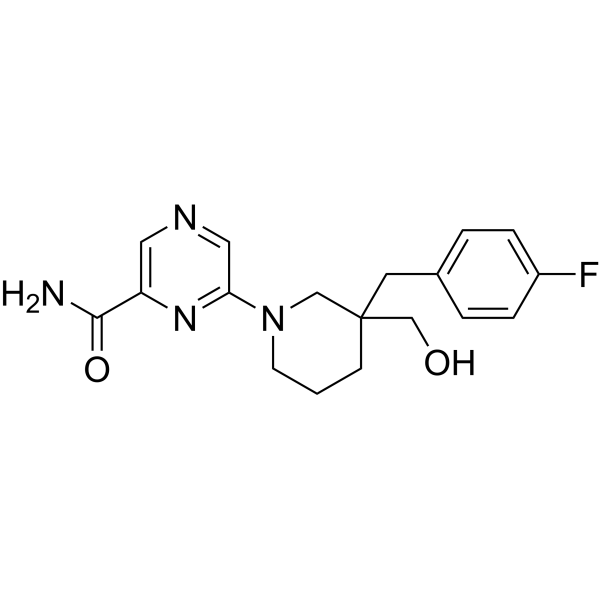
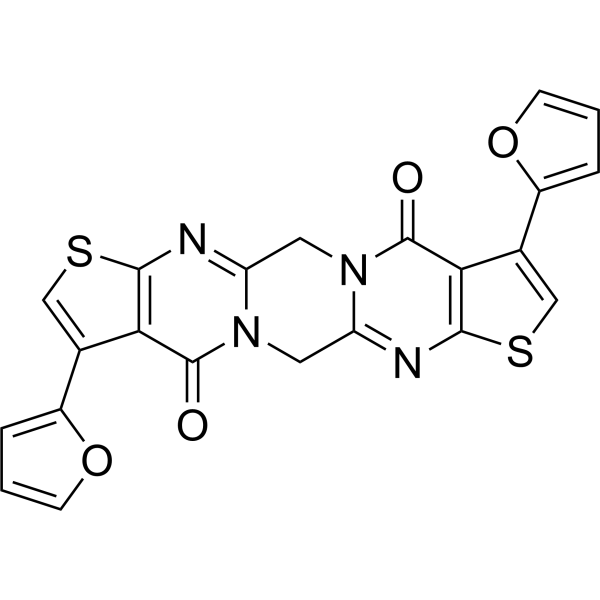
    IMP2-IN-1 (compound 4) is a potent IMP2 inhibitor with IC50 value of 81.3~127.5 for IMP2 RNA sequence. IMP2-IN-1 reduces IMP2 in SW480 cells. IMP2-IN-1 significantly reduces the viability of both differentiated and non-differentiated Huh7 cells .
    IMP2-IN-1
  • HY-106262B
    Delcasertib hydrochloride
    3 Publications Verification

    KAI-9803 hydrochloride; BMS-875944 hydrochloride

    PKC Cardiovascular Disease Inflammation/Immunology
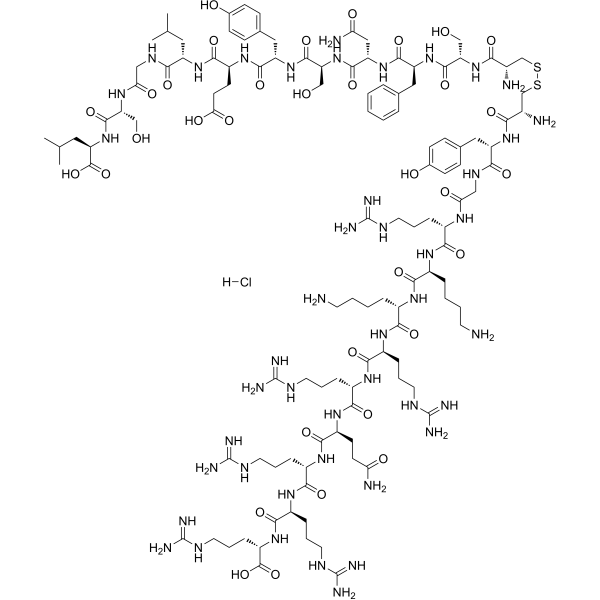
    Delcasertib (KAI-9803) hydrochloride is a potent and selective δ-protein kinase C (δPKC) inhibitor. Delcasertib (KAI-9803) hydrochloride could ameliorate injury associated with ischemia and reperfusion in animal models of acute myocardial infarction (MI) .
    Delcasertib hydrochloride
  • HY-117813

    Nucleoside Antimetabolite/Analog DNA/RNA Synthesis Dengue Virus Flavivirus CHIKV SARS-CoV Infection
    2-Thiouridine is an orally active modified nucleobase. 2-Thiouridine stabilizes U:A base pairs and destabilizes U:G wobble base pairs. 2-Thiouridine significantly improves the efficiency and accuracy of nonenzymatic replication of mixed-sequence A/U-containing RNA templates. 2-Thiouridine exhibits antiviral activity against multiple positive-sense single-stranded RNA viruses (DENV2, ZIKV, YFV, JEV, WNV, CHIKV, human coronaviruses ( [HCoV]-229E, HCoV-OC43, SARS-CoV), and MERS-CoV) .
    2-Thiouridine
  • HY-N0086R
    N6-Methyladenosine (Standard)
    1 Publications Verification

    6-Methyladenosine (Standard); N-Methyladenosine (Standard)

    Endogenous Metabolite Influenza Virus Reference Standards Infection
    N6-Methyladenosine (Standard) is the analytical standard of N6-Methyladenosine. This product is intended for research and analytical applications. N6-Methyladenosine is the most prevalent internal (non-cap) modification present in the messenger RNA (mRNA) of all higher eukaryotes. N6-Methyladenosine can modifies viral RNAs and has antiviral activities. In Vitro: N6-methyladenosine (m6A) is selectively recognized by the human YTH domain family 2 (YTHDF2) protein to regulate mRNA degradation. N6-methyladenosine (m6A), a prevalent internal modification in the messenger RNA of all eukaryotes, is post-transcriptionally installed by m6A methyltransferase (e.g., MT-A70) within the consensus sequence of G(m6A)C (70%) or A(m6A)C (30%). N6-methyladenosine (m6A)-containing RNAs are greatly enriched in the YTHDF-bound portion and diminished in the flow-through portion . N6-methyladenosine (m6A), the most abundant internal RNA modification, functions in diverse biological processes, including regulation of embryonic stem cell self-renewal and differentiation. N6-methyladenosine (m6A) is a large protein complex, consisting in part of methyltransferase-like 3 (METTL3) and methyltransferase-like 14 (METTL14) catalytic subunits .
    N6-Methyladenosine (Standard)
  • HY-148062

    PROTACs CDK AAK1 Cyclin G-associated Kinase (GAK) Salt-inducible Kinase (SIK) LIM Kinase (LIMK) Wee1 SnRK Others
    RSS0680 is a small noncoding RNA (sRNA) targeting the mRNA ribosome binding site (RBS) and a PROTAC with protein kinase degradation activity (Pink: FLT3-IN-17 (HY-148070); Black: Linker (HY-W041970); Blue: E3 ligase Ligand (HY-112078)). RSS0680 competitively binds to RBS through the conserved CCUCCUCCC anti-Shine-Dalgarno (aSD) sequence and inhibits the translation initiation of target genes. RSS0680 can interact with the DUF1127 protein CcaF1, regulate its own stability and participate in bacterial oxidative stress defense, enhancing the host's resistance to heat shock and oxidative damage by affecting pathways such as C1 metabolism and pyruvate dehydrogenase complex. RSS0680 degrades AAK1, CDK1, CDK16, CDK2, CDK4, CDK6, EIF2AK4, GAK, LATSl, LIMK2, MAPK6, MAPKAPK5, MARK2, MARK4, MKNK2, NEK9, RPS6KB1, SIK2, SNRK, STK17A, STK17B, STK35, and WEEl. RSS0680 can be used to study diseases or disorders mediated by aberrant kinase activity and regulatory mechanisms of noncoding RNAs in α-proteobacteria[1][2].
    RSS0680
  • HY-160227A

    Toll-like Receptor (TLR) Inflammation/Immunology
    ORN 06 (sodium) s a synthetic single-stranded U-rich RNA and contains 6 repeats of the UUGU sequence motif. The GU-rich oligoribonucleotides (ORNs) are able to stimulate TLR7 .
    ORN 06 sodium
  • HY-W591768

    Fluorescent Dye Others
    (E)-4-(4-(Dimethylamino)styryl)-1-methylpyridin-1-ium (iodide) (Py-NMe2) is a styryl-based dye for fluorescence and CD-based sensing of various ds-DNA/RNA sequence. ( maxλAbs = 450 nm, maxλEm = 615 nm) .
    (E)-4-(4-(Dimethylamino)styryl)-1-methylpyridin-1-ium iodide
  • HY-118874A

    Apoptosis Bcl-2 Family Cancer
    Oblimersen sodium is a BCL-2 inhibitor targeting BCL-2 RNA. Oblimersen sodium specifically binds to the first six codons of the bcl-2 mRNA sequence, resulting in degradation of bcl-2 mRNA and induces apoptosis by down-regulating expression of Bcl-2. Oblimersen sodium can be used for cancer research .
    Oblimersen sodium
  • HY-137697

    Nucleoside Antimetabolite/Analog DNA/RNA Synthesis HIV Protease HIV Drug Metabolite Infection
    ddCTP is a type of chain-terminating deoxynucleotide. ddCTP can be incorporated into the extension primer chain that lacks the 3'-hydroxyl group, thereby terminating primer extension, viral genome replication, and DNA synthesis. ddCTP can distinguish almost identical RNA through distinguishable extension products in primer extension inhibition experiments. ddCTP is the active metabolite of Zalcitabine (HY-17392), which can competitively inhibit HIV reverse transcriptase, terminate the synthesis of viral DNA chains, and thereby inhibit HIV replication .
    ddCTP
  • HY-106262

    KAI-9803; BMS-875944

    PKC Cardiovascular Disease Inflammation/Immunology
    Delcasertib (KAI-9803) is a potent and selective δ-protein kinase C (δPKC) inhibitor. Delcasertib (KAI-9803) could ameliorate injury associated with ischemia and reperfusion in animal models of acute myocardial infarction (MI) .
    Delcasertib
  • HY-W001952

    Fluorescent Dye Drug Intermediate Others
    6-Bromo-2-naphthol is an RTP (real-time polymerase chain reaction) probe that forms a 1:1 or 2:1 complex with β-cyclodextrin (β-CD). 6-Bromo-2-naphthol is capable of real-time monitoring of PCR reactions and quantification of specific nucleic acid sequences. RTP probes are a class of small DNA or RNA sequences labeled with fluorescent dyes and quencher molecules, which can be widely used in gene expression analysis, SNP genotyping, and pathogen detection. 6-Bromo-2-naphthol embeds into the cyclodextrin cavity through hydrophobic interactions, inhibits the oxygen quenching effect, and emits a phosphorescent signal at room temperature. 6-Bromo-2-naphthol can also be used as an intermediate for the synthesis of antibacterial azo dyes, and its derivatives show antibacterial activity against Staphylococcus aureus, Escherichia coli and other bacteria .
    6-Bromo-2-naphthol
  • HY-P3215

    Oxytocin Receptor Endocrinology
    Oxytocin parallel dimer is the disulfide-bridged homo peptide dimer. Oxytocin dimer has oxytocin and vasopressin-like activity with less toxic than oxytocin .
    Oxytocin parallel dimer
  • HY-P1286

    PKC Neurological Disease
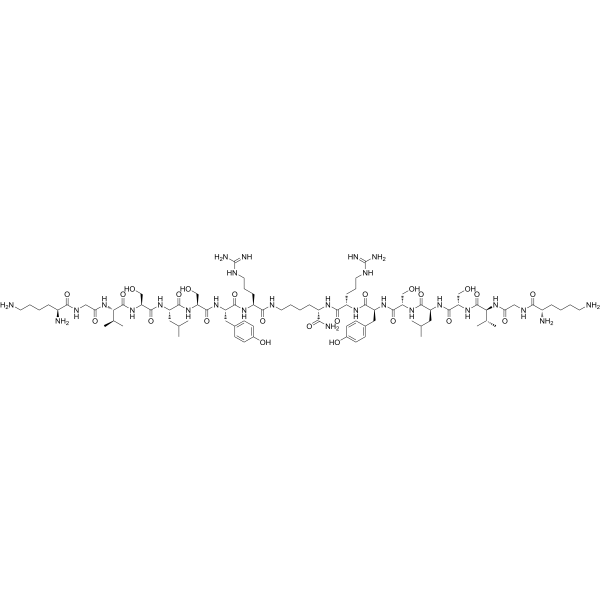
    PKC β pseudosubstrate is a selective cell-permeable inhibitor of PKC .
    PKC β pseudosubstrate
  • HY-132590

    ALN-TTRSC

    Small Interfering RNA (siRNA) Transthyretin (TTR) Neurological Disease
    Revusiran (ALN-TTRSC) is an RNA interference agent targeting the mRNA of transthyretin (Transthyretin, TTR). Revusiran mediates sequence-specific degradation of TTR mRNA through RNA interference, reduces the synthesis of TTR protein, binds to GalNAc ligands, and is taken up by hepatocytes via the asialoglycoprotein receptor. Revusiran exhibits favorable nonclinical safety profiles. Revusiran can be used in studies related to transthyretin-mediated amyloidosis .
    Revusiran
  • HY-118874

    Bcl-2 Family Apoptosis Cancer
    Oblimersen is a BCL-2 inhibitor targeting BCL-2 RNA. Oblimersen specifically binds to the first six codons of the bcl-2 mRNA sequence, resulting in degradation of bcl-2 mRNA and induces apoptosis by down-regulating expression of Bcl-2. Oblimersen can be used for cancer research .
    Oblimersen
  • HY-160227

    Toll-like Receptor (TLR) Inflammation/Immunology
    ORN 06 (Compound R-0006), a U-rich single-stranded RNA (containing 6 repeats of the UUG sequence motif), is a TLR7/8 agonist. ORN 06 stimulates human TLR7/8-mediated or murine TLR7-mediated immunity .
    ORN 06
  • HY-137697B

    HIV DNA/RNA Synthesis Nucleoside Antimetabolite/Analog Drug Metabolite HIV Protease Infection
    ddCTP trilithium is a type of chain-terminating deoxynucleotide. ddCTP trilithium can be incorporated into the extension primer chain that lacks the 3'-hydroxyl group, thereby terminating primer extension, viral genome replication, and DNA synthesis. ddCTP trilithium can distinguish almost identical RNA through distinguishable extension products in primer extension inhibition experiments. ddCTP trilithium is the active metabolite of Zalcitabine (HY-17392), which can competitively inhibit HIV reverse transcriptase, terminate the synthesis of viral DNA chains, and thereby inhibit HIV replication .
    ddCTP trilithium
  • HY-P1103A

    CXCR Cancer
    CTCE-9908 TFA is a potent and selective CXCR4 antagonist. CTCE-9908 TFA induces mitotic catastrophe, cytotoxicity and inhibits migration in CXCR4-expressing ovarian cancer cells .
    CTCE-9908 TFA
  • HY-P1321

    1229U91; GW1229

    Neuropeptide Y Receptor Neurological Disease
    GR231118, an analogue of the C-terminus of neuropeptide Y, is a potent , competitive and relative seletive antagonist at human neuropeptide Y Y receptor with a pKi of 10.4. GR231118 a potent agonist at the human neuropeptide Y Y4 receptor (pEC50=8.6; pKi=9.6) and a weak agonist at the human and rat neuropeptide YY2 and Y5 receptors. GR231118 also has high affinity for the mouse neuropeptide Y Y6 receptor (pKi= 8.8) .
    GR231118
  • HY-174499

    mRNA Others
    Cas9 Nickase D10A mRNA expresses a version of the Streptococcus pyogenes SF370 Cas9 protein (CRISPR Associated Protein 9) that contains a D10A amino acid substitution. This mRNA also contains a C-terminal nuclear localization signal followed by a HA tag.Cas9 functions as part of the CRISPR (clustered regularly interspaced short palindromic repeats) genome editing system. In the CRISPR system, an RNA guide sequence targets the site of interest and the Cas9 protein is employed to perform the DNA cleavage. While wild-type Cas9 creates a double-stranded break at the target site, Cas9 nickase creates a single-stranded break. This favors homology-directed repair and decreases the occurrence of non-homologous end joining.
    Cas9 Nickase D10A mRNA (5moU)
  • HY-172902

    DNA/RNA Synthesis Neurological Disease
    RNA binder 1 (Compound 4b) is a blood-brain permeable RNA binder. RNA binder 1 can selectively bind to the G-quadruplex structure of the G4C2 repeat sequence RNA of the C9orf72 gene. RNA binder 1 significantly reduces the levels of toxic polypeptides poly(GA) and poly(GP) produced by the G4C2 repeat sequence in amyotrophic lateral sclerosis (ALS) patient-derived cells. RNA binder 1 has no significant effect on the antisense polypeptide poly(PR), showing selectivity for sense RNA. RNA binder 1 can be used in the study of ALS and frontotemporal dementia (FTD) .
    RNA binder 1
  • HY-153805

    Molecular Glues Cancer
    Z-NCTS is an RNA mismatch binding molecule that recognizes the 5’-r(XGG)-3’/5’-r(XGG)-3’ sequence (X=U or A) and acts as a molecular glue for RNA .
    Z-NCTS
  • HY-153836

    Factor Xa Others
    Anivamersen is an RNA aptamer to reverse the anticoagulant effect of the parenteral factor IXa inhibitor pegnivacogin. REG1 is a novel anticoagulation system consisting of pegnivacogin, an RNA aptamer inhibitor of coagulation factor IXa, and anivamersen, a complementary sequence reversal oligonucleotide.
    Anivamersen
  • HY-153836A

    Factor Xa Others
    Anivamersen sodium is an RNA aptamer to reverse the anticoagulant effect of the parenteral factor IXa inhibitor pegnivacogin. REG1 is a novel anticoagulation system consisting of pegnivacogin, an RNA aptamer inhibitor of coagulation factor IXa, and anivamersen, a complementary sequence reversal oligonucleotide.
    Anivamersen sodium
  • HY-174792

    mRNA Others
    The Cre-T2A-GFP mRNA is a capped and polyadenylated messenger RNA encoding a Cre recombinase with a nuclear localization sequence (NLS) and a green fluorescent protein (GFP).
    Cre-T2A-GFP mRNA
  • HY-160228

    Toll-like Receptor (TLR) Inflammation/Immunology
    ORN 02 is a synthetic single-stranded U-rich RNA and contains 6 repeats of UUAU sequence motif. The AU-rich oligoribonucleotides (ORNs) are able to stimulate TLR8 .
    ORN 02
  • HY-160228A

    Toll-like Receptor (TLR) Inflammation/Immunology
    ORN 02 (sodium) is a synthetic single-stranded U-rich RNA and contains 6 repeats of UUAU sequence motif. The AU-rich oligoribonucleotides (ORNs) are able to stimulate TLR8 .
    ORN 02 sodium
  • HY-P1286A

    PKC Neurological Disease
    PKC β pseudosubstrate TFA is a selective cell-permeable inhibitor of PKC .
    PKC β pseudosubstrate TFA
  • HY-E70400

    DNA/RNA Synthesis Others
    Thermostable T7 RNA Polymerase is a thermostable version of T7 RNA Polymerase (HY-E70090). Compared with T7 RNA Polymerase, it has high temperature resistance and stable activity. T7 RNA polymerase is a polymerase expressed by Escherichia coli from the RNA polymerase gene of T7 bacteriophage. T7 RNA polymerase is highly specific and involved in in vitro transcription (IVT) of mRNA. In the presence of Mg 2+, T7 RNA polymerase only uses the single-stranded or double-stranded DNA containing the T7 promoter sequence as a template, and uses NTP as a substrate to synthesize RNA complementary to the single-stranded DNA downstream of the promoter .
    Thermostable T7 RNA Polymerase
  • HY-174521

    mRNA Inflammation/Immunology
    Human TLR7 mRNA encodes the human toll like receptor 7 (TLR7) protein, a member of the Toll-like receptor (TLR) family which plays a fundamental role in pathogen recognition and activation of innate immunity. TLR7 senses single-stranded RNA oligonucleotides containing guanosine- and uridine-rich sequences from RNA viruses, a recognition occuring in the endosomes of plasmacytoid dendritic cells and B cells.
    Human TLR7 mRNA
  • HY-P1321A

    1229U91 TFA; GW1229 TFA

    Neuropeptide Y Receptor Neurological Disease
    GR231118 TFA, an analogue of the C-terminus of neuropeptide Y, is a potent , competitive and relative seletive antagonist at human neuropeptide YY receptor with a pKi of 10.4. GR231118 a potent agonist at the human neuropeptide YY4 receptor (pEC50=8.6; pKi=9.6) and a weak agonist at the human and rat neuropeptide Y Y2 and Y5 receptors. GR231118 also has high affinity for the mouse neuropeptide YY6 receptor (pKi= 8.8) .
    GR231118 TFA
  • HY-P3215A

    Oxytocin Receptor Endocrinology
    Oxytocin parallel dimer TFA is the disulfide-bridged homo peptide dimer. Oxytocin dimer has oxytocin and vasopressin-like activity with less toxic than oxytocin .
    Oxytocin parallel dimer TFA
  • HY-153845B

    Biochemical Assay Reagents Others
    RNA Aptamer Broccoli sodium scrambled negative control is the sequence scrambled negative control of RNA Aptamer Broccoli sodium.
    RNA Aptamer Broccoli sodium scrambled negative control
  • HY-153843A

    Biochemical Assay Reagents Others
    RNA Aptamer Corn sodium scrambled negative control is the sequence scrambled negative control of RNA Aptamer Corn sodium.
    RNA Aptamer Corn sodium scrambled negative control
  • HY-174791

    mRNA Others
    The Cre-T2A-GFP mRNA is a capped and polyadenylated messenger RNA encoding a Cre recombinase with a nuclear localization sequence (NLS) and a green fluorescent protein (GFP). The incorporation of N1-Methylpseudo-UTP can reduce the immunogenicity of the resulting mRNA.
    Cre-T2A-GFP mRNA (N1-Methylpseudo-UTP)

Inquiry Online

Your information is safe with us. * Required Fields.

Salutation


Country or Region *

Applicant Name *


Organization Name *

Department *


Email Address *


Product Name *

Cat. No.


Requested quantity *

Phone Number *


Remarks

Inquiry Online

Inquiry Information

Product Name:
Cat. No.:
Quantity:
MCE Japan Authorized Agent:

