1. Search Result
Search Result
Pathways Recommended: Stem Cell/Wnt Cell Cycle/DNA Damage
Results for "

ST cells

" in MedChemExpress (MCE) Product Catalog:

36

Inhibitors & Agonists

4

Peptides

2

Inhibitory Antibodies

1

Natural
Products

1

Oligonucleotides

Cat. No. Product Name Target Research Areas Chemical Structure
  • HY-U00434
    3BDO
    20+ Cited Publications

    mTOR Autophagy Apoptosis Infection Inflammation/Immunology
    3BDO is a IFITM3 modulator and mTOR activator with antiviral and autophagy-inhibiting effects. 3BDO exhibits inhibitory activity against porcine coronaviruses. 3BDO increases the protein abundance of IFITM3, inhibits virus-cell membrane fusion, and blocks viral entry. 3BDO inhibits the entry of transmissible gastroenteritis virus, porcine epidemic diarrhea virus, and porcine respiratory coronavirus into host cells. 3BDO can be used for research on porcine coronavirus infection .
    3BDO
  • HY-173496

    Sialyltransferase Integrin VEGFR Akt Cancer
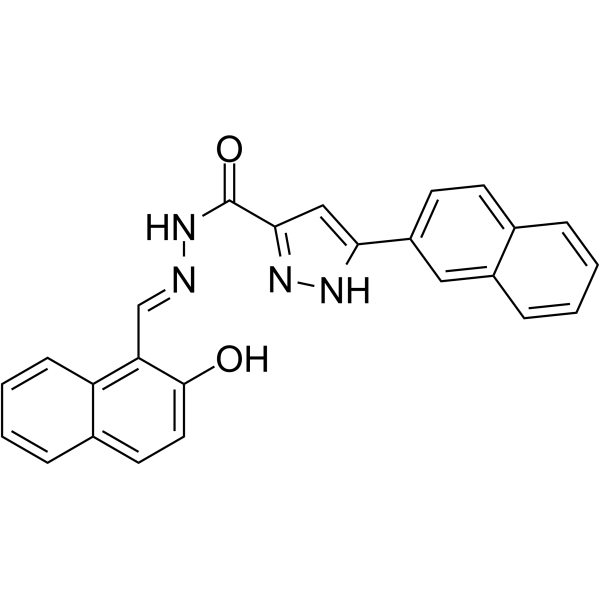
    ST6GAL1-IN-1 is an orally active selective ST6GAL1 inhibitor (IC50 = 20 μM). ST6GAL1-IN-1 exhibits high antimetastatic potential, effectively inhibiting the migration of MDA-MB-231 cells at noncytotoxic concentrations. ST6GAL1-IN-1 can disrupt integrin sialylation in MDA-MB-231 cells. ST6GAL1-IN-1 inhibits tumor angiogenesis and cancer metastasis via the Integrin/VEGFR2-mediated signaling pathway. ST6GAL1-IN-1 effectively suppresses both tumor growth and cancer metastasis on the MDA-MB-231 xenograft model. ST6GAL1-IN-1 can be used for the study of Triple-negative breast cancer (TNBC) .
    ST6GAL1-IN-1
  • HY-16957

    HCV HIV Infection
    LJ001 is a broad-spectrum and orally active antiviral agent. LJ001 exerts antiviral activities by binding to viral membranes. LJ001 inhibits TGEV and PDCoV infection. LJ001 decreases TGEV N and PDCoV N-protein expression .
    LJ001
  • HY-168532

    Interleukin Related Inflammation/Immunology
    ST2-IN-1 is a ST2 inhibitor. ST2-IN-1 blocks the binding interaction between ST2 and IL-33, thereby attenuating the downstream ST2/IL-33 signaling pathway. ST2-IN-1 reduces IL-1β release from mast cells and alleviates ST2 upregulation in cells. ST2-IN-1 can be used for research on inflammatory and immune-related diseases .
    ST2-IN-1
  • HY-136782

    Flavivirus Dengue Virus Infection
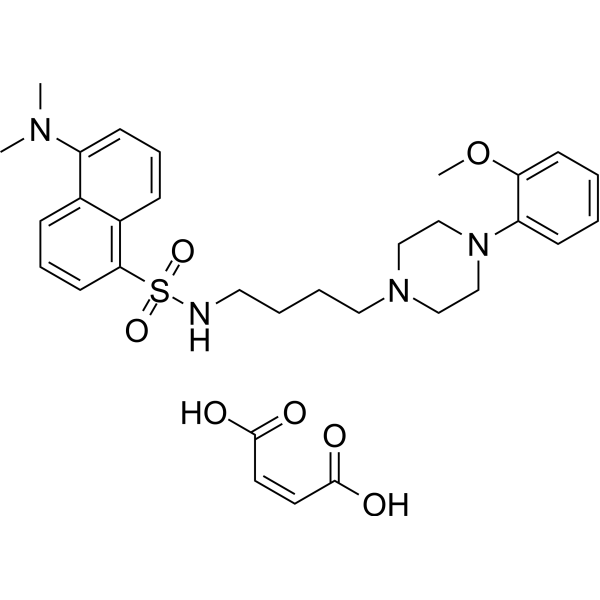
    ST-148 maleate is a potent and orally active DENV inhibitor. ST-148 maleate shows antiviral efficacy and low cell toxicity. ST-148 alters the interaction between lipid droplets and the C protein, thereby inhibiting viral replication. .
    ST-148 maleate
  • HY-115735

    SphK Apoptosis Cancer
    SKI-I is a potent and selective inhibitor of human sphingosine kinase (SK), with an IC50 of 1.2 μM for ST-hSK. SKI-I also inhibits hERK2 (IC50=11 μM). SKI-I induces apoptosis in tumor cell lines .
    SKI-I
  • HY-155193

    Interleukin Related Inflammation/Immunology
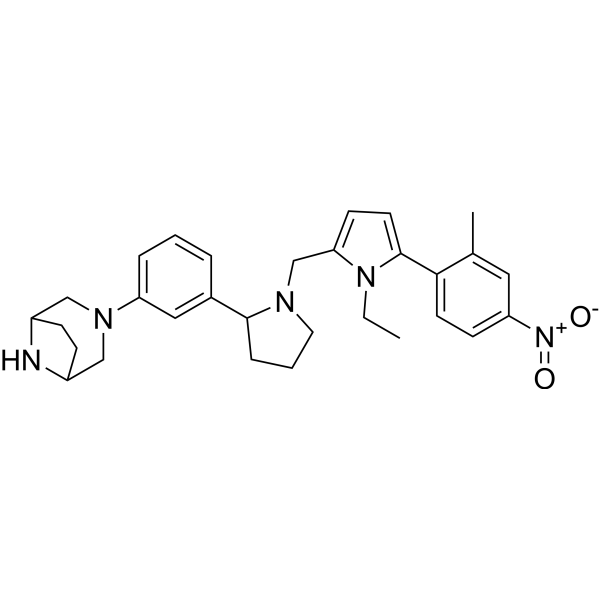
    XY-52 (Compound 32) is a Stimulation-2 (ST2) inhibitor, with an IC50 value of 5.68 μM in AlphaLISA assay, and 4.59 μM in HEK-Blue assay. XY-52 increases proinflammatory T-cell proliferation. XY-52 reduces the plasma sST2 and IFNγ biomarkers in the graft versus host disease (GVHD) mice model .
    XY-52
  • HY-169474

    PAMAM G1.0

    Biochemical Assay Reagents Cancer
    Starburst 1st Generation (PAMAM G1.0) is a Polyamidoamine (HY-164657; PAMAM) dendrimer with amine termini that has been used as a drug delivery system in vitro. Starburst 1st Generation conjugated to di-n-dodecylamine and encapsulating 5-Fluorouracil (HY-90006) increase the solubility of 5-Fluorouracil and are cytotoxic to AGS gastric adenocarcinoma cells .
    Starburst 1st generation (13.93% w/w in water)
  • HY-110122
    AZ 12216052
    1 Publications Verification

    mGluR Neurological Disease
    AZ 12216052 is a mGluR8 positive allosteric modulator, and helps mGluR8 modulate signaling inputing to retinal ganglion cells. AZ 12216052 exhibits antianxiety effect .
    AZ 12216052
  • HY-172888

    Endogenous Metabolite Sialyltransferase FAK Integrin Cancer
    SPP-037 is an orally active and selective inhibitor of ST6GAL1 (IC50 = 3.59 μM). SPP-037 inhibits integrin α2,6-sialylation and integrin-FAK-paxillin pathway. SPP-037 inhibits cancer cell proliferation, migration and exhibits antiangiogenic activity. SPP-037 has anti-tumor activity in MDA-MB-231 xenograft mouse model. SPP-037 can be used for the research of triple-negative breast cancer .
    SPP-037
  • HY-P2624A

    PAK Metabolic Disease
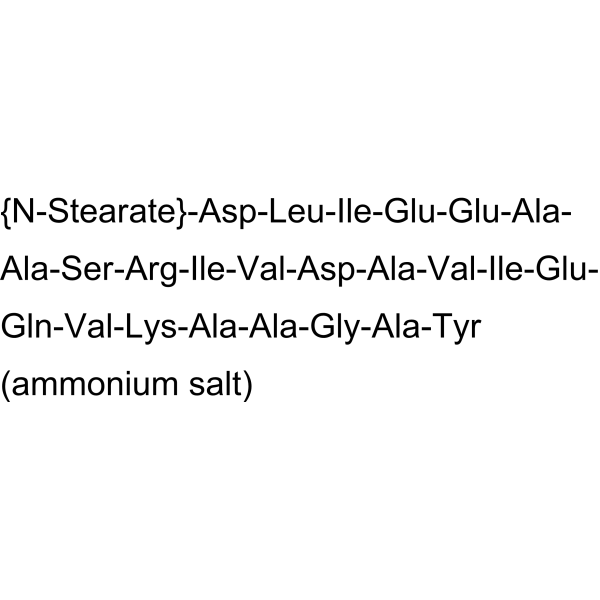
    st-Ht31 ammonium is a membrane-permeable peptide inhibitor of?protein kinase A (PKA) anchoring. st-Ht31 ammonium induces robust cholesterol/phospholipid efflux. st-Ht31 ammonium completely reverses foam cell formation and restores the metabolic health of macrophage .
    st-Ht31 ammonium
  • HY-15668

    MMP Bcl-2 Family Caspase Apoptosis Drug Derivative Cancer
    ST09 is an efficient and low toxicity Curcumin (HY-N0005) derivative. ST09 significantly inhibits cell migration and downregulates the expression of MMP1, MMP2, and Vimentin. ST09 has strong cytotoxicity to breast cancer cells, such as MDA-MB-231, MCF7 and T47D cells. ST09 induces cell apoptosis by upregulating Bax and cleaved caspase-3/9. ST09 can be used in the research of cancer such as breast cancer .
    ST09
  • HY-112806

    Drug-Linker Conjugates for ADC HDAC EGFR Microtubule/Tubulin Cancer
    ST8155AA1 is a part of antibody agent conjugates (ADCs) charged with HDAC inhibitor. ST8155AA1 induces α-tubulin, histone H3/H4 acetylation via direct enzymatic inhibition. ST8155AA1 recognizes and binds EGFR, undergoes internalization into EGFR-expressing tumor cells. ST8155AA1 inhibits cancer cell proliferation and exerts activity in mouse tumor models. ST8155AA1 can be used for the research of non-small cell lung cancer .
    ST8155AA1
  • HY-P2624

    PAK Metabolic Disease
    st-Ht31 is a membrane-permeable peptide inhibitor of protein kinase A (PKA) anchoring. st-Ht31 induces robust cholesterol/phospholipid efflux. st-Ht31 completely reverses foam cell formation and restores the metabolic health of macrophage .
    st-Ht31
  • HY-P991633

    Interleukin Related Inflammation/Immunology
    TQC2938 is a humanized IgG2 monoclonal antibody inhibitor targeting Stimulation-2 (ST2). TQC2938 inhibits the ST2/IL-33 signaling pathway, reduces the level of downstream Th2 cytokines (such as IL-4, IL-5, and IL-13) and eosinophils as well as other inflammatory cells. TQC2938 can be used for inflammatory diseases like asthma research .
    TQC2938
  • HY-163737

    Microtubule/Tubulin Cancer
    ST-401, a microtubule-targeting agent (MTA), is a brain-penetrant microtubule (MT) assembly inhibitor. ST-401 disrupts microtubule (MT) function through gentle and reverisible reduction in MT assembly that triggers mitotic delay and cell death in interphase. ST-401 shows a potent antitumor activity .
    ST-401
  • HY-120281

    MEK PI3K Akt Apoptosis Caspase Cancer
    ST-168 is an orally active MEK/PI3K inhibitor with an IC50 of 182 nM against MEK1 and IC50 values ​​of 69.2, 41.7, 1482 and 2293 nM against PI3Kα, PI3Kδ, PI3Kβ and PI3Kγ respectively. ST-168 completely inhibits the phosphorylation of ERK1/2 and AKT and induces cancer cell death in a 3D tumor sphere model. ST-168 demonstrates significant antitumor effects in the A375 melanoma mouse model. ST-168 improves the ocular toxicity profile of MEK inhibitors, showing lower caspase activation levels, indicating reduced apoptosis induction. ST-168 can be used in melanoma research .
    ST-168
  • HY-161774

    CD73 Cancer
    ST80 is an inhibitor for interaction of OTUD4 and CD73. ST80 decreases CD73 protein level, increases CD73 protein turnover, reduces immune evasion of tumor cells, and thus exhibits antitumor efficacy against immunosuppressive triple-negative breast cancer (TNBC) .
    ST80
  • HY-W060417

    Interleukin Related Inflammation/Immunology Cancer
    iST2-1 is an Stimulation-2 (ST2) inhibitor with an IC50 value of 46.65 μM, blocks interaction between ST2 and IL-33, inhibits downstream signaling. iST2-1 functions as an immunomodulator, reduces proliferation of CD4 + and CD8 + T cells, increases regulatory T cell populations, reduces IFN-γ +CD4 + T cell populations, increases Foxp3 +CD4 + regulatory T cell populations in the gastrointestinal tract. iST2-1 reduces plasma soluble ST2 and IFN-γ levels, reduces graft-versus-host disease scores, improves survival in graft-versus-host disease animal models, preserves graft-versus-tumor effect. iST2-1 can be used for the research of graft-versus-host disease .
    iST2-1
  • HY-12926

    HIV HDAC DNA/RNA Synthesis Infection
    ST7612AA1 is a histone deacetylase (HDAC) inhibitor that controls chromatin condensation and DNA transcription by removing acetyl groups from histones. ST7612AA1 is also a potent HIV reactivation inducer, and its reactivation activity is exerted without activating or proliferating CD4+T cells, and can be used in the study of HIV reactivation strategies and elimination of viral reservoirs .
    ST7612AA1
  • HY-156916

    Microtubule‐associated serine/threonine kinase (MAST) Metabolic Disease
    WAY-230563 (ST045945) is a serine/threonine kinase inhibitor that can block CHK1/CHK2-mediated cell cycle checkpoints. WAY-230563 can induce G2/M phase arrest and DNA damage in tumor cells .
    ST045945
  • HY-116543

    Apoptosis Cancer
    ST362 is a anti-cancer agent. ST362 induces cell apoptosis and inhibits cancer cell growth .
    ST362
  • HY-169084

    Glycosyltransferase Cancer
    ST-IN-1 (compound (R)-1) is a selective ST inhibitor (Ki=70 nM, rat a-2,6-ST; Ki=19 nM, hST6GAL1) with antitumor activity. ST-IN-1 inhibits tumor growth and metastasis by delipidating the surface of tumor cells .
    ST-IN-1
  • HY-N12137

    Others Cancer
    Glycoside St-J (Compound 2) is a triterpenoid saponin. Glycoside St-J has antitumor activity and inhibits HeLa cell proliferation. Glycoside St-J Isolates from natural Anemone flaccida. Glycoside St-J can be used in the development of new anticancer agents .
    Glycoside St-J
  • HY-E70288

    ST6GALNAC6

    Others Inflammation/Immunology
    ST6 Sialyltransferase 6 (ST6GALNAC6) belongs to the salivary transferase family, which modifies proteins and ceramides on the cell surface, thereby altering intercellular or extracellular matrix interactions. ST6 Sialyltransferase 6 can be used in the study of inflammatory bowel disease (IBD) .
    ST6 Sialyltransferase 6
  • HY-174607

    mRNA Inflammation/Immunology
    Human IL33 mRNA encodes the human interleukin 33 (IL33) protein, a cytokine that binds to the IL1RL1/ST2 receptor. IL33 is involved in the maturation of Th2 cells and the activation of mast cells, basophils, eosinophils and natural killer cells.
    Human IL33 mRNA
  • HY-P991369

    Sialyltransferase Cancer
    EBU-141 is a human monoclonal antibody (mAb) targeting CD75/ST6GAL1. EBU-141 can be used in B-cell lymphoma and multiple myeloma research .
    EBU-141
  • HY-E70298

    ST3GAL1

    Endogenous Metabolite Cancer
    ST3 β-Gal α-2,3-Sialyltransferase 1 (ST3GAL1) is a sialyltransferase whose overexpression in ovarian cancer cell lines enhances cell growth, migration, and invasion capabilities, as well as increases tumorigenicity and resistance to paclitaxel in vivo. ST3 β-Gal α-2,3-Sialyltransferase 1 catalyzes the transfer of sialic acid from cytidine monophosphate-sialic acid to galactose-containing substrates and can be utilized in studies of cancer progression and chemotherapy resistance .
    ST3 β-Gal α-2,3-Sialyltransferase 1
  • HY-P11298

    Caspase Apoptosis JNK p38 MAPK Interleukin Related IFNAR Inflammation/Immunology Cancer
    d-T101 peptide, a human hormone-peptide, is a T1/ST2 receptor ligand. d-T101 peptide binds to the T1/ST2 receptor and activates caspases 8, 9 and 3 mediated apoptosis, together with activation of JNKinase and p38 MAPKinase. d-T101 peptide also changes Golgi structural with function loss and downregulation of the endoplasmic reticulum (ER) stress repair mechanism. d-T101 peptide has immunostimulatory and anticancer activity, selectively induces apoptosis in proliferating cancer cells and increases IL-2 and IFN-γ expression as well as the recruitment of NK cells and M1 macrophages to the tumor site .
    d-T101 peptide
  • HY-P10873

    Nuclear Hormone Receptor 4A/NR4A Mitochondrial Metabolism Cancer
    ST-CY14 is an inhibitor for Nur77-PPARγ interaction with an EC50 of 3.15 μM, that binds to Nur77 (Kd=32 nM), blocks Nur77 from being ubiquitinated and degraded by PPARγ, reduces fatty acid uptake and mitochondrial respiration, and inhibits the transcription of CD36 and FABP4. ST-CY14 inhibits the proliferation and migration of cancer cell MCF7 and MDA-MB-231. ST-CY14 inhibits tumor growth and bone metastasis in mouse models .
    ST-CY14
  • HY-W511185

    Prostaglandin Receptor Leukotriene Receptor Inflammation/Immunology
    ST026567 is a potent mast cell activator. ST026567 induces the secretion of PGD2, LTC4 from cells. ST026567 exhibits degranulation potency .
    ST026567
  • HY-133488

    Acyltransferase Cancer
    ST1072 is a dual inhibitor of CerS4 and CerS6. ST1072 significantly reduces the ability of murine T cells to proliferate and produce IFN-γ. ST1072 can be used for hematologic malignancies research .
    ST1072
  • HY-E70301

    ST8SIA4

    Endogenous Metabolite Cancer
    ST8 alpha-2,8-Sialyltransferase 4 (ST8SIA4) is a sialyltransferase that participates in the sialylation mechanism. ST8 alpha-2,8-Sialyltransferase 4 has also been implicated in breast cancer development and mediates cell proliferation and invasion of cancer cells in a sialyltransferase-dependent manner .
    ST8 alpha-2,8-Sialyltransferase 4
  • HY-182564

    CCR Cancer
    ST45177901 is a CC chemokine receptor 4 (CCR4) antagonist. The combination of ST45177901 and Sorafenib (HY-10201) effectively inhibits the chemotaxis of Treg cells via the CCL22/CCL17-CCR4 signaling pathway, thereby significantly suppressing the growth and metastasis of tumor cells. ST45177901 is applicable to liver cancer research .
    ST45177901
  • HY-179654

    HDAC Apoptosis Cancer
    ST13, an ortho-hydroxyanilide, is a selective, slow- and tight-binding HDAC1 and HDAC2 inhibitor with IC50s of 23 nM and 49 nM, respectively. ST13 shows a weak inhibition of HDAC3 (IC50 = 4.30 μM) and HDAC6 (IC50 > 10 μM). The induced fit mechanism of ST13 proceeds through a two-step process: first, the enzyme and inhibitor rapidly form a collision complex (EI), which then slowly transforms into the stable complex E*I. ST13 induces apoptosis in cancer cells. ST13 can be used for the study of melanoma and triple-negative breast .
    ST13
  • HY-159803

    6-O-(3-Ethoxypropionyl)-3',4'-O-exo-benzylidenechartreusin

    Endogenous Metabolite Cancer
    IST-622 (6-O-(3-Ethoxypropionyl)-3',4'-O-exo-benzylidenechartreusin) is an anti-tumor agent with significant growth inhibitory activity. IST-622 exhibits significant anti-tumor effects against a variety of mouse tumors such as P388 and L1210 leukemias, B16 melanoma, Lewis lung carcinoma, Colon 26 and Colon 38 adenocarcinomas, and M5076 reticulum cell sarcoma. IST-622 was orally administered and the results showed efficacy in different tumor types. In addition, IST-622 provided significant inhibitory effects against two human tumor xenograft models: large cell lung carcinoma (Lu-116) and gastric adenocarcinoma (St-4). IST-622 also exhibited significant growth inhibitory activity against P388 leukemia in vitro, with a half inhibitory concentration (IC50) more than 20 times lower than CT .
    IST-622

Inquiry Online

Your information is safe with us. * Required Fields.

Salutation


Country or Region *

Applicant Name *


Organization Name *

Department *


Email Address *


Product Name *

Cat. No.


Requested quantity *

Phone Number *


Remarks

Inquiry Online

Inquiry Information

Product Name:
Cat. No.:
Quantity:
MCE Japan Authorized Agent:

