Search Result
Results for "
Toll-like receptors 7
" in MedChemExpress (MCE) Product Catalog:
2
Biochemical Assay Reagents
8
Isotope-Labeled Compounds
| Cat. No. |
Product Name |
Target |
Research Areas |
Chemical Structure |
-
- HY-13740
-
-
-
- HY-W031727
-
|
|
Parasite
Toll-like Receptor (TLR)
SARS-CoV
Autophagy
|
Infection
Cancer
|
|
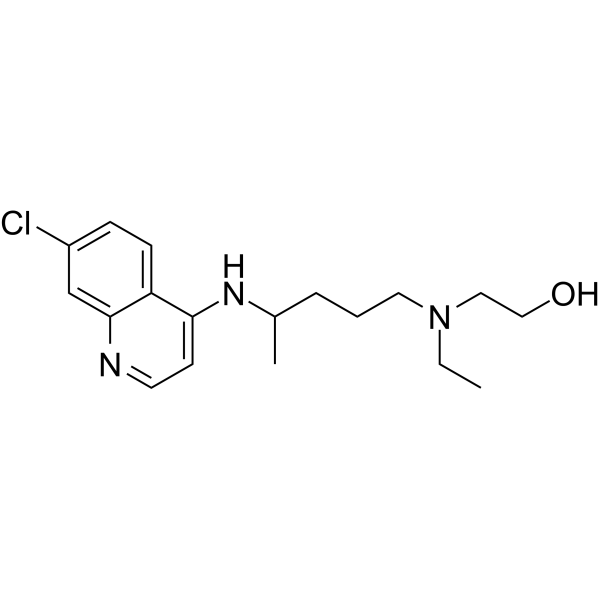
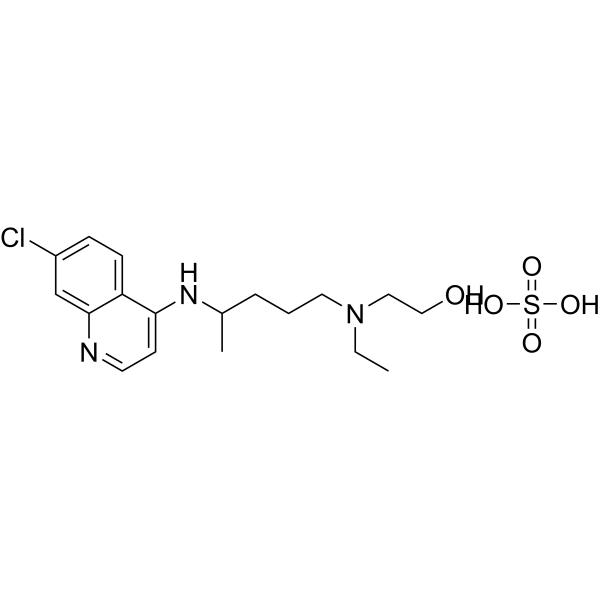
Hydroxychloroquine (HCQ) is a synthetic oral antimalarial drug that can be used in the study of malaria and autoimmune diseases such as systemic lupus erythematosus and rheumatoid arthritis. Hydroxychloroquine is a potent autophagic flux inhibitor with antiviral activity (such as SARS-CoV-2 virus) that inhibits Toll-like receptor 7/9 (TLR7/9) signaling .
|
-
-
- HY-B0180
-
-
-
- HY-B1370
-
-
-
- HY-B0180A
-
-
-
- HY-109104
-
|
MEDI9197; 3M-052
|
Toll-like Receptor (TLR)
|
Cancer
|
|
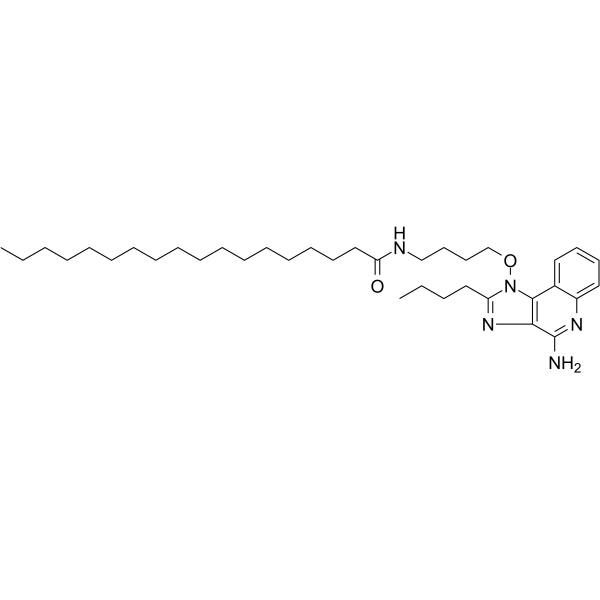
Telratolimod (MEDI9197) is a potent toll like receptors 7/8 (TLR7/8) agonist, with antitumor activity .
|
-
-
- HY-103039
-
-
-
- HY-115400
-
1V209
4 Publications Verification
TLR7 agonist T7
|
Toll-like Receptor (TLR)
|
Cancer
|
|
1V209 (TLR7 agonist T7) is a Toll-like receptor 7 (TLR7) agonist and has anti-tumor effects. 1V209 can be conjugated with various polysaccharides to improve its water solubility, and enhance its efficacy, and maintain low toxicity .
|
-
-
- HY-111582
-
|
|
Toll-like Receptor (TLR)
|
Inflammation/Immunology
|
|
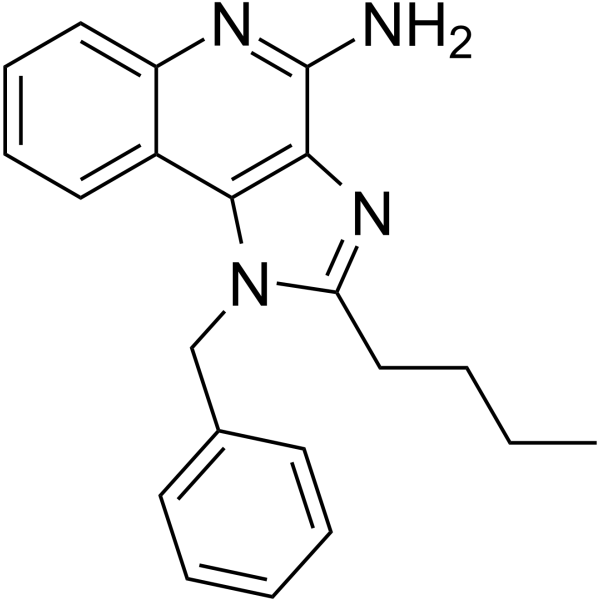
BBIQ is a imidazoquinoline compound and a potent and selectively toll-like receptor 7 (TLR7) agonist with an EC50 of 59.1 nM for human TLR7. BBIQ is a powerful vaccine adjuvant that enhances innate immune responses .
|
-
-
- HY-13740G
-
|
R848; S28463
|
Toll-like Receptor (TLR)
|
Inflammation/Immunology
Cancer
|
|
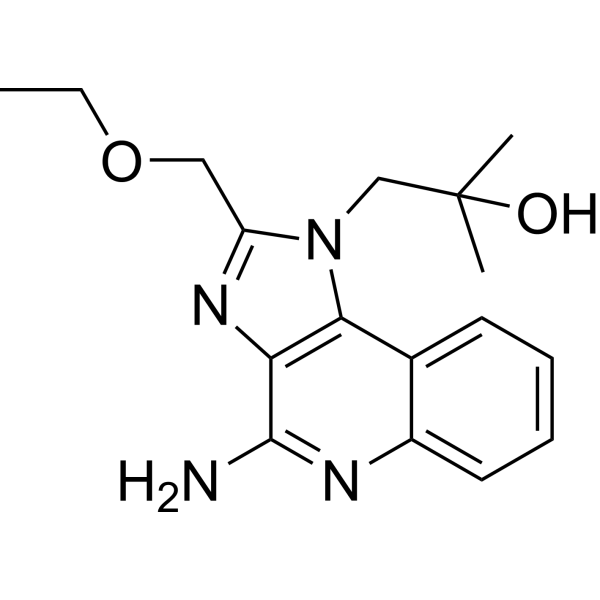
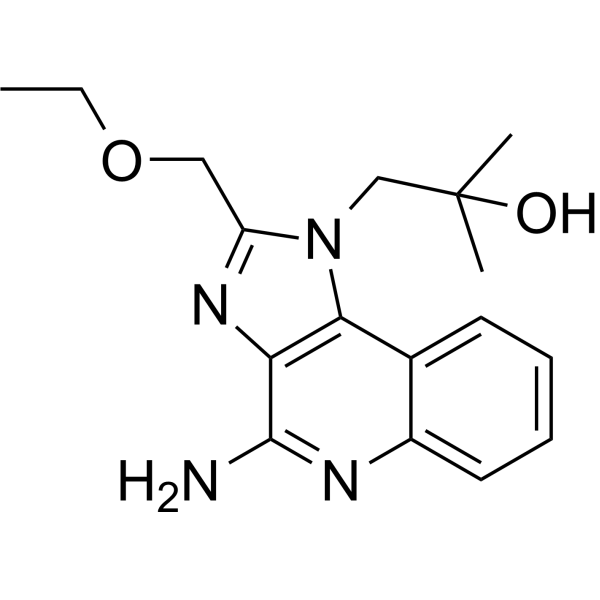
Resiquimod (R848) (GMP) is Resiquimod (HY-13740) produced by using GMP guidelines. GMP small molecules work appropriately as an auxiliary reagent for cell therapy manufacture. Resiquimod is a Toll-like receptor 7 and 8 (TLR7/TLR8) agonist. Resiquimod (GMP) can induce human mMDSC to mature into inflammatory macrophages .
|
-
-
- HY-111269
-
-
-
- HY-110120
-
|
|
Toll-like Receptor (TLR)
|
Cancer
|
|
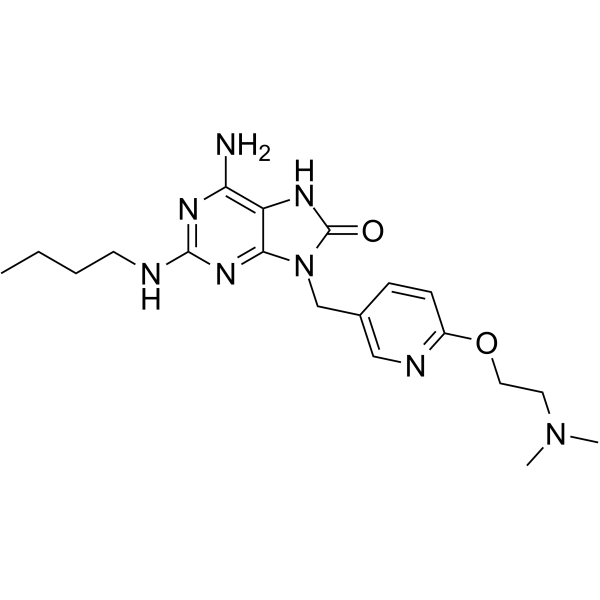
DSR-6434 is a potent and selective Toll-like receptor 7 (TLR7) agonist, with EC50s of 7.2 nM and 4.6 nM for human and mice TLR7, respectively. DSR-6434 has a strong antitumor effect .
|
-
-
- HY-B1370R
-
|
HCQ sulfate (Standard)
|
Reference Standards
Parasite
Toll-like Receptor (TLR)
SARS-CoV
Autophagy
|
Infection
Cancer
|
|
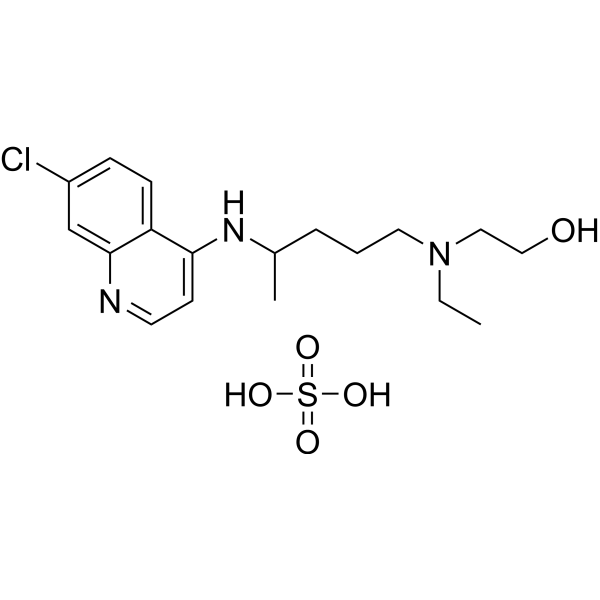
Hydroxychloroquine (sulfate) (Standard) is the analytical standard of Hydroxychloroquine (sulfate). This product is intended for research and analytical applications. Hydroxychloroquine sulfate (HCQ sulfate) is a synthetic antimalarial agent which can also inhibit Toll-like receptor 7/9 (TLR7/9) signaling. Hydroxychloroquine sulfate is efficiently inhibits SARS-CoV-2 infection in vitro .
|
-
-
- HY-B0180B
-
-
-
- HY-131952
-
-
-
- HY-134315
-
|
|
Nucleoside Antimetabolite/Analog
|
Others
|
|
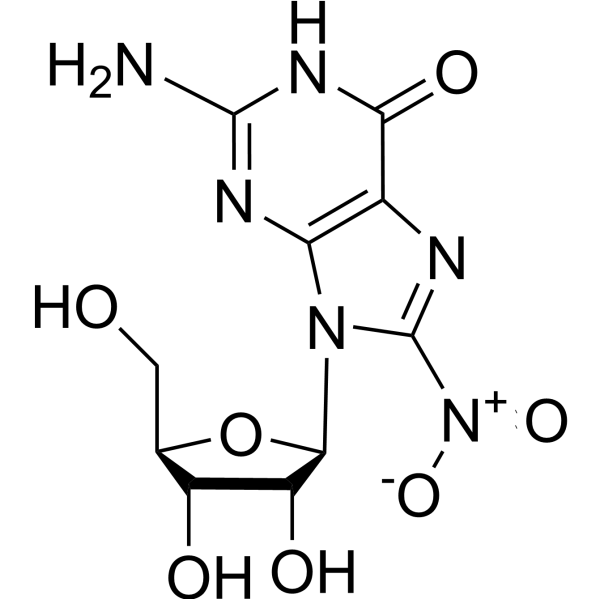
8-Nitroguanosine is a guanosine analogue. Some guanosine analogs have immunostimulatory activity. In some animal models, they also induce type I interferons, producing antiviral effects. Studies have shown that the functional activity of guanosine analogs is dependent on the activation of Toll-like receptor 7 (TLR7) .
|
-
-
- HY-154484
-
|
|
Nucleoside Antimetabolite/Analog
Phosphoramidites
|
Cancer
|
|
3’-O-Me-G(iBu)-2’-phosphoramidite is a guanosine analog. Some guanosine analogs have immunostimulatory activity. In some animal models, they also induce type I interferons, producing antiviral effects. Studies have shown that the functional activity of guanosine analogs is dependent on the activation of Toll-like receptor 7 (TLR7) .
|
-
-
- HY-118250
-
|
|
Toll-like Receptor (TLR)
IFNAR
TNF Receptor
|
Inflammation/Immunology
|
|
GSK2245035 is a highly potent and selective intranasal Toll-Like receptor 7 (TLR7) agonist with preferential Type-1 interferon (IFN)-stimulating properties. GSK2245035 has pEC50s of 9.3 and 6.5 for IFNα and TFNα. GSK2245035 effectively suppresses allergen-induced Th2 cytokine production in human peripheral blood cell cultures. GSK2245035 is used for asthma .
|
-
-
- HY-152684
-
|
|
Nucleoside Antimetabolite/Analog
|
Others
|
|
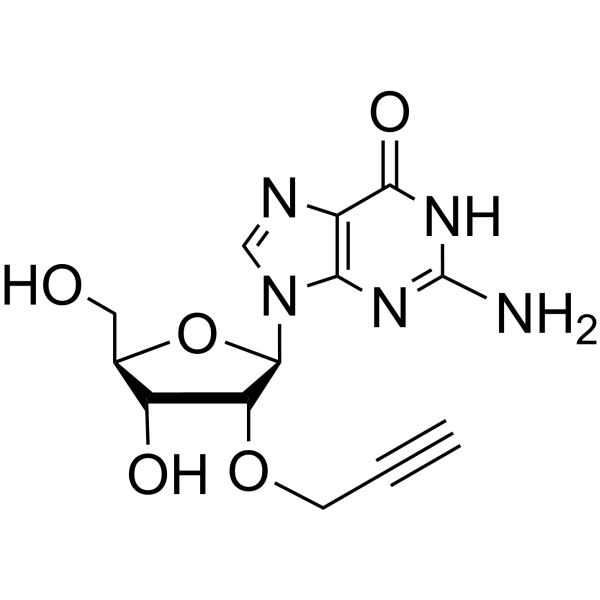
2′-O-2-Propyn-1-ylguanosine is a guanosine analogue. Some guanosine analogs have immunostimulatory activity. In some animal models, they also induce type I interferons, producing antiviral effects. Studies have shown that the functional activity of guanosine analogs is dependent on the activation of Toll-like receptor 7 (TLR7) . 2′-O-2-Propyn-1-ylguanosine is a click chemistry reagent, it contains an Alkyne group and can undergo copper-catalyzed azide-alkyne cycloaddition (CuAAc) with molecules containing Azide groups.
|
-
-
- HY-177617
-
|
IMO-8400
|
Toll-like Receptor (TLR)
|
Inflammation/Immunology
|
|
Bazlitoran (IMO-8400) is an oligonucleotide-based TLR7/8/9 antagonist. Bazlitoran blocks the activation of Toll-like receptors 7, 8, and 9. Bazlitoran inhibits cytokine responses mediated by Toll-like receptors 7, 8, and 9. Bazlitoran is associated with injection site reactions. Bazlitoran improves moderate-to-severe plaque psoriasis .
|
-
-
- HY-13740S
-
-
-
- HY-W031727R
-
|
|
Reference Standards
Parasite
Toll-like Receptor (TLR)
SARS-CoV
Autophagy
|
Infection
Cancer
|
|
Hydroxychloroquine (HCQ) is a synthetic oral antimalarial drug that can be used in the study of malaria and autoimmune diseases such as systemic lupus erythematosus and rheumatoid arthritis. Hydroxychloroquine is a potent autophagic flux inhibitor with antiviral activity (such as SARS-CoV-2 virus) that inhibits Toll-like receptor 7/9 (TLR7/9) signaling .
|
-
-
- HY-177617A
-
|
IMO-8400 sodium
|
Toll-like Receptor (TLR)
|
Inflammation/Immunology
|
|
Bazlitoran sodium (IMO-8400 sodium) is an oligonucleotide-based TLR7/8/9 antagonist. Bazlitoran sodium blocks the activation of Toll-like receptors 7, 8, and 9. Bazlitoran sodium inhibits cytokine responses mediated by Toll-like receptors 7, 8, and 9. Bazlitoran sodium is associated with injection site reactions. Bazlitoran sodium improves moderate-to-severe plaque psoriasis .
|
-
-
- HY-B1370B
-
|
(R)-HCQ
|
Parasite
Toll-like Receptor (TLR)
SARS-CoV
Autophagy
|
Infection
|
|
(R)-Hydroxychloroquine is the enantiomer of Hydroxychloroquine . Hydroxychloroquine is a synthetic antimalarial agent which can also inhibit Toll-like receptor 7/9 (TLR7/9) signaling. Hydroxychloroquine is efficiently inhibits SARS-CoV-2 infection in vitro .
|
-
-
- HY-137406
-
|
|
Nucleoside Antimetabolite/Analog
|
Others
|
|
1,2'-O-Dimethylguanosine is a guanosine analogue. Some guanosine analogs have immunostimulatory activity. In some animal models, they also induce type I interferons, producing antiviral effects. Studies have shown that the functional activity of guanosine analogs is dependent on the activation of Toll-like receptor 7 (TLR7) .
|
-
-
- HY-152493
-
|
|
Nucleoside Antimetabolite/Analog
|
Others
|
|
3’-O-(2-Methoxyethyl)guanosine is a guanosine analogue. Some guanosine analogs have immunostimulatory activity. In some animal models, they also induce type I interferons, producing antiviral effects. Studies have shown that the functional activity of guanosine analogs is dependent on the activation of Toll-like receptor 7 (TLR7) .
|
-
-
- HY-158694A
-
|
|
Toll-like Receptor (TLR)
|
Inflammation/Immunology
|
|
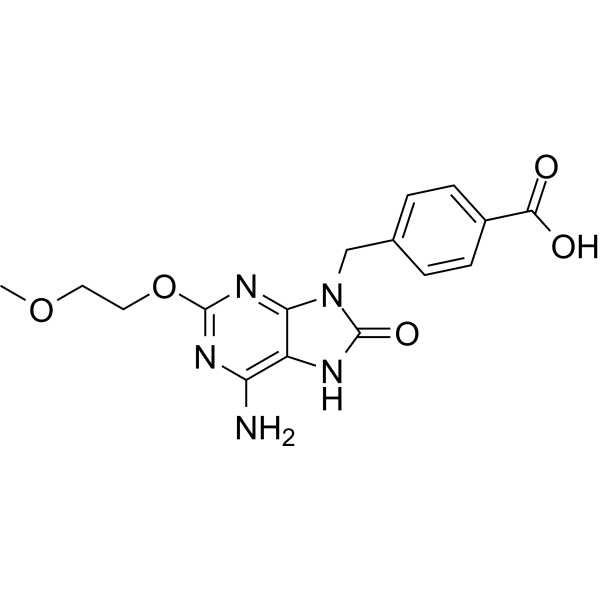
TLR7 agonist 20 hydrochloride is a selective Toll-like receptor 7 (TLR7) agonist with an EC50 of 0.22 μM. TLR7 agonist 20 hydrochloride, as an immunostimulant and vaccine adjuvant, enhances the production of anti-spike protein antibodies, increases IgG2b and IgG2c levels, and thereby drives Th1-type immune responses in mice. TLR7 agonist 20 hydrochloride can be used in studies related to non-inflammatory potent vaccine adjuvants .
|
-
-
- HY-B0180R
-
|
R 837 (Standard)
|
Reference Standards
Toll-like Receptor (TLR)
Autophagy
SARS-CoV
HSV
|
Infection
Inflammation/Immunology
Cancer
|
|
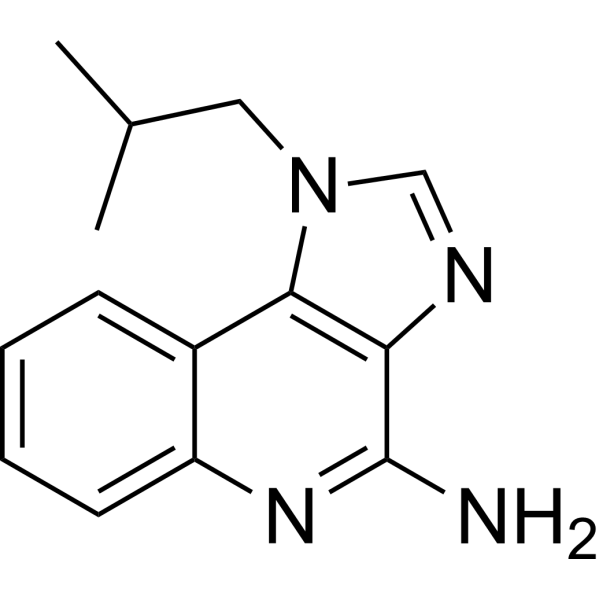
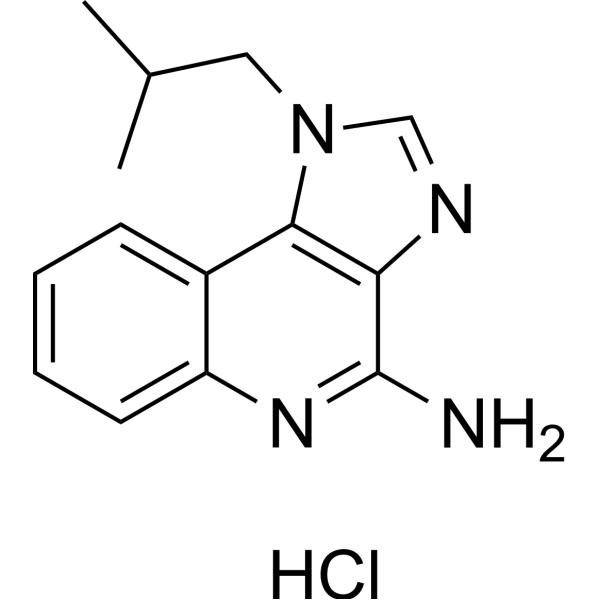
Imiquimod (Standard) is the analytical standard of Imiquimod. This product is intended for research and analytical applications. Imiquimod (R 837), an immune response modifier, is a selective toll like receptor 7 (TLR7) agonist. Imiquimod exhibits antiviral and antitumor effects in vivo. Imiquimod can be used for the research of external genital, perianal warts, cancer and COVID-19 .
|
-
-
- HY-139575
-
-
-
- HY-B1370A
-
|
(S)-HCQ
|
Parasite
Toll-like Receptor (TLR)
SARS-CoV
Autophagy
|
Infection
|
|
(S)-Hydroxychloroquine ((S)-HCQ) is the enantiomer of Hydroxychloroquine . Hydroxychloroquine, a synthetic antimalarial agent, inhibits Toll-like receptor 7/9 (TLR7/9) signaling, and shows efficiently inhibits SARS-CoV-2 infection in vitro .
|
-
-
- HY-131262
-
|
4-[(7-Chloro-4-quinolinyl)amino]-1-pentanol
|
SARS-CoV
Toll-like Receptor (TLR)
|
Others
|
|
Hydroxychloroquine Impurity E is the impurity of Hydroxychloroquine. Hydroxychloroquine is a synthetic antimalarial agent which can also inhibit Toll-like receptor 7/9 (TLR7/9) signaling. Hydroxychloroquine is efficiently inhibits SARS-CoV-2 infection in vitro .
|
-
-
- HY-W031727S
-
-
-
- HY-154332
-
|
|
Nucleoside Antimetabolite/Analog
|
Cancer
|
|
8-(Phenylmethoxy)guanosine is a guanosine analog. Some guanosine analogs have immunostimulatory activity. In some animal models, they also induce type I interferons, producing antiviral effects. Studies have shown that the functional activity of guanosine analogs is dependent on the activation of Toll-like receptor 7 (TLR7) .
|
-
-
- HY-152430
-
|
|
Nucleoside Antimetabolite/Analog
|
Cancer
|
|
8-Hydroxymethyl guanosine is a guanosine analog. Some guanosine analogs have immunostimulatory activity. In some animal models, they also induce type I interferons, producing antiviral effects. Studies have shown that the functional activity of guanosine analogs is dependent on the activation of Toll-like receptor 7 (TLR7) .
|
-
-
- HY-B1370S
-
-
-
- HY-144497
-
-
-
- HY-W130878
-
|
|
Complement System
Toll-like Receptor (TLR)
NF-κB
|
Inflammation/Immunology
|
|
4-Octylphenol is a hormone disruptor that has gender-specific effects on male reproductive cells, significantly reducing the mitotic index and the number of spermatogonia. 4-Octylphenol can cause inflammatory damage to fish gills by activating the complement system through the C3a/C3aR axis and the C5a/C5aR1 axis, this leads to complement activation and causes immune suppression due to the imbalance between Th1/Th2 cells and regulatory T cells (Treg)/Th17 cells, as well as inflammatory damage via the Toll-like receptor 7 (Toll-like Receptor (TLR))/IκBα/NF-κB pathway .
|
-
-
- HY-152547
-
|
|
Nucleoside Antimetabolite/Analog
|
Cancer
|
|
N2-[(N,N-Dimethyl amino]methylene-N1-methyl-2’-O-methylguanosine is a guanosine analog. Some guanosine analogs have immunostimulatory activity. In some animal models, they also induce type I interferons, producing antiviral effects. Studies have shown that the functional activity of guanosine analogs is dependent on the activation of Toll-like receptor 7 (TLR7) .
|
-
-
- HY-154464
-
|
|
Nucleoside Antimetabolite/Analog
Phosphoramidites
|
Cancer
|
|
N2-iso-Butyroyl-5'-O-DMT-3'-deoxy-3'-fluoroguanosine is a guanosine analog. Some guanosine analogs have immunostimulatory activity. In some animal models, they also induce type I interferons, producing antiviral effects. Studies have shown that the functional activity of guanosine analogs is dependent on the activation of Toll-like receptor 7 (TLR7) .
|
-
-
- HY-152478
-
|
|
Nucleoside Antimetabolite/Analog
|
Cancer
|
|
3’-β-C-Ethynylguanosine is a guanosine analog. Some guanosine analogs have immunostimulatory activity. In some animal models, they also induce type I interferons, producing antiviral effects. Studies have shown that the functional activity of guanosine analogs is dependent on the activation of Toll-like receptor 7 (TLR7) . 3’-β-C-Ethynylguanosine is a click chemistry reagent, it contains an Alkyne group and can undergo copper-catalyzed azide-alkyne cycloaddition (CuAAc) with molecules containing Azide groups.
|
-
-
- HY-13740R
-
|
R848 (Standard); S28463 (Standard)
|
Toll-like Receptor (TLR)
HCV
Reference Standards
|
Inflammation/Immunology
Cancer
|
|
Resiquimod (Standard) is the analytical standard of Resiquimod. This product is intended for research and analytical applications. Resiquimod is a Toll-like receptor 7 and 8 (TLR7/TLR8) agonist that induces the upregulation of cytokines such as TNF-α, IL-6 and IFN-α.
|
-
-
- HY-169017
-
|
|
Toll-like Receptor (TLR)
|
Cancer
|
MTT5 is a toll-like receptor 7 (TLR7) agonist. MTT5 can couple with Deruxtecan (HY-13631E) and exert anti-tumor activity in HER2 positive solid tumors through tumor cell killing and immune activation .
|
-
-
- HY-W031727S1
-
|
|
Autophagy
SARS-CoV
Toll-like Receptor (TLR)
Parasite
|
Cancer
|
|
Hydroxychloroquine-d5 is the deuterium labeled Hydroxychloroquine . Hydroxychloroquine is a synthetic antimalarial agent which can also inhibit Toll-like receptor 7/9 (TLR7/9) signaling. Hydroxychloroquine is efficiently inhibits SARS-CoV-2 infection in vitro .
|
-
-
- HY-154549
-
|
|
Nucleoside Antimetabolite/Analog
Phosphoramidites
|
Cancer
|
|
3’-O-MOE-G(iBu)-2’-phosphoramidite is a guanosine analog. Some guanosine analogs have immunostimulatory activity. In some animal models, they also induce type I interferons, producing antiviral effects. Studies have shown that the functional activity of guanosine analogs is dependent on the activation of Toll-like receptor 7 (TLR7) .
|
-
-
- HY-152993
-
|
|
Nucleoside Antimetabolite/Analog
|
Others
|
|
2′-Deoxy-N-(2-furanylmethyl)guanosine is a guanosine analog. Some guanosine analogs have immunostimulatory activity. In some animal models, they also induce type I interferons, producing antiviral effects. Studies have shown that the functional activity of guanosine analogs is dependent on the activation of Toll-like receptor 7 (TLR7) .
|
-
-
- HY-153543
-
|
|
Toll-like Receptor (TLR)
|
Cancer
|
|
TLR7/8 agonist 8 (compound 24m) is a potent toll-like receptor 7/8 (TLR7/8) dual agonist, with EC50s of 27 and 12 nM for hTLR7 and hTLR8, respectively. TLR7/8 agonist 8 can improve the antitumor activity of PD-1/PD-L1 blockade .
|
-
-
- HY-154351
-
|
|
Nucleoside Antimetabolite/Analog
Phosphoramidites
|
Cancer
|
|
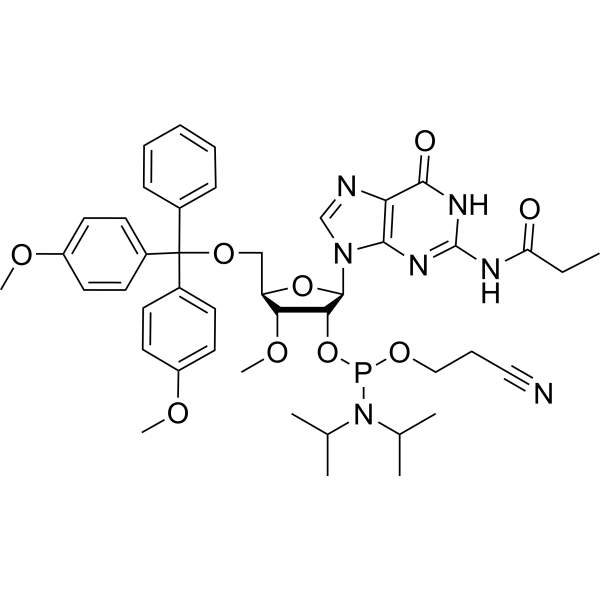
N2-iBu-5’-O-DMTr-2’-O-propargylguanosine-3’-CED-phosphoramidite is a guanosine analog. Some guanosine analogs have immunostimulatory activity. In some animal models, they also induce type I interferons, producing antiviral effects. Studies have shown that the functional activity of guanosine analogs is dependent on the activation of Toll-like receptor 7 (TLR7) .
|
-
-
- HY-162649
-
|
|
Toll-like Receptor (TLR)
NF-κB
p38 MAPK
|
Inflammation/Immunology
|
|
TIC10g is a dual inhibitor for toll-like receptor 7 and 9 (TLR7 and TLR9), which inhibits TLR7 and TLR9 mediated TNF-α release in mouse macrophages (IC50 is 14.5 μM and 6.5 μM) and human B lymphocytes (IC50 is 7.69 μM and 11.5 μM). TIC10g inhibits the activation of NF-κB and MAPK, and exhibits anti-inflammatory activity against systemic lupus erythematosus and rheumatoid arthritis .
|
-
-
- HY-158694
-
|
|
Toll-like Receptor (TLR)
|
Inflammation/Immunology
|
|
TLR7 agonist 20 is a selective Toll-like receptor 7 (TLR7) agonist with an EC50 of 0.22 μM. TLR7 agonist 20, as an immunostimulant and vaccine adjuvant, enhances the production of anti-spike protein antibodies, increases IgG2b and IgG2c levels, and thereby drives Th1-type immune responses in mice. TLR7 agonist 20 can be used in studies related to non-inflammatory potent vaccine adjuvants .
|
-
-
- HY-B0180S1
-
-
- HY-B0180S
-
-
- HY-B0180BR
-
|
|
Toll-like Receptor (TLR)
Autophagy
SARS-CoV
HSV
Reference Standards
|
Infection
Inflammation/Immunology
Cancer
|
|
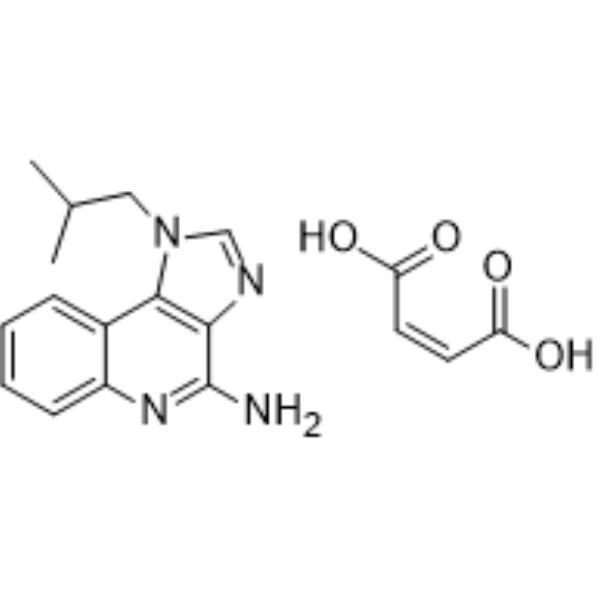
Imiquimod (maleate) (Standard) is the analytical standard of Imiquimod (maleate). This product is intended for research and analytical applications. Imiquimod maleate (R 837 maleate), an immune response modifier, is a selective toll like receptor 7 (TLR7) agonist. Imiquimod maleate exhibits antiviral and antitumor effects in vivo. Imiquimod maleate can be used for the research of external genital, perianal warts, cancer and COVID-19 .
|
-
- HY-B0180AR
-
|
R 837 hydrochloride (Standard)
|
Toll-like Receptor (TLR)
Autophagy
SARS-CoV
HSV
Reference Standards
|
Infection
Inflammation/Immunology
Cancer
|
|
Imiquimod (hydrochloride) (Standard) is the analytical standard of Imiquimod (hydrochloride). This product is intended for research and analytical applications. Imiquimod hydrochloride (R 837 hydrochloride), an immune response modifier, is a selective toll like receptor 7 (TLR7) agonist. Imiquimod hydrochloride exhibits antiviral and antitumor effects in vivo. Imiquimod hydrochloride can be used for the research of external genital, perianal warts, cancer and COVID-19 .
|
-
- HY-139575A
-
-
- HY-162163
-
|
|
Toll-like Receptor (TLR)
|
Cancer
|
|
TLR7 agonist 19 (Compound 14) is a Toll-like receptor 7 (TLR7) agonist with excellent pharmacokinetic properties and synergistic antitumor activity.
|
-
- HY-168157
-
-
- HY-174521
-
|
|
mRNA
|
Inflammation/Immunology
|
|
Human TLR7 mRNA encodes the human toll like receptor 7 (TLR7) protein, a member of the Toll-like receptor (TLR) family which plays a fundamental role in pathogen recognition and activation of innate immunity. TLR7 senses single-stranded RNA oligonucleotides containing guanosine- and uridine-rich sequences from RNA viruses, a recognition occuring in the endosomes of plasmacytoid dendritic cells and B cells.
|
-
- HY-131263
-
|
|
Drug Metabolite
|
Others
|
|
Hydroxychloroquine Impurity F is the impurity of Hydroxychloroquine. Hydroxychloroquine is a synthetic antimalarial agent which can also inhibit Toll-like receptor 7/9 (TLR7/9) signaling. Hydroxychloroquine is efficiently inhibits SARS-CoV-2 infection in vitro .
|
-
- HY-152610
-
|
|
Nucleoside Antimetabolite/Analog
|
Others
|
|
3′-C-Methylguanosine is a guanosine analogue. Some guanosine analogs have immunostimulatory activity. In some animal models, they also induce type I interferons, producing antiviral effects. Studies have shown that the functional activity of guanosine analogs is dependent on the activation of Toll-like receptor 7 (TLR7) .
|
-
- HY-152517
-
|
|
Nucleoside Antimetabolite/Analog
|
Others
|
|
8-(Methylthio)guanosine is a guanosine analogue. Some guanosine analogs have immunostimulatory activity. In some animal models, they also induce type I interferons, producing antiviral effects. Studies have shown that the functional activity of guanosine analogs is dependent on the activation of Toll-like receptor 7 (TLR7) .
|
-
- HY-154111
-
|
|
Nucleoside Antimetabolite/Analog
|
Cancer
|
|
8-(N-Boc-aminomethyl)guanosine is a guanosine analog. Some guanosine analogs have immunostimulatory activity. In some animal models, they also induce type I interferons, producing antiviral effects. Studies have shown that the functional activity of guanosine analogs is dependent on the activation of Toll-like receptor 7 (TLR7) .
|
-
- HY-152673
-
|
|
Nucleoside Antimetabolite/Analog
|
Cancer
|
|
9-(β-D-Xylofuranosyl)guanine is a guanosine analog. Some guanosine analogs have immunostimulatory activity. In some animal models, they also induce type I interferons, producing antiviral effects. Studies have shown that the functional activity of guanosine analogs is dependent on the activation of Toll-like receptor 7 (TLR7) .
|
-
- HY-154506
-
|
|
Nucleoside Antimetabolite/Analog
|
Cancer
|
|
N2-Phenoxyacetylguanosine is a guanosine analog. Some guanosine analogs have immunostimulatory activity. In some animal models, they also induce type I interferons, producing antiviral effects. Studies have shown that the functional activity of guanosine analogs is dependent on the activation of Toll-like receptor 7 (TLR7) .
|
-
- HY-152742
-
|
|
Nucleoside Antimetabolite/Analog
|
Others
|
|
8-(N,N-Dimethylaminomethyl)guanosine is a guanosine analogue. Some guanosine analogs have immunostimulatory activity. In some animal models, they also induce type I interferons, producing antiviral effects. Studies have shown that the functional activity of guanosine analogs is dependent on the activation of Toll-like receptor 7 (TLR7) .
|
-
- HY-152652
-
|
|
Nucleoside Antimetabolite/Analog
|
Cancer
|
|
5’(R)-C-Methylguanosine is a guanosine analog. Some guanosine analogs have immunostimulatory activity. In some animal models, they also induce type I interferons, producing antiviral effects. Studies have shown that the functional activity of guanosine analogs is dependent on the activation of Toll-like receptor 7 (TLR7) .
|
-
- HY-128139
-
|
2'-C-beta-Methylguanosine
|
Nucleoside Antimetabolite/Analog
|
Others
|
|
2'-C-Methylguanosine (2'-C-beta-Methylguanosine) is a guanosine analogue. Some guanosine analogs have immunostimulatory activity. In some animal models, they also induce type I interferons, producing antiviral effects. Studies have shown that the functional activity of guanosine analogs is dependent on the activation of Toll-like receptor 7 (TLR7) .
|
-
- HY-154336
-
|
|
Nucleoside Antimetabolite/Analog
|
Cancer
|
|
N-[2-[4-(1-Methylethyl)phenoxy]acetyl]guanosine is a guanosine analog. Some guanosine analogs have immunostimulatory activity. In some animal models, they also induce type I interferons, producing antiviral effects. Studies have shown that the functional activity of guanosine analogs is dependent on the activation of Toll-like receptor 7 (TLR7) .
|
-
- HY-152991
-
|
|
Nucleoside Antimetabolite/Analog
|
Others
|
|
2′-Deoxy-N-(2-furanylmethyl)guanosine is a guanosine analog. Some guanosine analogs have immunostimulatory activity. In some animal models, they also induce type I interferons, producing antiviral effects. Studies have shown that the functional activity of guanosine analogs is dependent on the activation of Toll-like receptor 7 (TLR7) .
|
-
- HY-111582G
-
|
|
Toll-like Receptor (TLR)
|
Inflammation/Immunology
|
|
BBIQ (GMP) is BBIQ (HY-111582) produced by using GMP guidelines. GMP small molecules works appropriately as an auxiliary reagent for cell therapy manufacture. BBIQ is a potent and selectively toll-like receptor 7 (TLR7) agonist with an EC50 of 59.1 nM. BBIQ is a powerful vaccine adjuvant that enhances innate immune responses .
|
-
- HY-154482
-
|
|
Nucleoside Antimetabolite/Analog
|
Cancer
|
|
N2-iso-Butyroyl-3’-O-methylguanosine is a guanosine analog. Some guanosine analogs have immunostimulatory activity. In some animal models, they also induce type I interferons, producing antiviral effects. Studies have shown that the functional activity of guanosine analogs is dependent on the activation of Toll-like receptor 7 (TLR7) .
|
-
- HY-154448
-
|
|
Nucleoside Antimetabolite/Analog
|
Cancer
|
|
3,5-Bis-O-(2,4-dichlorobenzyl)guanosine is a guanosine analog. Some guanosine analogs have immunostimulatory activity. In some animal models, they also induce type I interferons, producing antiviral effects. Studies have shown that the functional activity of guanosine analogs is dependent on the activation of Toll-like receptor 7 (TLR7) .
|
-
- HY-152988
-
|
|
Nucleoside Antimetabolite/Analog
Phosphoramidites
|
Others
|
|
N2-iso-Butyroyl-7'-O-DMT-morpholinoguanine is a guanosine analog. Some guanosine analogs have immunostimulatory activity. In some animal models, they also induce type I interferons, producing antiviral effects. Studies have shown that the functional activity of guanosine analogs is dependent on the activation of Toll-like receptor 7 (TLR7) .
|
-
- HY-152992
-
|
|
Nucleoside Antimetabolite/Analog
|
Others
|
|
7-Cyano-7-deaza-2'-deoxy guanosine is a guanosine analog. Some guanosine analogs have immunostimulatory activity. In some animal models, they also induce type I interferons, producing antiviral effects. Studies have shown that the functional activity of guanosine analogs is dependent on the activation of Toll-like receptor 7 (TLR7) .
|
-
- HY-152797
-
|
|
Nucleoside Antimetabolite/Analog
|
Others
|
|
N4-Desmethyl-N5-Methyl wyosine is a guanosine analogue. Some guanosine analogs have immunostimulatory activity. In some animal models, they also induce type I interferons, producing antiviral effects. Studies have shown that the functional activity of guanosine analogs is dependent on the activation of Toll-like receptor 7 (TLR7) .
|
-
- HY-154547
-
|
|
Nucleoside Antimetabolite/Analog
|
Cancer
|
|
N2-iso-Butyroyl-3’-O-(methoxyethyl)guanosine is a guanosine analog. Some guanosine analogs have immunostimulatory activity. In some animal models, they also induce type I interferons, producing antiviral effects. Studies have shown that the functional activity of guanosine analogs is dependent on the activation of Toll-like receptor 7 (TLR7) .
|
-
- HY-152545
-
|
|
Nucleoside Antimetabolite/Analog
|
Cancer
|
|
N1,N2-Dimethyl-2’-O-methylguanosine is a guanosine analog. Some guanosine analogs have immunostimulatory activity. In some animal models, they also induce type I interferons, producing antiviral effects. Studies have shown that the functional activity of guanosine analogs is dependent on the activation of Toll-like receptor 7 (TLR7) .
|
-
- HY-154350
-
|
|
Nucleoside Antimetabolite/Analog
Phosphoramidites
|
Cancer
|
|
5'-O-DMT-N2-isobutyryl-2'-O-propargylguanosine is a guanosine analog. Some guanosine analogs have immunostimulatory activity. In some animal models, they also induce type I interferons, producing antiviral effects. Studies have shown that the functional activity of guanosine analogs is dependent on the activation of Toll-like receptor 7 (TLR7) .
|
-
- HY-154606
-
|
|
Nucleoside Antimetabolite/Analog
Phosphoramidites
|
Cancer
|
|
2'-F-2'-ara-N2-ibu-dG Phosphoramidite is a guanosine analog. Some guanosine analogs have immunostimulatory activity. In some animal models, they also induce type I interferons, producing antiviral effects. Studies have shown that the functional activity of guanosine analogs is dependent on the activation of Toll-like receptor 7 (TLR7) .
|
-
- HY-161726
-
-
- HY-154548
-
|
|
Nucleoside Antimetabolite/Analog
Phosphoramidites
|
Others
|
|
N2-iso-Butyroyl-5’-O-DMT-3’-O-(methoxyethyl)guanosine is a guanosine analog. Some guanosine analogs have immunostimulatory activity. In some animal models, they also induce type I interferons, producing antiviral effects. Studies have shown that the functional activity of guanosine analogs is dependent on the activation of Toll-like receptor 7 (TLR7) .
|
-
- HY-154507
-
|
|
Nucleoside Antimetabolite/Analog
|
Cancer
|
|
N2-Phenoxyacetyl-3′,5′-O-(tetraisopropyldisiloxane-1,3-diyl)guanosine is a guanosine analog. Some guanosine analogs have immunostimulatory activity. In some animal models, they also induce type I interferons, producing antiviral effects. Studies have shown that the functional activity of guanosine analogs is dependent on the activation of Toll-like receptor 7 (TLR7) .
|
-
- HY-118250A
-
|
|
Toll-like Receptor (TLR)
IFNAR
TNF Receptor
|
Inflammation/Immunology
|
|
GSK2245035 maleate is a highly potent and selective intranasal Toll-Like receptor 7 (TLR7) agonist with preferential Type-1 interferon (IFN)-stimulating properties. GSK2245035 maleate has pEC50s of 9.3 and 6.5 for IFNα and TFNα. GSK2245035 maleate effectively suppresses allergen-induced Th2 cytokine production in human peripheral blood cell cultures. GSK2245035 maleate is used for asthma .
|
-
- HY-154483
-
|
|
Nucleoside Antimetabolite/Analog
|
Cancer
|
|
N2-iso-Butyroyl-5’-O-(4,4’-dimethoxytrityl)-3’-O-methylguanosine is a guanosine analog. Some guanosine analogs have immunostimulatory activity. In some animal models, they also induce type I interferons, producing antiviral effects. Studies have shown that the functional activity of guanosine analogs is dependent on the activation of Toll-like receptor 7 (TLR7) .
|
-
- HY-W777545
-
|
|
Isotope-Labeled Compounds
SARS-CoV
Toll-like Receptor (TLR)
|
Others
|
|
4-[(7-Chloro-4-quinolinyl)amino]-1-pentanol-d4 is the deuterium labeled Hydroxychloroquine Impurity E (HY-131262). Hydroxychloroquine Impurity E is the impurity of Hydroxychloroquine. Hydroxychloroquine is a synthetic antimalarial agent which can also inhibit Toll-like receptor 7/9 (TLR7/9) signaling. Hydroxychloroquine is efficiently inhibits SARS-CoV-2 infection in vitro .
|
-
- HY-154361
-
|
|
Nucleoside Antimetabolite/Analog
|
Cancer
|
|
TLR7 agonist 13 is a guanosine analog. Some guanosine analogs have immunostimulatory activity. In some animal models, they also induce type I interferons, producing antiviral effects. Studies have shown that the functional activity of guanosine analogs is dependent on the activation of Toll-like receptor 7 (TLR7) . TLR7 agonist 13 is a click chemistry reagent, it contains an Alkyne group and can undergo copper-catalyzed azide-alkyne cycloaddition (CuAAc) with molecules containing Azide groups.
|
-
- HY-162116
-
|
|
Toll-like Receptor (TLR)
|
Inflammation/Immunology
Cancer
|
|
TLR7 agonist 18 (Compound 21a) is a selective Toll-like receptor 7 (TLR7) agonist with an EC50 of 7.8 μM. TLR7 agonist 18 is not cytotoxic to hTLR7 cotransfected HEK293 cell lines and can induce the secretion of several cytokines, including IL-1β, IL-12p70, IL-8, and TNF-α. TLR7 agonist 18 can be used in vaccine, asthma, allergy and anti-cancer research .
|
-
- HY-163670
-
|
|
Toll-like Receptor (TLR)
|
Infection
|
|
TLR7 agonist 21 (Compound 27B) is a selective agonist for Toll-like receptor 7(TLR7), with an EC50 of 17.53 nM (for human TLR7) and 41.7 nM (for mouse TLR7). TLR7 agonist 21 stimulates the secretion of pro-inflammatory cytokines, such as IL-6, TNF-α, IFN-α1, and IL-4. TLR7 agonist 21 acts as a vaccine adjuvant, increases levels of IgG and IgA, and protects the mouse from influenza virus infections .
|
-
- HY-B0180C
-
-
- HY-154349
-
|
|
Nucleoside Antimetabolite/Analog
|
Cancer
|
|
N2-iso-Butyroyl-2’-O-propargylguanosine is a guanosine analog. Some guanosine analogs have immunostimulatory activity. In some animal models, they also induce type I interferons, producing antiviral effects. Studies have shown that the functional activity of guanosine analogs is dependent on the activation of Toll-like receptor 7 (TLR7) . N2-iso-Butyroyl-2’-O-propargylguanosine is a click chemistry reagent, it contains an Alkyne group and can undergo copper-catalyzed azide-alkyne cycloaddition (CuAAc) with molecules containing Azide groups.
|
-
- HY-B0180S2
-
-
- HY-103039R
-
-
| Cat. No. |
Product Name |
Type |
-
- HY-13740G
-
|
R848; S28463
|
Fluorescent Dyes
|
|
Resiquimod (R848) (GMP) is Resiquimod (HY-13740) produced by using GMP guidelines. GMP small molecules work appropriately as an auxiliary reagent for cell therapy manufacture. Resiquimod is a Toll-like receptor 7 and 8 (TLR7/TLR8) agonist. Resiquimod (GMP) can induce human mMDSC to mature into inflammatory macrophages .
|
-
- HY-111582G
-
|
|
Fluorescent Dyes
|
|
BBIQ (GMP) is BBIQ (HY-111582) produced by using GMP guidelines. GMP small molecules works appropriately as an auxiliary reagent for cell therapy manufacture. BBIQ is a potent and selectively toll-like receptor 7 (TLR7) agonist with an EC50 of 59.1 nM. BBIQ is a powerful vaccine adjuvant that enhances innate immune responses .
|
| Cat. No. |
Product Name |
Type |
-
- HY-13740G
-
|
R848; S28463
|
Biochemical Assay Reagents
|
|
Resiquimod (R848) (GMP) is Resiquimod (HY-13740) produced by using GMP guidelines. GMP small molecules work appropriately as an auxiliary reagent for cell therapy manufacture. Resiquimod is a Toll-like receptor 7 and 8 (TLR7/TLR8) agonist. Resiquimod (GMP) can induce human mMDSC to mature into inflammatory macrophages .
|
-
- HY-111582G
-
|
|
Biochemical Assay Reagents
|
|
BBIQ (GMP) is BBIQ (HY-111582) produced by using GMP guidelines. GMP small molecules works appropriately as an auxiliary reagent for cell therapy manufacture. BBIQ is a potent and selectively toll-like receptor 7 (TLR7) agonist with an EC50 of 59.1 nM. BBIQ is a powerful vaccine adjuvant that enhances innate immune responses .
|
| Cat. No. |
Product Name |
Chemical Structure |
-
- HY-13740S
-
1 Publications Verification
|
|
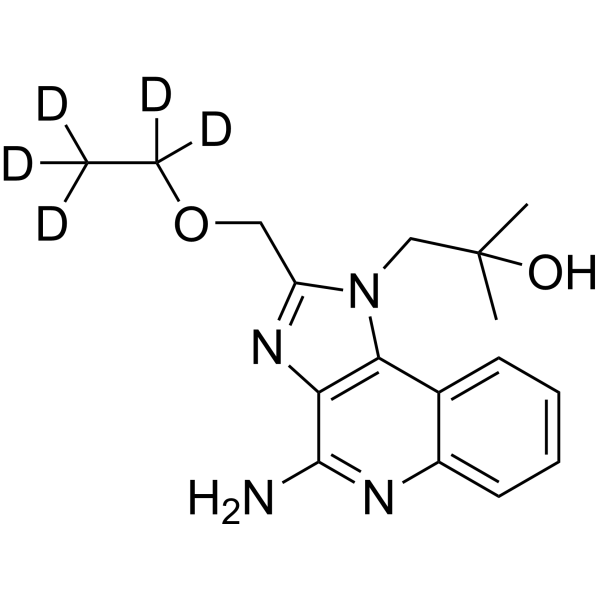
Resiquimod-d5 is deuterium labeled Resiquimod. Resiquimod is a Toll-like receptor 7 and 8 (TLR7/TLR8) agonist that induces the upregulation of cytokines such as TNF-α, IL-6 and IFN-α .
|
-
-
- HY-W031727S
-
|
|
|
Hydroxychloroquine-d4-1 (sulfate) is the deuterium labeled Hydroxychloroquine. Hydroxychloroquine is a synthetic antimalarial agent which can also inhibit Toll-like receptor 7/9 (TLR7/9) signaling. Hydroxychloroquine is efficiently inhibits SARS-CoV-2 infection in vitro .
|
-
-
- HY-B1370S
-
|
|
|
Hydroxychloroquine-d4 (sulfate) is the deuterium labeled Hydroxychloroquine sulfate. Hydroxychloroquine sulfate (HCQ sulfate) is a synthetic antimalarial agent which can also inhibit Toll-like receptor 7/9 (TLR7/9) signaling. Hydroxychloroquine sulfate is efficiently inhibits SARS-CoV-2 infection in vitro .
|
-
-
- HY-W031727S1
-
|
|
|
Hydroxychloroquine-d5 is the deuterium labeled Hydroxychloroquine . Hydroxychloroquine is a synthetic antimalarial agent which can also inhibit Toll-like receptor 7/9 (TLR7/9) signaling. Hydroxychloroquine is efficiently inhibits SARS-CoV-2 infection in vitro .
|
-
-
- HY-B0180S1
-
|
|
|
Imiquimod-d9 is deuterium labeled Imiquimod. Imiquimod (R 837), an immune response modifier, is a selective toll like receptor 7 (TLR7) agonist. Imiquimod exhibits antiviral and antitumor effects in vivo. Imiquimod can be used for the research of external genital, perianal warts, cancer and COVID-19 .
|
-
-
- HY-B0180S
-
|
|
|
Imiquimod-d6 is the deuterium labeled Imiquimod. Imiquimod (R 837), an immune response modifier, is a selective toll like receptor 7 (TLR7) agonist. Imiquimod exhibits antiviral and antitumor effects in vivo. Imiquimod can be used for the research of external genital, perianal warts, cancer and COVID-19 .
|
-
-
- HY-W777545
-
|
|
|
4-[(7-Chloro-4-quinolinyl)amino]-1-pentanol-d4 is the deuterium labeled Hydroxychloroquine Impurity E (HY-131262). Hydroxychloroquine Impurity E is the impurity of Hydroxychloroquine. Hydroxychloroquine is a synthetic antimalarial agent which can also inhibit Toll-like receptor 7/9 (TLR7/9) signaling. Hydroxychloroquine is efficiently inhibits SARS-CoV-2 infection in vitro .
|
-
-
- HY-B0180S2
-
|
|
|
Imiquimod-d7 (R 837-d7) is deuterium labeled Imiquimod. Imiquimod (R 837), an immune response modifier, is a selective toll like receptor 7 (TLR7) agonist. Imiquimod exhibits antiviral and antitumor effects in vivo. Imiquimod can be used for the research of external genital, perianal warts, cancer and COVID-19 .
|
-
| Cat. No. |
Product Name |
|
Classification |
-
- HY-152684
-
|
|
|
Alkynes
|
|
2′-O-2-Propyn-1-ylguanosine is a guanosine analogue. Some guanosine analogs have immunostimulatory activity. In some animal models, they also induce type I interferons, producing antiviral effects. Studies have shown that the functional activity of guanosine analogs is dependent on the activation of Toll-like receptor 7 (TLR7) . 2′-O-2-Propyn-1-ylguanosine is a click chemistry reagent, it contains an Alkyne group and can undergo copper-catalyzed azide-alkyne cycloaddition (CuAAc) with molecules containing Azide groups.
|
-
- HY-152478
-
|
|
|
Alkynes
|
|
3’-β-C-Ethynylguanosine is a guanosine analog. Some guanosine analogs have immunostimulatory activity. In some animal models, they also induce type I interferons, producing antiviral effects. Studies have shown that the functional activity of guanosine analogs is dependent on the activation of Toll-like receptor 7 (TLR7) . 3’-β-C-Ethynylguanosine is a click chemistry reagent, it contains an Alkyne group and can undergo copper-catalyzed azide-alkyne cycloaddition (CuAAc) with molecules containing Azide groups.
|
-
- HY-154361
-
|
|
|
Alkynes
|
|
TLR7 agonist 13 is a guanosine analog. Some guanosine analogs have immunostimulatory activity. In some animal models, they also induce type I interferons, producing antiviral effects. Studies have shown that the functional activity of guanosine analogs is dependent on the activation of Toll-like receptor 7 (TLR7) . TLR7 agonist 13 is a click chemistry reagent, it contains an Alkyne group and can undergo copper-catalyzed azide-alkyne cycloaddition (CuAAc) with molecules containing Azide groups.
|
-
- HY-154349
-
|
|
|
Alkynes
|
|
N2-iso-Butyroyl-2’-O-propargylguanosine is a guanosine analog. Some guanosine analogs have immunostimulatory activity. In some animal models, they also induce type I interferons, producing antiviral effects. Studies have shown that the functional activity of guanosine analogs is dependent on the activation of Toll-like receptor 7 (TLR7) . N2-iso-Butyroyl-2’-O-propargylguanosine is a click chemistry reagent, it contains an Alkyne group and can undergo copper-catalyzed azide-alkyne cycloaddition (CuAAc) with molecules containing Azide groups.
|
| Cat. No. |
Product Name |
|
Classification |
-
- HY-111582
-
|
|
|
Adjuvant
|
|
BBIQ is a imidazoquinoline compound and a potent and selectively toll-like receptor 7 (TLR7) agonist with an EC50 of 59.1 nM for human TLR7. BBIQ is a powerful vaccine adjuvant that enhances innate immune responses .
|
-
- HY-154484
-
|
|
|
Phosphoramidites
Guanine
|
|
3’-O-Me-G(iBu)-2’-phosphoramidite is a guanosine analog. Some guanosine analogs have immunostimulatory activity. In some animal models, they also induce type I interferons, producing antiviral effects. Studies have shown that the functional activity of guanosine analogs is dependent on the activation of Toll-like receptor 7 (TLR7) .
|
-
- HY-152684
-
|
|
|
Nucleoside Analogs
Guanosine
|
|
2′-O-2-Propyn-1-ylguanosine is a guanosine analogue. Some guanosine analogs have immunostimulatory activity. In some animal models, they also induce type I interferons, producing antiviral effects. Studies have shown that the functional activity of guanosine analogs is dependent on the activation of Toll-like receptor 7 (TLR7) . 2′-O-2-Propyn-1-ylguanosine is a click chemistry reagent, it contains an Alkyne group and can undergo copper-catalyzed azide-alkyne cycloaddition (CuAAc) with molecules containing Azide groups.
|
-
- HY-177617
-
|
IMO-8400
|
|
CpG ODNs
|
|
Bazlitoran (IMO-8400) is an oligonucleotide-based TLR7/8/9 antagonist. Bazlitoran blocks the activation of Toll-like receptors 7, 8, and 9. Bazlitoran inhibits cytokine responses mediated by Toll-like receptors 7, 8, and 9. Bazlitoran is associated with injection site reactions. Bazlitoran improves moderate-to-severe plaque psoriasis .
|
-
- HY-177617A
-
|
IMO-8400 sodium
|
|
CpG ODNs
|
|
Bazlitoran sodium (IMO-8400 sodium) is an oligonucleotide-based TLR7/8/9 antagonist. Bazlitoran sodium blocks the activation of Toll-like receptors 7, 8, and 9. Bazlitoran sodium inhibits cytokine responses mediated by Toll-like receptors 7, 8, and 9. Bazlitoran sodium is associated with injection site reactions. Bazlitoran sodium improves moderate-to-severe plaque psoriasis .
|
-
- HY-152493
-
|
|
|
Nucleoside Analogs
Guanosine
|
|
3’-O-(2-Methoxyethyl)guanosine is a guanosine analogue. Some guanosine analogs have immunostimulatory activity. In some animal models, they also induce type I interferons, producing antiviral effects. Studies have shown that the functional activity of guanosine analogs is dependent on the activation of Toll-like receptor 7 (TLR7) .
|
-
- HY-154332
-
|
|
|
Nucleoside Analogs
Guanosine
|
|
8-(Phenylmethoxy)guanosine is a guanosine analog. Some guanosine analogs have immunostimulatory activity. In some animal models, they also induce type I interferons, producing antiviral effects. Studies have shown that the functional activity of guanosine analogs is dependent on the activation of Toll-like receptor 7 (TLR7) .
|
-
- HY-152430
-
|
|
|
Nucleoside Analogs
Guanosine
|
|
8-Hydroxymethyl guanosine is a guanosine analog. Some guanosine analogs have immunostimulatory activity. In some animal models, they also induce type I interferons, producing antiviral effects. Studies have shown that the functional activity of guanosine analogs is dependent on the activation of Toll-like receptor 7 (TLR7) .
|
-
- HY-152547
-
|
|
|
Nucleoside Analogs
Guanosine
|
|
N2-[(N,N-Dimethyl amino]methylene-N1-methyl-2’-O-methylguanosine is a guanosine analog. Some guanosine analogs have immunostimulatory activity. In some animal models, they also induce type I interferons, producing antiviral effects. Studies have shown that the functional activity of guanosine analogs is dependent on the activation of Toll-like receptor 7 (TLR7) .
|
-
- HY-154464
-
|
|
|
Phosphoramidites
Guanine
|
|
N2-iso-Butyroyl-5'-O-DMT-3'-deoxy-3'-fluoroguanosine is a guanosine analog. Some guanosine analogs have immunostimulatory activity. In some animal models, they also induce type I interferons, producing antiviral effects. Studies have shown that the functional activity of guanosine analogs is dependent on the activation of Toll-like receptor 7 (TLR7) .
|
-
- HY-152478
-
|
|
|
Nucleoside Analogs
Guanosine
|
|
3’-β-C-Ethynylguanosine is a guanosine analog. Some guanosine analogs have immunostimulatory activity. In some animal models, they also induce type I interferons, producing antiviral effects. Studies have shown that the functional activity of guanosine analogs is dependent on the activation of Toll-like receptor 7 (TLR7) . 3’-β-C-Ethynylguanosine is a click chemistry reagent, it contains an Alkyne group and can undergo copper-catalyzed azide-alkyne cycloaddition (CuAAc) with molecules containing Azide groups.
|
-
- HY-154549
-
|
|
|
Phosphoramidites
Guanine
|
|
3’-O-MOE-G(iBu)-2’-phosphoramidite is a guanosine analog. Some guanosine analogs have immunostimulatory activity. In some animal models, they also induce type I interferons, producing antiviral effects. Studies have shown that the functional activity of guanosine analogs is dependent on the activation of Toll-like receptor 7 (TLR7) .
|
-
- HY-152993
-
|
|
|
Nucleoside Analogs
Guanosine
|
|
2′-Deoxy-N-(2-furanylmethyl)guanosine is a guanosine analog. Some guanosine analogs have immunostimulatory activity. In some animal models, they also induce type I interferons, producing antiviral effects. Studies have shown that the functional activity of guanosine analogs is dependent on the activation of Toll-like receptor 7 (TLR7) .
|
-
- HY-154351
-
|
|
|
Phosphoramidites
Guanine
|
|
N2-iBu-5’-O-DMTr-2’-O-propargylguanosine-3’-CED-phosphoramidite is a guanosine analog. Some guanosine analogs have immunostimulatory activity. In some animal models, they also induce type I interferons, producing antiviral effects. Studies have shown that the functional activity of guanosine analogs is dependent on the activation of Toll-like receptor 7 (TLR7) .
|
-
- HY-174521
-
|
|
|
mRNA
|
|
Human TLR7 mRNA encodes the human toll like receptor 7 (TLR7) protein, a member of the Toll-like receptor (TLR) family which plays a fundamental role in pathogen recognition and activation of innate immunity. TLR7 senses single-stranded RNA oligonucleotides containing guanosine- and uridine-rich sequences from RNA viruses, a recognition occuring in the endosomes of plasmacytoid dendritic cells and B cells.
|
-
- HY-152610
-
|
|
|
Nucleoside Analogs
Guanosine
|
|
3′-C-Methylguanosine is a guanosine analogue. Some guanosine analogs have immunostimulatory activity. In some animal models, they also induce type I interferons, producing antiviral effects. Studies have shown that the functional activity of guanosine analogs is dependent on the activation of Toll-like receptor 7 (TLR7) .
|
-
- HY-152517
-
|
|
|
Nucleoside Analogs
Guanosine
|
|
8-(Methylthio)guanosine is a guanosine analogue. Some guanosine analogs have immunostimulatory activity. In some animal models, they also induce type I interferons, producing antiviral effects. Studies have shown that the functional activity of guanosine analogs is dependent on the activation of Toll-like receptor 7 (TLR7) .
|
-
- HY-154111
-
|
|
|
Nucleoside Analogs
Guanosine
|
|
8-(N-Boc-aminomethyl)guanosine is a guanosine analog. Some guanosine analogs have immunostimulatory activity. In some animal models, they also induce type I interferons, producing antiviral effects. Studies have shown that the functional activity of guanosine analogs is dependent on the activation of Toll-like receptor 7 (TLR7) .
|
-
- HY-152673
-
|
|
|
Nucleoside Analogs
Guanosine
|
|
9-(β-D-Xylofuranosyl)guanine is a guanosine analog. Some guanosine analogs have immunostimulatory activity. In some animal models, they also induce type I interferons, producing antiviral effects. Studies have shown that the functional activity of guanosine analogs is dependent on the activation of Toll-like receptor 7 (TLR7) .
|
-
- HY-154506
-
|
|
|
Nucleoside Analogs
Guanosine
|
|
N2-Phenoxyacetylguanosine is a guanosine analog. Some guanosine analogs have immunostimulatory activity. In some animal models, they also induce type I interferons, producing antiviral effects. Studies have shown that the functional activity of guanosine analogs is dependent on the activation of Toll-like receptor 7 (TLR7) .
|
-
- HY-152742
-
|
|
|
Nucleoside Analogs
Guanosine
|
|
8-(N,N-Dimethylaminomethyl)guanosine is a guanosine analogue. Some guanosine analogs have immunostimulatory activity. In some animal models, they also induce type I interferons, producing antiviral effects. Studies have shown that the functional activity of guanosine analogs is dependent on the activation of Toll-like receptor 7 (TLR7) .
|
-
- HY-152652
-
|
|
|
Nucleoside Analogs
Guanosine
|
|
5’(R)-C-Methylguanosine is a guanosine analog. Some guanosine analogs have immunostimulatory activity. In some animal models, they also induce type I interferons, producing antiviral effects. Studies have shown that the functional activity of guanosine analogs is dependent on the activation of Toll-like receptor 7 (TLR7) .
|
-
- HY-154336
-
|
|
|
Nucleoside Analogs
Guanosine
|
|
N-[2-[4-(1-Methylethyl)phenoxy]acetyl]guanosine is a guanosine analog. Some guanosine analogs have immunostimulatory activity. In some animal models, they also induce type I interferons, producing antiviral effects. Studies have shown that the functional activity of guanosine analogs is dependent on the activation of Toll-like receptor 7 (TLR7) .
|
-
- HY-152991
-
|
|
|
Nucleoside Analogs
Guanosine
|
|
2′-Deoxy-N-(2-furanylmethyl)guanosine is a guanosine analog. Some guanosine analogs have immunostimulatory activity. In some animal models, they also induce type I interferons, producing antiviral effects. Studies have shown that the functional activity of guanosine analogs is dependent on the activation of Toll-like receptor 7 (TLR7) .
|
-
- HY-154482
-
|
|
|
Nucleoside Analogs
Guanosine
|
|
N2-iso-Butyroyl-3’-O-methylguanosine is a guanosine analog. Some guanosine analogs have immunostimulatory activity. In some animal models, they also induce type I interferons, producing antiviral effects. Studies have shown that the functional activity of guanosine analogs is dependent on the activation of Toll-like receptor 7 (TLR7) .
|
-
- HY-154448
-
|
|
|
Nucleoside Analogs
Guanosine
|
|
3,5-Bis-O-(2,4-dichlorobenzyl)guanosine is a guanosine analog. Some guanosine analogs have immunostimulatory activity. In some animal models, they also induce type I interferons, producing antiviral effects. Studies have shown that the functional activity of guanosine analogs is dependent on the activation of Toll-like receptor 7 (TLR7) .
|
-
- HY-152988
-
|
|
|
Phosphoramidites
Guanine
|
|
N2-iso-Butyroyl-7'-O-DMT-morpholinoguanine is a guanosine analog. Some guanosine analogs have immunostimulatory activity. In some animal models, they also induce type I interferons, producing antiviral effects. Studies have shown that the functional activity of guanosine analogs is dependent on the activation of Toll-like receptor 7 (TLR7) .
|
-
- HY-152992
-
|
|
|
Nucleoside Analogs
Guanosine
|
|
7-Cyano-7-deaza-2'-deoxy guanosine is a guanosine analog. Some guanosine analogs have immunostimulatory activity. In some animal models, they also induce type I interferons, producing antiviral effects. Studies have shown that the functional activity of guanosine analogs is dependent on the activation of Toll-like receptor 7 (TLR7) .
|
-
- HY-152797
-
|
|
|
Nucleoside Analogs
|
|
N4-Desmethyl-N5-Methyl wyosine is a guanosine analogue. Some guanosine analogs have immunostimulatory activity. In some animal models, they also induce type I interferons, producing antiviral effects. Studies have shown that the functional activity of guanosine analogs is dependent on the activation of Toll-like receptor 7 (TLR7) .
|
-
- HY-154547
-
|
|
|
Nucleoside Analogs
Guanosine
|
|
N2-iso-Butyroyl-3’-O-(methoxyethyl)guanosine is a guanosine analog. Some guanosine analogs have immunostimulatory activity. In some animal models, they also induce type I interferons, producing antiviral effects. Studies have shown that the functional activity of guanosine analogs is dependent on the activation of Toll-like receptor 7 (TLR7) .
|
-
- HY-152545
-
|
|
|
Nucleoside Analogs
Guanosine
|
|
N1,N2-Dimethyl-2’-O-methylguanosine is a guanosine analog. Some guanosine analogs have immunostimulatory activity. In some animal models, they also induce type I interferons, producing antiviral effects. Studies have shown that the functional activity of guanosine analogs is dependent on the activation of Toll-like receptor 7 (TLR7) .
|
-
- HY-154350
-
|
|
|
Phosphoramidites
Guanine
|
|
5'-O-DMT-N2-isobutyryl-2'-O-propargylguanosine is a guanosine analog. Some guanosine analogs have immunostimulatory activity. In some animal models, they also induce type I interferons, producing antiviral effects. Studies have shown that the functional activity of guanosine analogs is dependent on the activation of Toll-like receptor 7 (TLR7) .
|
-
- HY-154606
-
|
|
|
Phosphoramidites
Guanine
|
|
2'-F-2'-ara-N2-ibu-dG Phosphoramidite is a guanosine analog. Some guanosine analogs have immunostimulatory activity. In some animal models, they also induce type I interferons, producing antiviral effects. Studies have shown that the functional activity of guanosine analogs is dependent on the activation of Toll-like receptor 7 (TLR7) .
|
-
- HY-154548
-
|
|
|
Phosphoramidites
Guanine
|
|
N2-iso-Butyroyl-5’-O-DMT-3’-O-(methoxyethyl)guanosine is a guanosine analog. Some guanosine analogs have immunostimulatory activity. In some animal models, they also induce type I interferons, producing antiviral effects. Studies have shown that the functional activity of guanosine analogs is dependent on the activation of Toll-like receptor 7 (TLR7) .
|
-
- HY-154507
-
|
|
|
Nucleoside Analogs
Guanosine
|
|
N2-Phenoxyacetyl-3′,5′-O-(tetraisopropyldisiloxane-1,3-diyl)guanosine is a guanosine analog. Some guanosine analogs have immunostimulatory activity. In some animal models, they also induce type I interferons, producing antiviral effects. Studies have shown that the functional activity of guanosine analogs is dependent on the activation of Toll-like receptor 7 (TLR7) .
|
-
- HY-154483
-
|
|
|
Nucleoside Analogs
Guanosine
|
|
N2-iso-Butyroyl-5’-O-(4,4’-dimethoxytrityl)-3’-O-methylguanosine is a guanosine analog. Some guanosine analogs have immunostimulatory activity. In some animal models, they also induce type I interferons, producing antiviral effects. Studies have shown that the functional activity of guanosine analogs is dependent on the activation of Toll-like receptor 7 (TLR7) .
|
-
- HY-154349
-
|
|
|
Nucleoside Analogs
Guanosine
|
|
N2-iso-Butyroyl-2’-O-propargylguanosine is a guanosine analog. Some guanosine analogs have immunostimulatory activity. In some animal models, they also induce type I interferons, producing antiviral effects. Studies have shown that the functional activity of guanosine analogs is dependent on the activation of Toll-like receptor 7 (TLR7) . N2-iso-Butyroyl-2’-O-propargylguanosine is a click chemistry reagent, it contains an Alkyne group and can undergo copper-catalyzed azide-alkyne cycloaddition (CuAAc) with molecules containing Azide groups.
|
| Cat. No. |
Product Name |
Target |
Research Areas |
Chemical Structure |
-
- HY-13740G
-
|
R848; S28463
|
Toll-like Receptor (TLR)
|
Inflammation/Immunology
Cancer
|
|
Resiquimod (R848) (GMP) is Resiquimod (HY-13740) produced by using GMP guidelines. GMP small molecules work appropriately as an auxiliary reagent for cell therapy manufacture. Resiquimod is a Toll-like receptor 7 and 8 (TLR7/TLR8) agonist. Resiquimod (GMP) can induce human mMDSC to mature into inflammatory macrophages .
|
-
Your information is safe with us. * Required Fields.
Inquiry Information
- Product Name:
- Cat. No.:
- Quantity:
- MCE Japan Authorized Agent:

