



BBIQ

Based on 1 Customer Validation
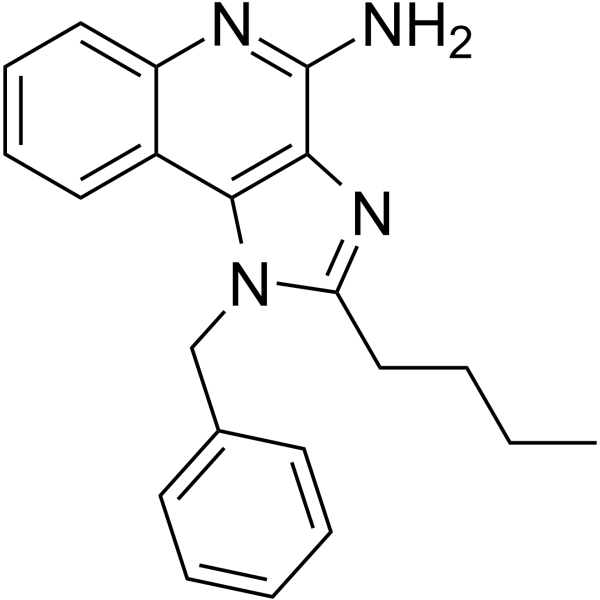
BBIQ is a imidazoquinoline compound and a potent and selectively toll-like receptor 7 (TLR7) agonist with an EC50 of 59.1 nM for human TLR7. BBIQ is a powerful vaccine adjuvant that enhances innate immune responses.
Nos produits utilisent uniquement pour la recherche. Nous ne vendons pas aux patients.
- Pureté : 99.81%
- CAS No.: 1229024-57-0
- Formule: C21H22N4
- Masse moléculaire:330.43
-
Stockage:Powder -20°C, 3 years , 4°C, 2 years ; In solvent -80°C, 6 months , -20°C, 1 month

To place orders, for customer services and technical support, please contact: MedChemExpress USA
Tel: 609-228-6898 E-mail: [email protected] [email protected]


-
 Activité biologique
-
Chemical Information
-
Solvant et solubilité
- Pureté et documentation
- Références
-
 Help & FAQs


-
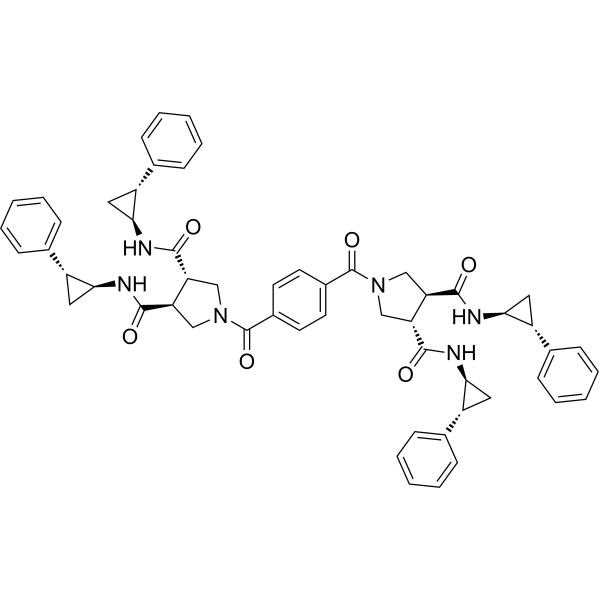
HY-123942
DiprovocimTLR1/TLR2 Agonist -
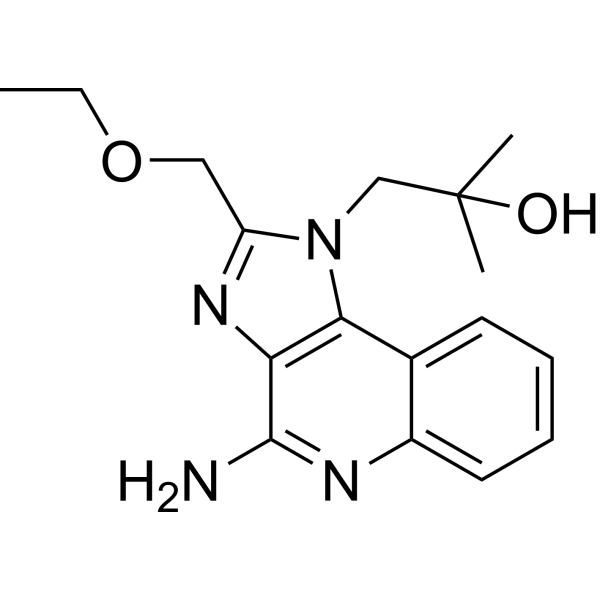
HY-13740
ResiquimodTLR7/8 Agonist -
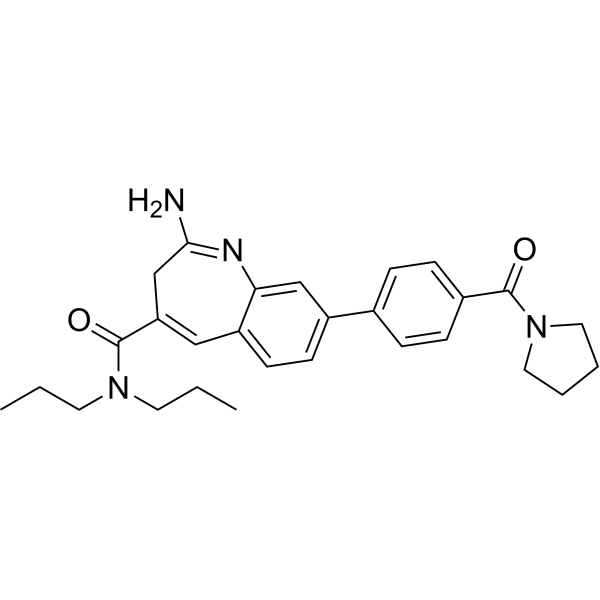
HY-13773
MotolimodTLR8 Agonist -
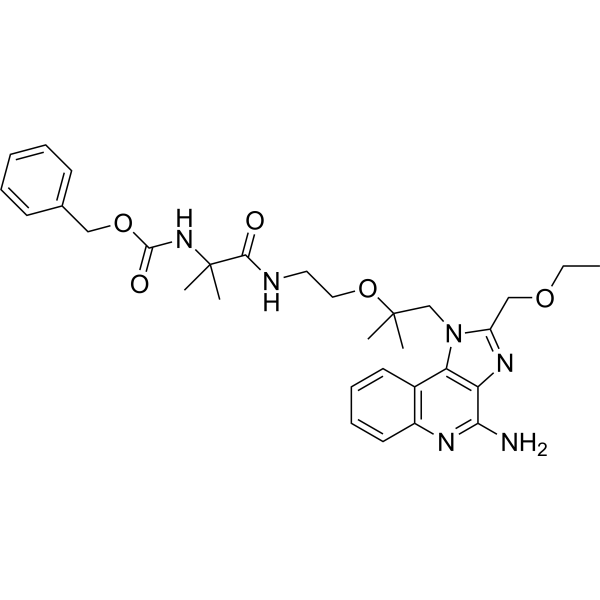
HY-148338
TLR8 agonist 5TLR8 Agonist -
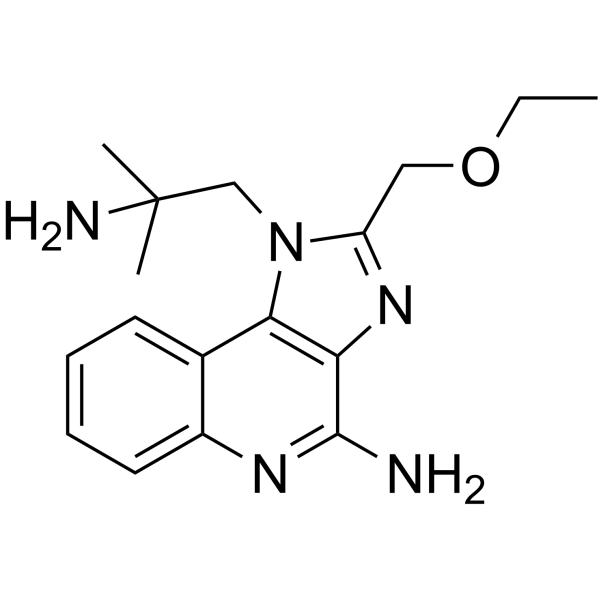
HY-130797
TLR7/8 agonist 3TLR7/8 Agonist -
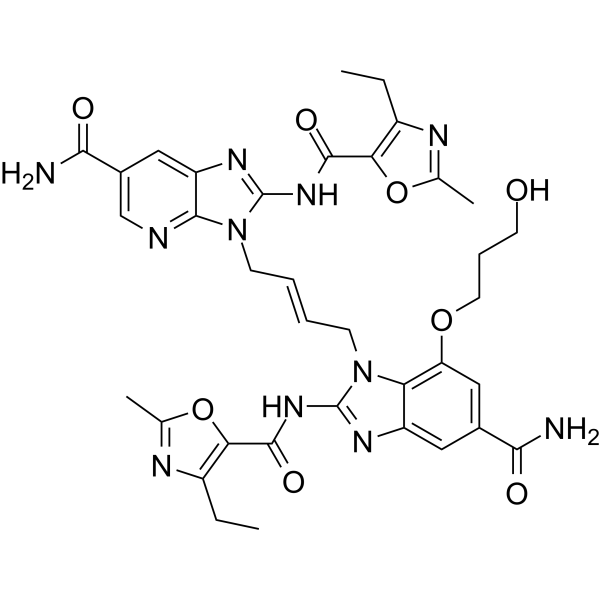
HY-148068
STING agonist-20STING Agonist -
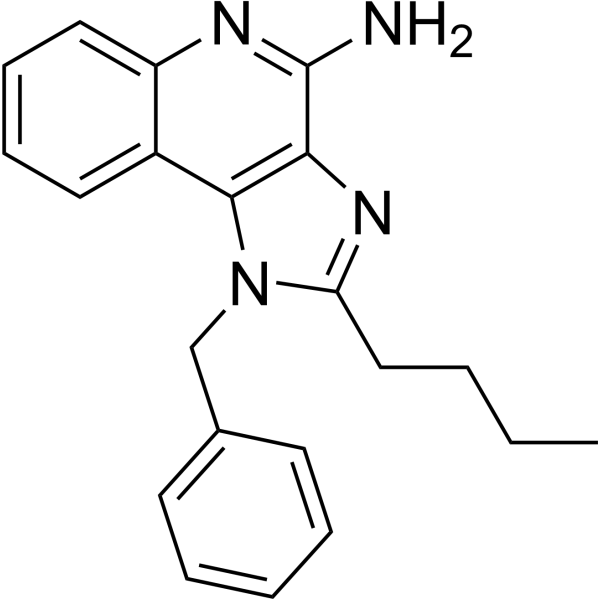
HY-111582G
BBIQ (GMP)TLR7 Agonist -
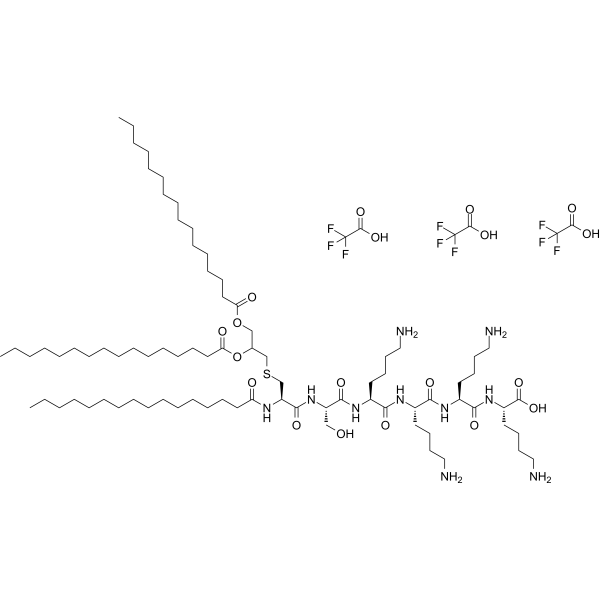
HY-P1180A
Pam3CSK4 TFATLR1/2 Agonist -

HY-W250113
Zymosan ATLR2 Agonist -

HY-146244
AgatolimodTLR9 Agonist -
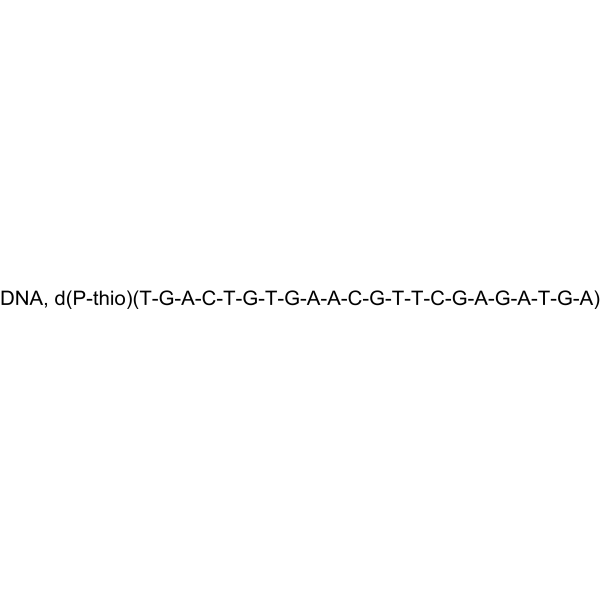
HY-150724
ODN 1018TLR9 Agonist -

HY-150734
ODN 2007TLR Ligand


Activité biologique
Description
IC50 & Target
[1]|
TLR7 59.1 nM (EC50, Human TLR7) |
Cellular Effect
|
Cell Line

|
Type | Value | Description | References |
|---|---|---|---|---|
| HEK293 | EC50 |
0.0591 μM
Compound: 31
|
Agonist activity at human TLR7 expressed in NF-kappaB-stimulated HEK293 cells assessed as induction of secreted alkaline phosphatase expression by reporter gene assay
Agonist activity at human TLR7 expressed in NF-kappaB-stimulated HEK293 cells assessed as induction of secreted alkaline phosphatase expression by reporter gene assay
|
[PMID: 20481492] |
In Vitro
BBIQ induces IFN-α in human PBMCs (520 pg/mL at 5 μg/mL)[1].
MedChemExpress (MCE) has not independently confirmed the accuracy of these methods. They are for reference only.
In Vivo
MedChemExpress (MCE) has not independently confirmed the accuracy of these methods. They are for reference only.


Chemical Information
-
CAS No. 1229024-57-0
-
Appearance Solid
-
Masse moléculaire 330.43
-
Formule C21H22N4
-
Color White to light yellow
-
SMILES
NC1=NC2=CC=CC=C2C3=C1N=C(CCCC)N3CC4=CC=CC=C4
-
Livraison
Room temperature in continental US; may vary elsewhere.
-
Stockage
Powder -20°C 3 years 4°C 2 years In solvent -80°C 6 months -20°C 1 month


Solvant et solubilité
In Vitro:
DMSO : 16.67 mg/mL (50.45 mM; ultrasonic and warming and heat to 60°C; Hygroscopic DMSO has a significant impact on the solubility of product, please use newly opened DMSO)
Please refer to the solubility information to select the appropriate solvent. Once prepared, please aliquot and store the solution to prevent product inactivation from repeated freeze-thaw cycles.
Storage method and period of stock solution: -80°C, 6 months; -20°C, 1 month. When stored at -80°C, please use it within 6 months. When stored at -20°C, please use it within 1 month.
Please refer to the solubility information to select the appropriate solvent. Once prepared, please aliquot and store the solution to prevent product inactivation from repeated freeze-thaw cycles.
Storage method and period of stock solution: -80°C, 6 months; -20°C, 1 month. When stored at -80°C, please use it within 6 months. When stored at -20°C, please use it within 1 month.
Concentration (start) × Volume (start) = Concentration (final) × Volume (final)
In Vivo:
Select the appropriate dissolution method based on your experimental animal and administration route.
- For the following dissolution methods, please ensure to first prepare a clear stock solution using an In Vitro approach and then sequentially add co-solvents:
- To ensure reliable experimental results, the clarified stock solution can be appropriately stored based on storage conditions. As for the working solution for In Vivo experiments, it is recommended to prepare freshly and use it on the same day.
- The percentages shown for the solvents indicate their volumetric ratio in the final prepared solution. If precipitation or phase separation occurs during preparation, heat and/or sonication can be used to aid dissolution.
In Vivo Dissolution Calculator
Please enter the basic information of animal experiments:
-
-
-
-
Recommended: Prepare an additional quantity of animals to account for potential losses during experiments.
Please enter your animal formula composition:
-
%DMSO +
Recommended: Keep the proportion of DMSO in working solution below 2% if your animal is weak.
-
%+
-
+%Tween-80 + +
-
%Saline +
The co-solvents required include: DMSO, . All of co-solvents are available by MedChemExpress (MCE). , Tween 80. All of co-solvents are available by MedChemExpress (MCE).
Working solution concentration: 0.22 mg/mL
Method for preparing stock solution: mg drug dissolved in μL DMSO. Stock solution concentration: mg/mL.
1. Take μL DMSO stock solution;
2. Add μL .
μL , mix evenly;
3. Then add μL Tween 80, mix evenly;
4. Then add μL
Please ensure that the stock solution in the first step is dissolved to a clear state, and add co-solvents in sequence. You can use ultrasonic heating (ultrasonic cleaner, recommended frequency 20-40 kHz), vortexing, etc. to assist dissolution.


Pureté et documentation
-
Fiche technique (281 KB)
-
SDS (252 KB)
- English - EN (252 KB)
- Français - FR (252 KB)
- Deutsch - DE (252 KB)
- Norwegian - NO (252 KB)
- Español - ES (252 KB)
- Swedish - SV (252 KB)
- Italian - IT (252 KB)
- Korean - KR (252 KB)
- Portuguese - PT (252 KB)
-
Instruction de manipulation (2659 KB)
Références
[1]. Saroa R, et al. Efficacy of TLR7 agonistic imidazoquinoline as immunochemotherapeutic agent against P. Berghei ANKA infected rodent host. Bioorg Med Chem Lett. 2019 May 1;29(9):1099-1105. [Content Brief]
[2]. Kaushik D, et al. BBIQ, a pure TLR7 agonist, is an effective influenza vaccine adjuvant. Hum Vaccin Immunother. 2020 Apr 16:1-8. [Content Brief]


Complete Stock Solution Preparation Table
Please refer to the solubility information to select the appropriate solvent. Once prepared, please aliquot and store the solution to prevent product inactivation from repeated freeze-thaw cycles.
Storage method and period of stock solution: -80°C, 6 months; -20°C, 1 month. When stored at -80°C, please use it within 6 months. When stored at -20°C, please use it within 1 month.
| Optional Solvent | Concentration Solvent Mass | 1 mg | 5 mg | 10 mg | 25 mg |
|---|---|---|---|---|---|
| DMSO | 1 mM | 3.0264 mL | 15.1318 mL | 30.2636 mL | 75.6590 mL |
| 5 mM | 0.6053 mL | 3.0264 mL | 6.0527 mL | 15.1318 mL | |
| 10 mM | 0.3026 mL | 1.5132 mL | 3.0264 mL | 7.5659 mL | |
| 15 mM | 0.2018 mL | 1.0088 mL | 2.0176 mL | 5.0439 mL | |
| 20 mM | 0.1513 mL | 0.7566 mL | 1.5132 mL | 3.7829 mL | |
| 25 mM | 0.1211 mL | 0.6053 mL | 1.2105 mL | 3.0264 mL | |
| 30 mM | 0.1009 mL | 0.5044 mL | 1.0088 mL | 2.5220 mL | |
| 40 mM | 0.0757 mL | 0.3783 mL | 0.7566 mL | 1.8915 mL | |
| 50 mM | 0.0605 mL | 0.3026 mL | 0.6053 mL | 1.5132 mL |


BBIQ Related Classifications
HY-111582 Related Classifications
 Powered by Bioz