1. Search Result
Search Result
Results for "

VEEV

" in MedChemExpress (MCE) Product Catalog:

18

Inhibitors & Agonists

1

Fluorescent Dye

1

Inhibitory Antibodies

4

Natural
Products

Cat. No. Product Name Target Research Areas Chemical Structure
  • HY-125033
    EIDD-1931
    Maximum Cited Publications
    39 Publications Verification

    β-D-N4-hydroxycytidine; NHC

    CHIKV SARS-CoV Enterovirus HCV Topoisomerase Infection
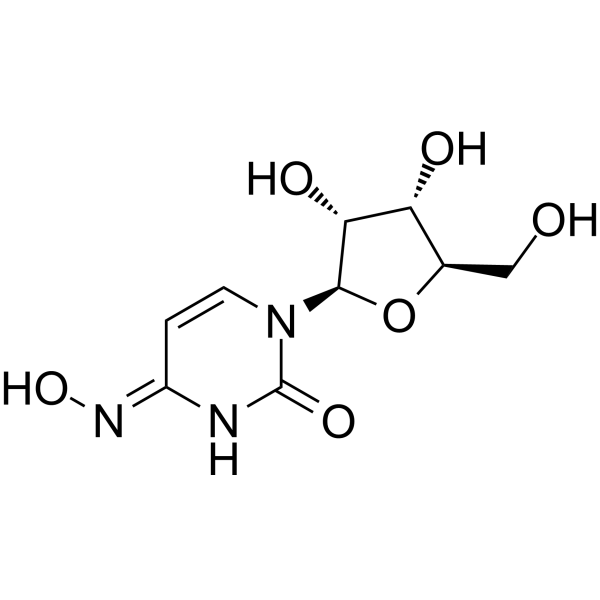
    EIDD-1931 (Beta-d-N4-hydroxycytidine; NHC) is a novel nucleoside analog and behaves as a potent anti-virus agent. EIDD-1931 effectively inhibits the replication activity of venezuelan equine encephalitis virus (VEEV), Chikungunya virus (CHIKV) and hepatitis C virus (HCV) .
    EIDD-1931
  • HY-19711
    STING agonist-1
    4 Publications Verification

    G10

    STING Virus Protease Infection
    STING agonist-1 (G10) is human-specific STING agonist that elicits antiviral activity against emerging Alphaviruses. G10 potently blocks replication of Alphavirus species Venezuelan Equine Encephalitis Virus (VEEV) with IC90 of 24.57 μM .
    STING agonist-1
  • HY-12928

    Virus Protease Infection
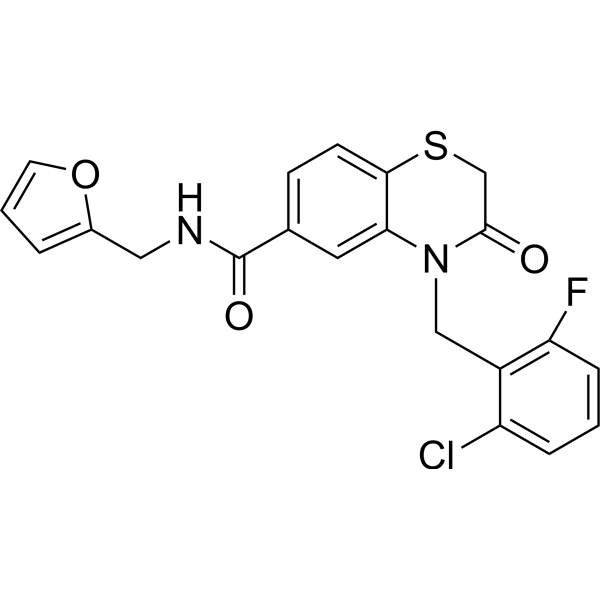
    ML336 is quinazolinone-based inhibitor against venezuelan equine encephalitis virus (VEEV), with IC50s of 32, 20, and 42 nM for VEEV TC-83 CPE , VEEV V3526 CPE, VEEV Wild Type CPE, respectively. ML336 potently inhibits a VEEV-induced cytopathic effect in three strains of the virus (TC-83, V3526, and wild type Trinidad donkey) in the low nanomolar range .
    ML336
  • HY-146248B

    Poly(ADP-ribose) Glycohydrolase (PARG) SARS-CoV Protease Activated Receptor (PAR) Metabolic Disease
    TFMU-ADPr diammonium is a selective reporter substrate of SARS-CoV-2 Macro1 (IC50=0.59 μM), with an excitation wavelength (λEx) of 385 nm, and an emission wavelength (λEm) of 502 nm (or 495 nm). TFMU-ADPr diammonium can also undergo enzymatic hydrolysis with Poly(ADP-ribose) Glycohydrolase (PARG) sourced from human, Tetrahymena thermophila and ADP-ribosylhydrolase 3 from human to release fluorophores, thereby directly reporting total poly (ADP-ribose) hydrolase activity. TFMU-ADPr diammonium binds to the ADPr-binding site of SARS-CoV-2 Macro1, and its TFMU moiety inserts into the narrow hydrophobic groove of this protein. TFMU-ADPr diammonium can thus be used to evaluate small-molecule inhibitors targeting PAR hydrolases under in vitro conditions, to investigate the regulatory mechanisms of ADP-ribosyl catabolic enzymes, or to detect PAR hydrolase activity in whole-cell lysate assays. TFMU-ADPr diammonium is also applicable to COVID-19-related research .
    TFMU-ADPr diammonium
  • HY-135867E
    NHC-triphosphate tetraammonium
    5+ Cited Publications

    CHIKV Endogenous Metabolite Enterovirus HCV Topoisomerase SARS-CoV Infection
    NHC-triphosphate tetraammonium is an active phosphorylated intracellular metabolite of β-d-N4-Hydroxycytidine (NHC) (HY-125033) as a triphosphate form . NHC-triphosphate tetraammonium is a weak alternative substrate for the viral polymerase and can be incorporated into HCV replicon RNA .
    NHC-triphosphate tetraammonium
  • HY-146248

    SARS-CoV Poly(ADP-ribose) Glycohydrolase (PARG) Protease Activated Receptor (PAR) Infection
    TFMU-ADPr is a selective reporter substrate of SARS-CoV-2 Macro1 (IC50=0.59 μM), with an excitation wavelength (λEx) of 385 nm, and an emission wavelength (λEm) of 502 nm (or 495 nm). TFMU-ADPr can also undergo enzymatic hydrolysis with Poly(ADP-ribose) Glycohydrolase (PARG) sourced from human, Tetrahymena thermophila and ADP-ribosylhydrolase 3 from human to release fluorophores, thereby directly reporting total poly (ADP-ribose) hydrolase activity. TFMU-ADPr binds to the ADPr-binding site of SARS-CoV-2 Macro1, and its TFMU moiety inserts into the narrow hydrophobic groove of this protein. TFMU-ADPr can thus be used to evaluate small-molecule inhibitors targeting PAR hydrolases under in vitro conditions, to investigate the regulatory mechanisms of ADP-ribosyl catabolic enzymes, or to detect PAR hydrolase activity in whole-cell lysate assays. TFMU-ADPr is also applicable to COVID-19-related research .
    TFMU-ADPr
  • HY-135867

    CHIKV Endogenous Metabolite Enterovirus HCV Topoisomerase SARS-CoV Infection
    NHC-triphosphate is an active phosphorylated intracellular metabolite of β-d-N4-Hydroxycytidine (NHC) (HY-125033) as a triphosphate form . NHC-triphosphate is a weak alternative substrate for the viral polymerase and can be incorporated into HCV replicon RNA .
    NHC-triphosphate
  • HY-178690

    MyD88 IFNAR Infection Inflammation/Immunology
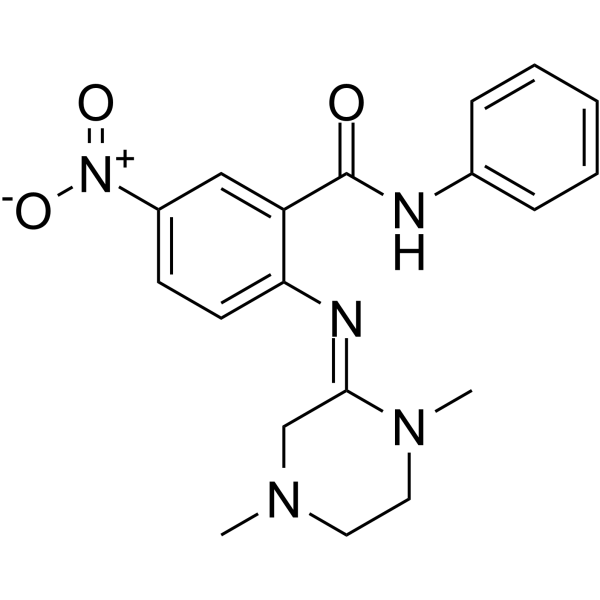
    MyD88-IN-4 is a MyD88 inhibitor. MyD88-IN-4 exerts antiviral effects by up-regulating IFN-β, and anti-inflammatory effects by inhibiting pro-inflammatory cytokine production. MyD88-IN-4 prevents MyD88 homodimer formation and its interaction with IRF3/IRF7. MyD88-IN-4 demonstrates efficacy against encephalitic alphavirus infections by reducing viral replication and improving survival in VEEV TC-83-infected mouse models. MyD88-IN-4 can be used for the study of alphavirus infections, bacterial toxin-related diseases, and sepsis .
    MyD88-IN-4
  • HY-135867A

    CHIKV Endogenous Metabolite Enterovirus HCV Topoisomerase Infection
    NHC-triphosphate tetrasodium is an active phosphorylated intracellular metabolite of β-d-N4-Hydroxycytidine (NHC) (HY-125033) as a triphosphate form . NHC-triphosphate tetrasodium is a weak alternative substrate for the viral polymerase and can be incorporated into HCV replicon RNA .
    NHC-triphosphate tetrasodium
  • HY-135867D
    NHC-diphosphate
    1 Publications Verification

    CHIKV Endogenous Metabolite Enterovirus HCV Topoisomerase SARS-CoV Infection
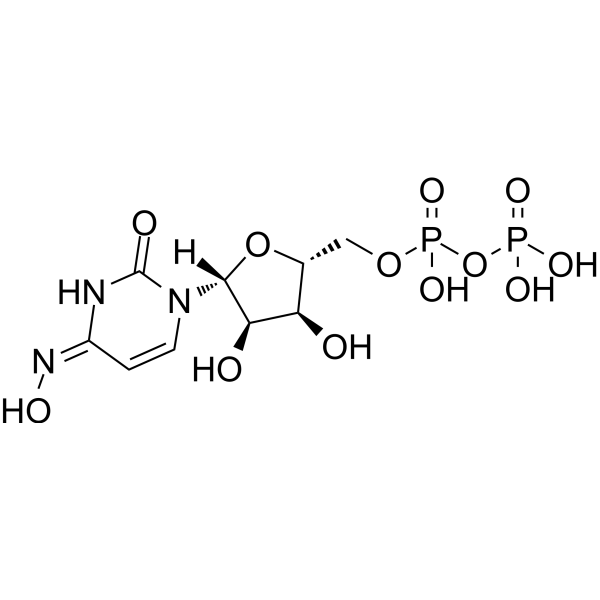
    NHC-diphosphate is an active phosphorylated intracellular metabolite of β-d-N4-Hydroxycytidine (NHC) (HY-125033) as a diphosphate form . NHC is a pyrimidine ribonucleoside and behaves as a potent anti-virus agent. NHC effectively inhibits the replication of venezuelan equine encephalitis virus (VEEV), Chikungunya virus (CHIKV) and hepatitis C virus (HCV) .
    NHC-diphosphate
  • HY-168050

    CHIKV Virus Protease Infection
    SGC-NSP2PRO-1 is a potent irreversible covalent inhibitor of Chikungunya (CHIKV) nsP2 cysteine protease with an IC50 value of 60 nM. SGC-NSP2PRO-1 demonstrates potent antialphavirus activity, inhibiting CHIKV and VEEV replication with EC50 = 0.01 and 0.3 µM, respectively .
    SGC-NSP2PRO-1
  • HY-145842

    Virus Protease Infection Neurological Disease
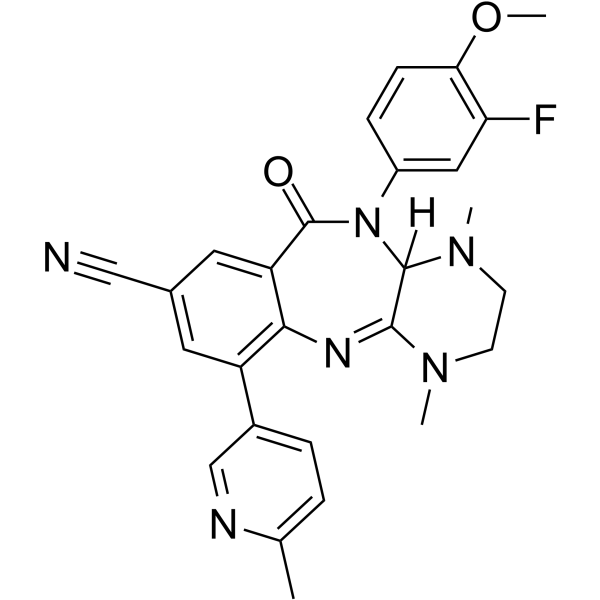
    Encephalitic alphavirus-IN-1 has antiviral activity for VEEV and EEEV with EC50s of 0.24 μM and 0.16 μM, respectively. Encephalitic alphavirus-IN-1 has robust mouse plasma stability, and no obvious cytotoxicity .
    Encephalitic alphavirus-IN-1
  • HY-135867F
    NHC-diphosphate triammonium
    1 Publications Verification

    CHIKV Endogenous Metabolite Enterovirus HCV Topoisomerase SARS-CoV Infection
    NHC-diphosphate triammonium is an active phosphorylated intracellular metabolite of β-d-N4-Hydroxycytidine (NHC) (HY-125033) as a diphosphate form . NHC-diphosphate triammonium is a weak alternative substrate for the viral polymerase and can be incorporated into HCV replicon RNA .
    NHC-diphosphate triammonium
  • HY-171261

    Virus Protease Infection
    CID15997213 is a blood-brain barrier penetrating antiviral agent. CID15997213 targets the amino-terminal domain of the VEEV nonstructural protein 2 (nsP2). CID15997213 shows alphavirus-specific antiviral effect, inhibiting VEEV and Western equine encephalitis virus .
    CID15997213
  • HY-175234

    DNA/RNA Synthesis Virus Protease Infection
    CHIKV nsP2 protease-IN-2 (Compound 2o) is a allosteric nonstructural protein 2 helicase (nsP2hel) inhibitor with IC50s of 0.5  μM and 0.9  μM for nsP2 ATPase and RNA unwindase, respectively. CHIKV nsP2 protease-IN-2 has broad-spectrum antialphaviral activity against chikungunya virus (CHIKV), Mayaro virus (MAYV), and Venezuelan equine encephalitis virus (VEEV) (EC50 of 120 nM for CHIKV-nLuc). CHIKV nsP2 protease-IN-2 can be used for alphaviruses infections research .
    CHIKV nsP2 protease-IN-2
  • HY-159879

    AAK1 Dengue Virus Infection
    AAK1-IN-6 (Compound 23) is an inhibitor of AP-2-associated protein kinase 1 (AAK1, IC50 = 12 nM) with antiviral activity against the dengue virus (DNEV2, EC50 = 0.24 μM) and Venezuelan equine encephalitis virus (VEEV, EC50 = 0.30 μM). AAK1-IN-6 can be utilized in antiviral research .
    AAK1-IN-6
  • HY-P991766

    Flavivirus Infection
    Anti-Venezuelan equine encephalitis virus E2 protein Antibody (VEEV-57) reacts with the E2 protein of the Venezuelan equine encephalitis virus (VEEV). Anti-Venezuelan equine encephalitis virus E2 protein Antibody (VEEV-57) inhibits VEEV attachment to Vero cells, viral egress, viral fusion, and LDLRAD3-D1-Fc binding. Recommend Isotype Controls: Mouse IgG2c kappa, Isotype Control (HY-P99981) .
    Anti-Venezuelan equine encephalitis virus E2 protein Antibody (VEEV-57)
  • HY-181969

    Virus Protease Infection
    BFB78 is a blood-brain barrier-permeable nsP2 protease inhibitor. BFB78 potently and broadly inhibits the purified nsP2 proteases of various alphaviruses, with IC50 values ranging from 21.6 nM (Mayaro virus; MAYV) to 130.7 nM (Chikungunya virus; CHIKV). BFB78 blocks viral replication in cell culture systems and reduces viral titers in the brains of mice. BFB78 can be used in studies related to Venezuelan equine encephalitis virus (VEEV) infection .
    BFB78

Inquiry Online

Your information is safe with us. * Required Fields.

Salutation


Country or Region *

Applicant Name *


Organization Name *

Department *


Email Address *


Product Name *

Cat. No.


Requested quantity *

Phone Number *


Remarks

Inquiry Online

Inquiry Information

Product Name:
Cat. No.:
Quantity:
MCE Japan Authorized Agent:

