10 Results for "

abnormal cell proliferation diseases

" in MedChemExpress (MCE) Product Catalog:
Products (10)

10 Results for "abnormal cell proliferation diseases" in MCE Product Catalog:

6
6 Cited Publications
Cat. No.: HY-N0430A
CAS No.: 1198398-71-8
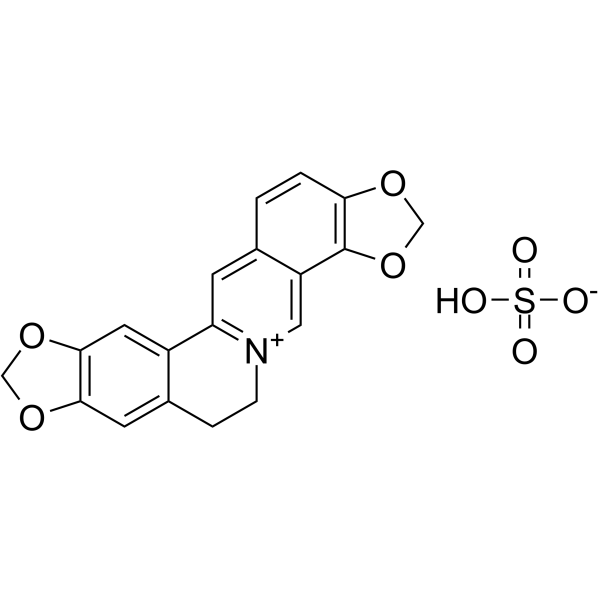
Coptisine Sulfate is an orally active and brain-penetrant alkaloid found in Coptis chinensis. Coptisine Sulfate is a reversible, uncompetitive IDO inhibitor with a Ki of 5.8 μM and an IC50 of 6.3 μM. Coptisine Sulfate suppresses neuroinflammation, reduces Aβ plaque burden and shows neuroprotective activity. Coptisine Sulfate shows anti-inflammation activity by blocking NF-κB, MAPK, and PI3K/Akt activation. Coptisine Sulfate inhibits cancer cells proliferation, induces DNA damage, G2/M phase cell cycle arrest, apoptosis, ROS production and mitochondrial dysfunction. Coptisine Sulfate inhibits Rho/ROCK pathway activation, reduces arrhythmia, limits cardiac injury marker release, reduces infarct size, and preserves cardiac function in rat myocardial ischemia/reperfusion models. Coptisine Sulfate downregulates HMGCR and upregulates LDLR and CYP7A1 to modulate cholesterol metabolism, reduces abnormal serum lipid levels, and promotes fecal bile acid excretion. Coptisine Sulfate be used for the research of cancer, hypercholesterolemia, Alzheimer’s disease, inflammatory disorders and cardiovascular disease .
loading...
    loading...
Cat. No.: HY-N0430
CAS No.: 3486-66-6
Synonyms: Coptisin
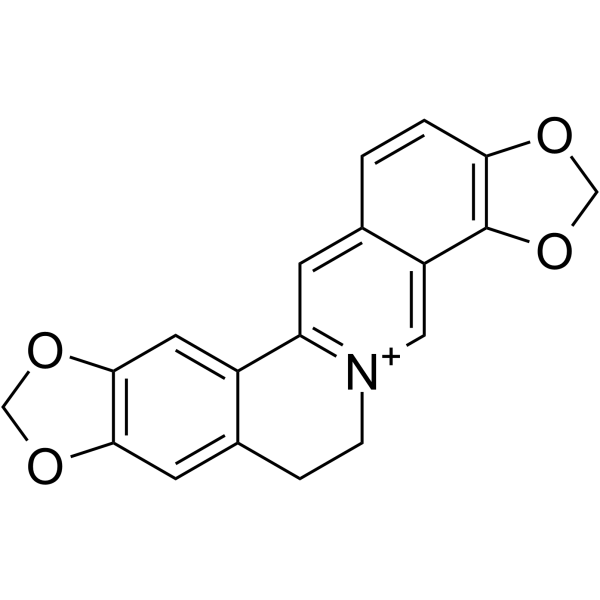
Coptisine is an orally active and brain-penetrant alkaloid found in Coptis chinensis. Coptisine is a reversible, uncompetitive IDO inhibitor with a Ki of 5.8 μM and an IC50 of 6.3 μM. Coptisine suppresses neuroinflammation, reduces Aβ plaque burden and shows neuroprotective activity. Coptisine shows anti-inflammation activity by blocking NF-κB, MAPK, and PI3K/Akt activation. Coptisine inhibits cancer cells proliferation, induces DNA damage, G2/M phase cell cycle arrest, apoptosis, ROS production and mitochondrial dysfunction. Coptisine inhibits Rho/ROCK pathway activation, reduces arrhythmia, limits cardiac injury marker release, reduces infarct size, and preserves cardiac function in rat myocardial ischemia/reperfusion models. Coptisine downregulates HMGCR and upregulates LDLR and CYP7A1 to modulate cholesterol metabolism, reduces abnormal serum lipid levels, and promotes fecal bile acid excretion. Coptisine can be used for the research of cancer, hypercholesterolemia, Alzheimer’s disease, inflammatory disorders and cardiovascular disease .
loading...
    loading...
Cat. No.: HY-P990552A

Target:  

PAI-1 Integrin

Research Areas:  

Cancer

huATN-658 is an inhibitor that specifically targets the DIII domain of human urokinase plasminogen activator receptor (uPAR). huATN-658 neutralizes uPAR function by blocking the interaction between uPAR and integrins, without interfering with the binding of uPA or vitronectin to uPAR. huATN-658 inhibits the proliferation and invasion of breast cancer cells, slows the growth of primary breast tumors, reduces breast cancer-induced bone lesions and decreases osteoclast activity. huATN-658 also alters the gene expression of the TGF-β receptor complex signaling pathway. huATN-658 exerts synergistic anticancer effects when combined with Zoledronic Acid (HY-13777), and does not cause physiological or behavioral abnormalities in immunodeficient mice. huATN-658 can be used in research related to breast cancer, metastatic breast cancer and breast cancer-induced bone disease .
loading...
    loading...
Cat. No.: HY-117491
CAS No.: 1660117-38-3
Purity:  99.52%
Research Areas:  

Cancer

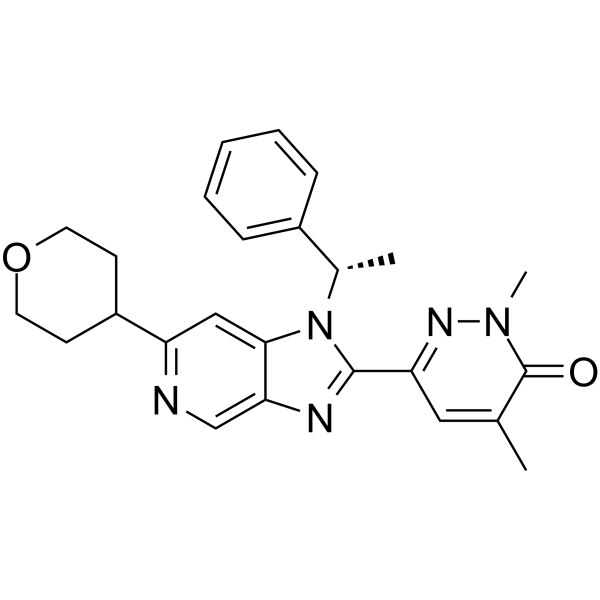
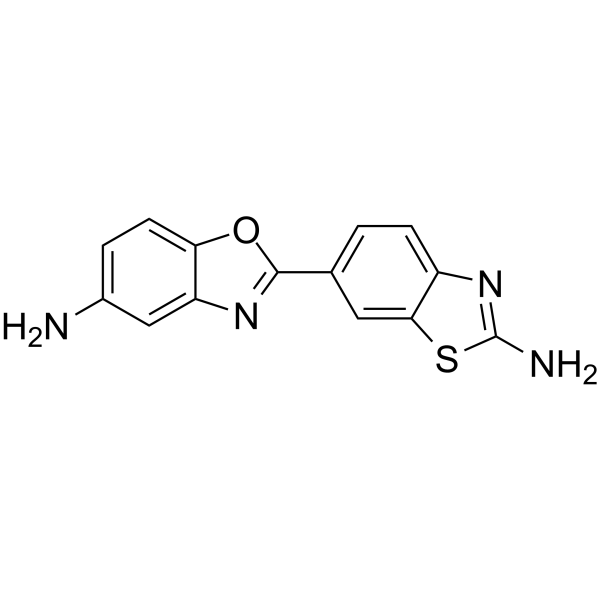
BRD4 Inhibitor-10 (Compound II-25) is a potent BRD4-BD1 inhibitor with an IC50 of 8 nM. BRD4 Inhibitor-10 can be used to study diseases caused by abnormal or excessive cell proliferation, such as cancer .
loading...
    loading...
Cat. No.: HY-101837
CAS No.: 152459-94-4
Purity:  98.20%
Target:  

PDGFR

Research Areas:  

Inflammation/Immunology

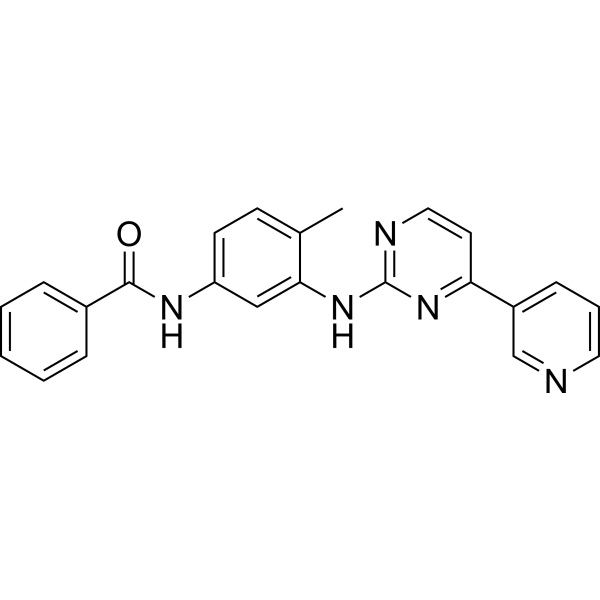
CGP 53716 is a potent protein tyrosine kinase inhibitor. CGP 53716 has selective activity of platelet-derived growth factor (PDGF) receptor. CGP 53716 can be used in the study of disease induced by abnormal cell proliferation induced by PDGF receptor activation .
loading...
    loading...
Cat. No.: HY-162534
CAS No.: 3034764-38-7
Research Areas:  

Cancer

GSPT1 degrader-5 is a GSPT1 molecular glue degrader that recruits cereblon (CRBN), with a DC50 of 20 nM. GSPT1 degrader-5 induces GSPT1 protein degradation via the ubiquitin-proteasome pathway. GSPT1 degrader-5 can be used in breast cancer-related research .
loading...
    loading...
Cat. No.: HY-162533
CAS No.: 3034764-32-1
Research Areas:  

Cancer

GSPT1 degrader-4 is a GSPT1 molecular glue degrader that recruits cereblon (CRBN), with a DC50 of 25.4 nM. GSPT1 degrader-4 inhibits the proliferation of cancer cells. GSPT1 degrader-4 is applicable to breast cancer-related research .
loading...
    loading...
Cat. No.: HY-162535
CAS No.: 3034764-41-2
Research Areas:  

Cancer

GSPT1 degrader-6 is a GSPT1 molecular glue degrader that recruits cereblon (CRBN), with a DC50 of 13 nM. GSPT1 degrader-6 induces GSPT1 protein degradation via the ubiquitin-proteasome pathway. GSPT1 degrader-6 can be used in breast cancer-related research .
loading...
    loading...
Cat. No.: HY-146033
CAS No.: 331851-78-6
Target:  

HPV

Research Areas:  

Cancer

HPV18-IN-1 (Compound H1) is a potent inhibitor of HPV18. HPV18-IN-1 prevents cervical cancer cells from premature cell procession and abnormal proliferation. HPV18-IN-1 supresses E7-Rb-E2F cellular pathway and DNA methylation. HPV18-IN-1 has the potential for the research of cancer diseases .
loading...
    loading...
Cat. No.: HY-117051
CAS No.: 1046490-67-8
Target:  

HSP

Research Areas:  

Cancer

STA-2842 is an inhibitor of heat shock protein HSP90 with potential to inhibit autosomal dominant polycystic kidney disease (ADPKD). ADPKD is caused by inherited mutations in the PKD1 or PKD2 genes that abnormally activate multiple signaling proteins and pathways that regulate cell proliferation. STA-2842 can significantly reduce initial renal cyst formation and kidney growth in mice, and slow disease progression in mice with existing cysts.
loading...
    loading...

