1. Search Result
Search Result
Results for "

abortion

" in MedChemExpress (MCE) Product Catalog:

14

Inhibitors & Agonists

1

Biochemical Assay Reagents

4

Natural
Products

1

Isotope-Labeled Compounds

Cat. No. Product Name Target Research Areas Chemical Structure
  • HY-B0742
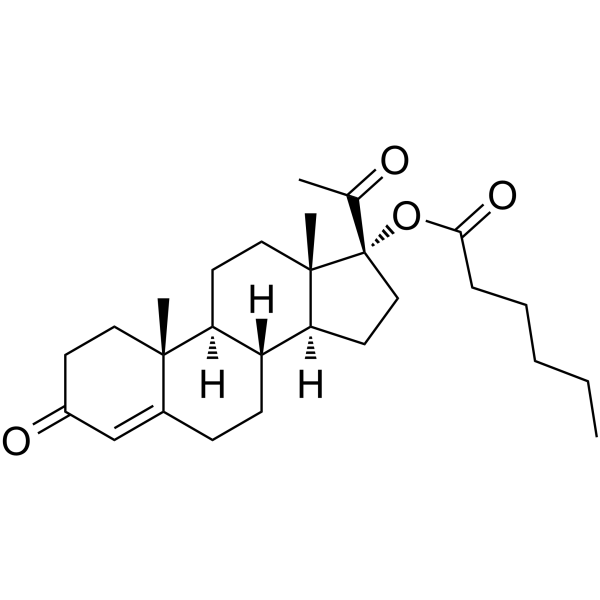
    Hydroxyprogesterone caproate
    Maximum Cited Publications
    6 Publications Verification

    17α-Hydroxyprogesterone hexanoate; 17α-Hydroxyprogesterone caproate

    Progesterone Receptor Endocrinology
    Hydroxyprogesterone caproate (17α-Hydroxyprogesterone hexanoate; 17α-Hydroxyprogesterone caproate) is a progesterone receptor (progesterone receptor) ligand and steroid hormone transcription inhibitor. Hydroxyprogesterone caproate downregulates estrogen receptors in target tissues and activates their metabolic pathways, and exhibits equivalent affinity for progesterone receptor A and progesterone receptor B. Hydroxyprogesterone caproate shows no consistent teratogenicity or developmental toxicity in rat, mouse and monkey models, but induces resorption or abortion in rhesus monkeys at human-equivalent doses. Hydroxyprogesterone caproate promotes the production of TNF-α in lipopolysaccharide-stimulated whole blood from non-pregnant women. Hydroxyprogesterone caproate can be used in scientific research related to preterm birth .
    Hydroxyprogesterone caproate
  • HY-B0487

    Pregneninolone; 17α-Ethynyltestosterone

    Estrogen Receptor/ERR Metabolic Disease
    Ethisterone (Pregneninolone; 17α-Ethynyltestosterone) is a synthetic steroidal estrogen, is an orally active steroidal contraceptive agent. Ethisterone has almost no effect on the phagocytic activity of the reticuloendothelial system in male guinea pigs, while in utero exposure can induce abnormalities in the urogenital system of offspring .
    Ethisterone
  • HY-128428

    15(S)-15-Methyl Prostaglandin F2α; 15-Methyl-PGF2α

    Prostaglandin Receptor Endocrinology
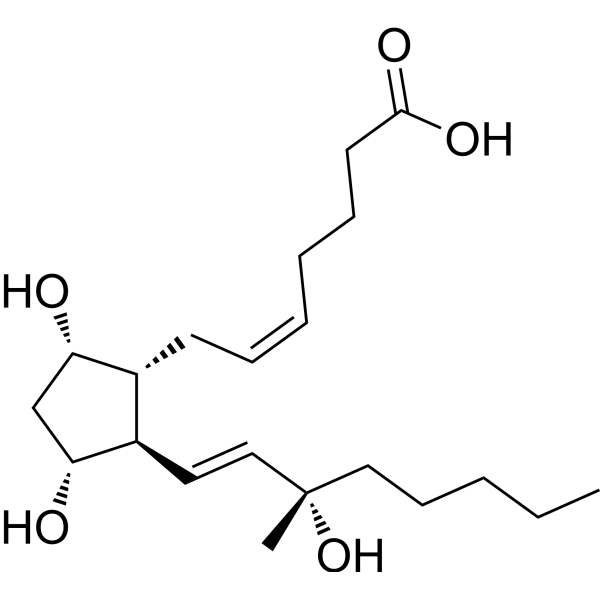
    Carboprost (15(S)-15-Methyl Prostaglandin F2α) is a metabolically stable synthetic analog of prostaglandin F2α. Carboprost stimulates uterine contractions and induces abortion. Carboprost is used for postpartum hemorrhage due to uterine atony and for the termination of pregnancy in the second trimester .
    Carboprost
  • HY-N7271
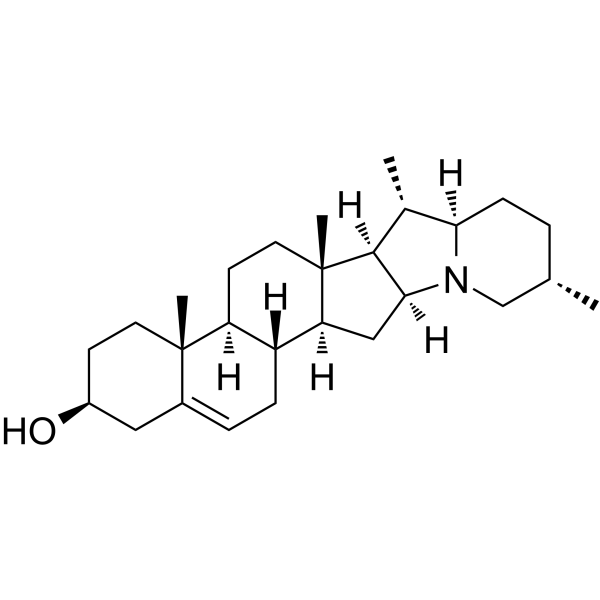
    Solanidine
    1 Publications Verification

    RAD51 MDM-2/p53 Cardiovascular Disease Cancer
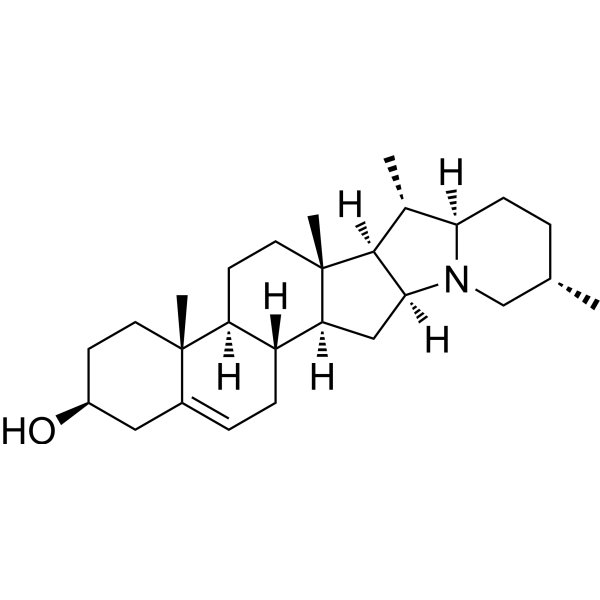
    Solanidine is an orally active cholestane alkaloid. Solanidine can be isolated from potato. Solanidine decreases RAD51 and increases γH2AX and p53. Solanidine has anti-tumor effects on LLC tumors and lung cancer. Solanidine promotes breast cancer cell proliferation. Solanidine reduces neovascularization. Solanidine causes abortion in some pregnant mice .
    Solanidine
  • HY-B0742R
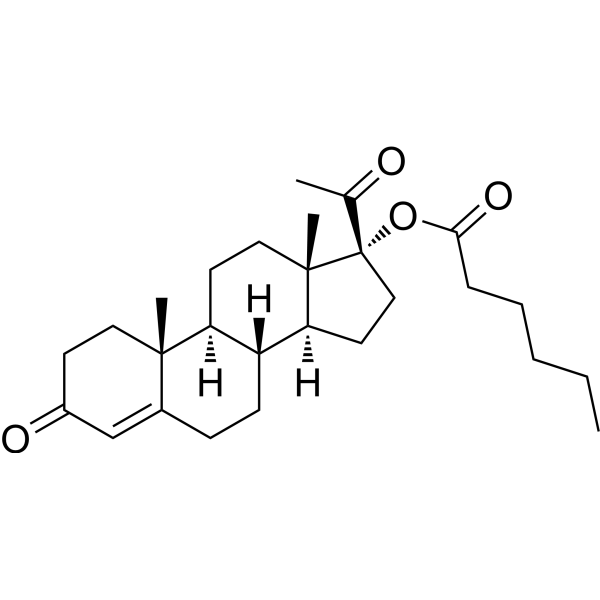
    Hydroxyprogesterone caproate (Standard)
    Maximum Cited Publications
    6 Publications Verification

    17α-Hydroxyprogesterone hexanoate(Standard); 17α-Hydroxyprogesterone caproate (Standard)

    Reference Standards Progesterone Receptor Others
    Hydroxyprogesterone caproate (Standard) is the analytical standard of Hydroxyprogesterone caproate. This product is intended for research and analytical applications. Hydroxyprogesterone caproate (17α-Hydroxyprogesterone hexanoate; 17α-Hydroxyprogesterone caproate) is a progesterone receptor (progesterone receptor) ligand and steroid hormone transcription inhibitor. Hydroxyprogesterone caproate downregulates estrogen receptors in target tissues and activates their metabolic pathways, and exhibits equivalent affinity for progesterone receptor A and progesterone receptor B. Hydroxyprogesterone caproate shows no consistent teratogenicity or developmental toxicity in rat, mouse and monkey models, but induces resorption or abortion in rhesus monkeys at human-equivalent doses. Hydroxyprogesterone caproate promotes the production of TNF-α in lipopolysaccharide-stimulated whole blood from non-pregnant women. Hydroxyprogesterone caproate can be used in scientific research related to preterm birth .
    Hydroxyprogesterone caproate (Standard)
  • HY-106534

    Preglandin; SC-37681

    Prostaglandin Receptor Endocrinology
    Gemeprost (Preglandin), a Prostaglandin E1 (HY-B0131) analogue, is a potent antiprogestogen drug. Gemeprost has the potential for second trimester abortion research .
    Gemeprost
  • HY-127067

    Akt EGFR mTOR Inflammation/Immunology Cancer
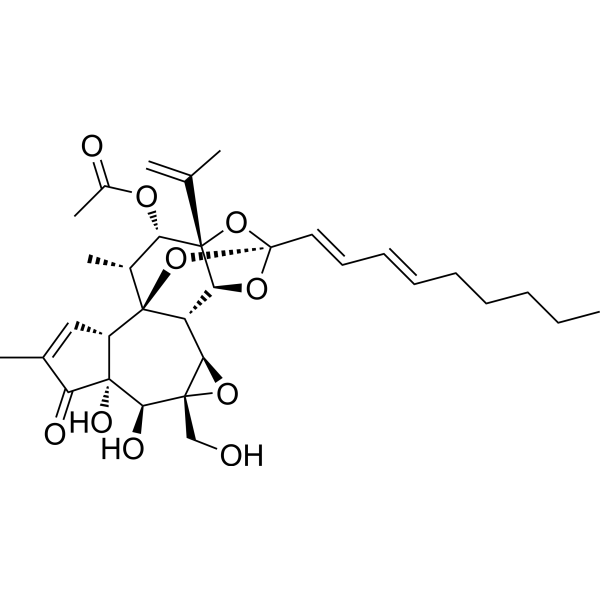
    Yuanhuadin, extracted from Genkwa Flos Daphne genkwa, has antitumor activity through inhibiting Akt/mTOR and EGFR pathways, induce cell-cycle arrest and abortion .
    Yuanhuadin
  • HY-126762

    Progesterone Receptor Endocrinology
    Fenprostalene is an analog of Dinoprost (PGF2α) (HY-12956) that is used in veterinary medicine to induce corpus luteum regression and blood Progesterone (HY-N0437) levels reduction in dogs. Fenprostalene is potent in ameliorating pyometra and inducing abortion .
    Fenprostalene
  • HY-128428R

    15(S)-15-Methyl Prostaglandin F2α (Standard); 15-Methyl-PGF2α (Standard)

    Reference Standards Prostaglandin Receptor Endocrinology
    Carboprost (Standard) is the analytical standard of Carboprost. This product is intended for research and analytical applications. Carboprost (15(S)-15-Methyl Prostaglandin F2α) is a metabolically stable synthetic analog of prostaglandin F2α. Carboprost stimulates uterine contractions and induces abortion. Carboprost is used for postpartum hemorrhage due to uterine atony and for the termination of pregnancy in the second trimester .
    Carboprost (Standard)
  • HY-N7271R

    Reference Standards RAD51 MDM-2/p53 Cardiovascular Disease Cancer
    Solanidine (Standard) is the analytical standard of Solanidine. This product is intended for research and analytical applications. Solanidine is an orally active cholestane alkaloid. Solanidine can be isolated from potato. Solanidine decreases RAD51 and increases γH2AX and p53. Solanidine has anti-tumor effects on LLC tumors and lung cancer. Solanidine promotes breast cancer cell proliferation. Solanidine reduces neovascularization. Solanidine causes abortion in some pregnant mice .
    Solanidine (Standard)
  • HY-D1056C4

    LPS, from Salmonella enterica (Serotype abortus equi)

    Toll-like Receptor (TLR) Inflammation/Immunology
    Lipopolysaccharides, from S. enterica (Salmonella enterica) serotype Abortusequi are lipopolysaccharide endotoxins and TLR-4 activators derived from the Abortusequi serotype of S. enterica, classified as a mutated R-type LPS, which can activate pathogen-associated molecular patterns (PAMP) of the immune system and induce cellular secretion of migrasomes. Lipopolysaccharides, from S. enterica serotype abortus equi consist of core oligosaccharide (core oligosaccharide) and lipid A (Lipid A). S. enterica serotype Abortusequi is a major pathogen causing abortion in mares and is also associated with neonatal sepsis, multiple abscesses, orchitis, and polyarthritis in equids. It is primarily grouped based on lipopolysaccharides (O-antigen) and flagellin (H-antigen) .
    It is recommended to prepare a solution with concentration ≥2 mg/mL. Vortex thoroughly for more than 10 minutes. Due to the adsorption characteristics of LPS, silanized container or low adsorption centrifuge tubes should be used for aliquoting and storage, and mix thoroughly before use.
    Lipopolysaccharides, from S. enterica serotype abortus equi
  • HY-B0742S1

    17α-Hydroxyprogesterone hexanoate-d8; 17α-Hydroxyprogesterone caproate-d8

    Isotope-Labeled Compounds Progesterone Receptor Others
    Hydroxyprogesterone caproate-d8 (17α-Hydroxyprogesterone hexanoate-d8) is the deuterium labeled Hydroxyprogesterone caproate (HY-B0742). Hydroxyprogesterone caproate (17α-Hydroxyprogesterone hexanoate; 17α-Hydroxyprogesterone caproate) is a progesterone receptor (progesterone receptor) ligand and steroid hormone transcription inhibitor. Hydroxyprogesterone caproate downregulates estrogen receptors in target tissues and activates their metabolic pathways, and exhibits equivalent affinity for progesterone receptor A and progesterone receptor B. Hydroxyprogesterone caproate shows no consistent teratogenicity or developmental toxicity in rat, mouse and monkey models, but induces resorption or abortion in rhesus monkeys at human-equivalent doses. Hydroxyprogesterone caproate promotes the production of TNF-α in lipopolysaccharide-stimulated whole blood from non-pregnant women. Hydroxyprogesterone caproate can be used in scientific research related to preterm birth .
    Hydroxyprogesterone caproate-d8
  • HY-W154247

    Bacterial Infection
    IP6C is a specific inhibitor and phage sensitizer targeting type II Thoeris systems. IP6C competitively binds to histidine in the catalytic pocket of ThsB, blocks the production of the His-ADPR alarm signal and inhibits ThsA activation, thereby relieving bacterial stasis of phage replication. IP6C selectively resensitizes drug-resistant bacteria carrying type II Thoeris systems (such as Pseudomonas aeruginosa) to phage lysis, without affecting other bacteria, and shows no toxicity to mice and human cell lines. IP6C significantly improves the survival rate of infected mice, and can be used to overcome bacterial phage defense mechanisms and study Pseudomonas aeruginosa infections .
    Thoeris system: (named after the Egyptian goddess of fertility and protection), is a widespread anti-phage immune defense system in bacteria and archaea. Thoeris system belongs to the "Abortion Infection (Abi)" mechanism of bacteria: when an individual bacterium detects phage invasion, it initiates a suicide program and dies, thereby blocking phage replication and spread, and protecting the surrounding bacterial population from infection.
    IP6C
  • HY-Z11709

    Endogenous Metabolite Cancer
    13-Hydroxy-alpha-tocopherol is a fat-soluble vitamin E derivative and anticancer agent with antioxidant and antiproliferative activities. 13-Hydroxy-alpha-tocopherol scavenges peroxyl free radicals and protects polyunsaturated fatty acids from oxidative damage. 13-Hydroxy-alpha-tocopherol not only inhibits the growth of glioma cancer cells, but its deficiency is also closely associated with recurrent miscarriage, embryonic growth retardation and death. Clinical observations show that the expression of 13-Hydroxy-alpha-tocopherol is downregulated in the follicular fluid of patients with recurrent miscarriage. 13-Hydroxy-alpha-tocopherol has important application potential in the research of recurrent miscarriage and glioma .
    13-Hydroxy-alpha-tocopherol

Inquiry Online

Your information is safe with us. * Required Fields.

Salutation


Country or Region *

Applicant Name *


Organization Name *

Department *


Email Address *


Product Name *

Cat. No.


Requested quantity *

Phone Number *


Remarks

Inquiry Online

Inquiry Information

Product Name:
Cat. No.:
Quantity:
MCE Japan Authorized Agent:

