1. Search Result
Search Result
Results for "

active site residue interactions

" in MedChemExpress (MCE) Product Catalog:

17

Inhibitors & Agonists

2

Screening Libraries

2

Natural
Products

Targets Recommended:
Cat. No. Product Name Target Research Areas Chemical Structure
  • HY-157521

    Acyltransferase Neurological Disease Metabolic Disease
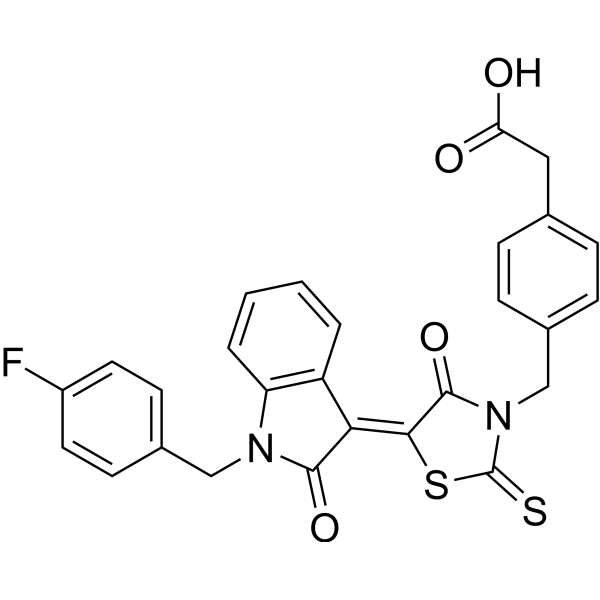
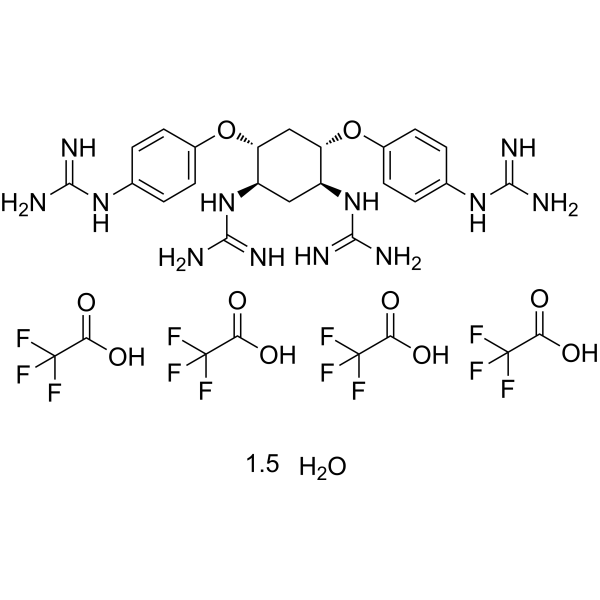
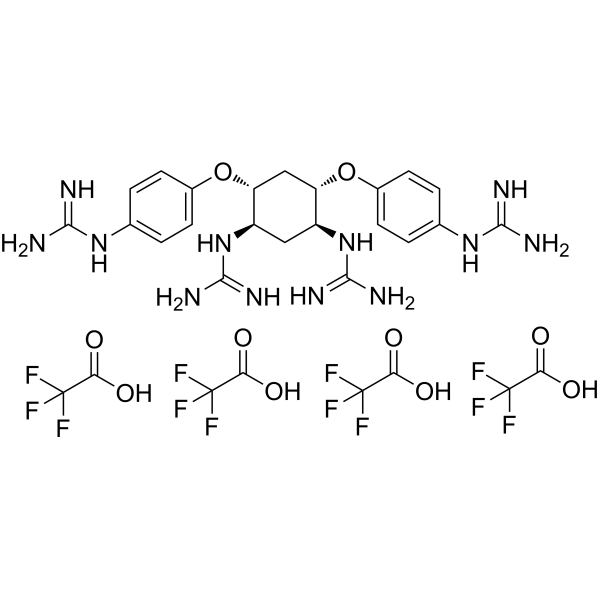
    AANAT-IN-1 is an arylalkylamine N-acetyltransferase (AANAT) inhibitor with a sheep AANAT IC50 of 9.9 μM. AANAT-IN-1 binds to the active site of sheep AANAT, interacting with amino acid residues via hydrogen bonds, hydrophobic interactions, ionic interactions, and water bridges, inhibiting the enzyme's catalytic activity. AANAT-IN-1 can be used for the researches of circadian rhythm-associated neuropsychiatric conditions, seasonal affective disorder, and other diseases associated with abnormally elevated melatonin levels .
    AANAT-IN-1
  • HY-N1341

    HCV HCV Protease DNA/RNA Synthesis Bacterial Infection
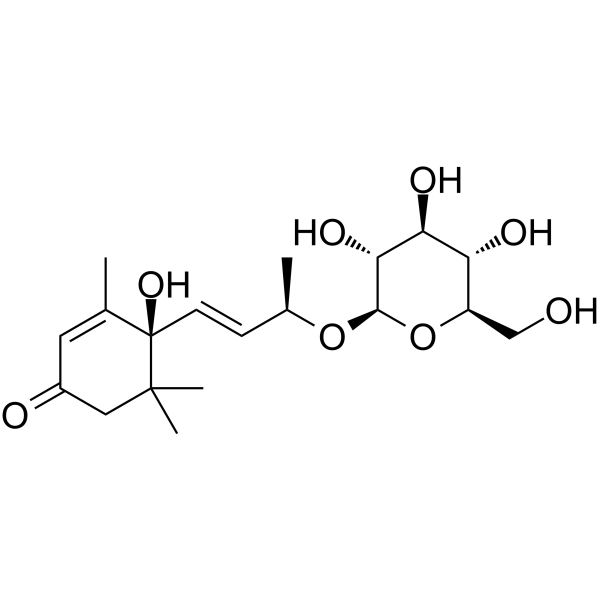
    Roseoside is an inhibitor of DNA gyrase and HAV 3C protease, and also inhibits HCV NS5A/B replicase in human systems with an IC50 of 20 μM. Roseoside binds to the active site of enzymes and stabilizes the interaction by forming hydrogen bonds with key amino acid residues. Roseoside inhibits the growth of Gram-positive bacteria, Gram-negative bacteria, and Candida albicans, and interferes with HCV RNA replication in vitro by inhibiting HCV NS5A/B replicase (IC50=20 μM). Roseoside shows no cytotoxicity and serves as a research tool for studies related to bacterial infections, candidiasis, HAV and HCV .
    Roseoside
  • HY-N10423

    (-)-Cubebin

    Cholinesterase (ChE) Bacterial Fungal Parasite p38 MAPK Infection Neurological Disease Metabolic Disease Inflammation/Immunology Cancer
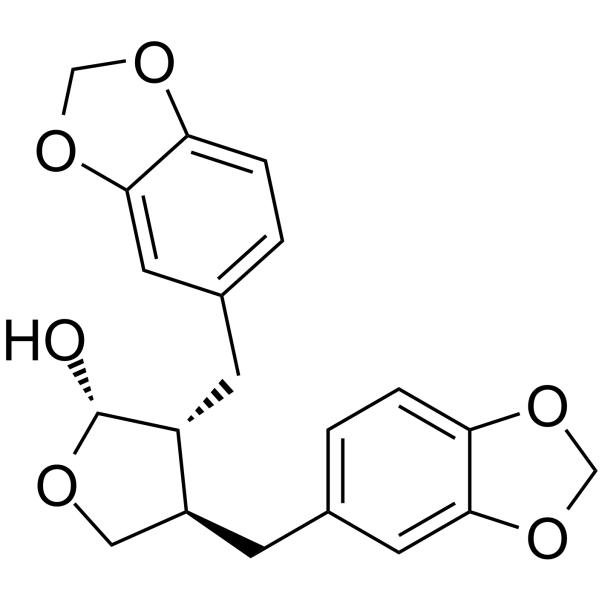
    Cubebin ((-)-Cubebin), a dibenzyl butyrolactone lignan, is an orally active AChE inhibitor. Cubebin binds to active sites of NF-κB, TNF-α, and TGF-β1 via hydrogen and hydrophobic interactions, obstructing critical residues to inhibit pro-inflammatory or renal fibrosis-related activity. Cubebin enhances p38 MAPK phosphorylation to increase tyrosinase gene expression, stimulating melanogenesis via elevated tyrosinase activity, expression, and mRNA levels. Cubebin reduces oxidative stress via enhanced endogenous antioxidant enzyme activity and inhibited lipid peroxidation, regulates lipid metabolism, improves glycemic control, and exerts renoprotective effects via reduced renal dysfunction markers and improved renal architecture. Cubebin shows antimicrobial activity. Cubebin exerts larvicidal activity against Angiostrongylus cantonensis larvae, with no cytotoxicity toward monkey or human cell lines or Caenorhabditis elegans. Cubebin can be used for the research of diabetic nephropathy, melanoma, colon adenocarcinoma, neuroangiostrongyliasis, Alzheimer’s disease (AD) and depression .
    Cubebin
  • HY-149350

    HIV Infection
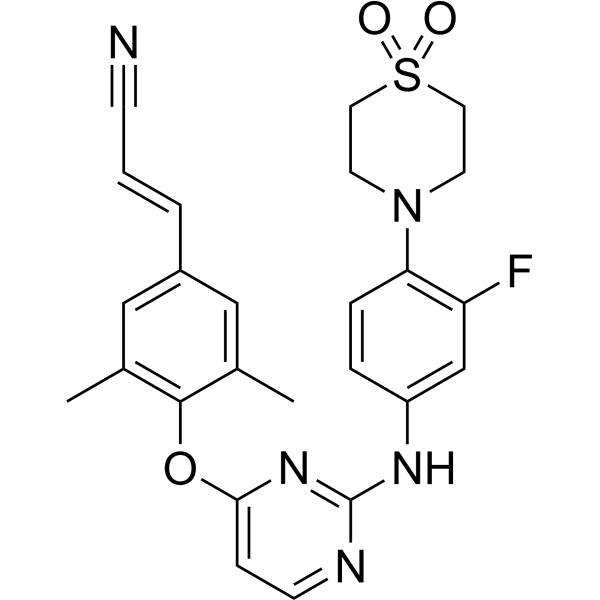
    HIV-1 inhibitor-57 (Compound 12g) is a HIV inhibitor. HIV-1 inhibitor-57 is active against wild-type and five prevalent NNRTI-resistant HIV-1 strains with EC50 values ranging from 0.024 to 0.0010 μM. HIV-1 inhibitor-57 forms additional interactions with residues around the binding site in HIV-1 RT .
    HIV-1 inhibitor-57
  • HY-159481

    Succinate Dehydrogenase Fungal Infection Inflammation/Immunology
    SDH-IN-17 (compound C32), a hydrazide-containing flavonol derivative, is a potent succinate dehydrogenase (SDH) inhibitor with an IC50 of 8.42 μM. SDH-IN-17 can occupy the active site and form strong interactions with the key residues of SDH. SDH-IN-17 exhibits antifungal activity against Rhizoctonia solani (EC50=0.170 μg/mL). SDH-IN-17 disrupts the normal growth of hyphae by affecting the structural integrity of the cell membrane and cellular respiration. SDH-IN-17 has the potential for plant disease control research .
    SDH-IN-17
  • HY-170557

    Topoisomerase Apoptosis Mitochondrial Metabolism Cancer
    Topoisomerase IIα-IN-10 (Compound 13r) is an inhibitor of Topoisomerase IIα. It binds to the active site of DNA when complexed with Topoisomerase IIα, and this binding is stabilized through interactions with DNA base pairs and amino acid residues. Topoisomerase IIα-IN-10 can induce Apoptosis by intercalating DNA and inhibiting Topoisomerase IIα, thereby disrupting the mitochondrial membrane potential and inhibiting the growth of HCT116 cell lines, with an IC50 of 4.37 μM against HCT116 cells. Topoisomerase IIα-IN-10 can be used for research in the field of cancer treatment .
    Topoisomerase IIα-IN-10
  • HY-180522

    COX Inflammation/Immunology
    4F-PMPH is a COX-II inhibitor with anti-inflammatory activity. 4F-PMPH binds to the active site of COX-II by forming key interactions with residues such as Val102, Tyr341, and Leu338 .
    4F-PMPH
  • HY-180567

    HIV Protease Infection Inflammation/Immunology
    PAC-Phe-Val is a potent HIV-1 protease inhibitor with an IC50 value of 33.10 nM. PAC-Phe-Val forms stable and strong interactions with critical active site residues, contributing to its high inhibitory potency. PAC-Phe-Val can be used for HIV/AIDS research .
    PAC-Phe-Val
  • HY-183362

    Parasite Adenosine Kinase Infection
    Antileishmanial agent-42 is an antileishmanial agent. Antileishmanial agent-42 has favorable interactions with key active site residues (e.g., Ser63, Asn66/295/299) of adenosine kinase. Antileishmanial agent-42 exerts activity against promastigote and amastigote forms of L. amazonensis, L. braziliensis, L. infantum, and L. donovani .
    Antileishmanial agent-42
  • HY-181141

    Cholinesterase (ChE) Monoamine Oxidase Neurological Disease
    AChE/MAO-B-IN-8 is an acetylcholinesterase (AChE) and monoamine oxidase B (MAO-B) inhibitor with IC50 values of 0.72 and 0.19 μM. AChE/MAO-B-IN-8 interactions with AChE and MAO-B active-site amino acid residues. AChE/MAO-B-IN-8 can be used for the research of Alzheimer’s disease .
    AChE/MAO-B-IN-8
  • HY-183076

    Bacterial Infection
    AW00718 is a Brachyspira pilosicoli glutamate racemase (Bp-MurI) inhibitor. AW00718 binds to Bp-MurI active site residues, forming stable hydrogen bonds and interactions with conserved amino acids in the enzyme’s binding cavity. AW00718 exerts antibacterial and bactericidal activity against Brachyspira pilosicoli in vitro. AW00718 can be used for the research of intestinal spirochaetosis .
    AW00718
  • HY-115373

    MMP Inflammation/Immunology
    RO314724 is a selective MMP-1 inhibitor. RO314724 chelates to the catalytic zinc ion within the active site of MMP-1 and forms a stable complex with MMP-1. RO314724 can be used for the research of osteoarthritis .
    RO314724
  • HY-183698

    CDK Cancer
    CDK9-IN-51 is a CDK9 inhibitor. CDK9-IN-51 binds stably to purified CDK9 protein via interactions with key active-site residues Cys106, Asp109, and Phe103. CDK9-IN-51 exhibits antiproliferative activity against multiple cancer cells. CDK9-IN-51 can be used for the research of cancer, such as lung carcinoma, cervical carcinoma and breast carcinoma .
    CDK9-IN-51
  • HY-N17394

    Cholinesterase (ChE) Neurological Disease
    Melineurine is a reversible mixed-type acetylcholinesterase inhibitor, with an IC50 of 95.3 μM against AChE and an IC50 of 28.0 μM against BChE. Melineurine is applicable to the research of Alzheimer's disease .
    Melineurine
  • HY-113658

    Endogenous Metabolite Others
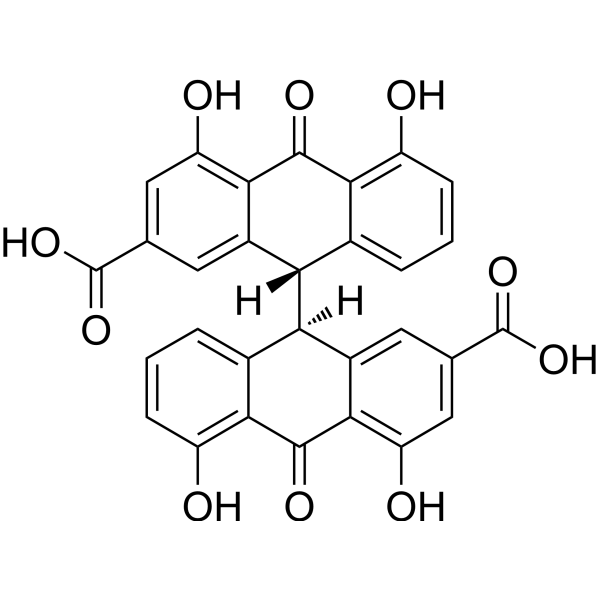
    ts-SA is a carbonic anhydrase (CA) inhibitor with activity against seven human CA homologues. ts-SA can bind to the Zn(II) ion in the enzyme active site in a deprotonated form. The organic skeleton of ts-SA extends in the enzyme cavity and participates in multiple interactions with amino acid residues and water molecules. Due to its structural differences, the inhibitory performance of ts-SA is significantly better than that of another pyridine derivative. ts-SA exhibits low nanomolar inhibitory activity and is a multi-target CA inhibitor .
    ts-SA
  • HY-115894

    Herbicide Infection
    DapL-IN-1 is an inhibitor of L,L-diaminoheptanoic acid aminotransferase (DapL) with the characteristics of inhibiting DapL activity in bacteria and plants. DapL-IN-1 can be used to design and discover new biocides such as antibiotics, herbicides or algaecides with the potential to be non-toxic to animals. DapL-IN-1 shows differential sensitivity in inhibiting different DapL homologues, which can provide important information for further drug development. DapL-IN-1 may affect its biological activity by affecting the interaction with residues adjacent to the active site, which may lead to different binding modes .
    DapL-IN-1
  • HY-182636

    Deubiquitinase Aldehyde Dehydrogenase (ALDH) Metabolic Disease Inflammation/Immunology Cancer
    MT16-001 is a cell-permeable UCHL1 inhibitor with an IC50 value of 580 nM. MT16-001 also exhibits considerable inhibitory activity against USP30, and shows selectivity for other UCH family deubiquitinases (DUBs) as well as the broader proteome. MT16-001 binds covalently to the cysteine residue at the active site of UCHL1, and forms covalent interactions with ALDH2, ALDH9A1 and GATD3A in intact cells. Meanwhile, as a cytotoxic agent, it displays a steep dose-response curve in human embryonic kidney cells. MT16-001 can be used for research on various cancers, liver fibrosis and pulmonary fibrosis .
    MT16-001

Inquiry Online

Your information is safe with us. * Required Fields.

Salutation


Country or Region *

Applicant Name *


Organization Name *

Department *


Email Address *


Product Name *

Cat. No.


Requested quantity *

Phone Number *


Remarks

Inquiry Online

Inquiry Information

Product Name:
Cat. No.:
Quantity:
MCE Japan Authorized Agent:

