
28 Results for "

acute liver failure

" in MedChemExpress (MCE) Product Catalog:
Products (28)

28 Results for "acute liver failure" in MCE Product Catalog:

  • Targets Recommended:
8
8 Publications Verification
Cat. No.: HY-P3211
CAS No.: 2014384-91-7
Synonyms: LR12
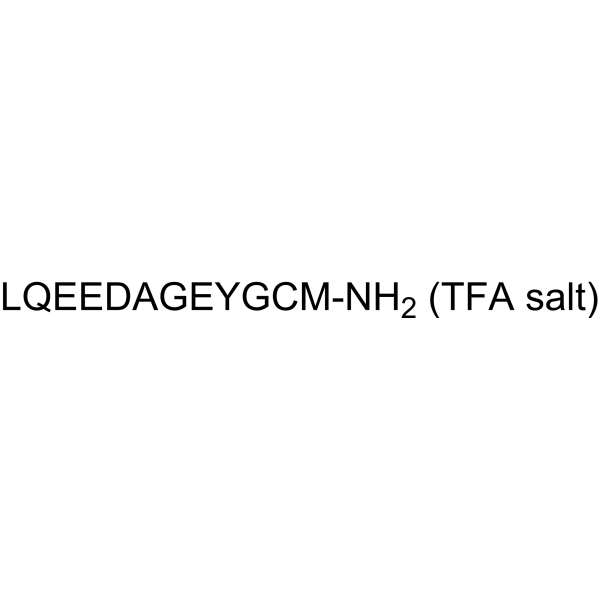
Nangibotide (LR12) is a synthetic peptide and TREM-1 receptor inhibitor. Nangibotide inhibits NF-κB and NLRP3 inflammasome activation and reduces the release of pro-inflammatory factors (such as IL-1β, IL-8). Nangibotide inhibits Apoptosis. Nangibotide reduces excessive inflammatory responses and protects tissues (liver, lung) from damage. Nangibotide can be used in the researches for myocardial ischemia-reperfusion injury, septic shock, acute lung injury, osteoarthritis, and acute liver failure .
loading...
    loading...
8
8 Publications Verification
Cat. No.: HY-P3211A
Synonyms: LR12 TFA
Nangibotide TFA (LR12 TFA) is a synthetic peptide and TREM-1 receptor inhibitor. Nangibotide TFA inhibits NF-κB and NLRP3 inflammasome activation and reduces the release of pro-inflammatory factors (such as IL-1β, IL-8). Nangibotide TFA inhibits Apoptosis. Nangibotide TFA reduces excessive inflammatory responses and protects tissues (liver, lung) from damage. Nangibotide TFA can be used in the researches for myocardial ischemia-reperfusion injury, septic shock, acute lung injury, osteoarthritis, and acute liver failure .
loading...
    loading...
4
4 Cited Publications
Cat. No.: HY-N0712
CAS No.: 104472-68-6
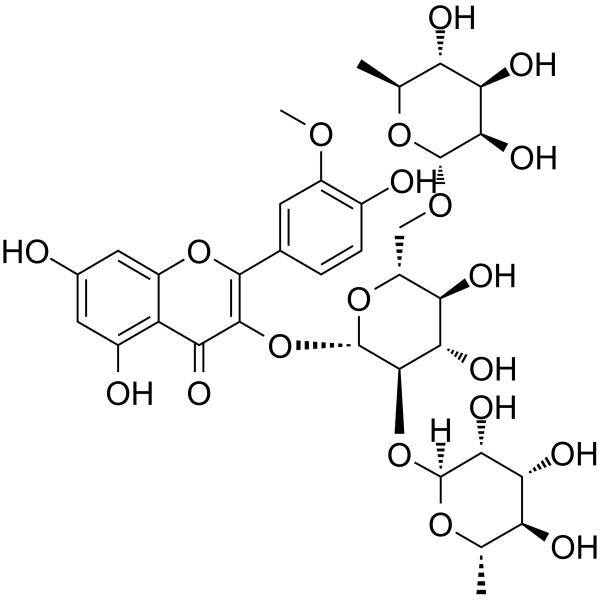
Typhaneoside is an orally active activator of PI3K/Akt/mTOR and farnesoid X receptor. Typhaneoside promotes the activation of AMPK and Caspase-3, induces apoptosis, ferroptosis, autophagy, ROS accumulation, cell cycle arrest at the G2/M phase, and reduces cancer cell viability. Typhaneoside improves glucose and lipid metabolism, alleviates inflammatory responses, oxidative stress and hepatic lipid accumulation, and exerts hepatoprotective effects. Typhaneoside can be used in research related to heart failure after myocardial infarction, acute myeloid leukemia, non-alcoholic fatty liver disease and neurological disorders .
loading...
    loading...
3
3 Cited Publications
Cat. No.: HY-42682
CAS No.: 1772-03-8
Synonyms: D-Galactosamine HCl
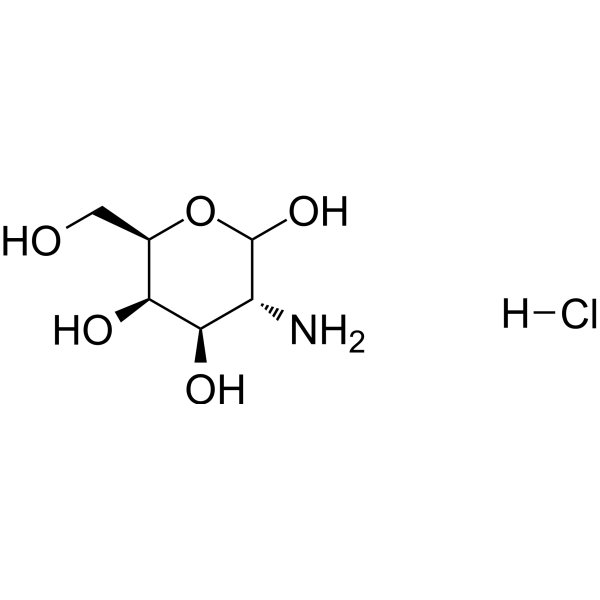
D(+)-Galactosamine (D-Galactosamine) hydrochloride, which is an established experimental toxin, primarily causes liver injury by the generation of free radicals and depletion of UTP nucleotides. D(+)-Galactosamine hydrochloride intoxication also induces renal dysfunction thus, renal failure is often associated with the end-stage of the liver damage. Lipopolysaccharide/D(+)-Galactosamine-induced acute liver injury is a known animal model of fulminant hepatic failure .
loading...
    loading...
3
3 Cited Publications
Cat. No.: HY-W013411A
CAS No.: 90719-30-5
Synonyms: UIC-1005
Research Areas:  

Cancer

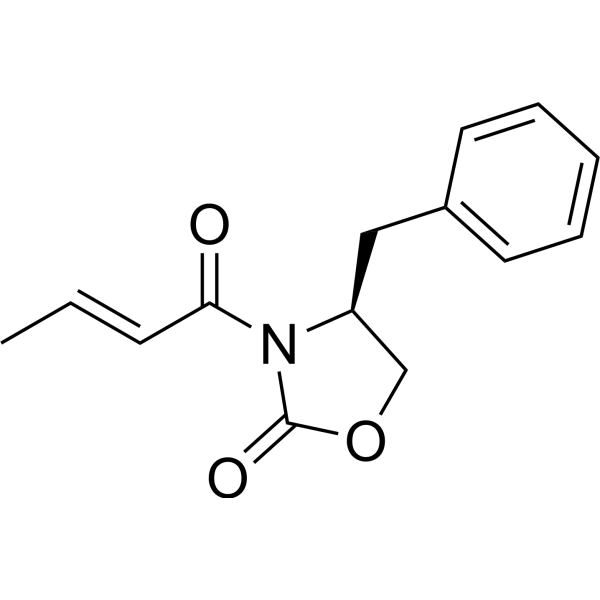
Locostatin (UIC-1005) is a potent RKIP inhibitor. Locostatin binds Raf kinase inhibitor RKIP protein and disrupts the interaction of RKIP with Raf-1 kinase and G protein-coupled receptor kinase 2. Locostatin inhibits cell proliferation and migration. Locostatin can be used to synthesize chemical probes toward PEBP-proteins. Locostatin aggravates thioacetamide (HY-Y0698)-induced acute liver failure in mice .
loading...
    loading...
2
2 Cited Publications
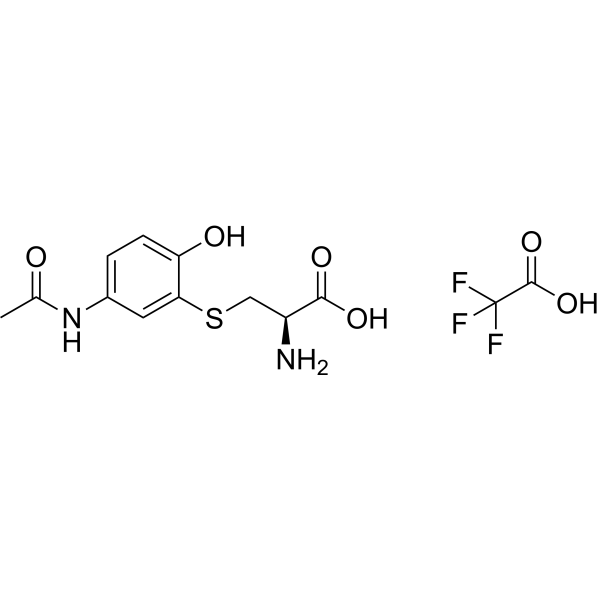
Cat. No.: HY-139093A
CAS No.: 1331891-93-0
Purity:  ≥99.0%
Synonyms: APAP-Cys TFA
Target:  

Drug Derivative

Research Areas:  

Others

Paracetamol-cysteine TFA (APAP-Cys TFA) is a cysteine adduct of Acetaminophen (HY-66005). It forms when Acetaminophen is oxidized to the reactive metabolite N-acetyl-p-benzoquinone imine (NAPQI) .
loading...
    loading...
2
2 Cited Publications
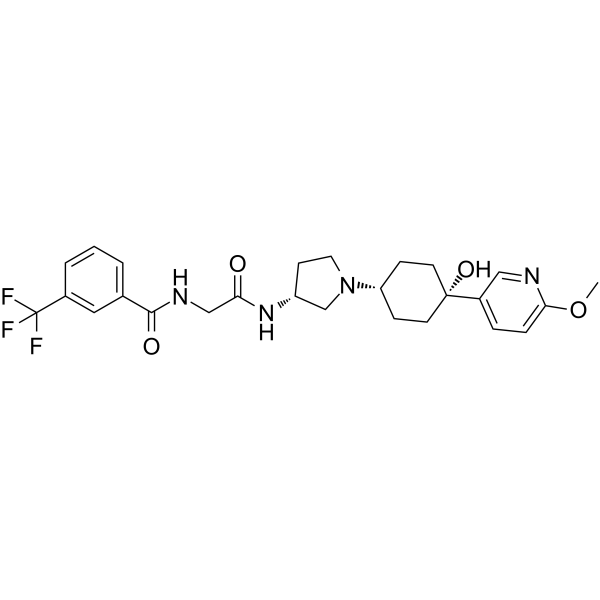
Cat. No.: HY-15450A
CAS No.: 887401-92-5
Purity:  99.30%
Target:  

CCR

Research Areas:  

Endocrinology

INCB 3284 is a potent, selective and orally bioavailable human CCR2 antagonist, inhibiting monocyte chemoattractant protein-1 binding to hCCR2, with an IC50 of 3.7 nM. INCB 3284 can be used in the research of acute liver failure.
loading...
    loading...
1
1 Cited Publications
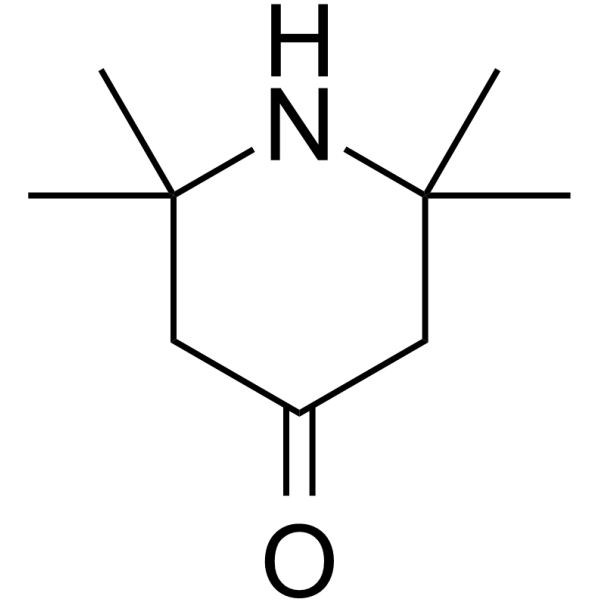
Cat. No.: HY-N1131
CAS No.: 826-36-8
Synonyms: 2,2,6,6-Tetramethyl-4-piperidone
Triacetonamine (2,2,6,6-Tetramethyl-4-piperidone) is used as an intermediate for the synthesis of pharmaceutical products, pesticides and photostabilizers for polymers. Triacetonamine has oral activity and can induce acute liver failure (ALF) in rats .
loading...
    loading...
1
1 Cited Publications
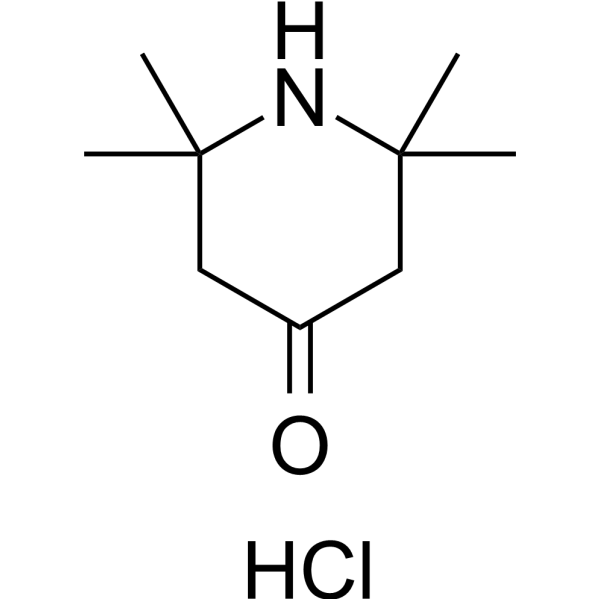
Cat. No.: HY-N1131A
CAS No.: 33973-59-0
Synonyms: 2,2,6,6-Tetramethyl-4-piperidone hydrochloride
Target:  

Drug Intermediate

Research Areas:  

Metabolic Disease

Triacetonamine (2,2,6,6-Tetramethyl-4-piperidone) hydrochloride is used as an intermediate for the synthesis of pharmaceutical products, pesticides and photostabilizers for polymers. Triacetonamine hydrochloride has oral activity and can induce acute liver failure (ALF) in rats .
loading...
    loading...
1
1 Cited Publications
Cat. No.: HY-N1131B
CAS No.: 10581-38-1
Synonyms: 2,2,6,6-Tetramethyl-4-piperidone monohydrate
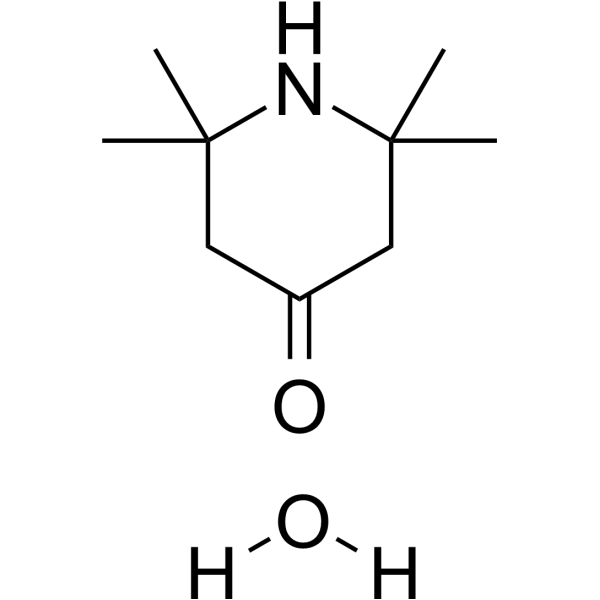
Triacetonamine (2,2,6,6-Tetramethyl-4-piperidone) monohydrate is used as an intermediate for the synthesis of pharmaceutical products, pesticides and photostabilizers for polymers. Triacetonamine hydrochloride has oral activity and can induce acute liver failure (ALF) in rats .
loading...
    loading...
Cat. No.: HY-110036
CAS No.: 180002-83-9
Purity:  99.12%
Synonyms: L768242
GW-405833 (L768242) is a potent, selective cannabinoid receptor 2 (CB2) agonist. GW405833 has EC50 and Ki values ​​of 0.65 nM and 3.92 nM for CB2, and EC50 and Ki values ​​of 16.1 μM and 4772 nM for CB1. GW-405833 also exhibits non-competitive CB1 antagonist, exerting its analgesic and and anti-inflammatory effect through a CB1 receptor (rather than CB2) dependent mechanism. GW-405833 can significantly inhibit the production of cAMP stimulated by Forskolin (HY-15371). GW405833 inhibits glycolysis by down-regulating HIF-1α, thereby alleviating acute liver failure (ALF) .
loading...
    loading...
Cat. No.: HY-154795
CAS No.: 658701-67-8
Purity:  99.81%
Synonyms: 18α-Glycyrrhizic acid Magnesium hydrate; 18α-GA Magnesium hydrate; 18α-Licorice-saponin H2 Magnesium hydrate
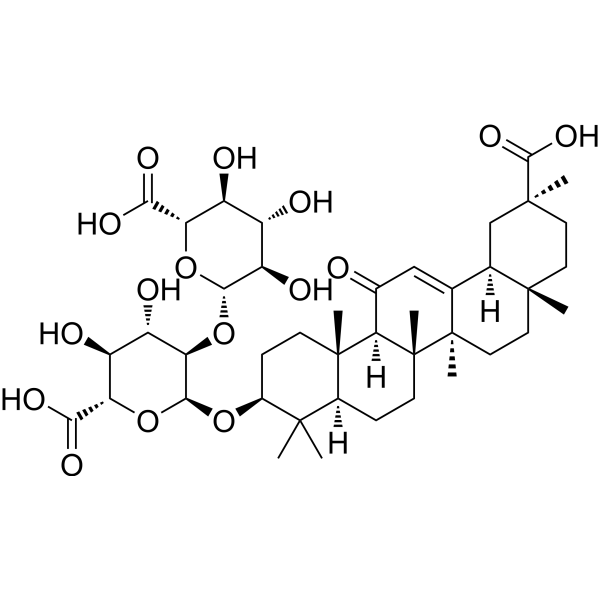
Magnesium isoglycyrrhizinate hydrate (18α-Glycyrrhizic acid Magnesium hydrate; 18α-GA Magnesium hydrate; 18α-Licorice-saponin H2 Magnesium hydrate) is a derivative of glycyrrhizic acid with oral activity. Magnesium isoglycyrrhizinate hydrate exhibits antioxidant, anti-inflammatory, hepatoprotective and cardioprotective activities. Magnesium isoglycyrrhizinate hydrate protects against ethanol-induced alcoholic liver disease in rats by upregulating the expression levels of SOD, GSH, PPAR-α and CPT-1 . Magnesium isoglycyrrhizinate hydrate shows cytotoxicity against T lymphocytes and inhibits HIV-1 replication in these cells . Magnesium isoglycyrrhizinate hydrate alleviates oxidative stress by reducing the levels of ROS, Nrf2, HO-1 and p-P65, and alleviates pyroptosis by downregulating the expression levels of NLRP3, GSDMD-N, P20 and c-IL-1β. Magnesium isoglycyrrhizinate hydrate inhibits autophagy, colonic fibrosis and myocardial fibrosis, and regulates intestinal barrier integrity. Magnesium isoglycyrrhizinate hydrate can be used in research related to alcoholic liver disease, HIV-1 infection, hepatotoxicity, acute liver failure, inflammatory bowel disease and myocardial fibrosis .
loading...
    loading...
Cat. No.: HY-N6911A
CAS No.: 83896-44-0
Synonyms: 18α-GA; Isoglycyrrhizinic acid; 18α-Glycyrrhizic acid
18α-Glycyrrhizic acid (18α-GA; Isoglycyrrhizinic acid; 18α-Glycyrrhizic acid) is a derivative of glycyrrhizic acid with oral activity. 18α-Glycyrrhizic acid exhibits antioxidant, anti-inflammatory, hepatoprotective and cardioprotective activities. 18α-Glycyrrhizic acid protects against ethanol-induced alcoholic liver disease in rats by upregulating the expression levels of SOD, GSH, PPAR-α and CPT-1 . 18α-Glycyrrhizic acid shows cytotoxicity against T lymphocytes and inhibits HIV-1 replication in these cells . 18α-Glycyrrhizic acid alleviates oxidative stress by reducing the levels of ROS, Nrf2, HO-1 and p-P65, and alleviates pyroptosis by downregulating the expression levels of NLRP3, GSDMD-N, P20 and c-IL-1β. 18α-Glycyrrhizic acid inhibits autophagy, colonic fibrosis and myocardial fibrosis, and regulates intestinal barrier integrity. 18α-Glycyrrhizic acid can be used in research related to alcoholic liver disease, HIV-1 infection, hepatotoxicity, acute liver failure, inflammatory bowel disease and myocardial fibrosis .
loading...
    loading...
Cat. No.: HY-N1131S
CAS No.: 52168-48-6
Synonyms: 2,2,6,6-Tetramethyl-4-piperidone-d17
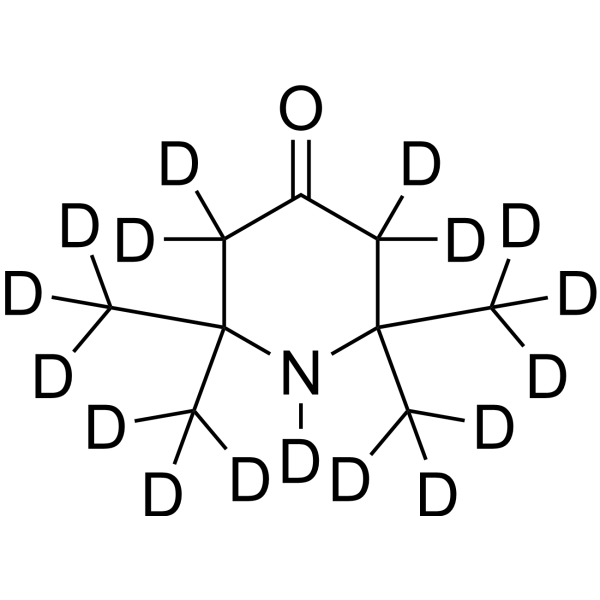
Triacetonamine-d17 (2,2,6,6-Tetramethyl-4-piperidone-d17) is the deuterium labeled Triacetonamine. Triacetonamine has oral activity and can induce acute liver failure (ALF) in rats .
loading...
    loading...
Cat. No.: HY-W392413
CAS No.: 118421-50-4
Glutathione monoethyl ester is a glutathione derivative that can be transported into cells and hydrolyzed into glutathione. Glutathione monoethyl ester downregulates the gene expression of TEN1 and CTC1 while upregulating TERT expression. Glutathione monoethyl ester enhances telomerase activity, promotes proliferation and differentiation in aged bone marrow stromal cells, while elevating glutathione levels and reducing oxidative stress, protein aggregation and cell death in motor neuronal cells. Glutathione monoethyl ester confers broad multi-organ protection against cerebral ischemia, renal injury, liver damage, and pancreatitis. Glutathione monoethyl ester can be used for the research of amyotrophic lateral sclerosis, stroke, acute renal failure, liver injury, and acute pancreatitis .
loading...
    loading...
Cat. No.: HY-122920
CAS No.: 55319-36-3
Purity:  99.81%
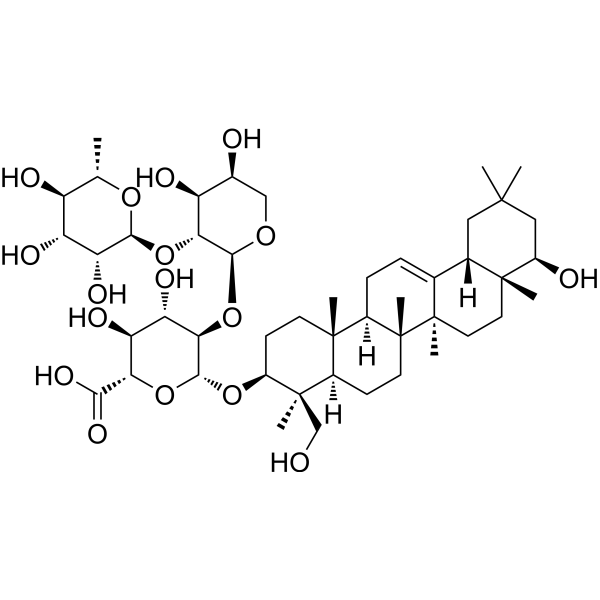
Soyasaponin II is a saponin with antiviral activity. Soyasaponin II inhibits the replication of HSV-1, HCMV, influenza virus, and HIV-1. Soyasaponin II shows potent inhibition on HSV-1 replication. Soyasaponin II serves as a inhibitor for YB-1 phosphorylation and NLRP3 inflammasome priming and could protect mice against LPS/GalN induced acute liver failure .
loading...
    loading...
Cat. No.: HY-142059
CAS No.: 224788-36-7
Purity:  99.60%
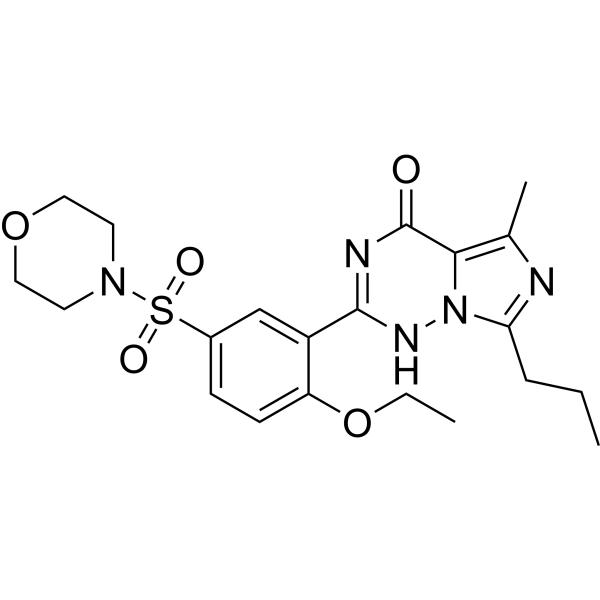
PDE5-IN-4 is a phosphodiesterase 5 inhibitor. PDE5-IN-4 can be used for the research of acute myocardial infarction and damage caused by reperfusion, gastrointestinal diseases, damage caused by diabetes, and liver failure .
loading...
    loading...
Cat. No.: HY-42682R
CAS No.: 1772-03-8
Synonyms: D-Galactosamine HCl (Standard)
D(+)-Galactosamine (hydrochloride) (Standard) is the analytical standard of D(+)-Galactosamine (hydrochloride). This product is intended for research and analytical applications. D(+)-Galactosamine (D-Galactosamine) hydrochloride, which is an established experimental toxin, primarily causes liver injury by the generation of free radicals and depletion of UTP nucleotides. D(+)-Galactosamine hydrochloride intoxication also induces renal dysfunction thus, renal failure is often associated with the end-stage of the liver damage. Lipopolysaccharide/D(+)-Galactosamine-induced acute liver injury is a known animal model of fulminant hepatic failure .
loading...
    loading...
Cat. No.: HY-110036A
CAS No.: 1202865-22-2
Purity:  99.59%
Synonyms: L768242 hydrochloride
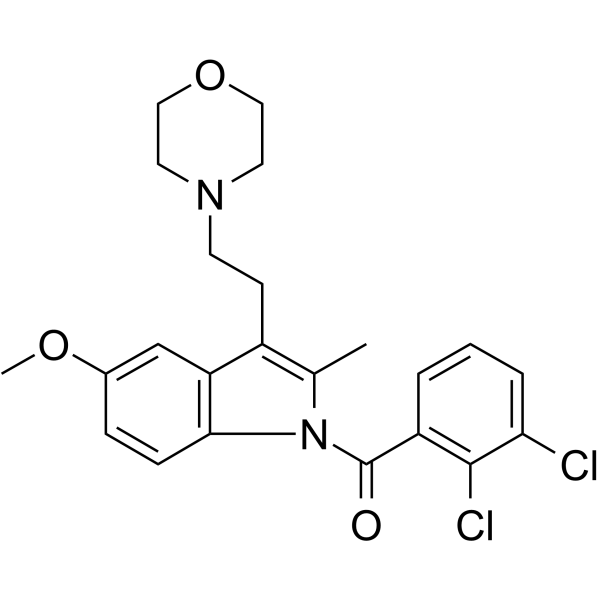
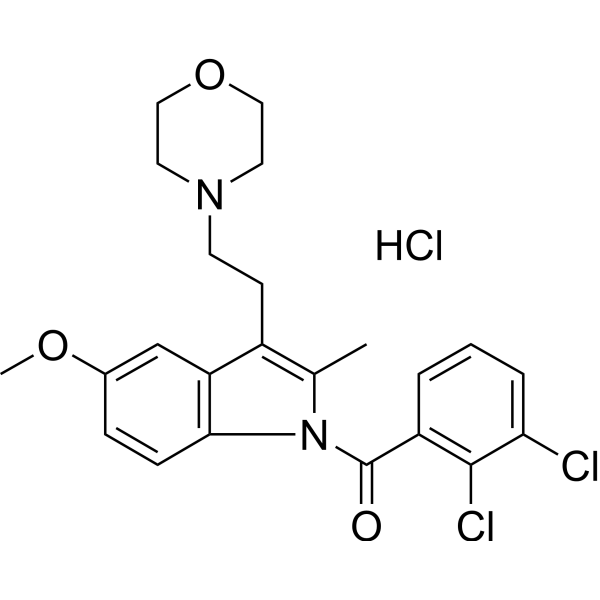
GW405833 (L768242) hydrochloride is a potent, selective cannabinoid receptor 2 (CB2) agonist. GW405833 has EC50 and Ki values ​​of 0.65 nM and 3.92 nM for CB2, and EC50 and Ki values ​​of 16.1 μM and 4772 nM for CB1. GW405833 hydrochloride also exhibits non-competitive CB1 antagonist, exerting its analgesic effect through a CB1 receptor (rather than CB2) dependent mechanism. GW405833 hydrochloride can significantly inhibit the production of cAMP stimulated by Forskolin (HY-15371). GW405833 hydrochloride inhibits glycolysis by down-regulating HIF-1α, thereby alleviating acute liver failure (ALF) .
loading...
    loading...
Cat. No.: HY-139093
CAS No.: 53446-10-9
Synonyms: APAP-Cys
Target:  

Drug Derivative

Research Areas:  

Others

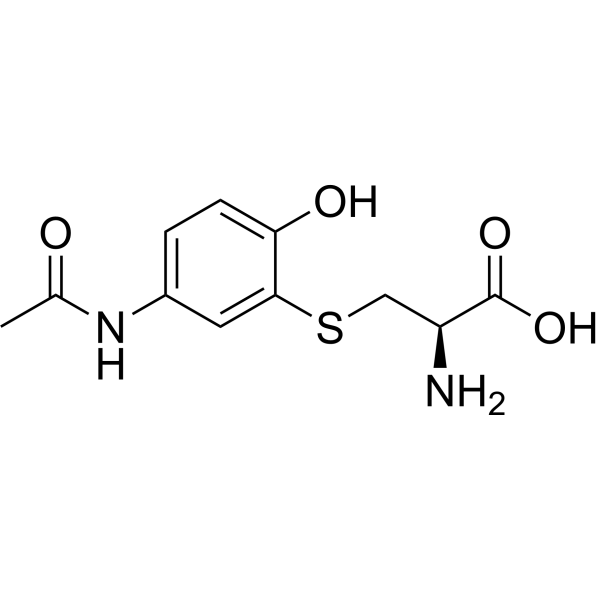
Paracetamol-cysteine (APAP-Cys) is a cysteine adduct of Acetaminophen (HY-66005). It forms when Acetaminophen is oxidized to the reactive metabolite N-acetyl-p-benzoquinone imine (NAPQI) .
loading...
    loading...

