1. Search Result
Search Result
Results for "

adenosine receptors

" in MedChemExpress (MCE) Product Catalog:

414

Inhibitors & Agonists

1

Screening Libraries

3

Fluorescent Dyes

10

Biochemical Assay Reagents

1

Peptides

36

Natural
Products

45

Isotope-Labeled Compounds

10

Oligonucleotides

1

GMP Molecules

Cat. No. Product Name Target Research Areas Chemical Structure
  • HY-10889
    Preladenant
    5+ Cited Publications

    SCH-420814

    Adenosine Receptor Neurological Disease Cancer
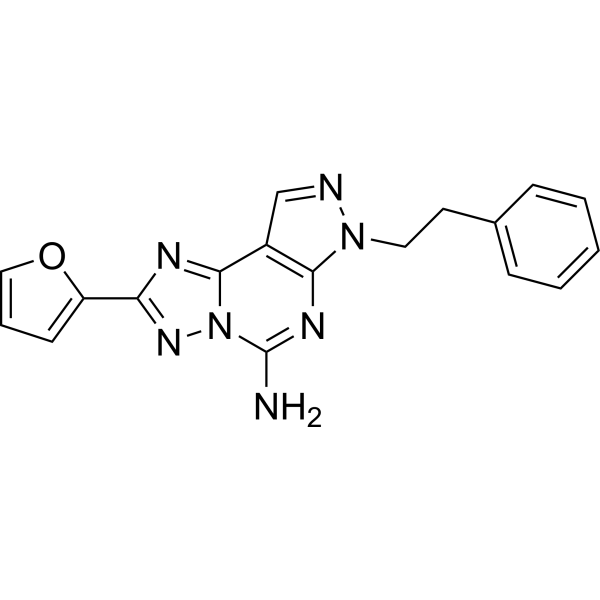
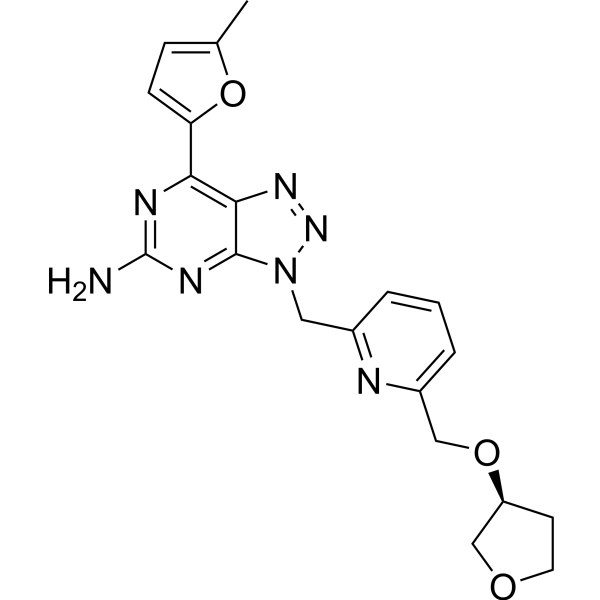
    Preladenant is a potent and competitive antagonist of the human adenosine A2A receptor with a Ki of 1.1 nM and has over 1000-fold selectivity over other adenosine receptors.
    Preladenant
  • HY-103175
    PSB36
    1 Publications Verification

    Adenosine Receptor Cardiovascular Disease Neurological Disease Inflammation/Immunology
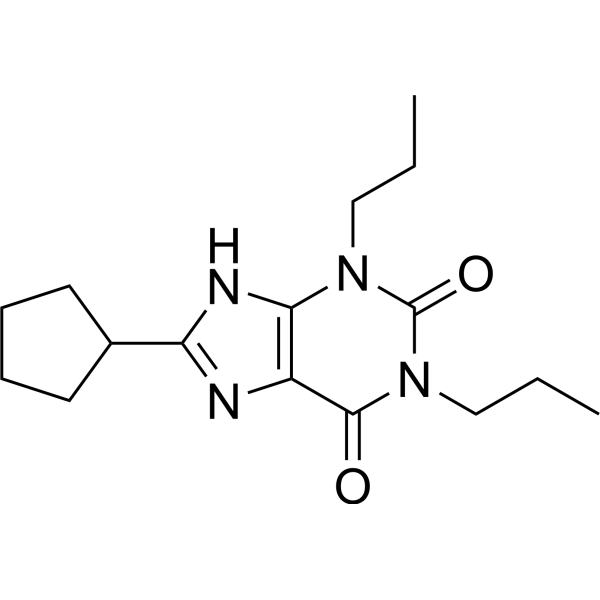
    PSB36 is a highly selective A1 adenosine receptor antagonist, with a Ki of 0.12 nM and a Kd of 0.7 nM. Systemic administration of PSB36 reduces formalin- and Carrageenan (HY-125474)-induced edema in mice and decreases pain-related behaviors, with no local paw activity. PSB36 prolongs the APD90 of rat and human atria, produces a frequency-dependent prolongation of rat atrial ERP, increases the diastolic threshold of rat atria, and shortens the duration of atrial fibrillation episodes. PSB36 can be used in research related to inflammatory pain, inflammatory hyperalgesia, edema and atrial fibrillation .
    PSB36
  • HY-103164

    (E)-CSC

    Adenosine Receptor Monoamine Oxidase Neurological Disease
    (E)-8-(3-Chlorostyryl)caffeine is a selective adenosine A2A receptor antagonist. (E)-8-(3-Chlorostyryl)caffeine inhibits monoamine oxidase B (MAO-B) with a Ki value of 70 nM by a pathway that is independent of its actions on the A2A receptor. (E)-8-(3-Chlorostyryl)caffeine has the potential for Parkinson's disease research .
    (E)-8-(3-Chlorostyryl)caffeine
  • HY-118301

    GABA Receptor 5-HT Receptor Neurological Disease
    ADX71441 is an orally active, blood-brain barrier penetrant positive allosteric modulator of GABAB receptor. ADX71441 potentiates the activity of endogenous GABA at GABAB receptor, with an EC50 of 96 nM. ADX71441 functionally inhibits adenosine transporters and 5-HT2B receptor. ADX71441 produces anxiolytic-like, analgesic, muscle relaxant, hypothermic and overactive bladder inhibitory effects, reduces acute locomotor activity levels, decreases voluntary intake of alcohol and saccharin, attenuates stress-induced neuronal activation, and exhibits anti-hyperalgesic activity .
    ADX71441
  • HY-106199
    Adenosine A1 receptor activator T62
    1 Publications Verification

    Adenosine Receptor Neurological Disease Inflammation/Immunology
    Adenosine A1 receptor activator T62 is an allosteric enhancer of adenosine A1 receptor. Adenosine A1 receptor activator T62 produces antinociception in animal models of acute pain and also reduces hypersensitivity in models of inflammatory and nerve-injury pain .
    Adenosine A1 receptor activator T62
  • HY-B0228S6

    Adenine riboside-d2; D-adenosine-d2

    Apoptosis Autophagy Endogenous Metabolite Nucleoside Antimetabolite/Analog Metabolic Disease Cancer
    Adenosine-d2 is the deuterium labeled Adenosine. Adenosine (Adenine riboside), a ubiquitous endogenous autacoid, acts through the enrollment of four G protein-coupled receptors: A1, A2A, A2B, and A3. Adenosine affects almost all aspects of cellular physio
    Adenosine-d2
  • HY-124151

    2'-AMP; adenosine 2'-phosphate; AMP 2'-phosphate

    Adenosine Receptor Endogenous Metabolite Neurological Disease
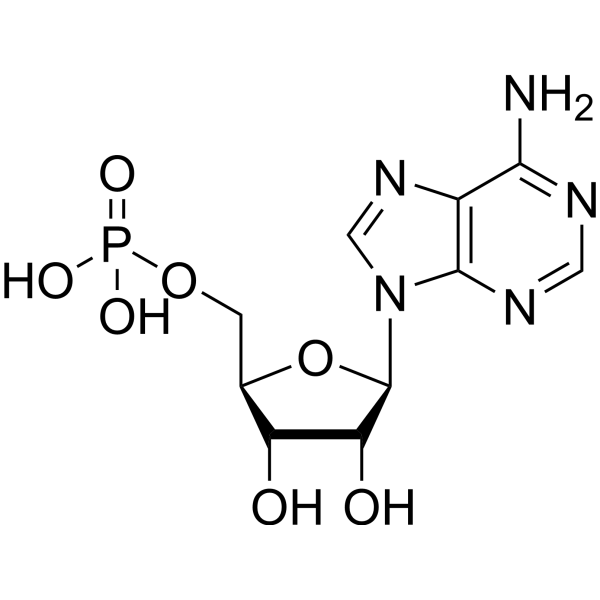
    Adenosine-2'-monophosphate (2'-AMP) is converted by extracellular 2’,3'-CAMP. Adenosine-2'-monophosphate is further metabolized to extracellular adenosine (a mechanism called the extracellular 2’,3’-cAMP-adenosine pathway). Adenosine-2'-monophosphate inhibits LPS-induced TNF-α and CXCL10 production via A2A receptor activation .
    Adenosine-2'-monophosphate
  • HY-105068

    BMS 068645; DWH 146e

    Adenosine Receptor Cardiovascular Disease
    Apadenoson is an adenosine analog with selective agonist activity for the adenosine A2a receptor and induces coronary vasodilatation .
    Apadenoson
  • HY-148088
    M1069
    1 Publications Verification

    Adenosine Receptor Cancer
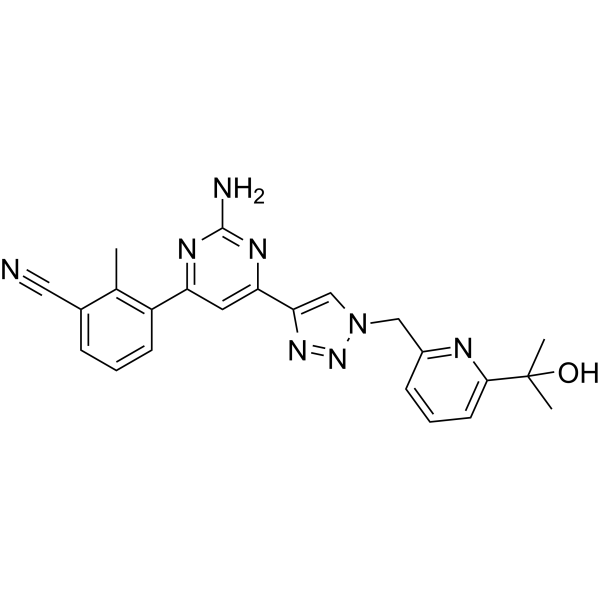
    M1069 is a selective and orall active, dual A2A/A2B adenosine receptor antagonist with a selectivity of >100 fold against the A1 and A3 receptors. M1069 counteracts immune-suppressive mechanisms of adenosine, and exhibits anti-tumor activity .
    M1069
  • HY-103162

    Adenosine Receptor Neurological Disease
    ANR94 is a potent and selective adenosine A2A receptor (AA2AR) antagonist with an Ki of 46 nM for hAA2AR. ANR94 has the potential for the research of Parkinson's disease .
    ANR94
  • HY-103190

    Adenosine Receptor Neurological Disease Cancer
    MRS1220, a highly potent and selective human A3 adenosine receptor (hA3AR) antagonist with a Ki of 0.59 nM, has therapeutic potential for the research of diseases of the central nervous system . MRS1220 reduces glioblastoma tumor size and blood vessel formation in vivo .
    MRS1220
  • HY-103174

    Adenosine Receptor Cardiovascular Disease
    MRS1334 is a potent and selective human adenosine A3 receptor antagonist with Kis of 2.69 nM, >100 nM, >100 nM for hA3, rA1, rA2A, respectively. MRS1334 blocks the protective effect of Cl-IB-MECA leading to significant bradycardia and elevated ST segment . MRS1334 is a click chemistry reagent, it contains an Alkyne group and can undergo copper-catalyzed azide-alkyne cycloaddition (CuAAc) with molecules containing Azide groups.
    MRS1334
  • HY-103170

    Adenosine Receptor Others
    LUF5834 is a selective A2B adenosine receptor (A2BR) partial agonist (EC50 = 12 nM). LUF5834 is also a partial A1/A2A adenosine receptor agonist (lacking selectivity) with Ki values of 2.6 and 28 nM, respectively .
    LUF5834
  • HY-W004425

    3,7-Dimethyl-1-propargylxanthine

    Adenosine Receptor Neurological Disease
    DMPX (3,7-Dimethyl-1-propargylxanthine) is a selective A2A adenosine receptor (A2A AR) antagonist that crosses the blood-brain barrier, with a Ki of 11 μM for rat A2 adenosine receptor and a Ki of 45 μM for rat A1 adenosine receptor. By blocking A2A receptors in specific brain regions, DMPX protects dopaminergic and GABAergic neurons from mitochondrial dysfunction. DMPX is applicable to research related to depression, Parkinson's disease and Huntington's disease .
    DMPX
  • HY-19259

    Adenosine Kinase Neurological Disease
    GP3269 is a selective and orally active human adenosine kinase (AK) inhibitor with an IC50 of 11 nM against human adenosine kinase. GP3269 increases adenosine levels at epileptic foci, activates A1 receptors on excitatory neurons, and exhibits anticonvulsant activity in rats. GP3269 does not induce hemodynamic effects including changes in blood pressure or heart rate in rats. GP3269 can be used for epilepsy-related research .
    GP3269
  • HY-19365
    AB-MECA
    1 Publications Verification

    Adenosine Receptor Neurological Disease
    AB-MECA is a high affinity A3 adenosine receptor agonist with a binding Ki of 430.5 nM for human A3 receptors in CHO cells. AB-MECA can enhance plasma histamine level .
    AB-MECA
  • HY-116675

    Adenosine Receptor Cardiovascular Disease
    Sulmazole is a cardiotonic agent. Sulmazole has competitive inhibitory for A1 adenosine receptor. Sulmazole can improve cardiac index and reduce pulmonary capillary wedge pressure .
    Sulmazole
  • HY-W178327

    Adenosine Receptor Cancer
    8-Chloro caffeine binds to adenosine receptors (Ki = 30 µM). 8-Chloro caffeine potentiates UV-induced chromosomal aberrations in Cl-I Chinese hamster embryonic lung cells. 8-Chloro caffeine is a derivative of the methylxanthine alkaloid caffeine .
    8-Chloro caffeine
  • HY-19842

    CVT 3619

    Adenosine Receptor Cardiovascular Disease Metabolic Disease
    GS-9667 (CVT 3619), a novel N 6-5'-substituted adenosine analog, is a selective, partial agonist of the A1 adenosine receptor (A1AdoR). GS-9667 binds to adipocyte membranes with high (KH=14 nM) and low (KL=5.4 μM) affinities. GS-9667 reduces cyclic AMP content and release of nonesterified fatty acids from epididymal adipocytes with IC50 values of 6 nM and 44 nM, respectively. GS-9667 inhibits lipolysis and has the potential for Type 2 diabetes (T2DM) and dyslipidemia via lowering of free fatty acids (FFA) .
    GS-9667
  • HY-111767

    Adenosine Receptor Inflammation/Immunology
    BAY-545 is a potent and selective A2B adenosine receptor antagonist, with an IC50 of 59 nM. BAY-545 also exhibits IC50s of 66, 400, 280 nM for human, mouse, rat A2B adenosine receptor in cells, respectively, and a Ki of 97 nM for human A2B adenosine receptor, with more selectivity over A1, A2A, and A3 adenosine receptor .
    BAY-545
  • HY-147907

    Adenosine Receptor Neurological Disease Inflammation/Immunology Cancer
    Adenosine receptor inhibitor 1 is a potent and selective adenosine receptor (AR) inhibitor with Ki values of >1000, 68.5, >1000, >1000 nM for A1AR, A2AAR, A2BAR, A3AR, respectively. Adenosine receptor inhibitor 1 shows antinociceptive activity, anti-inflammatory effect and peripheral analgesic effect. Adenosine receptor inhibitor 1 has the potential for the research of cancer or neurodegenerative diseases .
    Adenosine receptor inhibitor 1
  • HY-165578

    Adenosine Receptor Cardiovascular Disease Neurological Disease Cancer
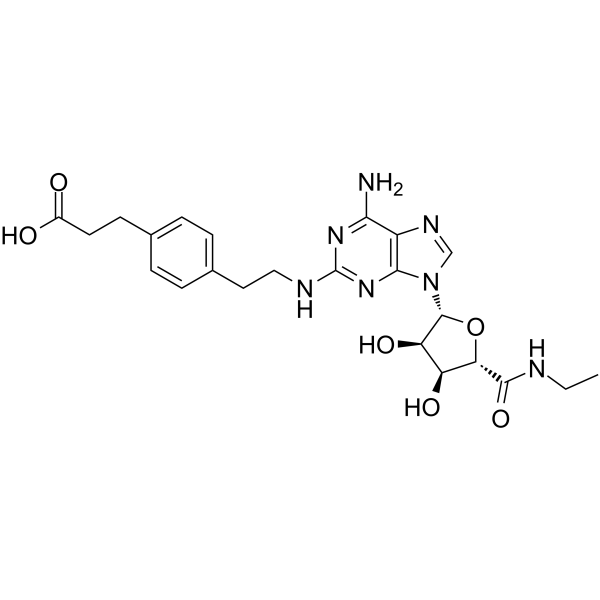
    Neladenoson is a potent and selective Adenosine A1 Receptor agonist. Neladenoson is promising for research of heart failure .
    Neladenoson
  • HY-147908

    Xanthine Oxidase Adenosine Receptor Inflammation/Immunology
    Adenosine receptor inhibitor 2 (compound 14b) is a potent AR (adenosine receptor) inhibitor. Adenosine receptor inhibitor 2 shows dual affinity toward A1/A2A ARs with higher affinity for the A1- than the A2AAR. Adenosine receptor inhibitor 2 has Ki values of 52.2 nM for the A1AR and 167 nM for the A2AAR .
    Adenosine receptor inhibitor 2
  • HY-B1505A

    Theophyllineacetic acid piperazine; Theophylline-7-acetic acid piperazine

    Adenosine Receptor Protein Arginine Deiminase Phosphodiesterase (PDE) Cardiovascular Disease Neurological Disease Inflammation/Immunology
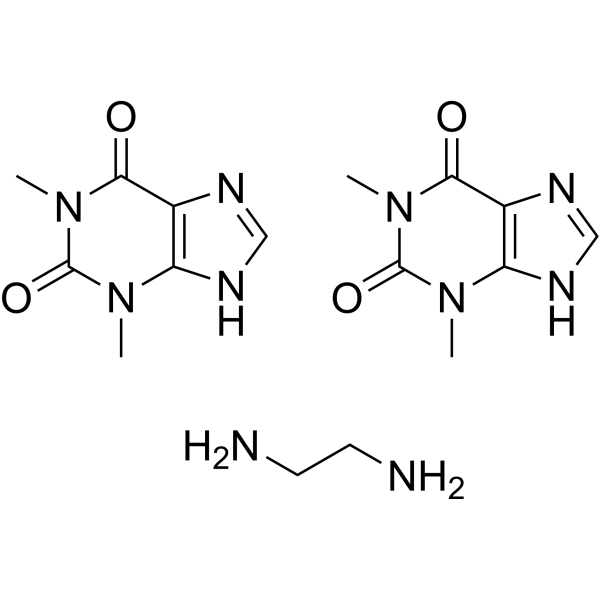
    Acefylline (Theophyllineacetic acid) piperazine, a xanthine derivative, is an Adenosine Receptor antagonist. Acefylline piperazine is a peptidylarginine deiminase (PAD) activator. Acefylline piperazine is also a bronchodilator and cardiac stimulant that inhibits rat lung cAMP phosphodiesterase isoenzymes. Acefylline piperazine can be used in asthma research .
    Acefylline piperazine
  • HY-103178

    Adenosine Receptor Inflammation/Immunology
    MRE3008F20 is a highly efficient, highly selective and radioactive adenosine A3 receptor (AA3R) antagonist (Ki=1.8 nM). MRE3008F20 effectively antagonises Cl-IB-MECA-induced cAMP production in resting lymphocytes with an IC50 value of 5 nM. MRE3008F20 can be used in the study of AA3R .
    MRE3008F20
  • HY-W063197

    Adenosine Receptor Cancer
    Adenosine receptor antagonist 4 (compound 2) is an adenosine A1 receptor antagonist with a Ki of 101 nM for human A1 receptor .
    Adenosine receptor antagonist 4
  • HY-144419

    Adenosine Receptor Cancer
    Adenosine receptor antagonist 3 is a potent antagonist of adenosine receptor. Adenosine receptor antagonist 3 has the potential for the research of cancer disease (extracted from patent WO2019233994A1, compound 1) .
    Adenosine receptor antagonist 3
  • HY-147545

    Adenosine Receptor Neurological Disease
    A1AR antagonist 6 (compound 15) is a potent and selective A1AR (A1 adenosine receptor) antagonist, with a pIC50 of 6.38 and a pKi of 7.13 .
    A1AR antagonist 6
  • HY-117184

    Adenosine Receptor Neurological Disease
    MSX-2 is A2A adenosine receptor antagonist, with Ki of 5 nM in human that plays an important role in Parkinson's disease .
    MSX-2
  • HY-152656

    Drug Intermediate Adenosine Receptor Neurological Disease
    2-Hydrazinyl-adenosine is a synthetic intermediate. Derivatives of 2-Hydrazinyl-adenosine act as A2A adenosine receptor agonists. 2-Hydrazinyl-adenosine is used in the research of neurodegenerative diseases .
    2-Hydrazinyl-adenosine
  • HY-107497

    Biochemical Assay Reagents Cancer
    1-Methyl-3-amino-4-cyanopyrazole (compound 3) is a molecular compound that can be used in the synthesis of adenosine A3 receptor antagonists. 1-Methyl-3-amino-4-cyanopyrazole can be utilized in cancer research .
    1-Methyl-3-amino-4-cyanopyrazole
  • HY-148954

    Adenosine Receptor Phosphodiesterase (PDE) Cancer
    PBF-999 is a phosphodiesterase10A (PDE-10A) and adenosine A2A receptor (A2AR) dual antagonist.
    PBF-999
  • HY-103187

    Adenosine Receptor Inflammation/Immunology Cancer
    HEMADO is a potent and selective adenosine A3 receptor agonist with a Ki of 1.1 nM at the human A3 subtype . HEMADO is a click chemistry reagent, it contains an Alkyne group and can undergo copper-catalyzed azide-alkyne cycloaddition (CuAAc) with molecules containing Azide groups.
    HEMADO
  • HY-112567

    Adenosine Receptor Neurological Disease
    TRR469 is a positive allosteric modulator of the A1 adenosine receptor (A1AR). TRR469 significantly increases the affinity of 2-chloro N(6)-cyclopentyladenosine (CCPA) for A₁AR, increasing the number of receptors recognized by the agonist radioligand [³H]-CCPA. TRR469 shows significant effects in both anxiety and pain models. TRR469 can be used to study anxiety disorders and pain management .
    TRR469
  • HY-144064

    Adenosine Receptor Cancer
    Adenosine receptor antagonist 2 is an orally active A2a/A2b adenosine receptor antagonist with IC50s of 1 nM and 3 nM, respectively. Adenosine receptor antagonist 2 has anti-tumor activity .
    Adenosine receptor antagonist 2
  • HY-103188

    Adenosine Receptor Neurological Disease
    PD81723 is an adenosine receptor binding enhancer. PD81723 enhances the inhibition of exogenous adenosine in a dose-dependent manner in hippocampal brain sections .
    PD81723
  • HY-111295

    Adenosine Receptor Others
    LAS38096 is a potent, selective, and efficacious A2B Adenosine Receptor antagonist, with a Ki of 17 nM .
    LAS38096
  • HY-176504

    Adenosine Receptor Cardiovascular Disease
    Adenosine receptor agonist 2 (Compound 10) is an adenosine A2B receptor (A2BR) agonist with an EC50 of 0.38 nM. Adenosine receptor agonist 2 significantly inhibits the accumulation of cAMP and calcium. Adenosine receptor agonist 2 can be used for cardioprotection research .
    Adenosine receptor agonist 2
  • HY-19130

    Adenosine Receptor Neurological Disease
    BW-534U87 is an orally active adenosine A1 receptor agonist and competitive adenosine deaminase (ADA) inhibitor (Ki=7 μM). BW-534U87 elevates brain adenosine levels and suppresses epileptiform activity. BW-534U87 demonstrate anticonvulsant efficacy in animal seizure models. BW-534U87 is promising for research of epilepsy and adenosine-related neuropsychiatric disorders .
    BW-534U87
  • HY-103182A

    Adenosine Receptor Others
    PSB-1115 potassium salt is a selective A2B Adenosine Receptor antagonist. PSB-1115 potassium salt inhibits the 2,4,6-trinitrobenzenesulfonic acid (TNBS)-induced contraction inhibition of acetylcholine (ACh) .
    PSB-1115 potassium salt
  • HY-W782550

    Adenosine Receptor Cardiovascular Disease
    FK-352 is a selective adenosine A1 receptor antagonist. FK-352 significantly improves intradialytic hypotension in chronic hemodialysis. FK-352 can be used for the study of intradialytic hypotension .
    FK-352
  • HY-137418

    2-Methylthio-ATP

    P2Y Receptor Others Inflammation/Immunology
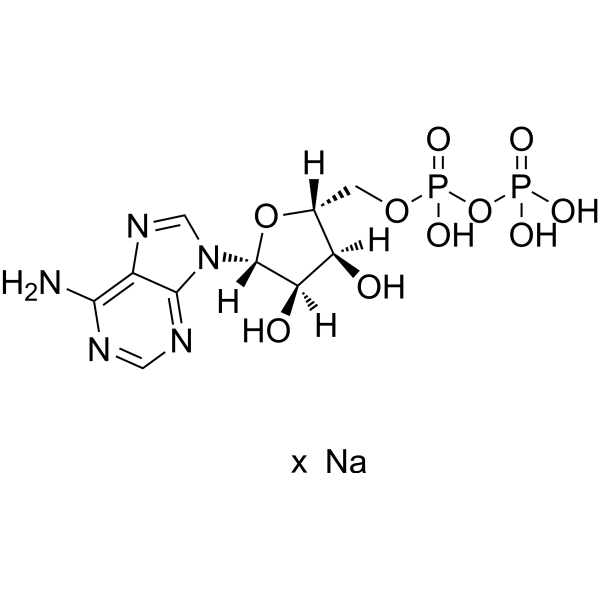
    2-MeS-ATP (2-Methylthio-ATP) is an analog of adenosine nucleotides and acts as a P2Y purinergic receptor agonist specific for adenosine nucleotide activation. 2-MeS-ATP is also able to inhibit the release of toxic mediators from macrophages stimulated by endotoxin (LPS). 2-MeS-ATP can be used in the study of endotoxin shock and inflammatory diseases .
    2-MeS-ATP
  • HY-14873

    BG 9928

    Adenosine Receptor Cardiovascular Disease Metabolic Disease
    Tonapofylline (BG 9928) is an orally active and selective adenosine A1 receptor antagonist with a Ki of 7.4 nM for human adenosine A1 receptor (hA1), which displays 915-fold selectivity versus human adenosine A2A receptor and 12-fold selectivity versus human adenosine A2B receptor and is used in development for the treatment of heart failure .
    Tonapofylline
  • HY-100274

    Adenosine Receptor Inflammation/Immunology
    Adenosine antagonist-1 is an adenosine A3 receptor (AA3R) antagonist with anti-inflammatory activity.
    Adenosine antagonist-1
  • HY-179248

    Adenosine Receptor ERK JNK MMP Cancer
    Adenosine receptor antagonist 7 is an orally active triple A1/A2A/A2B adenosine receptor antagonist with Ki values of 1.5, 0.6 and 21 nM. Adenosine receptor antagonist 7 shows potent inhibitory activity (IC50 = 0.8 nM) of cAMP production in A2AR-HEK293 cells. Adenosine receptor antagonist 7 can enhance infiltration of effector T cells and increase the CD8+/Treg ratio companied with Avelumab (HY-108730). Adenosine receptor antagonist 7can be used for the research of cancer, such as colon cancer .
    Adenosine receptor antagonist 7
  • HY-B0228S8

    Adenine riboside-d1-2; D-adenosine-d-2

    Apoptosis Autophagy Endogenous Metabolite Nucleoside Antimetabolite/Analog Metabolic Disease Cancer
    Adenosine-d-2 is the deuterium labeled Adenosine. Adenosine (Adenine riboside), a ubiquitous endogenous autacoid, acts through the enrollment of four G protein-coupled receptors: A1, A2A, A2B, and A3. Adenosine affects almost all aspects of cellular phys
    Adenosine-d1-2
  • HY-162851

    Adenosine Receptor Others
    Adenosine receptor agonist 1 (compound 6m) is an A3 adenosine receptor (AR) partial agonist with Ki value of 6.7 nM .
    Adenosine receptor agonist 1
  • HY-175195

    Adenosine Receptor Interleukin Related IFNAR Cytochrome P450 Inflammation/Immunology Cancer
    Adenosine receptor antagonist 6 is an orally active and selective A2A adenosine receptor (A2AAR) antagonist, with a Ki of 19.18 nM. Adenosine receptor antagonist 6 inhibits 5’-N-ethylcarboxamide adenosine (NECA) (HY-103173)-mediated cAMP production (IC50 = 0.089 μM) and immunosuppression, while promoting IL-2 and IFN-γ secretion. Adenosine receptor antagonist 6 abolishes the immunosuppressive effects of adenosine on T-cell activation and cytokine release. Adenosine receptor antagonist 6 inhibits tumor growth in a CT26/MC38 xenograft model. Adenosine receptor antagonist 6 can be used for the study of colon cancer .
    Adenosine receptor antagonist 6
  • HY-172244

    Adenosine Receptor Cancer
    Zaladenant is an adenosine receptor antagonist with antitumor effects .
    Zaladenant
  • HY-148088A
    M1069 free base
    1 Publications Verification

    Adenosine Receptor Cancer
    M1069 (free base) is a selective and orall active, dual A2A/A2B adenosine receptor antagonist with a selectivity of >100 fold against the A1 and A3 receptors. M1069 (free base) counteracts immune-suppressive mechanisms of adenosine, and exhibits anti-tumor activity .
    M1069 free base

Inquiry Online

Your information is safe with us. * Required Fields.

Salutation


Country or Region *

Applicant Name *


Organization Name *

Department *


Email Address *


Product Name *

Cat. No.


Requested quantity *

Phone Number *


Remarks

Inquiry Online

Inquiry Information

Product Name:
Cat. No.:
Quantity:
MCE Japan Authorized Agent:

