
1. Search Result
Search Result
Results for "

adsorbent

" in MedChemExpress (MCE) Product Catalog:

21

Inhibitors & Agonists

6

Fluorescent Dyes

2

Biochemical Assay Reagents

2

Natural
Products

1

Isotope-Labeled Compounds

4

Oligonucleotides

Cat. No. Product Name Target Research Areas Chemical Structure
  • HY-B1335
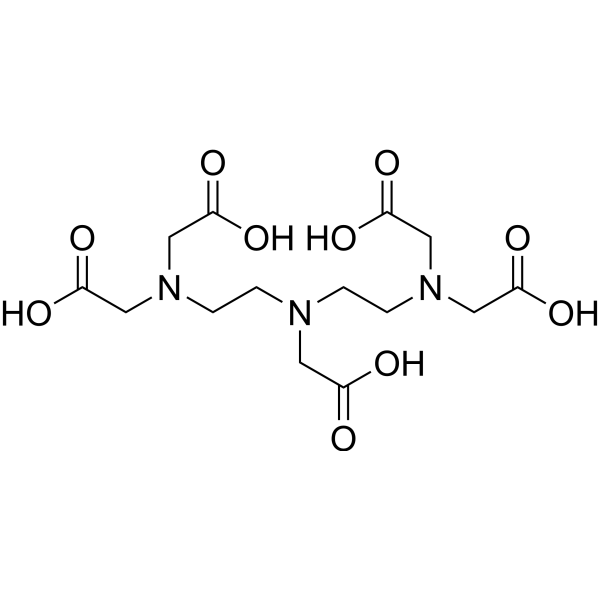
    Pentetic acid
    3 Publications Verification

    Diethylenetriaminepentaacetic acid; DTPA

    Environmental Pollutants Biochemical Assay Reagents Others
    Pentetic acid (Diethylenetriaminepentaacetic acid) is an orally active compound with biodegradability used to construct magnetic adsorbent, which can simultaneously remove heavy metal and dye from complex wastewater. Pentetic acid can form strong metal complexes, which prevents metal ions from catalysing the decomposition of peroxygen chemicals, especially hydrogen peroxide .
    Pentetic acid
  • HY-W145518

    Environmental Pollutants Antibiotic Endogenous Metabolite Bacterial Infection Cancer
    Pectin is a heteropolysaccharide, derived from the cell wall of higher plants. Pectin involves in the formation of nanoparticles as a delivery vehicle of agents. Pectin is also an adsorbent, a broad-spectrum antimicrobial agent that binds to bacteria toxins and other irritants in the intestinal mucosa, relieves irritated mucosa .
    Pectin
  • HY-106594A

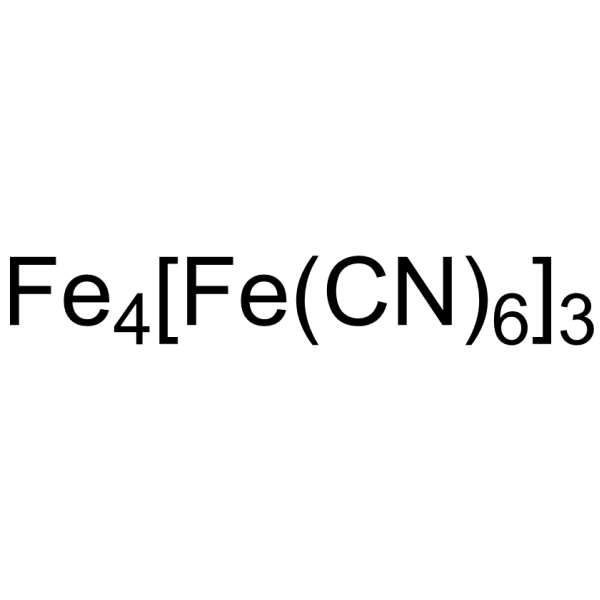
    Iron(III) ferrocyanide; Milori blue

    Environmental Pollutants Bacterial Infection Cancer
    Prussian blue soluble is a good adsorbent to be used as antidotes for poisoning with cesium or thallium ions. Prussian blue soluble has anticancerous and antibacterial properties. Prussian blue soluble can be used as a contrast agent in photoacoustic and magnetic resonance imaging (MRI) .
    Prussian blue insoluble
  • HY-128792

    1,3-Dipalmitoylglycerol; Glycerol 1,3-dipalmitate

    Biochemical Assay Reagents Others
    1,3-Dipalmitin (1,3-Dipalmitoylglycerol) is a diacylglycerol compound that can be found in the tuberous roots of Typhonium giganteum Engl. 1,3-Dipalmitin acts as an adsorption inhibitor for 1,3-diglycerides and β-carotene .
    1,3-Dipalmitin
  • HY-Y0708

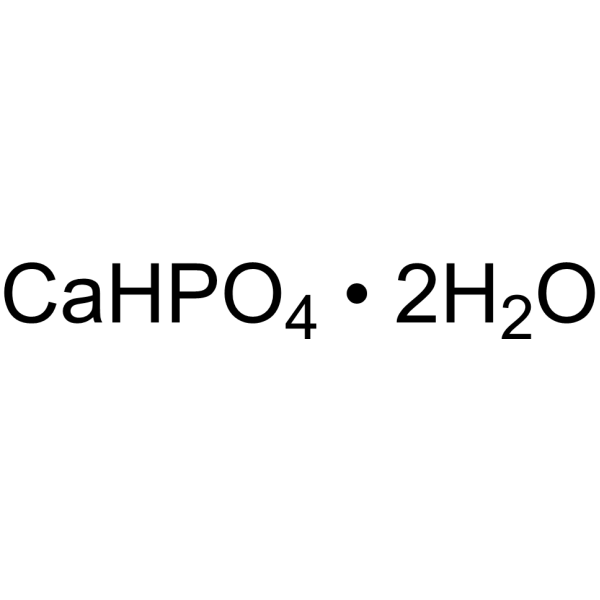
    Calcium phosphate dihydrate

    Biochemical Assay Reagents Others
    Calcium hydrogen phosphate dihydrate (Calcium phosphate dihydrate) can be found quite frequently in urinary calculi stones. Calcium hydrogen phosphate dihydrate can be used as an excipient, such as diluent, adsorbent. Pharmaceutical excipients, or pharmaceutical auxiliaries, refer to other chemical substances used in the pharmaceutical process other than pharmaceutical ingredients. Pharmaceutical excipients generally refer to inactive ingredients in pharmaceutical preparations, which can improve the stability, solubility and processability of pharmaceutical preparations. Pharmaceutical excipients also affect the absorption, distribution, metabolism, and elimination (ADME) processes of co-administered drugs .
    Calcium hydrogen phosphate dihydrate
  • HY-106594B

    Pigment blue 27

    Bacterial Infection Cancer
    Prussian blue soluble is a good adsorbent to be used as antidotes for poisoning with cesium or thallium ions. Prussian blue soluble has anticancerous and antibacterial properties. Prussian blue soluble can be used as a contrast agent in photoacoustic and magnetic resonance imaging (MRI) .
    Prussian blue soluble
  • HY-W010488

    Biochemical Assay Reagents Others
    Dithiooxamide (Rubeanic Acid) is a selective chelating agent and sulfur-containing analog of Oxamide. Dithiooxamide forms stable chelates with various metal ions (such as lead, iron, cadmium, manganese, and aluminum), which can be separated, enriched, and detected by adsorption on solid adsorbents or electrode surfaces .
    Dithiooxamide
  • HY-46846

    Environmental Pollutants Biochemical Assay Reagents Others
    Styrene-divinylbenzene sulfonated copolymer is a cation exchange resin prepared from sulfonic acid group-containing microporous styrene/divinylbenzene (DVB) copolymer. Styrene-divinylbenzene sulfonated copolymer serves as the core matrix material for most bilirubin adsorbents. It also acts as a hydrophilic cell immobilization carrier, whose porous structure provides an ideal environment for microbial growth and biochemical reactions .
    Styrene-divinylbenzene sulfonated copolymer
  • HY-154739A

    Biochemical Assay Reagents Others
    Amorphous silica can be used as an excipient, such as viscosifier, suspending agent, tablet disintegrating agent, adsorbent dispersing agent as liquid in powders. Pharmaceutical excipients, or pharmaceutical auxiliaries, refer to other chemical substances used in the pharmaceutical process other than pharmaceutical ingredients. Pharmaceutical excipients generally refer to inactive ingredients in pharmaceutical preparations, which can improve the stability, solubility and processability of pharmaceutical preparations. Pharmaceutical excipients also affect the absorption, distribution, metabolism, and elimination (ADME) processes of co-administered drugs .
    Amorphous silica
  • HY-113553

    (p-Aminophenyl)phosphocholine; p-Aminophenylphosphorylcholine; 4-APPC

    Endogenous Metabolite Metabolic Disease
    4-Aminophenylphosphorylcholine ((p-Aminophenyl)phosphocholine) is a probe that can be conjugated to agarose gels to generate adsorbents for affinity precipitation experiments.
    4-Aminophenylphosphorylcholine
  • HY-W142478

    Photoinitiator-DEAP

    Biochemical Assay Reagents Others
    2,2-Diethoxyacetophenone (Photoinitiator-DEAP) is a photoinitiator that can be used to prepare hydrogel adsorbents .
    2,2-Diethoxyacetophenone
  • HY-D0334

    Fluorescent Dye
    Direct Red 81 is a diazo dye with a very high water solubility. The dye adsorption efficiency of Direct Red 81 is increased by increasing the adsorbent dose and adsorption time .
    Direct Red 81
  • HY-154703

    Biochemical Assay Reagents Others
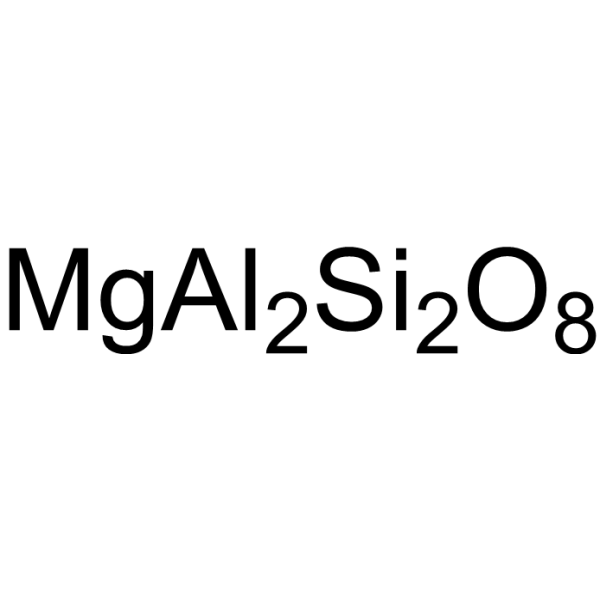
    Aluminum magnesium silicate can be used as an excipient, such as adsorbent, stabilizer, suspending agent, disintegrant for tablet and capsule, binder for tablet, thickener. Pharmaceutical excipients, or pharmaceutical auxiliaries, refer to other chemical substances used in the pharmaceutical process other than pharmaceutical ingredients. Pharmaceutical excipients generally refer to inactive ingredients in pharmaceutical preparations, which can improve the stability, solubility and processability of pharmaceutical preparations. Pharmaceutical excipients also affect the absorption, distribution, metabolism, and elimination (ADME) processes of co-administered drugs .
    Aluminum magnesium silicate
  • HY-B1335R

    Diethylenetriaminepentaacetic acid (Standard); DTPA (Standard)

    Biochemical Assay Reagents Reference Standards Others
    Pentetic acid (Standard) is the analytical standard of Pentetic acid. This product is intended for research and analytical applications. Pentetic acid is a compound used to construct magnetic adsorbent, which can simultaneously remove heavy metal and dye from complex wastewater .
    Pentetic acid (Standard)
  • HY-D0402

    AB26

    Fluorescent Dye
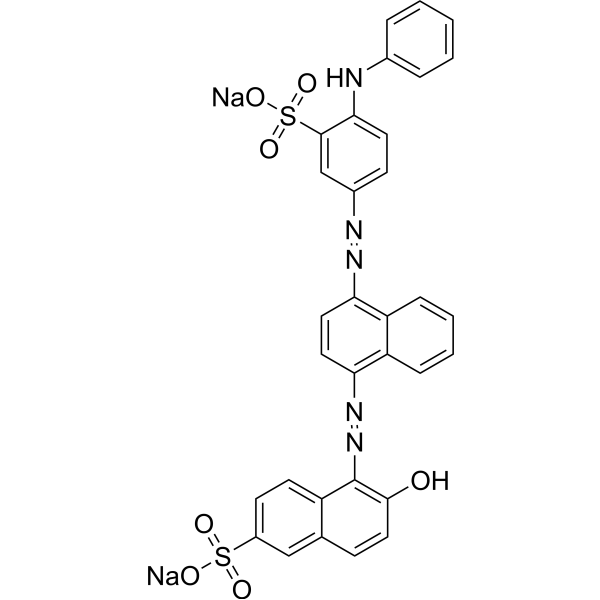
    Acid black 26 is a black agent whose coloring effect can be removed by adsorbents such as zeolites.
    Acid black 26
  • HY-D1036A

    Fluorescent Dye
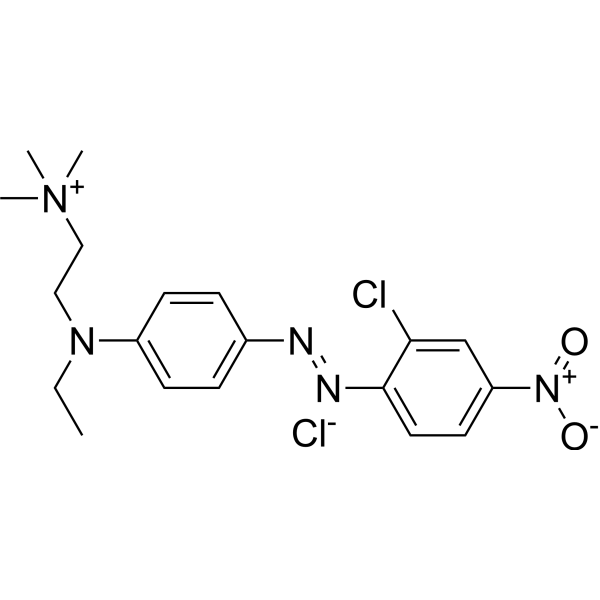
    Basic red 18 is a basic red dye whose dyeing effect can be removed by nanoclay adsorbent.
    Basic red 18
  • HY-D0356

    Fluorescent Dye
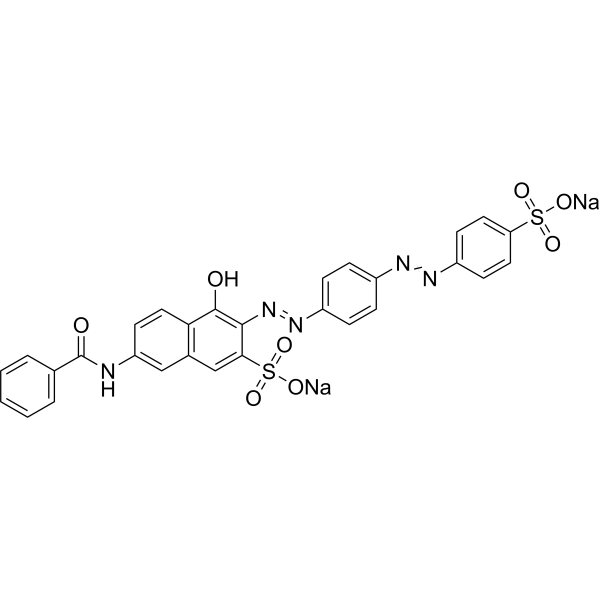
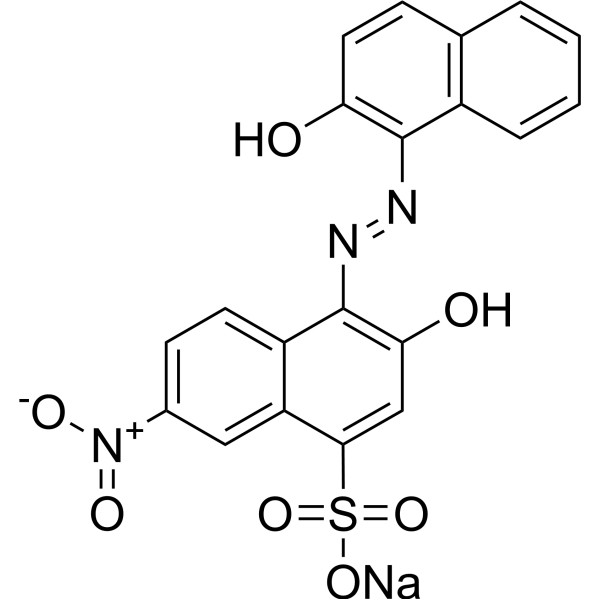
    Eriochrome Black A is an azo dye that can be removed from water by an adsorbent made of magnetic NiFe2O4 nanoparticles.
    Eriochrome Black A
  • HY-W749825

    Diethylenetriaminepentaacetic acid-13C5; DTPA-13C5

    Isotope-Labeled Compounds Fluorescent Dye Others
    Pentetic acid- 13C5 (Diethylenetriaminepentaacetic acid- 13C5) is the 13C-labeled Pentetic acid (HY-B1335). Pentetic acid (Diethylenetriaminepentaacetic acid) is an orally active compound with biodegradability used to construct magnetic adsorbent, which can simultaneously remove heavy metal and dye from complex wastewater. Pentetic acid can form strong metal complexes, which prevents metal ions from catalysing the decomposition of peroxygen chemicals, especially hydrogen peroxide .
    Pentetic acid-13C5
  • HY-106594AR

    Iron(III) ferrocyanide (Standard); Milori blue (Standard)

    Reference Standards Bacterial Infection Cancer
    Prussian blue insoluble (Standard) is the analytical standard of Prussian blue insoluble (HY-106594A). This product is intended for research and analytical applications. Prussian blue soluble is a good adsorbent to be used as antidotes for poisoning with cesium or thallium ions. Prussian blue soluble has anticancerous and antibacterial properties. Prussian blue soluble can be used as a contrast agent in photoacoustic and magnetic resonance imaging (MRI) .
    Prussian blue insoluble (Standard)
  • HY-106594BR

    Pigment blue 27 (Standard)

    Reference Standards Bacterial Infection Cancer
    Prussian blue soluble (Standard) is the analytical standard of Prussian blue soluble (HY-106594B). This product is intended for research and analytical applications. Prussian blue soluble is a good adsorbent to be used as antidotes for poisoning with cesium or thallium ions. Prussian blue soluble has anticancerous and antibacterial properties. Prussian blue soluble can be used as a contrast agent in photoacoustic and magnetic resonance imaging (MRI) .
    Prussian blue soluble (Standard)
  • HY-W249559

    MOFs Others
    CPL-2 is a metal organic framework material. CPL-2 has good humidity stability and ethylene selectivity, making it a potential industrial adsorbent .
    CPL-2

Inquiry Online

Your information is safe with us. * Required Fields.

Salutation


Country or Region *

Applicant Name *


Organization Name *

Department *


Email Address *


Product Name *

Cat. No.


Requested quantity *

Phone Number *


Remarks

Inquiry Online

Inquiry Information

Product Name:
Cat. No.:
Quantity:
MCE Japan Authorized Agent:

