64 Results for "

air

" in MedChemExpress (MCE) Product Catalog:
Products (64)

64 Results for "air" in MCE Product Catalog:

6
6 Publications Verification
Cat. No.: HY-12764
CAS No.: 83797-69-7
Purity:  99.77%
Synonyms: GTPL5846
Research Areas:  

Inflammation/Immunology

6-OAU (GTPL5846) (6-n-octylaminouracil) is an GPR84 (G protein-coupled receptor 84) agonist, with an EC50 value of 105 nM. 6-OAU works as a chemoattractant to both PMNs and macrophages, and amplifies the proinflammatory cytokine IL-8, shows proinflammatory function. 6-OAU also displays anti-bacterial function .
loading...
    loading...
4
4 Cited Publications
Cat. No.: HY-N2435
CAS No.: 36700-45-5
[8]-Shogaol, a kind of stimulating compound in ginger, has antiplatelet (IC50=5 μM), anti-cancer and anti-inflammatory activity. [8]-Shogaol inhibited COX-2 (IC50=17.5 μM), which led to the decline of human leukemia cells. 8-Shogaol Selective direction TAK1 sum TAK1-TAB1 (IC50=5 μM), suppress IKK, Akt sum MAPK signal pathway, and reverse synovitis synovial sum Air dampness (RA).
loading...
    loading...
1
1 Cited Publications
Cat. No.: HY-110112
CAS No.: 1259028-99-3
Purity:  99.22%
BTT-3033 is an orally active conformation-selective inhibitor of α2β1 (EC50: 130 nM) by binding to the α2I domain. BTT-3033 inhibits platelet binding to collagen I and cell proliferation, and induces cell apoptosis. BTT-3033 can be used in the research of prostate cancer, inflammation and cardiovascular disease .
loading...
    loading...
1
1 Cited Publications
Cat. No.: HY-120878
CAS No.: 1838123-21-9
Purity:  99.52%
Target:  

CXCR

Research Areas:  

Inflammation/Immunology

CXCR2-IN-2 is a selective, brain penetrant, and orally bioavailable CXCR2 antagonist (IC50=5.2 nM/1 nM in β-arrestin assay/CXCR2 Tango assay, respectively). CXCR2-IN-2 displays ~730-fold selectivity over CXCR1 and >1900-fold selectivity over all other chemokine receptors. CXCR2-IN-2 inhibits human whole blood Gro-α induced CD11b expression with an IC50 of 0.04 μM .
loading...
    loading...
Cat. No.: HY-P991272
Synonyms: PF-05230900

Target:  

Interleukin Related

Research Areas:  

Inflammation/Immunology

ATR-107 (PF-05230900) is a humanized monoclonal antibody inhibitor that targets the interleukin-21 receptor (IL-21R). The Ka value of ATR-107 is 2-4 nM in cynomolgus monkeys, 16 nM in mice, and 71 nM in rats. ATR-107 can be used in research related to systemic lupus erythematosus and air pouch inflammation .
loading...
    loading...
Cat. No.: HY-W251598C
CAS No.: 144-55-8
Synonyms: Sodium hydrogen carbonate for cell culture; Soda bicarbonate for cell culture
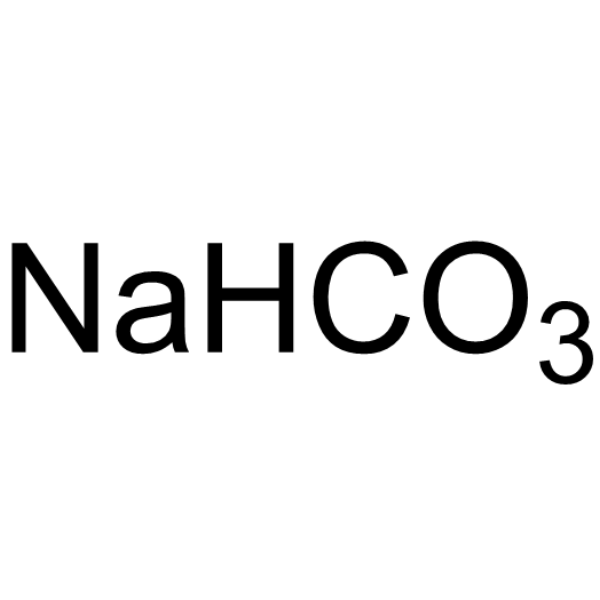
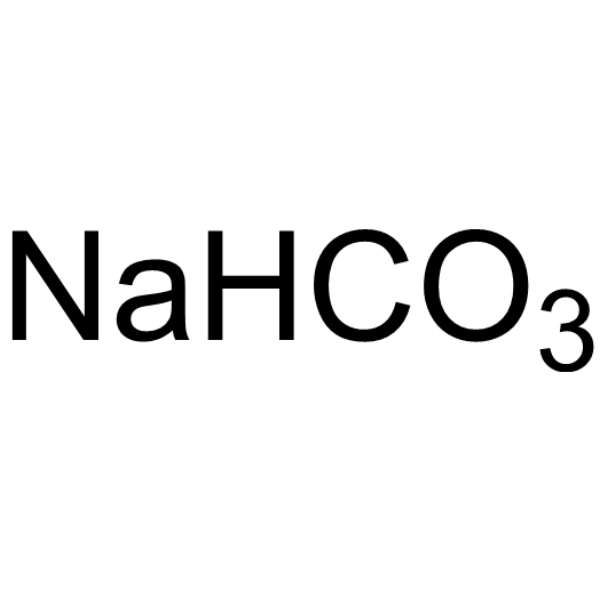
Sodium bicarbonate, for cell culture (Sodium hydrogen carbonate for cell culture; Soda bicarbonate for cell culture) is an inorganic salt that is neutral to slightly alkaline and easily decomposes when exposed to moisture in the air. Sodium bicarbonate, for cell culture can maintain the pH of the culture medium, thereby affecting the expression of inducible nitric oxide synthase (iNOS) and nitric oxide (NO) production in macrophages and reversing the acidosis of the tumor microenvironment. Sodium bicarbonate is widely used in the fields of food, medicine, cosmetics, etc. Its main uses include buffers, flavoring agents, disinfectants, pharmaceuticals, and proton gradient regulators. Sodium bicarbonate is also commonly used as an antacid to inhibit gastrointestinal diseases, neutralize gastric acid, and reduce gastric discomfort .
loading...
    loading...
Cat. No.: HY-W099535
CAS No.: 2044-56-6
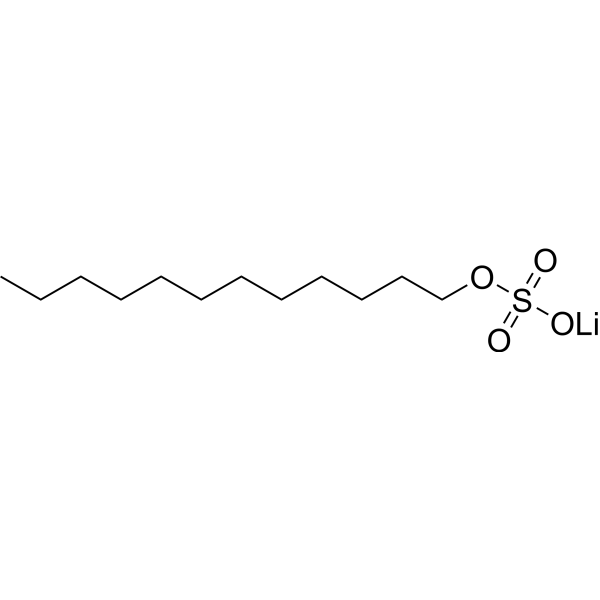
Lithium dodecyl sulfate is an anionic hydrocarbon surfactant with both surface tension reduction and interfacial adsorption capabilities. Lithium dodecyl sulfate induces low surface viscosity; it forms micelles in aqueous solutions through entropy-driven (low temperature) and enthalpy-driven (high temperature) mechanisms. When acting synergistically with tetrabutylammonium bromide, Lithium dodecyl sulfate exhibits cloud point behavior due to micelle aggregation and phase separation. Lithium dodecyl sulfate can form an adsorption layer at the air-water interface with quantifiable surface excess and minimum area per molecule, and it has higher equilibrium surface tension and foamability compared to other dodecyl sulfate counterion variants. The foam stability of Lithium dodecyl sulfate above its critical micelle concentration is low, and its dynamic surface tension pattern changes dynamically with bubble frequency .
loading...
    loading...
Cat. No.: HY-109519
CAS No.: 8050-81-5
Purity:  96.00%
Simethicone is an orally active defoamer. Simethicone reduces the surface tension of air bubbles in the gastrointestinal tract, causing them to be expelled by vomiting, exhalation or absorption into the bloodstream. Simethicone has potential applications in flatulence and colic .
loading...
    loading...
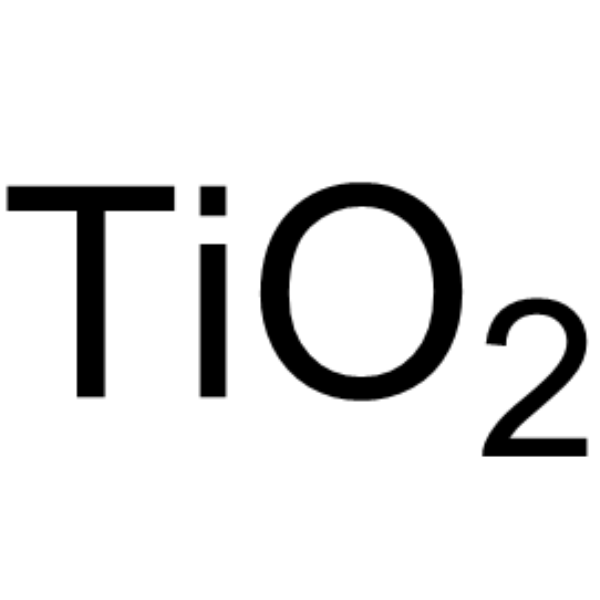
Cat. No.: HY-W051271
CAS No.: 13463-67-7
Synonyms: Titanium dioxide
Titanium(IV) oxide is a photosensitizer and photocatalyst. Titanium(IV) oxide can be used as a pharmaceutical excipient such as a flow aid, coating agent, sunscreen, colorant, etc. Pharmaceutical excipients or pharmaceutical excipients refer to other chemical substances used in the pharmaceutical process other than the drug ingredients. Pharmaceutical excipients generally refer to inactive ingredients in pharmaceutical preparations that can improve the stability, solubility and processability of pharmaceutical preparations. Pharmaceutical excipients also affect the absorption, distribution, metabolism and elimination (ADME) process of co-administered drugs. Titanium(IV) oxide can use light energy to generate electron-hole pairs to degrade pollutants. Photons excite electrons in TiO2 to generate active oxygen species (such as ·OH and ·O2 -), thereby oxidizing and mineralizing pollutants such as organic compounds and heavy metals. TiO2 can be used in the research of environmental remediation fields such as water treatment, air purification and self-cleaning materials .
loading...
    loading...
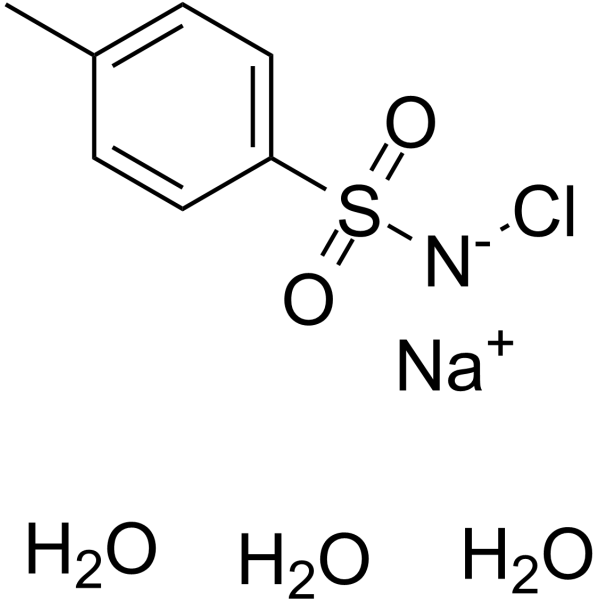
Cat. No.: HY-U00087
CAS No.: 7080-50-4
Target:  

Bacterial

Research Areas:  

Infection

Tosylchloramide sodium trihydrate (Chloramine T sodium trihydrate) is a disinfectant agent widely used in laboratories, kitchens and hospitals. It is also used as a biocide in air fresheners and deodorants.
loading...
    loading...
Cat. No.: HY-W034344
CAS No.: 2386-57-4
Sodium methanesulfonate is a hygroscopic atmospheric aerosol, which typically forms from the reaction of methanesulfonic acid with sodium chloride or sea salt particles. Sodium methanesulfonate can serve as a substrate for oxidation reactions, undergoing heterogeneous oxidation by hydroxyl radicals at the air-aerosol interface, thereby initiating subsequent aerosol-phase chain reactions. Sodium methanesulfonate exhibits significant temperature-dependent deliquescence and efflorescence properties; particularly at lower temperatures relevant to the troposphere, its deliquescence and efflorescence relative humidity increase accordingly .
loading...
    loading...
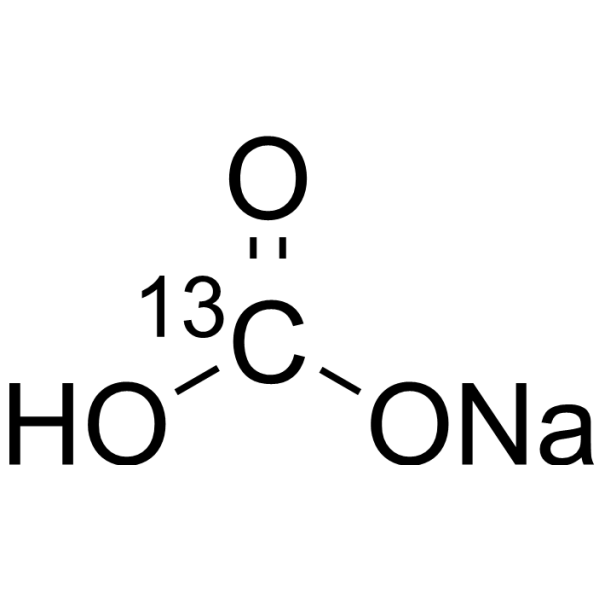
Cat. No.: HY-W251598S
CAS No.: 87081-58-1
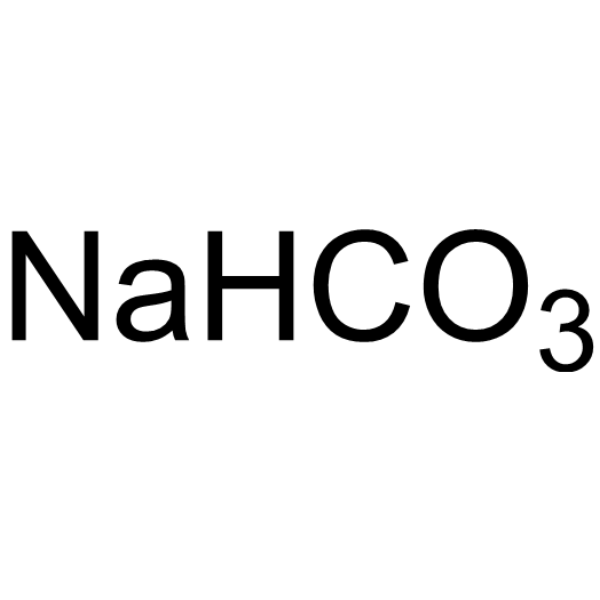
Bicarbonate- 13C sodium is the 13C-labeled Sodium bicarbonate (HY-Y0756). Sodium bicarbonate is an inorganic salt that is neutral to slightly alkaline and easily decomposes when exposed to moisture in the air. Sodium bicarbonate can maintain the pH of the culture medium, thereby affecting the expression of inducible nitric oxide synthase (iNOS) and nitric oxide (NO) production in macrophages and reversing the acidosis of the tumor microenvironment. Sodium bicarbonate is widely used in the fields of food, medicine, cosmetics, etc. Its main uses include buffers, flavoring agents, disinfectants, pharmaceuticals, and proton gradient regulators. Sodium bicarbonate is also commonly used as an antacid to inhibit gastrointestinal diseases, neutralize gastric acid, and reduce gastric discomfort .
loading...
    loading...
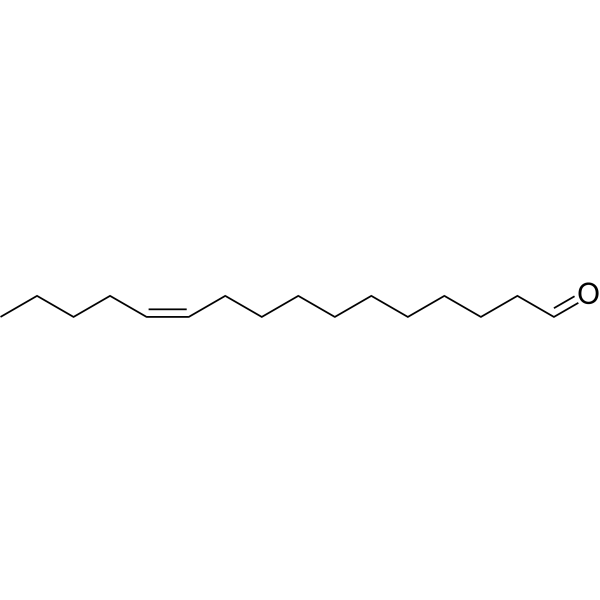
Cat. No.: HY-W127507
CAS No.: 53939-28-9
cis-11-Hexadecenal has a fatty, waxy odor and is commonly used as a flavoring agent in the food and beverage industry. In addition, it can be used as an intermediate in the synthesis of various organic compounds, including fragrances, pharmaceuticals, and agrochemicals. Its unique chemical properties make it an important ingredient in a variety of industrial processes, notably in the production of perfumes and air fresheners.
loading...
    loading...
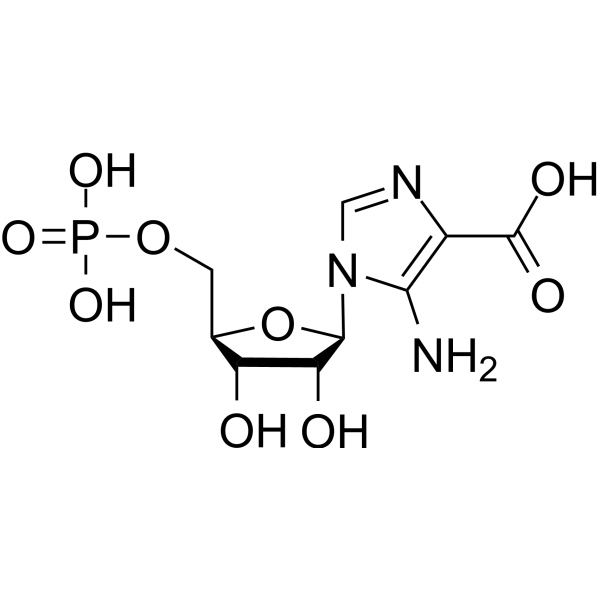
Cat. No.: HY-133154
CAS No.: 6001-14-5
Purity:  98.31%
Synonyms: Cair; 4-Carboxy-air
Carboxyaminoimidazole ribotide (CAIR) is a metabolite of E. coli. Carboxyaminoimidazole ribotide can be used to detect distinctive features of E. coli PurE active site and synthesis fungal de novo purine .
loading...
    loading...
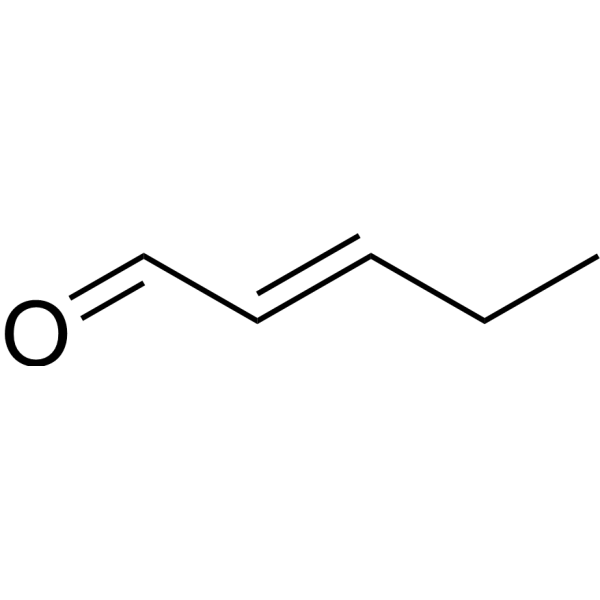
Cat. No.: HY-W111375
CAS No.: 1576-87-0
(E)-Pent-2-enal has a pungent fruity odor. This compound is commonly used in the flavor and fragrance industry because of its strong aroma, often described as fresh and green. Furthermore, (E)-Pent-2-enal can be used as an intermediate in the synthesis of various organic compounds, including pharmaceuticals and agrochemicals. Its unique chemical properties make it an important ingredient in many commercial products, including perfumes, air fresheners and cleaners.
loading...
    loading...
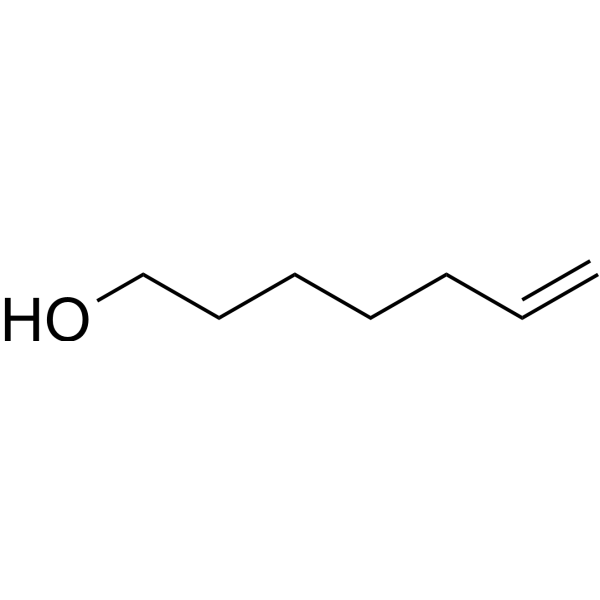
Cat. No.: HY-W127475
CAS No.: 4117-10-6
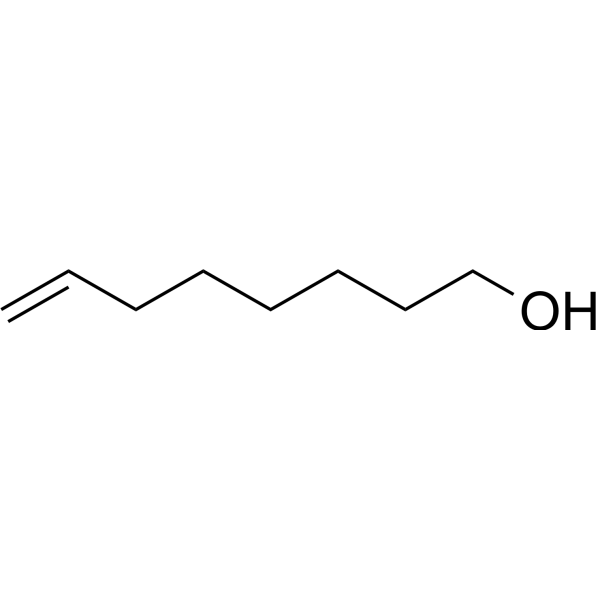
6-Hepten-1-ol has a floral and green odor and is commonly used as a flavoring agent in the food and beverage industry. In addition, it can be used as an intermediate in the synthesis of various organic compounds, including fragrances, pharmaceuticals, and agrochemicals. Its unique chemical properties make it an important ingredient in a variety of industrial processes, notably in the production of perfumes, air fresheners and cleaning agents.
loading...
    loading...
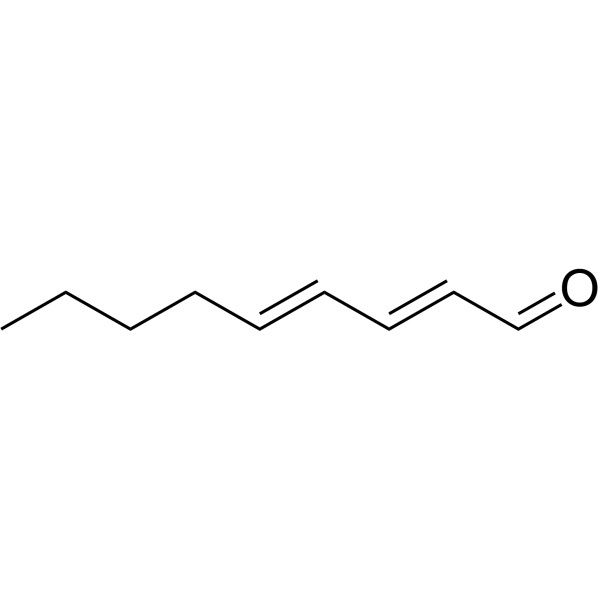
Cat. No.: HY-W127515
CAS No.: 557-48-2
Synonyms: Violet leaf aldehyde
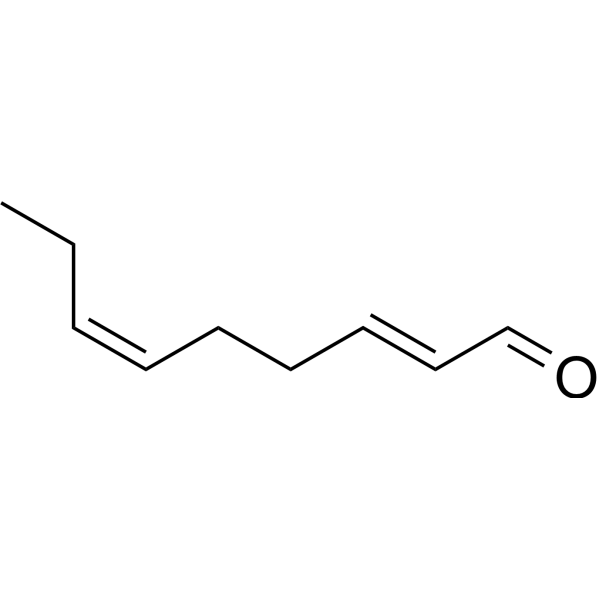
Trans-2, cis-6-NonadienalIt is an organic compound belonging to aldehydes. It has a strong, pungent smell and is commonly found in a variety of foods, including fruits and vegetables. Trans-2, cis-6-NonadienalIt has a variety of applications in the flavor and fragrance industry, especially as a fragrance agent in products such as perfume, cologne and air fresheners. In addition, it can also be used as an intermediate in the synthesis of various chemicals and drugs.
loading...
    loading...
Cat. No.: HY-W251598I
CAS No.: 144-55-8
Synonyms: Sodium hydrogen carbonate, meets analytical specification of Ph. Eur., BP, USP, FCC, E500
Sodium bicarbonate, meets analytical specification of Ph. Eur., BP, USP, FCC, E500 is an inorganic salt that is neutral to slightly alkaline and easily decomposes when exposed to moisture in the air. Sodium bicarbonate can maintain the pH of the culture medium, thereby affecting the expression of inducible nitric oxide synthase (iNOS) and nitric oxide (NO) production in macrophages and reversing the acidosis of the tumor microenvironment. Sodium bicarbonate is widely used in the fields of food, medicine, cosmetics, etc. Its main uses include buffers, flavoring agents, disinfectants, pharmaceuticals, and proton gradient regulators. Sodium bicarbonate is also commonly used as an antacid to inhibit gastrointestinal diseases, neutralize gastric acid, and reduce gastric discomfort .
loading...
    loading...
Cat. No.: HY-118282
CAS No.: 1268709-57-4
Purity:  99.78%
Target:  

PGE synthase

Research Areas:  

Endocrinology

mPGES-1-IN-2 (compound III) is a benzimidazole-based mPGES-1 inhibitor that also inhibits adipophysin PGD synthase (I-PGDS) (5 μM, IR=60 %). mPGES-1-IN-2 reduces PGE2 production and tends to reduce levels of other prostaglandins. mPGES-1-IN-2 effectively inhibits acute inflammation in an air sac model stimulated by Carrageenan (HY-125474) in mice .
loading...
    loading...
Cat. No.: HY-138933
CAS No.: 16423-19-1
Target:  

Endogenous Metabolite

(±)-Geosmin is a natural organic compound with biological activity that causes earthy aroma. (±)-Geosmin plays an important role in microbial metabolism and is commonly used as a fragrance in food and air. (±)-Geosmin has also been studied for detecting soil and water pollution.
loading...
    loading...