
24 Results for "

allosteric mechanism

" in MedChemExpress (MCE) Product Catalog:
Products (24)

24 Results for "allosteric mechanism" in MCE Product Catalog:

5
5 Cited Publications
Cat. No.: HY-12316
CAS No.: 516-72-3
Purity:  99.29%
Synonyms: 20α-Hydroxycholesterol
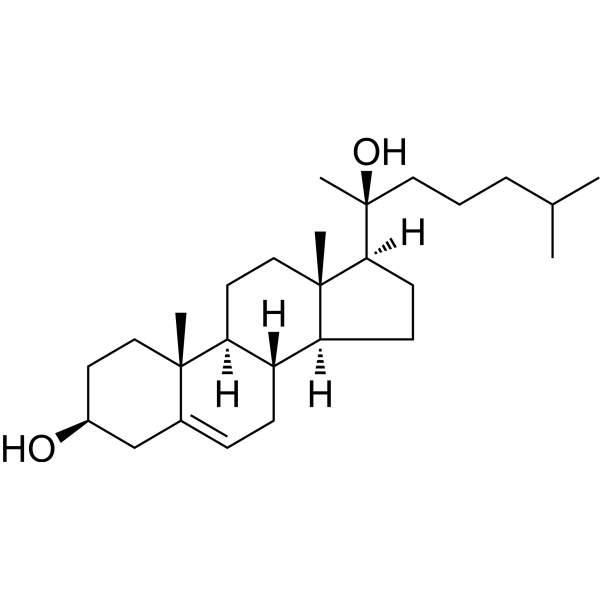
20(S)-Hydroxycholesterol (20α-Hydroxycholesterol) is an allosteric activator that selectively targets the Smoothened (Smo) of the Hedgehog pathway with an EC50 of ~30 μM (Hedgehog). 20(S)-Hydroxycholesterol binds to the extracellular cysteine-rich domain (CRD) of Smo in a stereoselective manner, activating downstream Gli transcription factors (without inducing transcription of receptor genes in the Wnt pathway). 20(S)-Hydroxycholesterol enhances osteogenic differentiation of bone marrow stromal cells and synergistically activates the Raf/MEK/ERK pathway with Simvastatin (HY-17502) to promote bone regeneration. 20(S)-Hydroxycholesterol can be used to study the mechanisms of developmental biology, oncology, bone, and angiogenesis .
loading...
    loading...
2
2 Cited Publications
Cat. No.: HY-P99171
CAS No.: 1129435-60-4

Target:  

Interleukin Related

Research Areas:  

Inflammation/Immunology Cancer

Gevokizumab is a potent anti-IL-1β antibody, negatively modulates IL-1β signaling through an allosteric mechanism. Gevokizumab selectively decreases the binding affinity of IL-1β for the IL-1 receptor type I (IL-1RI) signaling receptor instead of IL-1 counter-regulatory decoy receptor (IL-1 receptor type II) .
loading...
    loading...
1
1 Cited Publications
Cat. No.: HY-16940
CAS No.: 474-73-7
Synonyms: 24S-OHC; 24S-HC; Cerebrosterol
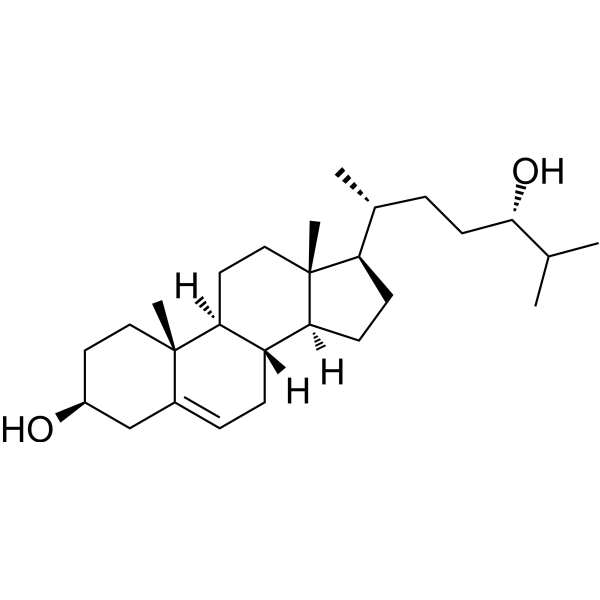
24(S)-Hydroxycholesterol (24S-OHC), the major brain cholesterol metabolite, plays an important role to maintain homeostasis of cholesterol in the brain. 24(S)-Hydroxycholesterol (24S-OHC) is one of the most efficient endogenous LXR agonist known and is present in the brain and in the circulation at relatively high levels. 24(S)-Hydroxycholesterol (24S-OHC) is a very potent, direct, and selective positive allosteric modulator of NMDARs with a mechanism that does not overlapthat of other allosteric modulators .
loading...
    loading...
Cat. No.: HY-175750
CAS No.: 3078276-74-8
Target:  

DNA/RNA Synthesis

Research Areas:  

Cancer

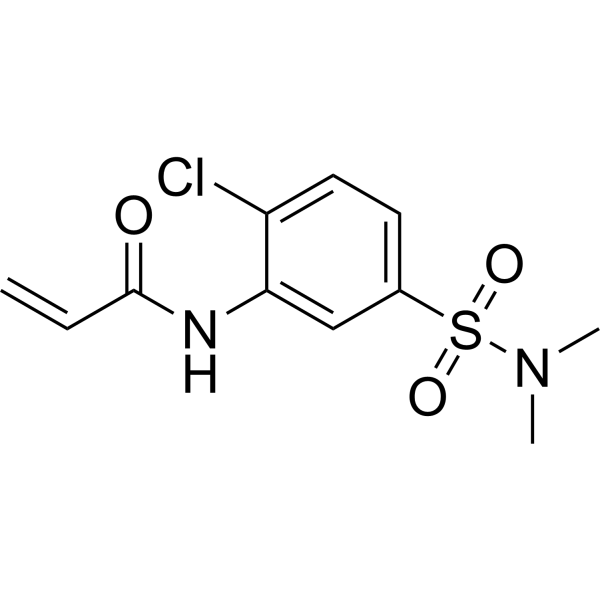
MOMA-341 is a selective Werner RecQ like helicase (WRN) inhibitor. MOMA-341 binds to WRN at cysteine 727 through an allosteric and ATP-competitive binding mechanism. MOMA-341 has antitumor activity and can be used for advanced and metastatic solid tumors research .
loading...
    loading...
Cat. No.: HY-108708
CAS No.: 2143475-98-1
Purity:  99.91%
Target:  

PARP

Research Areas:  

Cancer

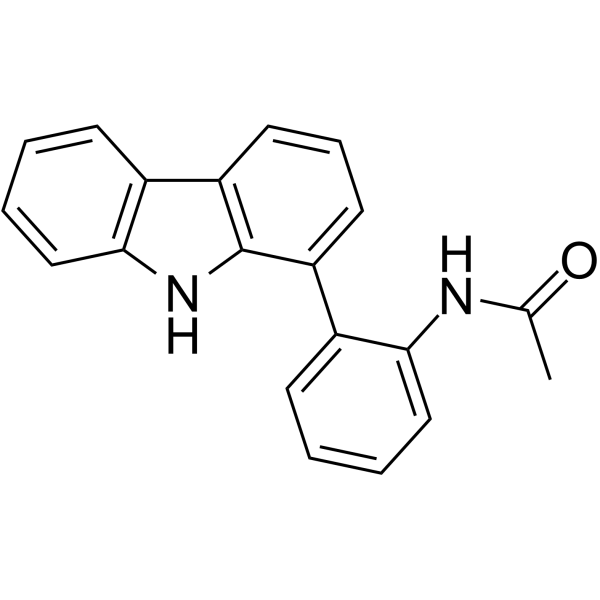
GeA-69 is a selective, allosteric inhibitor of poly-adenosine-diphosphate-ribose polymerase 14 (PARP14) targeting macrodomain 2 (MD2), with a Kd value of 2.1 μM. GeA-69 involves in DNA damage repair mechanisms and prevents recruitment of PARP14 MD2 to sites of laser-induced DNA damage .
loading...
    loading...
Cat. No.: HY-49444
CAS No.: 793719-01-4
Research Areas:  

Cancer

EN450 is a cysteine-reactive covalent molecular glue degrader targeting NF-κB. EN450 interacts with allosteric C111 in the E2 ubiquitin ligase UBE2D. EN450 induces the ternary complex formation between UBE2D and NFKB1. EN450 exerts its anti-proliferative effects through a Cullin E3 ligase and proteasome-dependent mechanism .
loading...
    loading...
Cat. No.: HY-107111
CAS No.: 932373-87-0
Purity:  98.78%
Target:  

mAChR

Research Areas:  

Neurological Disease

GSK1034702 is an orally active and allosteric agonist of M1 mAChR (pEC50=8.1) that can cross the blood-brain barrier. GSK1034702 activates the Gq/11 protein-mediated signaling pathway, enhancing neuronal firing and long-term potentiation (LTP) in the CA1 region of the hippocampus. GSK1034702 can modulate hippocampal function, improve memory encoding in the nicotine withdrawal cognitive dysfunction model, and show pro-cognitive effects in rodents. GSK1034702 can be used for the study of the mechanisms of cognitive impairment diseases such as Alzheimer's disease, and has certain peripheral M receptor activation-related side effects (such as gastrointestinal reactions) .
loading...
    loading...
Cat. No.: HY-161296
Target:  

Bacterial HIV

Research Areas:  

Infection

TH6342 is a SAMHD1 modulator that binds to pretetrameric SAMHD1 and prevents its oligomerization and allosteric activation. SAMHD1 is a dNTP triphosphohydrolase and an HIV-1 restriction factor. SAMHD1 can limit the replication of retroviruses and DNA viruses and has antiviral effects. The inhibitory mechanism of TH6342 does not occupy the SAMHD1 nucleotide-binding pocket, gently binds the target, and functions as a chemical probe .
loading...
    loading...
Cat. No.: HY-W028350
CAS No.: 40106-12-5
Research Areas:  

Infection

NSC727447 is a vinyl urea-based allosteric inhibitor of HIV reverse transcriptase-associated RNase H with IC50 values of 2.0 μM and 2.5 μM against HIV-1 and HIV-2 RNase H, respectively, and IC50 values of 100 μM and 10.6 μM against Escherichia coli and human RNase H, respectively. NSC727447 exerts allosteric inhibitory effects mainly by interacting with the region adjacent to α-helix I in the thumb subdomain of the p51 subunit of HIV-1 reverse transcriptase. Cys280, Lys281 and the RNase H primer grip region are involved in its action, and it may inhibit the catalytic activity of RNase H by altering the positioning of nucleic acid substrates or the geometry of the RNase H active site. NSC727447 can be used in studies related to HIV infection, the function of HIV reverse transcriptase RNase H, and allosteric inhibition mechanisms .
loading...
    loading...
Cat. No.: HY-118967
CAS No.: 663212-40-6
Synonyms: VU0183254
Target:  

HCN Channel

Research Areas:  

Others

VUANT1 (VU0183254) is an allosteric antagonist of insect odorant receptor ion channels, which has the activity of inhibiting insect odorant receptor signaling. VUANT1 can inhibit the activation of insect odorant receptors through allosteric regulation, which is important for the study of the molecular mechanism of insect olfactory signaling. Although it may be of limited use in insect control programs, it can be used as a pharmacological tool to study related mechanisms.
loading...
    loading...
Cat. No.: HY-162401
CAS No.: 2813866-27-0
Target:  

RXFP Receptor

Research Areas:  

Cardiovascular Disease

AZ7976 (Compound 42) is a highly selective agonist for the Relaxin Family Peptide Receptor 1 (RXFP1) (pEC50 > 10.5). AZ7976 enhances RXFP1's cAMP signaling through an allosteric mechanism, thereby physiologically increasing heart rate. AZ7976 can be used in the field of cardiovascular disease research .
loading...
    loading...
Cat. No.: HY-10250
CAS No.: 61966-08-3
Synonyms: TCN-P
Target:  

ATP Synthase

Research Areas:  

Metabolic Disease Cancer

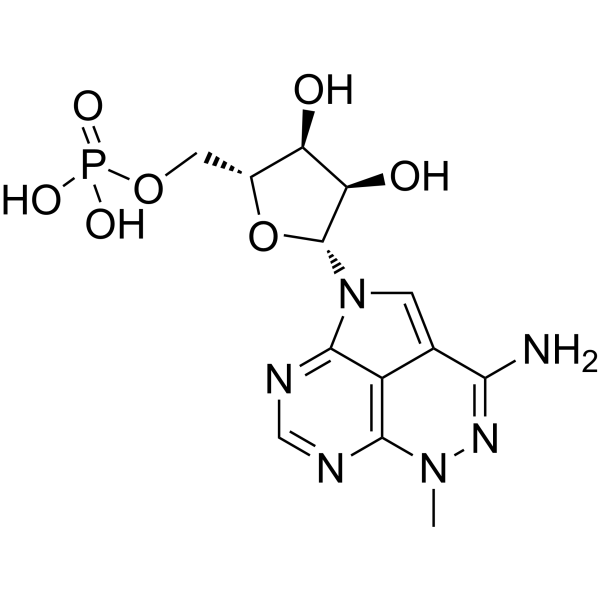
Triciribine phosphate (TCN-P) inhibits amidophosphoribosyltransferase by an allosteric mechanism which affects the first committed step of de novo purine biosynthesis. Triciribine phosphate also inhibits  IMP dehydrogenase which is the first committed step of guanosine nucleotide synthesis. Tricilibine phosphate does not affect ligase activity .
loading...
    loading...
Cat. No.: HY-10250A
Purity:  99.82%
Synonyms: TCN-P sodium
Target:  

ATP Synthase

Research Areas:  

Metabolic Disease Cancer

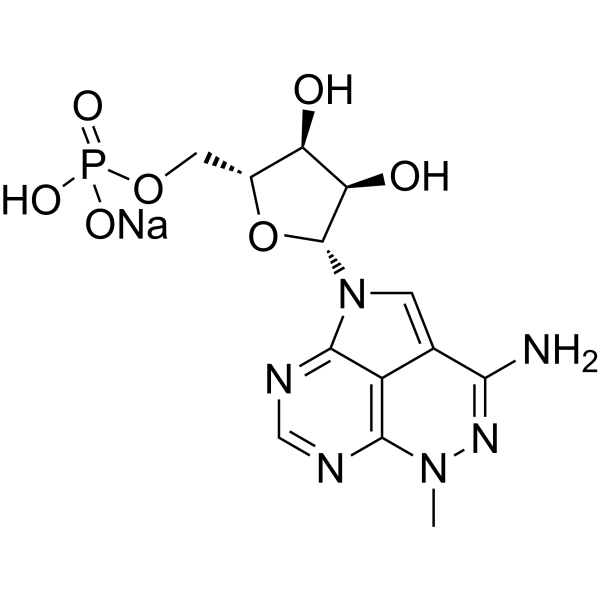
Triciribine phosphate sodium inhibits amidophosphoribosyltransferase by an allosteric mechanism which affects the first committed step of de novo purine biosynthesis. Triciribine phosphate sodium also inhibits IMP dehydrogenase which is the first committed step of guanosine nucleotide synthesis. Tricilibine phosphate does not affect ligase activity .
loading...
    loading...
Cat. No.: HY-126158
CAS No.: 1928712-46-2
SRI-29574 is an allosteric modulator of the dopamine transporter (DAT). SRI-29574 partially inhibits the uptake of the DAT (IC50=2.3 nM) and also partially inhibits the uptake of the serotonin transporter (SERT) and norepinephrine transporter (NET). SRI-29574 may serve as a useful probe to study the function and regulatory mechanisms of DAT .
loading...
    loading...
Cat. No.: HY-10250S1
Synonyms: TCN-P-d3
Triciribine phosphate-d3 (TCN-P-d3) is a deuterated compound of Triciribine phosphate (TCN-P). TCN-P inhibits adenosine monophosphate (AMP)-activated protein kinase through an allosteric mechanism, affecting the first key step in de novo purine biosynthesis. Triciribine phosphate also inhibits inosine monophosphate dehydrogenase, which is the first key step in guanosine nucleotide synthesis. Triciribine phosphate does not affect ligase activity .
loading...
    loading...
Cat. No.: HY-107111A
CAS No.: 932373-86-9
Research Areas:  

Neurological Disease

GSK1034702 hydrochloride is an orally active and allosteric agonist of M1 mAChR (pEC50=8.1) that can cross the blood-brain barrier. GSK1034702 hydrochloride activates the Gq/11 protein-mediated signaling pathway, enhancing neuronal firing and long-term potentiation (LTP) in the CA1 region of the hippocampus. GSK1034702 hydrochloride can modulate hippocampal function, improve memory encoding in the nicotine withdrawal cognitive dysfunction model, and show pro-cognitive effects in rodents. GSK1034702 hydrochloride can be used for the study of the mechanisms of cognitive impairment diseases such as Alzheimer's disease, and has certain peripheral M receptor activation-related side effects (such as gastrointestinal reactions) .
loading...
    loading...
Cat. No.: HY-117106
CAS No.: 200266-76-8
Target:  

GABA Receptor

Research Areas:  

Others

PNU-107484A is a GABAA receptor ligand that exhibits target activity mechanisms dependent on α isoforms. In the α1β2γ2 subtype, PNU-107484A acts as a positive allosteric modulator, enhancing GABA-induced Cl - currents, while it inhibits the currents in the α3β2γ2 and α6β2γ2 subtypes. The half-maximal concentrations for the α1β2γ2, α3β2γ2, and α6β2γ2 subtypes are 3.1, 4.2, and 3.5 μM, respectively. PNU-107484A can be used as a probe to investigate the physiological roles of different α isoform subtypes .
loading...
    loading...
Cat. No.: HY-182062
CAS No.: 931366-46-0
Target:  

NAMPT E1/E2/E3 Enzyme

Research Areas:  

Neurological Disease

NAMPT activator-9 (Compound DIPM) is an allosteric, non-competitive NAMPT activator, with an EC50 of 3.366 μM against hNAMPT. NAMPT activator-9 enhances the enzymatic activity of NAMPT via an allosteric, non-competitive mechanism. NAMPT activator-9 increases intracellular NAD + levels. NAMPT activator-9 restores myotube diameter and reduces the expression of atrophy markers Atrogin-1 and MuRF1. NAMPT activator-9 is applicable to research related to muscle atrophy .
loading...
    loading...
Cat. No.: HY-N19650
CAS No.: 11024-55-8
Paspalicine is an indole diterpenoid fungal metabolite with no tremorgenic activity in animals. Paspalicine targets the large-conductance calcium-activated potassium (maxi-K) channel, blocks channel activity, and modulates the binding of Charybdotoxin (HY-P0191) to the maxi-K channel via a positive allosteric mechanism that enhances toxin binding. Paspalicine can be used in studies related to ryegrass staggers .
loading...
    loading...
Cat. No.: HY-122222
CAS No.: 393794-32-6
Target:  

PPAR

Research Areas:  

Others

MRL20 is a PPARγ constitutive and allosteric agonist. MRL20 enhances the interaction between PPARγ and the co-activating peptide of TRAP220, with its EC50 being 10 nM. Even after being covalently blocked in the constitutive pocket by GW9662 (HY-16578) or T0070907 (HY-13202), MRL20 can still strengthen the interaction between PPARγ and TRAP220, with EC50 values of 176 and 440 nM respectively. MRL20 fails to completely inhibit its cell activation effect. MRL20 can be used to study the allosteric regulatory mechanism of PPARγ .
loading...
    loading...

