1. Search Result
Search Result
Results for "

ampicillin

" in MedChemExpress (MCE) Product Catalog:

32

Inhibitors & Agonists

3

Natural
Products

2

Isotope-Labeled Compounds

Cat. No. Product Name Target Research Areas Chemical Structure
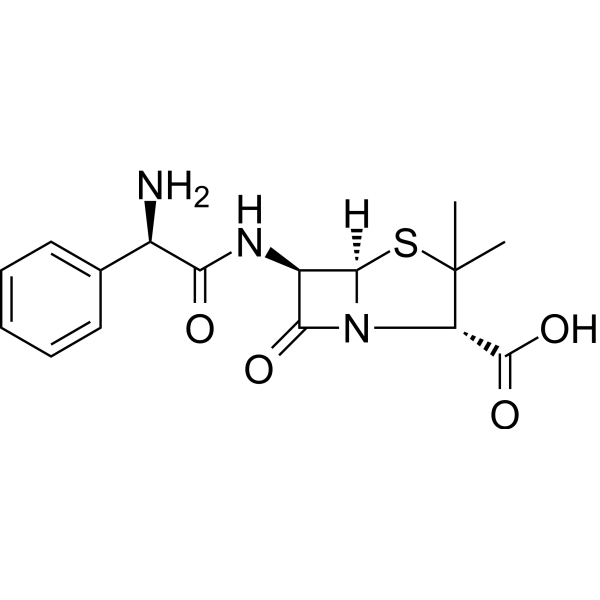
  • HY-B0522
    Ampicillin
    Maximum Cited Publications
    80 Publications Verification

    D-(-)-α-Aminobenzylpenicillin

    Bacterial Antibiotic Infection
    Ampicillin is a broad-spectrum beta-lactam antibiotic against a variety of gram-positive and gram-negative bacteria.
    Ampicillin
  • HY-B0522A
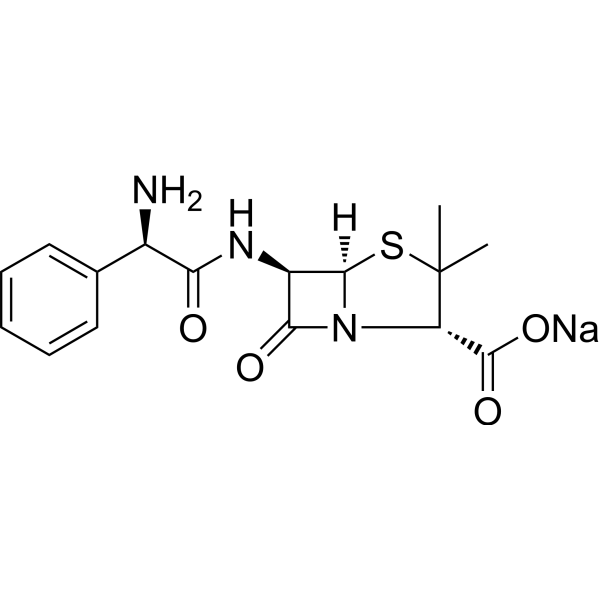
    Ampicillin sodium
    Maximum Cited Publications
    80 Publications Verification

    D-(-)-α-Aminobenzylpenicillin sodium salt

    Bacterial Antibiotic Infection
    Ampicillin sodium (D-(-)-α-Aminobenzylpenicillin sodium salt) is a broad-spectrum beta-lactam antibiotic against a variety of gram-positive and gram-negative bacteria .
    Ampicillin sodium
  • HY-B0522B
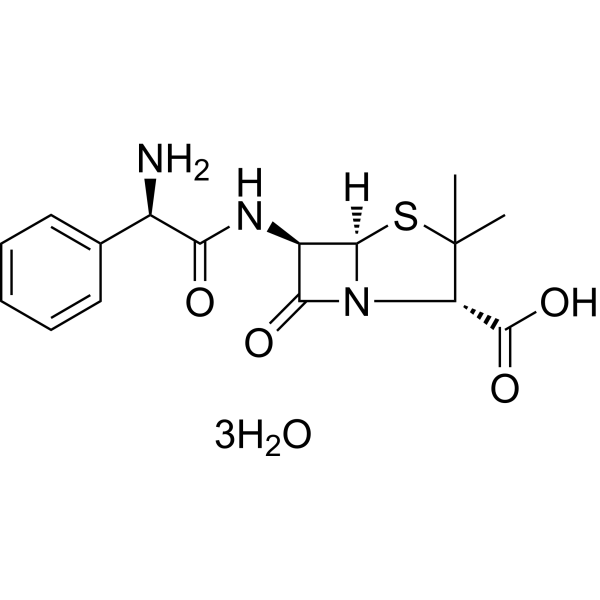
    Ampicillin trihydrate
    Maximum Cited Publications
    80 Publications Verification

    D-(-)-α-Aminobenzylpenicillin trihydrate

    Bacterial Antibiotic Infection
    Ampicillin trihydrate (D-(-)-α-Aminobenzylpenicillin trihydrate) is a broad-spectrum beta-lactam antibiotic against a variety of gram-positive and gram-negative bacteria.
    Ampicillin trihydrate
  • HY-128449
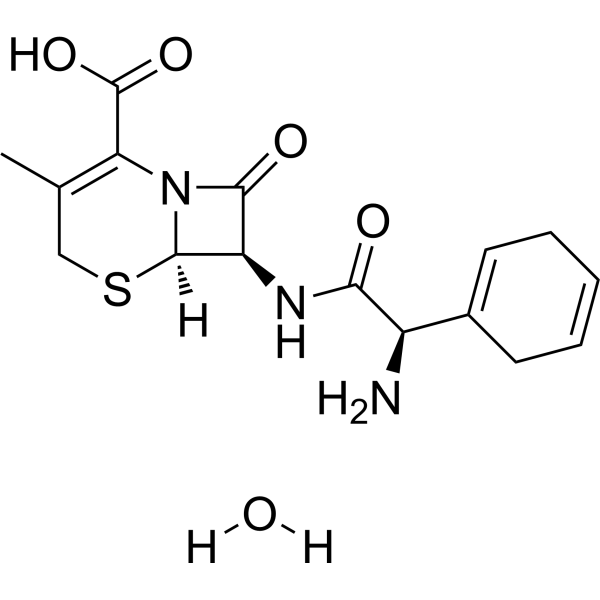
    Cephradine monohydrate
    5 Publications Verification

    Cefradine monohydrate

    Bacterial Antibiotic TOPK Infection Inflammation/Immunology
    Cephradine (Cefradine) monohydrate is a broad-spectrum and orally active cephalosporin. Cephradine monohydrate is active against both grampositive and gram-negative pathogens and effective in eradicating most penicillinase-producing organisms known to be resistant to penicillin G, penicillin V, and ampicillin. Cephradine monohydrate has been used in the research of genitourinary, gastrointestinal and respiratory tract infections, and in infections of the skin and soft tissues. Cephradine monohydrate blocks solar-ultraviolet induced skin inflammation through direct inhibition of TOPK .
    Cephradine monohydrate
  • HY-B0522R

    D-(-)-α-Aminobenzylpenicillin (Standard)

    Reference Standards Bacterial Antibiotic Infection
    Ampicillin (Standard) is the analytical standard of Ampicillin. This product is intended for research and analytical applications. Ampicillin is a broad-spectrum beta-lactam antibiotic against a variety of gram-positive and gram-negative bacteria.
    Ampicillin (Standard)
  • HY-B0522S

    Bacterial Antibiotic Infection
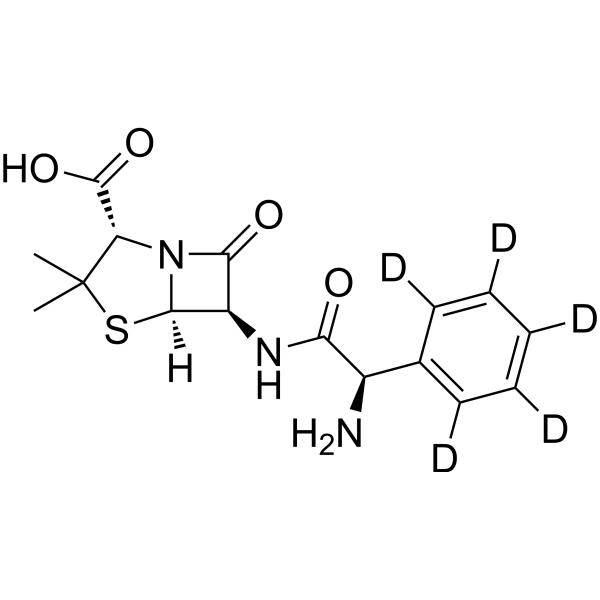
    Ampicillin-d5 is the deuterium labeled Ampicillin. Ampicillin is a broad-spectrum beta-lactam antibiotic against a variety of gram-positive and gram-negative bacteria .
    Ampicillin-d5
  • HY-Y1718
    Tridecanoic acid
    1 Publications Verification

    N-Tridecanoic acid

    Endogenous Metabolite Bacterial Infection
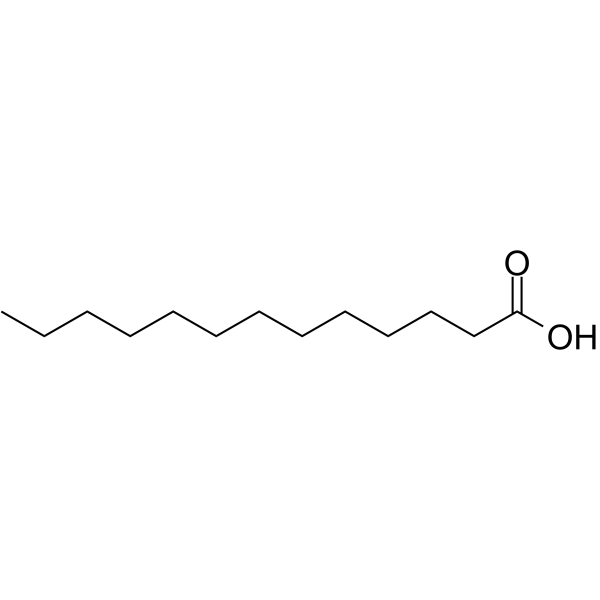
    Tridecanoic acid (N-Tridecanoic acid) is a medium-chain saturated fatty acid and inhibitor with no antibacterial activity against enterohemorrhagic E. coli (EHEC). When used in combination with Ciprofloxacin (HY-B0356) or Ampicillin (HY-B0522), Tridecanoic acid suppresses persister formation in exponentially growing E. coli and EHEC, but exerts no inhibitory effect on persister formation induced by Kanamycin (HY-16566) or in stationary-phase cells. Tridecanoic acid inhibits biofilm formation in EHEC. It can be used in the research of bacterial infections .
    Tridecanoic acid
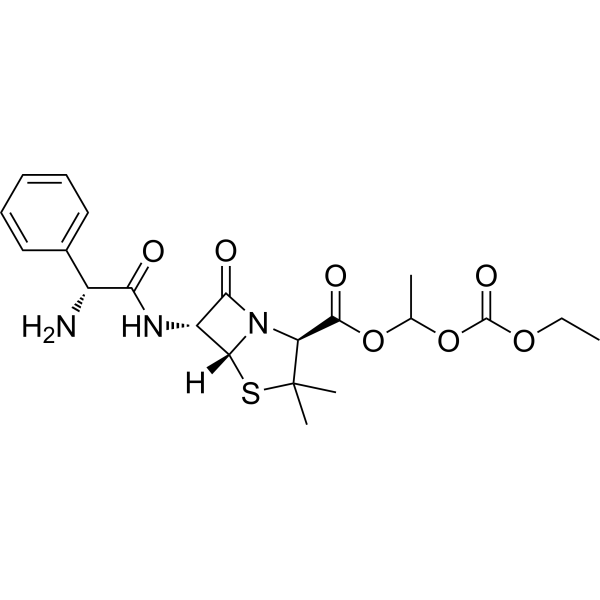
  • HY-B1149A

    Bacterial Antibiotic Infection
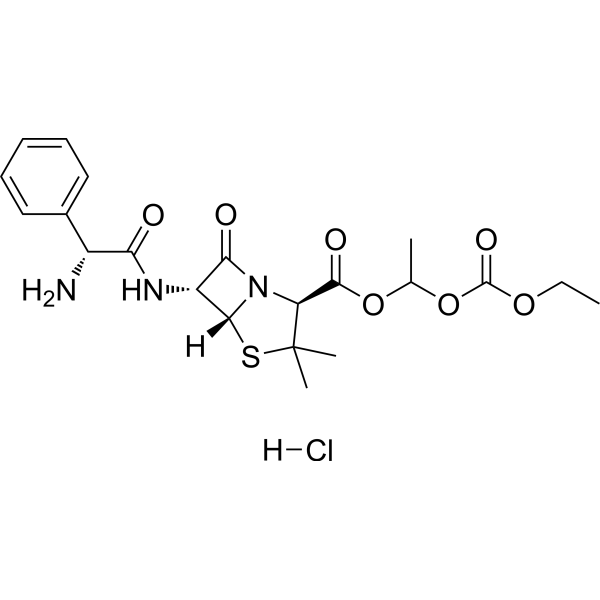
    Bacampicillin hydrochloride is a penicillin antibiotic, is a prodrug of ampicillin with improved oral bioavailability.
    Bacampicillin hydrochloride
  • HY-16158

    Wy-4508; Aminocyclohexylpenicillin; Ciclacillin

    Bacterial Antibiotic Infection
    Cyclacillin (Wy-4508) is an orally active aminopenicillin antibiotic, shows antibacterial activity against a wide range of gram-positive and gram-negative pathogens .
    Cyclacillin
  • HY-B0522C

    L-(+)-α-Aminobenzylpenicillin

    Antibiotic Infection
    L-(+)-Ampicillin (L-(2S) ampicillin) is the L-isomer of Ampicillin (HY-B0522). Ampicillin is a broad-spectrum beta-lactam antibiotic against a variety of gram-positive and gram-negative bacteria .
    L-(+)-Ampicillin
  • HY-B0522AR

    D-(-)-α-Aminobenzylpenicillin sodium salt (Standard)

    Reference Standards Bacterial Antibiotic Infection
    Ampicillin (sodium) (Standard) is the analytical standard of Ampicillin (sodium). This product is intended for research and analytical applications. Ampicillin sodium (D-(-)-α-Aminobenzylpenicillin sodium salt) is a broad-spectrum beta-lactam antibiotic against a variety of gram-positive and gram-negative bacteria .
    Ampicillin sodium (Standard)
  • HY-B0522BR

    D-(-)-α-Aminobenzylpenicillin trihydrate (Standard)

    Reference Standards Bacterial Antibiotic Infection
    Ampicillin (trihydrate) (Standard) is the analytical standard of Ampicillin (trihydrate). This product is intended for research and analytical applications. Ampicillin trihydrate (D-(-)-α-Aminobenzylpenicillin trihydrate) is a broad-spectrum beta-lactam antibiotic against a variety of gram-positive and gram-negative bacteria.
    Ampicillin trihydrate (Standard)
  • HY-119011

    Antibiotic Bacterial Infection
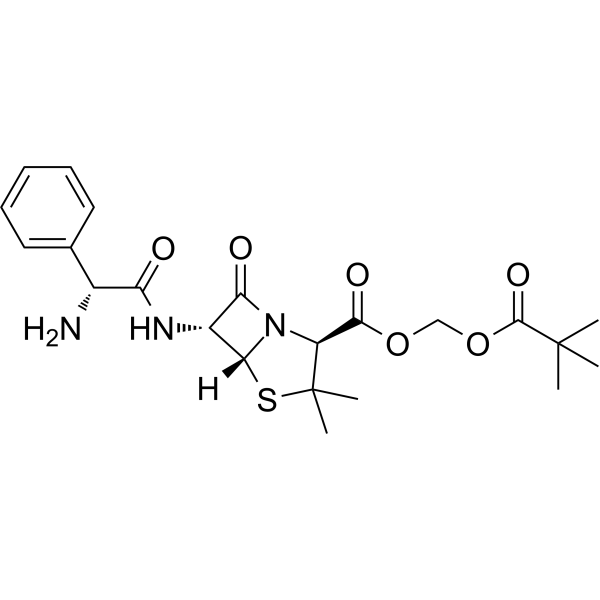
    Pivampicillin is a penicillin antibiotic. Pivampicillin is a prodrug of Ampicillin (HY-B0522) .
    Pivampicillin
  • HY-B1149

    Bacterial Antibiotic Infection
    Bacampicillin is a penicillin antibiotic, is a prodrug of ampicillin with improved oral bioavailability.
    Bacampicillin
  • HY-CE01550

    ampicillin-coenzyme A

    Biochemical Assay Reagents Metabolic Disease
    Ampicillin-CoA (Ampicillin-coenzyme A) is a coenzyme A derivative .
    Ampicillin-CoA
  • HY-N8509

    Deacetylchevalone C

    Bacterial Infection
    Chevalone E (Deacetylchevalone C) (Compound 3) is a meroditerpenoid. Chevalone E can be isolated from the fungus Aspergillus similanensis sp. Chevalone E has a synergic effect with Oxacillin (HY-B0925A) and Ampicillin (HY-B0522) against MRSA .
    Chevalone E
  • HY-117845

    LL-E19085α

    Antibiotic Bacterial Infection
    Citreamicin alpha (LL-E 19085-alpha) is an antibiotic whose in vitro antimicrobial activity against 429 clinical isolates of Gram-positive cocci has been tested by the agar dilution method. These microorganisms included 313 strains of Staphylococci and 116 strains of Streptococci. The in vitro activity of Citreamicin alpha was compared with that of ampicillin, amoxicillin, ceftriaxone, erythromycin, and vancomycin. For Staphylococci, the MIC values of Citreamicin alpha ranged from 0.12-4.0 μg/ml, and for Streptococcus pyogenes of the genus Streptococcus, it was 0.03-0.12 μg/ml. However, enterococci were relatively resistant, requiring 2.0 μg/ml of the agent to inhibit 64% of the 62 tested strains. The in vitro activity of this antibiotic was much better than that of ampicillin, amoxicillin, ceftriaxone, and erythromycin, but comparable or slightly inferior to that of vancomycin.
    Citreamicin alpha
  • HY-W746564

    L-(+)-α-Aminobenzylpenicillin-d5

    Isotope-Labeled Compounds Antibiotic Infection
    L-(+)-Ampicillin-d5 (L-(+)-α-Aminobenzylpenicillin-d5) is the deuterium labeled L-(+)-Ampicillin (HY-B0522C). L-(+)-Ampicillin (L-(2S) ampicillin) is the L-isomer of Ampicillin (HY-B0522). Ampicillin is a broad-spectrum beta-lactam antibiotic against a variety of gram-positive and gram-negative bacteria .
    L-(+)-Ampicillin-d5
  • HY-118983

    Antibiotic Bacterial Infection
    Pivampicillin hydrochloride is a penicillin antibiotic. Pivampicillin hydrochloride is a prodrug of Ampicillin (HY-B0522) .
    Pivampicillin hydrochloride
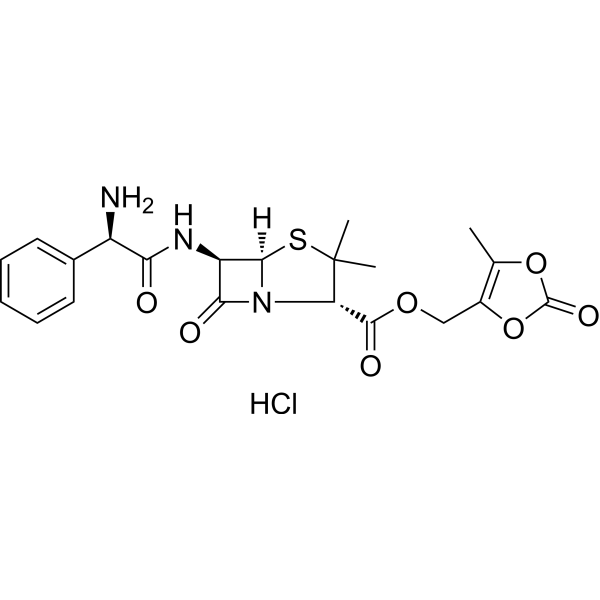
  • HY-100500

    KBT 1585 hydrochloride

    Penicillin-binding protein (PBP) Bacterial Infection Cancer
    Lenampicillin hydrochloride (KBT 1585 hydrochloride) is an orally active proagent of Ampicillin and is an effective beta-lactam antibacterial agent that inhibits bacterial penicillin-binding proteins (transpeptidase). Lenampicillin hydrochloride has improved absorption and decreased side effects compares to Ampicillin and is applied in the investigation of the suppurative skin and soft tissue infection .
    Lenampicillin hydrochloride
  • HY-118456A

    Bacterial Drug Derivative Infection
    Talampicillin (hydrochloride) is a ampicillin derivative. Talampicillin (hydrochloride) is a thiazolide carboxylic ester of ampicillin. Talampicillin (hydrochloride) can be studied in research on urinary infection .
    Talampicillin hydrochloride
  • HY-174389

    Bacterial Infection
    Antibacterial agent 283 (Compound 13) is an antimicrobial agent. Antibacterial agent 283 is active against both Gram-positive and Gram-negative bacteria, with potency comparable to the antibiotic Ampicillin (HY-B0522) .
    Antibacterial agent 283
  • HY-139971

    Bacterial Infection
    Antibacterial agent 64 (compound 62) is a potent YycG inhibitor (IC50=6.1 µM) and an antibacterial agent. Antibacterial agent 64 combines with ampicillin could synergistically eradicate the biofilm-embedded viable bacteria .
    Antibacterial agent 64
  • HY-124334

    Antibiotic Bacterial Infection
    L-161240 is an antibiotic, which exhibits antibacterial activity against Escherichia coli, through inhibition of LpxC enzyme (Ki is 50 nM) .
    L-161240
  • HY-106350

    U-63196E; AC-1370

    Antibiotic Bacterial Infection Inflammation/Immunology
    Cefpimizole (U-63196E) is a broad-spectrum cephalosporin antibiotic. Cefpimizole inhibits many Ampicillin (HY-B0522)-resistant bacteria, and is active against gram-negative species. Cefpimizole augments phagocytosis of macrophages and neutrophils .
    Cefpimizole
  • HY-106350A

    U-63196E sodium; AC-1370 sodium

    Antibiotic Bacterial Infection Inflammation/Immunology
    Cefpimizole (U-63196E) sodium is a broad-spectrum cephalosporin antibiotic. Cefpimizole sodium inhibits many Ampicillin (HY-B0522)-resistant bacteria, and is active against gram-negative species. Cefpimizole sodium augments phagocytosis of macrophages and neutrophils .
    Cefpimizole sodium
  • HY-169187

    Bacterial Cancer
    Antibacterial agent 247 (compund 30b) is a bacterial antagonist that significantly inhibits the formation of Pseudomonas aeruginosa biofilm (IC50=5.8 μM) and multiple virulence phenotypes, and enhances its interaction with Tob Antibacterial activity of combined therapy with ampicillin and polymyxin B .
    Antibacterial agent 247
  • HY-16158R

    Wy-4508 (Standard); Aminocyclohexylpenicillin (Standard); Ciclacillin (Standard)

    Reference Standards Bacterial Antibiotic Infection
    DL-Glutamic acid (Standard) is the analytical standard of DL-Glutamic acid. This product is intended for research and analytical applications. DL-Glutamic acid is the conjugate acid of Glutamic acid, which acts as a fundamental metabolite. Comparing with the second phase of polymorphs α and β L-Glutamic acid, DL-Glutamic acid presents better stability .
    Cyclacillin (Standard)
  • HY-185351

    ampicillin/Sulbactam combination

    Bacterial Antibiotic Infection
    Ampicillin sodium and Sulbactam sodium are formed by mixing HY-B0522A Ampicillin sodium with HY-B0334A Sulbactam sodium (each 1.5 g of this product contains 1 g amoxicillin sodium and 0.5 g sulbactam sodium). Ampicillin is a β-lactam antimicrobial, whereas sulbactam is a β-lactamase inhibitor. Ampicillin has a broad spectrum of bactericidal activity against many gram-positive and gram-negative aerobic and anaerobic bacteria. However, ampicillin is degraded by beta-lactamases. The combination of ampicillin and sulbactam demonstrates synergy in addressing bacterial strains resistant to ampicillin, thus providing broader coverage. Bacteria susceptible to ampicillin/sulbactam include Haemophilus influenzae, Escherichia coli, Acinetobacter, Klebsiella, Staphylococcus aureus, Enterobacter, and anaerobes.
    Ampicillin sodium and Sulbactam sodium
  • HY-111127

    Antibiotic Bacterial Infection
    LY164846 is an orally active cephalosporin. LY164846 is highly sensitive to Haemophilus influenzae (including Ampicillin (HY-B0522)-resistant strains) and Moraxella catarrhalis (with MIC90 ≤ 4 μg/mL). LY164846 is generally sensitive to Methicillin (HY-121544)-resistant Staphylococcus aureus and Streptococcus (except Enterococcus) (with MIC90: 0.25 - 8 μg/mL), and moderately sensitive to anaerobic bacteria. LY164846 has MBC/MIC ratio to Haemophilus influenzae of ≤ 2, showing bactericidal activity. LY164846 can be used for research on respiratory and skin infections .
    LY164846
  • HY-106705

    PC-904 sodium

    Bacterial Infection
    Apalcillin (PC-904) (sodium) is an antibacterial agent. Apalcillin (sodium) is active against carbenicillin- and ampicillin-resistant strains of gram-negative bacilli .
    Apalcillin sodium
  • HY-W074886

    Biochemical Assay Reagents Others
    N-Methyl-N-tetradecanoylglycine is a rectal absorption promoter. N-Methyl-N-tetradecanoylglycine enhances rectal absorption of antibiotics .
    N-Methyl-N-tetradecanoylglycine

Inquiry Online

Your information is safe with us. * Required Fields.

Salutation


Country or Region *

Applicant Name *


Organization Name *

Department *


Email Address *


Product Name *

Cat. No.


Requested quantity *

Phone Number *


Remarks

Inquiry Online

Inquiry Information

Product Name:
Cat. No.:
Quantity:
MCE Japan Authorized Agent:

