


1. Search Result
Search Result
Results for "

amyloid-β plaque

" in MedChemExpress (MCE) Product Catalog:

20

Inhibitors & Agonists

2

Fluorescent Dyes

2

Peptides

3

Inhibitory Antibodies

1

Isotope-Labeled Compounds

Targets Recommended:
Art. -Nr. Produktname Target Forschungsgebiete Chemical Structure
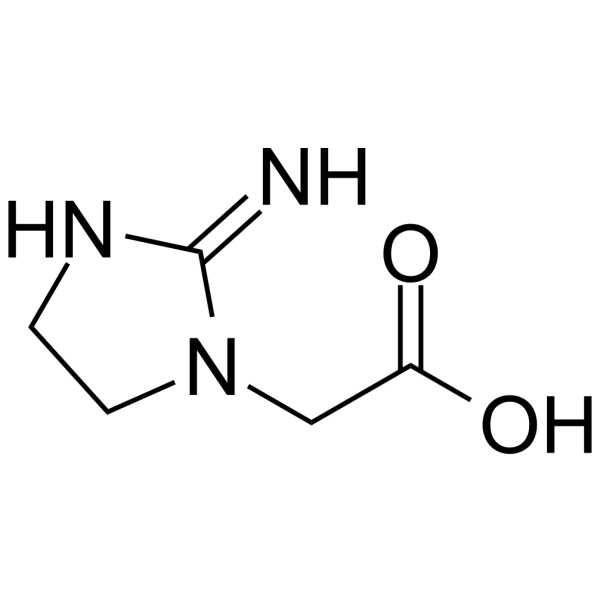
  • HY-W017540
    Cyclocreatine
    1 Publications Verification

    ATP Synthase Cardiovascular Disease Neurological Disease Metabolic Disease Cancer
    Cyclocreatine, a creatine analogue, acts as a brain-penetrant and potent bioenergetic protective agent by providing high levels of ATP. Cyclocreatine can be phosphorylated and dephosphorylated by creatine kinases. Cyclocreatine suppresses creatine metabolism ameliorating the cognitive, autistic and epileptic phenotype in a mouse model of creatine transporter defciency. Cyclocreatine protects against ischemic injury and enhances cardiac recovery during early reperfusion in dogs and rats. Cyclocreatine decreases plaque-adjacent neuronal dystrophy in TREM2-deficient mice with amyloid-β pathology. Cyclocreatine is proming for research of ischemic heart disease, cardiovascular diseases, Alzheimer’s disease and other neurodegenerative diseases associated with microglial dysfunction, prostate cancer .
    Cyclocreatine
  • HY-176293

    Prostaglandin Receptor Amyloid-β Neurological Disease
    EP2 receptor antagonist-3 is a selective EP2 receptor antagonist (IC50: 8 nM in hEP2 SPA assay, 50 nM in hEP2 cAMP assay). EP2 receptor antagonist-3 increases the macrophage-mediated clearance of Amyloid-β plaques. EP2 receptor antagonist-3 can be used for the study of alzheimer’s diseases .
    EP2 receptor antagonist-3
  • HY-P990078

    LY3372993

    Amyloid-β Neurological Disease
    Remternetug (LY3372993) is a monoclonal antibody that targets pyroglutamylated amyloid β fibrils (N3pG-Aβ). Remternetug specifically binds to N3pG-Aβ, thereby clearing amyloid plaques in the brain and reducing amyloid burden. Remternetug can be used in research related to Alzheimer's disease .
    Remternetug
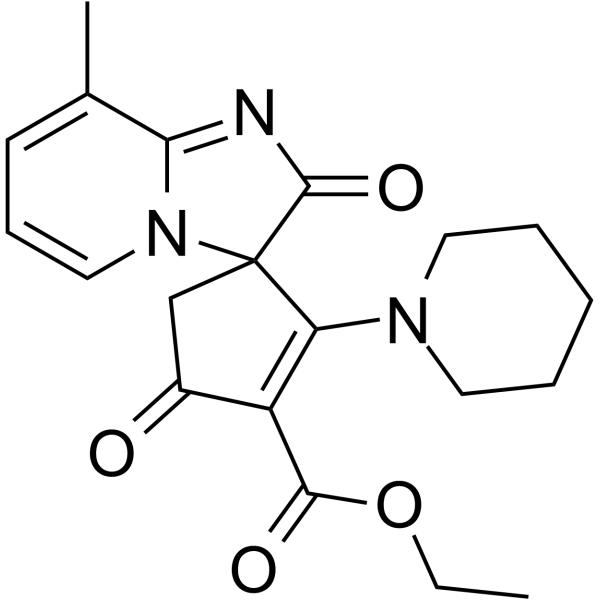
  • HY-120597

    Calcium Channel Neurological Disease
    SAK3 is a potent T-type voltage-gated Ca 2+ channels (T-VGCCs) enhancer. SAK3 enhances Cav3.1 and Cav3.3 T-type Ca 2+ channel currents. Acute SAK3 administration improves memory deficits in olfactory-bulbectomized mice . SAK3 inhibits amyloid β plaque formation in APP-KI mice by activating the proteasome activity .
    SAK3
  • HY-P1047

    [Pro18, Asp21] β-amyloid (17-21)

    Amyloid-β Neurological Disease
    β-Sheet Breaker Peptide iAβ5 is an effective brain amyloid-β (Abeta) degrader. Abeta deposits are associated with Alzheimer's disease (AD), and the related toxicity arises from its β-sheet conformation and aggregation. β-Sheet Breaker Peptide iAβ5 can repeatedly induce the degradation of fibrillary amyloid deposits in vivo. Therefore, β-Sheet Breaker Peptide iAβ5 can prevent and/or reverse neuronal contraction caused by Abeta and reduce the range of interleukin IL-1beta positive microglial-like cells around Abeta deposits. β-Sheet Breaker Peptide iAβ5 can reduce the size and/or number of brain amyloid plaques in AD. β-Sheet Breaker Peptide iAβ5 is labeled with a hydrophobic benzyl alcohol (HBA) tag and shows a bright blue color under acidic conditions, which can be used for quantitative determination.
    β-Sheet Breaker Peptide iAβ5
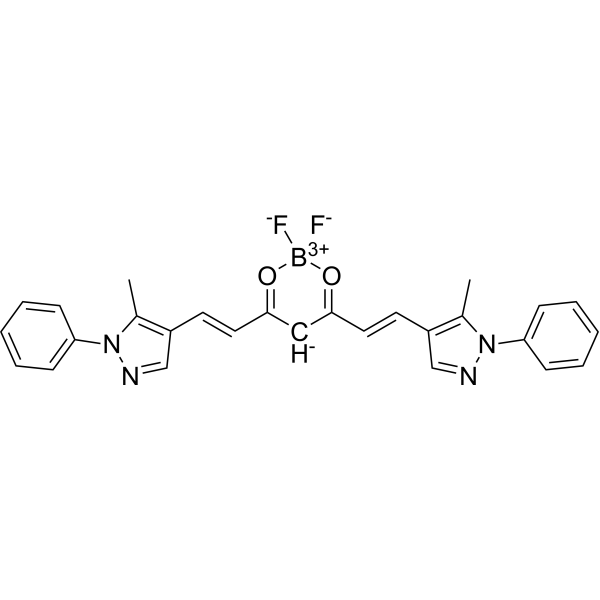
  • HY-123495

    Fluorescent Dye Neurological Disease
    CRANAD-28 is a robust fluorescent compound for visualization of amyloid beta plaques .
    CRANAD-28
  • HY-W611371

    TRP Channel iGluR Neurological Disease
    FP802 is an orally active potent TwinF interface inhibitor that disrupts and detoxifies the NMDAR/TRPM4 death complex. FP802 exerts powerful neuroprotective effects in the 5xFAD mouse model of Alzheimer’s disease (AD) by preventing cognitive decline, preserving neuronal structural integrity, reducing amyloid-β plaque formation, and mitigating mitochondrial pathology . FP802 stops loss of motor neurons, reduces serum neurofilament light chain (NfL) levels, improves motor performance, and extends life in a mouse model of amyotrophic lateral sclerosis (ALS). FP802 can be used for AD and ALS research .
    FP802
  • HY-P11540

    Cholecystokinin Receptor MMP Amyloid-β Neurological Disease
    CCKBR agonist-1 (Compound 3r1) is a Gq-protein-preferring cholecystokinin B receptor (CCKBR) agonist with an EC50 of 35 pM. CCKBR agonist-1 significantly increases the survival rate of neurons, with an EC50 of 37 pM. CCKBR agonist-1 can improve the cognitive decline in mice by upregulating α-secretase (ADAM10) and calcium signaling molecule PLCB4, reduce the number of amyloid β () plaques, and promote long-term potentiation (LTP). CCKBR agonist-1 can be used for the study of Alzheimer's disease .
    CCKBR agonist-1
  • HY-W611371A

    TRP Channel iGluR Neurological Disease
    FP802 dihydrochloride is an orally active potent TwinF interface inhibitor that disrupts and detoxifies the NMDAR/TRPM4 death complex. FP802 dihydrochloride exerts powerful neuroprotective effects in the 5xFAD mouse model of Alzheimer’s disease (AD) by preventing cognitive decline, preserving neuronal structural integrity, reducing amyloid-β plaque formation, and mitigating mitochondrial pathology . FP802 dihydrochloride stops loss of motor neurons, reduces serum neurofilament light chain (NfL) levels, improves motor performance, and extends life in a mouse model of amyotrophic lateral sclerosis (ALS) . FP802 dihydrochloride can be used for AD and ALS research .
    FP802 dihydrochloride
  • HY-W017540R

    Reference Standards ATP Synthase Cardiovascular Disease Neurological Disease Metabolic Disease Cancer
    Cyclocreatine, a creatine analogue, acts as a brain-penetrant and potent bioenergetic protective agent by providing high levels of ATP. Cyclocreatine can be phosphorylated and dephosphorylated by creatine kinases. Cyclocreatine suppresses creatine metabolism ameliorating the cognitive, autistic and epileptic phenotype in a mouse model of creatine transporter defciency. Cyclocreatine protects against ischemic injury and enhances cardiac recovery during early reperfusion in dogs and rats. Cyclocreatine decreases plaque-adjacent neuronal dystrophy in TREM2-deficient mice with amyloid-β pathology. Cyclocreatine is proming for research of ischemic heart disease, cardiovascular diseases, Alzheimer’s disease and other neurodegenerative diseases associated with microglial dysfunction, prostate cancer .
    Cyclocreatine (Standard)
  • HY-W841438

    Amyloid-β Tau Protein Neurological Disease
    Lithium orotate is an orally active lithium supplement with reduced binding that can bypass amyloid sequestration in AD mice models. Lithium orotate can prevent Aβ plaque deposition and phospho-tau accumulation and reverse AD pathology, neuroinflammatory changes and memory loss in AD mice models and ageing wild-type mice. Lithium orotate can be used for the research of alcoholism and Alzheimer’s disease .
    Lithium orotate
  • HY-W017540S

    Isotope-Labeled Compounds ATP Synthase Cardiovascular Disease Neurological Disease Metabolic Disease Cancer
    Cyclocreatine- 13C3 is the 13C-labeled Cyclocreatine (HY-W017540). Cyclocreatine, a creatine analogue, acts as a brain-penetrant and potent bioenergetic protective agent by providing high levels of ATP. Cyclocreatine can be phosphorylated and dephosphorylated by creatine kinases. Cyclocreatine suppresses creatine metabolism ameliorating the cognitive, autistic and epileptic phenotype in a mouse model of creatine transporter defciency. Cyclocreatine protects against ischemic injury and enhances cardiac recovery during early reperfusion in dogs and rats. Cyclocreatine decreases plaque-adjacent neuronal dystrophy in TREM2-deficient mice with amyloid-β pathology. Cyclocreatine is proming for research of ischemic heart disease, cardiovascular diseases, Alzheimer’s disease and other neurodegenerative diseases associated with microglial dysfunction, prostate cancer .
    Cyclocreatine-13C3
  • HY-100740A

    AZD-3293 hydrochloride; LY3314814 hydrochloride

    Beta-secretase Neurological Disease
    Lanabecestat (AZD3293; LY3314814) hydrochloride is a potent BACE1 inhibitor that has been investigated for its potential as a modifying treatment for Alzheimer's disease. Lanabecestat (hydrochloride) demonstrated significant dose- and time-dependent reductions in concentrations of amyloid beta peptides in plasma, cerebrospinal fluid, and brain. Lanabecestat (hydrochloride) was also shown to produce reductions in Aβ neuritic plaque burden without demonstrating clinical benefits or slowing the progression of Alzheimer's disease pathophysiology.
    Lanabecestat hydrochloride
  • HY-P991654

    Amyloid-β Neurological Disease
    SAR228810 is a humanized IgG4 monoclonal antibody inhibitor targeting amyloid β (Aβ) with a KD? of ?0.43 ?nM for protofibrillar Aβ over monomeric Aβ. SAR228810 significantly inhibits the brain amyloid plaque formation and oligomer-induced synaptic dysfunction and neurite loss. SAR228810 has significant protection against Aβ-mediated neuritotoxicity. MINT1526A can be used for Alzheimer’s disease imaging and immunotherapy research .
    SAR228810
  • HY-149219

    Amyloid-β Neurological Disease
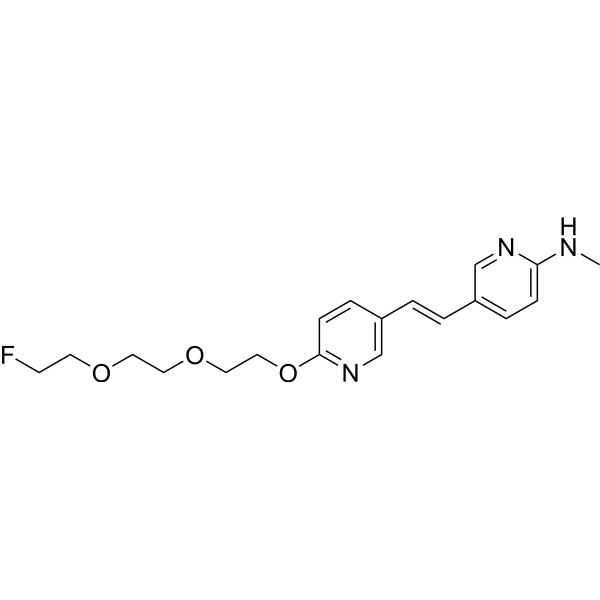
    BIBD-124 binds amyloid beta (Aβ) plaque with an IC50 value of 9.51 nM. [18F]BIBD-124 can be used as radiotracer of Aβ plaques .
    BIBD-124
  • HY-182304

    Amyloid-β α-synuclein Amylin Receptor Tau Protein SOD Neurological Disease
    CLR01 sodium is a blood-brain barrier-permeable anti-aggregation agent. CLR01 sodium inhibits the de novo aggregation of Amyloid-β 40/42, α-synuclein, IAPP, tau protein and SOD1. CLR01 sodium reduces amyloid plaque burden in the cortex of triple-transgenic mice and improves the memory and motor abilities of these mice. CLR01 sodium can be used in research related to Alzheimer's disease, Parkinson's disease, and amyotrophic lateral sclerosis (ALS) .
    CLR01 sodium
  • HY-118972

    Amyloid-β Neurological Disease
    TPI-1917-49 is an agent that can cross the blood-brain barrier and reduce amyloid β (). TPI-1917-49 reduces the production of Aβ peptide segments by promoting the non-amyloidogenic pathway of amyloid precursor protein (APP) (increasing the generation of sAPPα mediated by α-secretase). TPI-1917-49 reduces amyloid plaques in mouse models. TPI-1917-49 can be used in Alzheimer's disease research .
    TPI-1917-49
  • HY-D3221

    Fluorescent Dye Monoamine Oxidase Amyloid-β Neurological Disease
    MAO Probe 1 is a reactive two-photon fluorescent probe capable of crossing the blood-brain barrier, which is used to detect the activity of monoamine oxidases (MAO-A/MAO-B), with Km values of 70 μM (MAO-A) and 75 μM (MAO-B), respectively. IBC 2 (benzo[g]imino-coumarin 2), the enzymatic product of MAO Probe 1, can further specifically bind to and image plaques, enabling in vivo two-photon co-monitoring of MAO activity and Aβ plaques. MAO Probe 1 can be used in Alzheimer's disease research (IBC 2: Ex/Em = 850 nm/570-620 nm) .
    MAO Probe 1
  • HY-D2962

    Fluorescent Dye Neurological Disease
    CAQ is a near-infrared fluorescent probe based on a curcumin scaffold (Ex/Em = 565/635). CAQ exhibits high affinity for Aβ1-42 aggregates (Kd = 78.89 nM) and excellent selectivity toward common biomolecules. CAQ’s emission wavelength shows significant solvent dependence. CAQ, by incorporating intramolecular rotation donors and quinoline functional groups, can be used for the specific detection and imaging of Aβ aggregates in Alzheimer's disease .
    CAQ
  • HY-P992157

    murine version of Bapineuzumab

    Amyloid-β Neurological Disease
    Anti-APP/Amyloid beta Antibody (3D6) is an antibody targeting β-amyloid protein () containing free Asp1. Anti-APP/Amyloid beta Antibody (3D6) recognizes and binds to the amino acid epitope at positions 1-5 of β-amyloid protein with a free Asp1 residue. Anti-APP/Amyloid beta Antibody (3D6) serves as a detection antibody in immunoblot analysis. Anti-APP/Amyloid beta Antibody (3D6) is applicable to research related to Alzheimer's disease .
    Anti-APP/Amyloid beta Antibody (3D6)

Online-Anfrage

Your information is safe with us. * Required Fields.

Anrede


Country or Region *

Name des Antragstellers *


Name der Organisation *

Department *


E-Mail-Addresse *


Produktname *

Art. -Nr.


Requested quantity *

Telefonnummer *


Bemerkungen

Online-Anfrage

Inquiry Information

Produktname:
Art. -Nr.:
Menge:
MCE Japan Authorized Agent:

