1. Search Result
Search Result
Results for "

antibiotic ionophore

" in MedChemExpress (MCE) Product Catalog:

35

Inhibitors & Agonists

3

Peptides

21

Natural
Products

2

Isotope-Labeled Compounds

Targets Recommended:
Art. -Nr. Produktname Target Forschungsgebiete Chemical Structure
  • HY-13434
    Ionomycin
    115+ Cited Publications

    SQ23377

    Calcium Channel PKC Bacterial Apoptosis Antibiotic Infection Cancer
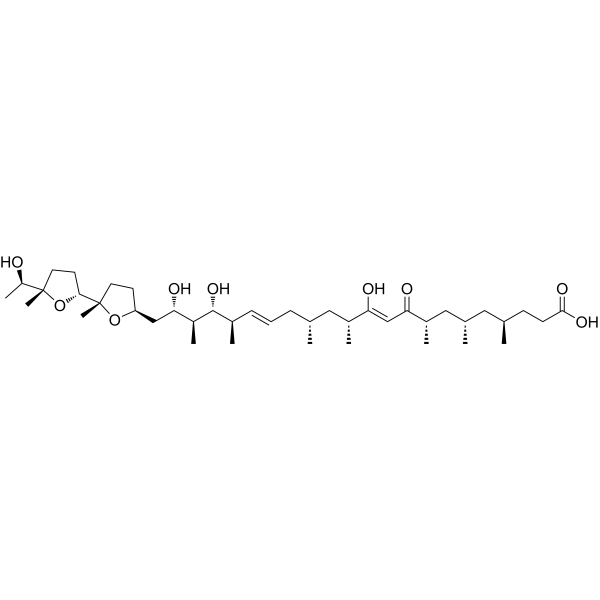
    Ionomycin (SQ23377) is a potent, selective calcium ionophore and an antibiotic produced by Streptomyces conglobatus. Ionomycin (SQ23377) is highly specific for divalent cations (Ca>Mg>Sr=Ba). Ionomycin (SQ23377) promotes apoptosis. Ionomycin also induces the activation of protein kinase C (PKC) .
    Ionomycin
  • HY-127019
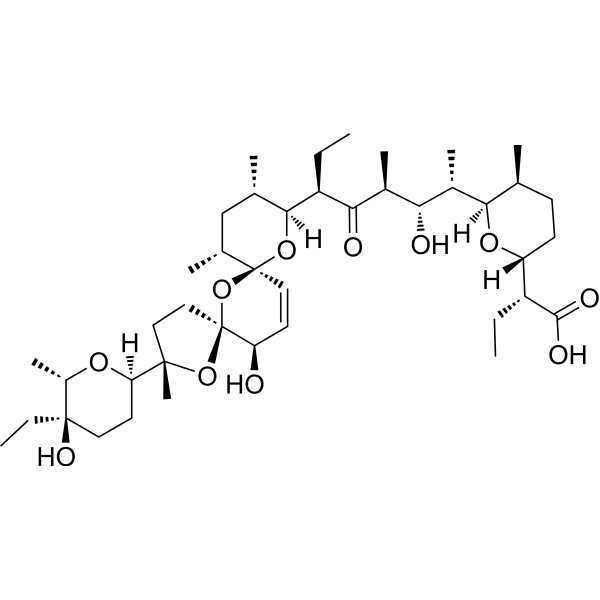
    Nigericin
    Maximum Cited Publications
    221 Publications Verification

    Potassium Channel NOD-like Receptor (NLR) Bacterial Antibiotic Pyroptosis Wnt β-catenin Infection Cancer
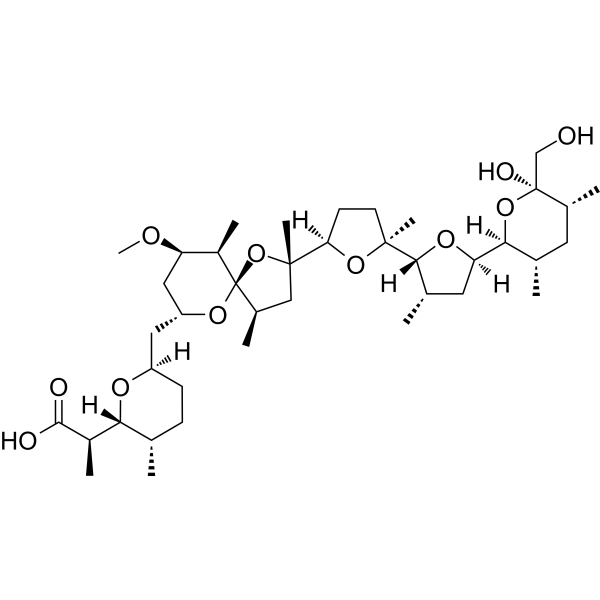
    Nigericin is an antibiotic derived from Streptomyces hygroscopicus that act as a K +/H + ionophore, promoting K +/H + exchange across mitochondrial membranes. Nigericin is a NLRP3 activator. Nigericin shows promising anti-cancer activities through decreasing intracellular pH (pHi), and inactivation of Wnt/β-catenin signals. Nigericin induces pyroptosis through caspase 1/GSDMD in TNBC .
    Nigericin
  • HY-100381
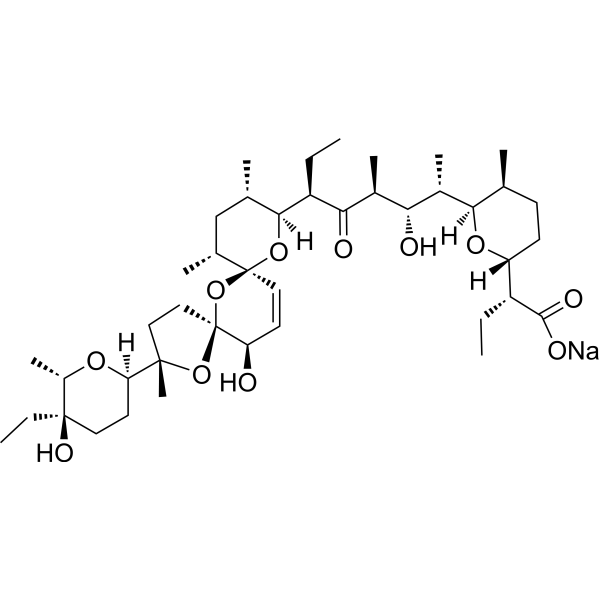
    Nigericin sodium salt
    Maximum Cited Publications
    221 Publications Verification

    Potassium Channel NOD-like Receptor (NLR) Bacterial Antibiotic Pyroptosis Wnt β-catenin Infection Cancer
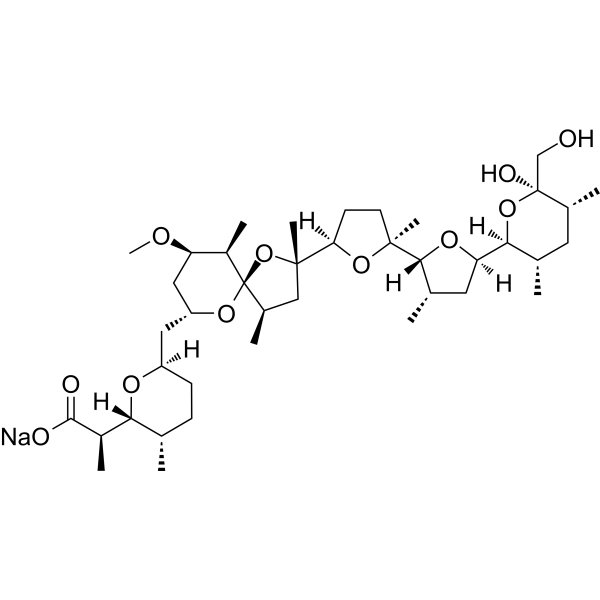
    Nigericin sodium salt is an antibiotic derived from Streptomyces hygroscopicus that act as a K +/H + ionophore, promoting K +/H + exchange across mitochondrial membranes. Nigericin sodium salt is a NLRP3 activator. Nigericin sodium salt shows promising anti-cancer activities through decreasing intracellular pH (pHi), and inactivation of Wnt/β-catenin signals. Nigericin sodium salt induces pyroptosis through caspase 1/GSDMD in TNBC .
    Nigericin sodium salt
  • HY-N6687
    Calcimycin
    20+ Cited Publications

    A-23187; antibiotic A-23187

    Oxidative Phosphorylation Bacterial Fungal Apoptosis Autophagy Antibiotic Infection Inflammation/Immunology Cancer
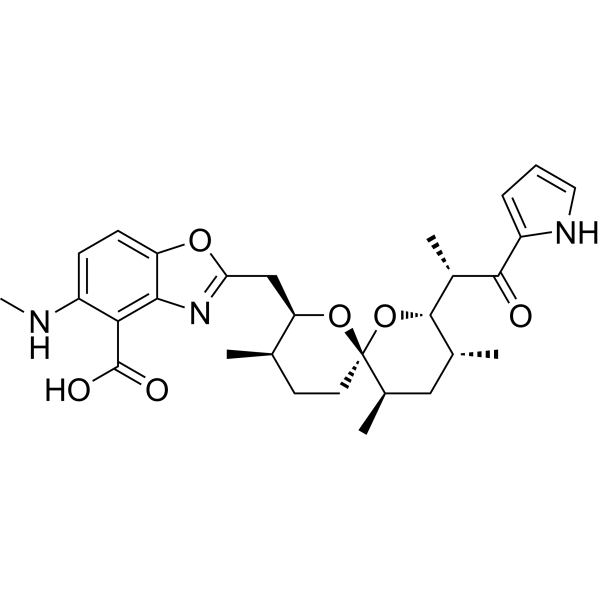
    Calcimycin (A-23187) is an antibiotic and a unique divalent cation ionophore (like calcium and magnesium). Calcimycin induces Ca 2+-dependent cell death by increasing intracellular calcium concentration. Calcimycin inhibits the growth of Gram-positive bacteria and some fungi. Calcimycin also inhibits the activity of ATPase and uncouples oxidative phosphorylation (OXPHOS) of mammalian cells. Calcimycin induces apoptosis and autophagy .
    Calcimycin
  • HY-13434A
    Ionomycin calcium
    115+ Cited Publications

    SQ23377 calcium

    Calcium Channel PKC Bacterial Apoptosis Antibiotic Infection Cancer
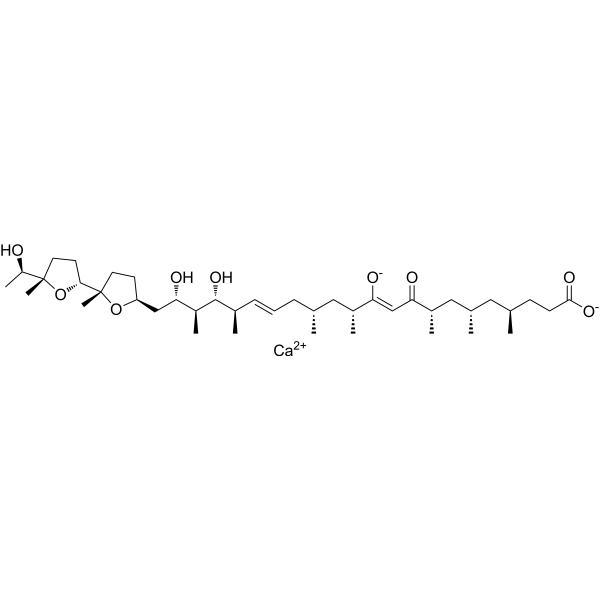
    Ionomycin calcium (SQ23377 calcium) is a potent, selective calcium ionophore and an antibiotic produced by Streptomyces conglobatus. Ionomycin calcium (SQ23377 calcium) is highly specific for divalent cations (Ca>Mg>Sr=Ba). Ionomycin (SQ23377) promotes apoptosis. Ionomycin calcium (SQ23377 calcium) also induces the activation of protein kinase C (PKC) .
    Ionomycin calcium
  • HY-N0150
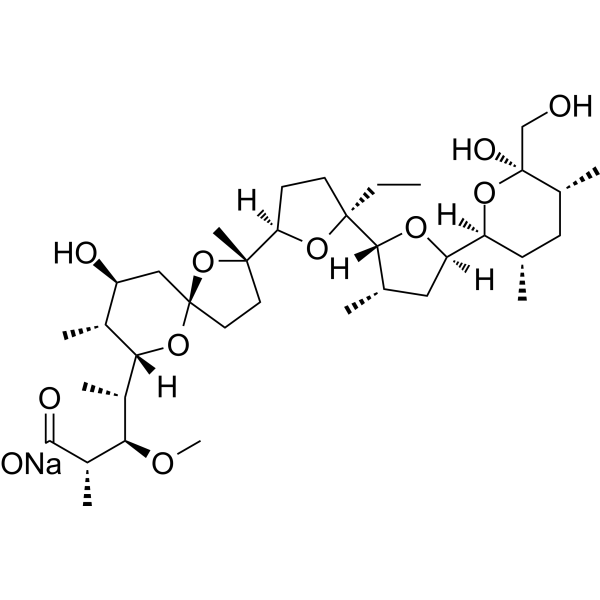
    Monensin sodium
    35+ Cited Publications

    Monensin A sodium

    Exosomes Bacterial Antibiotic Na+/H+ Exchanger (NHE) Parasite Apoptosis Fungal Wnt Infection Cancer
    Monensin (Monensin A) sodium, an orally active antibiotic, is an ionophore that mediates Na +/H + exchange. Monensin sodium is a potent Wnt signaling inhibitor. Monensin sodium causes a marked enlargement of the multivesicular bodies (MVBs) and regulates exosome secretion. Monensin sodium can be used for bacterial, fungal, and parasitic infections research, and shows anticancer effects .
    Monensin sodium
  • HY-N6693
    Valinomycin
    5+ Cited Publications

    NSC 122023

    Apoptosis Antibiotic Autophagy Fungal Infection Others Cancer
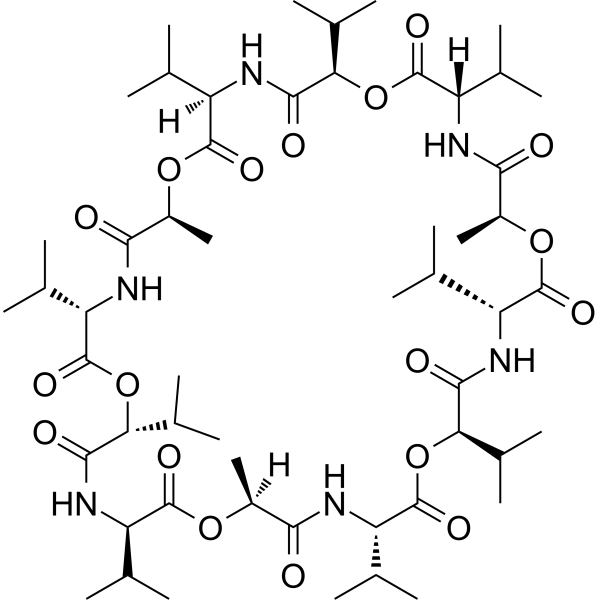
    Valinomycin is a potassium-specific ionophore, the valinomycin-K + complex can be incorporated into biological bilayer membranes with the hydrophobic surface of valinomycin, destroys the normal K + gradient across the membrane, and as a result kills the cells, incorporating into liposomes can significantly reduces the cytotoxicity and enhances the targeting effect. Valinomycin exhibits antibiotic, antifungal, antiviral, antitumor and insecticidal efficacy, thus can be used for relevant research .
    Valinomycin
  • HY-15597
    Salinomycin
    45+ Cited Publications

    Procoxacin

    Bacterial Wnt β-catenin Mitophagy Autophagy Apoptosis Antibiotic Parasite Cancer
    Salinomycin (Procoxacin), a polyether potassium ionophore antibiotic, selectively inhibits the growth of gram-positive bacteria. Salinomycin is a potent inhibitor of Wnt/β-catenin signaling, blocks Wnt-induced LRP6 phosphorylation. Salinomycin shows selective activity against human cancer stem cells .
    Salinomycin
  • HY-17439
    Salinomycin sodium salt
    45+ Cited Publications

    Salinomycin sodium; Sodium salinomycin

    Wnt β-catenin Bacterial Autophagy Apoptosis Antibiotic Parasite Cancer
    Salinomycin sodium salt (Salinomycin sodium), an antibiotic potassium ionophore, is a potent inhibitor of Wnt/β-catenin signaling. Salinomycin sodium salt acts on the Wnt/Fzd/LRP complex, blocks Wnt-induced LRP6 phosphorylation, and causes degradation of the LRP6 protein. Salinomycin sodium salt shows selective activity against human cancer stem cells .
    Salinomycin sodium salt
  • HY-B1327
    Chlortetracycline hydrochloride
    5+ Cited Publications

    7-Chlorotetracycline hydrochloride

    Bacterial Antibiotic Parasite Infection Inflammation/Immunology
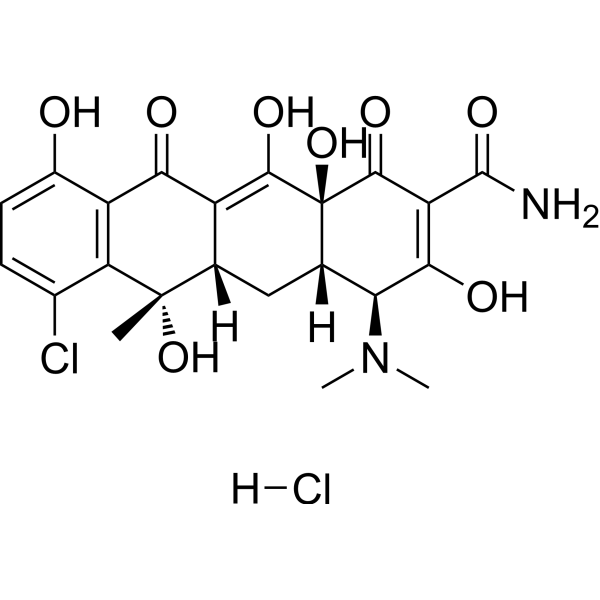
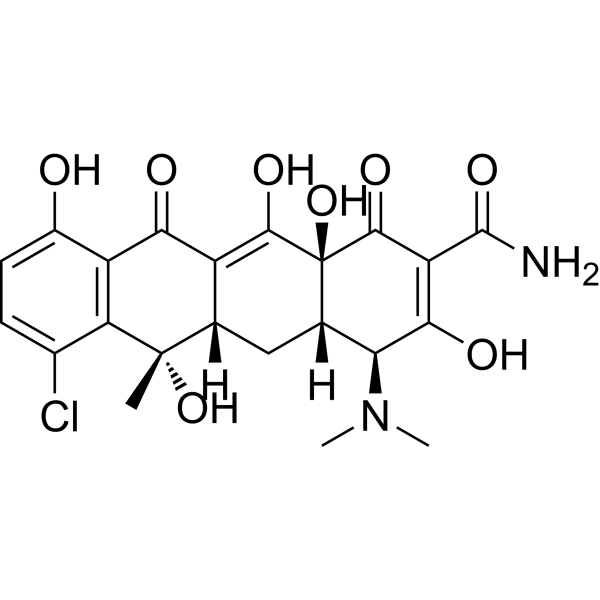
    Chlortetracycline hydrochloride (7-Chlorotetracycline hydrochloride) is an orally active, effective and selectively methanogenic bacteria inhibitor with bactericidal effects. Chlortetracycline hydrochloride is also a antibiotic that acts by inhibiting bacterial protein synthesis. Additionally, Chlortetracycline hydrochloride is a specific and potent calcium ionophore antibiotic, inhibiting binding of aminoacyl-tRNA to ribosomes .
    Chlortetracycline hydrochloride
  • HY-B1071
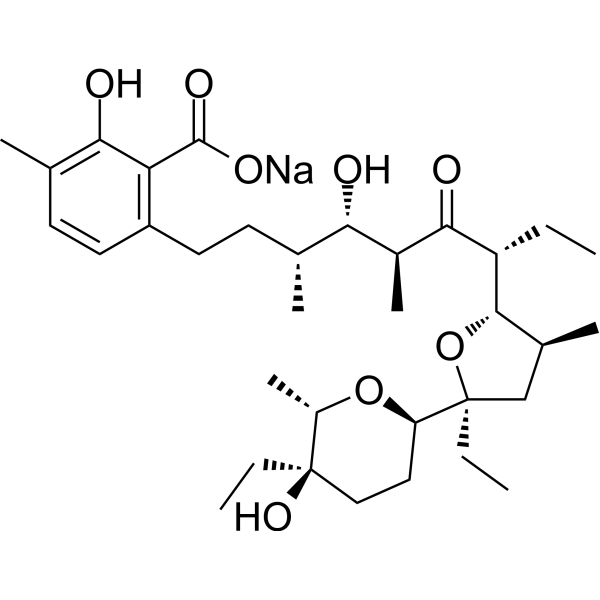
    Lasalocid
    4 Publications Verification

    Lasalocid-A; ionophore X-537A; antibiotic X-537A

    Antibiotic Bacterial Autophagy Parasite Apoptosis Infection Cancer
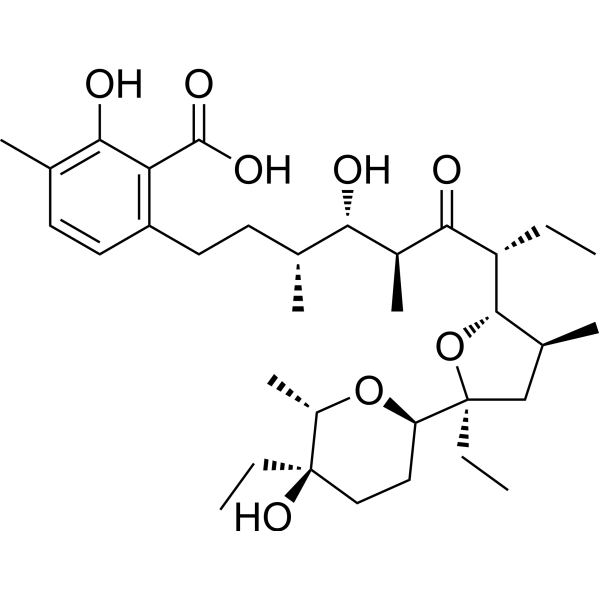
    Lasalocid (Lasalocid-A) is an antibacterial and anticoccidial agent that can be used as feed additives. Lasalocid exhibits antitumor activity. Lasalocid is orally active .
    Lasalocid
  • HY-B1071A
    Lasalocid sodium
    4 Publications Verification

    Lasalocid-A sodium; ionophore X-537A sodium; antibiotic X-537A sodium

    Antibiotic Bacterial Autophagy Parasite Apoptosis Infection Cancer
    Lasalocid sodium (Lasalocid sodium-A) is an antibacterial and anticoccidial agent that can be used as feed additives. Lasalocid sodium exhibits antitumor activity. Lasalocid sodium is orally active .
    Lasalocid sodium
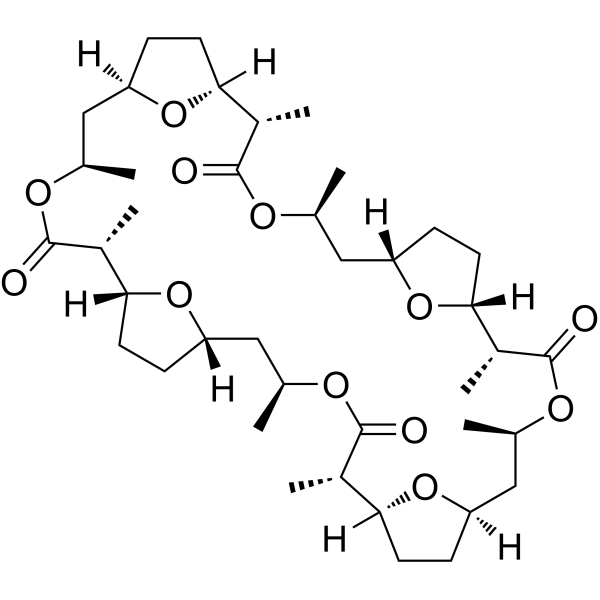
  • HY-N6790

    Ammonium ionophore I

    Oxidative Phosphorylation Potassium Channel Mitochondrial Metabolism Bacterial Influenza Virus Apoptosis Antibiotic HSP Infection Cancer
    Nonactin is a macrotetrolide antibiotic and mitochondrial uncoupler with antibacterial, insecticidal, and acaricidal activities. Nonactin acts as an ionophore for monovalent cations, including K +, and NH4 +, and it can also inhibit the surface expression of endogenous HSP60. In addition, Nonactin can induce apoptosis in β-catenin mutant tumor cells and has anti-tumor activity .
    Nonactin
  • HY-B1327A

    7-Chlorotetracycline

    Bacterial Antibiotic Parasite Infection Inflammation/Immunology
    Chlortetracycline (7-Chlorotetracycline) is an orally active, effective and selectively methanogenic bacteria inhibitor with bactericidal effects. Chlortetracycline is also a antibiotic that acts by inhibiting bacterial protein synthesis. Additionally, Chlortetracycline is a specific and potent calcium ionophore antibiotic, inhibiting binding of aminoacyl-tRNA to ribosomes .
    Chlortetracycline
  • HY-N4302
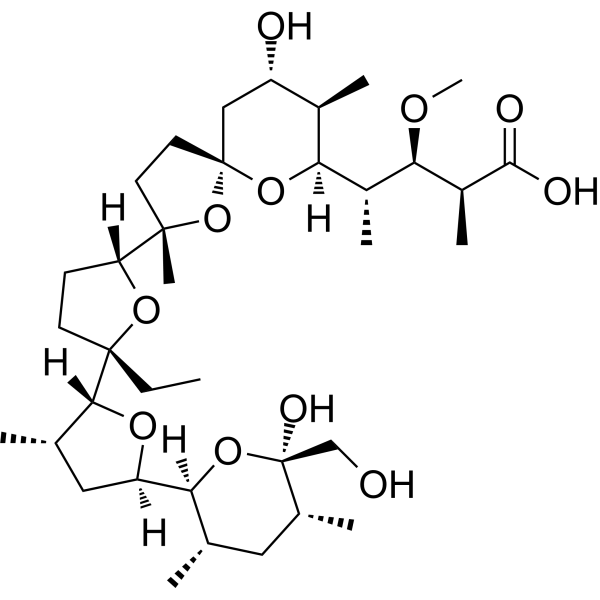
    Monensin
    35+ Cited Publications

    Monensin A

    Exosomes Bacterial Apoptosis Antibiotic Parasite Na+/H+ Exchanger (NHE) Fungal Wnt Infection Cancer
    Monensin (Monensin A), an orally active antibiotic, is an ionophore that mediates Na +/H + exchange. Monensin is a potent Wnt signaling inhibitor. Monensin causes a marked enlargement of the multivesicular bodies (MVBs) and regulates exosome secretion. Monensin can be used for bacterial, fungal, and parasitic infections research, and shows anticancer effects .
    Monensin
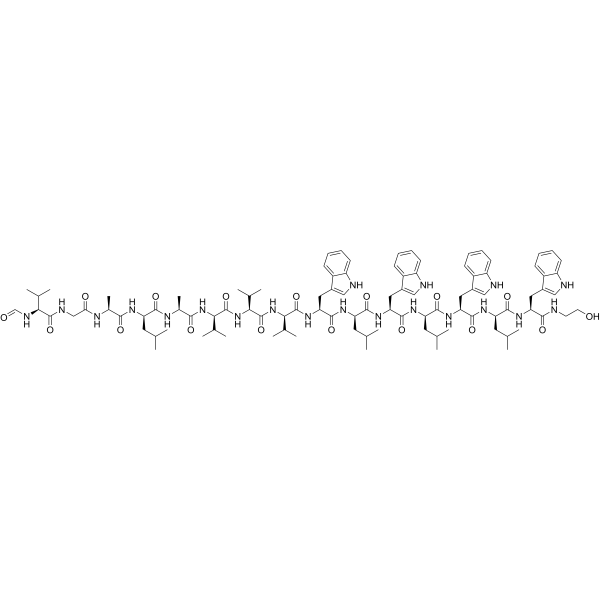
  • HY-P2324
    Gramicidin A
    1 Publications Verification

    Bacterial HIF/HIF Prolyl-Hydroxylase Antibiotic Infection Cancer
    Gramicidin A is a peptide component of gramicidin, an antibiotic mixture originally isolated from B. brevis. Gramicidin A is a highly hydrophobic channel-forming ionophore that forms channels in model membranes that are permeable to monovalent cations. Gramicidin A induces degradation of hypoxia inducible factor 1 α (HIF-1α) .
    Gramicidin A
  • HY-121410
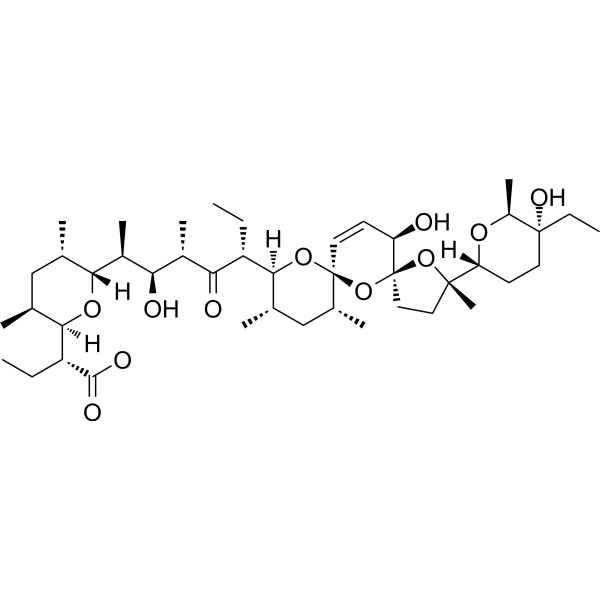
    Narasin
    2 Publications Verification

    Bacterial Apoptosis Parasite NF-κB Antibiotic Infection Cancer
    Narasin is a cationic ionophore antibiotic and coccidiostat agent. Narasin inhibits NF-κB signaling and induces tumor cells apoptosis. Narasin has antimicrobial, antiviral anticancer activity. Narasin inhibits tumor metastasis and growth of ERα‑positive breast cancer cells by inactivation of the TGF-β/SMAD3 and IL‑6/STAT3 signaling pathways .
    Narasin
  • HY-B1327S

    7-Chlorotetracycline-d6 hydrochloride

    Bacterial Antibiotic Infection
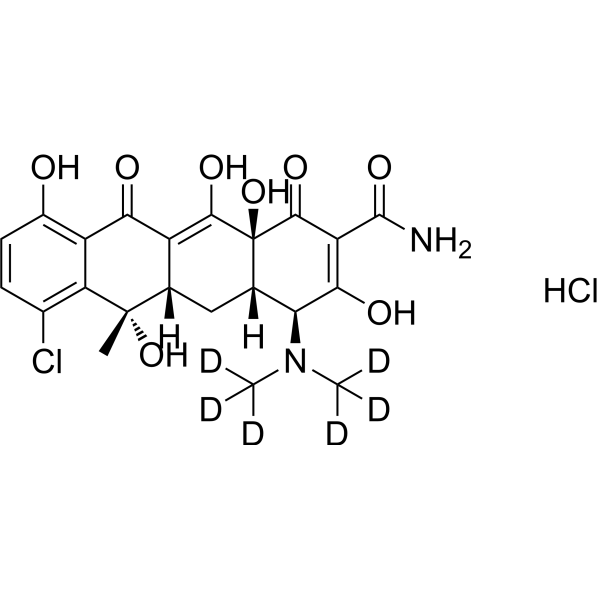
    Chlortetracycline-d6 (hydrochloride) is the deuterium labeled Chlortetracycline hydrochloride. Chlortetracycline hydrochloride (7-Chlorotetracycline hydrochloride) is a specific and potent calcium ionophore antibiotic, inhibits binding of aminoacyl-tRNA to ribosomes.
    Chlortetracycline-d6 hydrochloride
  • HY-167843

    Akt Autophagy PTEN Amyloid-β Antibiotic Bacterial Fungal Infection Neurological Disease
    Alborixin is a polycyclic polyether ionophore Antibiotic. Alborixin is isolated from cultures of Streptomyces albus. Alborixin induces Autophagy via PTEN-mediated inhibition of the AKT pathway, thereby clearing Amyloid-β. Alborixin exhibits activity against Gram-positive bacteria and fungi. Alborixin can be used in the research of Alzheimer's disease .
    Alborixin
  • HY-W653977

    7-Chlorotetracycline-13C,d3 hydrochloride

    Isotope-Labeled Compounds Antibiotic Bacterial Parasite Infection
    Chlortetracycline-13C,d3 hydrochloride (7-Chlorotetracycline-13C,d3 hydrochloride) is the 13C- and deuterium labeled Chlortetracycline hydrochloride (HY-B1327). Chlortetracycline hydrochloride is an orally active, selective antibiotic, that inhibits methanogenic bacteria through inhibition of bacterial protein synthesis. Chlortetracycline hydrochloride is a specific and potent calcium ionophore antibiotic, that inhibits binding of aminoacyl-tRNA to ribosomes .
    Chlortetracycline-13C,d3 hydrochloride
  • HY-N0150R

    Monensin A sodium (Standard)

    Reference Standards Exosomes Bacterial Antibiotic Na+/H+ Exchanger (NHE) Parasite Apoptosis Fungal Wnt Infection Cancer
    Monensin (sodium) (Standard) is the analytical standard of Monensin (sodium). This product is intended for research and analytical applications. Monensin (Monensin A) sodium, an orally active antibiotic, is an ionophore that mediates Na+/H+ exchange. Monensin sodium is a potent Wnt signaling inhibitor. Monensin sodium causes a marked enlargement of the multivesicular bodies (MVBs) and regulates exosome secretion. Monensin sodium can be used for bacterial, fungal, and parasitic infections research, and shows anticancer effects .
    Monensin sodium (Standard)
  • HY-17439R

    Salinomycin sodium (Standard); Sodium salinomycin (Standard)

    Reference Standards Wnt β-catenin Bacterial Autophagy Apoptosis Antibiotic Parasite Cancer
    Salinomycin (sodium salt) (Standard) is the analytical standard of Salinomycin (sodium salt). This product is intended for research and analytical applications. Salinomycin sodium salt (Salinomycin sodium), an antibiotic potassium ionophore, is a potent inhibitor of Wnt/β-catenin signaling. Salinomycin sodium salt (Salinomycin sodium) acts on the Wnt/Fzd/LRP complex, blocks Wnt-induced LRP6 phosphorylation, and causes degradation of the LRP6 protein. Salinomycin sodium salt (Salinomycin sodium) shows selective activity against human cancer stem cells .
    Salinomycin sodium salt (Standard)
  • HY-121333

    Antibiotic Wnt β-catenin Bacterial Infection Neurological Disease Cancer
    Dinactin, an antibiotic ionophore produced by Streptomyces species, as an effective small molecule targeting Wnt/β-catenin signaling pathway in cancer cells. Dinactin shows marked inhibition of HCT-116 cell growth with an IC50 of 1.1 μM. Dinactin shows anti-proliferative activity against the cancer cells in apoptosis-independent manner. Dinactin is also an effective agent for the research of neuropathic pain .
    Dinactin
  • HY-B1071AR

    Lasalocid-A sodium (Standard); ionophore X-537A sodium (Standard); antibiotic X-537A sodium (Standard)

    Reference Standards Bacterial Autophagy Antibiotic Parasite Apoptosis Infection Cancer
    Lasalocid (sodium) (Standard) is the analytical standard of Lasalocid (sodium). This product is intended for research and analytical applications. Lasalocid sodium (Lasalocid sodium-A) is an antibacterial and anticoccidial agent that can be used as feed additives. Lasalocid sodium exhibits antitumor activity. Lasalocid sodium is orally active.
    Lasalocid sodium (Standard)
  • HY-111525

    Oxidative Phosphorylation Bacterial Antibiotic Infection
    Monactin is a mactrotetralide antibiotic and a non-selective ionophore for monovalent cations, including potassium, sodium, and lithium. Monactin is isolated from Streptomyces and has antiproliferative activity .
    Monactin
  • HY-13434AR

    SQ23377 calcium (Standard)

    Reference Standards Calcium Channel PKC Bacterial Apoptosis Antibiotic Infection Cancer
    2-(1-Piperazinyl)pyrimidine (Standard) is the analytical standard of 2-(1-Piperazinyl)pyrimidine. This product is intended for research and analytical applications. 2-(1-Piperazinyl)pyrimidine is the major metabolite of Tandospirone (HY-14558) .
    Ionomycin calcium (Standard)
  • HY-N6687B

    A-23187 hemimagnesium; antibiotic A-23187 hemimagnesium

    Oxidative Phosphorylation Antibiotic Bacterial Fungal Apoptosis Autophagy Infection Cancer
    Calcimycin (A-23187) hemimagnesium is an antibiotic and a unique divalent cation ionophore (like calcium and magnesium). Calcimycin hemimagnesium induces Ca 2+-dependent cell death by increasing intracellular calcium concentration. Calcimycin hemimagnesium inhibits the growth of Gram-positive bacteria and some fungi. Calcimycin hemimagnesium also inhibits the activity of ATPase and uncouples oxidative phosphorylation (OXPHOS) of mammalian cells. Calcimycin hemimagnesium induces apoptosis and autophagy .
    Calcimycin hemimagnesium
  • HY-15597R

    Procoxacin (Standard)

    Reference Standards Bacterial Wnt β-catenin Mitophagy Autophagy Apoptosis Antibiotic Parasite Cancer
    Salinomycin (Standard) is the analytical standard of Salinomycin. This product is intended for research and analytical applications. Salinomycin (Procoxacin), a polyether potassium ionophore antibiotic, selectively inhibits the growth of gram-positive bacteria. Salinomycin is a potent inhibitor of Wnt/β-catenin signaling, blocks Wnt-induced LRP6 phosphorylation. Salinomycin shows selective activity against human cancer stem cells[1][2][3].
    Salinomycin (Standard)
  • HY-B1071R

    Lasalocid-A (Standard); ionophore X-537A (Standard); antibiotic X-537A (Standard)

    Reference Standards Bacterial Autophagy Antibiotic Parasite Apoptosis Infection Cancer
    Lasalocid (Standard) is the analytical standard of Lasalocid. This product is intended for research and analytical applications. Lasalocid (Lasalocid-A) is an antibacterial and anticoccidial agent that can be used as feed additives. Lasalocid exhibits antitumor activity. Lasalocid is orally active.
    Lasalocid (Standard)
  • HY-129623R

    Reference Standards Endogenous Metabolite Metabolic Disease
    Nigericin (sodium salt) (Standard) is the analytical standard of Nigericin (sodium salt). This product is intended for research and analytical applications. Nigericin sodium salt is an antibiotic from Streptomyces hygroscopicus that works by acting as an H+, K+, and Pb2+ ionophore, a NLRP3 activator .
    Ethyl nonanoate (Standard)
  • HY-P2324A

    Antibiotic Bacterial Infection
    Gramicidin A (TFA) is a peptide component of gramicidin, an antibiotic mixture originally isolated from B. brevis. Gramicidin A (TFA) is a highly hydrophobic channel-forming ionophore that forms channels in model membranes that are permeable to monovalent cations. Gramicidin A (TFA) induces degradation of hypoxia inducible factor 1 α (HIF-1α) .
    Gramicidin A TFA
  • HY-N6687R

    A-23187 (Standard); antibiotic A-23187 (Standard)

    Oxidative Phosphorylation Reference Standards Bacterial Fungal Apoptosis Autophagy Antibiotic Infection Cancer
    Calcimycin (Standard) is the analytical standard of Calcimycin. This product is used for research and analytical applications. Calcimycin is an antibiotic and a unique divalent cation ionophore, such as calcium ions and magnesium ions. Calcimycin induces Ca 2+ -dependent cell death by increasing the intracellular calcium concentration. Calcimycin inhibits the growth of Gram-positive bacteria and some fungi, and also inhibits the activity of ATPase and uncouples the oxidative phosphorylation (OXPHOS) of mammalian cells, inducing apoptosis and autophagy.
    Calcimycin (Standard)
  • HY-N6687A

    A-23187 hemicalcium salt; antibiotic A-23187 hemicalcium salt

    Oxidative Phosphorylation Bacterial Fungal Apoptosis Autophagy Antibiotic Infection Cancer
    Calcimycin (A-23187) hemicalcium salt is an antibiotic and a unique divalent cation ionophore (like calcium and magnesium). Calcimycin hemicalcium salt induces Ca 2+-dependent cell death by increasing intracellular calcium concentration. Calcimycin hemicalcium salt inhibits the growth of Gram-positive bacteria and some fungi. Calcimycin hemicalcium salt also inhibits the activity of ATPase and uncouples oxidative phosphorylation (OXPHOS) of mammalian cells. Calcimycin hemicalcium salt induces apoptosis and autophagy .
    Calcimycin hemicalcium salt
  • HY-100381R

    Reference Standards Potassium Channel NOD-like Receptor (NLR) Bacterial Antibiotic Pyroptosis Wnt β-catenin Infection Cancer
    Nigericin (sodium salt) (Standard) is the analytical standard of Nigericin (sodium salt). This product is intended for research and analytical applications. Nigericin sodium salt is an antibiotic derived from Streptomyces hygroscopicus that act as a K +/H + ionophore, promoting K +/H + exchange across mitochondrial membranes. Nigericin sodium salt is a NLRP3 activator. Nigericin sodium salt shows promising anti-cancer activities through decreasing intracellular pH (pHi), and inactivation of Wnt/β-catenin signals. Nigericin sodium salt induces pyroptosis through caspase 1/GSDMD in TNBC .
    Nigericin sodium salt (Standard)
  • HY-N6687C

    A-23187 hemicalcium hemimagnesium; antibiotic A-23187 hemicalcium hemimagnesium

    Oxidative Phosphorylation Bacterial Fungal Apoptosis Autophagy Antibiotic Infection Cancer
    Calcimycin (A-23187) hemicalcium hemimagnesium is an antibiotic and a unique divalent cation ionophore (like calcium and magnesium). Calcimycin hemicalcium hemimagnesium induces Ca 2+-dependent cell death by increasing intracellular calcium concentration. Calcimycin hemicalcium hemimagnesium inhibits the growth of Gram-positive bacteria and some fungi. Calcimycin hemicalcium hemimagnesium also inhibits the activity of ATPase and uncouples oxidative phosphorylation (OXPHOS) of mammalian cells. Calcimycin hemicalcium hemimagnesium induces apoptosis and autophagy .
    Calcimycin hemicalcium hemimagnesium

Online-Anfrage

Your information is safe with us. * Required Fields.

Anrede


Country or Region *

Name des Antragstellers *


Name der Organisation *

Department *


E-Mail-Addresse *


Produktname *

Art. -Nr.


Requested quantity *

Telefonnummer *


Bemerkungen

Online-Anfrage

Inquiry Information

Produktname:
Art. -Nr.:
Menge:
MCE Japan Authorized Agent:

