1. Search Result
Search Result
Results for "

aphid

" in MedChemExpress (MCE) Product Catalog:

28

Inhibitors & Agonists

1

Peptides

4

Natural
Products

2

Isotope-Labeled Compounds

Cat. No. Product Name Target Research Areas Chemical Structure
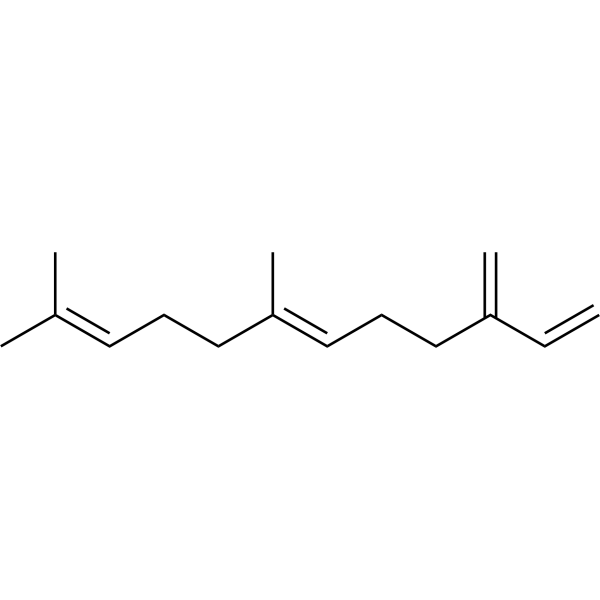
  • HY-N7364

    trans-β-Farnesene

    Environmental Pollutants Fungal CDK Infection Cancer
    (E)-β-Farnesene (trans-β-Farnesene) is an aphid alarm pheromone, which can be found in Phlomis aurea Decne essential oil. (E)-β-Farnesene shows good binding score with a value of -30.64 kcal/mol to the CDK2 receptor. (E)-β-Farnesene also exhibits good affinity to odorant-binding protein 3 (OBP3). (E)-β-Farnesene can be used as a feeding stimulant for the sand fly Lutzomyia longipalpis .
    (E)-β-Farnesene
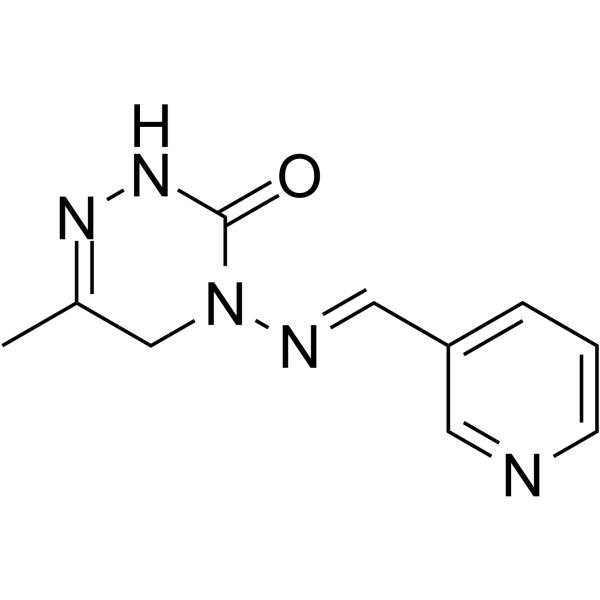
  • HY-B0821
    Pymetrozine
    1 Publications Verification

    CGA 215944

    Environmental Pollutants Bacterial Infection
    Pymetrozine is a feeding inhibitor of Homoptera, in preventing transmission of cauliflower mosaic caulimovirus by the aphid species Myzus persicae (Sulzer).
    Pymetrozine
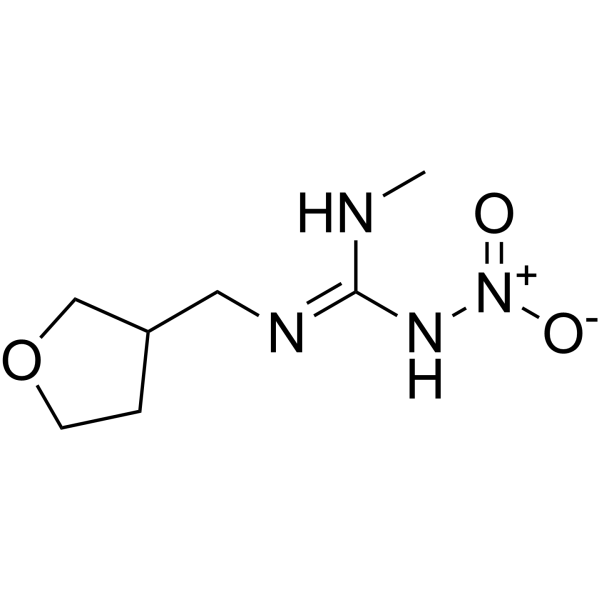
  • HY-B0827
    Dinotefuran
    4 Publications Verification

    MTI-446

    Environmental Pollutants Parasite nAChR Infection Cardiovascular Disease
    Dinotefuran is an orally active and competitive inhibitor and insecticide targeting insect nicotinic acetylcholine receptors (nAChRs). Dinotefuran blocks neural signaling and induces neural dysfunction in insects. Dinotefuran binds to [ 3H]epibatidine in the neural cord membrane of American cockroach with an IC50 of 890 nM and to [ 3H]α-bungarotoxin with an IC50 of 36.1 μM. Dinotefuran exhibits knockdown activity (KD50=0.351 nmol/g) and lethal activity (LD50=0.173 nmol/g) against German cockroach. Dinotefuran is mainly used for agricultural pest control, such as field control of piercing-sucking and chewing insects (e.g., aphids, planthoppers), while its environmental toxicological effects (e.g., oxidative stress and reproductive neurotoxicity on earthworms) are also a research focus to assess ecological risks .
    Dinotefuran
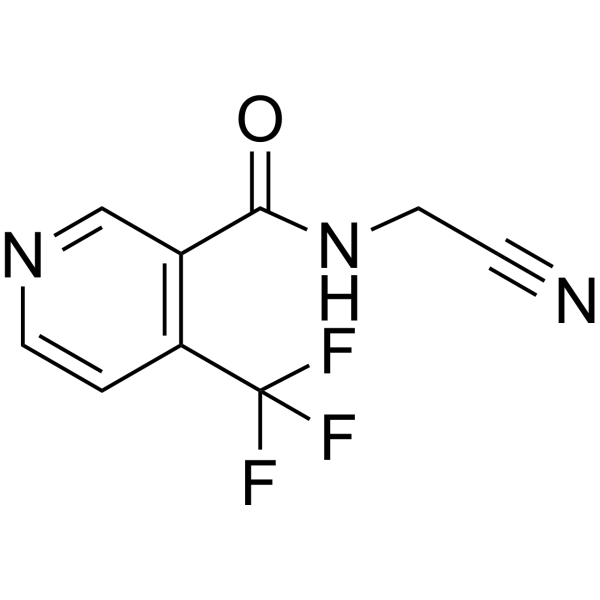
  • HY-119649

    IKI220

    Environmental Pollutants Parasite Infection
    Flonicamid (IKI220) is a novel systemic insecticide with selective activity against hemipterous pests. The main insecticidal mechanism of flonicamid is starvation based on the inhibition of stylet penetration to plant tissues .
    Flonicamid
  • HY-124449

    ME-5343

    TRP Channel Others
    Afidopyropen (ME-5343) is an Afidopyropen targets sucking insects such as whiteflies, aphids, and leafhoppers by acting on the Nanchung (Nan) and Inactive (Iav) encoding gene of insects, and affecting TRPV channel. Afidopyropen can be used for many crops for its degradability .
    Afidopyropen
  • HY-B0821R

    CGA 215944 (Standard)

    Reference Standards Bacterial Infection
    Pymetrozine (Standard) is the analytical standard of Pymetrozine. This product is intended for research and analytical applications. Pymetrozine is a feeding inhibitor of Homoptera, in preventing transmission of cauliflower mosaic caulimovirus by the aphid species Myzus persicae (Sulzer).
    Pymetrozine (Standard)
  • HY-P3100

    Parasite Infection
    Orfamide A is a major metabolite of insecticidal biosurfactant in Pseudomonas sp. F6 and has aphidicidal activity. Orfamide A can be used for aphid control in organic agriculture. Orfamide A exhibits dose-dependent mortality against aphids with an LC50 value of 34.5 μg/mL .
    Orfamide A
  • HY-120253

    BY-108330

    Environmental Pollutants Insecticide SOD Glutathione Peroxidase Carboxylesterase (CES) Infection Metabolic Disease
    Spirotetramat (BY-108330) is an orally active Insecticide and lipid biosynthesis inhibitor. Spirotetramat regulates the activities of superoxide dismutase (SOD) and glutathione peroxidase (GSH-Px), with short-term exposure increasing their activities and long-term exposure altering their activities. Spirotetramat induces the activity and mRNA expression of carboxylesterase (CarE). Spirotetramat induces oxidative stress and lipid peroxidation in tadpoles. Spirotetramat is toxic to amphibian tadpoles and exhibits sublethal/non-lethal toxicity to amphibians. Spirotetramat causes death in immature psyllids, aphids, scale insects, mealybugs, whiteflies and thrips, and shows a high lethal rate against Cacopsylla pyri nymphs. Spirotetramat reduces the fecundity of Aphis gossypii. Spirotetramat induces tolerance in the offspring of exposed Aphis gossypii, and acts on Myzus persicae, Bemisia tabaci and Tetranychus urticae .
    Spirotetramat
  • HY-B0828

    Parasite Cholinesterase (ChE) Others
    Triazophos, a non-systemic insecticide and acaricide that acts as an acetylcholinesterase (AChE) inhibitor, covalently and irreversibly binds to the acetylcholine binding site, thus blocking the hydrolysis of acetylcholine and leading to hyperexcitability; it is effective against a variety of soil insects and mites, including aphids, thrips, midges, beetles, Lepidoptera larvae, cutworms, and spider mites in crops such as ornamentals, cotton, rice, maize, soybeans, oil palms, olives, and coffee.
    Triazophos
  • HY-120253R

    BY-108330 (Standard)

    Insecticide Reference Standards Others
    Spirotetramat (Standard) is the analytical standard of Spirotetramat. This product is intended for research and analytical applications. Spirotetramat (BY-108330) is a pesticide, that can be used to control aphids on crops, without significant phytotoxicity .
    Spirotetramat (Standard)
  • HY-124901

    Parasite Infection
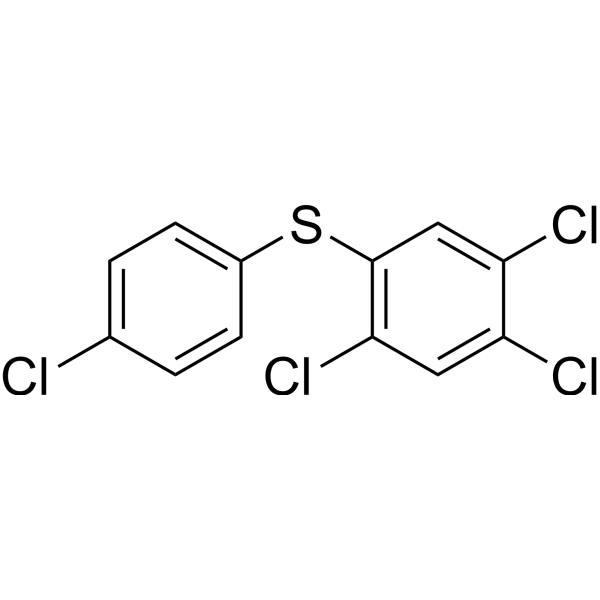
    Tetrasul is an acaricide. Tetrasul inhibits Tetranychus urticae and aphids on hops. Tetrasul has also been used in research of erythematous (type one) rosacea .
    Tetrasul
  • HY-136560

    Drug Metabolite Others
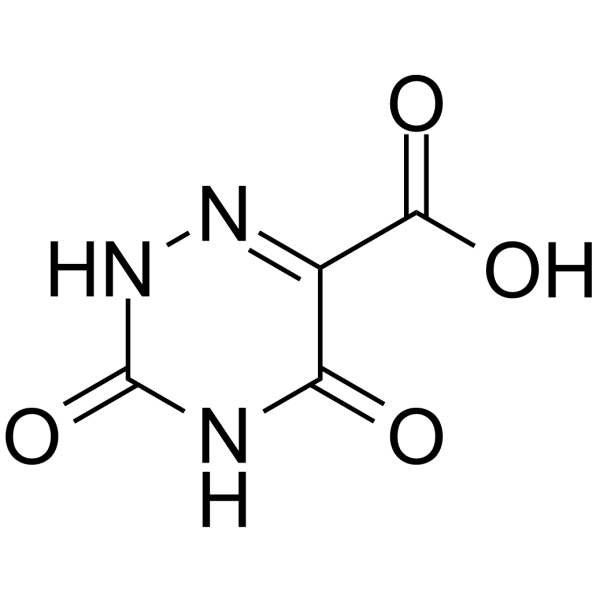
    6-Azathymine acid is a metabolite of Pymetrozine. Pymetrozine is active against plant-sucking insects, such as aphids and whiteflies in vegetables, cotton, field crops and fruits and affects the nervous regulation of feeding behavior .
    6-Azathymine acid
  • HY-124901R

    Reference Standards Parasite Infection
    Tetrasul (Standard) is the analytical standard of Tetrasul. This product is intended for research and analytical applications. Tetrasul is an acaricide. Tetrasul inhibits Tetranychus urticae and aphids on hops. Tetrasul has also been used in research of erythematous (type one) rosacea .
    Tetrasul (Standard)
  • HY-170513

    Insecticide Infection Cancer
    3'-Ethoxy-5,6-dihydrospinosyn J 17-pseudoaglycone is a Spinosyn derivative with potent insecticidal activity. 3'-Ethoxy-5,6-dihydrospinosyn J 17-pseudoaglycone (500mg/L) achieves a 100% mortality rate against Mythimna separata, aphids, and red spiders .
    3'-Ethoxy-5,6-dihydrospinosyn J 17-pseudoaglycone
  • HY-170768

    Parasite Others
    Alkaline tryptase-IN-1 (compound H-13) is an insecticide that targets alkaline tryptase. The LC50 of Alkaline tryptase-IN-1 inhibits Aphid graminearum, Schizaphis graminearum, Aphid natans, Aphid oleraceus, Aphid fusca, Aphid mariana, and Myzus persicae with concentrations of 8.72, 13.77, 14.17, 12.96, and 12.35 μg/mL, respectively .
    Alkaline tryptase-IN-1
  • HY-119649R

    IKI220 (Standard)

    Parasite Reference Standards Infection
    Flonicamid (Standard) is the analytical standard of Flonicamid. This product is intended for research and analytical applications. Flonicamid (IKI220) is a novel systemic insecticide with selective activity against hemipterous pests. The main insecticidal mechanism of flonicamid is starvation based on the inhibition of stylet penetration to plant tissues .
    Flonicamid (Standard)
  • HY-105581

    Oxinothiofos

    Cholinesterase (ChE) Others
    Quintiofos (Oxinothiofos) is an insecticide. Quintiofos inhibits the activity of acetylcholinesterase in insects, causing nerve conduction disorders, thereby achieving an insecticidal effect. Quintiofos can be used to control a variety of pests, such as aphids, whiteflies, and stem borers .
    Quintiofos
  • HY-100196AR

    PQQ disodium salt (Standard); Methoxatin disodium salt (Standard)

    Reference Standards Endogenous Metabolite Inflammation/Immunology
    Triazophos (Standard) is the analytical standard of Triazophos. This product is intended for research and analytical applications. Triazophos, a non-systemic insecticide and acaricide that acts as an acetylcholinesterase (AChE) inhibitor, covalently and irreversibly binds to the acetylcholine binding site, thus blocking the hydrolysis of acetylcholine and leading to hyperexcitability; it is effective against a variety of soil insects and mites, including aphids, thrips, midges, beetles, Lepidoptera larvae, cutworms, and spider mites in crops such as ornamentals, cotton, rice, maize, soybeans, oil palms, olives, and coffee.
    Pyrroloquinoline quinone disodium salt (Standard)
  • HY-B0828R

    Parasite Reference Standards Others
    Triazophos (Standard) is the analytical standard of Triazophos. This product is intended for research and analytical applications. Triazophos, a non-systemic insecticide and acaricide that acts as an acetylcholinesterase (AChE) inhibitor, covalently and irreversibly binds to the acetylcholine binding site, thus blocking the hydrolysis of acetylcholine and leading to hyperexcitability; it is effective against a variety of soil insects and mites, including aphids, thrips, midges, beetles, Lepidoptera larvae, cutworms, and spider mites in crops such as ornamentals, cotton, rice, maize, soybeans, oil palms, olives, and coffee.
    Triazophos (Standard)
  • HY-B2041

    Insecticide Infection
    Benfuracarb is a broad-spectrum carbamate insecticide with crop protection activity. Benfuracarb is used to control springtails, aphids, and other pests, typically on sugar beet crops. Benfuracarb exhibits toxicity to humans and aquatic organisms. Benfuracarb exposure to zebrafish embryos resulted in a reduction in the body length of zebrafish larvae. Superoxide dismutase (SOD) activity was significantly increased after Benfuracarb treatment. Benfuracarb also interfered with the transcriptional levels of marker genes associated with early embryonic development .
    Benfuracarb
  • HY-W099331R

    MEGX hydrochloride (Standard); Norlidocaine hydrochloride (Standard)

    Reference Standards Drug Metabolite Metabolic Disease Inflammation/Immunology
    Benfuracarb (Standard) is the analytical standard of Benfuracarb. This product is intended for research and analytical applications. Benfuracarb is a broad-spectrum carbamate insecticide with crop protection activity. Benfuracarb is used to control springtails, aphids, and other pests, typically on sugar beet crops. Benfuracarb exhibits toxicity to humans and aquatic organisms. Benfuracarb exposure to zebrafish embryos resulted in a reduction in the body length of zebrafish larvae. Superoxide dismutase (SOD) activity was significantly increased after Benfuracarb treatment. Benfuracarb also interfered with the transcriptional levels of marker genes associated with early embryonic development .
    Monoethylglycinexylidide hydrochloride (Standard)
  • HY-B2041R

    Parasite Reference Standards Infection
    Benfuracarb (Standard) is the analytical standard of Benfuracarb. This product is intended for research and analytical applications. Benfuracarb is a broad-spectrum carbamate insecticide with crop protection activity. Benfuracarb is used to control springtails, aphids, and other pests, typically on sugar beet crops. Benfuracarb exhibits toxicity to humans and aquatic organisms. Benfuracarb exposure to zebrafish embryos resulted in a reduction in the body length of zebrafish larvae. Superoxide dismutase (SOD) activity was significantly increased after Benfuracarb treatment. Benfuracarb also interfered with the transcriptional levels of marker genes associated with early embryonic development .
    Benfuracarb (Standard)
  • HY-N7364S

    trans-β-Farnesene-d6

    Fungal Isotope-Labeled Compounds Cancer
    (E)-β-Farnesene-d6 is deuterated labeled (E)-β-Farnesene (HY-N7364). (E)-β-Farnesene (trans-β-Farnesene) is an aphid alarm pheromone, which can be found in Phlomis aurea Decne essential oil. (E)-β-Farnesene shows good binding score with a value of -30.64 kcal/mol to the CDK2 receptor. (E)-β-Farnesene also exhibits good affinity to odorant-binding protein 3 (OBP3). (E)-β-Farnesene can be used as a feeding stimulant for the sand fly Lutzomyia longipalpis .
    (E)-β-Farnesene-d6
  • HY-181706

    Insecticide Infection
    Insecticidal agent 29 is a pyrethroid incorporating a pyridine heterocycle and insecticide. Insecticidal agent 29 exhibits insecticidal activity against Culex pipiens Pallens larvae, Aphis laburni Kaltenbach, and aphids. Insecticidal agent 29 shows inactivity against Tetranychus cinnabarinus Boisduval .
    Insecticidal agent 29
  • HY-N18873

    Insecticide Infection
    Inulasalsolin is a insecticide with antifeedant activity, which is isolated from the plant Inula salsoloides. Inulasalsolin reduces the feeding behavior of third-instar Plutella xylostella larvae. Inulasalsolin induces the death of third-instar Plutella xylostella larvae and vegetable aphids. Inulasalsolin is applicable to pest control research .
    Inulasalsolin
  • HY-B0828S

    Hostathion 40EC-d5; Hostathion-d5; Hostation-d5

    Isotope-Labeled Compounds Parasite Cholinesterase (ChE) Others
    Triazophos-d5 (Hostathion 40EC-d5) is the deuterium labeled Triazophos(HY-B0828) . Triazophos, a non-systemic insecticide and acaricide that acts as an acetylcholinesterase (AChE) inhibitor, covalently and irreversibly binds to the acetylcholine binding site, thus blocking the hydrolysis of acetylcholine and leading to hyperexcitability; it is effective against a variety of soil insects and mites, including aphids, thrips, midges, beetles, Lepidoptera larvae, cutworms, and spider mites in crops such as ornamentals, cotton, rice, maize, soybeans, oil palms, olives, and coffee.
    Triazophos-d5
  • HY-W587734

    Insecticide Acetyl-CoA Carboxylase Infection
    Spirotetramat-enol, Spirotetramat (HY-120253) metabolite, is an insecticide. Spirotetramat-enol shows inhibitory activity against acetyl-CoA carboxylase. Spirotetramat-enol exerts insecticidal activity against Aphis craccivora Koch .
    Spirotetramat-enol
  • HY-N18035

    Insecticide Infection
    Spinosyn K is an insecticide found in the actinomycete Saccharopolyspora spinosa. Spinosyn K shows strong insecticidal activity .
    Spinosyn K

Inquiry Online

Your information is safe with us. * Required Fields.

Salutation


Country or Region *

Applicant Name *


Organization Name *

Department *


Email Address *


Product Name *

Cat. No.


Requested quantity *

Phone Number *


Remarks

Inquiry Online

Inquiry Information

Product Name:
Cat. No.:
Quantity:
MCE Japan Authorized Agent:

