18 Results for "

autoinducer

" in MedChemExpress (MCE) Product Catalog:
Products (18)

18 Results for "autoinducer" in MCE Product Catalog:

Art. -Nr.: HY-124237A
CAS. Nr.: 147852-84-4
Reinheit:  99.58%
Synonyms: C8-HSL
Target:  

Bacterial

Forschungsgebiete:  

Infection Inflammation/Immunology

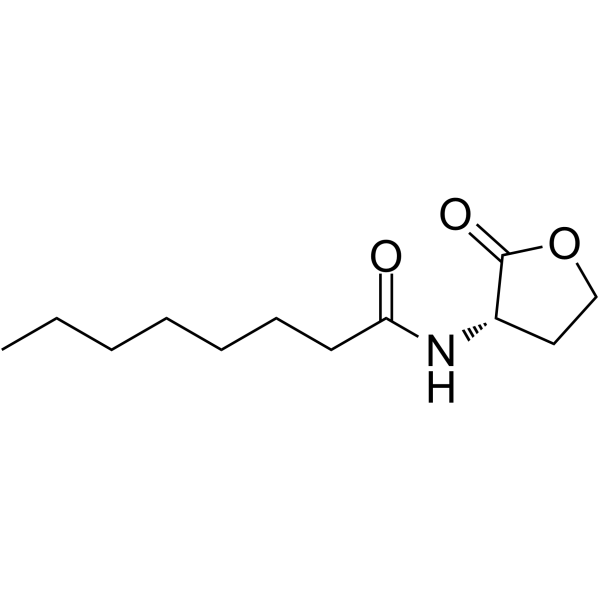
N-Octanoyl-L-homoserine lactone (C8-HSL) is an autoinducer. It mainly serves as a key inter- and intra-species communication medium or "signal molecule" in Gram-negative bacteria. N-Octanoyl-L-homoserine lactone microparticles exhibit adjuvant potential when used in combination with various particulate vaccines .
loading...
    loading...
Art. -Nr.: HY-145376
CAS. Nr.: 1004296-82-5
Reinheit:  99.32%
Synonyms: CAI-1
Target:  

Bacterial

Forschungsgebiete:  

Others

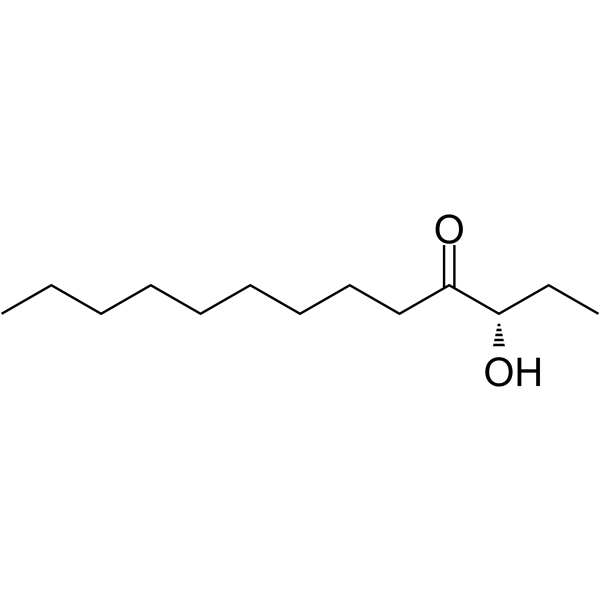
Cholera autoinducer 1 is Vibrio cholerae autoinducer (S)-3-hydroxytridecan-4-one. Cholera autoinducer 1 influences chemotaxis in C. elegans .
loading...
    loading...
Art. -Nr.: HY-108700
CAS. Nr.: 147795-39-9
Reinheit:  98.05%
Target:  

SOD

Forschungsgebiete:  

Infection

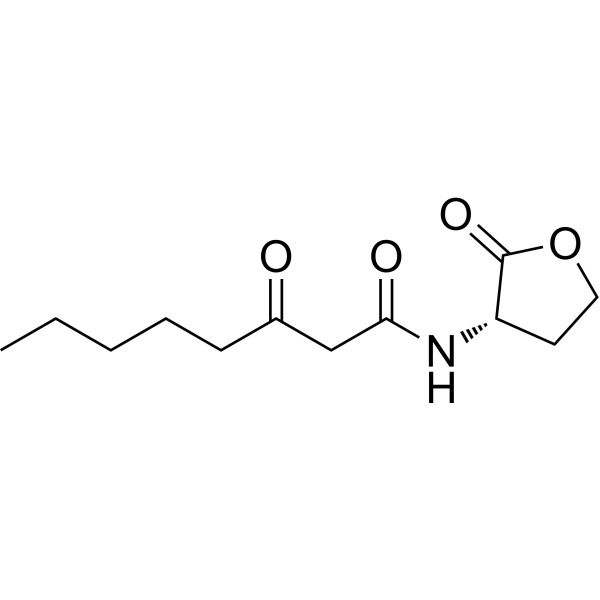
N-3-Oxo-octanoyl-L-homoserine lactone, a quorum-sensing signal, is an Agrobacterium autoinducer .
loading...
    loading...
Art. -Nr.: HY-129405
CAS. Nr.: 76924-95-3
Reinheit:  99.63%
Target:  

Bacterial

Forschungsgebiete:  

Infection

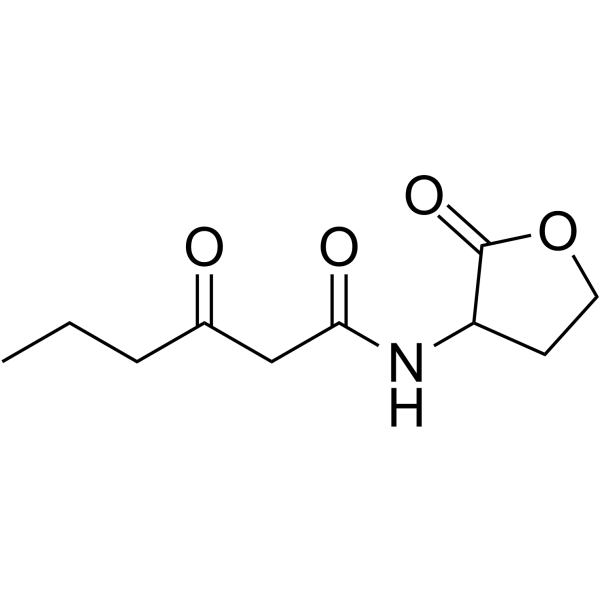
N-(Ketocaproyl)-DL-homoserine lactone is a natural, very active ligand of LuxR. N-(Ketocaproyl)-DL-homoserine lactone is a quorum sensing (QS) autoinducer .
loading...
    loading...
Art. -Nr.: HY-W685561
CAS. Nr.: 216596-70-2
Synonyms: N-(3-Oxooctanoyl)-l-homoserine lactone
Forschungsgebiete:  

Infection

3-Oxo-C8-HSL (N-(3-Oxooctanoyl)-l-homoserine lactone) is an autoinducer pheromone. 3-Oxo-C8-HSL is a TraR-regulated promoter. 3-Oxo-C8-HSL significantly stimulates tra gene expression .
loading...
    loading...
Art. -Nr.: HY-W004812
CAS. Nr.: 161660-94-2
Synonyms: (1S,3S)-3-[(tert-Butoxycarbonyl)amino]cyclopentanecarboxylic acid
Forschungsgebiete:  

Infection

BOC-(1R,3S)-3-aminocyclopentane carboxylic acid ((1S,3S)-3-[(tert-Butoxycarbonyl)amino]cyclopentanecarboxylic acid) is a conformationally constrained peptide building block and a key component of SARS-CoV-2 main protease (Mpro) inhibitors. When incorporated into macrocyclic peptides, BOC-(1R,3S)-3-aminocyclopentane carboxylic acid not only helps generate high-affinity Mpro inhibitors by preorganizing the secondary structure of peptides, but also exerts sequence-dependent functional inhibition on the hydrolytic activity of Mpro. BOC-(1R,3S)-3-aminocyclopentane carboxylic is widely used in COVID-19-related research .
loading...
    loading...
Art. -Nr.: HY-141641
CAS. Nr.: 148433-21-0
Synonyms: HSL
Target:  

Bacterial

Forschungsgebiete:  

Infection

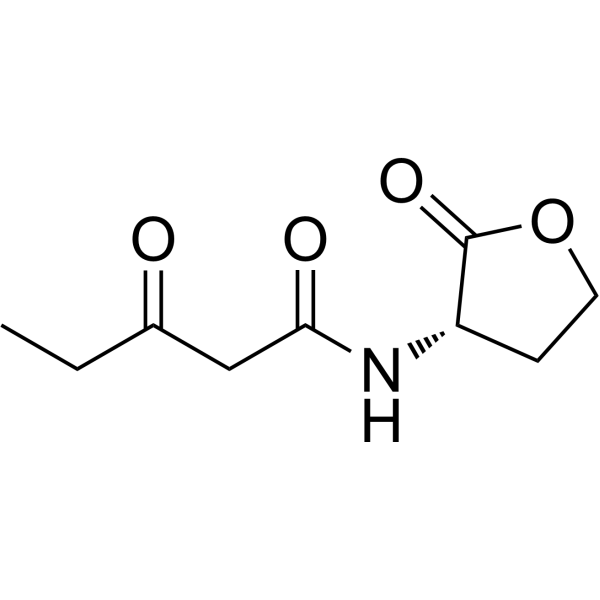
N-(3-Oxopentanoyl)-L-homoserine lactone is an autoinducer, a kind of chemical signal molecule which passively diffuses across the bacterial envelope and accumulates intracellularly at high bacterial densities. It may bind to a protein related to the LuxR protein of V. fischeri and causes cell density-dependent gene expression. N-(3-Oxopentanoyl)-L-homoserine can be used for research of quorum sensing .
loading...
    loading...
Art. -Nr.: HY-124237AR
CAS. Nr.: 147852-84-4
Synonyms: C8-HSL (Standard)
Forschungsgebiete:  

Infection Inflammation/Immunology

N-Octanoyl-L-homoserine lactone (Standard) (C8-HSL (Standard)) is the analytical standard of N-Octanoyl-L-homoserine lactone (HY-124237A). This product is intended for research and analytical applications. N-Octanoyl-L-homoserine lactone (C8-HSL) is an autoinducer. It mainly serves as a key inter- and intra-species communication medium or "signal molecule" in Gram-negative bacteria. N-Octanoyl-L-homoserine lactone microparticles exhibit adjuvant potential when used in combination with various particulate vaccines .
loading...
    loading...
Art. -Nr.: HY-W127393
CAS. Nr.: 177158-21-3
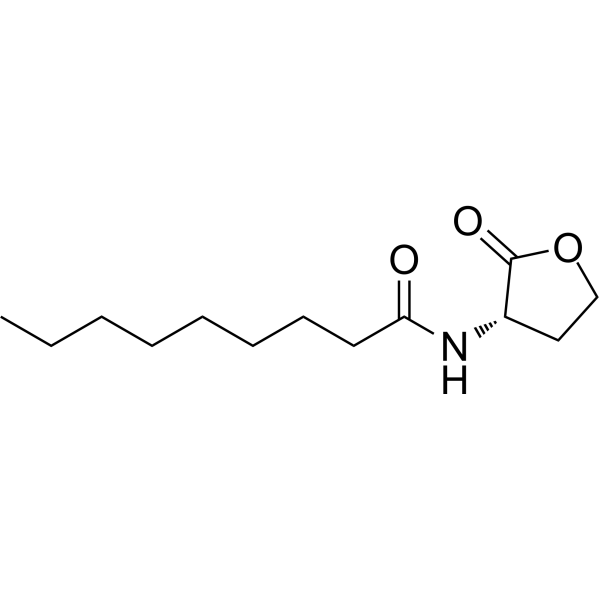
Quorum sensing is a regulatory system used by bacteria to control gene expression in response to increased cell density. This regulatory process manifests itself in a variety of phenotypes, including biofilm formation and virulence factor production. Coordinated gene expression is achieved through the production, release and detection of small diffusible signaling molecules called autoinducers. N-acylated homoserine lactones (AHLs) comprise a class of such autoinducers, each of which generally consists of a fatty acid coupled to a homoserine lactone (HSL). Modulation of bacterial quorum-sensing signaling systems to suppress pathogenesis represents a new approach to antimicrobial research for infectious diseases. AHLs differ in acyl length (C4-C18), C3 substitution (hydrogen, hydroxyl, or oxo group), and the presence or absence of one or more carbon-carbon double bonds in the fatty acid chain. These differences confer signaling specificity through the affinity of the LuxR family of transcriptional regulators. C9-HSL is a rare odd-numbered acyl carbon chain produced by wild-type Erwinia carotovora strain SCC 3193 grown in nutrient-rich Luria-Bertani broth (LB) medium.
loading...
    loading...
Art. -Nr.: HY-114505
CAS. Nr.: 1046789-93-8
Target:  

Bacterial

Forschungsgebiete:  

Infection

3-Hydroxypentadecane-4-one (LAI-1; Legionella autoinducer-1) is a quorum sensing signaling molecule by Legionella pneumophila. 3-Hydroxypentadecane-4-one is an autoinducer, which affects the intercellular communication between bacteria through sensor kinases, LqsS, LqsT and LqsR .
loading...
    loading...
Art. -Nr.: HY-129405R
CAS. Nr.: 76924-95-3
Forschungsgebiete:  

Infection

N-(Ketocaproyl)-DL-homoserine lactone (Standard) is the analytical standard of N-(Ketocaproyl)-DL-homoserine lactone. This product is intended for research and analytical applications. N-(Ketocaproyl)-DL-homoserine lactone is a natural, very active ligand of LuxR. N-(Ketocaproyl)-DL-homoserine lactone is a quorum sensing (QS) autoinducer .
loading...
    loading...
Art. -Nr.: HY-145462
CAS. Nr.: 1400974-23-3
Target:  

Bacterial

Forschungsgebiete:  

Infection

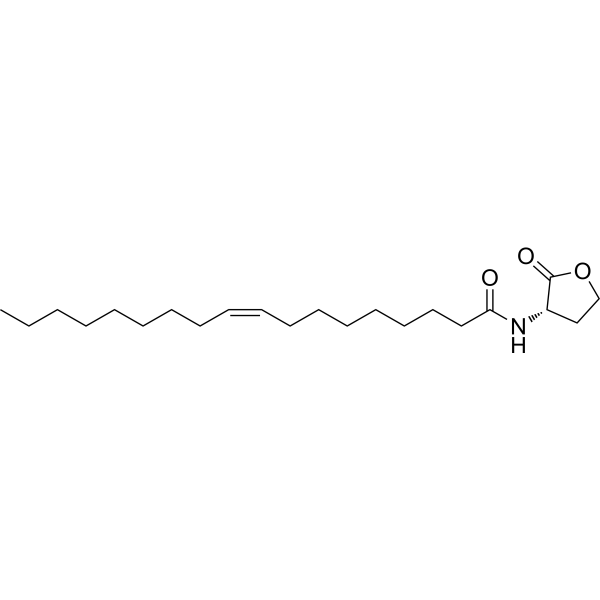
N-cis-octadec-9Z-enoyl-L-Homoserine lactone is a potent inhibitor of AhyI. AhyI (expressing acylhomoserine lactone) is responsible for the biosynthesis of autoinducer-1 (AI-1), commonly referred to as a quorum sensing (QS) signaling molecule, which plays an essential role in bacterial communication. N-cis-octadec-9Z-enoyl-L-Homoserine lactone is a competitive inhibitor of AI-1 biosynthesis .
loading...
    loading...
Art. -Nr.: HY-124286
CAS. Nr.: 1675245-06-3
Synonyms: C14-9Z-HSL
Target:  

Bacterial

Forschungsgebiete:  

Inflammation/Immunology

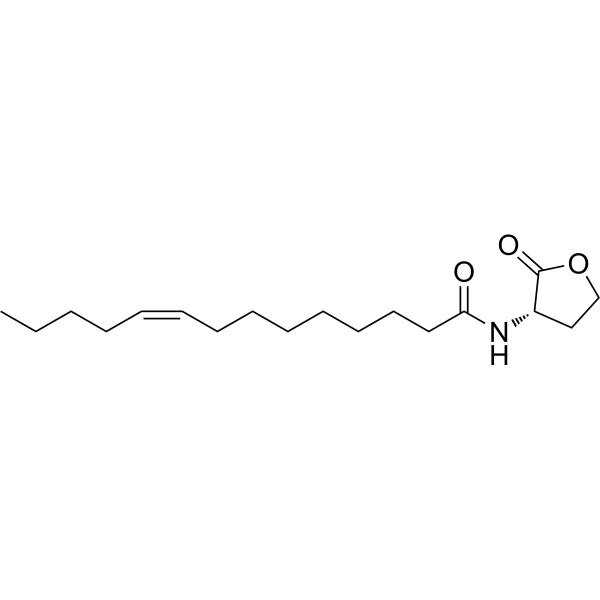
N-cis-Tetradec-9Z-enoyl-L-homoserine lactone (C14-9Z-HSL) is an autoinducer in C. rodentium, that serves as signal molecule, coordinates the gene expression and behaviors through diffusion into cells of different bacterial species .
loading...
    loading...
Art. -Nr.: HY-114773
CAS. Nr.: 216596-71-3
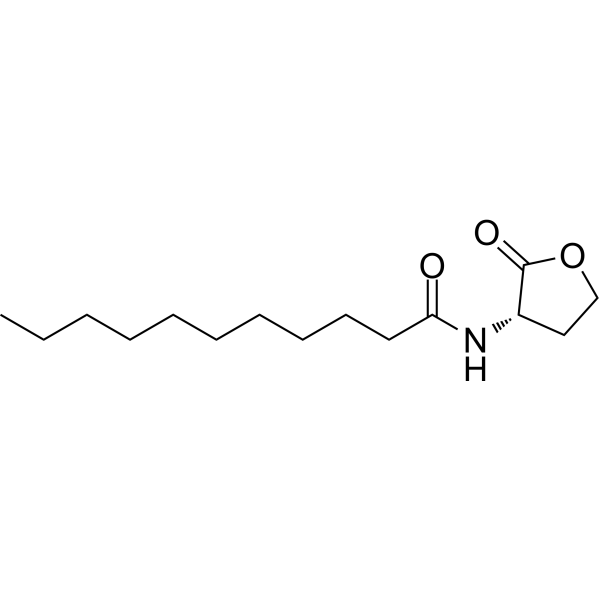
Quorum sensing is a regulatory system used by bacteria to control gene expression in response to increased cell density. This regulatory process manifests itself in a variety of phenotypes, including biofilm formation and virulence factor production. Coordinated gene expression is achieved through the production, release and detection of small diffusible signaling molecules called autoinducers. N-acylated homoserine lactones (AHLs) comprise a class of such autoinducers, each of which generally consists of a fatty acid coupled to a homoserine lactone (HSL). Modulation of bacterial quorum-sensing signaling systems to suppress pathogenesis represents a new approach to antimicrobial research for infectious diseases. AHLs differ in acyl length (C4-C18), C3 substitution (hydrogen, hydroxyl, or oxo group), and the presence or absence of one or more carbon-carbon double bonds in the fatty acid chain. These differences confer signaling specificity through the affinity of the LuxR family of transcriptional regulators. C11-HSL has a rare odd-numbered acyl carbon chain and may be a minor quorum-sensing signaling molecule in Pseudomonas aeruginosa strains.
loading...
    loading...
Art. -Nr.: HY-W127487
CAS. Nr.: 479050-96-9
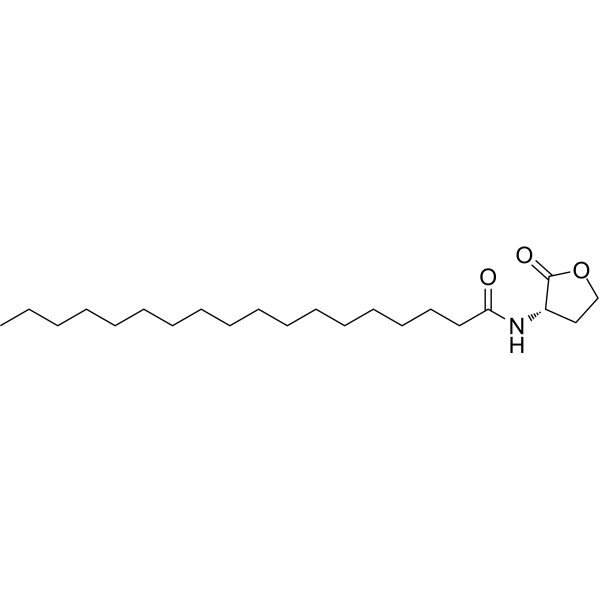
Quorum sensing is a regulatory system used by bacteria to control gene expression in response to increased cell density. This regulatory process manifests itself in a variety of phenotypes, including biofilm formation and virulence factor production. Coordinated gene expression is achieved through the production, release and detection of small diffusible signaling molecules called autoinducers. N-acylated homoserine lactones (AHLs) comprise a class of such autoinducers, each of which generally consists of a fatty acid coupled to a homoserine lactone (HSL). Modulation of bacterial quorum-sensing signaling systems to suppress pathogenesis represents a new approach to antimicrobial research for infectious diseases. AHLs differ in acyl length (C4-C18), C3 substitution (hydrogen, hydroxyl, or oxo group), and the presence or absence of one or more carbon-carbon double bonds in the fatty acid chain. These differences confer signaling specificity through the affinity of the LuxR family of transcriptional regulators. C18-HSL, one of four lipophilic long acyl side chain AHLs produced by the LuxI AHL synthase homolog SinI, is involved in quorum-sensing signaling in strains of Rhizobium meliloti (a nitrogen-fixing bacterial symbiont of the legume M. sativa) . C18-HSL and other hydrophobic AHLs tend to localize in the relatively lipophilic environment of bacterial cells and cannot diffuse freely across the cell membrane. Long-chain N-acyl homoserine lactones can be exported from cells by efflux pumps, or can be transported between communicating cells by extracellular outer membrane vesicles.
loading...
    loading...
Art. -Nr.: HY-E71072
Forschungsgebiete:  

Others

(4S)-4-Hydroxy-5-phosphonooxypentane-2,3-dione isomerase (EC 5.3.1.32) participates in a degradation pathway of the bacterial quorum-sensing autoinducer molecule AI-2.
loading...
    loading...
Art. -Nr.: HY-182942
CAS. Nr.: 3112321-20-4
Target:  

Bacterial Elastase

Forschungsgebiete:  

Infection

PV-DPD-19 is an autoinducer-2 (AI-2) quorum sensing inhibitor. PV-DPD-19 reduces AI-2 production and inhibits the expression of multiple MSCRAMMs. In co-culture systems with Staphylococcus aureus, PV-DPD-19 decreases the production of pyocyanin and Elastase in Pseudomonas aeruginosa. PV-DPD-19 impairs the adhesion ability of Staphylococcus aureus to lung epithelial cells. PV-DPD-19 inhibits biofilm formation of Pseudomonas aeruginosa (MBIC50 = 27 μg/mL) and Staphylococcus aureus (MBIC50 = 35 μg/mL). PV-DPD-19 shows no cytotoxicity in both in vitro lung epithelial cell models and in vivo Galleria mellonella larva models .
loading...
    loading...
Art. -Nr.: HY-P71528
Reinheit:  ≥ 95%, as determined by reducing SDS-PAGE.
Synonyms: luxS; ygaG; b2687; JW2662; S-ribosylhomocysteine lyase; EC 4.4.1.21; AI-2 synthesis protein; autoinducer-2 production protein LuxS
Species:  
Source:  
loading...
    loading...
  • 1

