1. Search Result
Search Result
Pathways Recommended: Autophagy MAPK/ERK Pathway
Results for "

autophagy/lysosome pathway

" in MedChemExpress (MCE) Product Catalog:

22

Inhibitors & Agonists

1

Screening Libraries

3

Natural
Products

Cat. No. Product Name Target Research Areas Chemical Structure
  • HY-175839

    PROTACs EGFR ATP Synthase Cancer
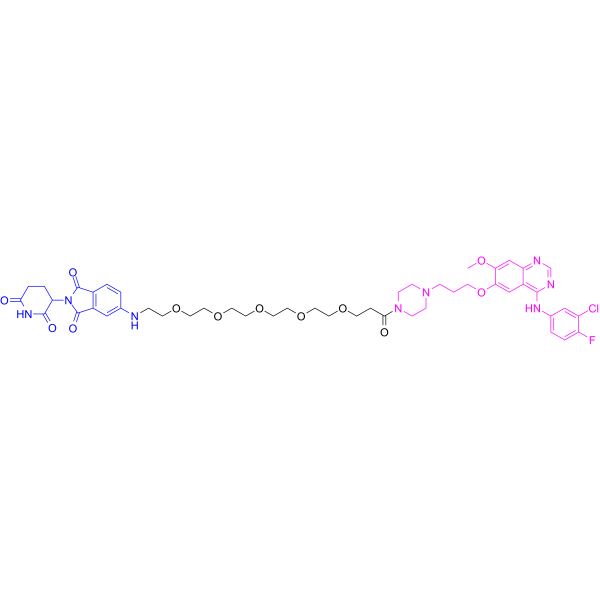
    PROTAC EGFR degrader 15 is a Pomalidomide (HY-10984)-based Gefitinib (HY-50895) EGFR PROTAC degrader. PROTAC EGFR degrader 15 triggers EGFR degradation via ubiquitin-proteasome-dependent proteolysis and autophagy-lysosome activation pathways. PROTAC EGFR degrader 15 targets ETFA to enhance ATP production. PROTAC EGFR degrader 15 significantly suppresses tumor growth in a Gefitinib-acquired resistant HCC-827 xenograft model. PROTAC EGFR degrader 15 can be used for the study of non-small cell lung cancer (NSCLC) (Pink: EGFR ligand (HY-W109039); Blue: CRBN ligand (HY-10984); Black: Linker (HY-W679737)) .
    PROTAC EGFR degrader 15
  • HY-N2991

    Autophagy Neurological Disease
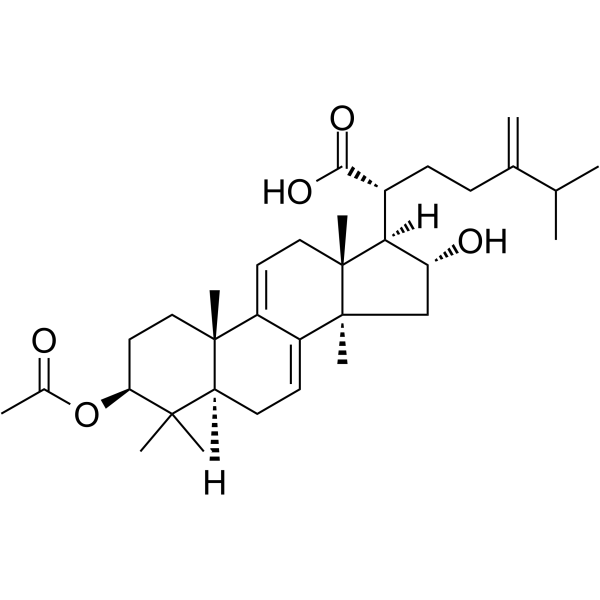
    Dehydropachymic acid is one of the major triterpenes isolated from Poria cocos. Dehydropachymic acid is more effective in autophagy-lysosome pathway (ALP) impaired cells rather than normal cells .
    Dehydropachymic acid
  • HY-119137

    Autophagy AMPK Cancer
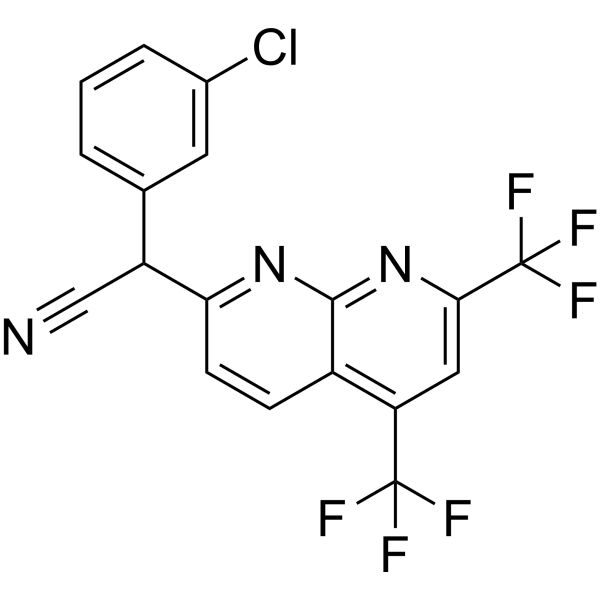
    AMDE-1 is a potent autophagy inducer. AMDE-1 induces autophagy by the AMPK-mTORC1-ULK1 pathway and at the same time inhibited autophagy-mediated degradation by causing lysosome dysfunction. AMDE-1 can be used in research of cancer .
    AMDE-1
  • HY-147942

    PROTACs EGFR Cancer
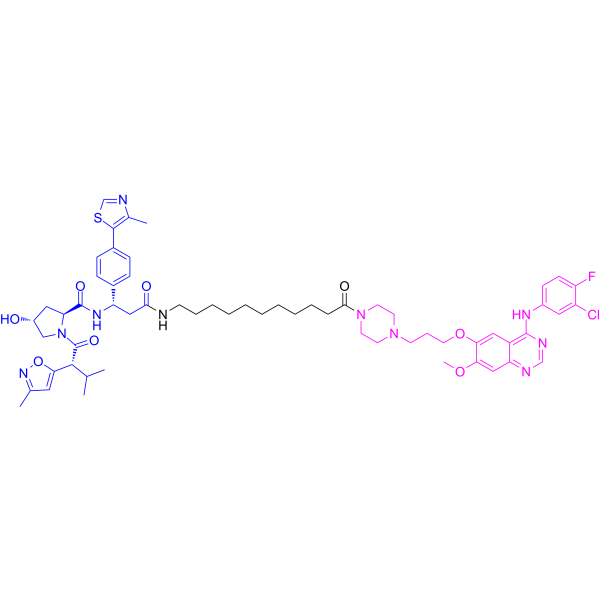
    MS9449 is a potent PROTAC EGFR degrader with Kds of 17 nM and 10 nM for EGFR WT and EGFR L858R, respectively. MS9449 effectively induces degradation of mutant EGFRs through both the ubiquitin/proteasome system (UPS) and autophagy/lysosome pathways. MS9449 potently inhibits the proliferation of NSCLC cells. MS9449 can be used for researching anticancer .
    MS9449
  • HY-147941

    PROTACs EGFR Inflammation/Immunology Cancer
    MS9427 is a potent PROTAC EGFR degrader with Kds of 7.1 nM and 4.3 nM for EGFR WT and EGFR L858R, respectively. MS9427 selectively degrades the mutant but not the WT EGFR through both the ubiquitin/proteasome system (UPS) and autophagy/lysosome pathways. MS9427 potently inhibits the proliferation of NSCLC cells. MS9427 can be used for researching anticancer .
    MS9427
  • HY-147941A

    PROTACs EGFR Infection Inflammation/Immunology Cancer
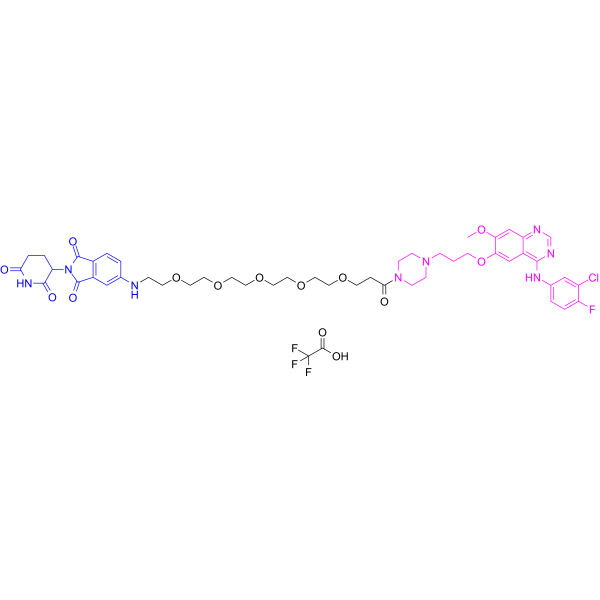
    MS9427 TFA is a potent PROTAC EGFR degrader with Kds of 7.1 nM and 4.3 nM for EGFR WT and EGFR L858R, respectively. MS9427 TFA selectively degrades the mutant but not the WT EGFR through both the ubiquitin/proteasome system (UPS) and autophagy/lysosome pathways. MS9427 TFA potently inhibits the proliferation of NSCLC cells. MS9427 TFA can be used for researching anticancer .
    MS9427 TFA
  • HY-168892

    Atg8/LC3 Autophagy Cancer
    LC3B recruiter 2 (34R) is an LC3B recruiter and a component of the autophagy-lysosome pathway degradation system (ATTEC, Autophagy-Tethering Compounds), which directly binds to LC3B. LC3B recruiter 2 binds to CDK9 inhibitor SNS-032 (HY-10008) through a linker, forming an ATTEC that targets the degradation of the CDK9 and Cyclin T1 complex (with inhibitory effects on both). Therefore, LC3B recruiter 2 exerts activity through the LC3B-dependent autophagy-lysosome pathway, interfering with the cell cycle of cancer cells, thus exhibiting antitumor activity .
    LC3B recruiter 2
  • HY-169363

    PD-1/PD-L1 Autophagy AUTACs Cancer
    PD-L1 degrader-2 (Compound B3) is an orally active AUTAC degrader, that degrades PD-L1 through autophagy-lysosome pathway with a DC50 of 0.5 μM. PD-L1 degrader-2 exhibits inhibitory activity against PD-1/PD-L1 interaction with an IC50 of 22.8 nM. PD-L1 degrader-2 upregulates the expressions of Atg9b, Lamp1 and Mitf, and activates the autophagy lysosome system. PD-L1 degrader- exhibits antitumor efficacy in CT26 mouse model . (Pink: autophagy-lysosome activator (HY-159894); Black: linker (HY-W015088); Blue: PD-L1 ligand (HY-169365))
    PDL1 degrader-2
  • HY-157788

    PROTACs Reactive Oxygen Species (ROS) Ferroptosis Glutathione Peroxidase Cancer
    ZX703 (compound 5I) is a PROTAC that significantly degrades GPX4 in a dose- and time-dependent manner through the ubiquitin-proteasome and autophagy-lysosome pathways (DC50=0.315 µM). ZX703 induces ferroptosis by inducing Reactive Oxygen Species (ROS) accumulation in cells. ZX703 can be used for cancer research .
    ZX703
  • HY-176451

    CDK Cancer
    CDK9 degrader-1 (Compound AZ-9) is a selective CDK9 degrader (DC50: 0.4073 µM). CDK9 degrader-1 recruits ATG101 to initiate the autophagy-lysosome pathway and forms autophagosomes by recruiting LC3, which then fuses with lysosomes to degrade CDK9 and its partner protein Cyclin T1 (DC50: 1.215 µM). CDK9 degrader-1 induces caspase 3-mediated apoptosis. CDK9 degrader-1 has antitumor activity in a mouse HCT116 xenograft model .
    CDK9 degrader-1
  • HY-175204

    AUTACs SHP2 Apoptosis Autophagy Atg8/LC3 Cancer
    SHP2 protein degrader-3 is a SHP2 AUTAC degrader. SHP2 protein degrader-3 shows dose-dependent SHP2 degradation ability (DC50 = 3.22 μM) and anti-tumor activity (IC50 = 5.59 μM) in HeLa cells. SHP2 protein degrader-3 induces degradation through the LC3-mediated autophagy pathway, which can be inhibited by lysosome inhibitors. SHP2 protein degrader-3 induces apoptosis in various cancer cells (HeLa cells, HepG2 cells, LoVo cells, Huh-7 cells) (SHP2 Ligand : (HY-100388); LC3 Ligand: (HY-10542); Linker : (HY-128834)) .
    SHP2 protein degrader-3
  • HY-173150

    YAP Cancer
    Hapalindole Q (Compound (+)-1) is an autophagy (Autophagy) inhibitor targeting YAP1. Hapalindole Q binds to the Hippo pathway transcription factor YAP1 with a Kd of 9.13 μM and induces its degradation via the chaperone-mediated autophagy (CMA) pathway. This process inhibits Rab7-mediated fusion of autophagosomes and lysosomes, thereby reducing overall autophagy levels without affecting lysosomal function. Hapalindole Q holds promise for research in cancer (e.g., liver cancer, breast cancer, etc.) .
    Hapalindole Q
  • HY-N2991R

    Reference Standards Autophagy Neurological Disease
    Dehydropachymic acid (Standard) is the analytical standard of Dehydropachymic acid. This product is intended for research and analytical applications. Dehydropachymic acid is one of the major triterpenes isolated from Poria cocos. Dehydropachymic acid is more effective in autophagy-lysosome pathway (ALP) impaired cells rather than normal cells .
    Dehydropachymic acid (Standard)
  • HY-170989

    HyT Epigenetic Reader Domain Autophagy Cancer
    BRD4 degrader-5 (Compound 23) is a hydrophobic tag (HyTag)-based protein degrader for BRD4 (DC50 = 24.7 μM) through ER stress and autophagy-lysosome pathway. BRD4 degrader-5 inhibits the proliferation of cancer cell 4T1 with an IC50 of 20.6 μM .
    BRD4 degrader-5
  • HY-161874

    Apoptosis MDM-2/p53 Bcl-2 Family Caspase PARP Autophagy Cancer
    RPS6-IN-1 (Compound 22o) inhibits cell metastasis, induces cell apoptosis (increases the expression of Bax, p53, cleaved-caspase 3, and cleaved-PARP). RPS6-IN-1 decreases mitochondrial membrane potential. RPS6-IN-1 activates autophagy through the PI3K-Akt-mTOR signaling pathway, damages intracellular mitochondria and lysosomes, and cause ER stress. RPS6-IN-1 inhibits RPS6 phosphorylation. RPS6-IN-1 is an anticancer agent with low systemic toxicity .
    RPS6-IN-1
  • HY-183786

    NF-κB Fluorescent Dye Drug Derivative Autophagy Cancer
    Anticancer agent 327, a fluorescent Andrographolide (HY-N0191) derivative, is an NF-κB p50 inhibitor. Anticancer agent 327 covalently binds to the p50 subunit of NF-κB. Anticancer agent 327 reduces levels of multiple oncogenic p53 proteins via the autophagy/lysosome pathway. Anticancer agent 327 can be used for the research of pancreatic ductal adenocarcinoma (Ex/Em = 488/515 nm)[1].
    Anticancer agent 327
  • HY-182760

    DNA Alkylator/Crosslinker Bcl-2 Family Caspase Apoptosis Topoisomerase Cancer
    MN33-63 is a Bcl-2 inhibitor, caspase-3 activator and DNA crosslinker with broad-spectrum anticancer activity. MN33-63 improves the water solubility of SN-38 (HY-13704), inhibits tumor growth and proliferation in a dose-dependent manner, and causes no obvious toxicity. MN33-63 relieves the inhibition of the mitochondrial apoptotic pathway, initiates the apoptosis program, inhibits Topo I activity, and promotes its degradation via the ubiquitin-proteasome and autophagy-lysosome pathways. MN33-63 induces DNA crosslinking, G2/M cell cycle arrest, inhibition of cancer cell migration, and cancer cell apoptosis through the mitochondrial pathway. MN33-63 can be used in the research of colorectal cancer, cervical cancer, hepatocellular carcinoma, lung adenocarcinoma and gastric cancer .
    MN33-63
  • HY-182796

    HyT JNK Cancer
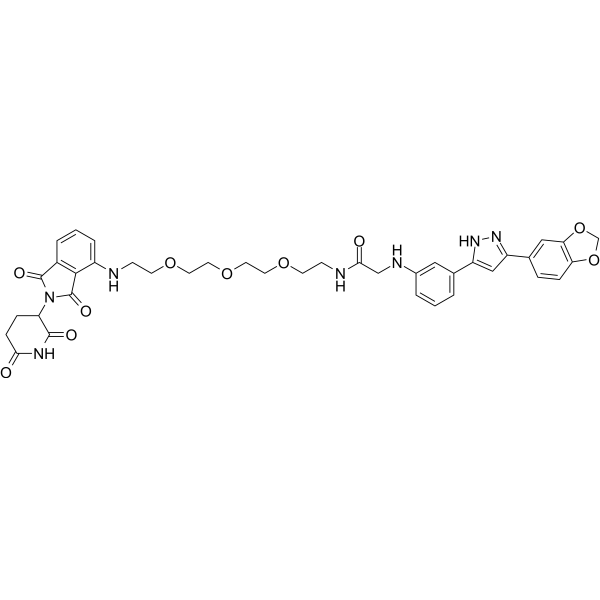
    JNK1 degrader-1 is a JNK1 HyT degrader. JNK1 degrader-1 can induce JNK1 degradation through the HyT-mediated ubiquitin-proteasome system and autophagy-lysosome pathway. JNK1 degrader-1 inhibits TGF-β1-induced epithelial-mesenchymal transition (EMT). JNK1 degrader-1 can be used for research on fibrotic diseases and cancer metastasis. (Pink: JNK1 ligand (HY-183006); Blue: Hyt hydrophobic group (HY-W037848); Black: Linker (HY-B1008)) .
    JNK1 degrader-1
  • HY-182759

    DNA Alkylator/Crosslinker Topoisomerase Caspase Bcl-2 Family Apoptosis Cancer
    MN33-47 is a multi-target anti-tumor compound with broad-spectrum anti-proliferative activity. MN33-47 relieves the inhibition of the mitochondrial apoptosis pathway by downregulating the anti-apoptotic protein Bcl-2, while activating caspase-3 and inhibiting Topoisomerase I activity, thereby promoting its degradation through the ubiquitin-proteasome and autophagy-lysosome pathways. MN33-47 can also induce DNA cross-linking and G2/M cell cycle arrest, inhibit cancer cell migration and activate the mitochondrial apoptosis pathway, thus exerting potent anti-tumor effects. MN33-47 can improve the water solubility of SN-38 (HY-13704), and exhibits dose-dependent tumor growth inhibition effects in CT26 tumor-bearing mouse models without obvious toxic and side effects. MN33-47 can be used in related studies on colorectal adenocarcinoma, cervical adenocarcinoma, hepatocellular carcinoma, alveolar basal epithelial adenocarcinoma, gastric cancer and colon cancer .
    MN33-47
  • HY-182971

    PROTACs Enterovirus Infection
    PROTAC EV-A71 Degrader-1 is a PROTAC degrader targeting EV-A71 3D polymerase, with broad-spectrum activity against a variety of enteroviruses. PROTAC EV-A71 Degrader-1 induces the degradation of EV-A71 3D polymerase through the ubiquitin-proteasome and autophagy-lysosome pathways, and blocks viral replication. PROTAC EV-A71 Degrader-1 protects infected mice from death, alleviates tissue damage, and exhibits safety profiles. PROTAC EV-A71 Degrader-1 can be used in the research of enterovirus infections. (Pink: EV-A71 ligand (HY-19339); Blue: E3 ligase ligand (HY-W012479); Black: linker (HY-W105744)) .
    PROTAC EV-A71 Degrader-1
  • HY-181907

    HyT Keap1-Nrf2 HSP Inflammation/Immunology
    NBE5 is an orally active hydrophobic tag-targeting (Hyt) degrader (HyTTD) that targets Keap1. NBE5 mimics protein misfolding and recruits the molecular chaperone Hsp90, while achieving targeted degradation of Keap1 through both the ubiquitin-proteasome system and the autophagy-lysosome system. Consequently, NBE5 relieves the inhibition of the transcription factor Nrf2 by Keap1, potently activates the Nrf2-mediated endogenous antioxidant pathway, and upregulates the expression of downstream antioxidant proteins such as HO-1 and GCLM. NBE5 effectively alleviates oxidative stress and inflammatory damage, and exhibits excellent in vivo activity in a mouse model of acute colitis induced by DSS (HY-116282C) .
    NBE5 consists of a hydrophobic tag (HY-W022007), a Keap1-Nrf2 ligand (HY-14909), and a linker (HY-W014831).
    NBE5
  • HY-184158

    AUTACs HIF/HIF Prolyl-Hydroxylase Metabolic Disease Inflammation/Immunology
    HATC is a HIF-1α AUTAC degrader. HATC links HIF-1α to LC3 to form a ternary complex that undergoes degradation via the autophagy-lysosome fusion pathway. HATC induces dose-dependent HIF-1α degradation in multiple cell types. HATC reduces visceral fat accumulation, hepatic lipid deposition, senescent cell aggregation, and bone loss; alleviates age-related intervertebral disc degeneration, liver dysfunction, kyphosis, and alveolar dilation; decreases circulating lactic acid levels; improves physical performance; and reverses age-related changes in granulocyte proportions. HATC extends median and maximum lifespan, reduces transcriptomic age, and causes no obvious persistent toxicity. HATC can be used in the research of age-related diseases (pink: LC3 ligand (HY-50759); blue: HIF-1α ligand (HY-P10426); Linker: (HY-W008264)) .
    HATC

Inquiry Online

Your information is safe with us. * Required Fields.

Salutation


Country or Region *

Applicant Name *


Organization Name *

Department *


Email Address *


Product Name *

Cat. No.


Requested quantity *

Phone Number *


Remarks

Inquiry Online

Inquiry Information

Product Name:
Cat. No.:
Quantity:
MCE Japan Authorized Agent:

