1. Search Result
Search Result
Results for "

barrel cortex Layer 2/3 pyramidal neurons

" in MedChemExpress (MCE) Product Catalog:

1353

Inhibitors & Agonists

10

Screening Libraries

32

Fluorescent Dyes

42

Biochemical Assay Reagents

170

Peptides

6

MCE Kits

9

Inhibitory Antibodies

215

Natural
Products

6

Recombinant Proteins

92

Isotope-Labeled Compounds

2

Antibodies

3

Click Chemistry

21

Oligonucleotides

10

GMP Molecules

Cat. No. Product Name Target Research Areas Chemical Structure
  • HY-W008719
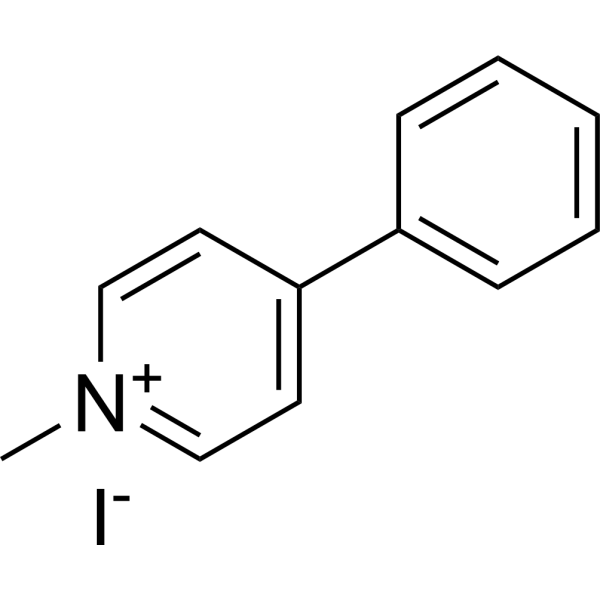
    MPP+ iodide
    30+ Cited Publications

    Mitochondrial Metabolism Neurological Disease
    MPP+ iodide, a toxic metabolite of the neurotoxin MPTP, causes symptom of Parkinson's disease in animal models by selectively destroying dopaminergic neurons in substantia nigra. MPP+ iodide is taken up by the dopamine transporter into dopaminergic neurons where it exerts its neurotoxic action on mitochondria by affecting complex I of the respiratory chain. MPP+ iodide is also a high affinity substrate for the serotonin transporter (SERT) [2].
    MPP+ iodide
  • HY-10232
    THIP
    1 Publications Verification

    Gaboxadol

    GABA Receptor Neurological Disease
    THIP (Gaboxadol) is a selective extrasynaptic GABAA receptors (eGABARs) agonist (with blood-brain barrier permeability), shows an EC50 value of 13 μM for δ-GABAAR. THIP induces strong tense GABAA-mediated currents in layer 2/3 neurons, but shows on effect on miniature IPSCs. THIP can be used in studies of sleep disorders [2] .
    THIP
  • HY-B1176

    7-Dehydroestrone

    Estrogen Receptor/ERR Endocrinology
    Equilin (7-Dehydroestrone) is an important member of the large group of oestrogenic substances and is chemically related to menformon (oestrone). Equilin increases the growth of cortical neurons via an NMDA receptor-dependent mechanism [2].
    Equilin
  • HY-126436A

    L-Ornithine homopolymer hydrobromide (MW 30000-70000)

    Biochemical Assay Reagents Neurological Disease
    Poly-L-ornithine hydrobromide (MW 30000-70000) is a poly-lysine derivative with a molecular weight of 30000-70000. Poly-L-ornithine hydrobromide (MW 30000-70000) binds to the surface of cell culture vessels through positively charged amino acid residues to form a coating that promotes cell adhesion and provides cells with a matrix environment required for growth. Poly-L-ornithine hydrobromide (MW 30000-70000) is used as a coating agent in cell culture and can be used for the study of primary culture of neurons (such as dopaminergic neurons and oligodendrocytes) [2].
    Poly-L-ornithine hydrobromide (MW 30000-70000)
  • HY-B1833

    HQ-495

    GABA Receptor Neurological Disease
    Afloqualone (HQ-495) is an orally active central muscle relaxant and antivertiginous agent that can increase the sensitivity of GABA receptors in neurons of the lateral vestibular nucleus. Afloqualone (HQ-495) can be used in the research of low back pain and neck-arm-shoulder syndrome [2] .
    Afloqualone
  • HY-107339

    Harmonyl

    Angiotensin-converting Enzyme (ACE) Cardiovascular Disease Neurological Disease Metabolic Disease
    Deserpidine (Harmonyl) is an alkaloid isolated from the root of Rauwolfia canescens related to Reserpine. Deserpidine is used as an antihypertensive agent and a tranquilizer. Deserpidine is a competitive angiotensin converting enzyme (ACE) inhibitor. Deserpidine also decreases angiotensin II-induced aldosterone secretion by the adrenal cortex [2] .
    Deserpidine
  • HY-E70306

    Endogenous Metabolite Parasite Infection
    Zymolyase, Arthrobacter luteus, is a zymolyase mainly found in Arthrobacter luteus. Enzyme, an enzyme with beta-1,3 glucanase activity, removes the electron-dense outer layer of the Plasmodium karinii cell wall, exposing an electron-lucent layer .
    Zymolyase, Arthrobacter luteus
  • HY-136341

    Apoptosis NO Synthase Endogenous Metabolite Neurological Disease Inflammation/Immunology
    7,8-Dihydroneopterin, an inflammation marker, induces cellular apoptosis in astrocytes and neurons via enhancement of nitric oxide synthase (iNOS) expression. 7,8-Dihydroneopterin can be used in the research of neurodegenerative diseases .
    7,8-Dihydroneopterin
  • HY-121186

    Adrenergic Receptor Calcium Channel Cardiovascular Disease Neurological Disease Metabolic Disease
    Bevantolol hydrochloride is a selective β1 and α1-adrenergic receptor antagonist with pKi values of 7.83, 6.9 in rat cerebral cortex, respectively. Bevantolol hydrochloride is a potent Ca 2+ antagonist [2].
    Bevantolol hydrochloride
  • HY-D1161

    NCI 240899

    Fluorescent Dye Neurological Disease
    True Blue (NCI 240899) is a fluorescent dye, as neuronal retrograde tracer (excitation wavelength 395-425 nm, barrier filter 450 nm). True Blue can label neuron and has no effects on neuronal survival [2].
    True Blue
  • HY-59137

    Drug Intermediate Cancer
    1-Methylimidazole acts as a membrane performance regulator that promotes the formation of reverse osmosis membranes with a dense ultra-thin polyamide layer. Such membranes exhibit higher flux and salt rejection rate, while also conferring excellent pH stability to the membrane. 1-Methylimidazole can serve as a ligand for ruthenium (II) complexes to construct metal-based anticancer agents [2].
    1-Methylimidazole
  • HY-W143531

    NOV03; SHR8058

    Biochemical Assay Reagents Inflammation/Immunology
    Perfluorohexyloctane (NOV03), a semifluorinated alkane, reduces tear film instability in Meibomian gland dysfunction and evaporative dry eye disease. Perfluorohexyloctane is a long-term tamponade agent. Perfluorohexyloctane increases tear film breakup time and lipid layer thickness .
    Perfluorohexyloctane
  • HY-158082B

    Tetramethyl rhodamine isothiocyanate glucan, MW 40000

    Fluorescent Dye Others
    TRITC-dextran (Tetramethyl rhodamine isothiocyanate glucan), MW 40000 is a TRITC (HY-D0791)-labeled neutral 40 kDa fluorescent polysaccharide probe. TRITC-dextran, MW 40000 forms a membrane layer on the surface of protocells composed of protamine/folate condensates, and is used to assess membrane fluidity via fluorescence recovery after photobleaching. TRITC-dextran, MW 40000 can also be used to evaluate the anti-bacterial invasion ability and colloidal stability of coated condensates, as well as analyze the permeability of vascular and lymphatic endothelial cell layers [2] .
    TRITC-dextran, MW 40000
  • HY-101333

    (RS)-CPPG

    mGluR Neurological Disease
    CPPG ((RS)-CPPG) is a potent group II/III mGlu receptors antagonist. CPPG exhibits some selectivity (approximately 20 fold) for group III (IC50=2.2 nM) over group II (IC50=46.2 nM) mGlu receptors in the rat cerebral cortex. CPPG has weak effects at group I mGlu receptors .
    CPPG
  • HY-N2411
    Geissoschizine methyl ether
    1 Publications Verification

    5-HT Receptor Neurological Disease
    Geissoschizine methyl ether is an orally active, blood-brain barrier permeable alkaloid, and a partial agonist of the 5-HT1A receptor. It can be isolated from Uncaria hook. Geissoschizine methyl ether potently inhibits the binding of [ 3H]8-OH-DPAT to the 5-HT1A receptor in a concentration-dependent manner, with an IC50 of 0.904 μM. It ameliorates isolation-induced increased aggression and reduced sociability in mice. Geissoschizine methyl ether promotes oligodendrocyte differentiation and remyelination in the medial prefrontal cortex of adult mice [2] .
    Geissoschizine methyl ether
  • HY-112722

    PINK1/Parkin Neurological Disease
    Neurotoxin Inhibitor is a neurotoxin inhibitor. Neurotoxin Inhibitor promotes the expression of DJ-1 protein, reduces the level of oxidative stress, and thereby protects dopaminergic neurons. Neurotoxin Inhibitor can be used for the study of Parkinson's disease .
    Neurotoxin Inhibitor
  • HY-124061

    Protease Activated Receptor (PAR) Neurological Disease Inflammation/Immunology
    GB83 is a potent PAR2 antagonist. GB83 reverses neutrophil elastase‐induced synovitis and pain. GB83 blocks the effect of MET-1 supernatant on NG neurons .
    GB83
  • HY-P99163

    ABBV-8E12; C2N-8E12

    Tau Protein Neurological Disease
    Tilavonemab (ABBV-8E12) is a humanized anti-tau monoclonal antibody that binds to amino acids 25-30 near the N-terminus of the tau protein. Tilavonemab can block the ability of human and mouse neurons to uptake tau aggregates. Tilavonemab can be used for research on Alzheimer’s disease and other tauopathies [2] .
    Tilavonemab
  • HY-W203728

    Amino Acid Derivatives Neurological Disease
    L-β-Imidazolelactic acid is a histidine derivative and an oxidizing agent that can trigger antioxidant effects in the brain cortex of rats .
    L-β-Imidazolelactic acid
  • HY-139427

    β-Methylglutaconic acid

    GABA Receptor Cardiovascular Disease Neurological Disease Metabolic Disease
    3-Methylglutaconic acid is the major metabolites accumulating in 3-Methylglutaconic aciduria (MGTA). 3-Methylglutaconic acid can induce lipid oxidative damage and protein oxidative. 3-Methylglutaconic acid decreases the non-enzymatic antioxidant defenses in cerebral cortex supernatants to elicit oxidative stress in the cerebral cortex. 3-Methylglutaconic acid can be used for brain damage disease research .
    3-Methylglutaconic acid
  • HY-126112

    Drug Derivative Neurological Disease
    Mephenoxalone is a muscle relaxant with anti-anxiety activity. Mephenoxalone has neuropharmacologic activity in vivo. Mephenoxalone inhibits neuron transmission and can relax skeletal muscles by inhibiting the reflex arc .
    Mephenoxalone
  • HY-P1247

    Phosphatase Neurological Disease
    Calcineurin autoinhibitory peptide is a selective inhibitor of Ca 2+/calmodulin-dependent protein phosphatase (calcineurin), with an IC50 of ~10 μM. Calcineurin autoinhibitory peptide could protect neurons from excitatory neuronal death [2].
    Calcineurin autoinhibitory peptide
  • HY-N4126
    6-Demethoxytangeretin
    1 Publications Verification

    Anaplastic lymphoma kinase (ALK) p38 MAPK Interleukin Related ERK JNK JAK STAT Akt Neurological Disease Inflammation/Immunology
    6-Demethoxytangeretin is a flavonoid compound that can be isolated from Citrus reticulata. 6-Demethoxytangeretin has anti-inflammatory and anti-allergic activities and can inhibit the production of IL-6 and the expression of related genes in human mast cells through the ALK and MAPK pathways. 6-Demethoxytangeretin can promote CRE-mediated transcription in hippocampal neurons [2].
    6-Demethoxytangeretin
  • HY-18663
    CP-465022
    1 Publications Verification

    iGluR Neurological Disease
    CP-465022 is a potent, and selective noncompetitive AMPA receptor antagonist with anticonvulsant activity. CP-465022 is against Kainate-induced response with an IC50 of 25 nM in rat cortical neurons. CP-465022 provides a new tool to investigate the role of AMPA receptors in physiological and pathophysiological processes [2].
    CP-465022
  • HY-P1387

    Amyloid-β Apoptosis Neurological Disease
    β-Amyloid (1-40) (rat) is a rat form of the amyloid β-peptide, which accumulates as an insoluble extracellular deposit around neurons, giving rise to the senile plaques associated with Alzheimer's disease (AD). β-Amyloid (1-40) (rat) increases 45Ca 2+ influx, induces neurodegeneration in the rat hippocampal neurons of the CA1 subfield. β-Amyloid (1-40) (rat) induces apoptosis. β-Amyloid (1-40) (rat) can be used for the research of Alzheimer's disease [2].
    β-Amyloid (1-40) (rat)
  • HY-151873

    RIP kinase Inflammation/Immunology Cancer
    SZM679 is a potent, orally active and selective RIPK1 inhibitor with Kd values of 8.6 nM and >5000 nM for RIPK1 and RIPK3, respectively. SZM679 reverses the tumor necrosis factor-induced systemic inflammatory response. SZM679 decreases the Tau hyperphosphorylation, neuroinflammation, and the RIPK1 phosphorylation level in the hippocampus and cortex. SZM679 can be used in research of Alzheimer's disease (AD) .
    SZM679
  • HY-P2707

    α-DTX

    Sodium Channel Potassium Channel Neurological Disease
    α-Dendrotoxin (α-DTX) is a voltage-gated K + channel blocker and an acid-sensing ion channel (ASIC) inhibitor. α-Dendrotoxin blocks Kv1.1, Kv1.2, Kv1.6 and D-type (ID) voltage-gated K + channels, and reversibly inhibits slowly inactivating potassium currents. α-Dendrotoxin induces epilepsy-related behaviors in mice. α-Dendrotoxin can be used in studies related to tonic-clonic seizures [2] .
    α-Dendrotoxin
  • HY-136980

    Asp-Glu

    Endogenous Metabolite Neurological Disease
    Aspartylglutamate (Asp-Glu) is a dipeptide that exhibits excitatory activity, as it has been shown to depolarize CA1 pyramidal neurons and increase conductance in response to stimulation. Aspartylglutamate selectively binds to certain glutamate receptors and demonstrates potent effects in specific regions of the hippocampus, particularly in the stratum radiatum where it enhances excitatory neurotransmission.
    Aspartylglutamate
  • HY-P4397

    Oxytocin Receptor Endocrinology
    (d(CH2)51,Tyr(Me)2,Thr4,Orn8,des-Gly-NH29)-Vasotocin, an oxytocin receptor antagonist, abolishes oxytocin-enhanced inhibitory postsynaptic currents in CA1 pyramidal neurons .
    (d(CH2)51,Tyr(Me)2,Thr4,Orn8,des-Gly-NH29)-Vasotocin
  • HY-D1631A

    Fluorescent Dye Neurological Disease
    Calcium green-5N hexapotassium is a cell-impermeant Ca 2+-sensitive fluorescent probe. Calcium green-5N hexapotassium shows enhancement in fluorescence intensity on binding Ca 2+, and can monitor free Ca 2+ in neurons .
    Calcium green-5N hexapotassium
  • HY-100797

    (±)-CPP

    iGluR Neurological Disease
    (RS)-CPP ((±)-CPP) is a potent and selective NMDA antagonist. (RS)-CPP inhibits central neuron responses, and has anticonvulsant activity .
    (RS)-CPP
  • HY-103110
    ST1936
    1 Publications Verification

    5-HT Receptor Adrenergic Receptor Neurological Disease
    ST1936 is a selective, nanomolar affinity 5-HT6 receptor agonist with Ki values of 13 nM, 168 nM and 245 nM for human 5-HT6, 5-HT7 and 5-HT2B receptors, respectively. ST1936 also shows moderate affinity (Ki of 300 nM) for human and rat α2 adrenergic receptor .
    ST1936
  • HY-W134328B

    Dextran blue (MW 10000)

    Biochemical Assay Reagents Others
    Blue dextran (Dextran blue) (MW 10000) is a 10 kDa osmotic dextran. Blue dextran (MW 10000) penetrates all sublayers of the pre-epithelial mucus gel layer in the rat distal colon and is taken up by the nuclei of surface cells in the rat distal colonic mucosa. Blue dextran (MW 10000) is not blocked by the pre-epithelial mucus gel layer of the rat distal colon, which acts as a diffusion barrier [2].
    Blue dextran (MW 10000)
  • HY-P3883

    Neurokinin Receptor Neurological Disease
    [DAla4] Substance P (4-11) is an analog of Substance P (HY-P0201) that inhibits the binding of 125I-Bolton Hunter-conjugated Eledoisin (HY-P0006) (IC50 of 0.5 μM) and 125I-Bolton Hunter-conjugated Substance P (IC50 of 0.15 μM) to rat brain cortex membranes .
    [DAla4] Substance P (4-11)
  • HY-108479

    SR140333

    Neurokinin Receptor Neurological Disease
    Nolpitantium (SR140333) is a potent, selective, competitive, non-peptide tachykinin NK1 receptor antagonist. Nolpitantium blocks the activation of rat thalamic neurons after nociceptive stimulation .
    Nolpitantium
  • HY-100823

    mGluR Neurological Disease
    (1S,3R)-ACPD is a mGluR agonist that can depolarize pyramidal cells .
    (1S,3R)-ACPD
  • HY-14547

    Dopamine Receptor 5-HT Receptor Neurological Disease
    Bifeprunox is a potent dopamine D2-like and 5-HT1A receptor partial agonist with pKis of 7.19 and 8.83 for cortex 5-HT1A and striatum D2, and a pEC50 of 6.37 for hippocampus 5-HT1A, respectively. Bifeprunox is an antipsychotic for the research of schizophrenia [2].
    Bifeprunox
  • HY-123059

    (Rac)-ICI-118551 hydrochloride

    Adrenergic Receptor Neurological Disease
    (Rac)-ICI-118551 ((Rac)-ICI-118551) hydrochloride is a selective β2-adrenergic receptor antagonist. (Rac)-ICI-118551 hydrochloride can inhibit dendrite ramification of hippocampal neurons in a mouse model of Alzheimer's disease .
    (Rac)-Zenidolol hydrochloride
  • HY-10232S

    Gaboxadol-d4

    Isotope-Labeled Compounds GABA Receptor Neurological Disease
    THIP-d4 (Gaboxadol-d4) is the deuterium labeled THIP (HY-10232). THIP (Gaboxadol) is a selective extrasynaptic GABAA receptors (eGABARs) agonist (with blood-brain barrier permeability), shows an EC50 value of 13 μM for δ-GABAAR. THIP induces strong tense GABAA-mediated currents in layer 2/3 neurons, but shows on effect on miniature IPSCs. THIP can be used in studies of sleep disorders [2] .
    THIP-d4
  • HY-14477

    PARP Neurological Disease
    UPF-1035 is a selective PARP-2 inhibitor with an IC50 value of 0.15 μM. UPF-1035 increases CA1 pyramidal cell loss in hippocampal and has neuroprotective activity .
    UPF-1035
  • HY-103522

    GABA Receptor Neurological Disease
    AA29504 is a ethyl carbamate with γ-aminobutyric acid (GABAA(HY-L120) receptor activity. AA29504 inhibits the delivery of the neurotransmitter gamma-aminobutyric acid in the central nervous system. AA29504 can be used to research anxiety, insomnia and other neuropsychiatric diseases .
    AA29504
  • HY-106943

    Dopamine Receptor 5-HT Receptor Neurological Disease
    1192U90 is an antipsychotic agent, dopamine D2 receptor antagonist as well as serotonin 5-HT1a receptor agonist. 1192U90 reduces the number of spontaneously firing neurons in the limbic dopamine system [2].
    1192U90
  • HY-B1304A
    (+)-Sparteine sulfate pentahydrate
    1 Publications Verification

    (+)-Lupinidine sulfate pentahydrate

    nAChR Neurological Disease
    (+)-sparteine (sulfate pentahydrate) is a ganglionic blocking agent. (+)-Sparteine competitively blocks nicotinic ACh receptor in the neurons .
    (+)-Sparteine sulfate pentahydrate
  • HY-10232R

    Gaboxadol (Standard)

    Reference Standards GABA Receptor Neurological Disease
    THIP (Standard) is the analytical standard of THIP. This product is intended for research and analytical applications. THIP (Gaboxadol) is a selective extrasynaptic GABAA receptors (eGABARs) agonist (with blood-brain barrier permeability), shows an EC50 value of 13 μM for δ-GABAAR. THIP induces strong tense GABAA-mediated currents in layer 2/3 neurons, but shows on effect on miniature IPSCs. THIP can be used in studies of sleep disorders [2] .
    THIP (Standard)
  • HY-137103

    Fluorescent Dye Others
    BTC-AM is a low affinity calcium indicator. BTC-AM has substantial calcium-independent fluorescence at all excitation wavelengths. BTC-AM is readily loaded into neurons and is rapidly hydrolysed .
    BTC-AM
  • HY-P1293

    iGluR Neurological Disease
    Conantokin G, a 17-amino-acid peptide, is a potent, selective and competitive antagonist of N-methyl-D-aspartate (NMDA) receptors. Conantokin G inhibits NMDA-evoked currents in murine cortical neurons with an IC50 of 480 nM. Conantokin G has neuroprotective properties [2].
    Conantokin G
  • HY-Y0531

    Tricyclo[3.3.1.1~3,7~]decan-1-ol

    Drug Intermediate Bacterial Infection
    1-Adamantanol (Tricyclo[3.3.1.1~3,7~]decan-1-ol) is a hydroxylated derivative of Adamantane (HY-N2427). 1-Adamantanol serves as a substrate for regioselective hydroxylation reactions in Streptomyces strain SA8. 1-Adamantanol can form acrylate derivatives, which are used as photoresist layer materials .
    1-Adamantanol
  • HY-P3820

    Neurokinin Receptor Neurological Disease Inflammation/Immunology
    [Dehydro-Pro4] Substance P (4-11) is a peptide fragment of Substance P. Substance P is a peptide mainly secreted by neurons. Substance P takes part in many biological processes, including nociception, inflammation and immunity .
    [Dehydro-Pro4] Substance P (4-11)
  • HY-W794785

    5-HT Receptor Neurological Disease
    WAY 208466 is a selective 5-HT6 receptor agonist with an EC50 of 7.3 nM. WAY-208466 increases GABA levels following both acute and chronic administration in the dorsolateral frontal cortex of rat models with stereotaxic surgery. WAY 208466 can be used for anxiety-related disorders like obsessive compulsive disorder (OCD) research .
    WAY 208466
  • HY-119495

    Thyroid Hormone Receptor Neurological Disease
    JTP 2942 is a thyrotropin-releasing hormone analogue. JTP 2942 can promote the release of Acetylcholine in the hippocampus and frontal cortex of rats. JTP 2942 possesses neuroprotective and cognitive-improving activities. JTP 2942 dose-dependently improves motor and neurological deficits in rat models of chronic focal cerebral ischemia. JTP 2942 can be used for the research of cerebral ischemia, motor neuron diseases, and other related conditions [2].
    JTP 2942

Inquiry Online

Your information is safe with us. * Required Fields.

Salutation


Country or Region *

Applicant Name *


Organization Name *

Department *


Email Address *


Product Name *

Cat. No.


Requested quantity *

Phone Number *


Remarks

Inquiry Online

Inquiry Information

Product Name:
Cat. No.:
Quantity:
MCE Japan Authorized Agent:

